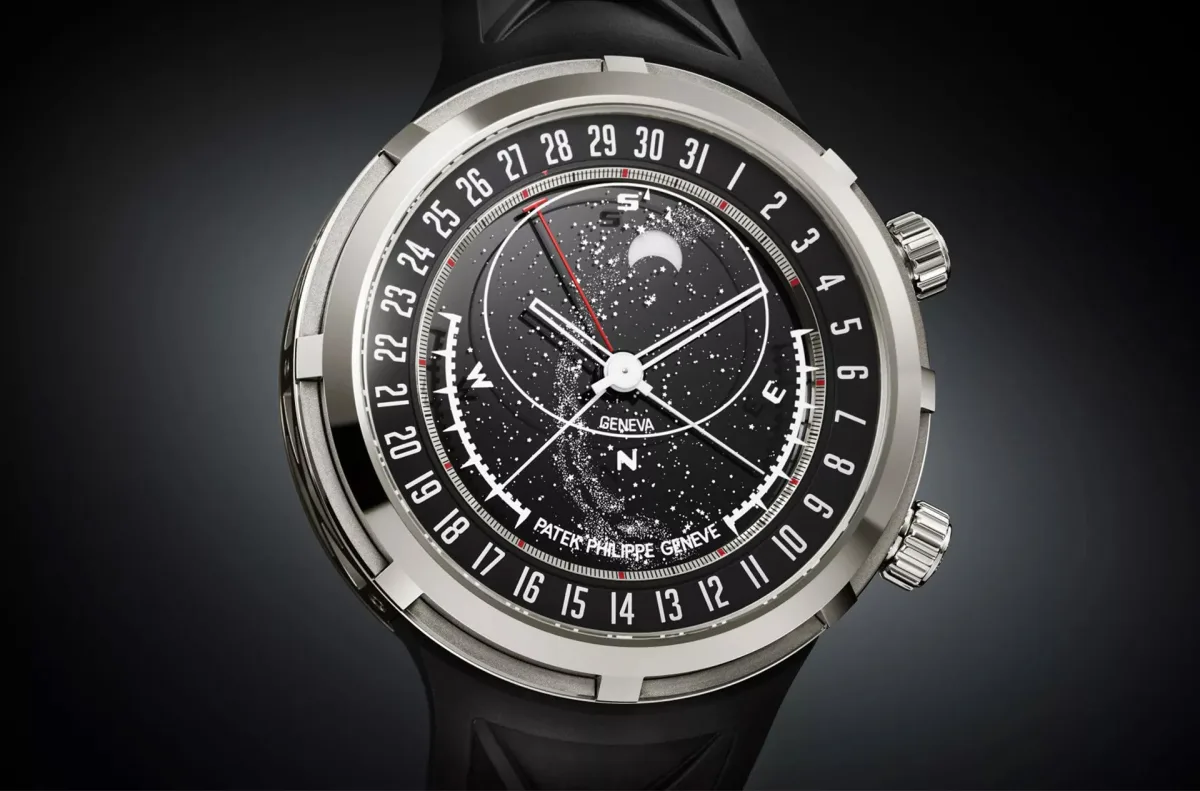
Wristwatches featuring for the first time for Patek Philippe the display of sunrise and sunset times (accounting for daylight saving time).
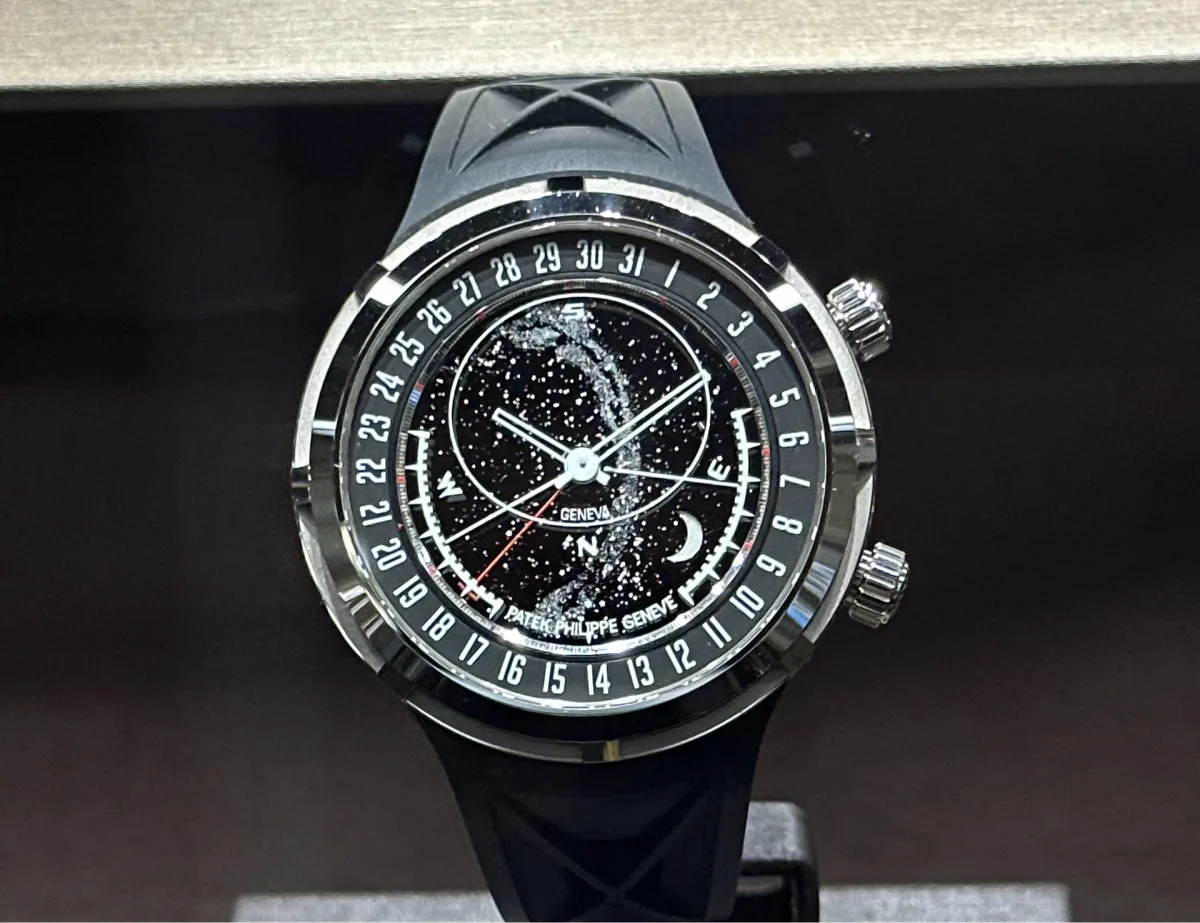
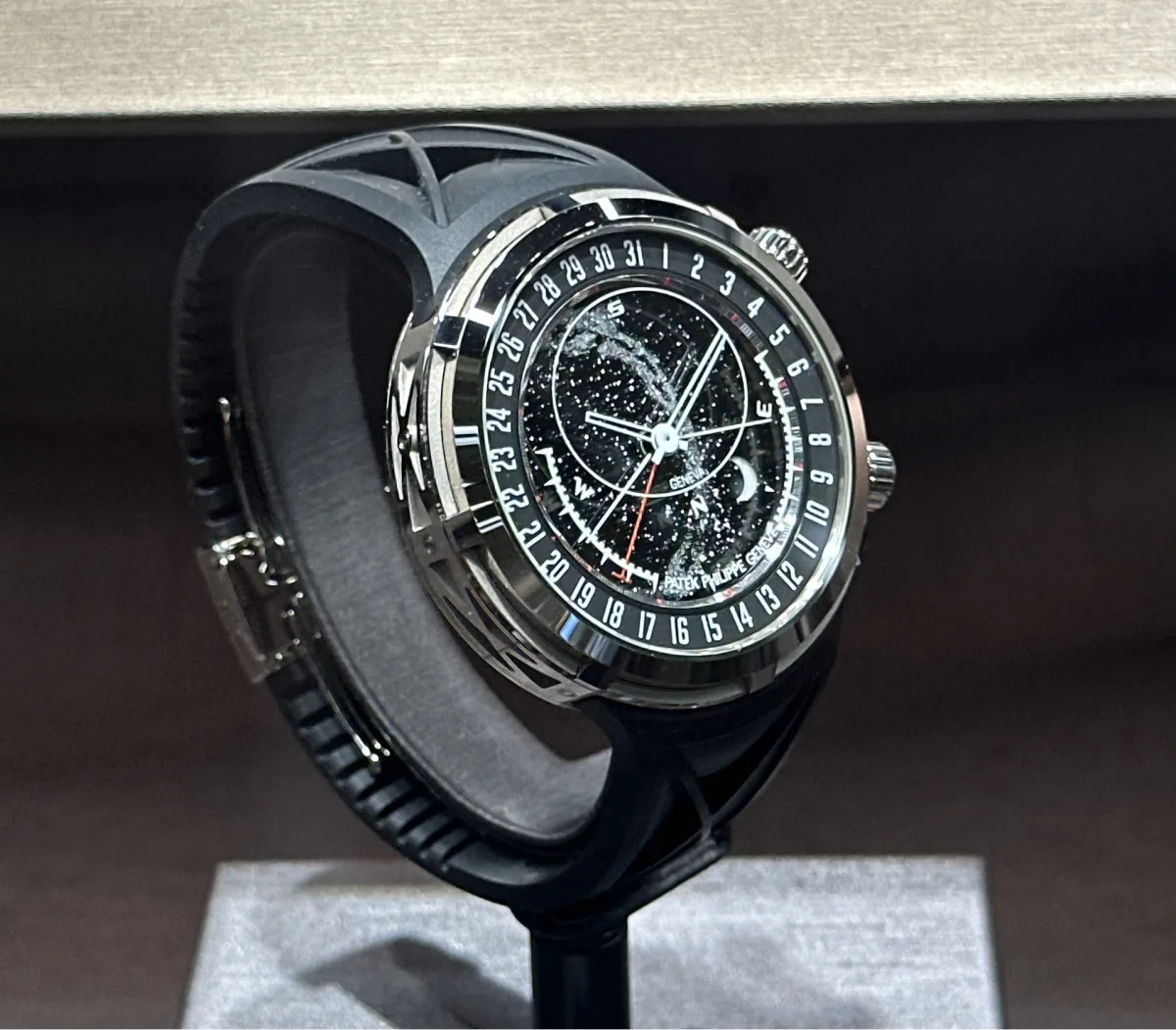
During the Geneva watch exhibition Watches & Wonders, Patek Philippe presented an extraordinary astronomical watch. It is unique because it is the first Patek Philippe wristwatch to display sunrise and sunset times. An important nuance of this new mechanism is that, for the first time in the world, sunrise and sunset times can be adjusted for daylight saving and standard time with a simple button press.
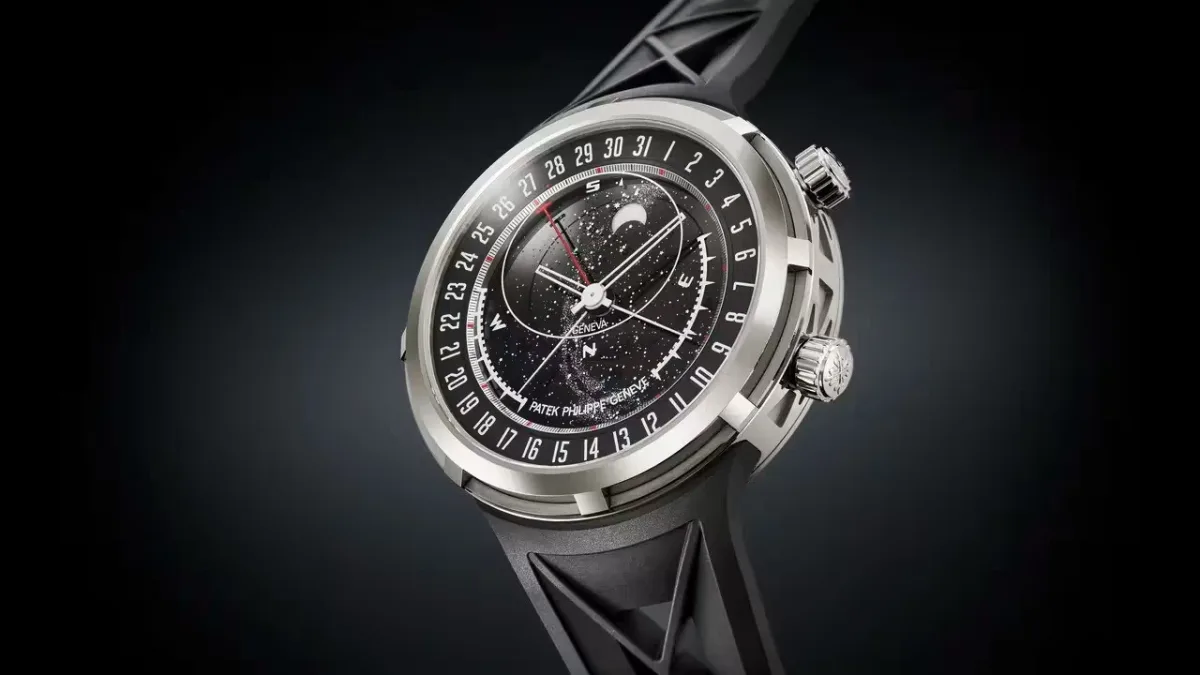
The indication of sunrise and sunset times is found in rare, complex mechanisms. Examples include pocket watches that Patek Philippe created last century for James Ward Packard (1927) and Henry Graves Jr. (1933), as well as the ultra-complex Caliber 89 and the Star Caliber 2000 pocket watch series, which Patek Philippe released for the new millennium.
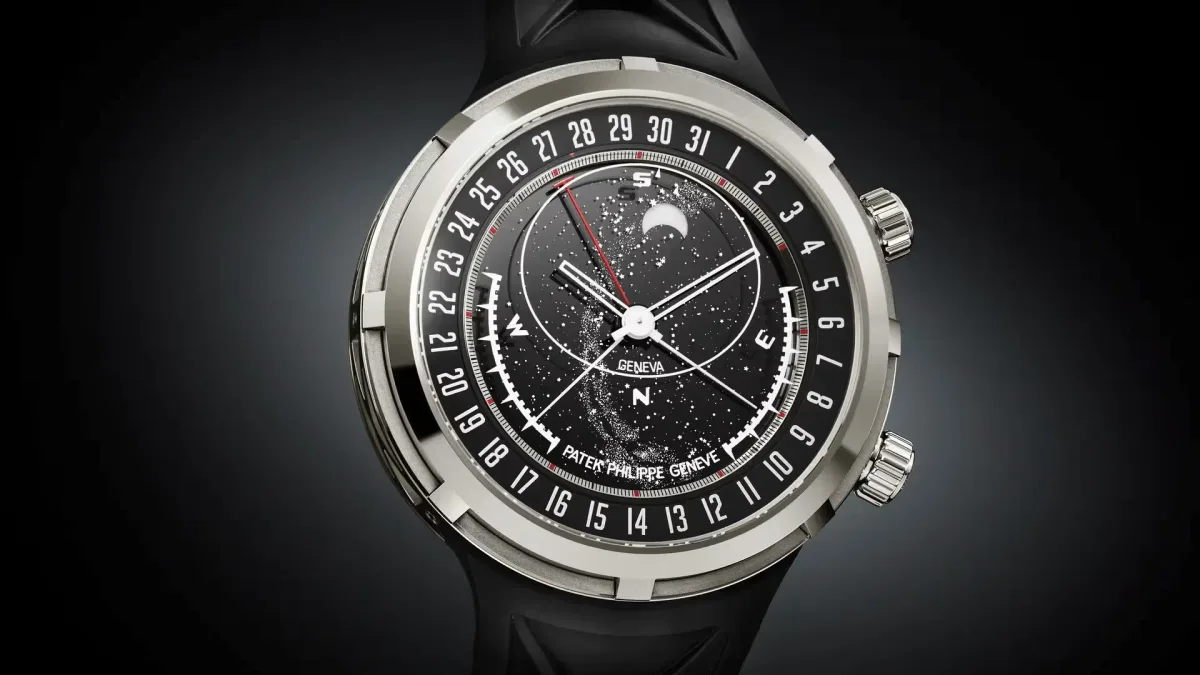
The development of the first wristwatch with this complication took 5 years and required 6 patents. The lengthy creation process is largely due to the fact that the indication of sunrise and sunset times traditionally relies on standard time. In summer, the owner of such a watch usually needs to make some mathematical calculations.
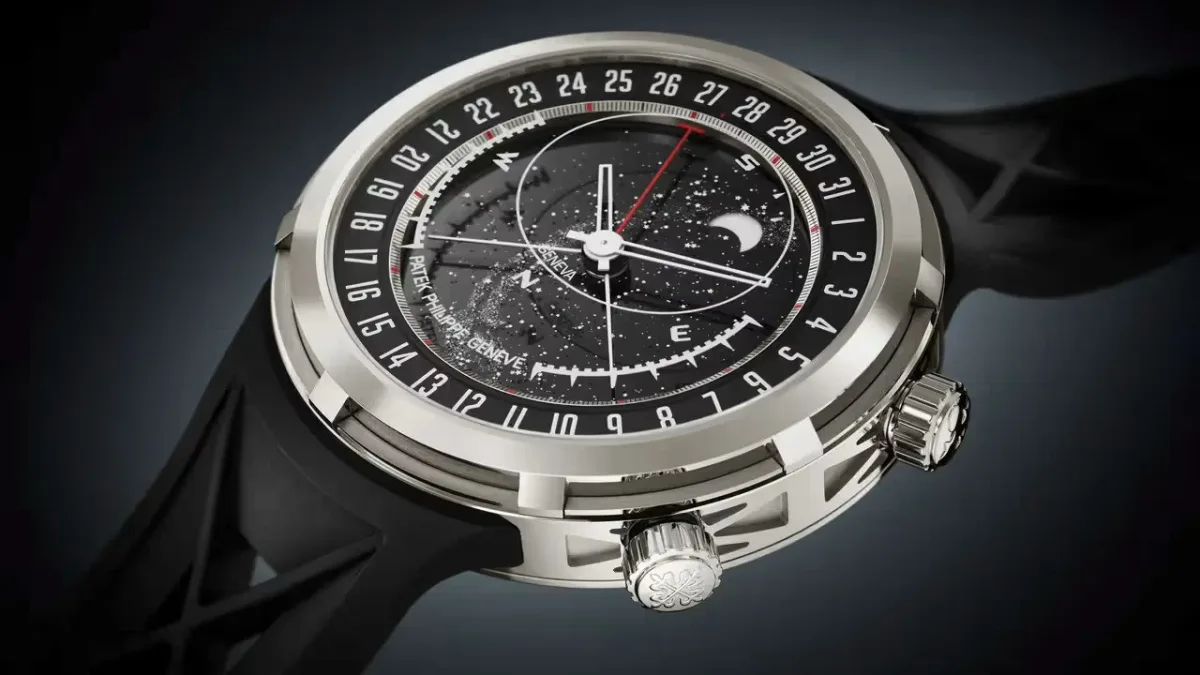
The dial of the model is multi-layered. It consists of several sapphire disks, which are placed one above the other and rotate independently, displaying the night sky with the visible movement of stars. Note: the watch displays a segment of the celestial sphere visible over Geneva, along with the phases and orbit of the Moon.
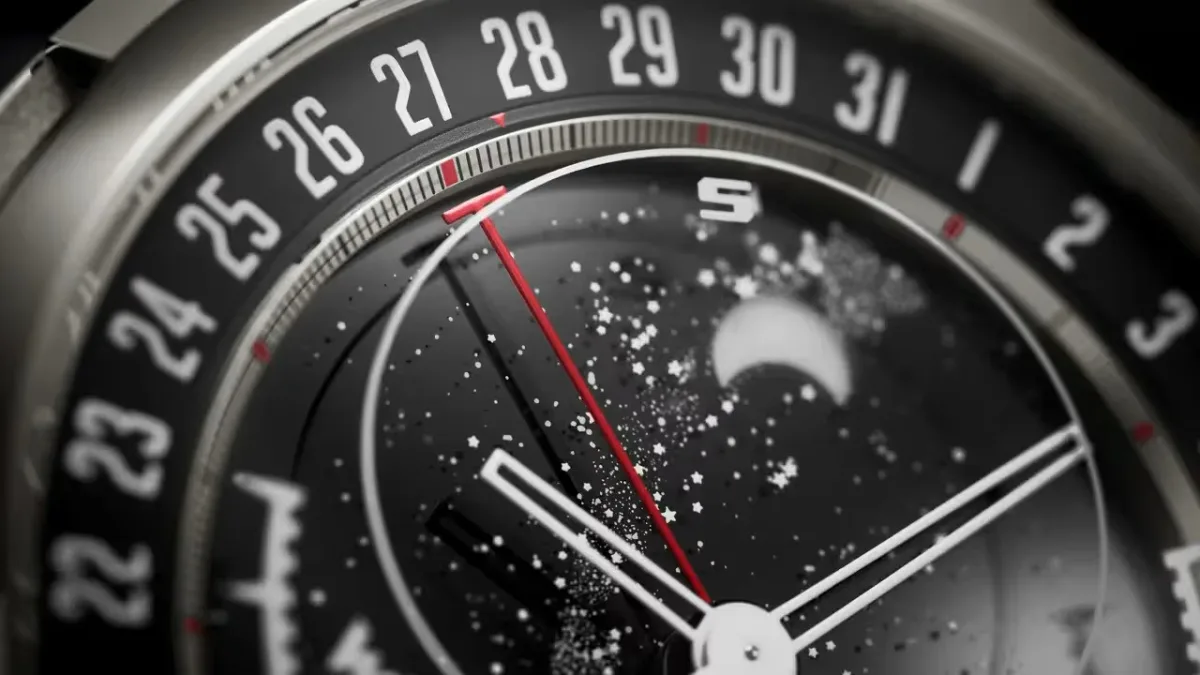
One of the disks is a moving star map that rotates at a speed of 23 hours 56 minutes. The reverse side of this disk depicts the Milky Way. The second disk is treated with a dark PVD coating and mounted on an aluminum wheel, showing the Moon's rotation. It has a circular opening through which a third mineral glass disk can be seen, reproducing the Moon's phases. This mechanism deviates from the real lunar cycle by only one day every 3000 years.
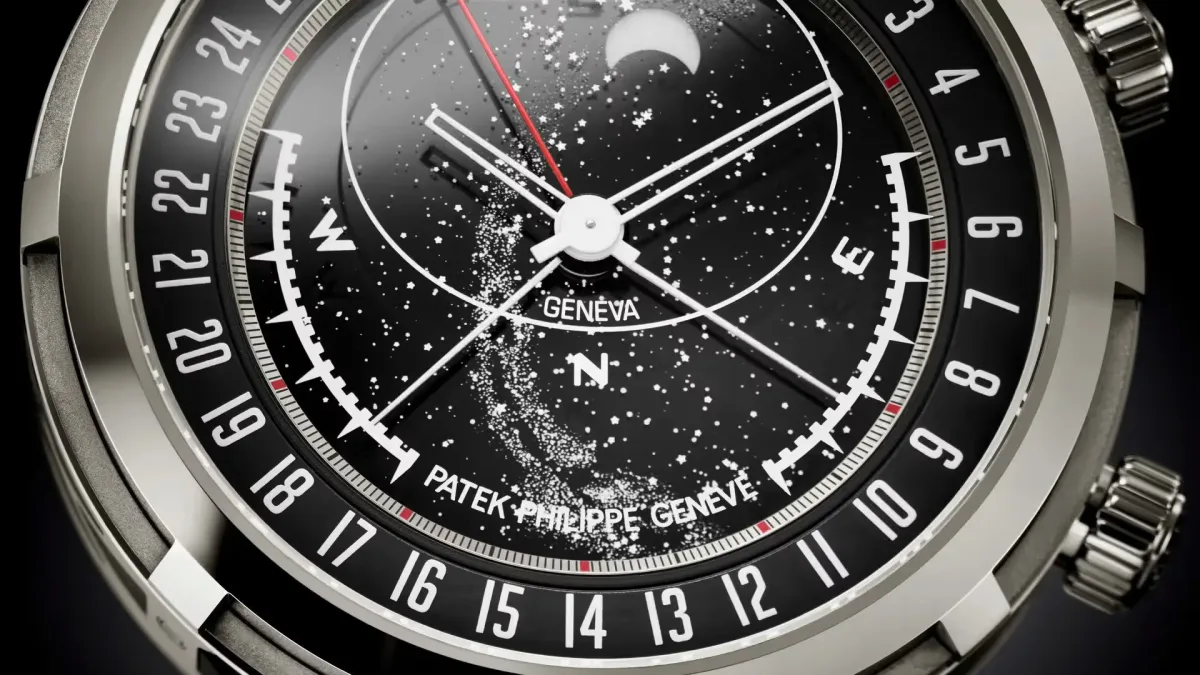
The sky map on the dial is complemented by a date hand indicator and the aforementioned sunrise and sunset time indication. The latter uses two white stick-shaped hands. This function is powered by a complex mechanism with a patented double probe.
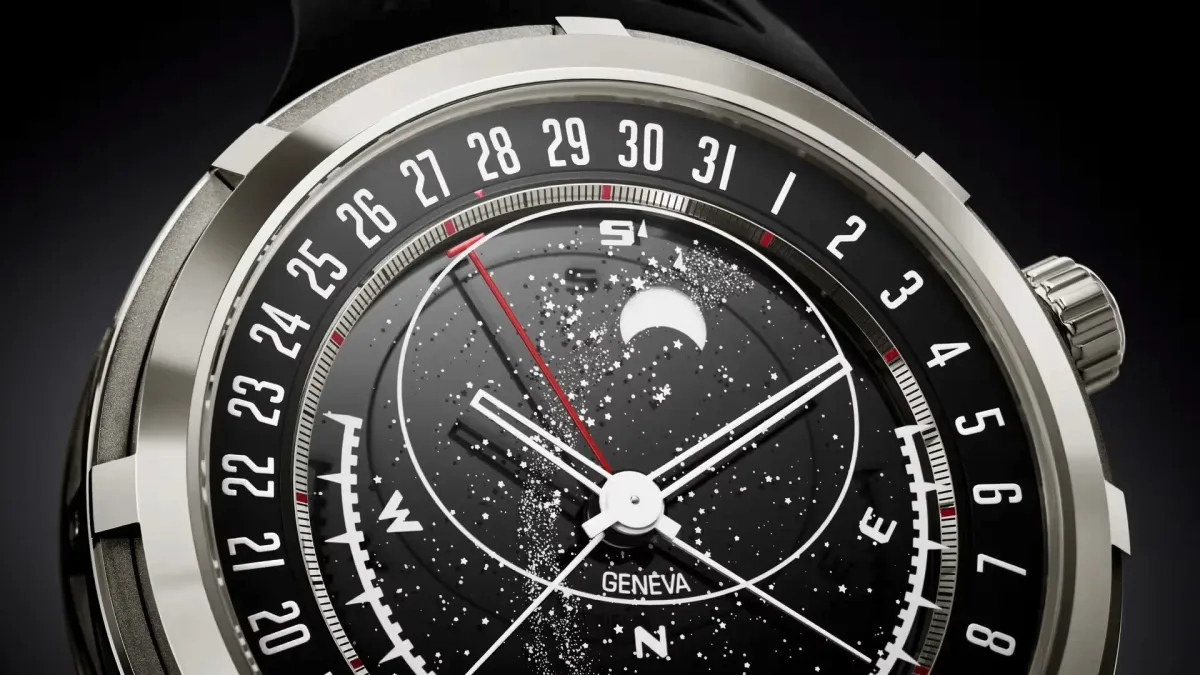
The probe reads data from two oval-shaped cams. The cams' linear movement is controlled by two gear racks, directed by a flexible component with two pairs of levers. The monolithic design of the component eliminates factors such as play between parts, friction, wear of parts, and the need for lubrication. Information from the gear racks is transmitted to the pointer hands.
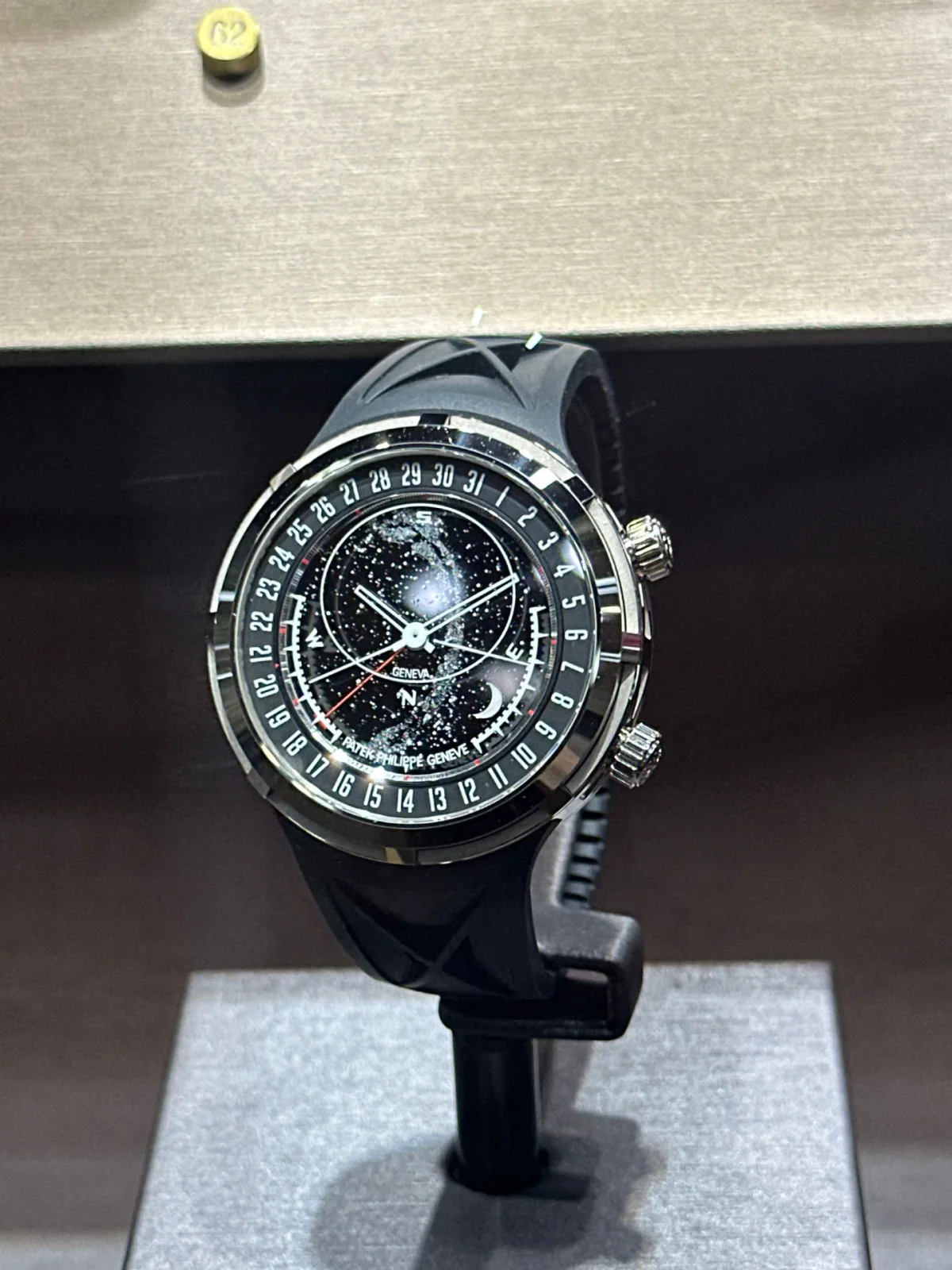
Switching between standard and daylight saving time is done using side buttons located at the 8 and 10 o'clock positions. A safety system prevents multiple presses of the same button. Technically, pressing one of the buttons results in three different actions: adjusting the current time by 1 hour, rotating the disk and date hand by 1/31 of a turn. It is the date disk's rotation that allows the watch to adapt to daylight saving time.

The model is powered by caliber 238 240 C LU CL LCSO. This is a movement with a balance frequency of 3 Hz and a 48-hour power reserve, based on the ultra-thin caliber 240. Despite its complex construction, consisting of 426 parts, the movement's thickness is just 7.93 mm thanks to a micro-rotor.
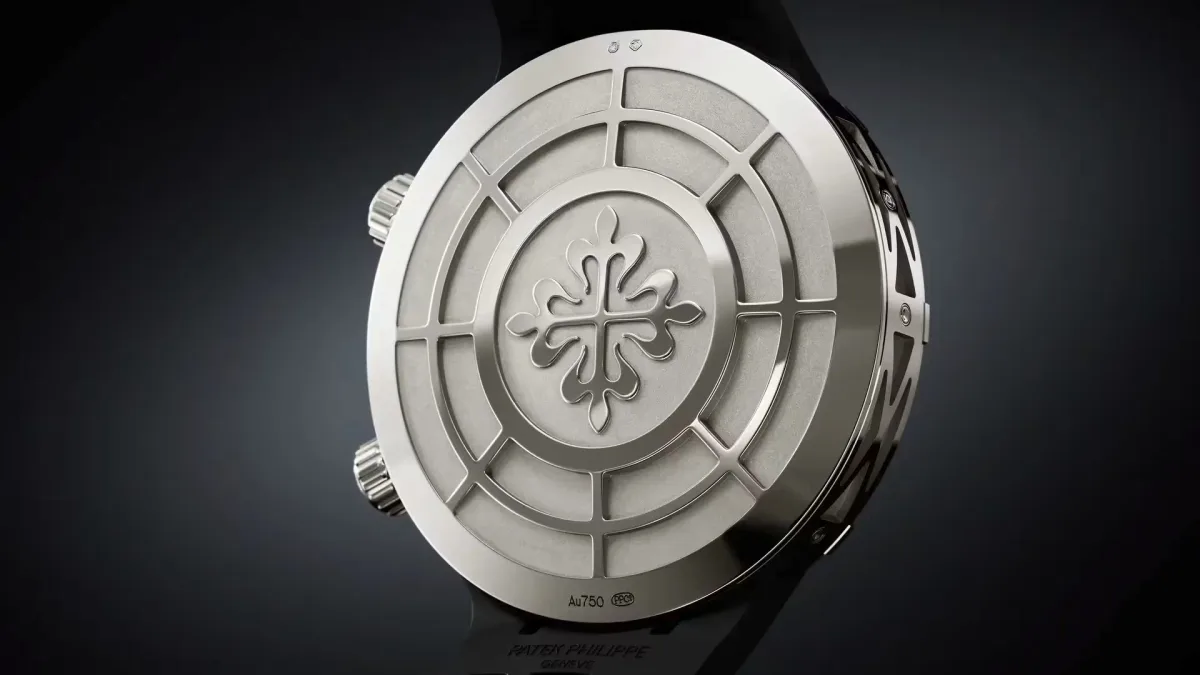
The watch is housed in a 47-mm white gold case. Due to the absence of lugs, it appears more compact than its impressive diameter suggests. The back cover and sides of the case are decorated with intricate engravings. The case features two crowns, one of which is used to adjust the astronomical indications. The button at the 7:30 position allows sequential presses to adjust the date.
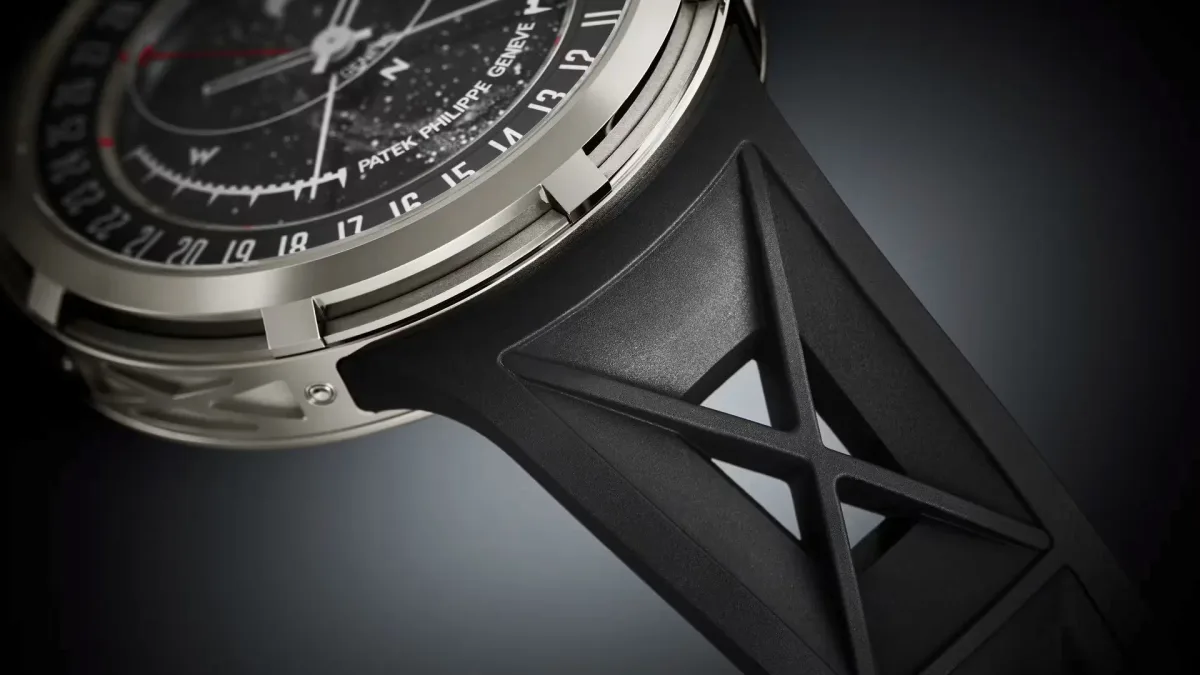
The novelty comes with an integrated black strap made of composite material. The pattern on the strap echoes the decor on the sides of the case, and the watch is secured on the wrist with a triple folding clasp. The estimated price of the model is CHF 350,000.
You can enjoy a live video on our Instagram
View this post on InstagramPosted by Watch Journal since 2012. PandaTells.com (@pandatells_com)