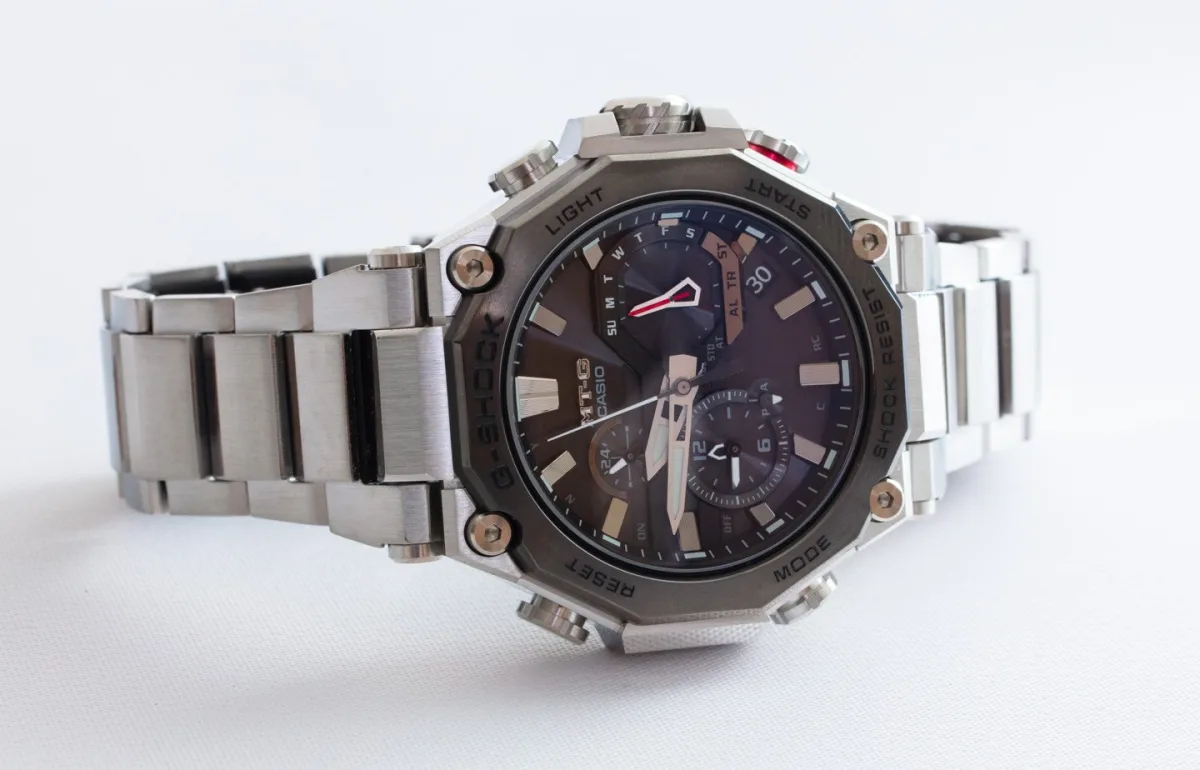
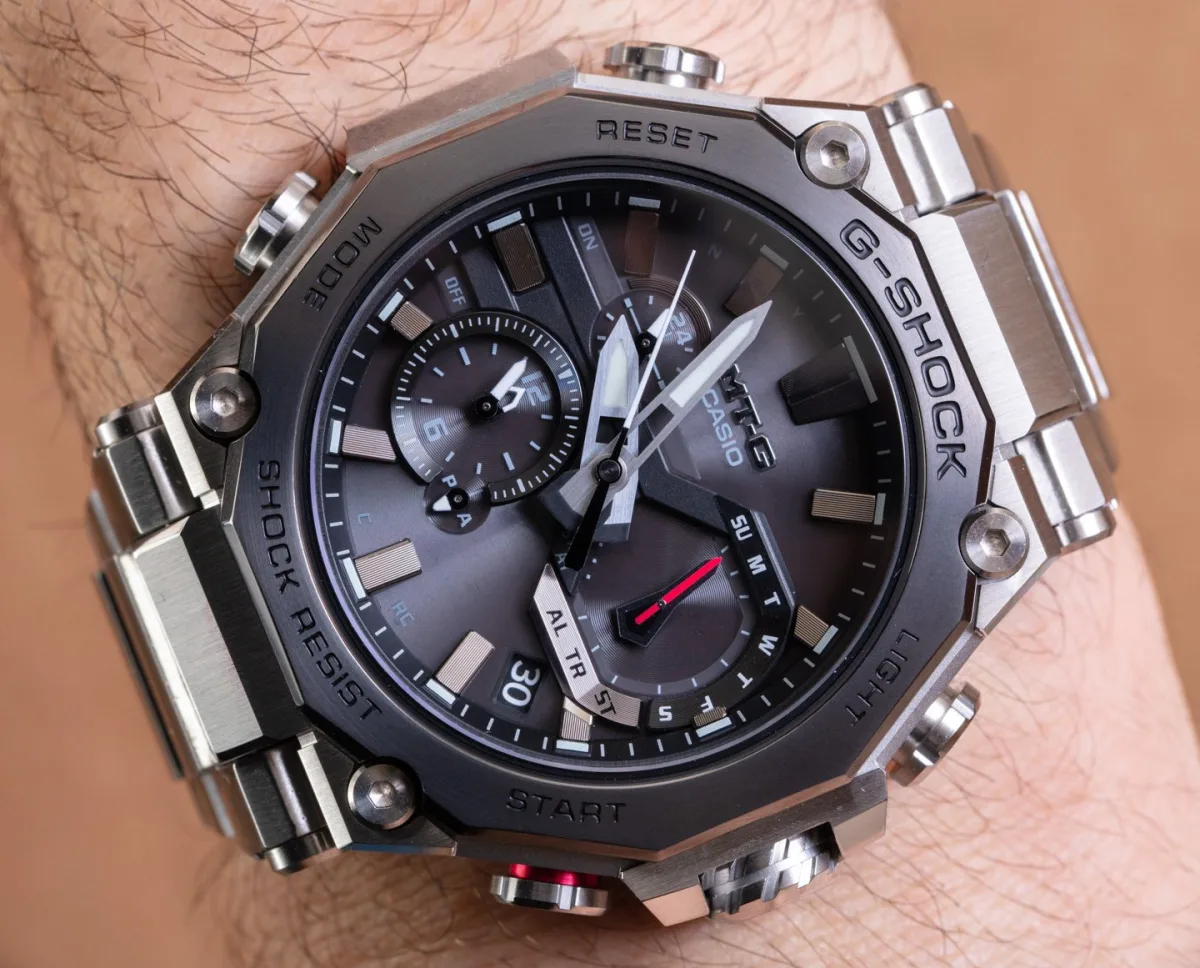
Functionally, the MTGB1000 and MTGB2000 are very similar. This means they have most of the same features and provide comparable wearing experiences. However, the watches have completely different case, dial, and movement designs. This makes the MTGB2000 not so much a direct replacement for the MTGB1000 but rather a minor update and stylistic variation. In some ways, the simultaneous release of the MTGB1000 and MTGB2000 makes them competitors. If you frequently travel and need the fastest automatic time synchronization capabilities, I believe the MTGB2000 has the edge, as its newer hardware module seems to have improved Bluetooth and/or radio signal connectivity features. The MTGB1000 has more or less the same Bluetooth connectivity features, but Casio seems to have tweaked the performance for the new module in the MTGB2000. For the most part, the choice between the G-Shock MTGB1000 and MTGB2000 will depend on the owner's aesthetic preferences.
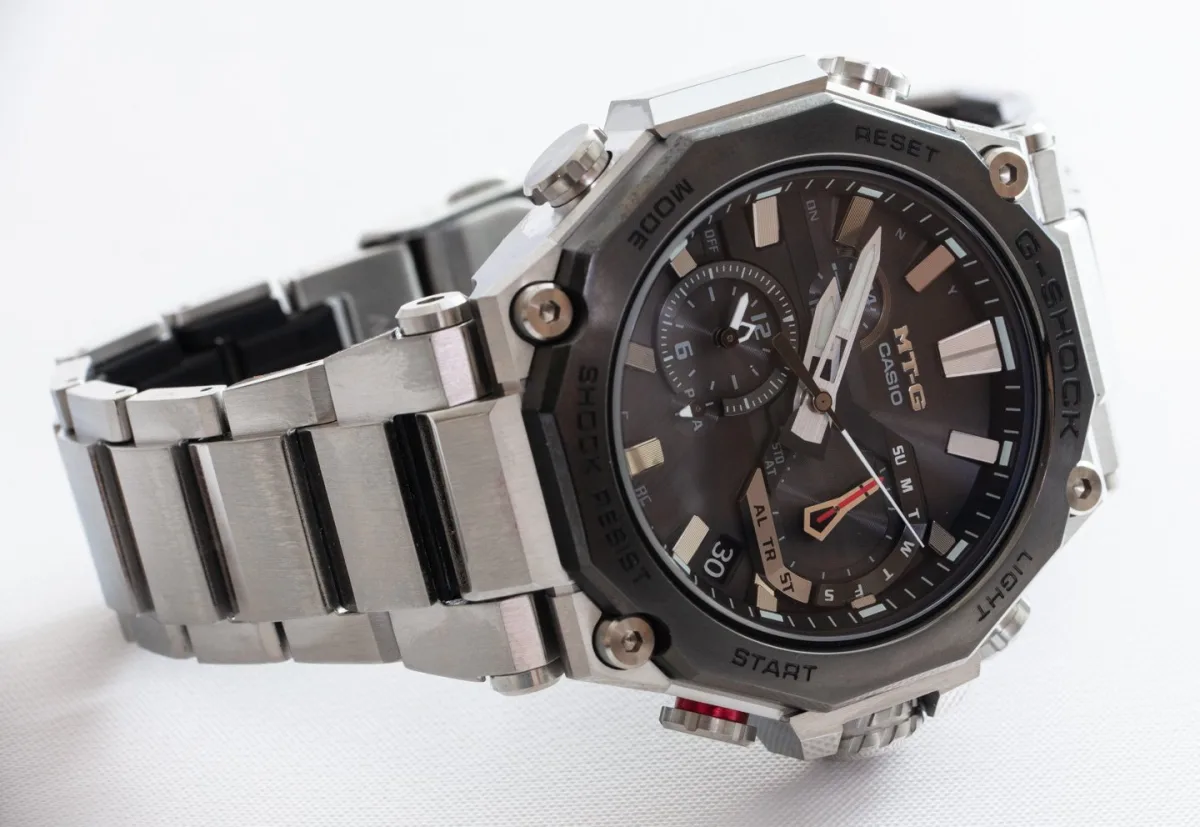
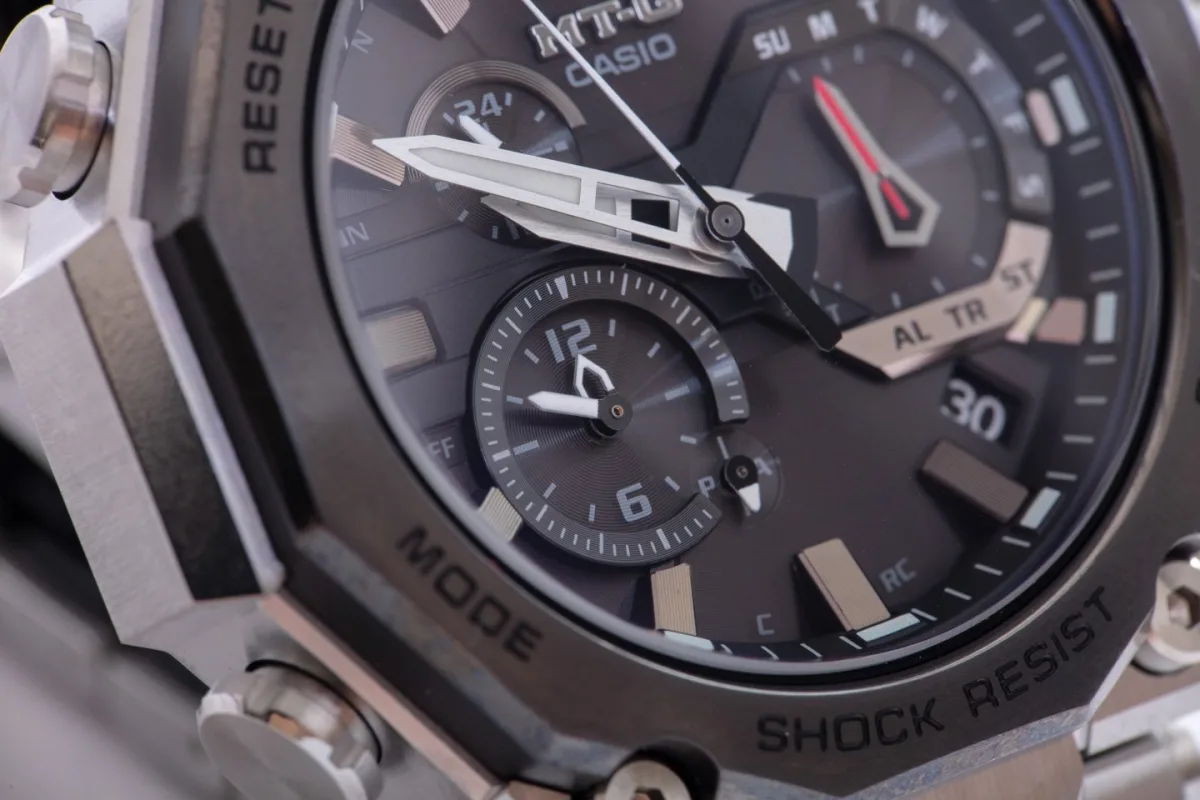
The dials of the MTGB1000 and MTGB2000 models contain the same information but have different layouts. This includes the main time dial with seconds, a 12-hour format subdial (primarily for a second time zone), a small AM/PM indicator for the second time zone, a date window, a dual-purpose day of the week indicator, and a function selection hand. Note that the MTGB2000 model is equipped with an additional button on the case. I also found that using the buttons to control functions was simpler in the MTGB2000 model, which I think is one of the advantages of these watches over previous generation models.
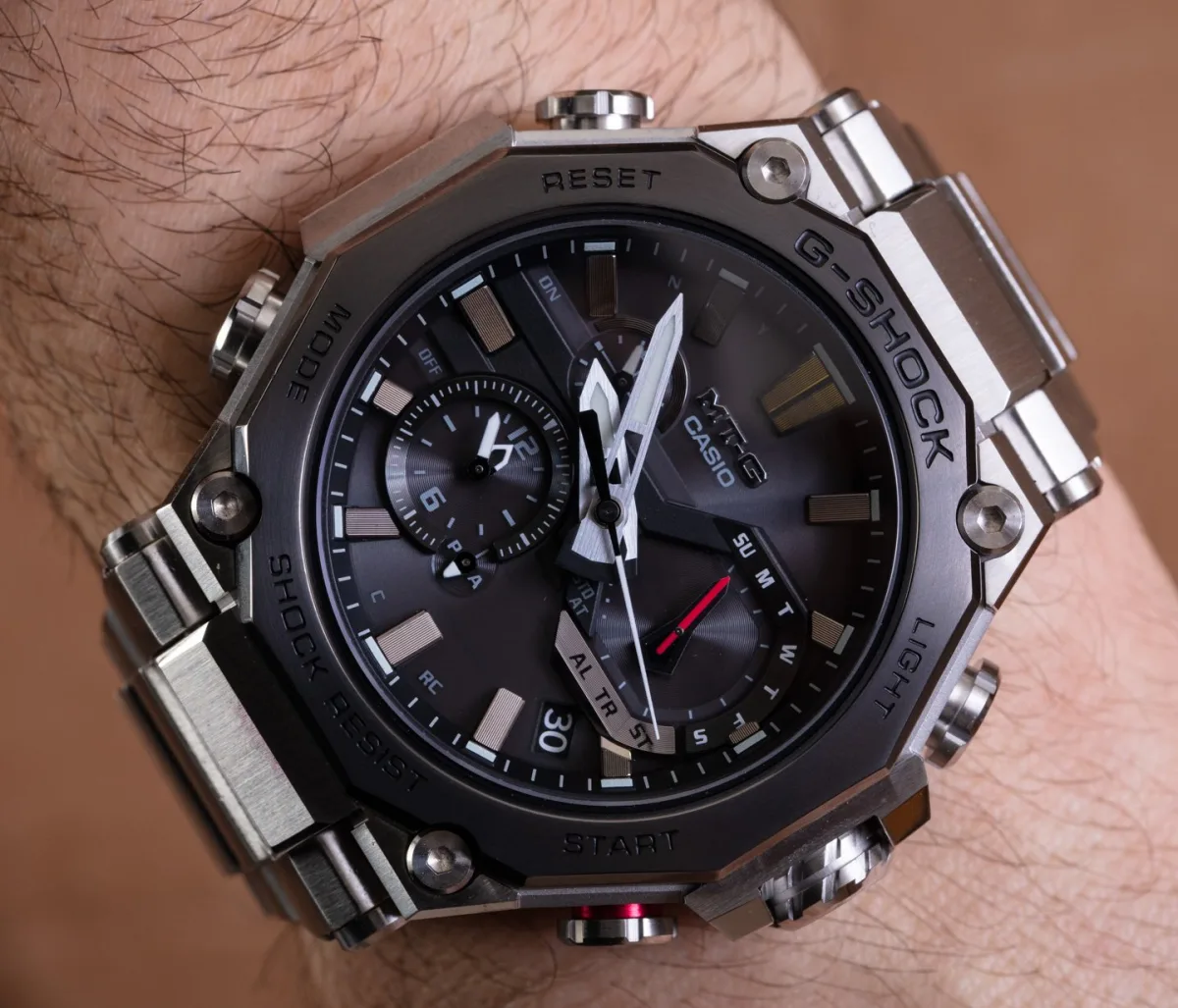
The dial is Casio's attempt to be restrained in design, and you can really see that the main focus is on the hands and markers (as opposed to less important dial decoration), and the readability is quite good. The design is very futuristic, with a strong sense of bold masculinity. The watch dial is not the most beautiful or original from Casio, but it is stylish in the right way. The design idea for watches like the MT-G is to pay less attention to the dial and more to the case and bracelet, where the main expressive design should manifest.
Note that while the hands and hour markers have limited luminescence, the watch is equipped with a bright LED backlight, making it easy to read the dial in the dark.
The watch case is slightly narrower and shorter than the previous generation model but a bit thicker. The MTGB2000 case, made of steel and carbon, is 51 mm wide, with a lug-to-lug distance of 55.1 mm and a thickness of 15.9 mm. It is also about 30 grams lighter than the MTGB1000, weighing only 156 grams (quite a good figure for a steel case and bracelet). The case itself uses the new Casio Carbon Core Guard construction, which eliminates the metal case back and uses a complex monocoque carbon inner case structure to which metal parts are subsequently attached.
G-Shock watches using this new technology are actually more durable and lightweight. Honestly, I like good heavy metal watches on my wrist, but for sports watches, the lighter, the better.
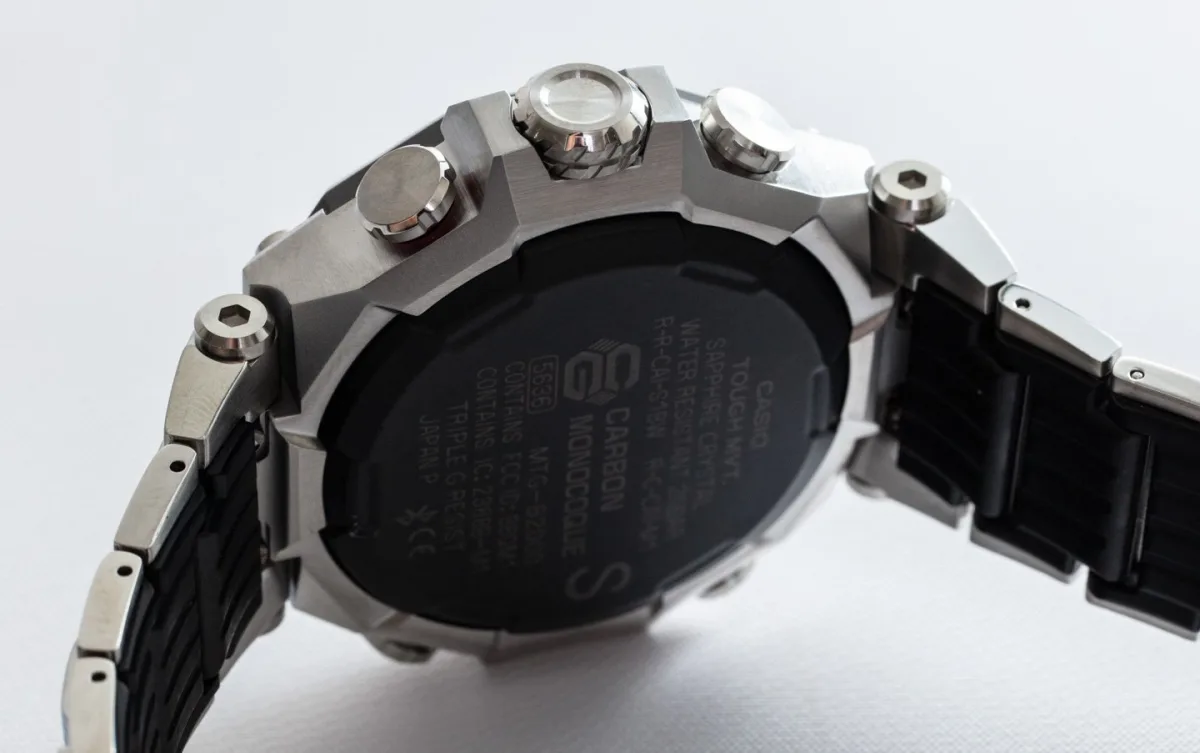
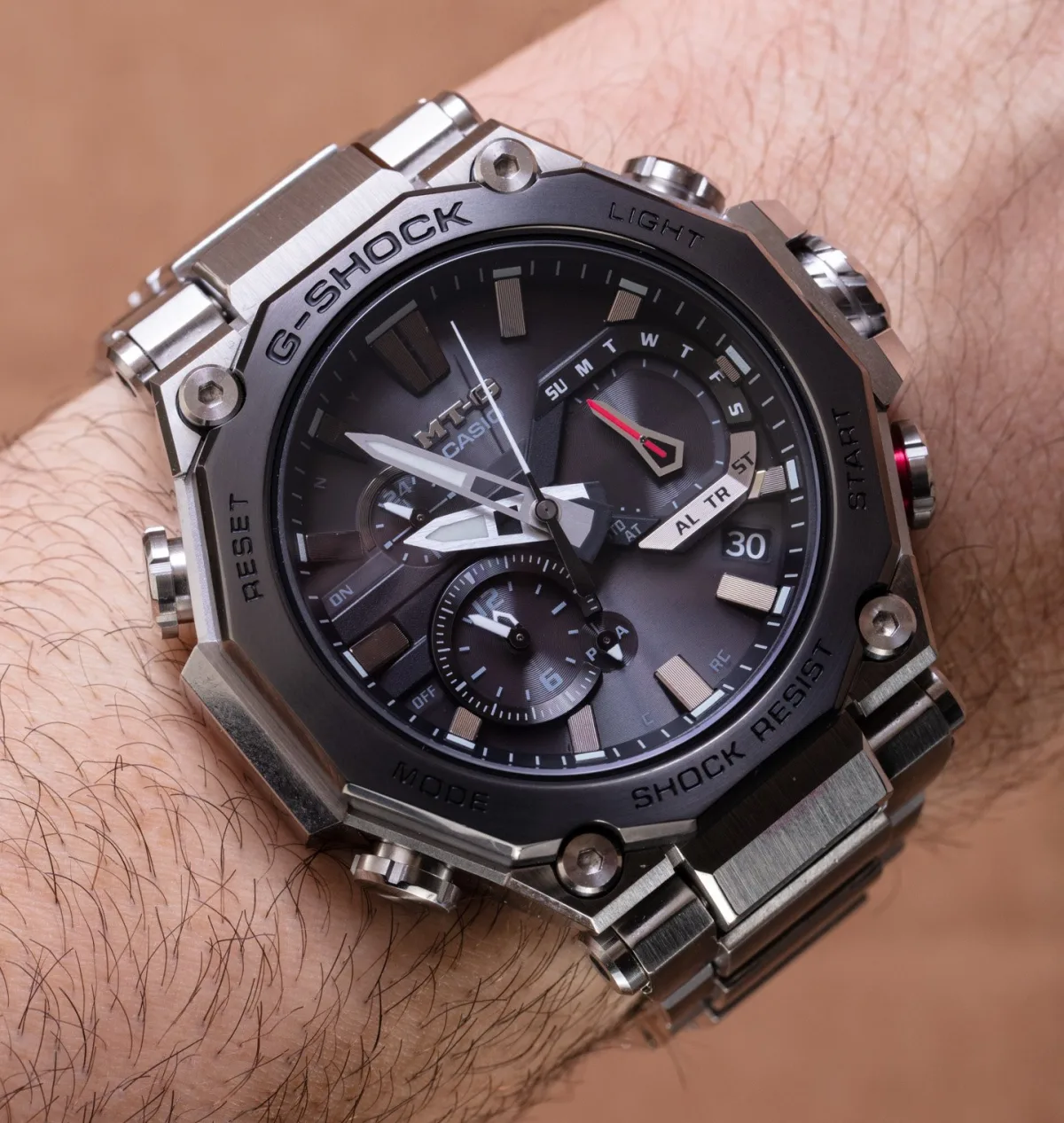
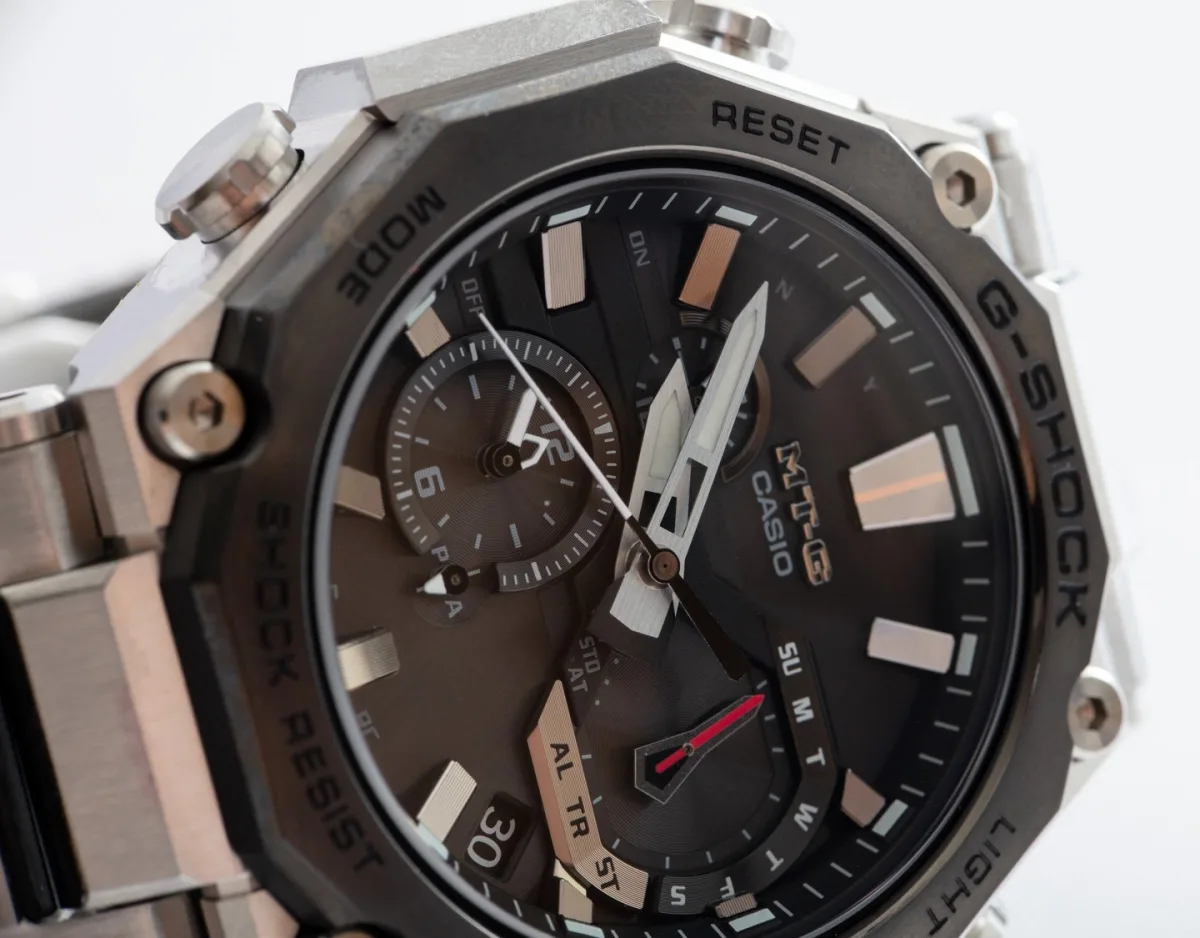
The case is water-resistant to 200 meters and has a slightly recessed and slightly domed sapphire crystal with AR coating over the dial. The steel bezel is coated in an anthracite-gray color and has a 12-sided design. While it does not mimic the octagonal bezel of the Royal Oak model (which some other Casio models do), one could say that Casio would like this latest generation of the MT-G model to be mentally classified by consumers as part of the “geometric bezel trend.” This concept continues in the watch case, making the overall look of the MTGB2000 very interesting.
The “Triple G Resist” case is very robust and has the standard G-Shock set of shock-resistant properties. The movement also has a “Tough Solar” function, meaning that in addition to charging from light, it is also shock-resistant and will perform actions such as hand alignment if they are displaced due to strong vibration or impact. For me, the Bluetooth features are very important, as they allow for useful connectivity between the phone and the watch (for example, the G-Shock App automatically updates the time on the watch when changing time zones), and also allow for controlling some of the watch's more complex functions (such as setting an alarm or timer) using a smartphone. I consider the radio frequency atomic clock functions an added bonus, as I don't think they are heavily relied upon outside of Casio's native territory in Japan.
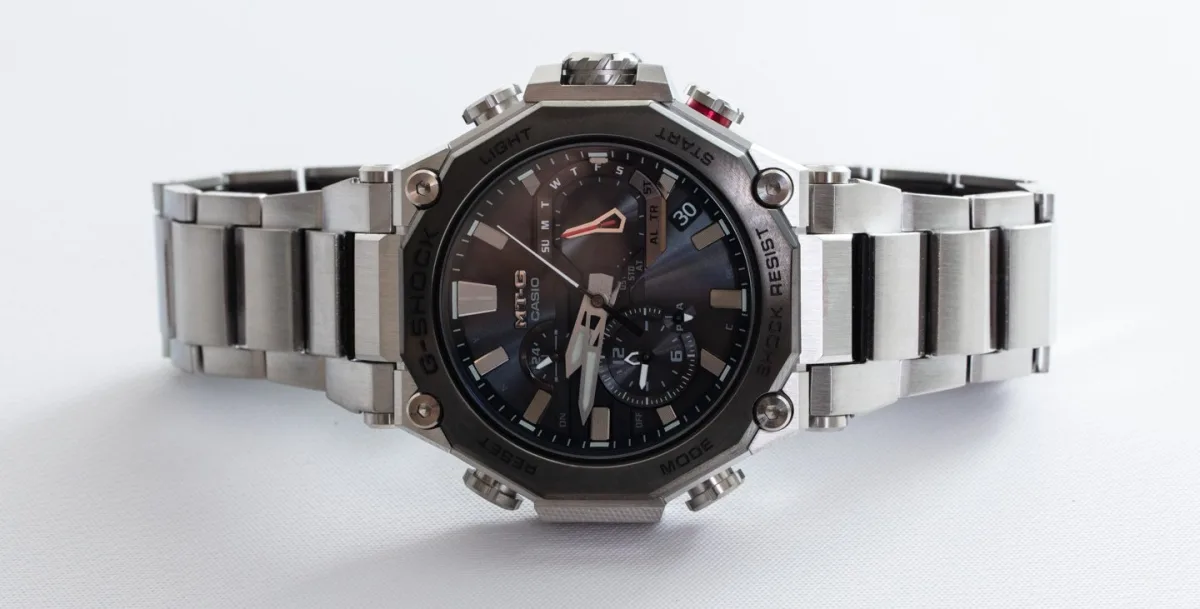
In addition to the carbon case structure, the corresponding steel metal bracelet also has a carbon inner structure, which helps it be comfortable and lightweight. The bracelet and clasp are simple but pleasing to look at and wear. Don't miss the new articulation system for the strap attachment. One of the new features of the MT-G MTGB2000 version is the quick-release system, allowing easy removal of the bracelet and replacement with a strap (which is also available for these watches). Just a few years ago, Casio didn't even recommend consumers remove straps from their watches, and now it is equipping more and more models with quick-release systems. It's just interesting to note how these days the policies and individual characteristics of our favorite watch brands can change or update.
For this price, Casio G-Shock MT-G watches have always been an interesting acquisition. Although they are more expensive than most Casio G-Shocks, they use most of the brand's latest technologies, and the sophisticated, civilized appearance makes them more suitable for social or business use, as opposed to casual or sportswear. The question is, who are these watches more suitable for? Are they for traditional watch enthusiasts looking to move down the market and wear trendy high-end quartz G-Shocks that still match elegant outfits, or those transitioning from mid-level G-Shock watches? I think ultimately these watches are worn by people from both camps, but I would be interested to know who Casio thinks the MT-G watches appeal to the most. In the higher-end MR-G watches, there is less focus on additional functionality and more on the use of higher-end materials and sometimes artisanal handmade components (like the bezel or bracelet links).
In my opinion, anyone looking to purchase high-end Casio watches should focus primarily on the MT-G collection. Many will stay there, while some will move up to the MR-G. Others may find it excessive and be satisfied with the more mid-level Casio G-Shock in a metal case. In any case, Casio is doing what it does best - continuing to improve the MT-G collection, making the MTGB2000 on paper the best G-Shock MT-G model. The price of the reference Casio G-Shock MTGB2000D-1A is $1,000 USD. Learn more or order at the Casio G-Shock website here.
ESSENTIAL DATA
>Brand: Casio
>Model: G-Shock MT-G (MTGB2000) reference MTGB2000D-1A
>Price: $1,000 USD
>Sizes: 51 mm wide, 15.9 mm thick, and 55.1 mm lug-to-lug distance.
>When the reviewer would wear it personally: As an everyday watch during travel or when needing to transition from active leisure to socializing without time to change.
>Friend we would recommend it to first: Someone looking to mature their watch choice but still wants the comfort, convenience, reliability, and durability of resin-made G-Shocks.
>Best characteristic of the watch: The best G-Shock MT-G watch Casio has released to date. Lightweight carbon and steel construction is very well done. Clear dial and plenty of convenient features. Excellent value in versatile watches that will easily last for years.
>Worst characteristic of the watch: Design not for everyone. Still a large watch. I see consumers being a bit confused given that (at the moment) both MTGB1000 and MTGB2000 are on sale, with somewhat overlapping prices.