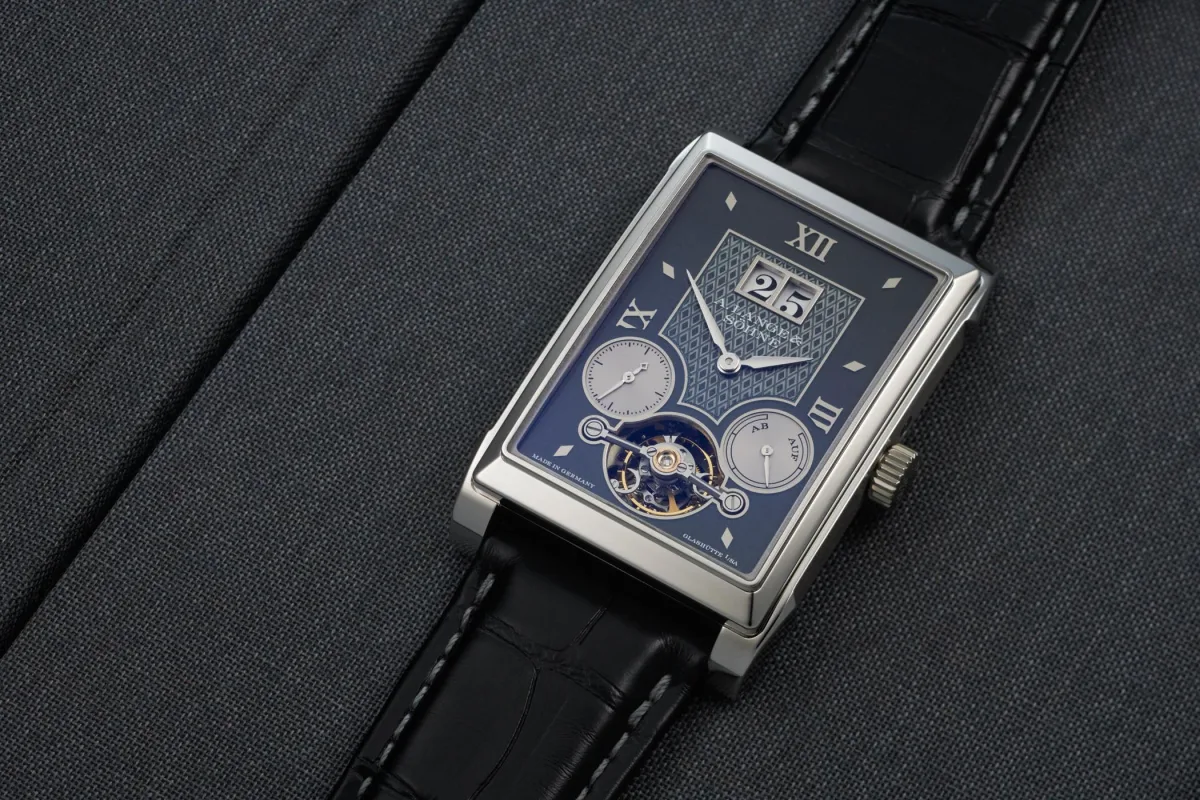
In 1997, A. Lange & Söhne introduced the Cabaret model. The Cabaret, with its unlikely name considering the Saxon spirit of the brand, became Lange's first rectangular watch since the brand's revival in 1994. Not to be confused with the Arkade, which was part of the quartet of watches marking the brand's revival, the Cabaret was distinguished by its Art Deco spirit. The most spectacular and complex version of the Cabaret was the tourbillon version, discontinued in 2013. Today, collectors can celebrate the return of this limited series Cabaret Tourbillon, with 30 pieces in a dazzling platinum 950 case. The seventh model in Lange's hyper-exclusive Handwerkskunst collection features the highest level of finishing. But before we delve into the rich details and unique rectangular movement with stop-seconds for the tourbillon, a few words about its origins.
Life is a Cabaret
While it is hard to imagine a rectangular watch in Lange's lineup of round watches, there is a historical background that corresponds to a more obscure chapter in the brand's history.
The transition from pocket watches to wristwatches, according to the reliable site Langepedia, was traumatic for the Glashütte brand, which was on the brink of bankruptcy: “After World War I, the demand for pocket watches plummeted, and A. Lange & Söhne lacked the know-how or materials to produce a line of wristwatches”. Then, in the hands of the third generation, Otto, Rudolf, and Gerhard Lange, the 1920s became a harsh wake-up call for the Saxon brand. As Reinhard Meis writes in the impressive book “A. Lange & Söhne The Watchmakers of Dresden,” “no one wanted to believe that the age of handmade watches was coming to an end.” Coupled with the devastating economic crisis of 1923 and the repeal of the ban on importing Swiss watches at the end of 1924, Lange had to rethink its entire strategy. Cheaper Swiss wrist and pocket watches, machine-made, flooded the market, and as Meis explains, Lange had to admit that “their handmade products had no commercial future. It was time to implement new production methods and machines to not fall behind the global market.”
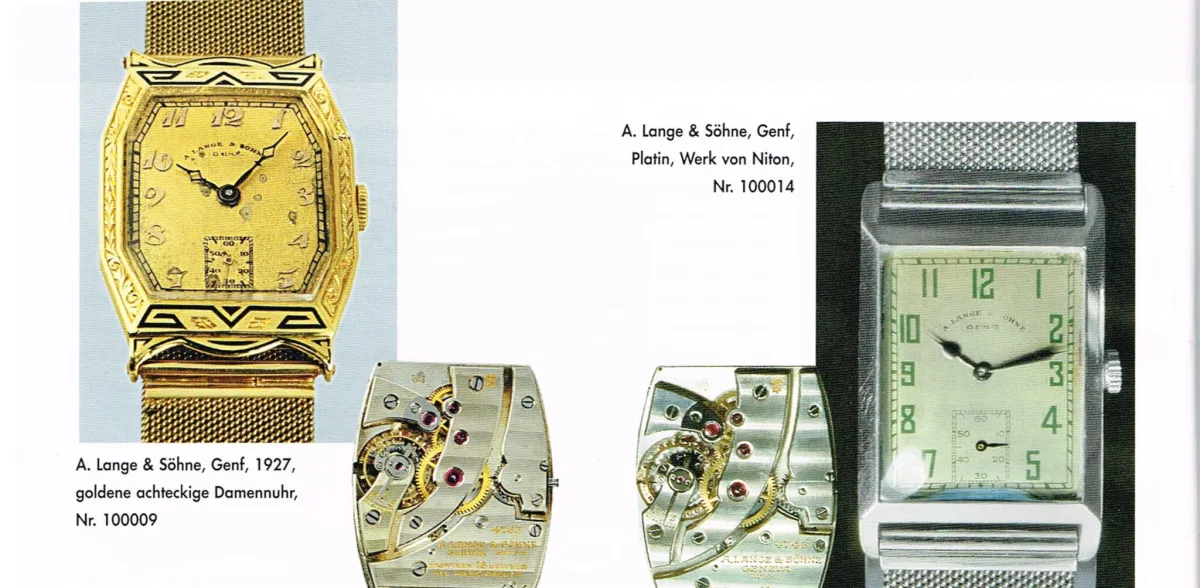
In 1927, Lange decided to order small Swiss wristwatch movements from Altus. Following the Art Deco aesthetics of the time, the wristwatches were rectangular with corresponding movements. Released under various names (Lange-Uhr Glashütte and A. Lange & Söhne Genf.), some of these early examples appear at auctions.
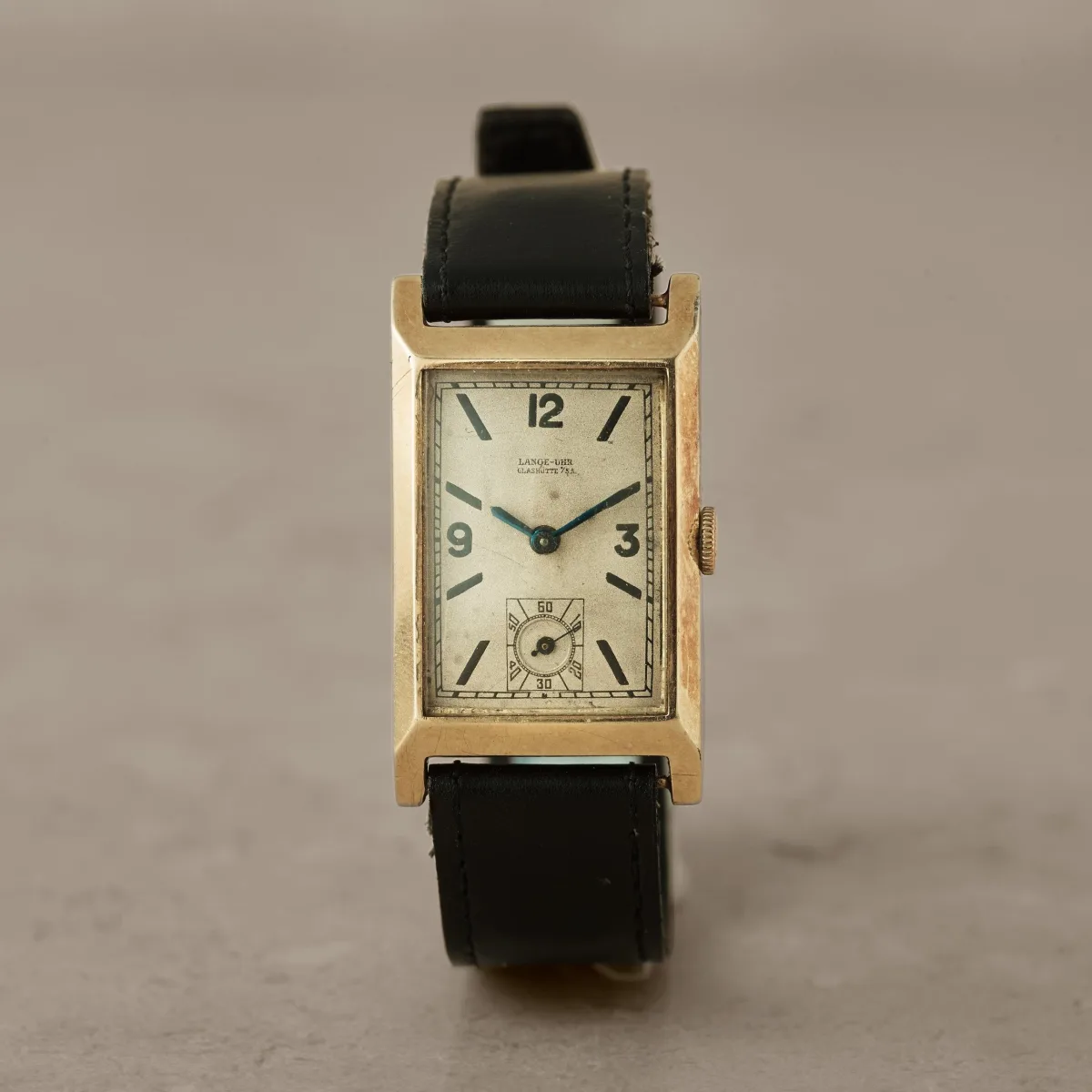
The barrel-shaped caliber 9 movement in this particular gold model was made by Altus, and the finishing touches were applied by Lange in Glashütte. Upon closely examining the elegant lines of the case, I would even risk suggesting that this model might have served as an inspiration for the creation of the Cabaret.
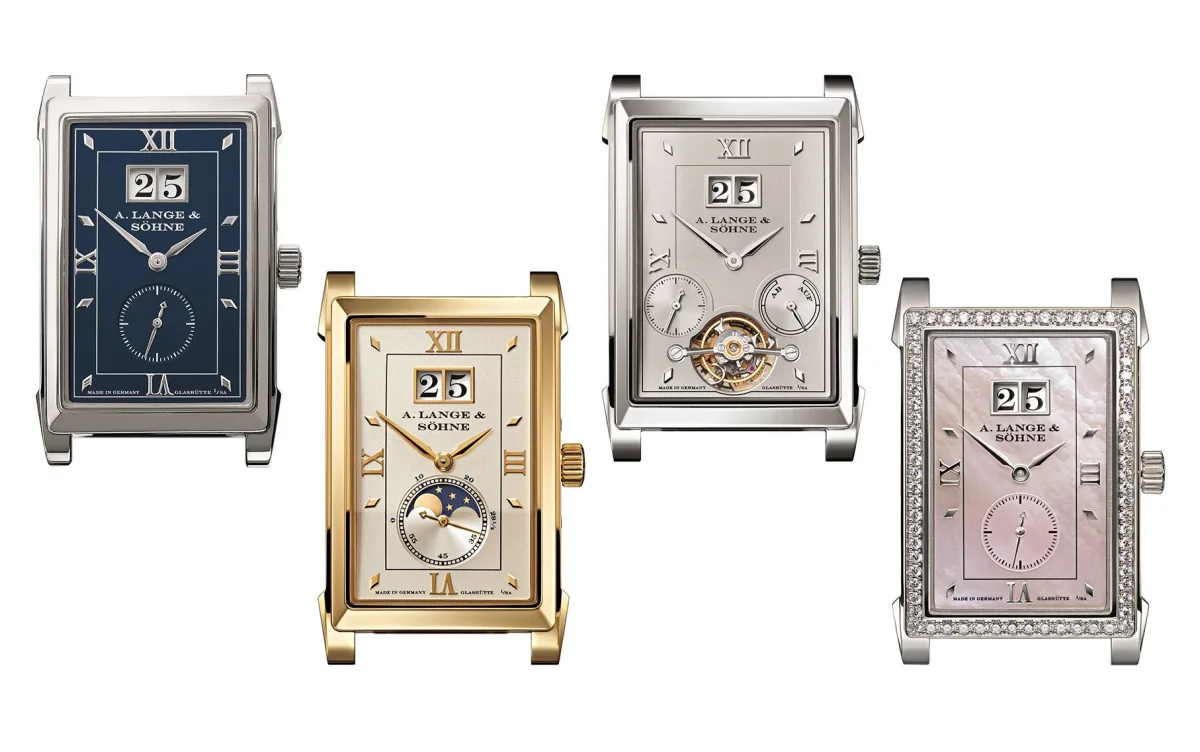
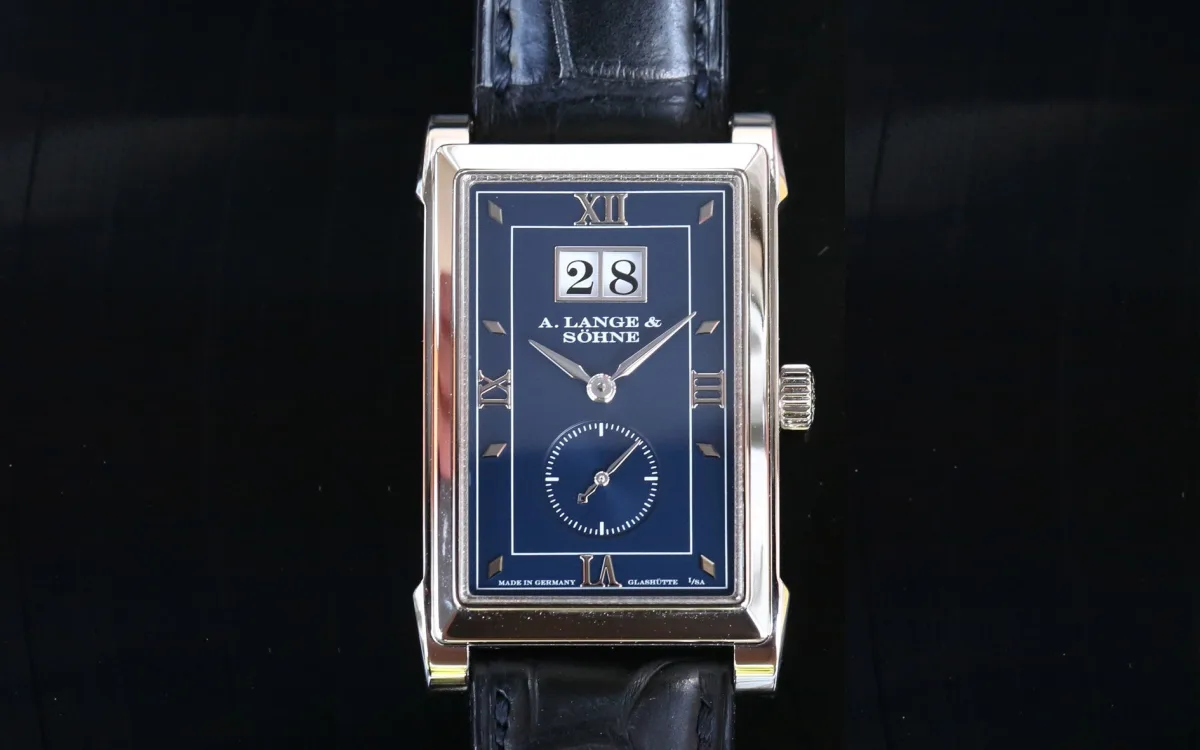
The first rectangular Cabaret model from 1997 might have been a surprise, but one feature marked it as a child of Lange: the big date. There was a certain liveliness to these watches, and their rectangular profile inevitably drew comparisons with “other” famous rectangular watches. As all Lange fans know, Walter Lange's partner in the brand's revival was engineer Günter Blümlein, who led Jaeger-LeCoultre (and IWC) when he was head of Les Manufacturers Horlogères (LMH). However, when you place the Reverso and the Cabaret side by side, you see two completely different personalities. With its big date and powerful lines, the Cabaret showcases a more assertive, more German identity.
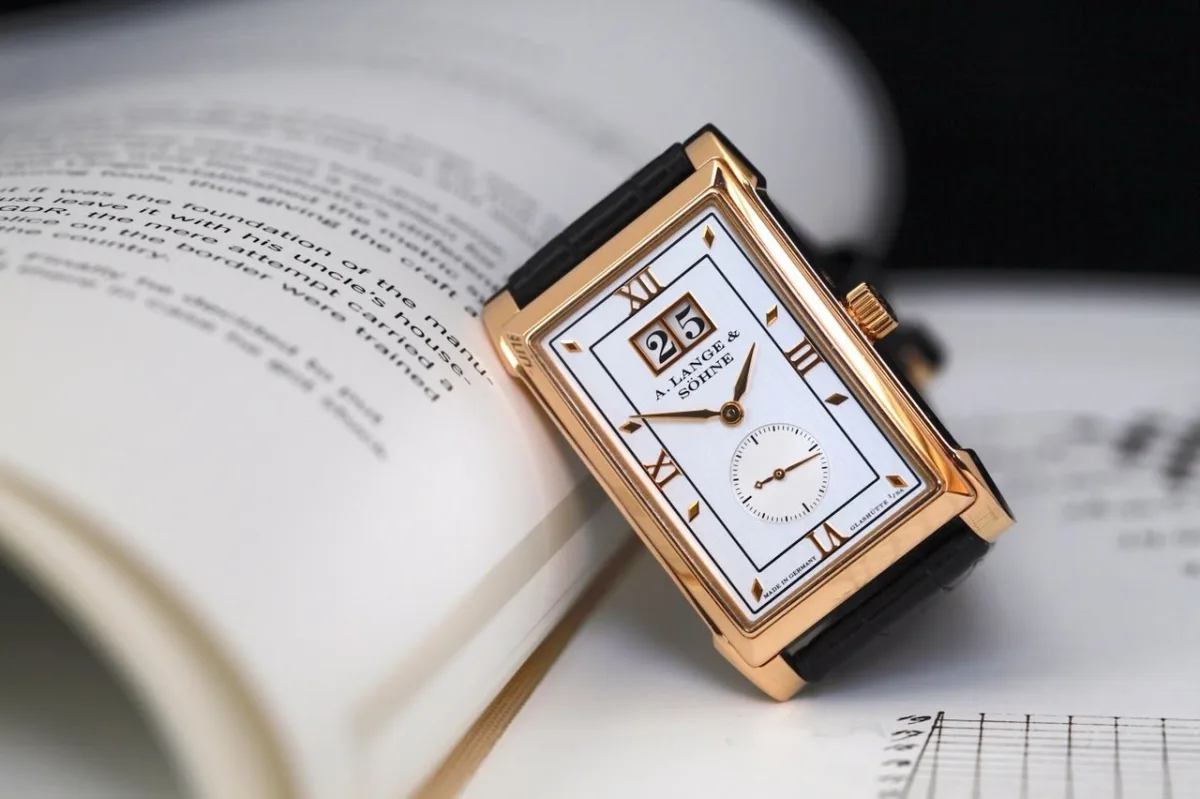
Undoubtedly one of Lange's most complex and detailed cases, the architecture of the first Cabaret showcases a convex and stepped bezel and an elongated mid-case with prominent lugs. Viewed from the side, you can appreciate the soft curve, protruding lugs, and the matte finish of the case back, contrasting with the brightly polished lugs and bezel.
The first Cabaret models were simple, time-only pieces, with a big date at noon, a small seconds counter at the “6 o'clock” position, applied gold Roman numerals XII, III, VI, and IX, and diamond-shaped indices. The second rectangular shape on the dial, framing the date and seconds, emphasizes the powerful rectangular case shape. The L931 manually wound rectangular caliber, located on the back, reveals Lange's classic finishing elements such as Glashütte ribbing on the three-quarter plate, a hand-engraved balance cock, blued screws, and gold chatons.
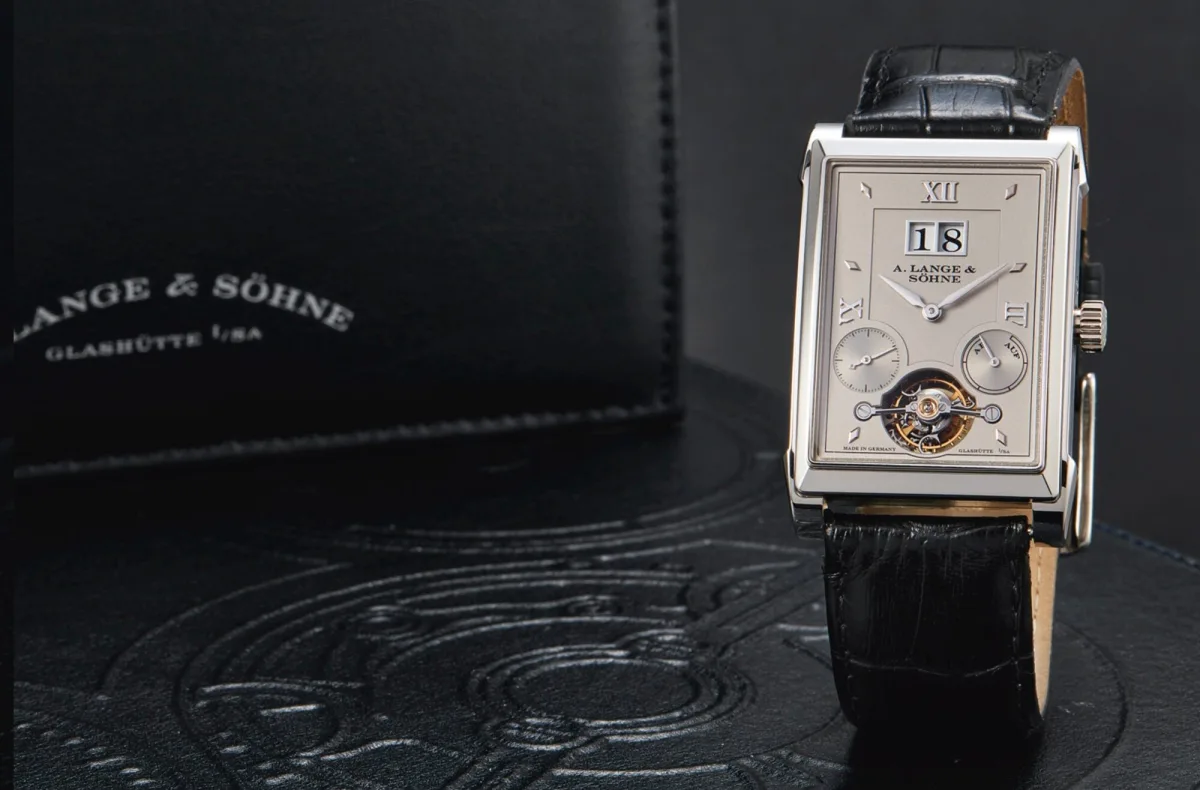
In 2004, a moon phase indicator was added inside the small seconds hand, but it was not until 2008 that the Cabaret model was complemented by a tourbillon complication. The Cabaret Tourbillon, produced in platinum and pink gold cases over five years, had a larger case than its predecessors and displayed the tourbillon in an aperture at the “6 o'clock” position with two small counters on either side for running seconds and power reserve indication. However, what truly delighted collectors was found on the reverse side of the case.
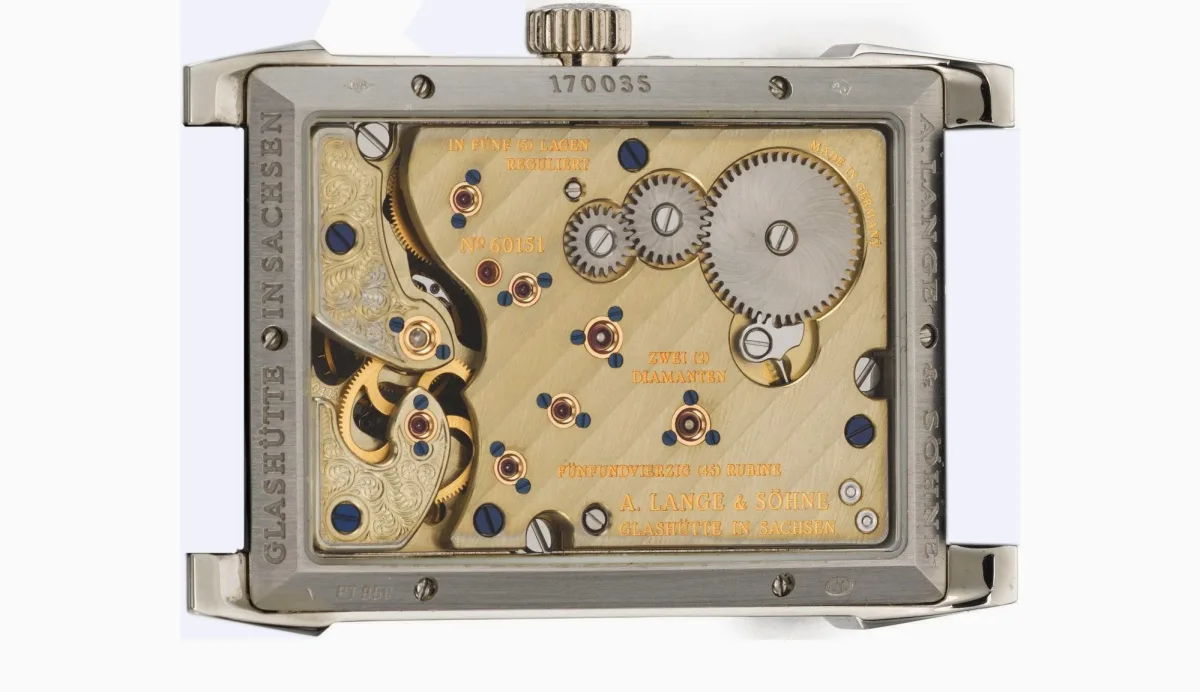
Lange's impressive caliber L042.1 became the first mechanical wristwatch movement with stop-seconds for the tourbillon. A milestone in precise watchmaking, the Cabaret Tourbillon was capable of instantly stopping the balance within the rotating cage and instantly restarting it with the crown.
Handcrafting the Cabaret Tourbillon
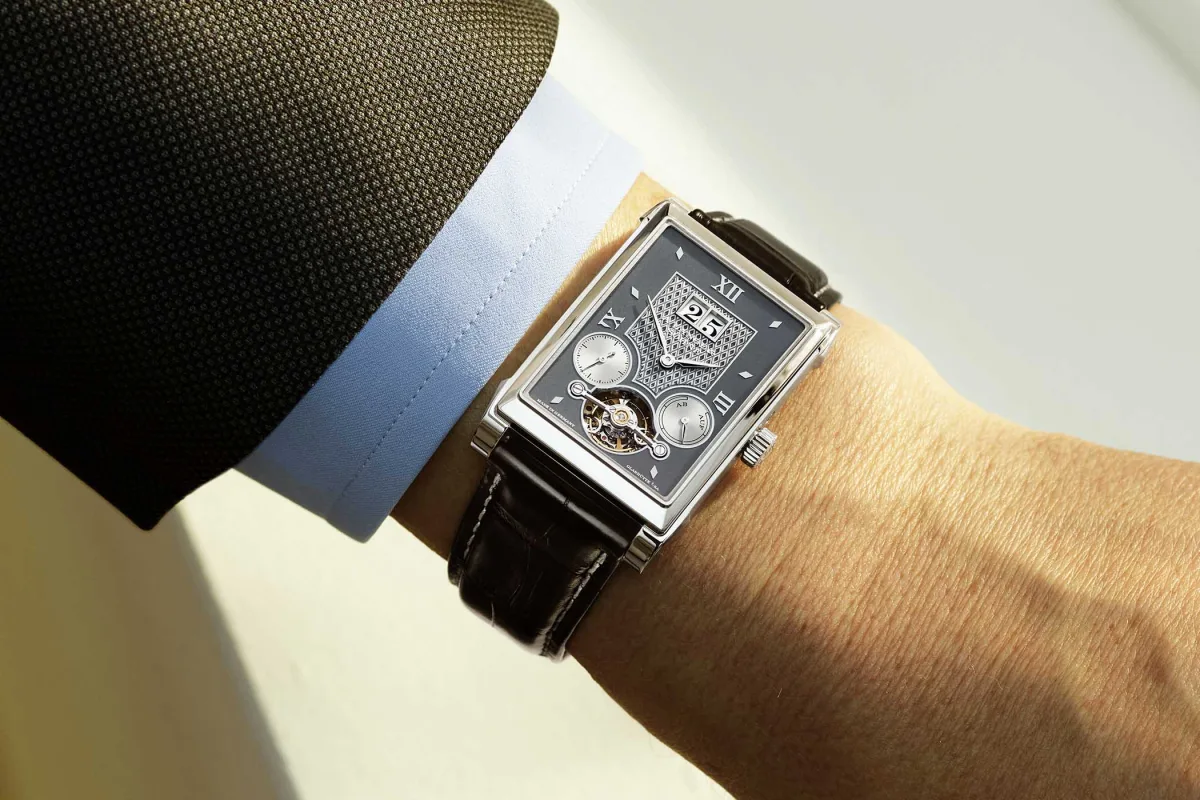
Five years after the discontinuation of the Cabaret Tourbillon, it returns to the spotlight in this ultra-complicated Handwerkskunst edition in platinum 950. The rectangular case, like previous editions, measures 29.5 mm in width, 39.2 mm in length, and 10.3 mm in thickness.
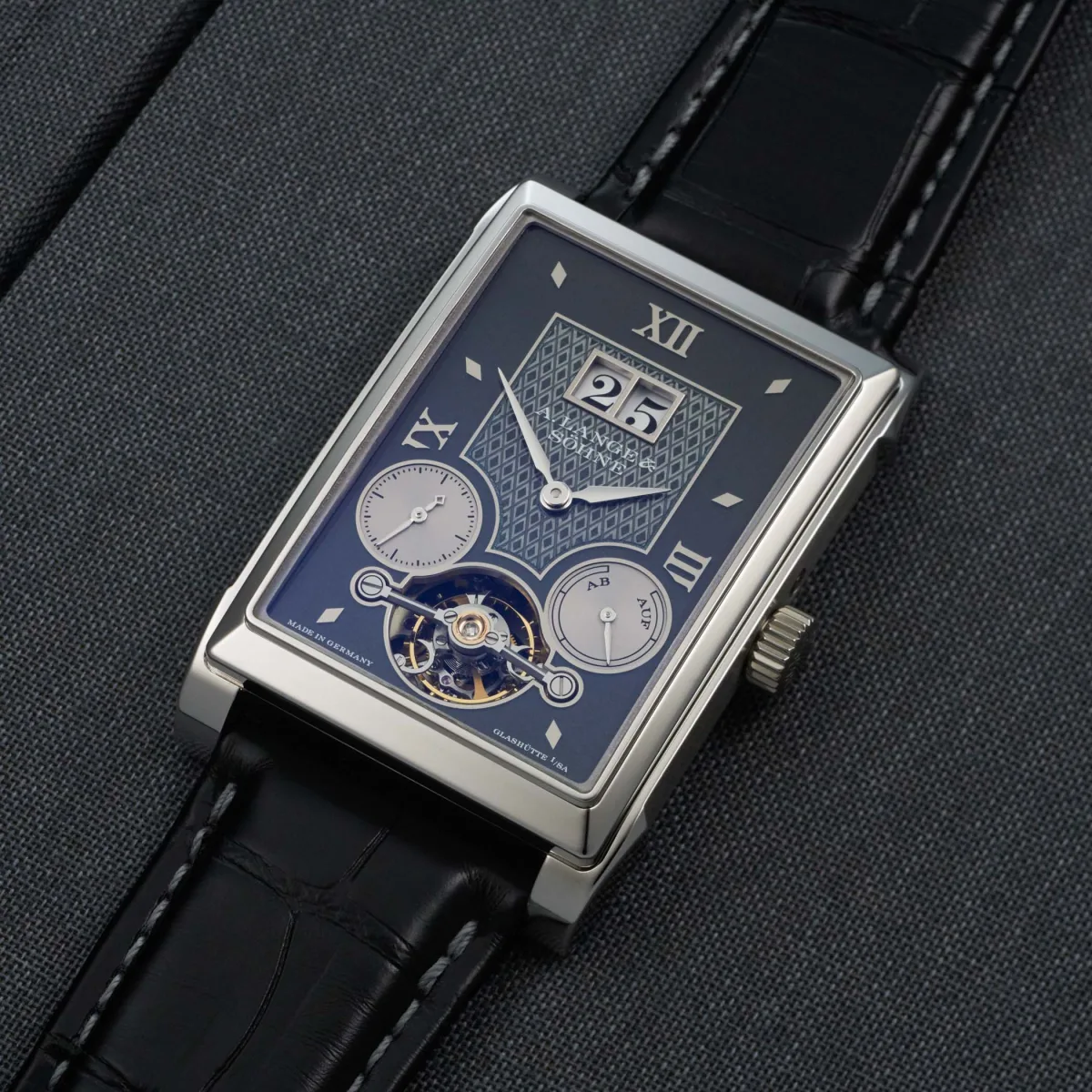
As a member of the elite Hankwerkskunst collection (craftsmanship), the decorative touches are simply stunning. The dial, composed of three parts, is made of pure white gold and entirely manufactured in-house. The central area surrounding the oversized date is adorned with beautiful hand engraving in the form of diamonds, echoing the applied diamond-shaped hour markers. Against the matte gray background, six diamond-shaped indices are accompanied by three Roman numerals XII, III, and IX. Many details of the dial, such as the date window frames and the fine line separating different areas of the dial, are decorated using a tremblage technique developed by Lange. Using a flat graver with sharp teeth, the engraver moves the tool across the white gold in different directions, creating tiny indentations that result in a subtly granulated matte surface.
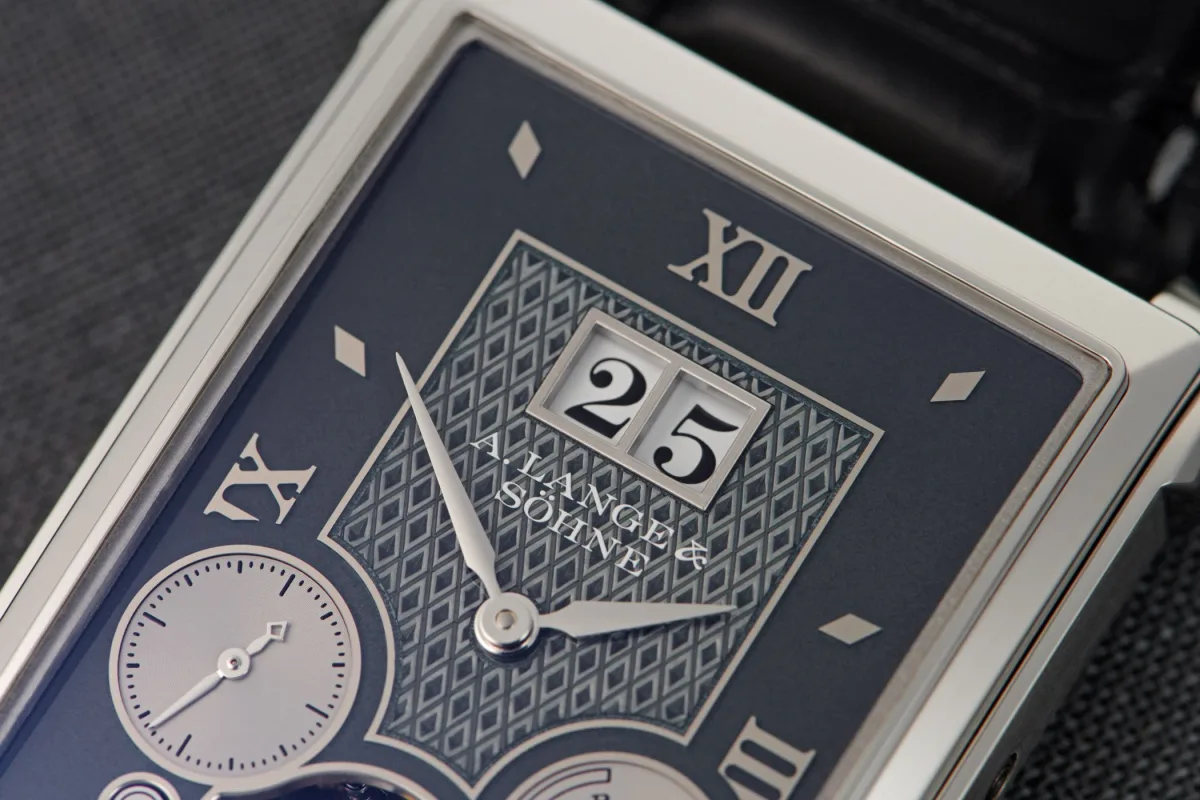
After engraving, the dial is covered with a semi-transparent layer of enamel, which adds depth and reveals various metallic shades of gray. The two subsidiary dials, indicating the small seconds and power reserve AB/AUF, are made of rhodium-plated gold. The only polished elements on the predominantly matte gray dial are the gold hands and the brand name, applied under the date window.
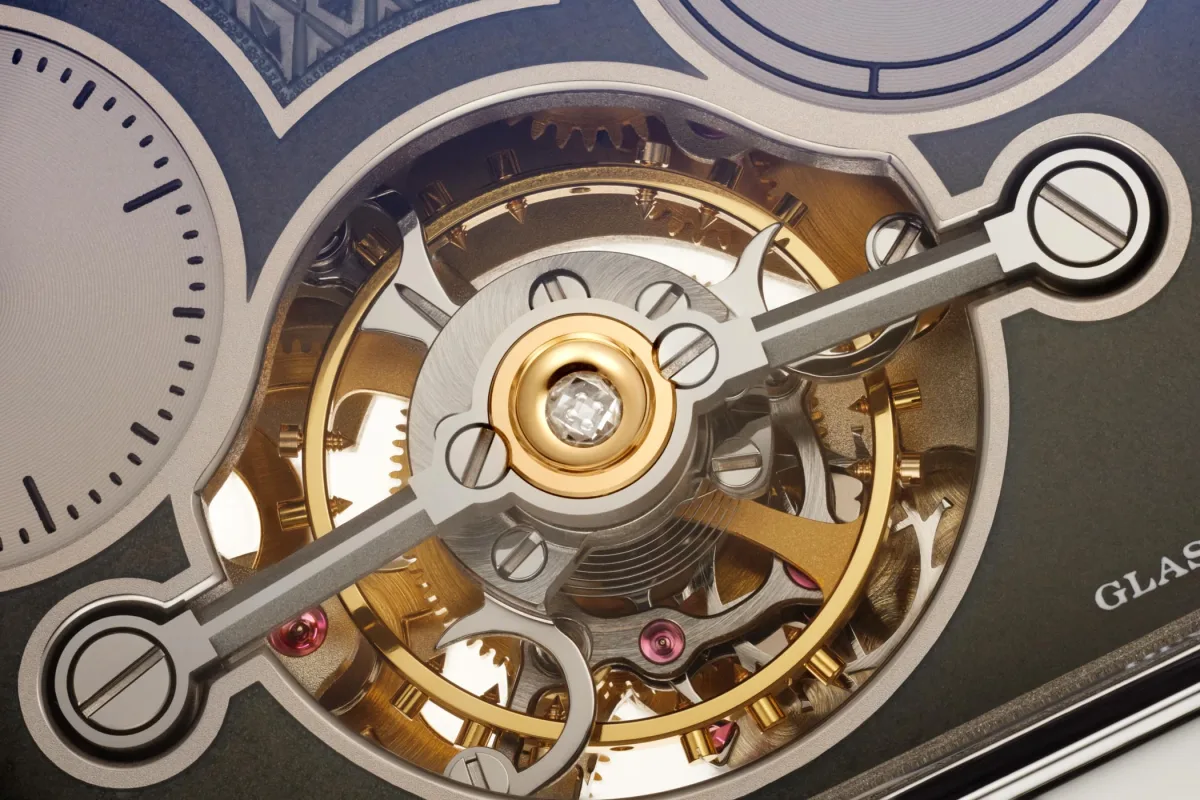
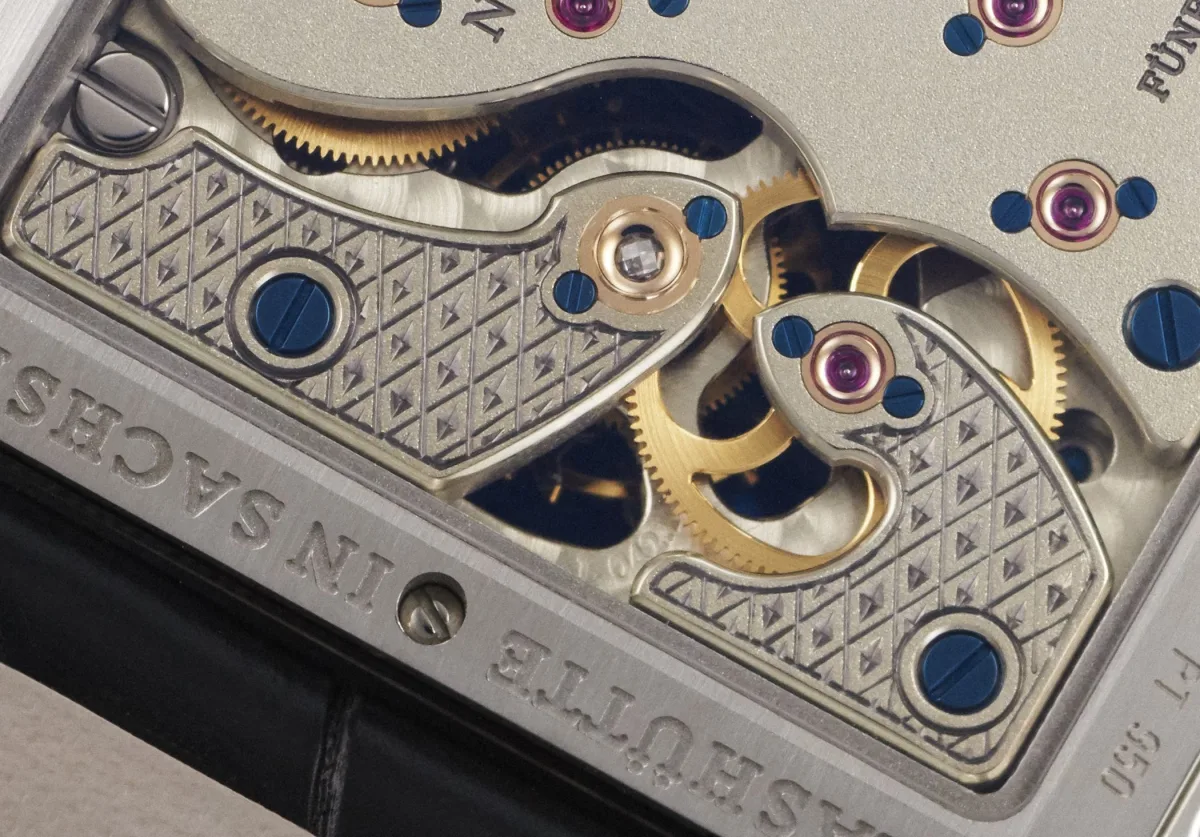
Naturally, the one-minute tourbillon is the highlight of this model, suspended between two diamond end-stones. The lower half of the tourbillon bridge is matte to match the dial, but the upper part is polished to a mirror finish. Black polishing, performed entirely by hand, is considered one of the most complex types of finishing.
Caliber L042.1
Lange's hand-wound caliber L042.1 is a masterpiece of technology and craftsmanship. The movement, measuring 22.3 by 32.6 mm, is adapted to fit the rectangular case. Compared to the 2008 version, this caliber is equipped with a balance system without index with a Lange balance spring. Otherwise, technically, it is the same base that Lange introduced in 2008.
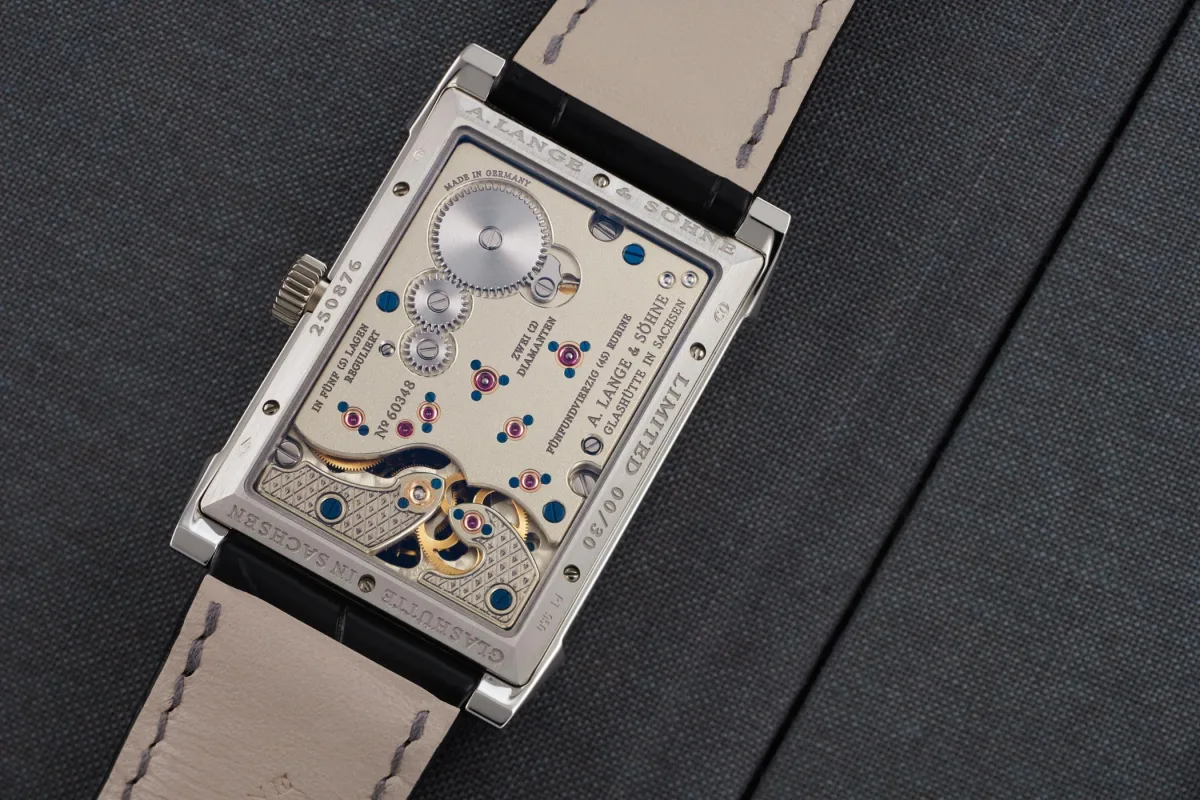
Consisting of 370 parts, 84 of which are dedicated to the tourbillon, the movement marks a milestone in the history of the tourbillon. More than 200 years after Breguet's invention of the tourbillon, A. Lange & Söhne managed to stop the balance within the rotating cage, allowing the watch owner to set the time to the exact second. When the crown is pulled, a complex lever mechanism is activated, which turns a movable V-shaped spring onto the balance wheel rim. The balance stops instantly, even if one of the spring's levers touches one of the three banking pins. The spring’s special geometry ensures that the pressure applied to the balance is always correctly dosed, regardless of the separator's position.
The advantage of this design is the preservation of the balance spring's potential energy, allowing the balance to restart instantly once the unloading spring retracts when the crown is pressed back in.
Compared to the 2008 version, the caliber L042.1 has undergone significant finishing changes. Watches in the Hankwerkskunst series received special finishes, including the signature tremblage technique on the 3/4 plate made of German silver, reminiscent of movements found in antique pocket watches. Of course, classic elements like gold chatons held in place by blued screws are still present - there are at least 8 on the train bridge and the tourbillon and intermediate wheels.
Finally, in harmony with the dial's decoration, these two bridges are engraved with the same diamond pattern, covered in black rhodium. As expected from an A. Lange & Söhne movement, all components are meticulously hand-decorated, whether visible or not. The engraved inscriptions on the plates are also covered in black rhodium.
Availability and Price
The 2021 A. Lange & Söhne Cabaret Tourbillon Handwerkskunst (ref. 703.048) will be released in a limited edition of 30 individually numbered pieces. The watch is worn on a black alligator leather strap with gray stitching and a platinum 950 deployant clasp. Its price will be 315,000 Euros (including German taxes).
More information can be found on www.alange-soehne.com.
TECHNICAL SPECIFICATIONS – A. LANGE & SÖHNE CABARET TOURBILLON HANDWERKSKUNST
Case: 29.5 mm width × 39.2 mm height × 10.3 mm thickness – rectangular platinum 950 case, curved profile, satin and polished finishes – curved sapphire crystal on top, sapphire case back – water-resistant (no depth indication)
Dial: 18-carat white gold, gray with hand-engraved diamond pattern, semi-transparent enamel – Rhodium-plated white gold hands and applied markers
Movement: Caliber L042.1, in-house – manual winding – 45 jewels, including 2 diamond end-stones and 9 gold chatons – 22.3 mm × 32.6 mm × 6.4 mm – minute tourbillon with stop-seconds, performing 21,600 semi-oscillations per hour – screw balance, in-house balance spring and lever escapement – power reserve of 120 hours – decorated and assembled twice by hand, precise adjustment in five positions – hours, minutes, small seconds, power reserve, tourbillon with stop-seconds, oversized date
Strap: black alligator leather strap with gray stitching and platinum 950 deployant clasp
Reference: 703.048
Availability: Limited to 30 numbered pieces
Price: 315,000 Euros (including German taxes)