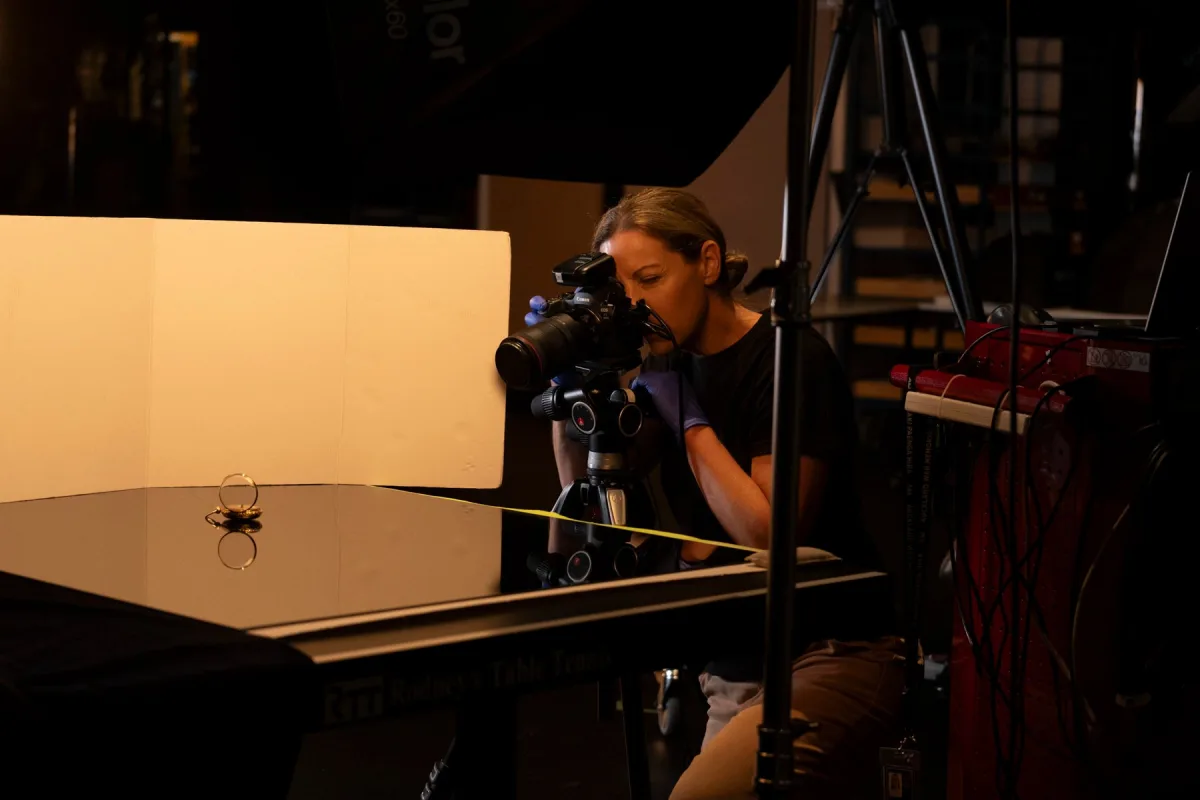
Today we share an unusual story on WatchTested - the experience of a New Zealand photographer who meticulously captures the mechanical life of pocket watches at the Auckland Museum Tāmaki Paenga Hira.
There is a fundamental difference between commercial watch photography and museum archival photography. Commercial photography creates an image, a dream - with ideal lighting, flawless surfaces, and carefully edited glossy shots that hide the slightest defects. Archival photography, on the other hand, strives for unvarnished truth. It documents the reality of the object - scratches, patina, broken parts, preserving the history of the watch even after the metal begins to decay. Therefore, it can be said that high-quality museum archival photography requires some of the highest technical skills in photography.
When museum photographer Jen Carol was tasked with digitizing over 100 antique pocket watches at the Auckland Museum, she wasn't just taking pictures. She was creating a permanent visual archive of the horological art history of the 17th, 18th, and 19th centuries. We spoke with Jen about the technical challenges of shooting reflective glass and gold, encountering archaic watch terms like "beetles and poker hands," and what happens when a 100-year-old watch suddenly starts ticking on a studio table.
Archival Principle: No Photoshop
"In the museum, we shoot not for commerce, but for the archive," Jen explains.
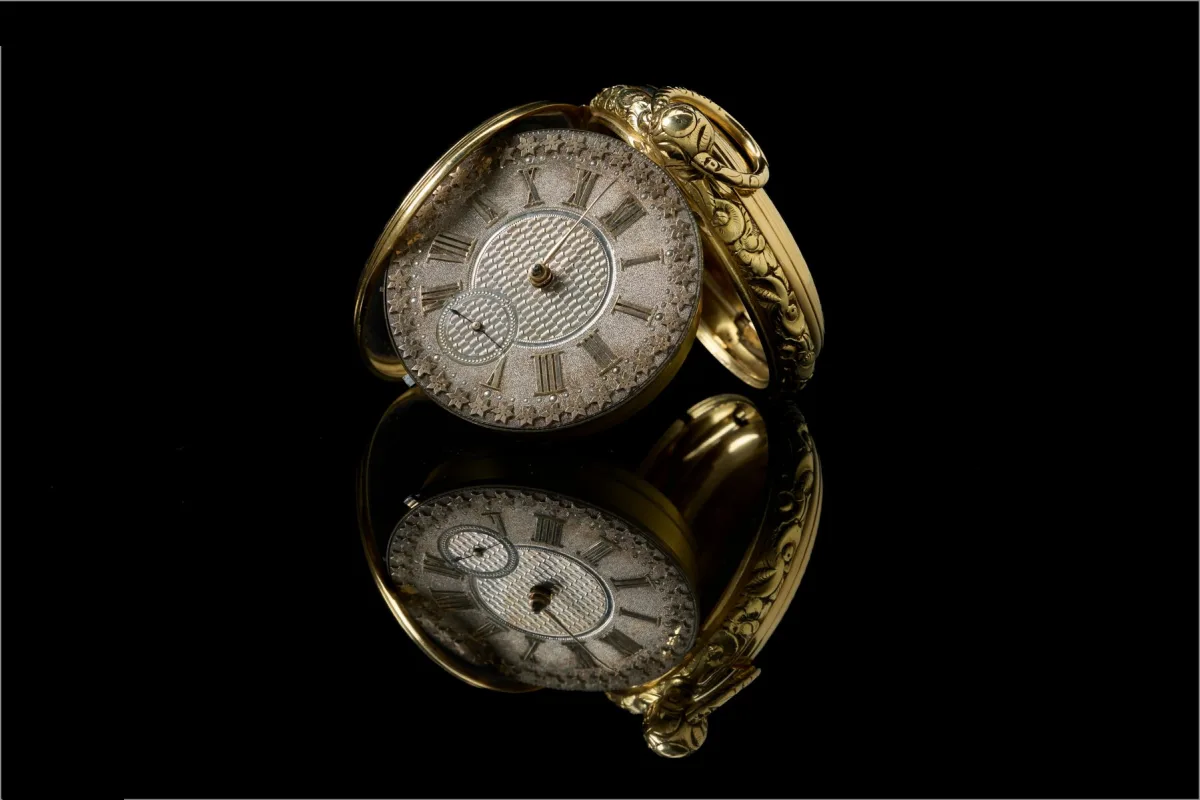
"Wear, dust, scratches, breakages - all this is important. It's part of the object's history. We do no post-processing, no retouching or alterations. The photograph must remain true to the moment the object arrived at the museum."
Technical Requirements for Shooting
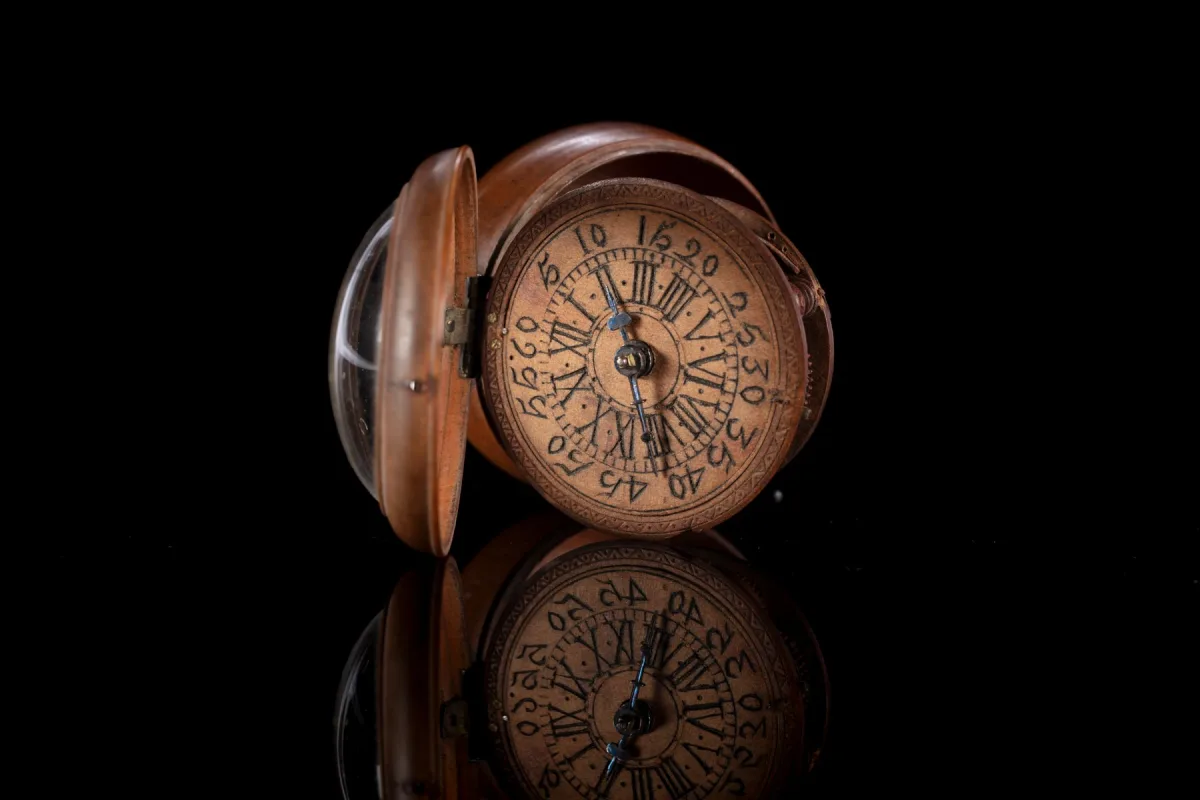
This principle imposes serious constraints on camera settings. In commercial shooting, reflections on glass or shadows on markings are easily corrected in Photoshop. In archival photography, if something doesn't capture correctly in the frame - it's an error forever. The fragility of the items adds to the challenge:
"Due to the age and condition, watches are assessed for risk, and this affects the shooting approach. A hinge might be too fragile to open, or a curator's presence might be needed. I can't suspend, prop, or forcibly open parts. Watches are photographed in the position they are in."
Fighting Reflections: A Masterclass in Trial and Error
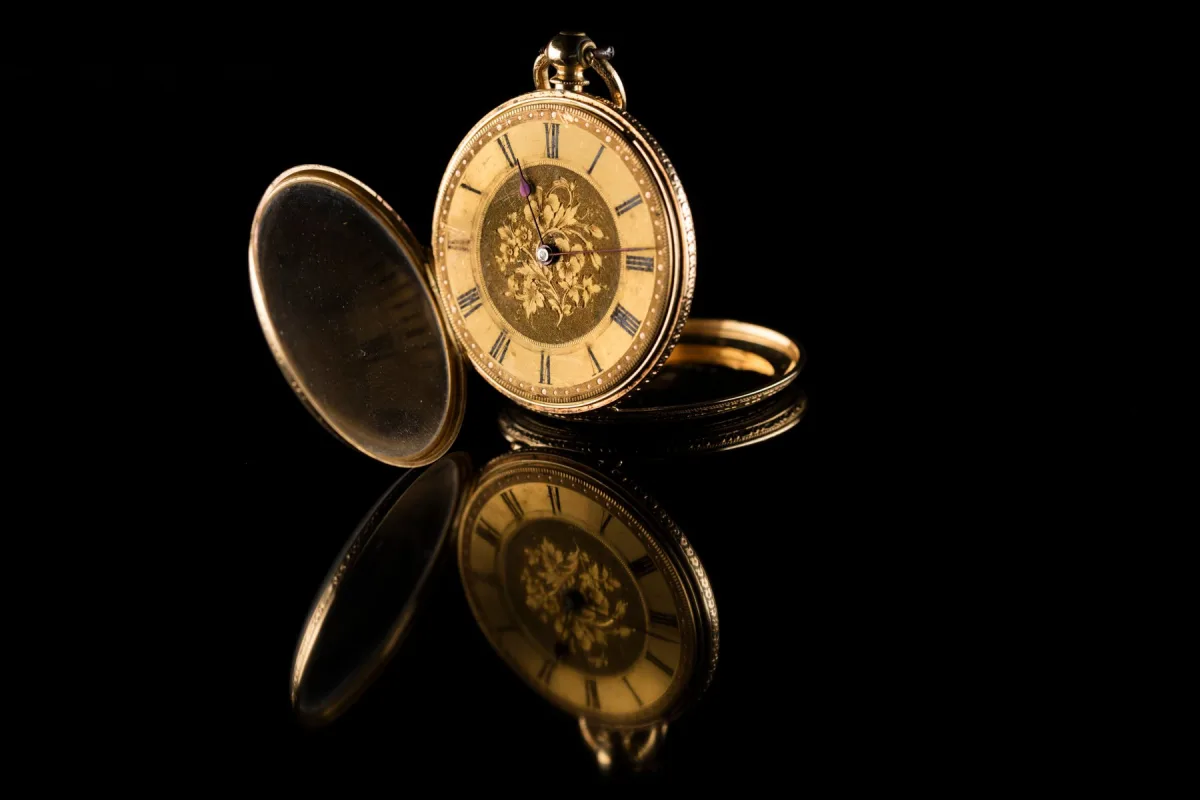
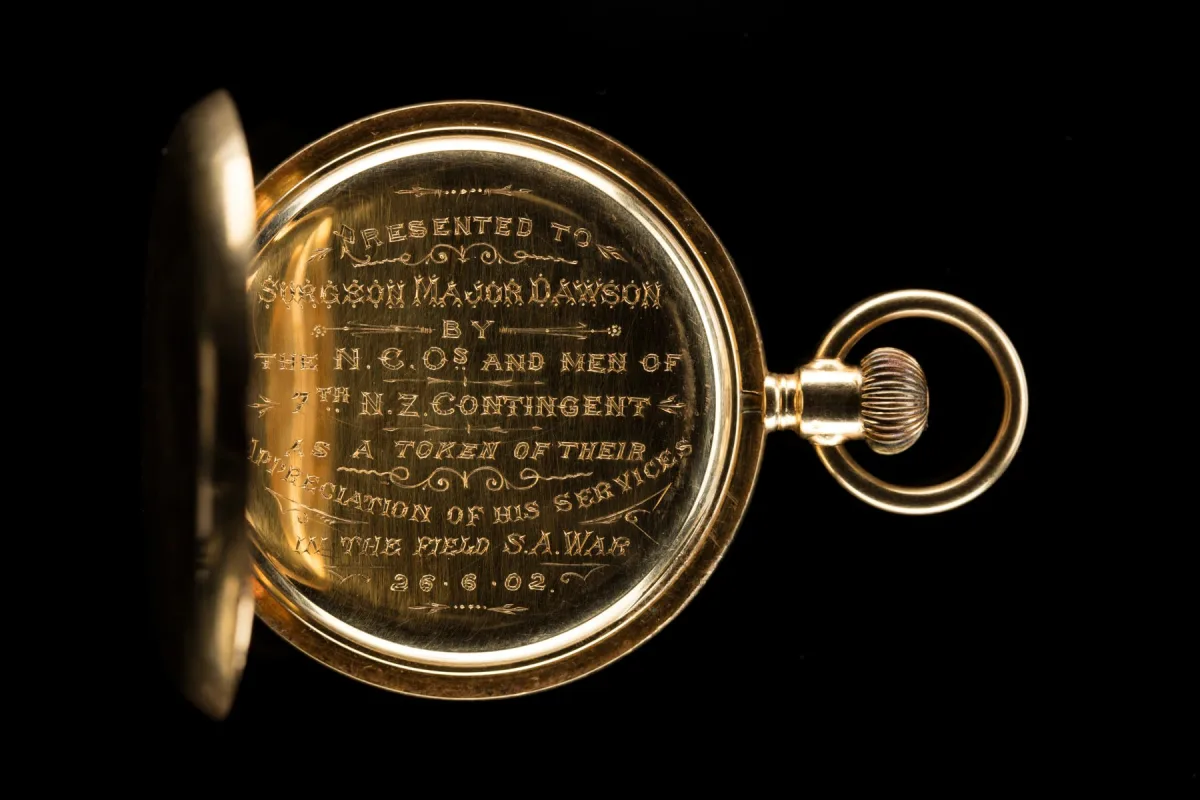
Shooting pocket watches involves battling curved glass covering reflective gold, silver, or black metal. Initially, Jen tried to strictly control reflections - using a circular polarizer on the lens and polarizing gels on studio lights. The result? Reflections disappeared completely.
"The reflections vanished, but the harsh directional light and complete lack of highlights looked terrible. I needed tea."
Stepping away from the table and rethinking the task, Jen realized that removing all reflections deceives the eye - creating the impression that the glass is not there at all. To make the watches look natural, subtle highlights along the curve of the glass are needed - enough to add depth but not obscure the dial.
Technical Solution
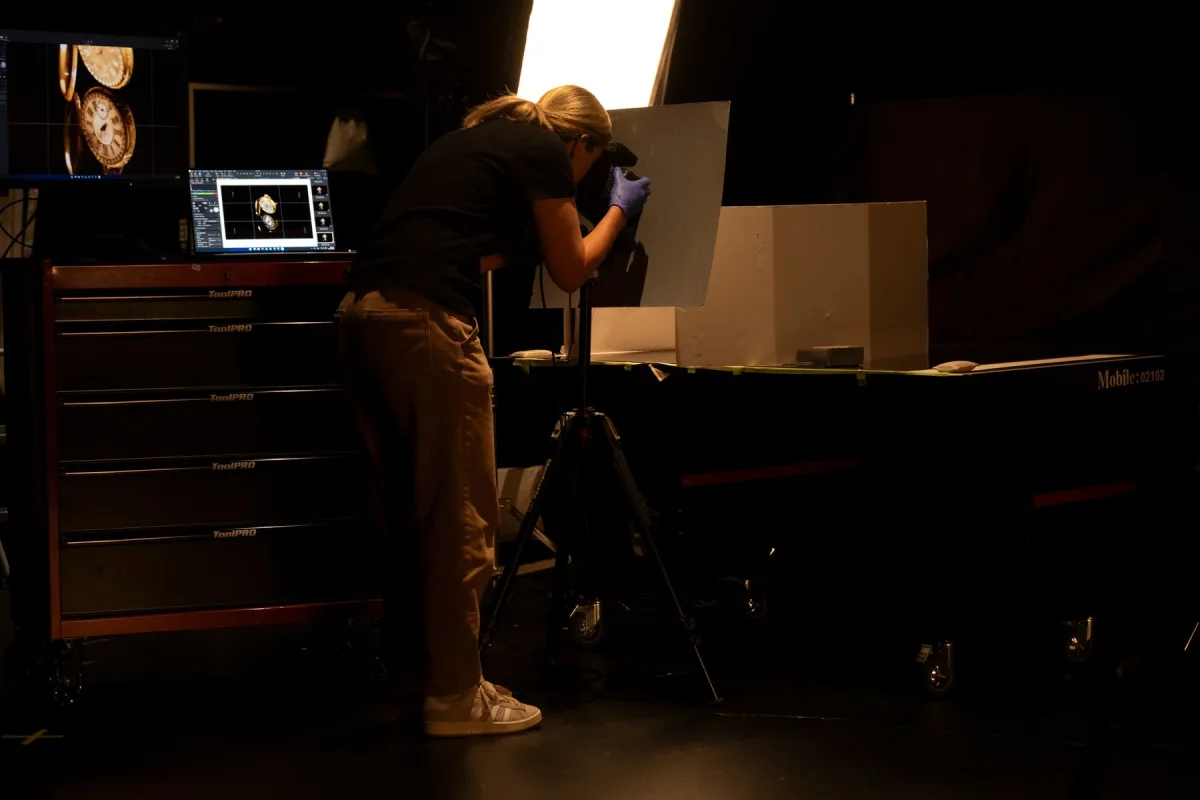
Jen abandoned the polarizing gels on light sources, keeping only the circular polarizer on the lens for fine reflection adjustment. She set up three low-positioned narrow softboxes (creating long rectangular light sources to avoid highlights on the central part of the dial) and placed a curved white reflective panel in front of the watch to fill shadows. A black acrylic board was used as the base. The dark background eliminated distracting reflections, creating an elegant and subtle reflection that "grounds" the watch.
Deciphering the Language of 18th Century Pocket Watches
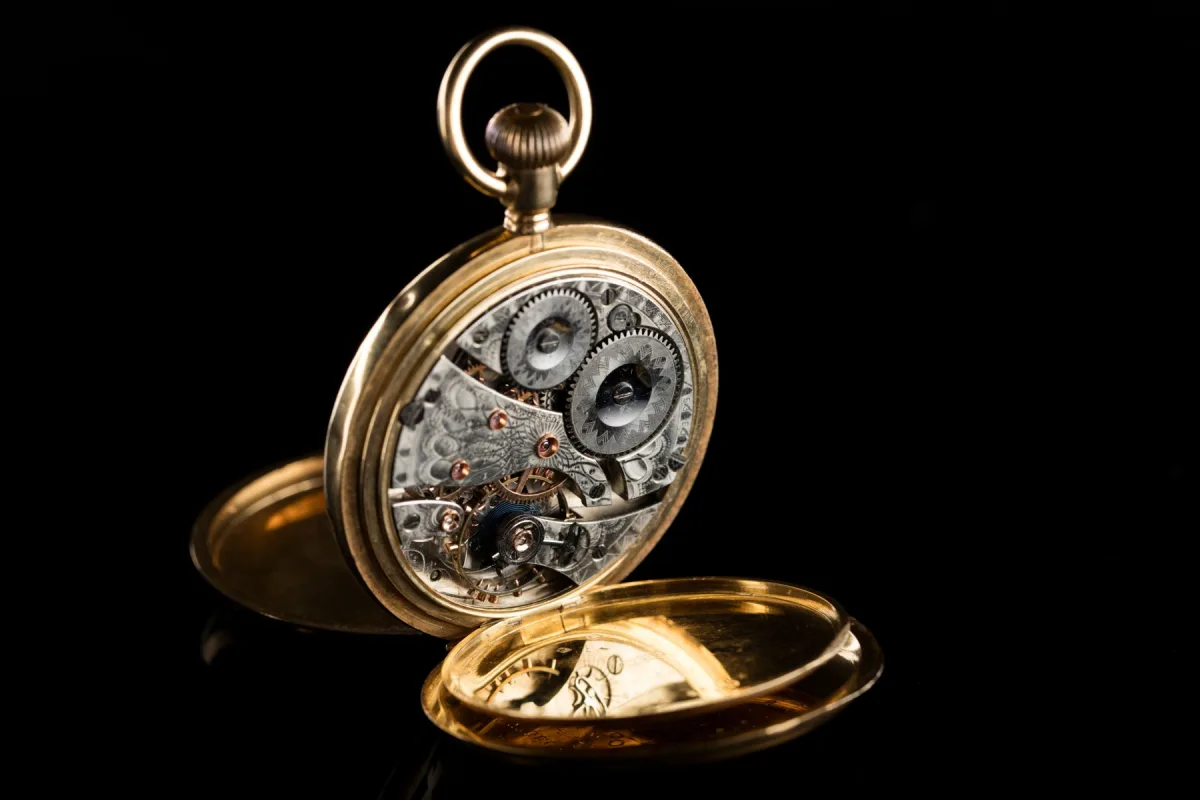
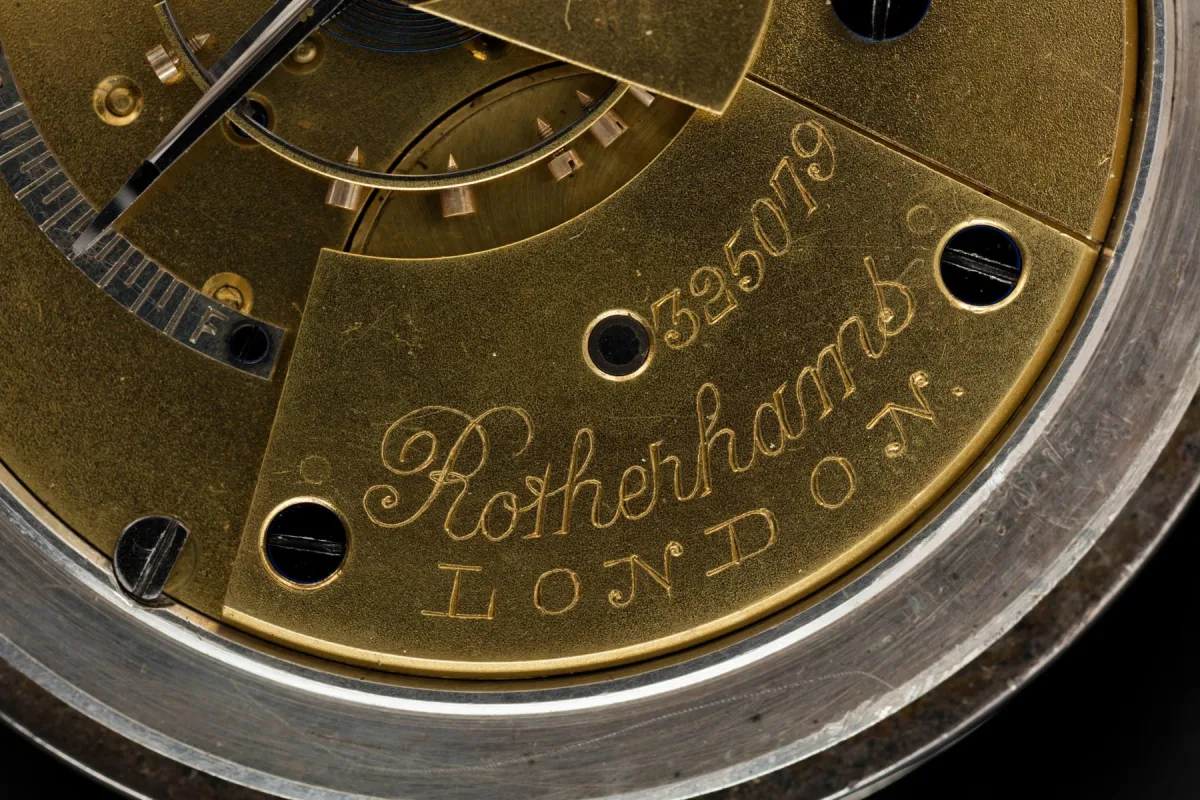
Before systematically working with the collection, Jen had to learn what exactly she was photographing. Cataloging the watch mechanism requires documenting the manufacturer's markings, escapements, and decorative elements.
"I had to study a lot to understand the mechanical structure and terminology. Some terms surprised me - for example, 'pierced cock' or 'beetles and poker hands.'"
For those unfamiliar with 18th-century watch terms, here's a brief glossary:
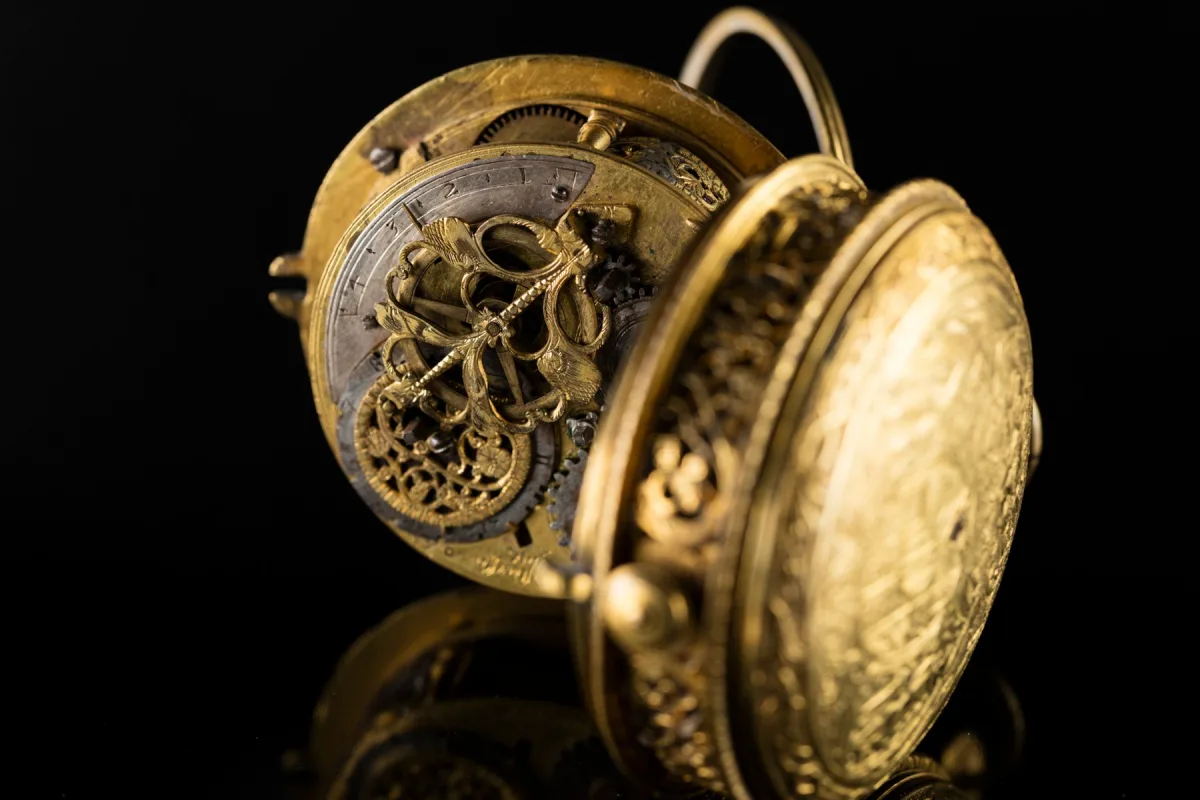
- Pierced Cock - a balance cock (bridge supporting the upper bearing of the balance wheel), hand-cut and drilled with an exquisite decorative pattern, characteristic of English and French pocket watches of the 18th century.
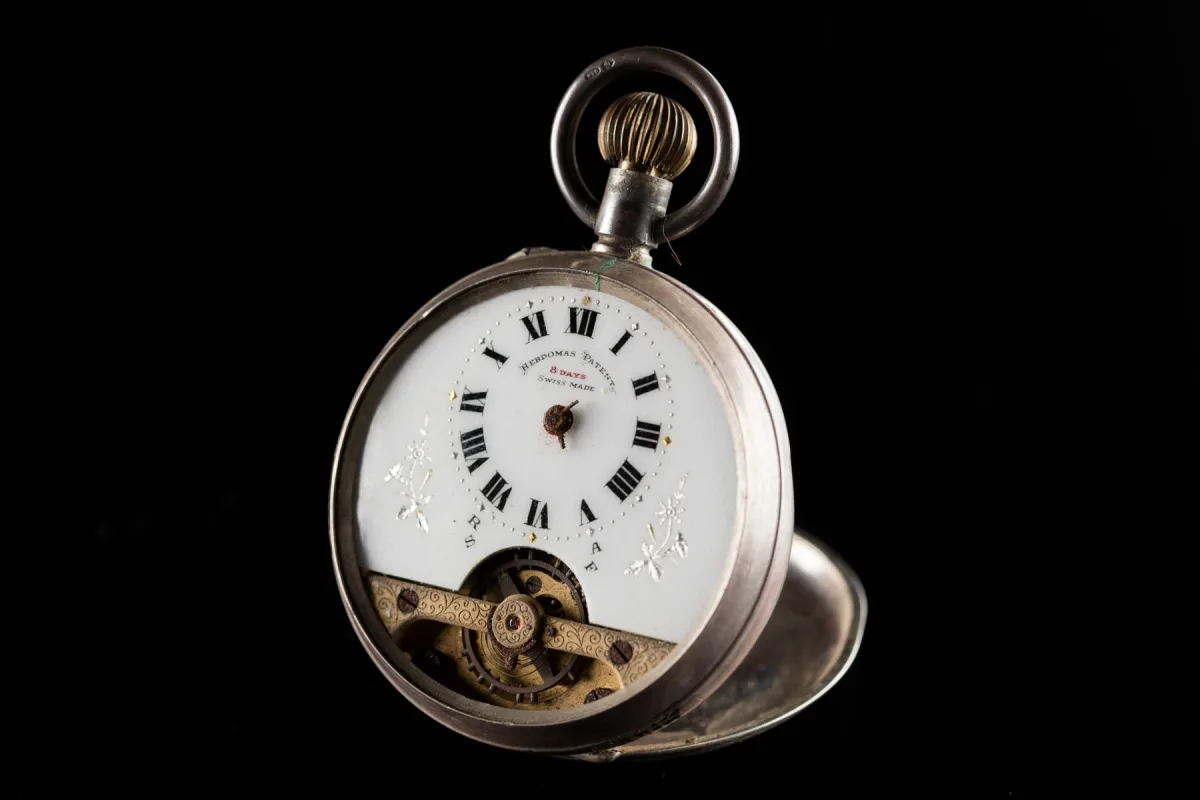
- Beetles and Poker Hands - a distinctive style of watch hands from the 18th century. The hour hand has a bulging loop resembling a beetle, while the minute hand is straight and pointed like a poker.
The collection included cases of 18-carat gold, hand-cut rubies, and unique complications. One notable piece from the 1920s had a black metal case with a gold-plated side button and a repeater mechanism that chimed the hours and minutes in the dark. As Jen says,
"essentially, they were the smartwatches of their time."
"For Lilly from Dad, May 1912"
Beyond mechanical variety, the most powerful impression was the human story of the collection. "Watches are very personal things," Jen reflects. "Early pocket watches were a status symbol, but also a family heirloom. Scratches with service dates, stamps, engravings - these are threads of information about the maker and the owner."
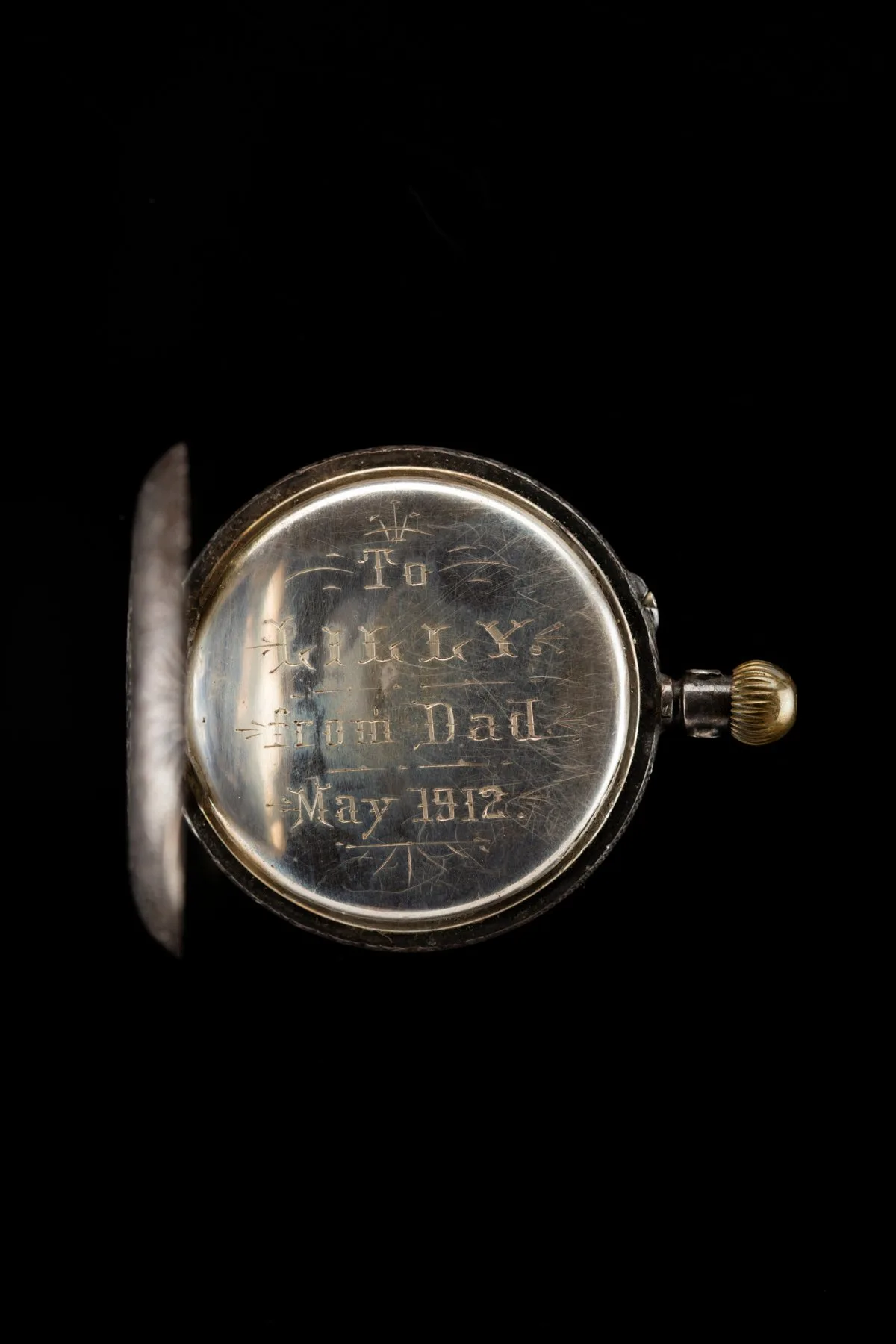
One moment during the shoot was particularly memorable:
"There was a watch from the early 20th century with a beautiful pattern and the inscription 'For Lilly from Dad, May 1912.' It was the only watch with a direct family connection that I could remember. When I placed it on the studio table, it began to tick rhythmically and didn't stop until I put it back in the box. I heard the sound of the past," Jen says. "A watch over a hundred years old, made with such precision that a small movement brought it to life. Perhaps it was the echo of love between father and daughter."
Preserving for a Global Audience
Digitizing museum collections is not just an internal affair. Capturing close-up details of stamps, scratches, and mechanisms' architecture, the Auckland Museum opens its storages to the entire world.
This helps both horological historians study engravings on 18th-century balance cocks from different countries and descendants seeking information about their ancestors' belongings. High-quality archival images overcome physical distances.
Conclusion
For Jen, the technical challenges and lighting puzzles were worth the result.
"It's a rare opportunity to see such an extensive collection spanning three centuries in such detail. As a creative person, I want people to see what I see, to immerse themselves in these tiny objects and experience the same sense of wonder."
We thank Jen and the Auckland Museum for the opportunity to get acquainted with the pocket watch collection and learn about the creative and technical process of their photographic preservation.
All images of pocket watches are from the Auckland Museum's collection and provided under a Creative Commons 4.0 CC BY license. The Auckland Museum is located in Auckland Domain Park, Auckland, New Zealand.