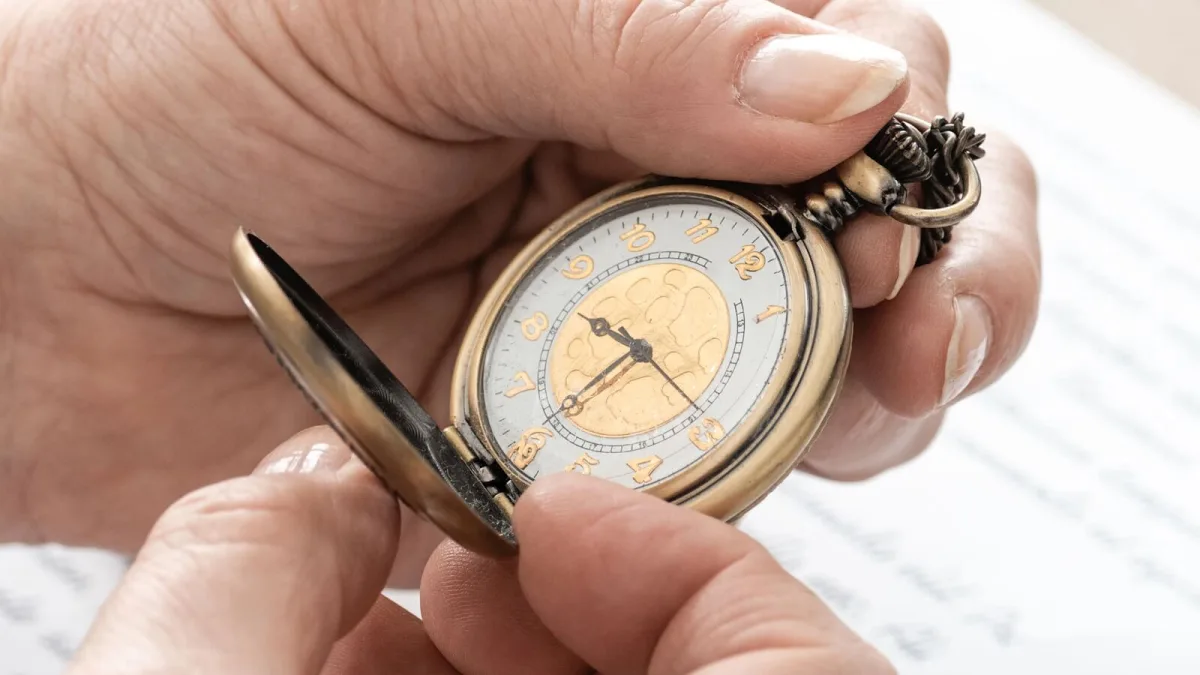
The time has come to get acquainted with one of the most classic treasures of watchmaking art - pocket watches.
Pocket watches are my argument in favor of the fact that watchmaking continues to thrive today. Unlike wristwatches, which are easily accessible and always on the hand, pocket watches require more effort.
When you try to find a watch deep in your clothing or pockets, you could just glance at your wrist. In a world where the mobile phone has become an integral part of life, it is not much more convenient than wristwatches. Nevertheless, pocket watches are an inconvenient and capricious accessory that nevertheless evokes love and admiration. It is a classic, elegant work of art to which collectors have a special attachment.
Vintage pocket watches are particularly attractive. These time capsules carry a piece of genuine watchmaking history. They are compact portals that transport us to a nostalgic era.
Moreover, there is something incredibly soothing about using them. For example, the Titanic pocket watch in an 18-carat gold case.
This watch sold for 1.75 million pounds, significantly exceeding its estimated value. They remain the most expensive artifact associated with the tragedy of the British ocean liner.
If you are considering getting to know pocket watches, it is helpful to learn about their history.
History of Pocket Watches
Initially, pocket watches were the prerogative of the upper class, but over time they became an essential tool for the working class.
One of the first models belonged to Queen Elizabeth I. The popularity of pocket watches increased in the 16th century when a German watchmaker brought his masterpiece to England. After that, manufacturers began making pocket watches from various materials, including gold, brass, and silver, in addition to steel.
With the development of railway systems in America and Europe, pocket watches became popular among the lower and middle classes.
With the advent of wristwatches and the quartz movement, the popularity of pocket watches temporarily declined. However, today they are experiencing a revival: modern models are available on the market, as well as collectible vintage specimens.
When Were Pocket Watches Invented?
Many enthusiasts are concerned with the question: when did the first pocket watches appear?
The first official pocket watch was invented by Peter Henlein in 1510. Thanks to the use of a mainspring, the watch became small enough to carry with you.
Although the first item was presented as a pendant watch on a chain, later Charles II began wearing it in a waistcoat pocket, which started the tradition and gave the name "pocket watch."
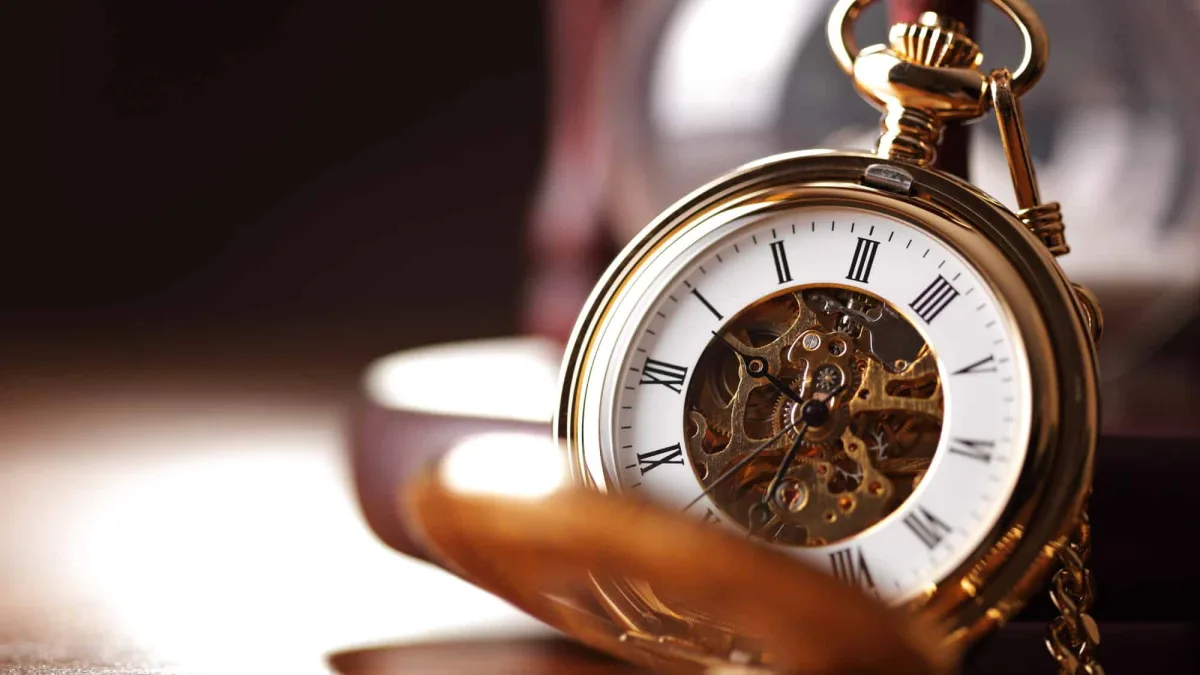
How to Wear Pocket Watches
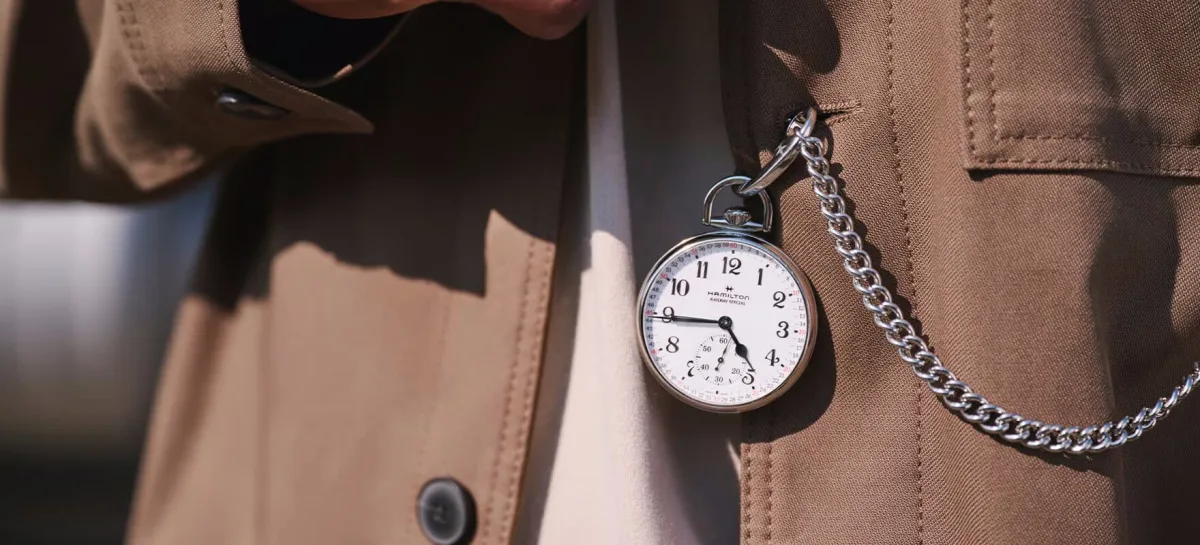
Pocket watches are symbols of style and good taste. The traditional way is to wear them in the upper pocket of a jacket or waistcoat. For a classic look, the chain is threaded through a buttonhole, and the watch is placed in the pocket.
For a more formal look, pocket watches can be paired with a suit, threading the chain through a loop.
However, watches can also be worn without a waistcoat or jacket, creating a more casual style. For example, pair them with a white shirt and loafers or chinos, or secure the chain on the waistband of jeans. This look appears stylish and relaxed.
The Beauty of Modern Pocket Watches
The modern market offers many stylish models of pocket watches.
For example, the well-known manufacturer Hamilton pays tribute to American heritage with the Railroad model. The dial features large Arabic numerals reminiscent of the style of railway watches of that time.
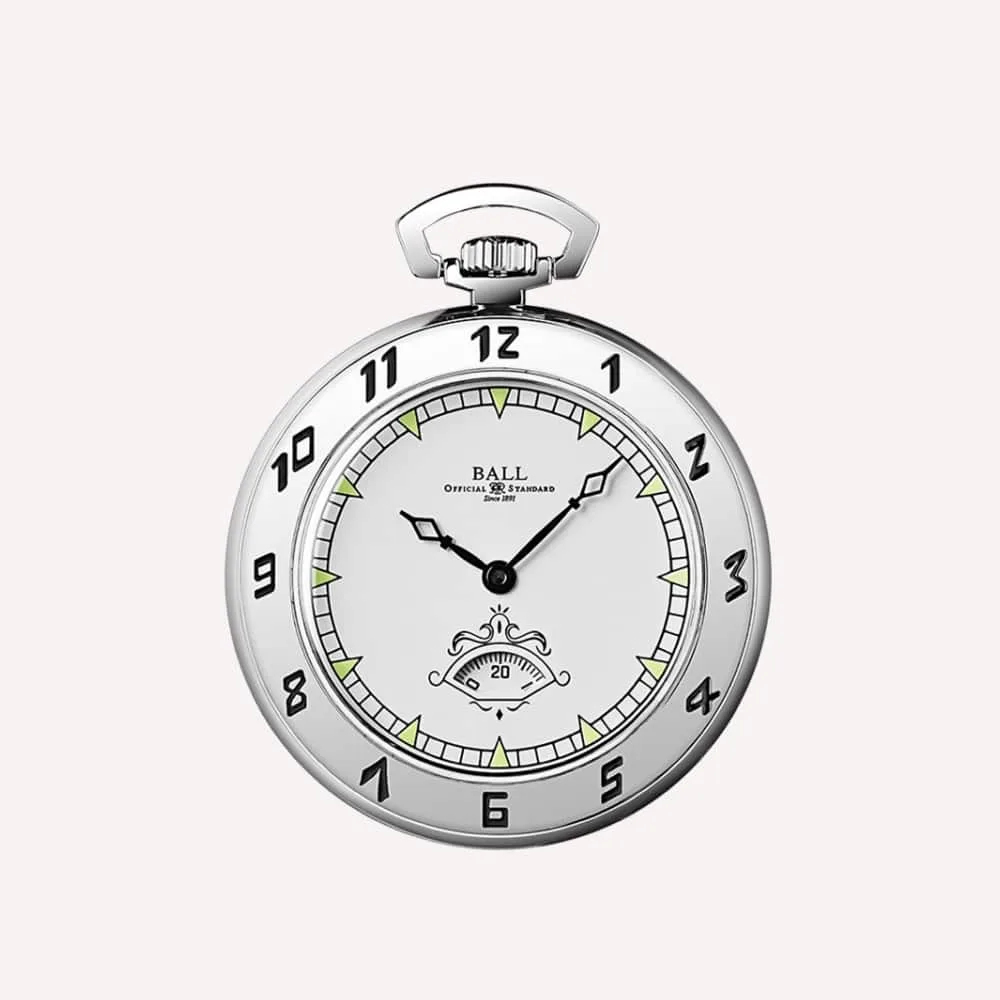
Speaking of railroads, it is worth noting the Ball Watch Company. Their Trainmaster Secometer model symbolizes a contribution to the accuracy of American railway systems of the 19th century.
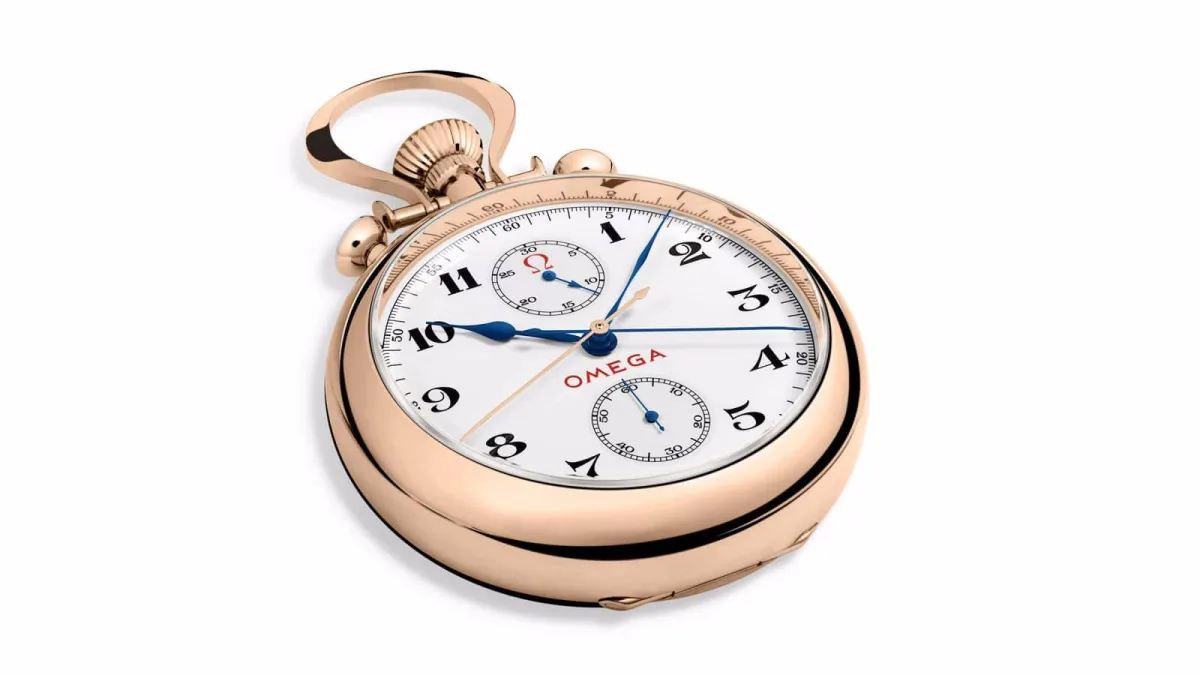
Few people know that Omega also produced pocket watches. In 1932, the brand created a model in honor of its role as the official timekeeper of the Olympic Games.
Omega presented a commemorative model made of 18-carat rose gold with a Hunter case, which opens to allow viewing of the reworked Calibre 3889 movement through the back cover.
Pocket Watches with a Chain
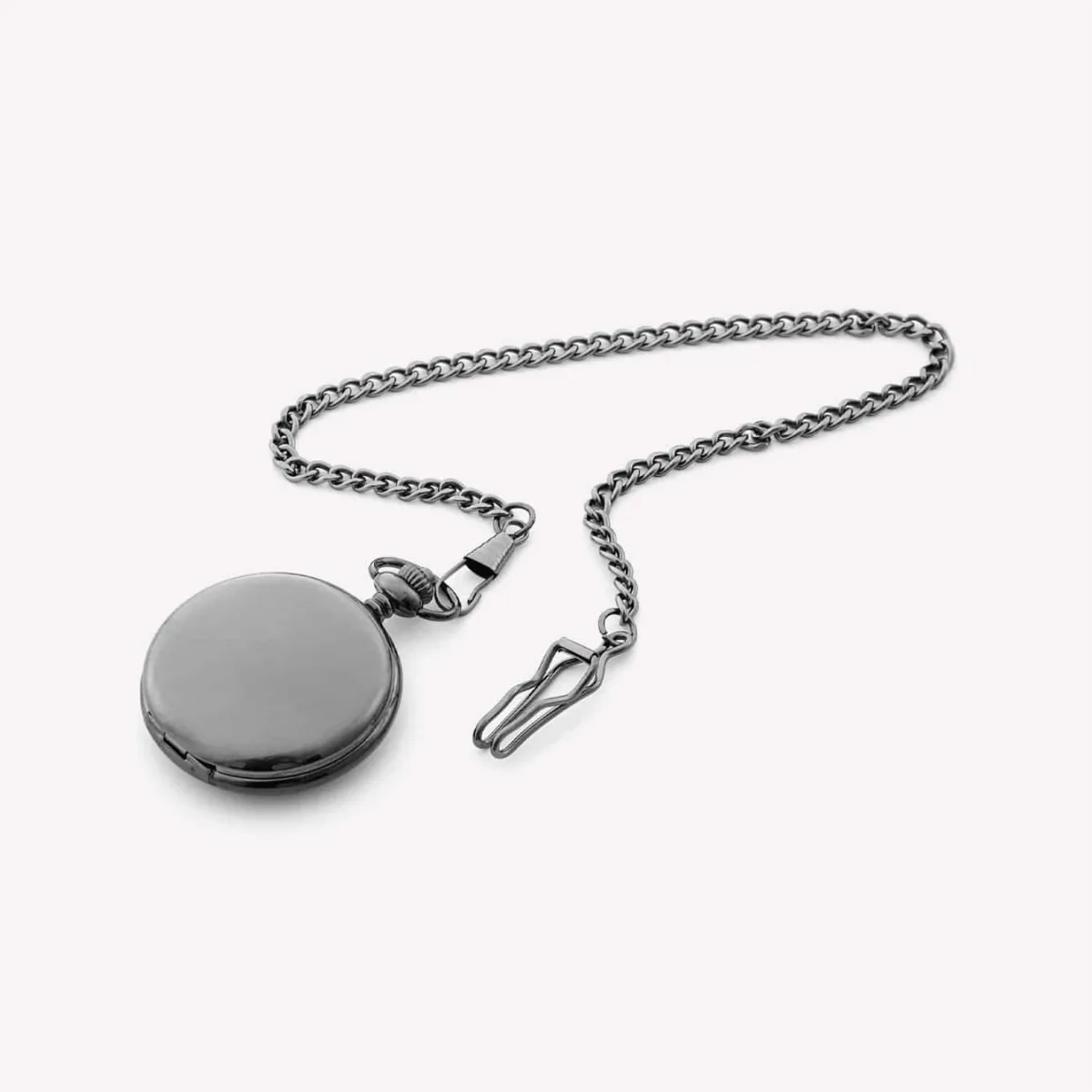
The tradition of wearing pocket watches with a chain has been preserved for several centuries. Today, there are many options for chains that can change the style of these watches.
- A T-bar chain is the best choice for wearing in a waistcoat pocket.
- A belt clip chain easily attaches to the belt loop of trousers.
- A ring-lock chain attaches similarly to women's necklaces.
The revival of classic chain watches has been a pleasant event for many collectors. These watches, filled with nostalgia and charm, are presented in many variations, which explains their popularity among watchmakers and collectors.
Three Main Parts of Pocket Watches
If you regularly follow our publications, you may already be familiar with the basics of watch construction.
Let's consider the main parts of pocket watches, starting from the outside.
1. Case
The case of pocket watches is made from various materials: steel, gold, brass. It can be open (open-dial) or have a closed cover (Hunter case). A semi-Hunter allows you to see part of the dial.
The bezel is part of the case. In watches with a lever mechanism, the bezel is unscrewed to set the time. Bezels can be smooth, stepped, or decorated with engraving.
The crown is used for the daily winding of the mechanism and, depending on the model, for setting the time.
The chain serves to attach the watch to clothing through a buttonhole or belt, preventing the watch from being lost or dropped.
2. Movement
Pocket watch movements can be quartz or mechanical. The movement is responsible for the precise movement of the hands.
To wind a mechanical movement, turn the crown, usually located at the 12 o'clock position.
3. Dial
Pocket watch dials vary in style. Hands can have different shapes: "dauphine," "cathedral," "leaf." Colors also vary, although the classic is a white dial.
Hour markers can be large Arabic numerals (often in a railroad style) or Roman numerals, creating a more elegant, jewelry-like appearance.
How to Open Pocket Watches
The method of opening depends on the design.
- Swing-out case watches open from the front; to set the time, the bezel must be unscrewed.
- Railroad watches have a case without hinges, threaded in the middle, unscrewed counterclockwise from the back.
- Hunter cases open with a latch that can be opened with a fingernail or special tool.
If you are unsure how to open the case, it is better to consult professionals to avoid damaging the watch.
How to Wind Pocket Watches
Mechanical pocket watches require daily winding. The method depends on the type of movement.
There Are Four Main Types:
- Pin set - wound by the crown, press the pin to set the time.
- Lever set - to set the time, unscrew the bezel and pull out the lever.
- Pendant set - wound and set by the crown without additional actions.
- Key-winding - an old type, wound with a key through a hole on the back cover.
How to Set Pocket Watches
Setting the time also depends on the design.
- In pendant set, simply pull out the crown and turn the hands.
- In pin set, simultaneously press the pin and turn the crown.
- In lever set, after opening the bezel and pulling out the lever, you can turn the crown to set.
- In key set watches, set the time with a key through a hole on the face.
Modern key set models allow winding and setting through the back cover.
Conclusion
Despite technological progress and the widespread use of smartphones, pocket watches remain a sought-after accessory.
In the modern world, they are not a necessity, but their variety and historical value confirm our unwavering love for them.
Just like in fashion, trends come and go, but pocket watches have never completely disappeared and continue to inspire watch enthusiasts.
Leave your questions in the comments!