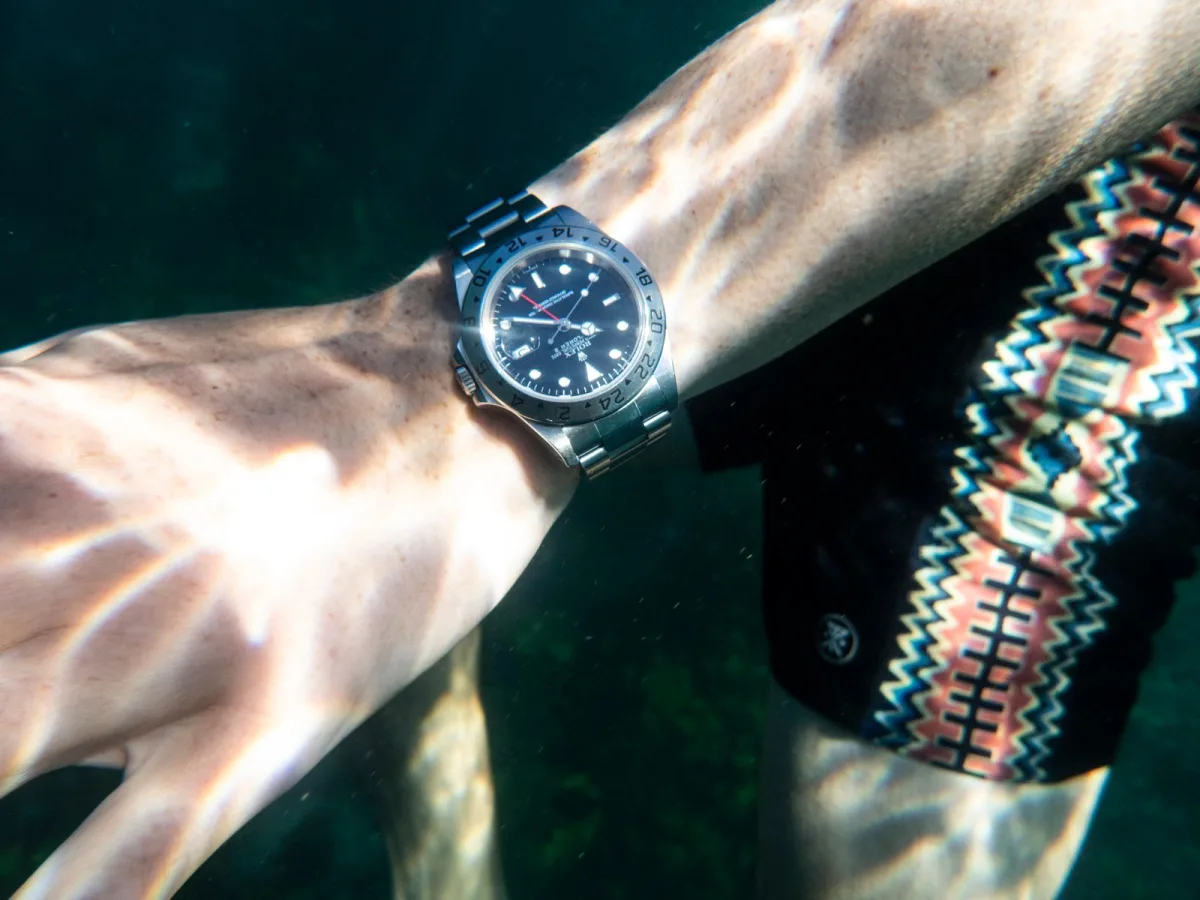
There is a special feeling when diving into the ocean with a Rolex Explorer II.
Even here, at the waves of Sydney's eastern coast, you notice something that sets this model apart from most sports watches I've dealt with: it feels like it's in its element. The 16570 isn't taken into the surf to show off. It's taken because it quietly belongs there.
Design and Character of the Rolex Explorer II Ref. 16570
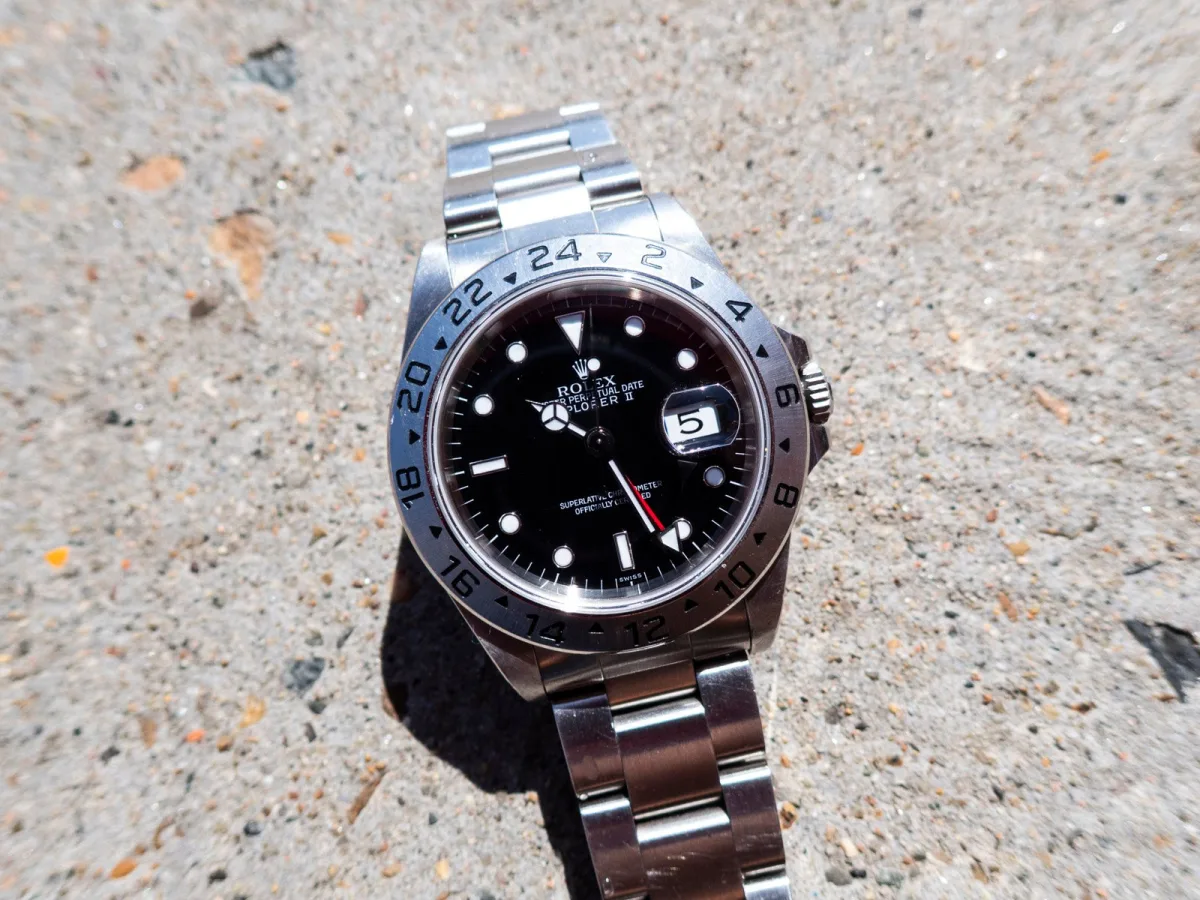
At first glance, the Explorer II does not stand out. A 40 mm stainless steel case, a fixed 24-hour bezel, and a black dial under a flat sapphire crystal create the image of a watch made for work, not for admiration in a noisy bar. However, in this thoughtful symmetry, there is a quiet confidence—a quality that becomes attractive after a long acquaintance.
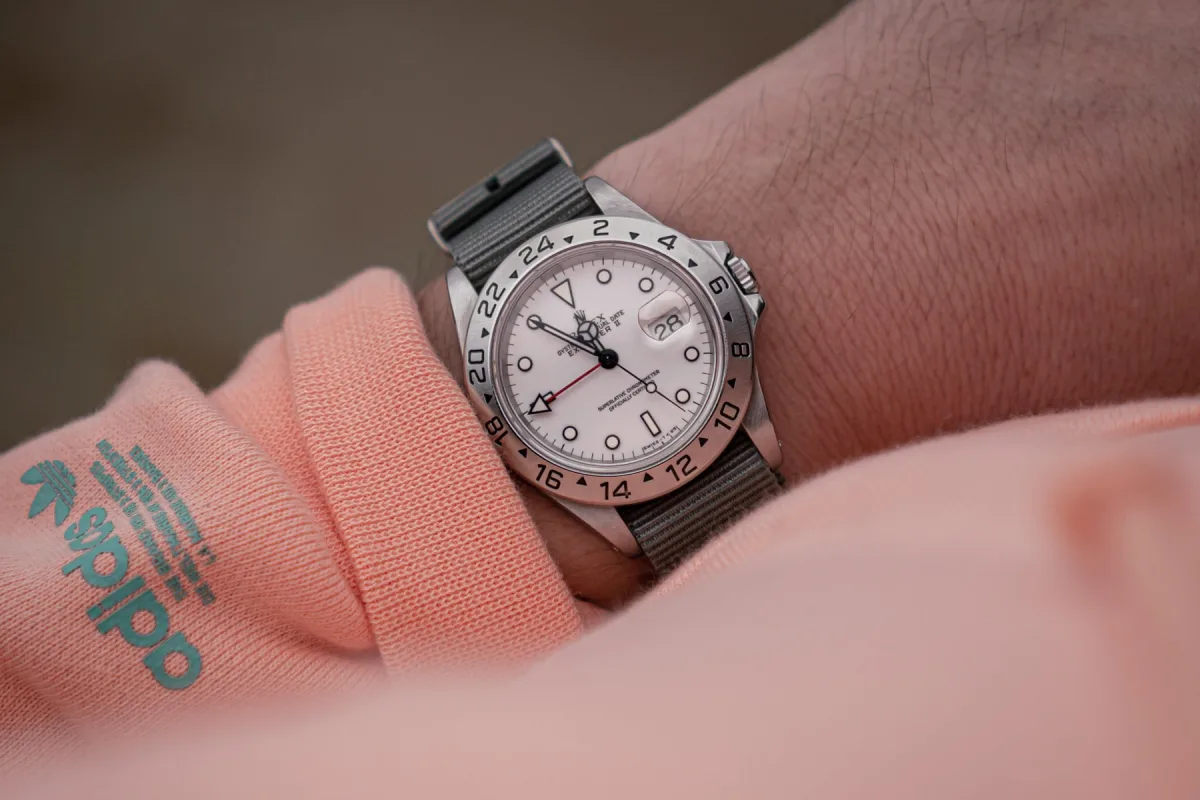
The black dial variant—with its glossy deep background and white gold surrounds around the hour markers—can be called the restrained sibling of the more discussed 'Polar' version. I confess, I always leaned towards the white dial. The contrast, the play of light, and the slightly more expressive character spoke to me in a special language. However, the black dial is classic and seems more true to the spirit of the Explorer. In any case, the Explorer II represents restraint, seriousness, and timeless classicism.
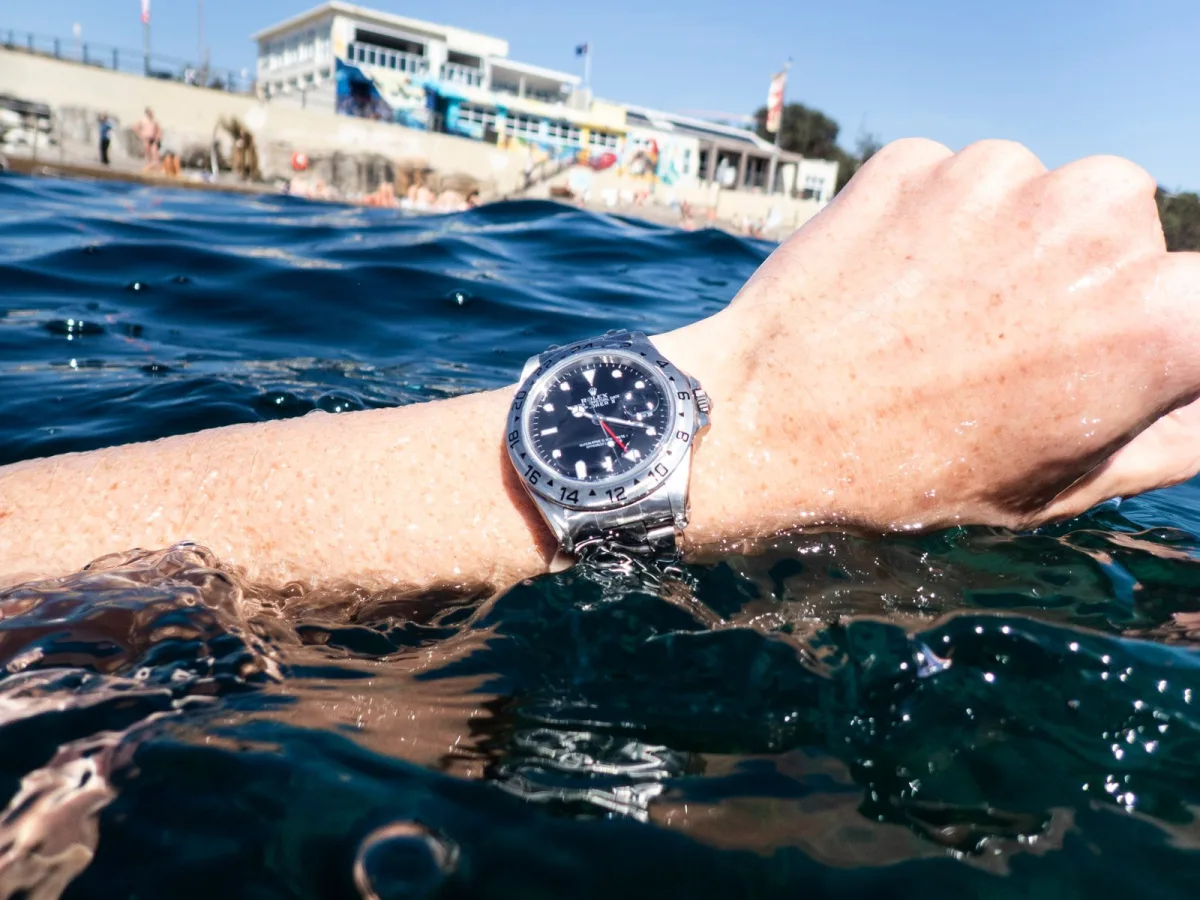
Diving into the Pacific Ocean with the Rolex Explorer II
The waves on Sydney's eastern coast roll in with the precision of a clock, and for me, this is comparable to the character of the 16570—consistent, playful, and unassuming. Put on the watch before your morning swim, and you immediately feel the balance. The 12.2 mm thickness ensures a flat and secure fit, making the watch neither bulky nor overly massive. A water resistance of up to 100 meters is more than sufficient for swimming, surfing, or an impulsive cliff jump. This era of Rolex design seems more restrained compared to modern models—less shine, more functionality.

Underwater, the watch does not sparkle like specialized diving models. There is no rotating bezel for timing dives, nor large luminous markers demanding attention. The dial remains calm. The red GMT hand—a small touch of adventure—crosses the black background with quiet assurance. It's a reminder that the watch was not made for beaches but for caves, expeditions, and tracking time beyond the horizon. Nevertheless, it feels perfectly at home in salt water.
Neo-Vintage Balance in Design
The key to the 16570's appeal today is its position in the so-called 'neo-vintage' niche. Produced from the late 1980s to 2011, this model smoothly connects two Rolex eras. Early examples feature tritium lume and drilled lugs, details that evoke nostalgia among traditionalists. Later versions received Super-LumiNova and the updated caliber 3186 with a Parachrom hairspring, quietly modernizing the watch without changing its basic character.
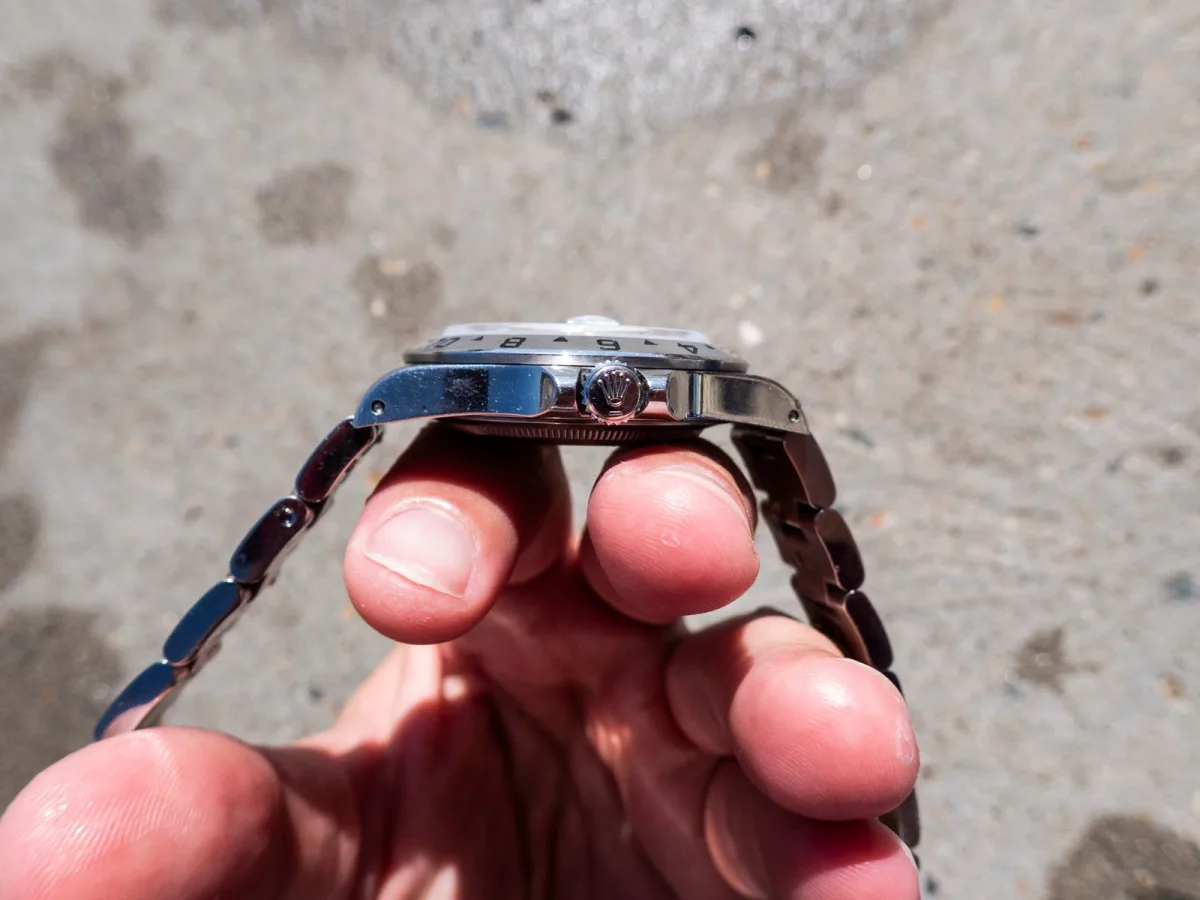
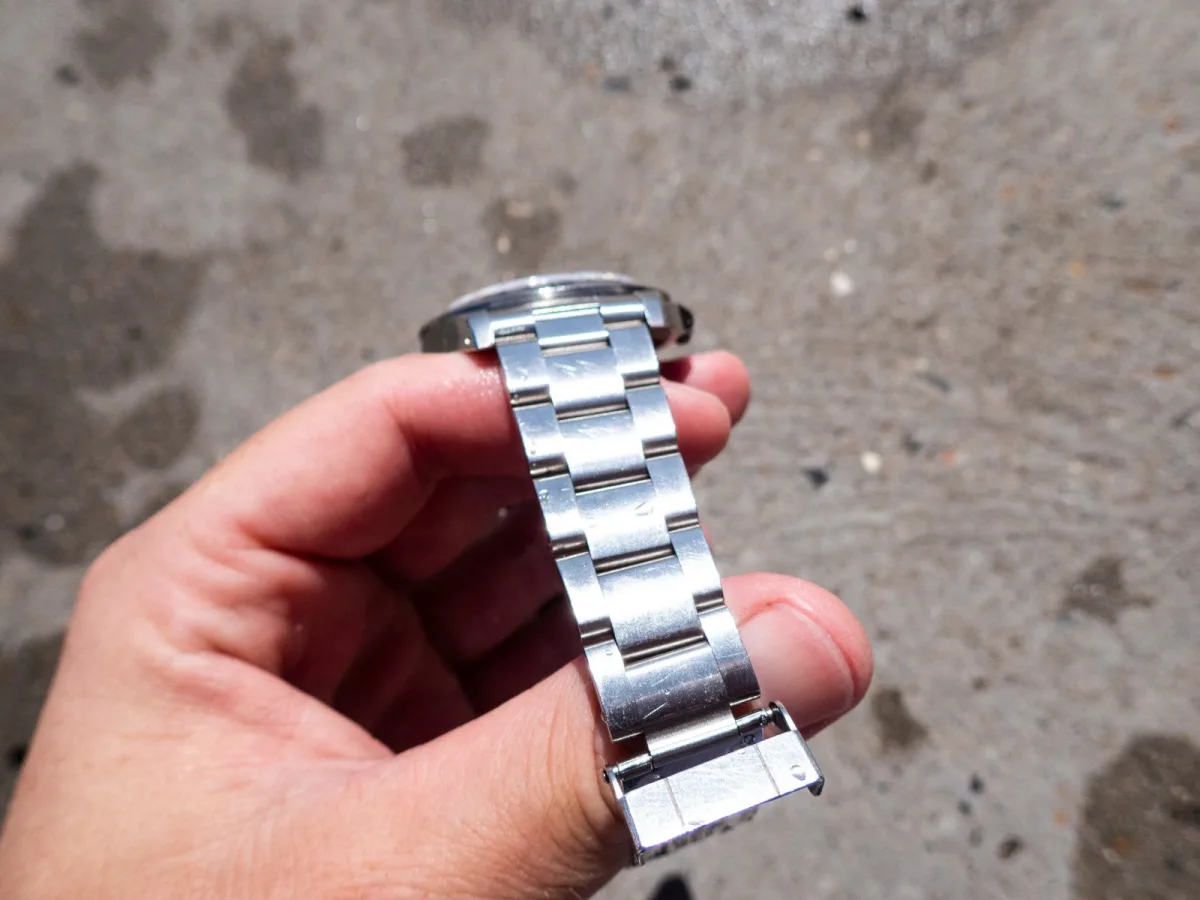
Proportions are crucial. The 40 mm diameter, modest 47 mm lug-to-lug distance, and 12.2 mm profile make the case elegant compared to modern Rolex sports models. The fixed steel bezel remains functional and readable. The bracelet is lighter than modern counterparts, creating a feeling of lightness and mobility rather than bulkiness. The watch is modern enough for everyday wear, yet 'old' enough to have warmth and character. Such balance is increasingly rare.
Subtle Elegance of the Black Dial
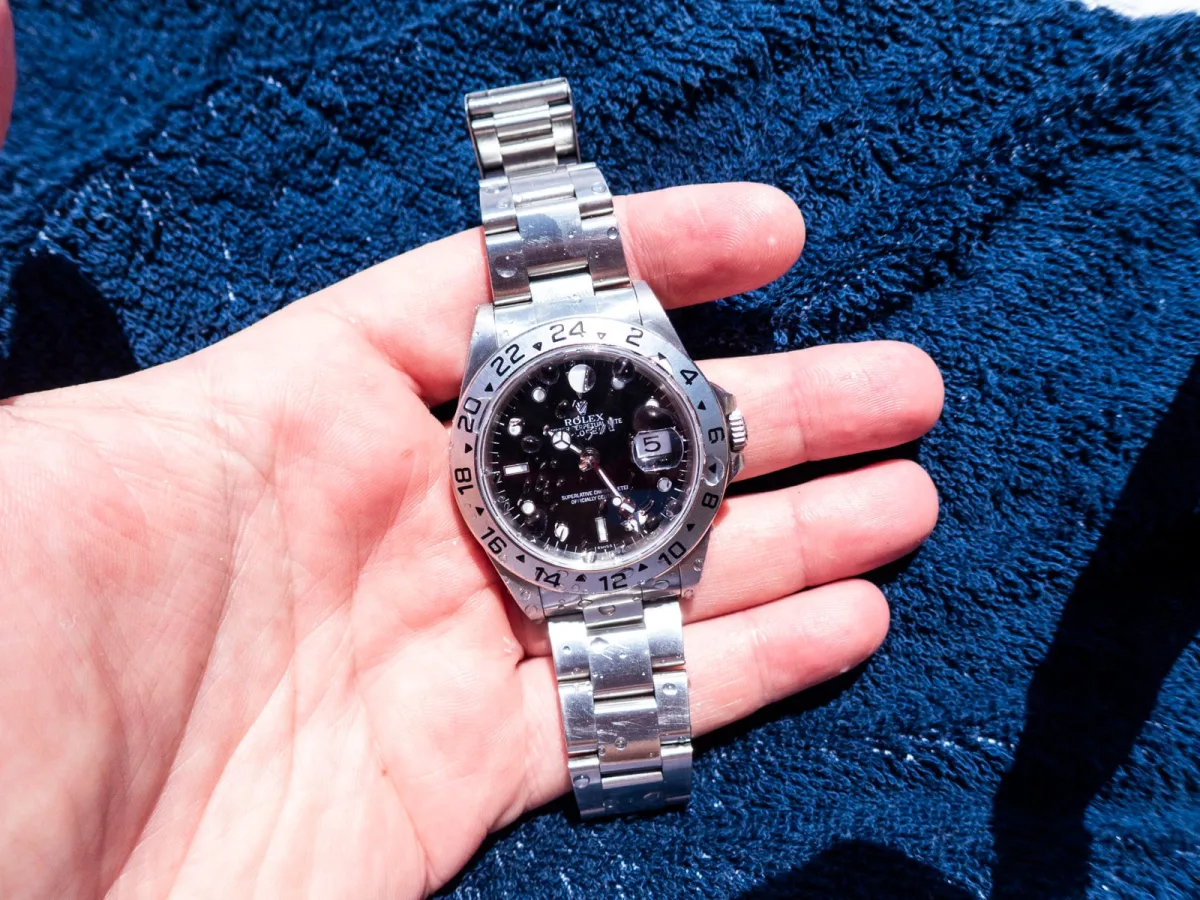
The black dial enhances the instrumental nature of the Explorer II. While the white dial feels more expressive, almost playful in certain lighting, the black is pure restraint. It absorbs light rather than reflects it, and pairs well with any style: from surfing shorts on Bronte beach to a suit in the business center and a sweater on a long flight. It never looks out of place. Such a watch is perfectly suited to the relaxed coastal lifestyle of Australia.
One of this model's most attractive qualities is the minimal attention it attracts. Among connoisseurs, it evokes an understanding nod, while to others, it remains unnoticed. In a world where modern luxury sports watches demand attention, the 16570 earns recognition gradually. It's a watch for the owner, not for others.
Final Thoughts
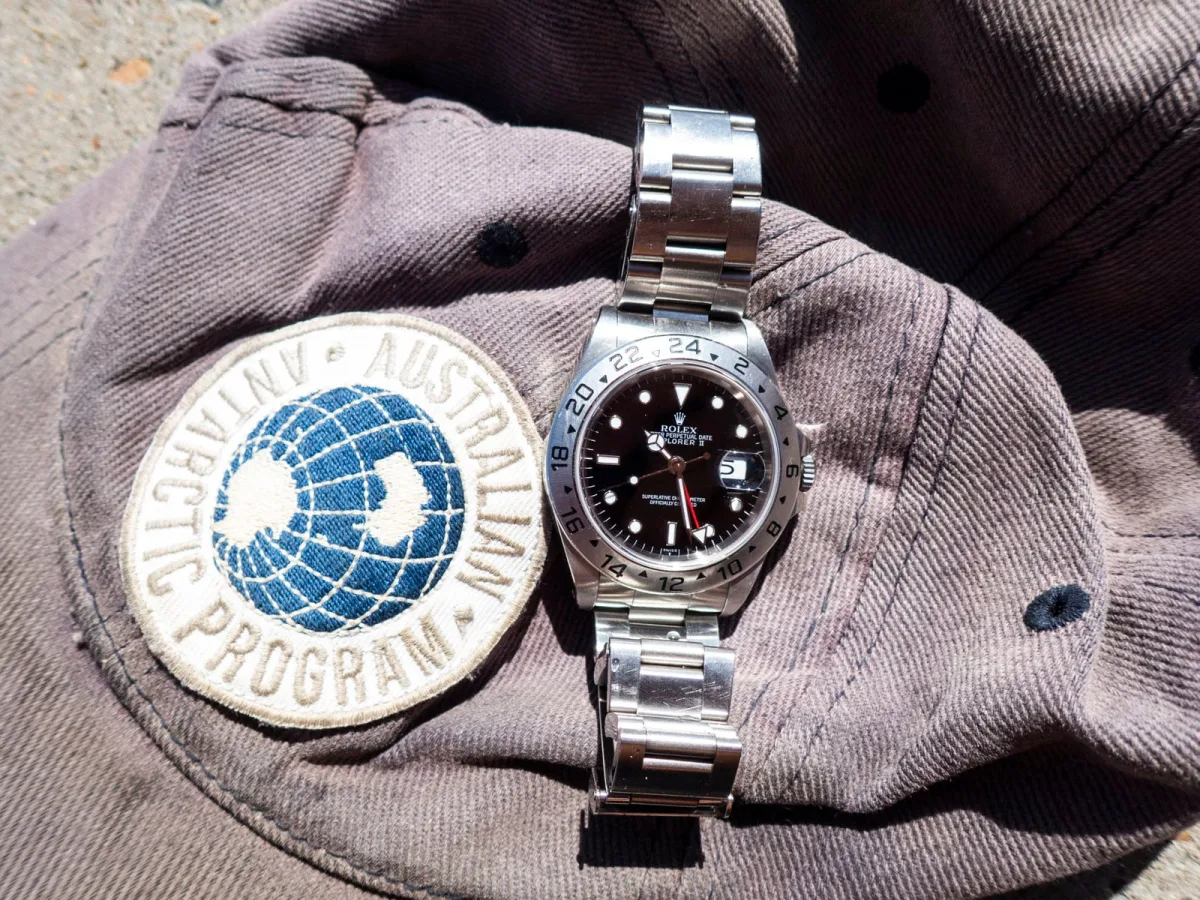
There is also an emotional aspect to the 16570's appeal. Neo-vintage Rolex watches reflect a period when mechanical watchmaking confidently survived the quartz crisis but had not yet turned into a modern show. The 16570 is a product of this quiet self-assurance. It doesn't rely solely on nostalgia and doesn't chase novelty. Personally, I have already 'lived' this style and own a neo-vintage Rolex Sea-Dweller ref. 16600. Neo-vintage Rolex watches are less pretentious; they simply exist, perfectly balanced between the past and the present. After a swim, washed with fresh water and dried in the morning sun, the black dial acquires a subtle sheen. The steel becomes softer in tone. The red GMT hand calmly awaits the next time zone, the next trip, the next early alarm. It is in these quiet moments after the ocean that the watch's appeal becomes especially apparent.
As collectors continue to discover the allure of neo-vintage Rolex, the 16570 stands out as one of the most honest embodiments of the brand's tool watch DNA. And while my heart still leans a little towards the white dial, the black remains the choice of purists—classic, understated, and effortlessly stylish. Perhaps that's why it looks so natural in the ocean off the Sydney coast—not because it was made for the sea, but because it was made for life. And as it turns out, life includes saltwater, sunrise, and the quiet satisfaction of wearing something that requires nothing but to be on your wrist. They gradually win you over. Although it is not my first choice among neo-vintage Rolex (that title belongs to the aforementioned Sea-Dweller), the Explorer II offers many original design solutions. And perhaps most importantly, the Rolex Explorer II ref. 16570 is not the most sought-after neo-vintage model, allowing it to be acquired at a price that seems reasonable in an era of ever-rising prices.