Chronoswiss is one of those independent brands whose origin story directly explains their products.
Founded in 1983 in Munich by master watchmaker Gerd-Rüdiger Lang, the company set out to advance the art of mechanical watchmaking, not just preserve its traditions. The brand's language quickly became tactile and recognizable - the onion-shaped crown and coin-edge knurled details are not mere decorations, but part of a broader concept that watches should feel like an engineering piece, not an anonymous accessory.
Historical Turn: Chronoswiss Regulator
The turning point was the release of the Régulateur model. Launched in 1987 and widely recognized as the first serially produced wristwatch model that popularized the regulator style with separate hour, minute, and second displays, it borrowed the logic of workshop regulator clocks where minutes take center stage. From this moment, Chronoswiss built its reputation on dial architecture - unusual layouts, open mechanisms, and multilayered dials, which continue to evolve in the modern era under Oliver Ebstein's direction in Lucerne.
This context makes the brand's latest releases logical and consistent: traditional mechanics expressed through depth and play of light. The Space Timer Gravity brings the grammar of the Chronoswiss regulator into an explicit cosmic theme, while the Lunar Chronograph Aurora updates a long-standing model with a finish inspired by the Northern Lights. Both models use color-changing CVD coatings, both maintain the lunar theme, and both are instantly recognizable as Chronoswiss.
Space Timer Gravity: Regulator Dial Built Like a Landscape
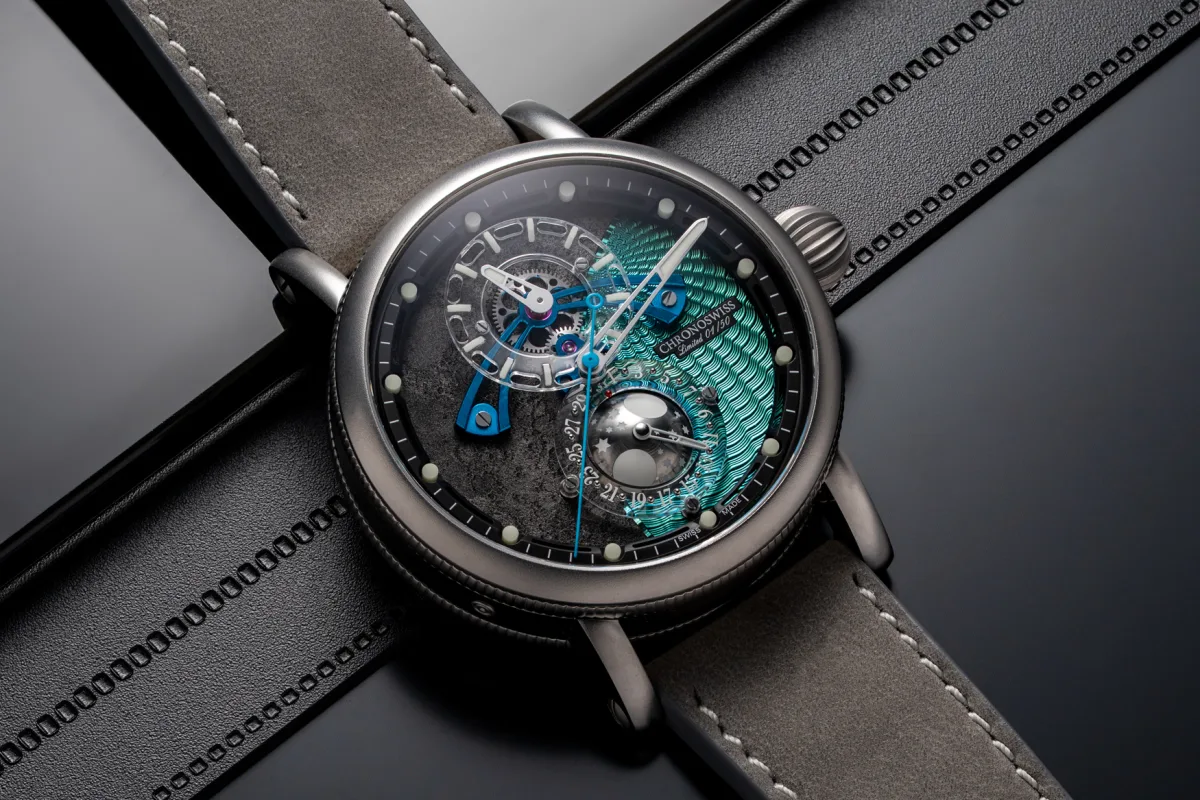
Chronoswiss positions the Space Timer Gravity as a new chapter in its Space Timer lineup, and the message is clear: this is "space as construction," not as illustration. The theme is gravity - the invisible force shaping everything around - and it serves as a framework, as the main feature of the watch is physical depth: multilayered surfaces, suspended indicators, and a mechanism that is not hidden but shown as part of the composition.
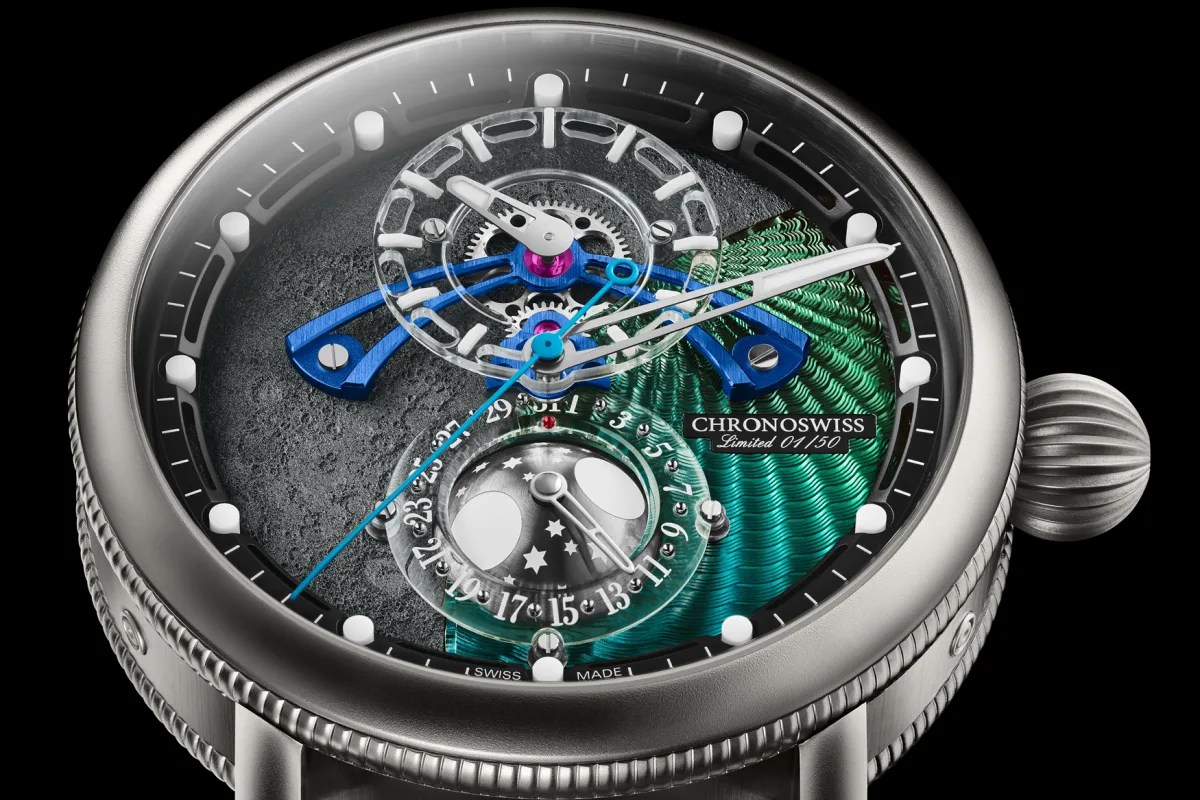
The dial combines partial hand guilloché with a color-changing CVD coating, shifting from deep green to oceanic blue depending on the lighting. On the left side is a lunar landscape (based on an original NASA photo, according to Chronoswiss), created with laser processing to achieve a subtle three-dimensional crater texture, not a flat print. The moon phase indicator is located at "6 o'clock," and the rest of the dial plays with contrasts of "territory": the dark, cratered part is opposed to the lighter, wave-like guilloché.
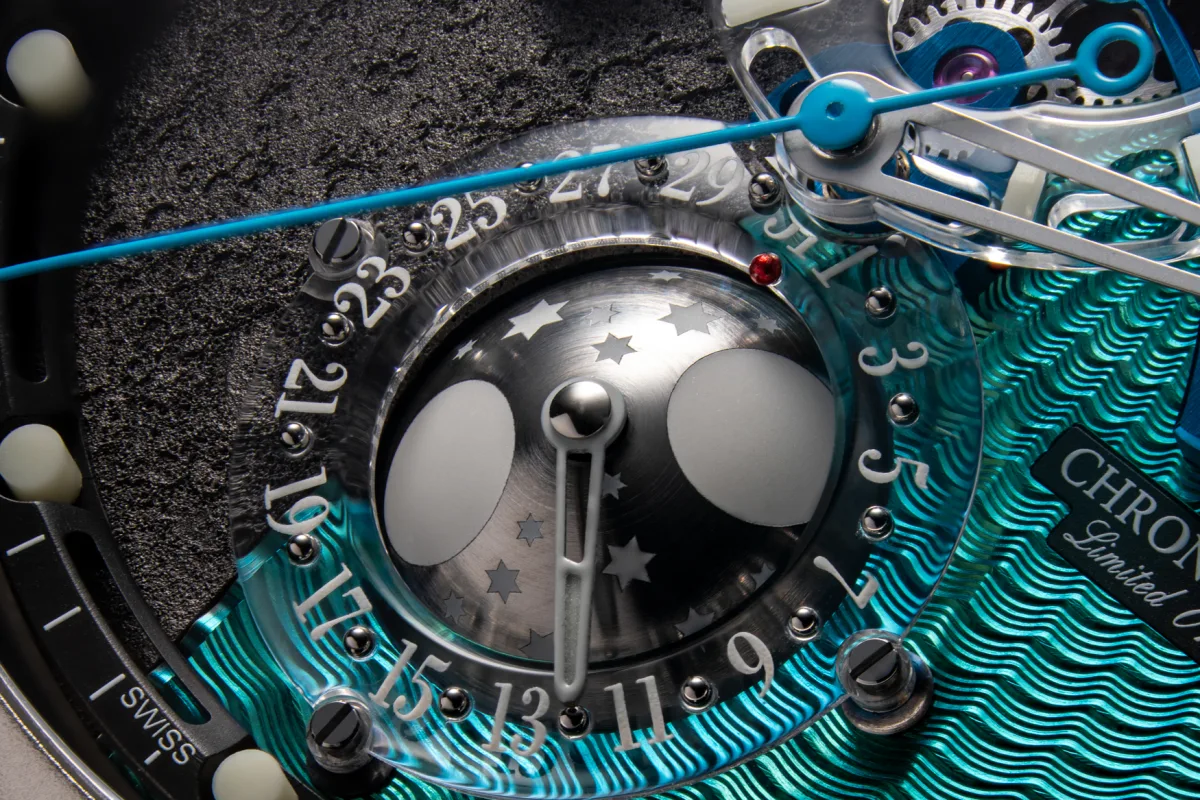
The display is pure Chronoswiss. The offset hours are at "12 o'clock" with an "open gear" mechanism, while the minutes and seconds are centered. The hours and date are displayed on transparent rings made of ITR2 composite, which the brand describes as a light and durable material. These rings create a feeling of floating above the dial - orbital movement rather than simple layering. Below the rings, the open movement is visible, framed by a blue bridge that matches the second hand, providing a bright accent.
The dial construction consists of 63 parts; the date is indicated by tiny stainless steel balls 0.6 mm in diameter, secured in the ITR2 structure; minute markers are made of luminous cylinders from a mix of Super-LumiNova and ceramic; the moon and stars are a thermally colored titanium hemisphere with luminescent filling. For one dial, this is a large number of materials - but that's the idea.
The case is made of stainless steel, 44 mm in diameter, 15.2 mm in height, with a matte gray finish. The case construction consists of 17 parts, partial knurling, curved sapphire crystal with double anti-reflective coating, and a screw-down sapphire case back. Water resistance is 100 meters, and the watch comes on a gray nubuck strap to keep the look restrained.
The mechanism is based on the automatic Chronoswiss C.308 caliber, which is a heavily modified ETA 2895, operating at 4 Hz and with a power reserve of about 42 hours. The finishing includes perlage and a skeletonized rotor with a côtes de Genève pattern. The Space Timer Gravity is released as a limited edition of 50 pieces.
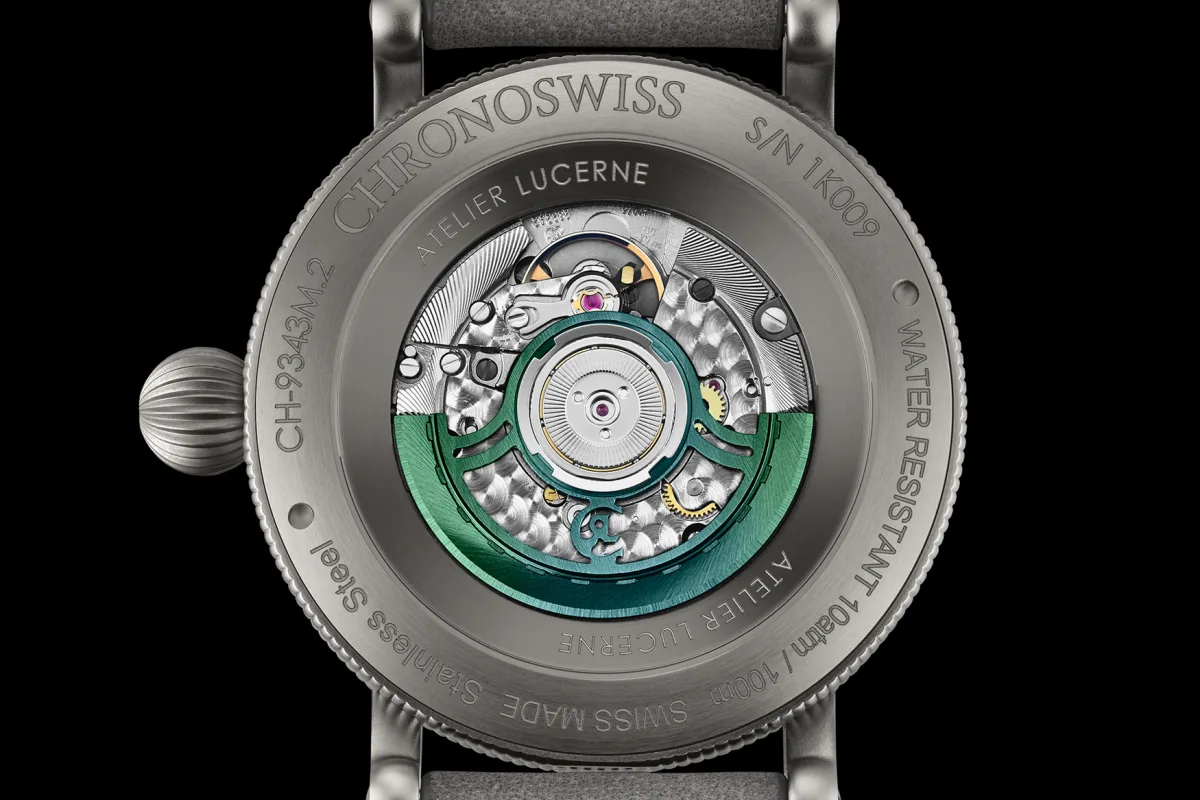
Specifications of Chronoswiss Space Timer Gravity
| Parameter | Value |
|---|---|
| Brand | Chronoswiss |
| Model | Space Timer Gravity |
| Reference | CH-9343M.2-MOPA |
| Case Size | 44 mm (diameter) x 15.2 mm (thickness) |
| Case Material | Stainless steel |
| Water Resistance | 100 meters |
| Crystal | Sapphire front and back |
| Dial | Open with guilloché and laser processing |
| Strap | Gray nubuck |
| Movement | Chronoswiss C.308, based on ETA 2895, automatic |
| Power Reserve | 42 hours |
| Functions | Hours, minutes, seconds, moon phase, date |
| Availability | Limited edition of 50 pieces |
| Price | Not specified |
Lunar Chronograph Aurora: Familiar Architecture, New Atmosphere
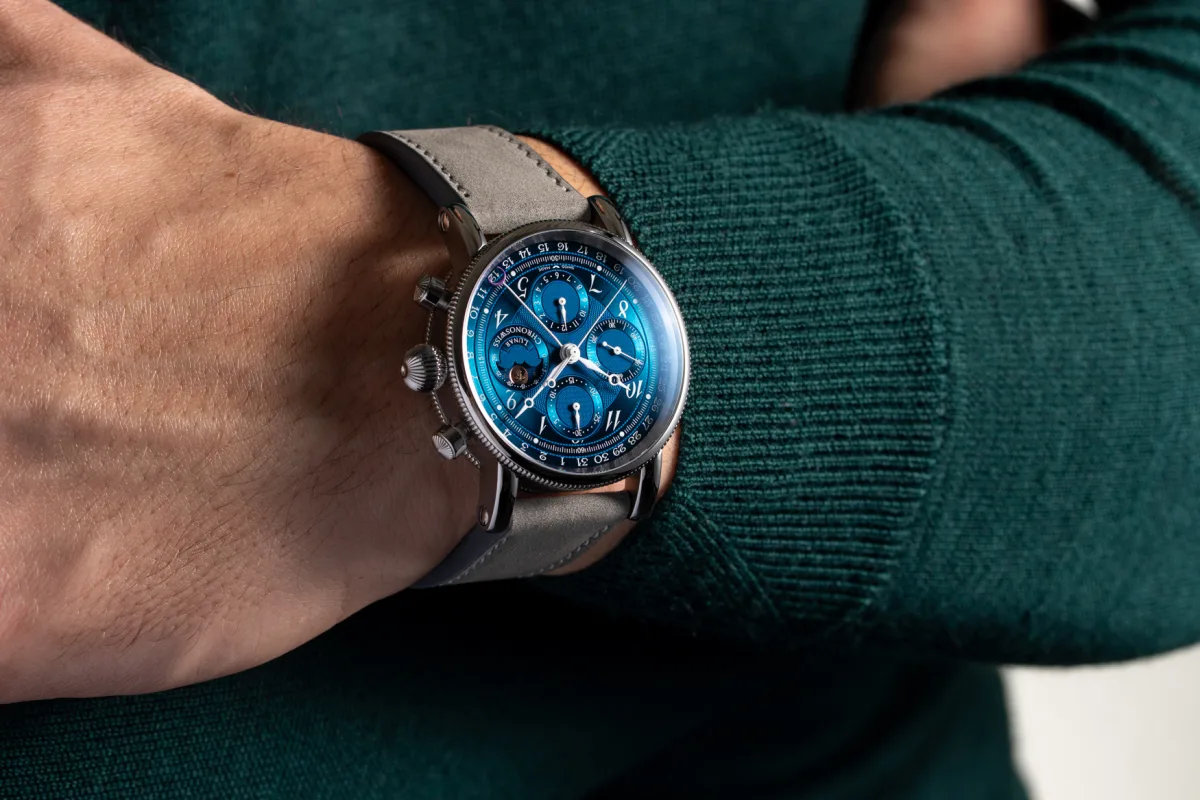
If the Space Timer is Chronoswiss's most experimental model, the Lunar Chronograph shows how the brand creates "classics" without blending into the masses. Chronoswiss positions this model as a key piece since its debut in 1999, built around a rare combination of complications - chronograph, date, and moon phase - organized in a multilayered yet structured manner.
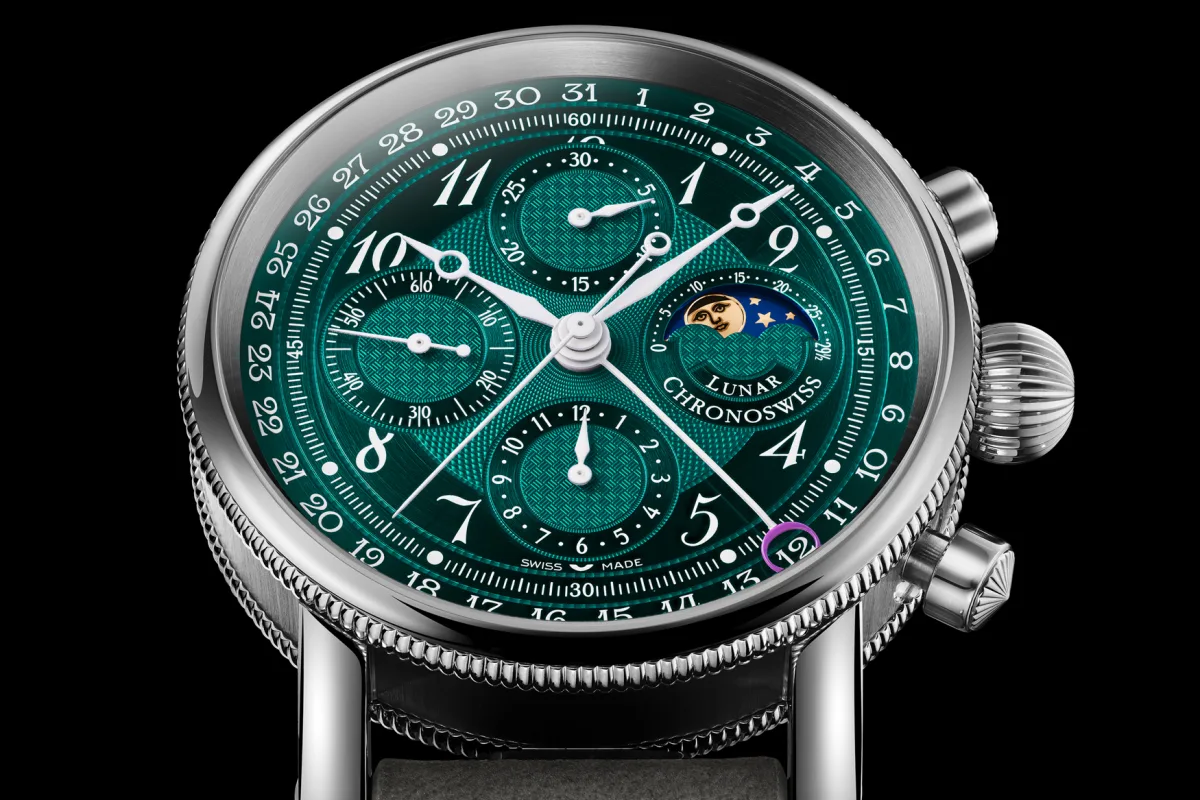
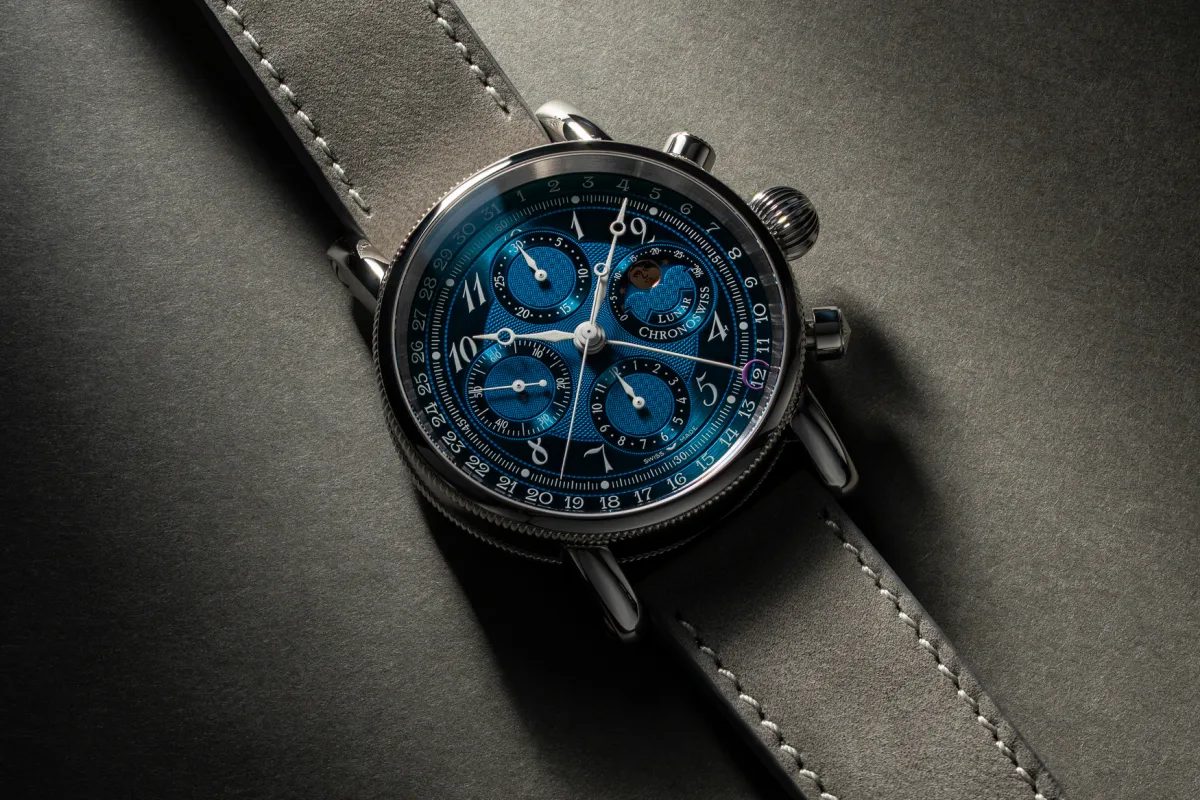
The Aurora update starts with the dial. Completely covered with CVD, it changes color from deep green to bright blue depending on the light, directly referencing the Northern Lights. Underneath the coating is a guilloché base, so that color is not the only design element. White hands are a conscious contrasting move; they are a mix of Breguet and rhomboid styles, made of steel, and coated with white lacquer for improved readability on the dark background.
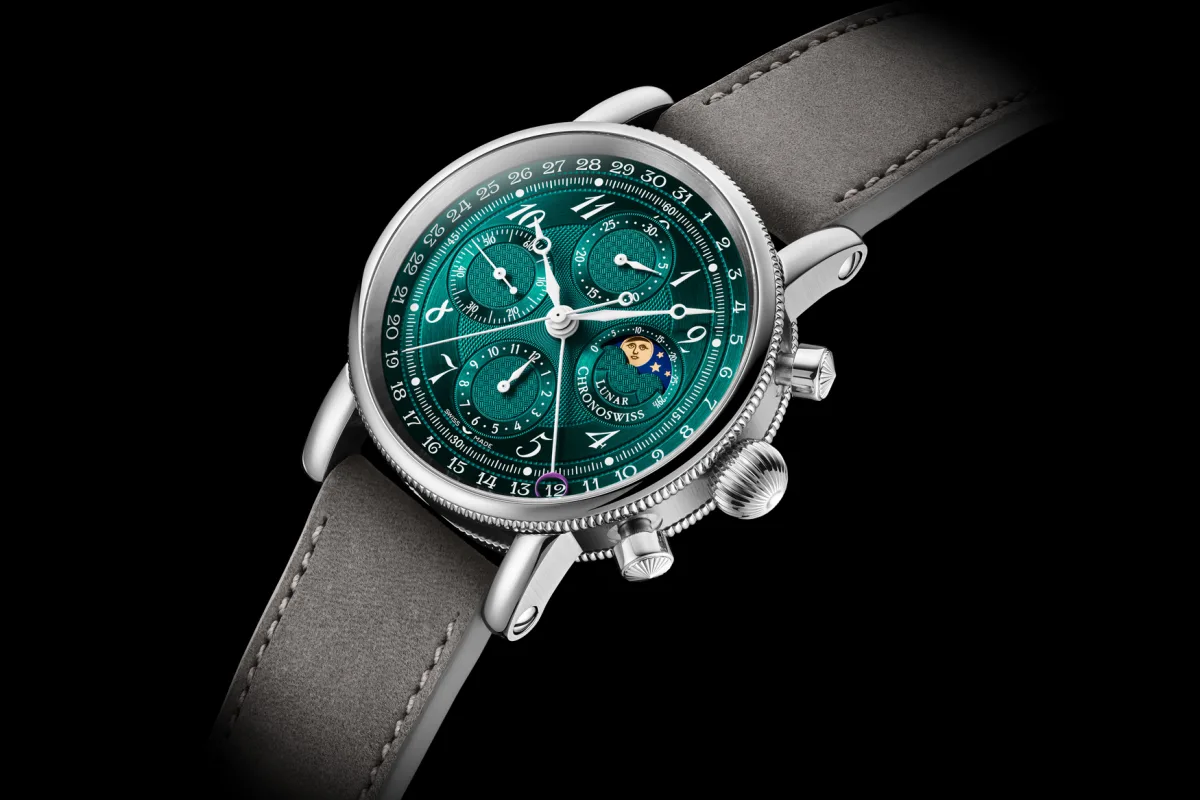
Functionally, it's a classic Chronoswiss-style chronograph layout. The central chronograph second hand works alongside 30-minute and 12-hour counters, the moon phase is located at "3 o'clock." The small second hand is at "9 o'clock," and the date is shown by a central analog hand pointing to a scale from 1 to 31 around the dial's perimeter, maintaining symmetry and avoiding a date window.
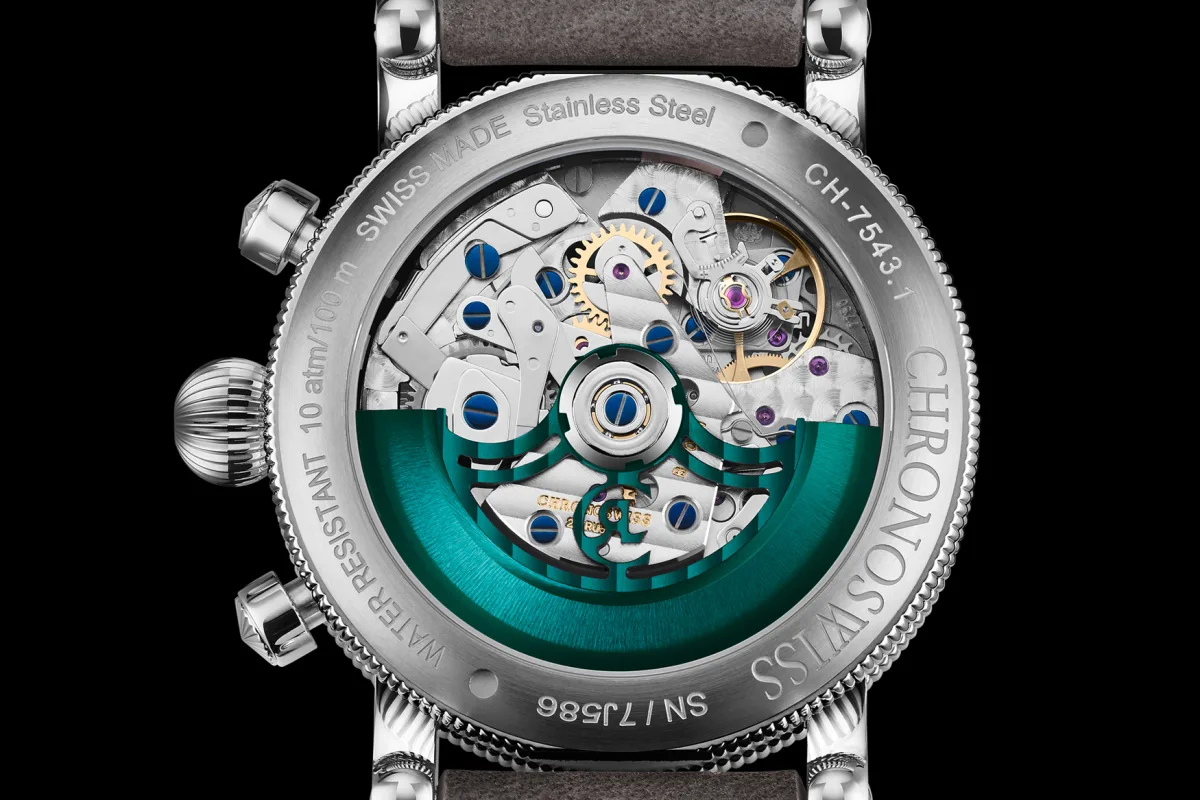
The case is 41 mm in diameter, made of stainless steel, with a thickness of 15 mm. The case construction consists of 23 elements, satin-finished with a polished bezel, partial knurling, curved sapphire crystal, and a screw-down sapphire case back. The signature Chronoswiss elements - an onion crown and screwed lugs - are present, water resistance is 100 meters. The dark gray nubuck strap gives a modern look without making the watch too sporty.
Inside is the automatic Chronoswiss C.755 caliber based on the ETA 7750, operating at 4 Hz and providing a power reserve of about 46 hours. The movement is equipped with a three-spoke Glucydur balance, Nivarox 1 hairspring, fine adjustment with eccentric, Incabloc protection, perlage finishing, and a skeletonized rotor visible through the sapphire case back.
Specifications of Chronoswiss Lunar Chronograph Aurora
| Parameter | Value |
|---|---|
| Brand | Chronoswiss |
| Model | Lunar Chronograph Aurora |
| Reference | CH-7543L-DGR |
| Case Size | 41 mm (diameter) x 15 mm (thickness) |
| Case Material | Stainless steel |
| Water Resistance | 100 meters |
| Crystal | Sapphire front and back |
| Dial | From deep green to bright blue |
| Strap | Dark gray nubuck |
| Movement | Chronoswiss C.755, based on ETA Valjoux 7750, automatic |
| Power Reserve | 46 hours |
| Functions | Hours, minutes, small seconds, date, moon phase, chronograph |
| Availability | Available |
| Price | Not specified |
Final Conclusions
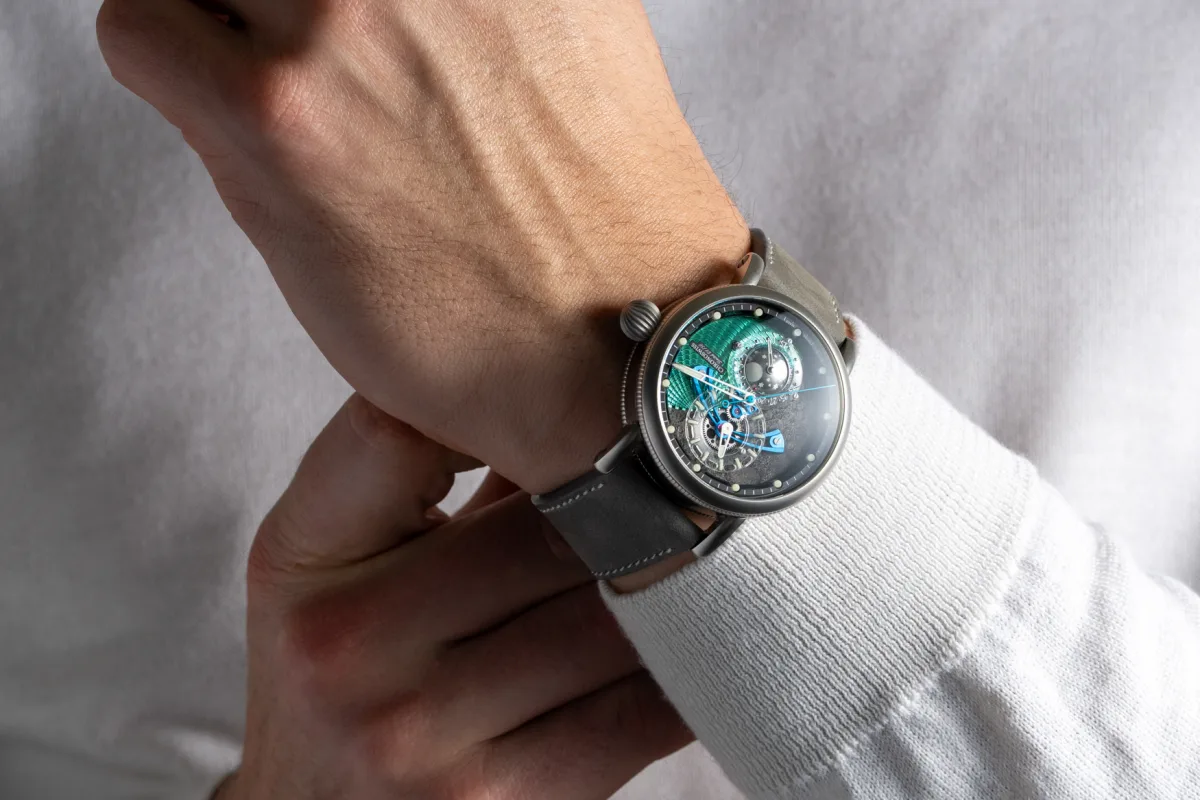
Together, these two models showcase Chronoswiss's direction: traditional complications presented through modern surfaces and explicit construction, while preserving the tactile codes of the case that make the brand recognizable. Both models feature a color palette from green to blue, both have practical 100-meter water resistance, and both use the moon as an element beyond mere decoration.
The difference lies in the presentation. The Space Timer Gravity is a mechanical theater: a regulator layout, suspended transparent rings, and an open movement that becomes part of the "gravity" narrative of the dial. The Lunar Chronograph Aurora is a more traditional everyday option: a familiar chronograph with atmospheric dial updates and a set of hands geared towards readability. It is also worth noting that neither model is thin - the thickness of over 15 mm is part of the concept, emphasizing the watches as noticeable objects, not discreet accessories under the cuff.