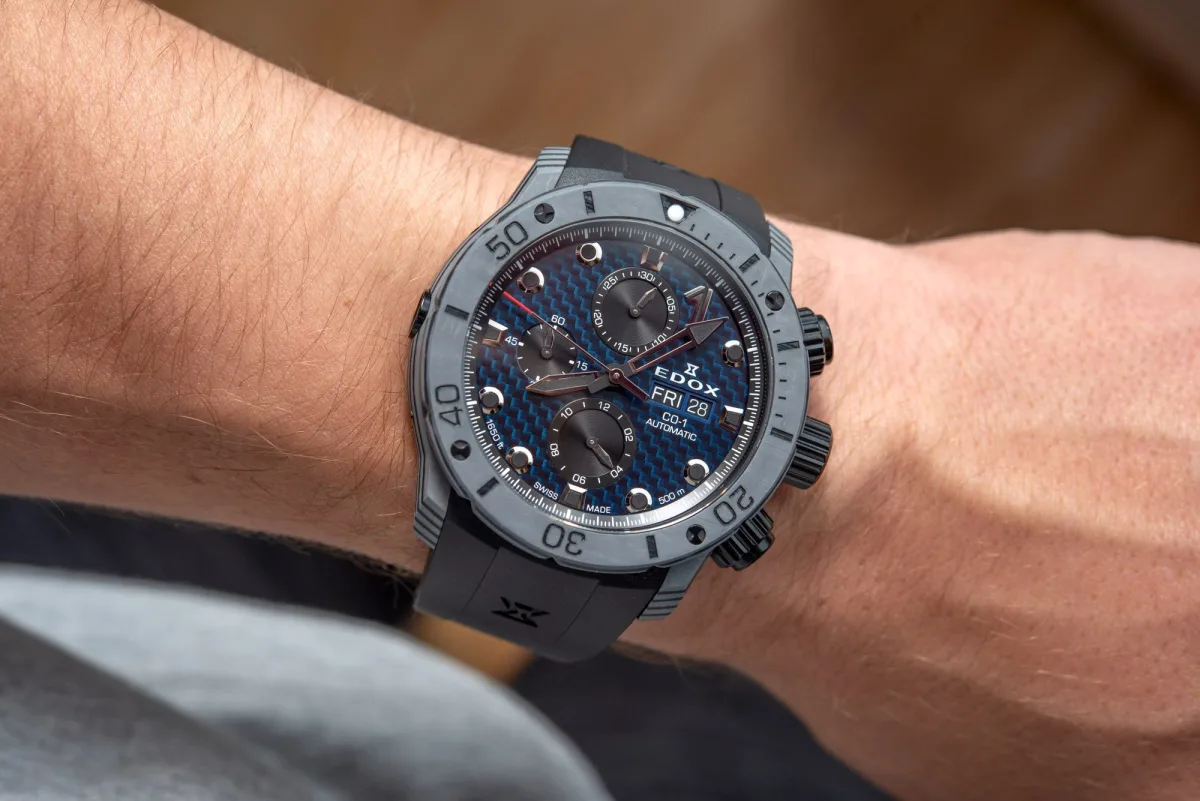
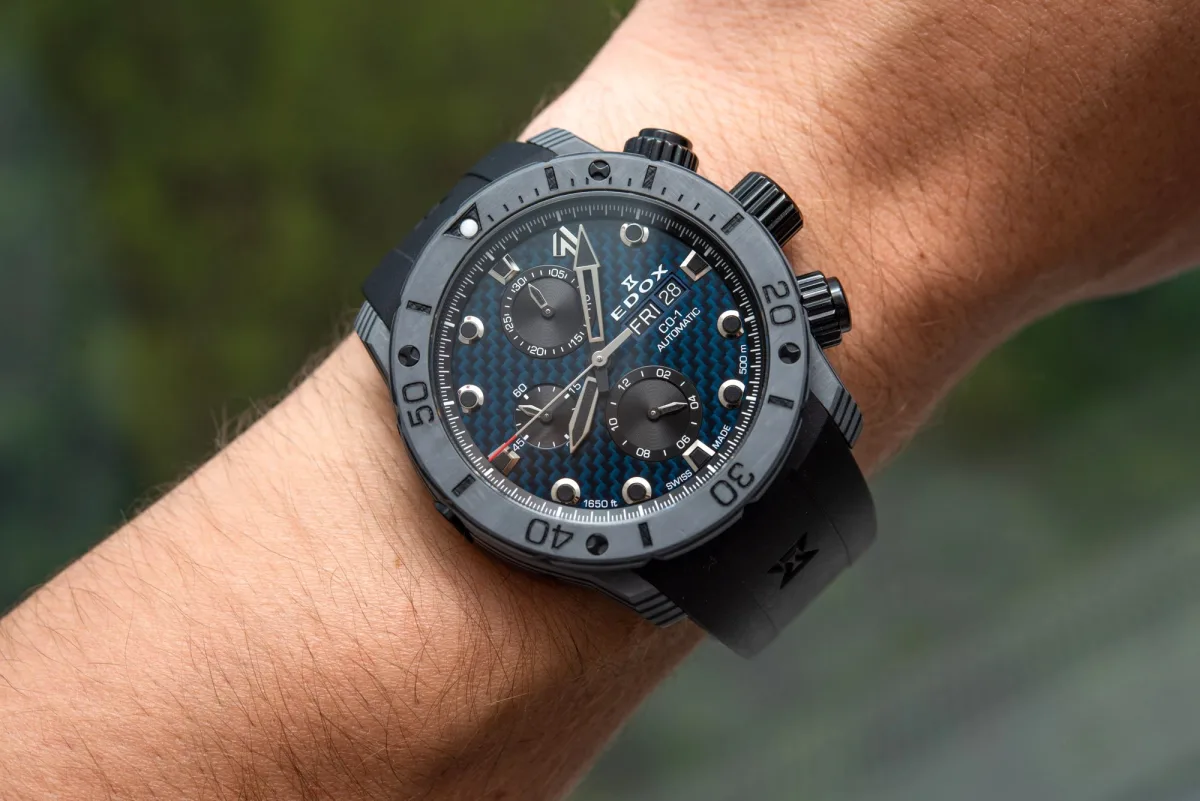
While five-digit luxury watches often grab attention with new flashy materials paired with even flashier looks, the world does not stand still in the lower four-digit range either. Enter the Edox CO-1 Carbon Chronograph - a $3,890 watch featuring a carbon-ceramic resin case, 500-meter water resistance, a helium escape valve, a rotating dive bezel, screw-down pushers and crown, and a gold-colored movement.
Yes, Edox has truly pulled out all the stops for its CO-1 collection, and as if by magic, the end result has become one of the best offerings equipped with the 7750/SW500. In the range of $3,000 to $5,000 (and above...), there are so many chronographs equipped with the 7750/SW500 that it creates a competitive microcosm of popular entry and mid-level luxury watches. It's no surprise that many of them have a distinctly OEM feel (OEM means "original equipment manufacturer" - case, dial, hands, clasp, strap have the same typical design, as they are all supplied by one or another well-known supplier). While there's nothing wrong with them quality-wise, personally, I seek a unique design created from the eternal ingredients: the triple sub-dial layout, the crown and two pushers, and a large, bulky case.
No matter how enjoyable watch reviews are, I simply can't review dull watches equipped with the 7750/SW500 anymore. They drain all my will to live. In contrast, potentially well-made (I won't know until I hold them), creatively designed watches priced below the "big names" of the luxury industry are what can make my heart race, because that's what I would much more gladly recommend to friends and loved ones. Why? Because they are much less likely to tire of it in the foreseeable future, which is preferable since they are not exactly leaders in value retention. If you make the wrong choice, you either take a loss or struggle to sell the item before moving on to the next. That's why a strong pre-selection stage is important to me.
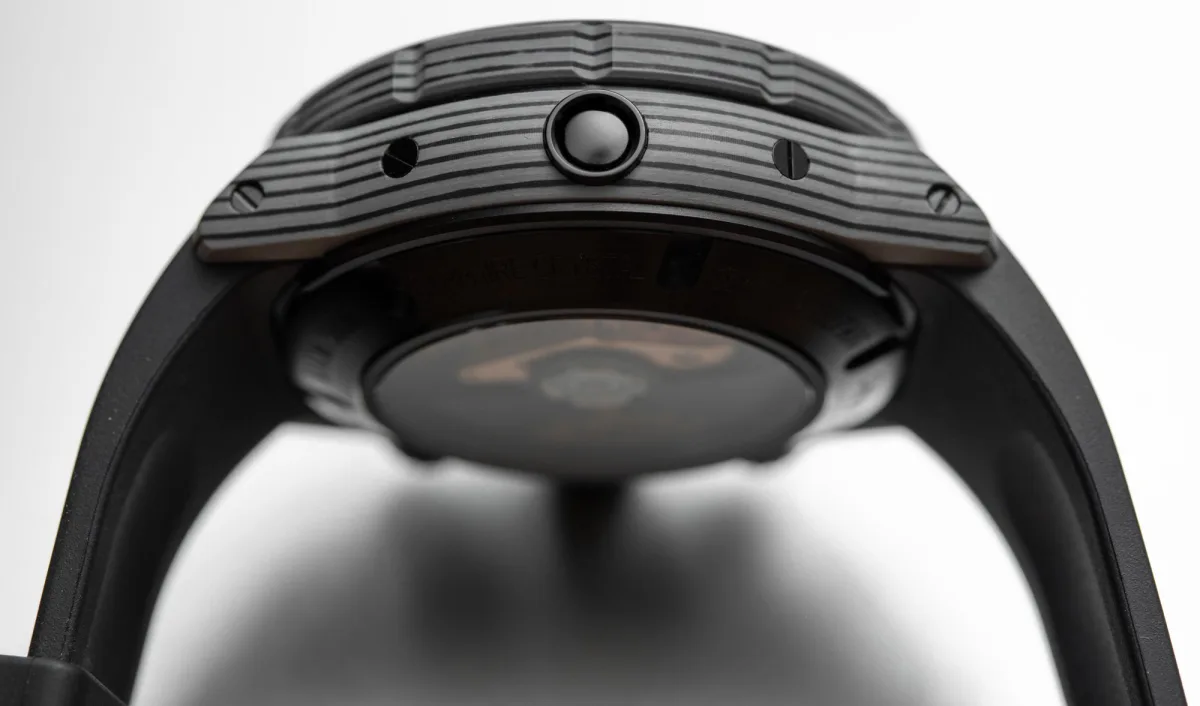
Over the past decade or so, carbon fiber cases have come a long way. Just the other day, I saw an early forged carbon Audemars Piguet Royal Oak Offshore for sale, and it looked like a two-month-old potato that had been in a car crash. Since regular "checkerboard" carbon is a pain to manufacture into watch parts and cases, figuring out how to make neat forged carbon cases became a priority - ultimately, the industry and its suppliers succeeded in this, and at some point, the price dropped to $865. Meanwhile, other types of carbon have also been tested and modified for specific use scenarios in high-end watchmaking, including a wide variety of multilayer carbon solutions.
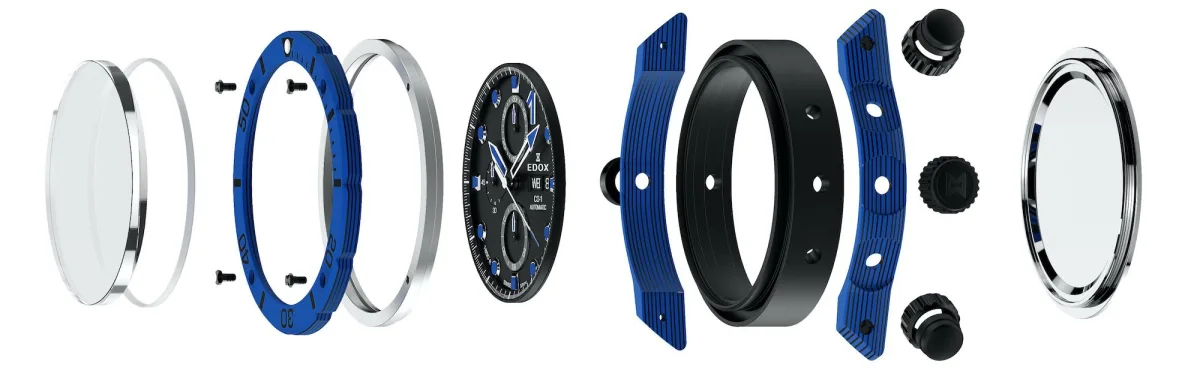
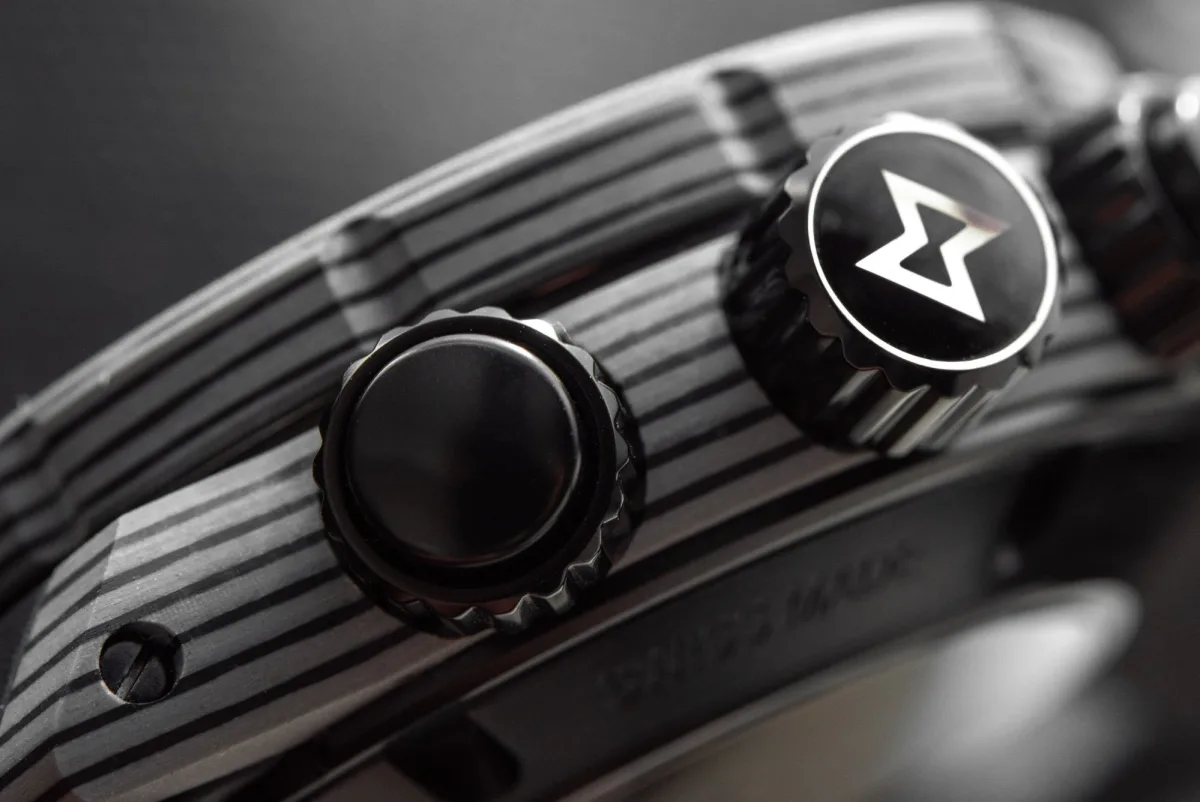
According to the brand, "The Edox CO-1 Carbon Chronograph case is made from a newly developed material that is much more resistant to scratches and general wear than ordinary carbon. Made from a ceramic layer forged in resin with black carbon and glass fiber inclusions, it gives a distinctive color and texture." Personally, I've never had problems with scratches and wear on other types of carbon fiber watches, but what I can appreciate is the distinctive striped look and various colors provided by this unnamed type of carbon that Edox used for their CO-1 watches.
The benefits of carbon, as you probably know, lie in its extreme lightness yet incredible hardness and strength, combining a unique sporty aesthetic with wearing comfort (thanks to its lighter weight, better thermal conductivity - no hockey puck feeling when putting on in the cold, and no allergic or other skin irritations that I'm aware of). Carbon can indeed offer a lot to the end user, but compared to soft 18-karat gold or even 316L steel, it is balanced by a damn complicated manufacturing technology. Since carbon is so hard, and these layered carbon materials even harder, they present a real challenge when it comes to machining the base material into precise and refined watch exterior forms. Drilling and cutting tools need to be changed much more frequently because they just chew through them randomly, and special holders often have to be developed so CNC machines can make their way through the material when one half of the case is already done. Much of this knowledge I gathered by visiting Richard Mille's ProArt center and talking to engineers collaborating with carbon case suppliers in the industry - but I have no reason to doubt they apply to Edox's multilayer case as well.
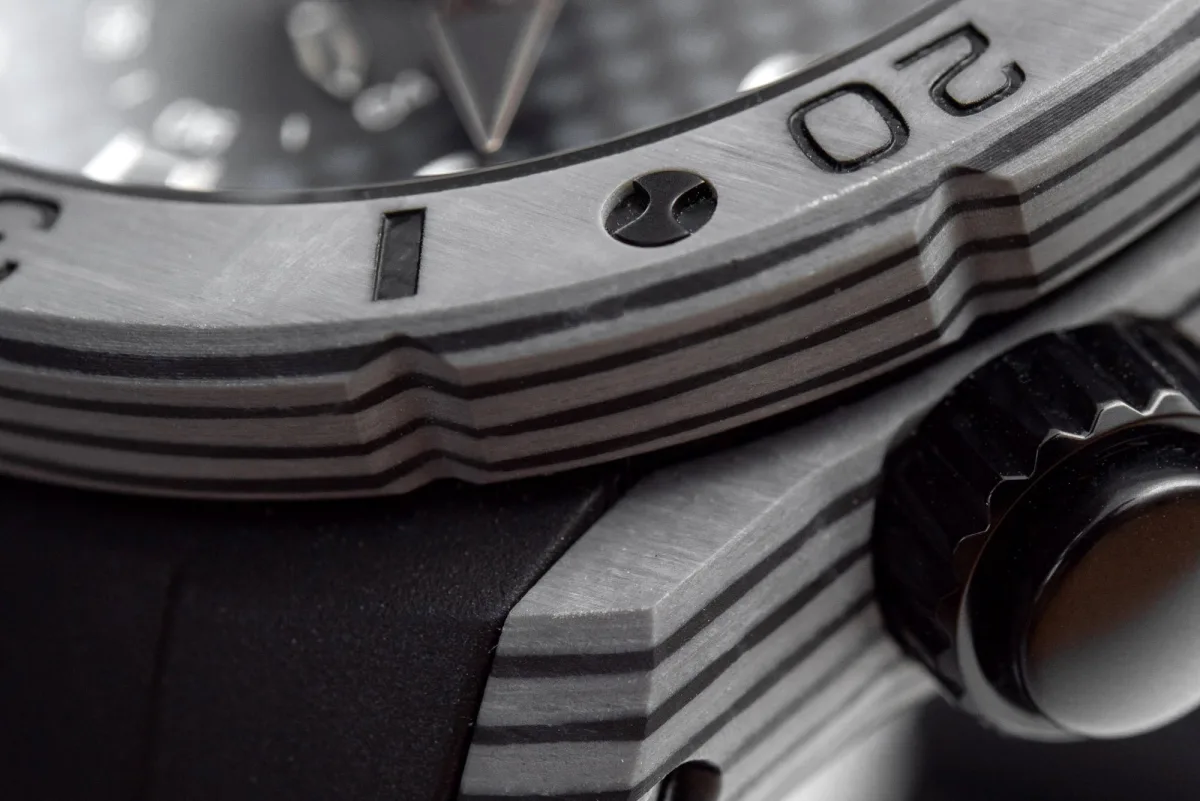
To the touch, the Edox CO-1 carbon case feels a lot like polished wood that hasn't been lacquered. It's matte and obviously unfinished, so you can feel the microscopic pores of the material. Unlike many sports watches with steel cases, the Edox CO-1 Carbon Chronograph case has no sharp edges anywhere, even on the underside or around the lug edges. So, just because the case surface is unfinished and you can feel its porous surface, don't think that this creates unpleasant tactile sensations - quite the opposite.
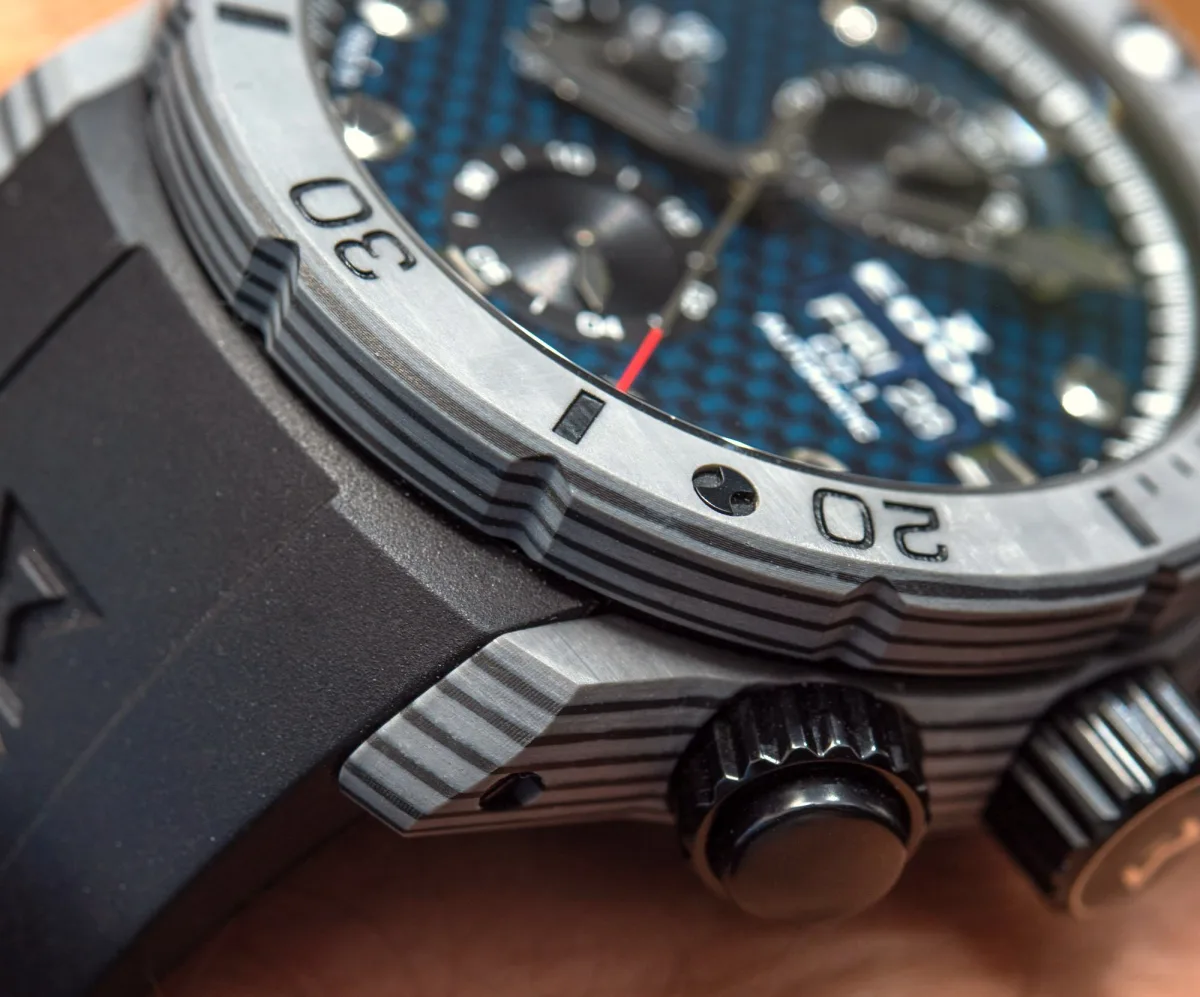
Despite the cartoonish multilayer material, upon closer inspection, it becomes evident that the tolerances with which it was machined are on par with the best cases of any watches costing at least $10,000. The bezel sits perfectly flat and virtually does not wobble side to side, the holes drilled for the screws securing the straps (+1 bonus point for that) are even and sharp, and the highly polished (another neat detail) screws installed on the left side of the case also sit perfectly flat. They look as if two screws somehow grew and burst out of the mechanism. It's rare to see such fine details on watches priced at $3,890. Seriously, big thanks for including these details.
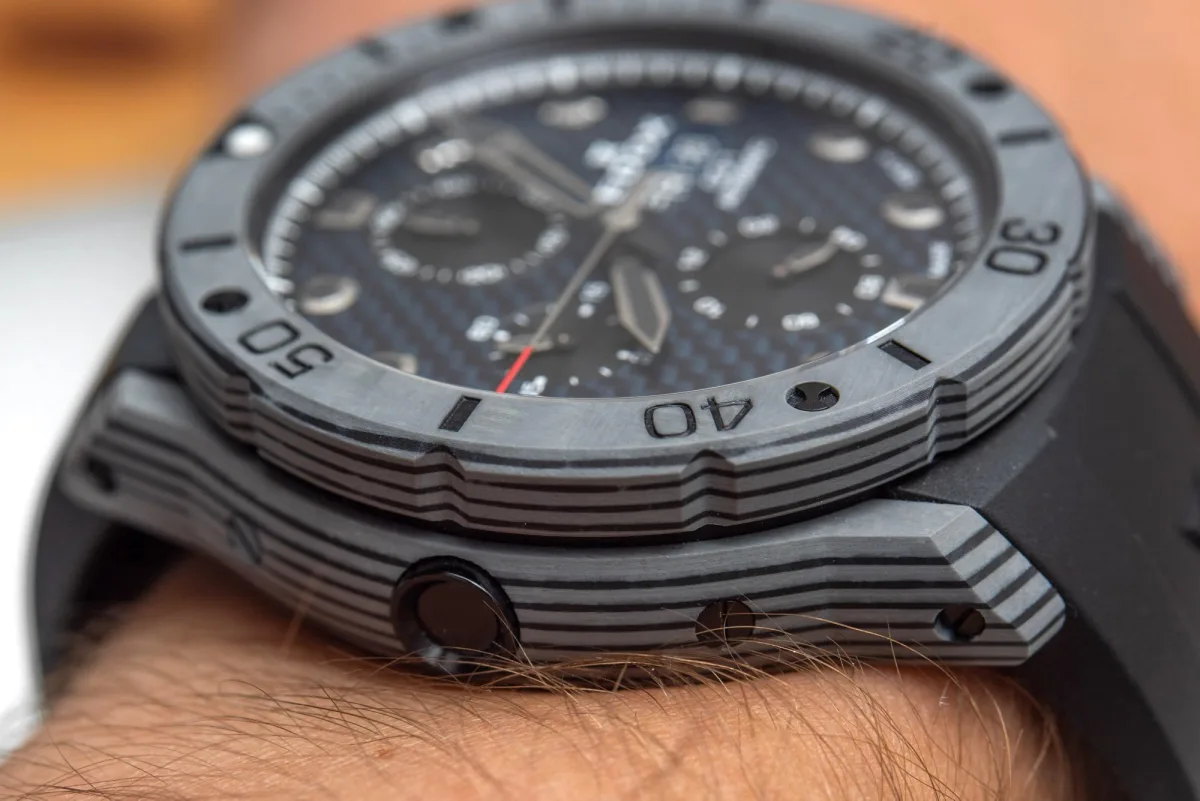
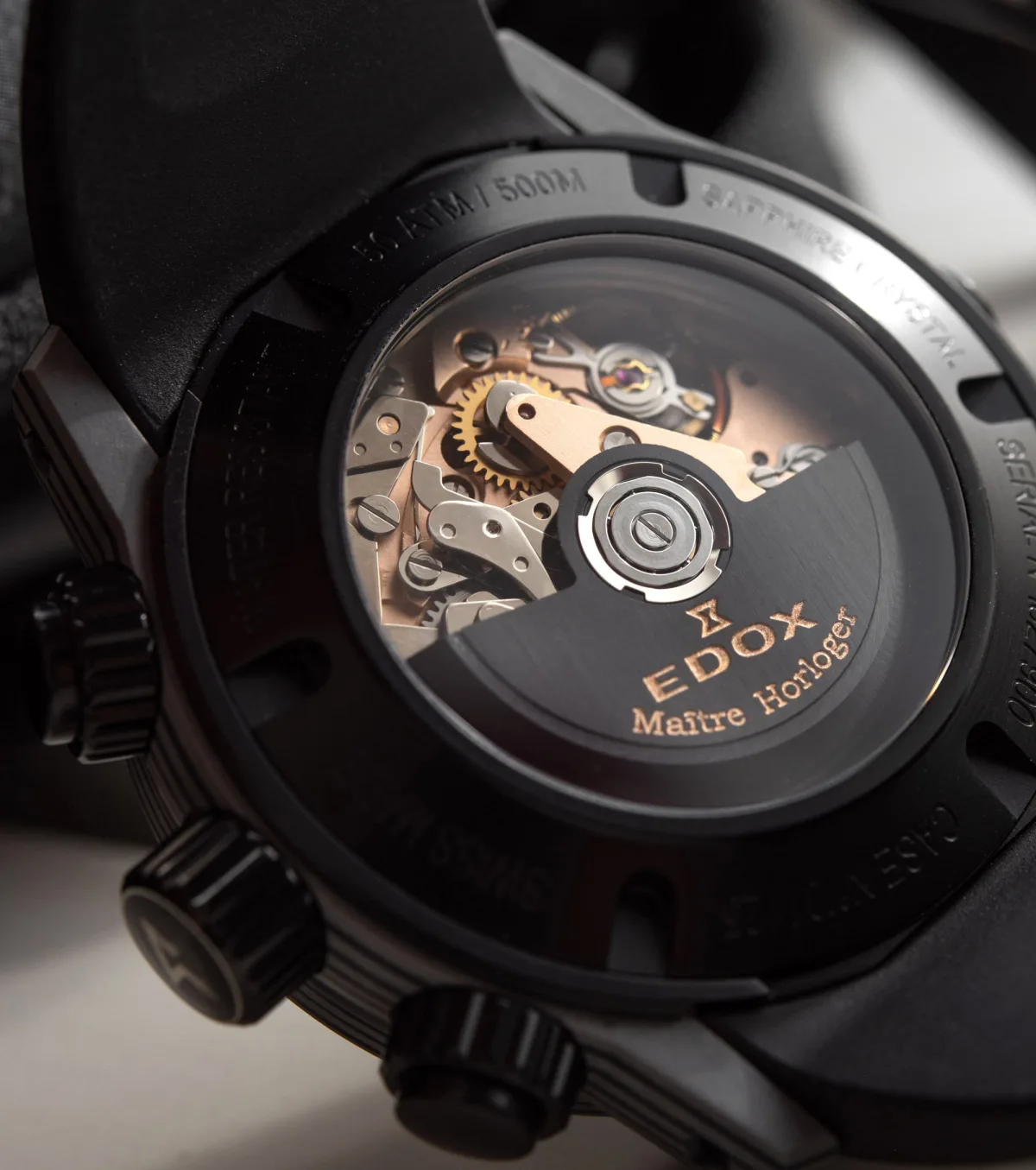
I love tapping on sapphire crystals with my index fingernail to gauge how sturdy they are. On cheap watches, it's a simple and reliable way to find out if sapphire glass was used or some cheaper alternative, and on dive watches with 500M water resistance, it's fun to feel how a brick-like very thick piece of sapphire had to be used to achieve that level of water resistance. Take regular watches with sapphire glass, tap on them, and then on real dive watches - it's like regular glass versus bulletproof glass - a fun and literally invisible detail that speaks to the foundational ruggedness of 500M dive watches.
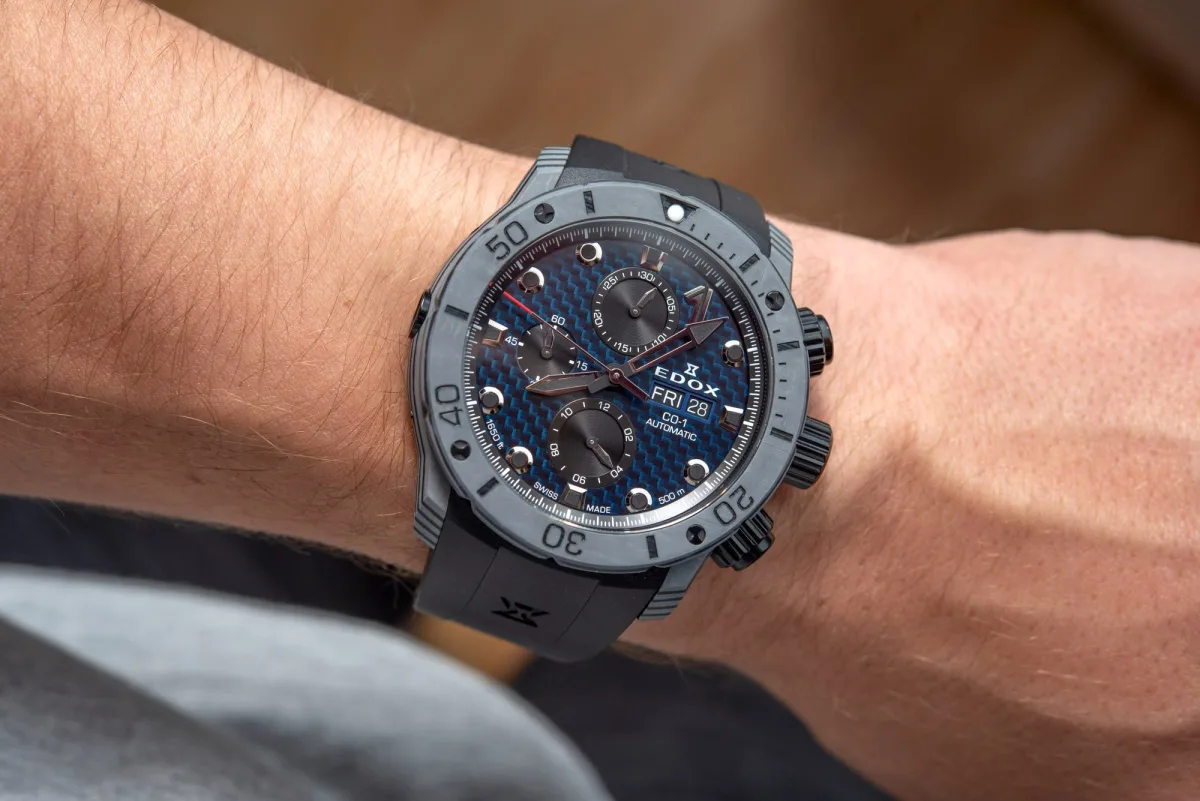
At 45mm wide, 16.8mm thick, and 50mm lug-to-lug, the Edox CO-1 Carbon Chronograph is a substantial watch. That's the nature of the beast: 99% of all watches equipped with 7750/SW500 movements are thick as hell because the base movement is inherently thick. Add 500m WR, a helium escape valve, a rotating bezel, and screw-down screws, and the CO-1 becomes as compact as it can possibly be. It's funny how you feel the weight gravitate towards the center of the watch: the case itself is very light, and the thick movement, thick sapphire glass, and all the internal engineering (metal inner core, metal case back) are everything but.
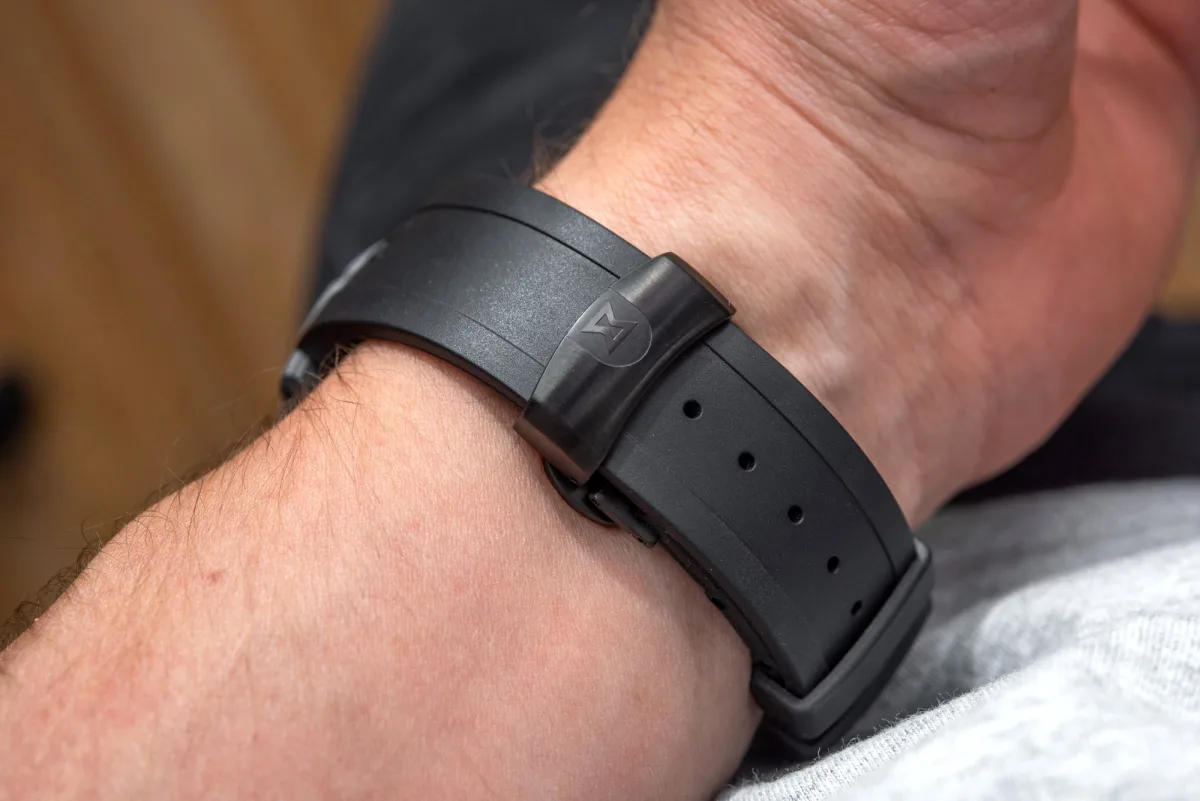
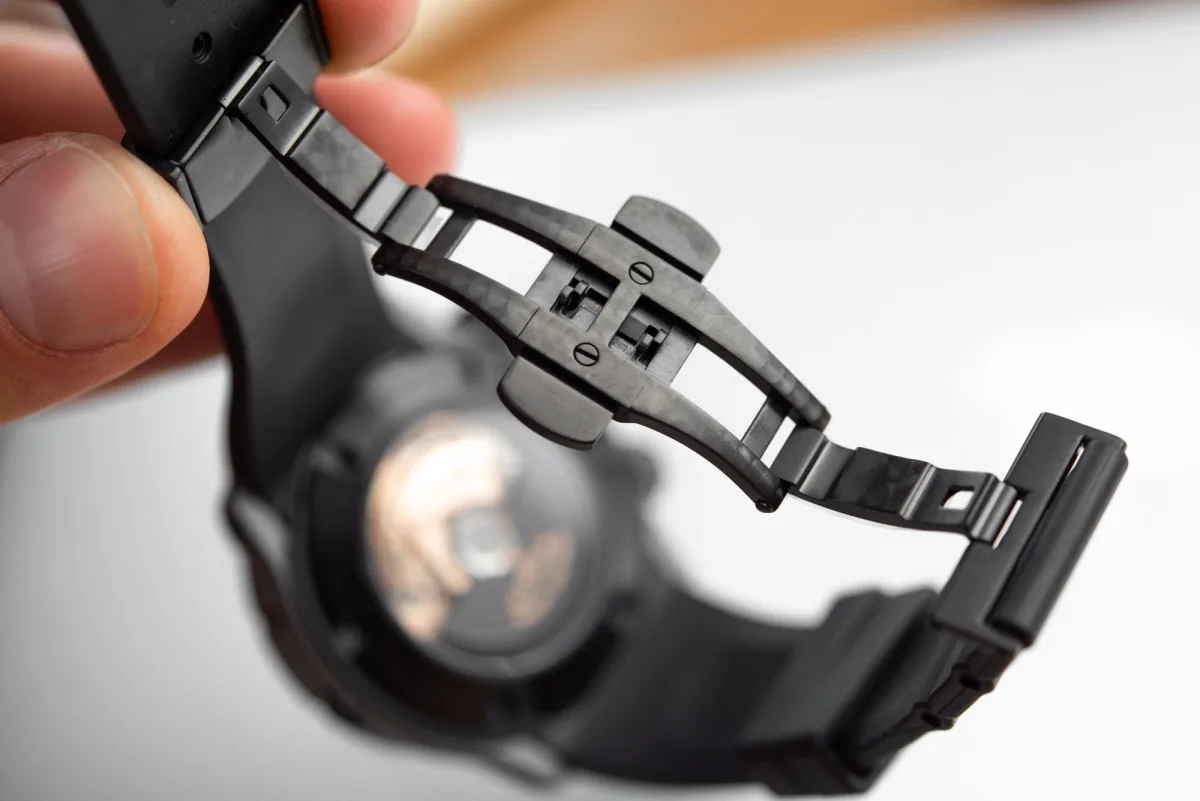
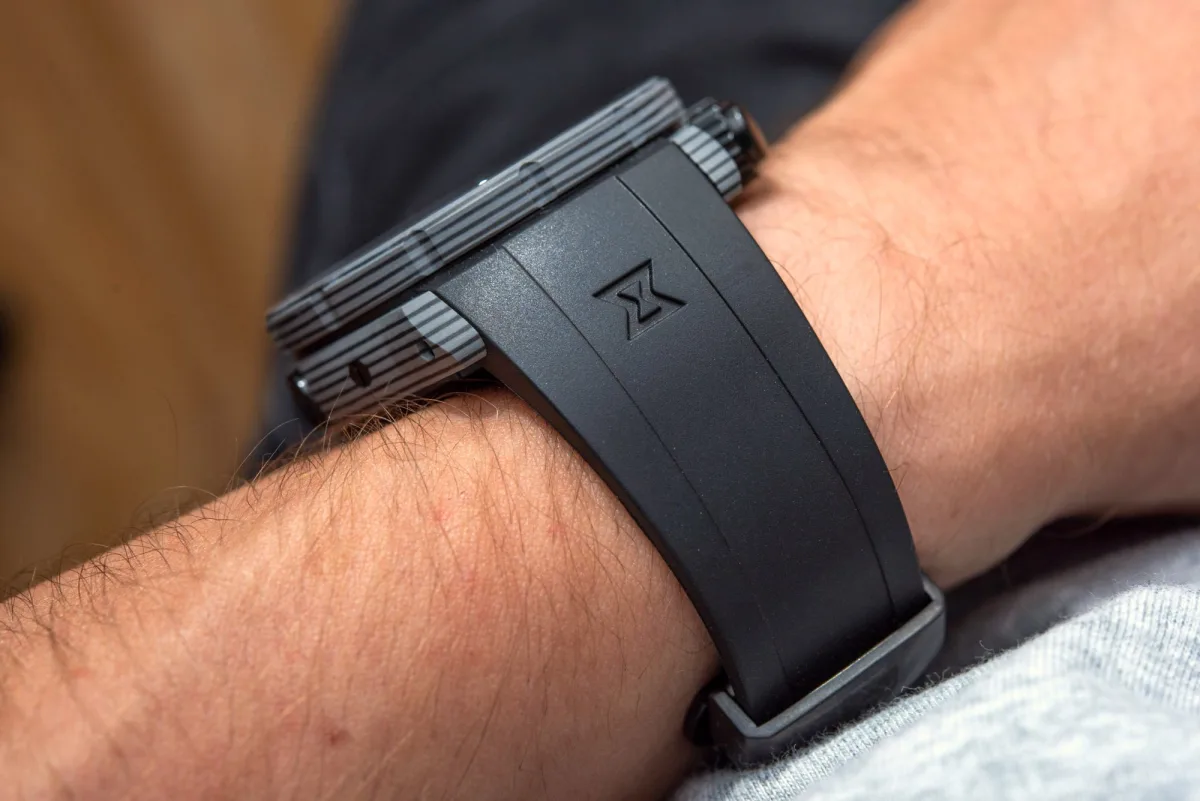
As a result, the overall wearing experience is pleasant, except for that silly double deployant clasp that, I believe, virtually all entry and mid-level luxury brands use solely because it looks more expensive than a regular tang buckle. I've worn countless dozens of watches equipped with exactly this clasp, and each has always left its mark on the underside of my wrist - a mark of discomfort, that is. I genuinely believe that all else being equal, with a regular tang buckle, the Edox CO-1 Carbon Chronograph could be among the most comfortable watches equipped with the 7750/SW500.
Watches with deeply and neatly integrated straps and bracelets tend to better hold their heft, with more or less complete reduction of wrist wobble (unless you're very energetic in your movements). The rubber strap tapers neatly and has a concave reverse side, leaving a bit of space between the skin and part of the strap. The advantage of this is that your wrist is less likely to develop a sweaty ring, as is usually the case with wide rubber straps and even wider watch heads. I wish the rubber strap manufacturer would finally figure out how to make the three ventilation holes found on Richard Mille straps because they really take wearing comfort to a new level.
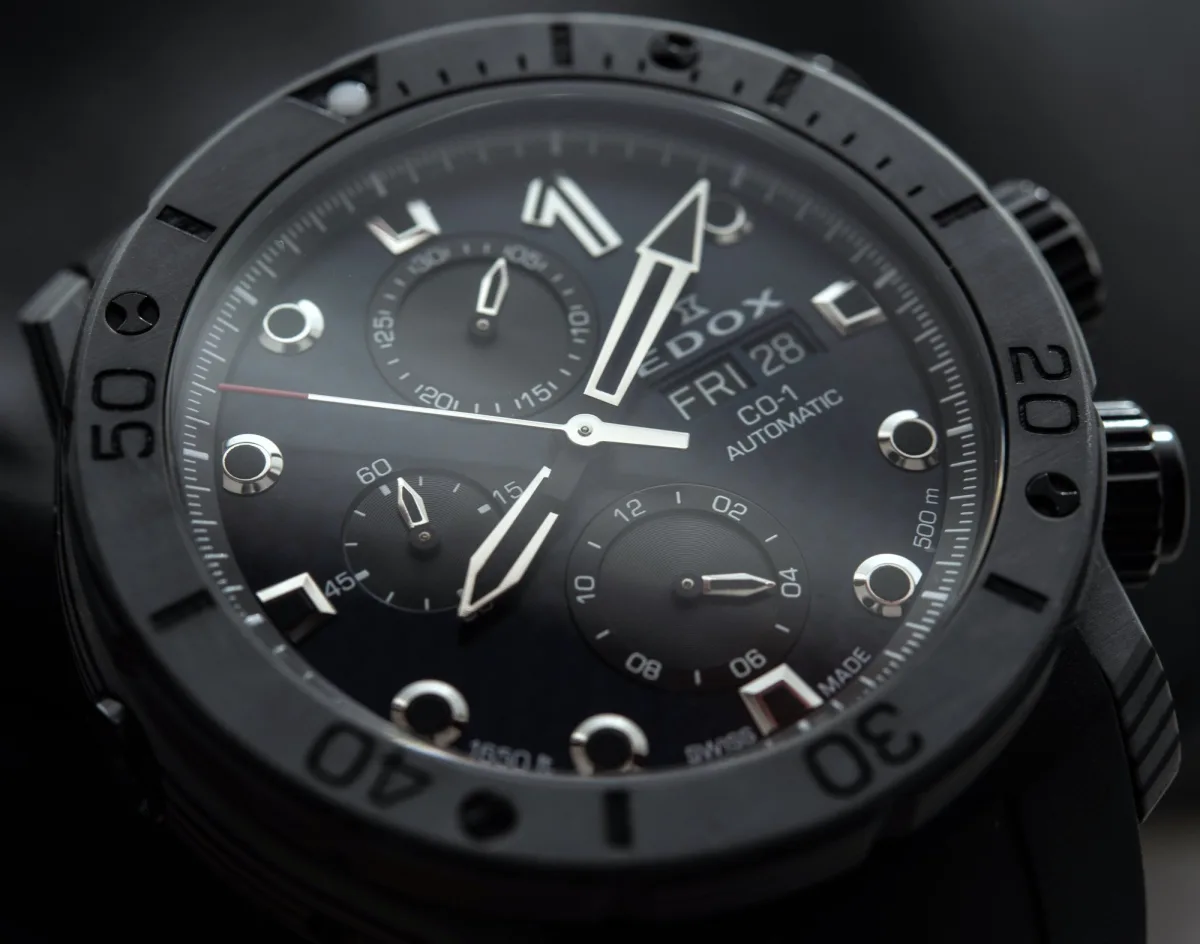
In some circumstances, legibility is mediocre, in others - excellent. Despite the dark theme, illegibility becomes a problem only in pitch darkness. As long as there is a bit of light, the shiny frames of the hands and indices will allow you to tell the time without night vision goggles.
The lume is as bad as black lume usually is: Luminescence is barely noticeable and quickly fades. The lume on the bezel is noticeably brighter and longer-lasting than on the dial, which is sometimes a bit off-putting - or so it is for the lume geeks among us.
But under all other circumstances, the CO-1 proves what Hublot proved a long time ago: Fully black watches can be comfortably readable, much better than watches with shiny, skinny hands over shiny dials and horrible crystals (big, big brands still make these mistakes).
The sapphire crystal on the CO-1 has an anti-reflective coating, which makes it easy to appreciate the black design - we've seen on watches 8 times more expensive how much the absence of AR affects the chances of appreciating the sporty black design.
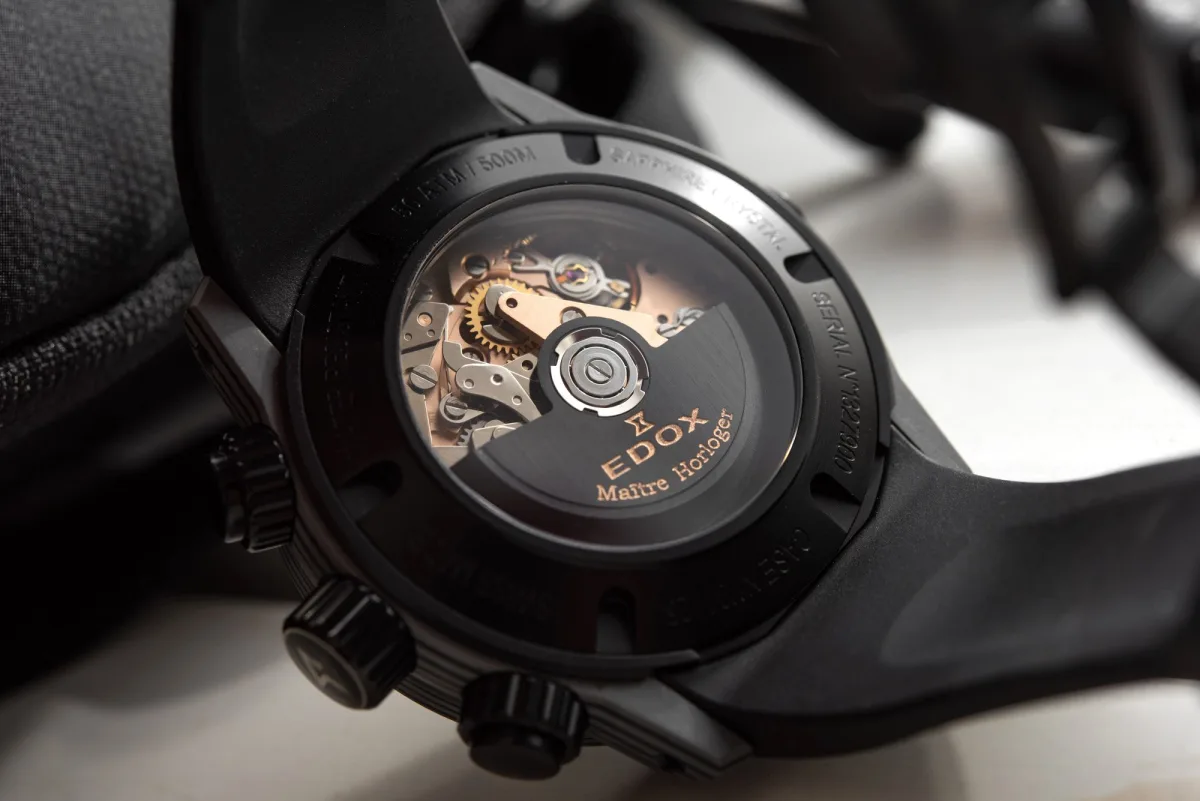
The movement is the Edox Caliber 011, which according to Edox, is based on the Sellita SW500 - thanks for including this information on the product page on the website. The 7750-based design means 7.9mm thickness, 48 hours of power reserve, Incabloc shock resistance, and a 20-second daily accuracy tolerance. Honestly, I was a bit puzzled at first to see such a wide range of tolerances, but the feeling of bewilderment quickly passed when I realized how incredibly rare it is to see a brand in this price category provide such a "worst-case scenario" rating. Others (practically all others) using 7750/SW500 movements simply remain blissfully silent.
It goes without saying that the actual, real-world accuracy should (and in all likelihood will) be much higher. Nonetheless, you can always find other watches equipped with 7750/SW500 movements with chronometer certifications if that makes you feel better. The sample sent to me stayed accurate enough; I never had to reset or adjust it due to excessive inaccuracy.
Lastly, and this is not something I regularly mention in my reviews, I was pleasantly surprised by how neatly Edox's story is presented on the brand's website. They should be a bit more open about the private ownership of the brand and how it was more or less resurrected in the 1980s (and in the 1950s), but nonetheless, it's a good summary of Edox's significant past watches and achievements. The point is, Edox is one of the most well-known and successful independent brands in this segment, and this fact may not be on everyone's radar.
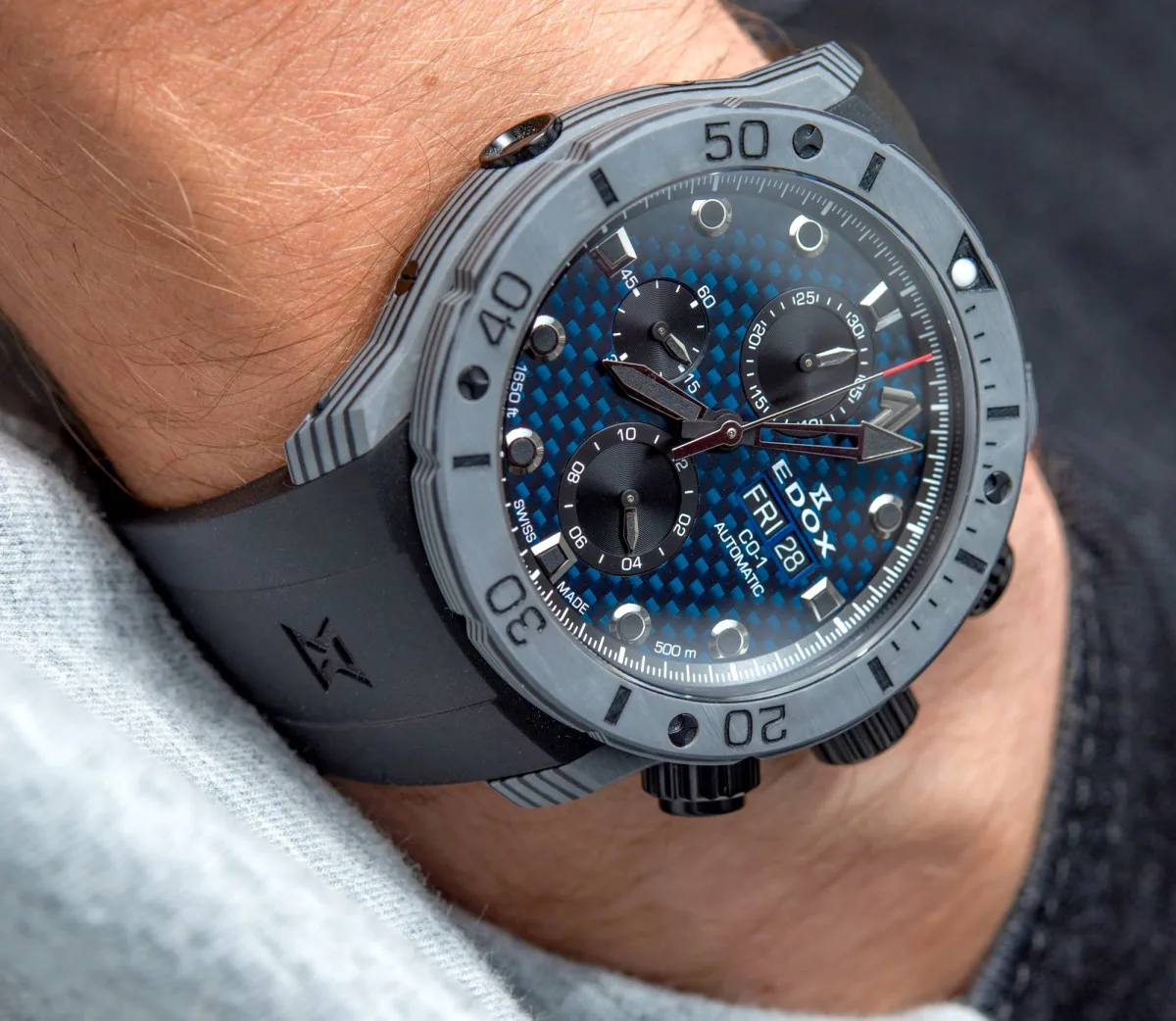
Overall, the Edox CO-1 Carbon Chronograph is a very solid offering, even at a price of $3,890. Its high-tech case, impressive detailing and quality, worthy wearing comfort, and only minor flaws make it a purchase I can recommend to anyone looking for a slightly flashy modern sports chronograph. With 500 meters WR, a rotating bezel, helium valve, screw-down case back, neat strap, and cool dial, it's a very good buy - even if it's a lot of bucks. The watch is available in various case and dial colors, and you can learn more on the brand's website.
Essential Data
>Brand: Edox
>Model: CO-1 Carbon Chronograph reference 01125-CLNGN-BUNN
>Price: $3,890 USD
>Dimensions: 45mm width, 16.8mm thickness, and 51.5mm lug-to-lug.
>When to wear it: Everyday, casual occasions.
>Friend we’d recommend it to first: Someone seeking a cool modern sports chronograph that goes beyond looks.
>Best characteristic of the watch: New materials combined with excellent detailed execution. Fun and enjoyable to wear.
>Worst characteristic of the watch: Would prefer a simple tang buckle and at least one color option with bright/regular lume on hands and indices.