Rumors about the return of the Gerald Genta brand had been circulating for a long time before the watch enthusiast community learned of its revival in 2019 with the Arena Bi-Retro version in a platinum case (featuring a simpler blue dial). Almost exactly a year ago (at the time of writing this article), BVLGARI, owned by LVMH (which acquired the Gerald Genta brand and name in 2000), announced the debut of this particular version of the watch in a titanium case, known as the Gerald Genta Arena Bi-Retro Sport. In the article about this model's debut, I discuss the history of the Gerald Genta brand and the current context of the hype surrounding Gerald Genta's designs. Today, I am trying out the Gerald Genta Arena Bi-Retro Sport watch with reference number 103448.
Although the Arena Bi-Retro Sport watch was introduced a year ago, it is still not available for purchase on the BVLGARI website (I do not believe a dedicated Gerald Genta brand website exists at this time), and is simply marked as "coming soon." The pandemic has extended already long production times for wristwatches, and the wait time for new releases, even after their launch, can take (as in this case) over a year to hit the market. I think the wait is truly worth it. Although the Arena Bi-Retro Sport watch can hardly be called a bargain considering its price of nearly $15,000, it is an exceptionally well-executed watch that has impressed everyone I have shown it to.
Key highlights include the extremely comfortable and intricately detailed Grade 5 titanium case, the eye-catching retrograde minute/jumping hour automatic mechanism, and the striking dial that combines excellent texture with impressive legibility. Overall, I believe that people who end up wearing this watch on their wrist will find it hard to part with it - even if they were initially reluctant about it.
The Arena Bi-Retro watches were among the first, if not the first, retrograde watches of this type. Retrograde indicators are those that, instead of making full circular rotations, follow a set path and then have hands that return to their starting position once they reach the end of that path. At the time when Gerald Genta (who passed away several years ago) founded his eponymous brand, he aimed for ultra-exotic things and was clearly ahead of his time in terms of design and complexity. Watches like the Gerald Genta Arena, Octo, and Gefica from the 1990s were popular with a certain audience but, like many other "non-standard" luxury brands, they failed to gain popularity with the general public. It took two decades or more before some of his works and those of other designers from the Gerald Genta brand began to receive the recognition they deserved. In the context of some of the brand's creations, the Arena was relatively modest compared to them.
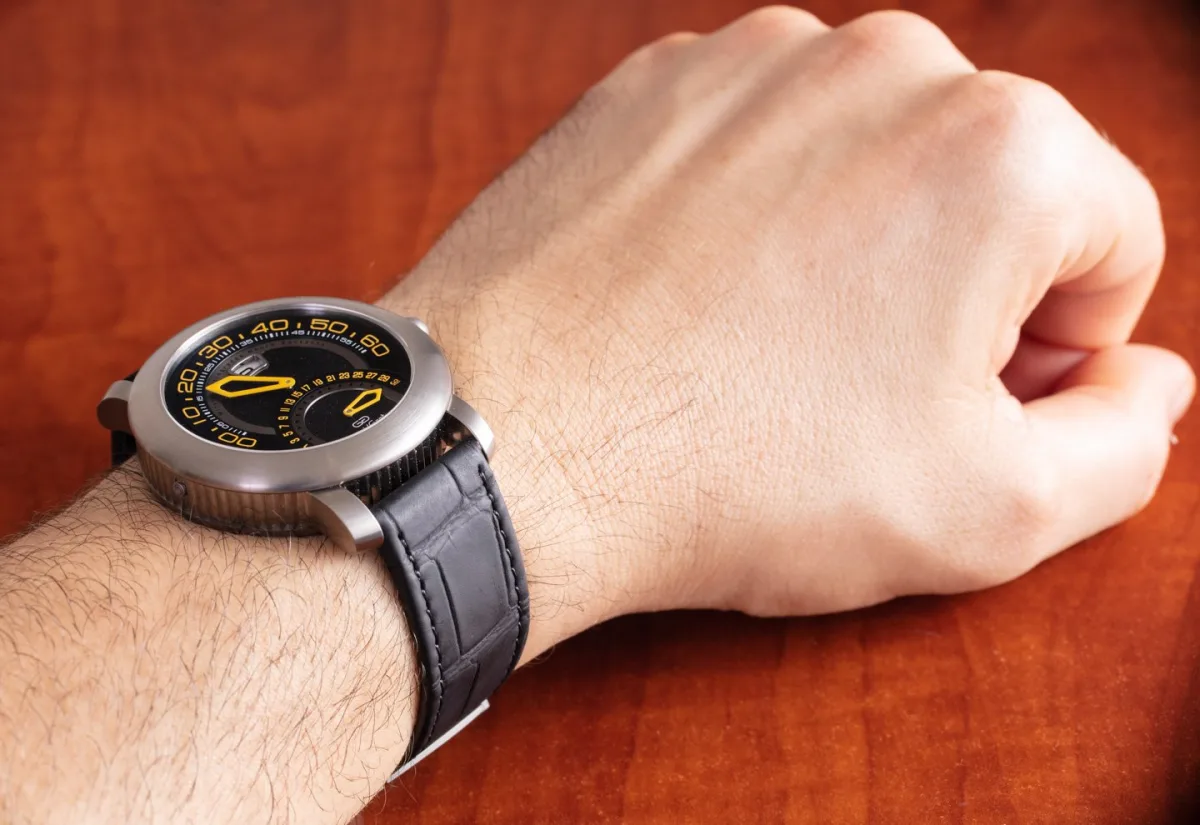
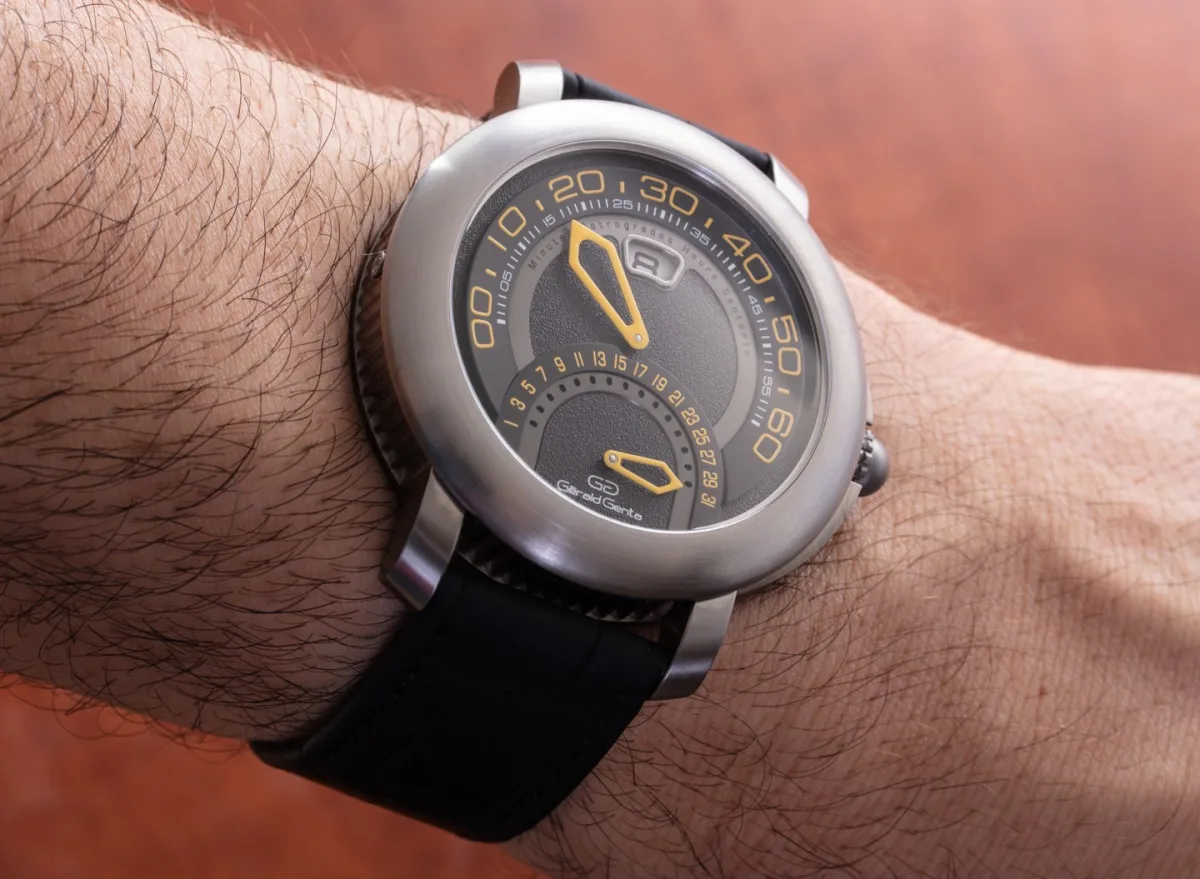
BVLGARI has already turned one of Gerald Genta's most iconic designs into a brand staple with the Octo model (which has taken on many new forms with BVLGARI branding on the dial). Now the Arena Bi-Retro will be clearly positioned without the BVLGARI branding and with a new version of the original Gerald Genta logo. What does it remind you of more, BVLGARI or Gerald Genta? It's actually a good question because, at least for now, these watches are openly produced by BVLGARI and sold through BVLGARI distribution channels. I would say that these watches feel different from other BVLGARI products. It's obvious that they are produced in the same high-quality manner, but instead of an Italian fashion sense, the Arena Bi-Retro Sport feels less like they aim for mainstream luxury and clearly strive to blend high design with a competent wrist tool (i.e., somewhat more Swiss in execution).
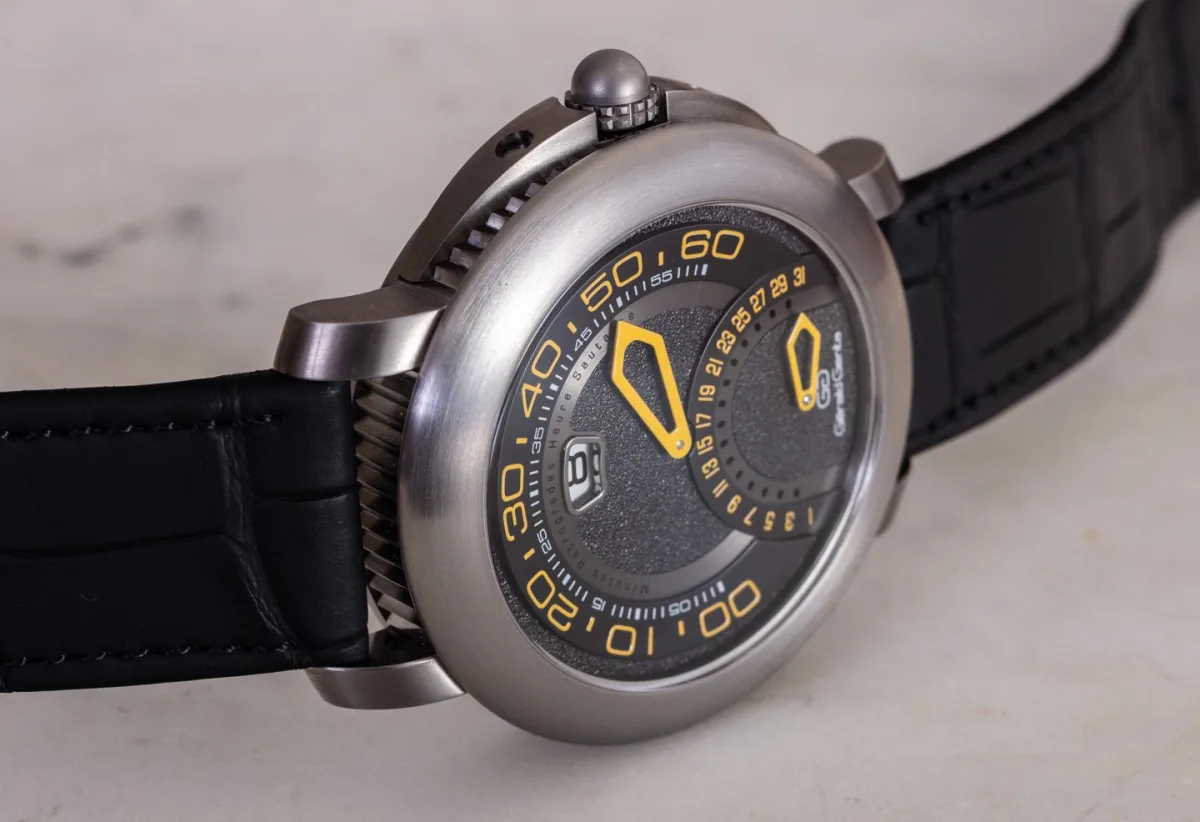
Don't be misled by the "sport" part of the name. These watches are lightweight and legible, but beyond that, I wouldn't recommend being too rough with them. The titanium case is 43 mm wide (about 11 mm thick and 52 mm lug-to-lug distance), water-resistant to 100 meters, and features a slightly domed sapphire crystal with AR coating over the dial (and another over the movement). It's durable, but remember that titanium is a sensitive metal and prone to scratches. Such wear won't look too pretty on the beautiful polished and matte surfaces of these watches. I particularly like the matte bezel, set at an angle, as well as the column-like details on the side of the case and the precise lines of the crown.
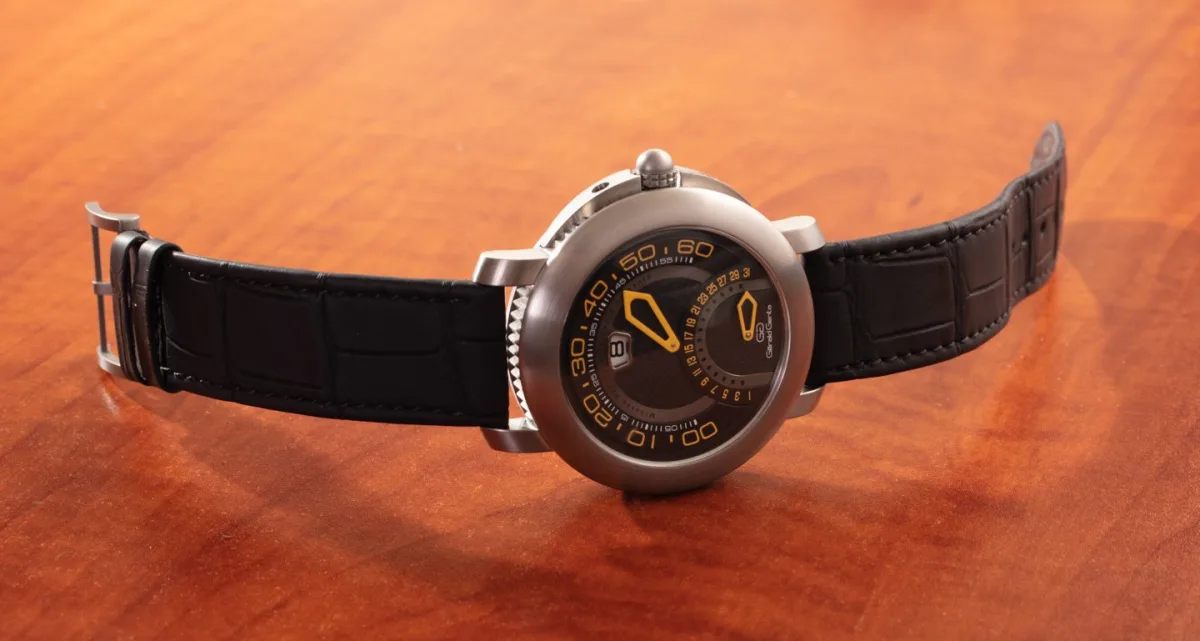
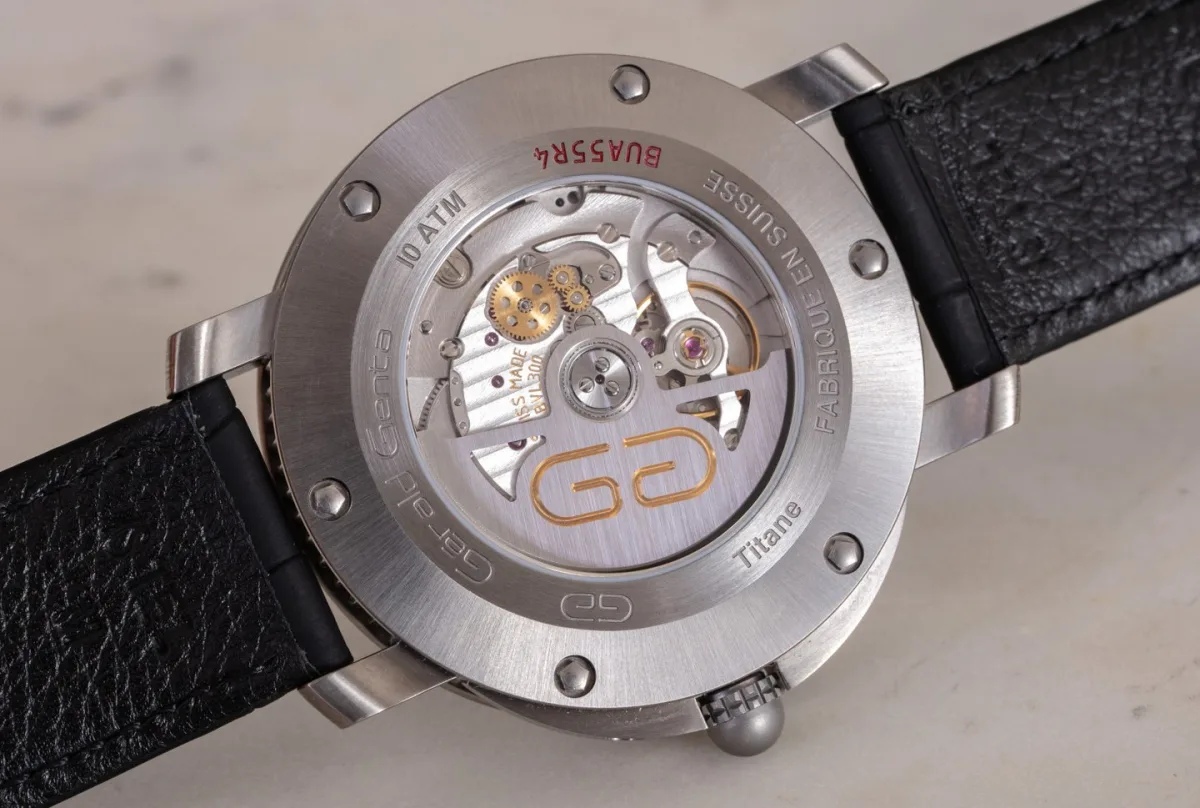
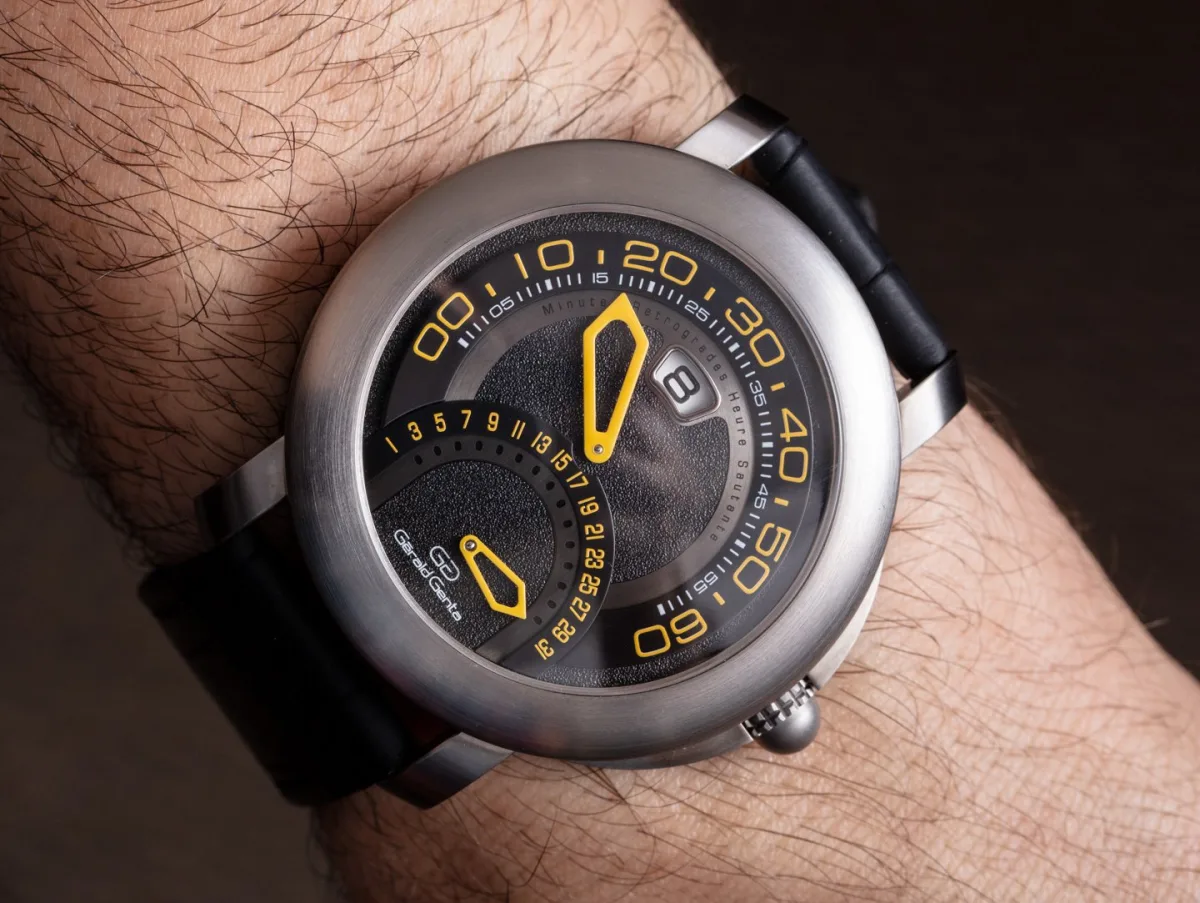
Everyone who wears the watch on their wrist comments on how comfortable they are, especially on the high-quality matte black alligator leather strap, which is relatively thin (despite having a soft lining) and easily wraps around the wrist. Some watch brands would have spoiled the wearing comfort by including a bulky folding clasp on the strap. Fortunately, the BVLGARI designers had the good sense to realize that a traditional buckle is the most convenient and comfortable way to wear such a watch. The watch also feels thinner than it actually is because the flat case back sits very snugly against the wrist. The screw-down crown has a grooved section that makes it easy to unscrew, and the rounded and matte crown head echoes the style of the rounded bezel of the case.
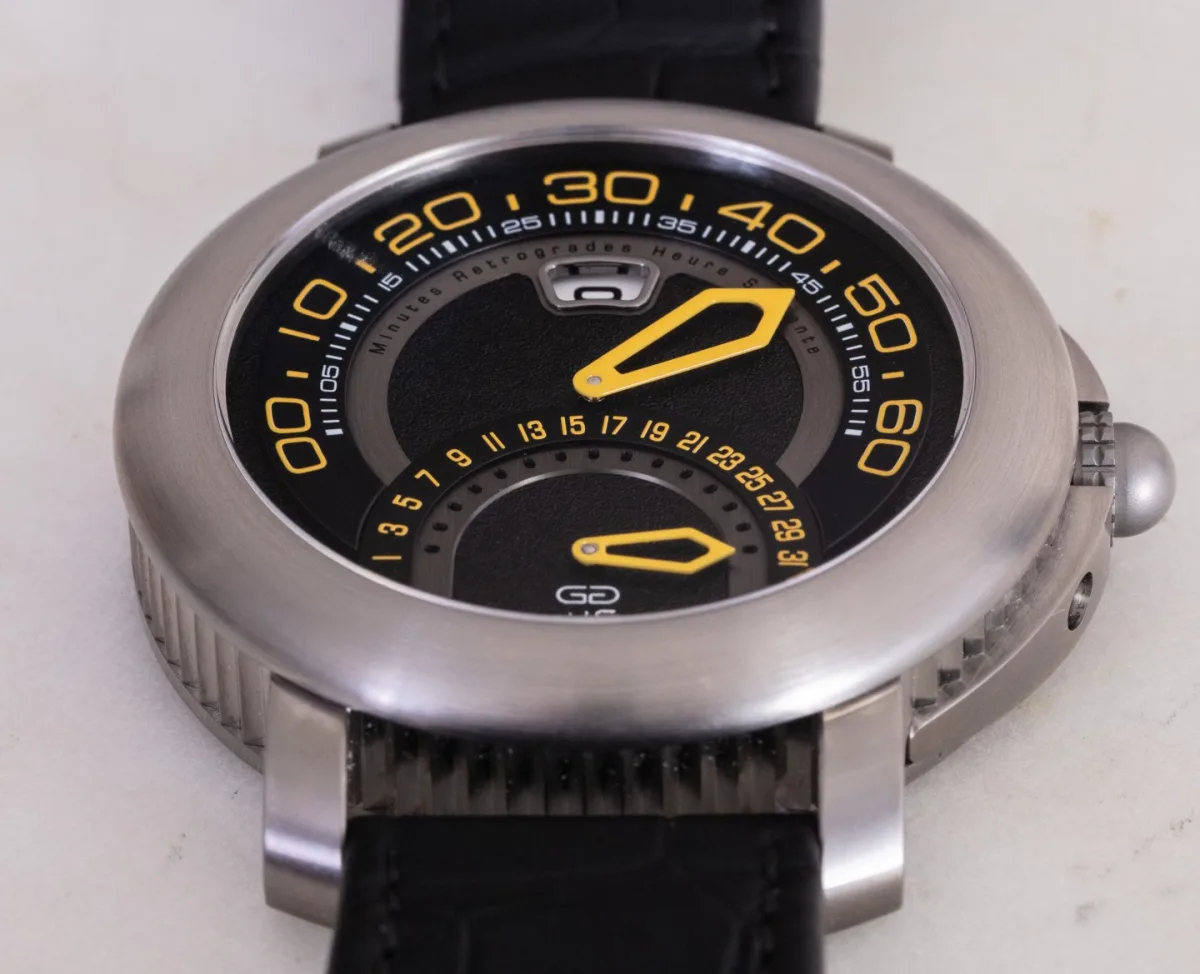
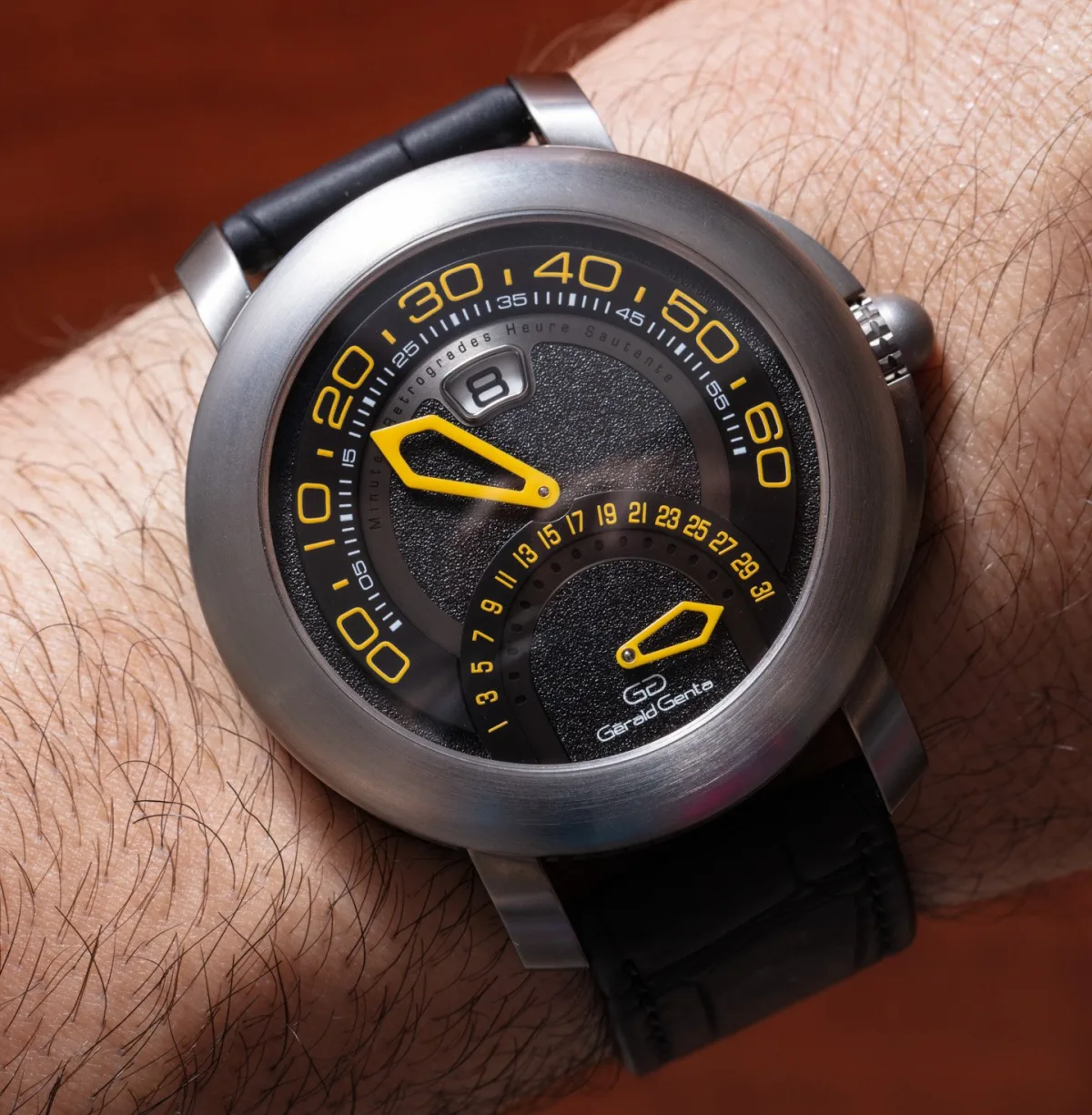
Many found the platinum version of the Gerald Genta Arena Bi-Retro watch to be a bit dull when it came to dial design. BVLGARI experimented with a more minimalist design they used in the Octo watch series. I'm not sure it worked as well with the Arena Bi-Retro. In the Reference 103448 Sport model, BVLGARI more closely resembles the classic Gerald Genta look that enthusiasts enjoy. It includes playful shapes, bright colors, a serious focus on logical utility, and a kind of neo-art-deco. In the marketing photos of the watch, the text on the dial seems very noticeable, but in reality, the text on the inner metal ring is off to the side and almost doesn't distract attention. The most striking features of this watch are the two yellow hands, the corresponding orange minute and date scales, and the hour indicator window below the "12 o'clock" mark.
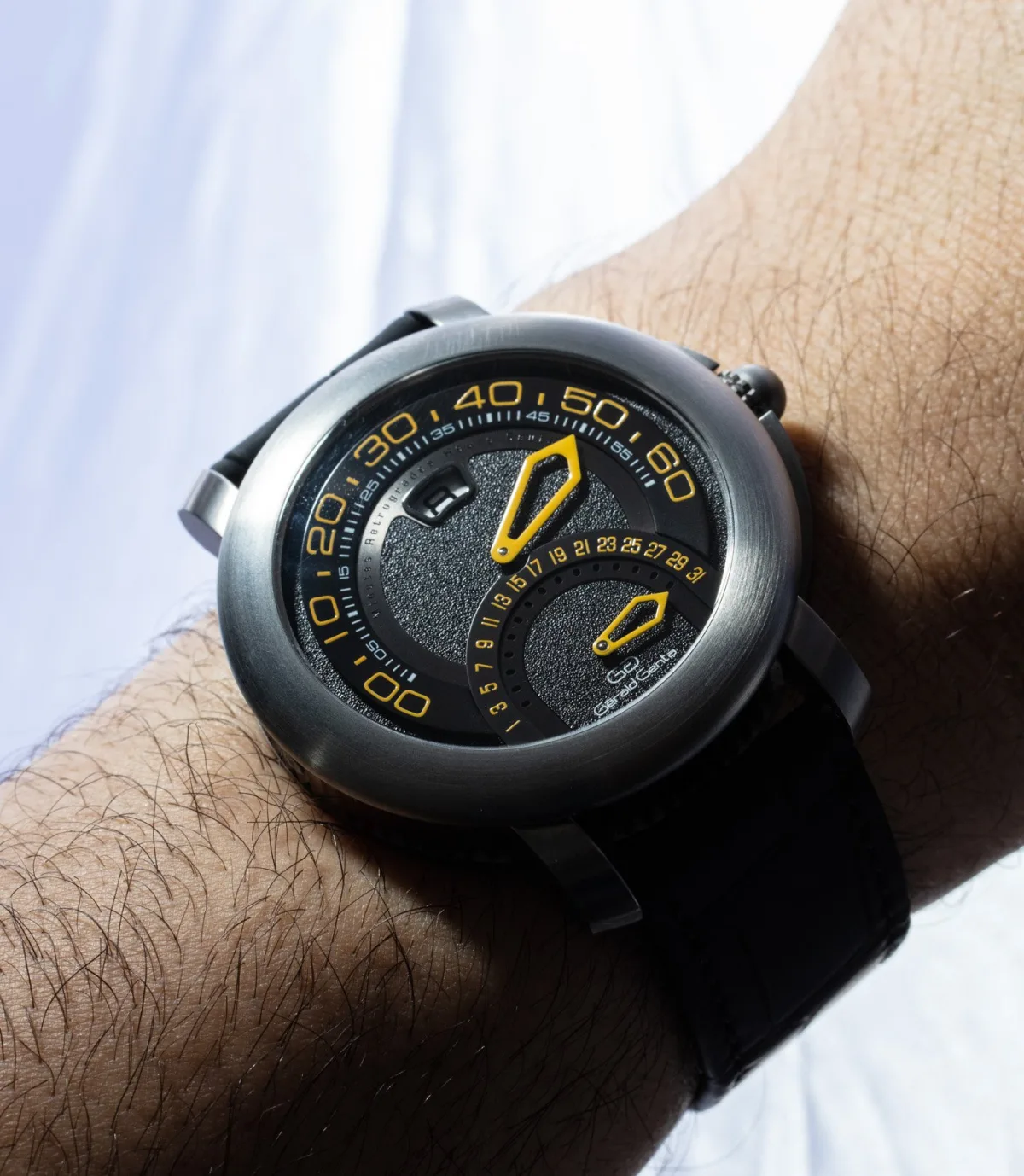
The symmetrical dial is interesting to look at and very easy to read once you get used to it. However, Arena Bi-Retro Sport owners confuse newcomers because most ordinary people have no idea what to do when they are first shown a retrograde and/or jumping hour mechanism. The actual hour window looks nice, but I keep wondering if it would look better in yellow font on a black disc matching the dial. Indeed, the original Arena watches looked exactly like this, but I think the design would be even more elegant if the white disc and black hour text were more harmonious with the rest of the dial's color and texture composition.
Speaking of textures, the Arena Bi-Retro Sport dial is full of them, including brushed and matte surfaces, along with the polished look of the yellow lacquered hands. The dial and movement design also lacks a seconds indicator, which makes the dial more elegant - but at the same time, it loses a bit of useful information. In fact, I think BVLGARI might want to try a redesigned version of the automatic movement BVL 300, where the date indicator dial is replaced with a retrograde seconds indicator. Date complications are useful, but they are unlikely to be in high demand among many people who might be interested in this watch. Could a version with a retrograde seconds indicator be more appealing to watch collectors? I think so. However, there is one potential engineering issue.
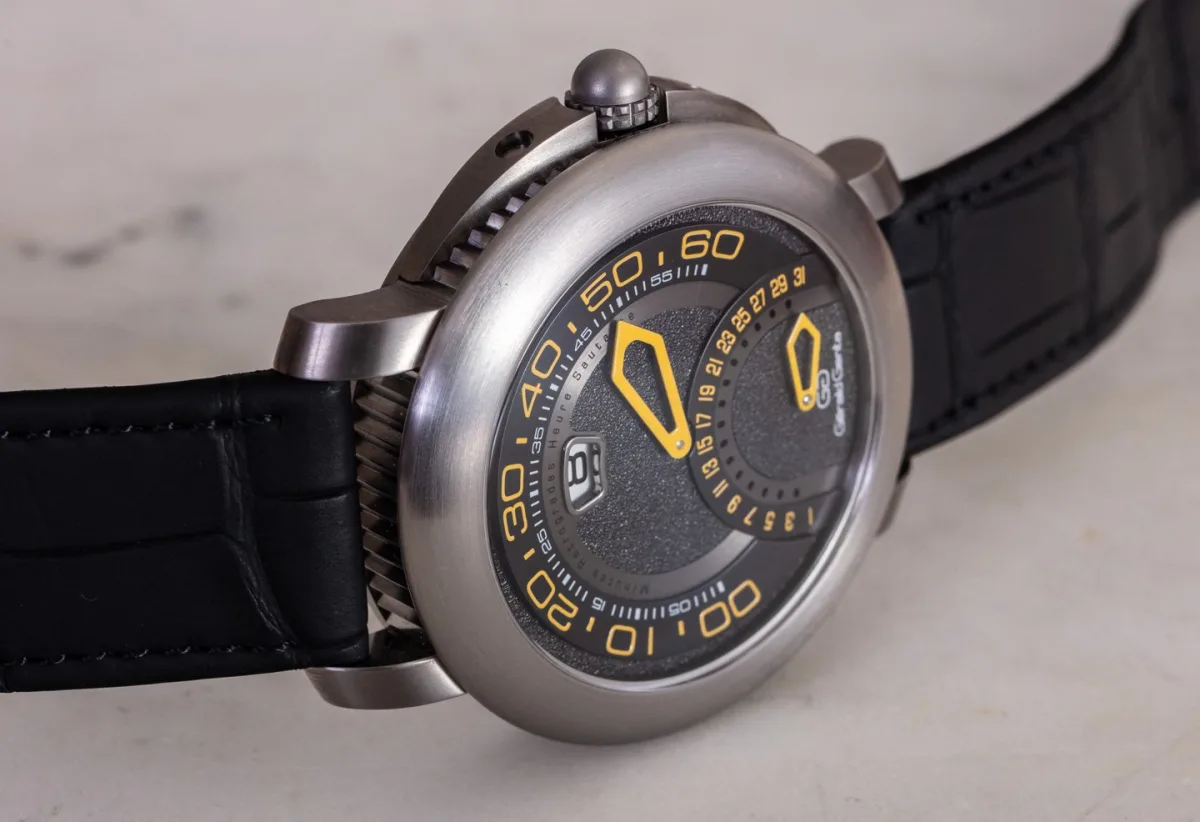
The reason there aren't many retrograde movements on the market (as I understand it) is that the constant reset of the retrograde mechanism's hand can lead to wear and thus require more frequent servicing. The problem lies in the impact. The retrograde hand uses a spring to instantly return to its starting position. This return action requires a certain buffer when the hand returns to the starting position, otherwise, there is a strong impact on the relevant parts. The retrograde seconds hand experiences the most wear because it returns every minute.
Compare this with the frequency of the date hand's return (once a month versus nearly 1,500 times a day), and you can imagine how much the service interval increases with such a difference. For now, BVLGARI watch movement engineers only need to focus on the service intervals of the minute hand, which resets 24 times a day. I would be interested to learn what technologies or materials BVLGARI currently uses in the retrograde hand return system to ensure its long-lasting operation.
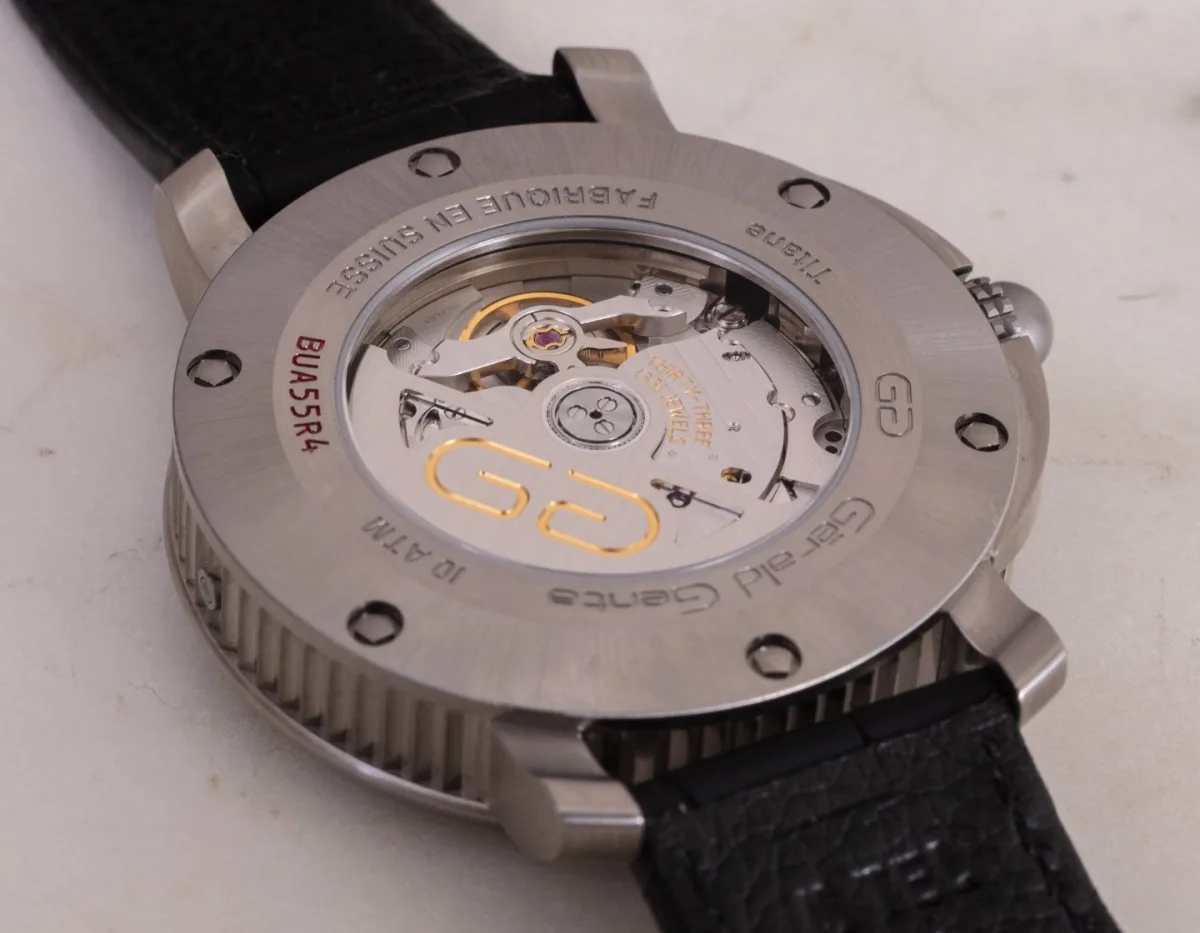
The automatic movement itself is known as BVL 300, and it is an attractive, yet more or less efficient movement with a bidirectional automatic winding rotor, operating at a frequency of 4 Hz, with a 42-hour power reserve. I like the combination of industrial design with elements of fine watch finishing in the movement (e.g., polished edges on some bridges). The date is set using a button on the side of the case, and time setting is somewhat different from other watches. If the minutes can be adjusted back or forth, the hours can be moved forward. The crown moves the minute hand so quickly that even if you need to go through several hours to set the time correctly, this process will take only a few seconds. Overall, I would say this is a very convenient movement, considering some practical limitations associated with the retrograde dial and jumping hour display system.
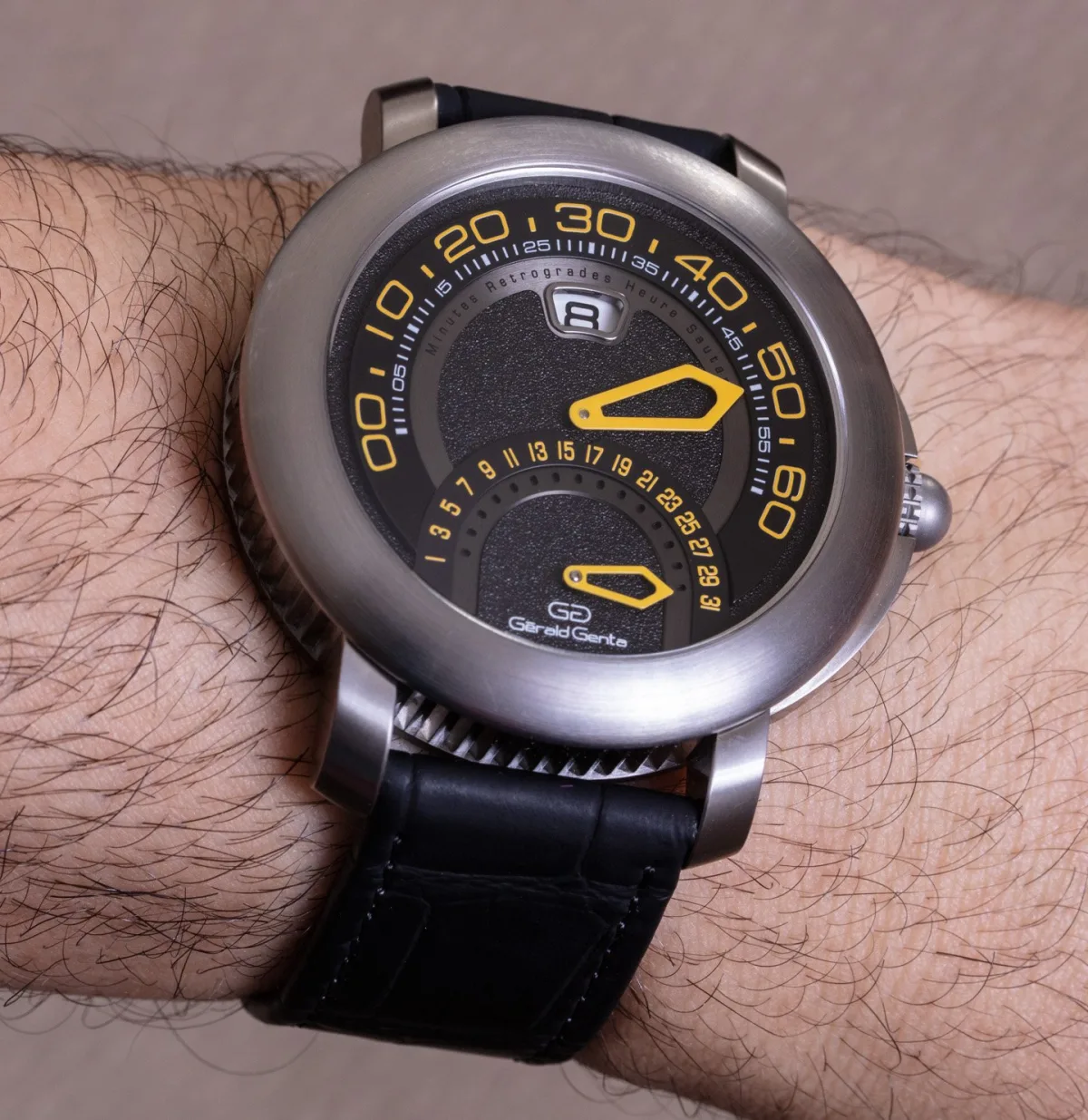
The Gerald Genta Arena Bi-Retro is back, and I am very pleased that a new generation of watch enthusiasts can familiarize themselves with what was a relatively underrated Gerald Genta product when it first appeared (it was ahead of its time, in many ways). The BVLGARI team has created these new versions with great care, and I think enthusiasts will be able to notice this. Given how rare retrograde minute/jumping hour watches are, the enthusiast community still does not have a high demand for such products. I encourage people to try them because these watches will truly delight and surprise you with their appearance, excellent construction, and chic personality combined with real practicality, making them reliable for daily wear.
BVLGARI has already confirmed that more beloved Gerald Genta watches will appear in the future, including additional variations of the Bi-Retro model. The next thing enthusiasts can expect is the return of dials with Disney characters (Mickey Mouse, Minnie Mouse, Donald Duck, and Goofy mainly), which I have always found surprisingly cool. The originals are now very hard to find, and given the popularity of pop culture, I think BVLGARI will have an instant hit with them. Returning to our black-and-yellow titanium friend, the Gerald Genta reference 103448 Arena Bi-Retro Sport has a retail price of $14,800 USD. Learn more on the BVLGARI website.
Necessary Data
>Brand: Gerald Genta (by BVLGARI)
>Model: Arena Bi-Retro Sport reference 103448
>Price: $14,800 USD
>Dimensions: 43 mm in width, ~11 mm in thickness, and ~52 mm lug-to-lug distance.
>When the reader would wear it personally: As comfortable and stylish everyday wear for high-end urban travel or for engaging with a design-oriented professional audience.
>Friends we'd recommend them to first: Fans of well-made avant-garde watches who couldn't acquire the original Gerald Genta Arena watches.
>Best characteristic of the watch: Excellent combination of strengths to create a reliable all-round watch, which is generally not characteristic of more expressive models where form outweighs function.
>Worst characteristic of the watch: Expensive price.