Placing the IWC Mark XV and Rolex Explorer ref. 114270 side by side on the table, one might wonder why compare them at all.
One is a pilot's watch from Schaffhausen with a military heritage, the other is a pure expression of Rolex sports watches, worn by mountaineers and geologists long before they became popular among collectors. However, spending time with them, as I did with my Mark XV - a watch that has been to one of the deepest mines in Australia and traveled across Tasmania on a vintage BMW motorcycle - the kinship becomes apparent.
These are two models released a few years apart, united by restrained confidence and occupying a similar niche in today's market. Both are new enough for easy maintenance yet already possess a neo-vintage charm. I tend to think that the IWC Mark XV and Rolex Explorer ref. 114270 are the perfect neo-vintage combination, proving that watchmaking at the turn of the millennium achieved proportions that the industry has only recently begun to rediscover.
IWC Mark XV: Timeless Watches You Can Forget on Your Wrist
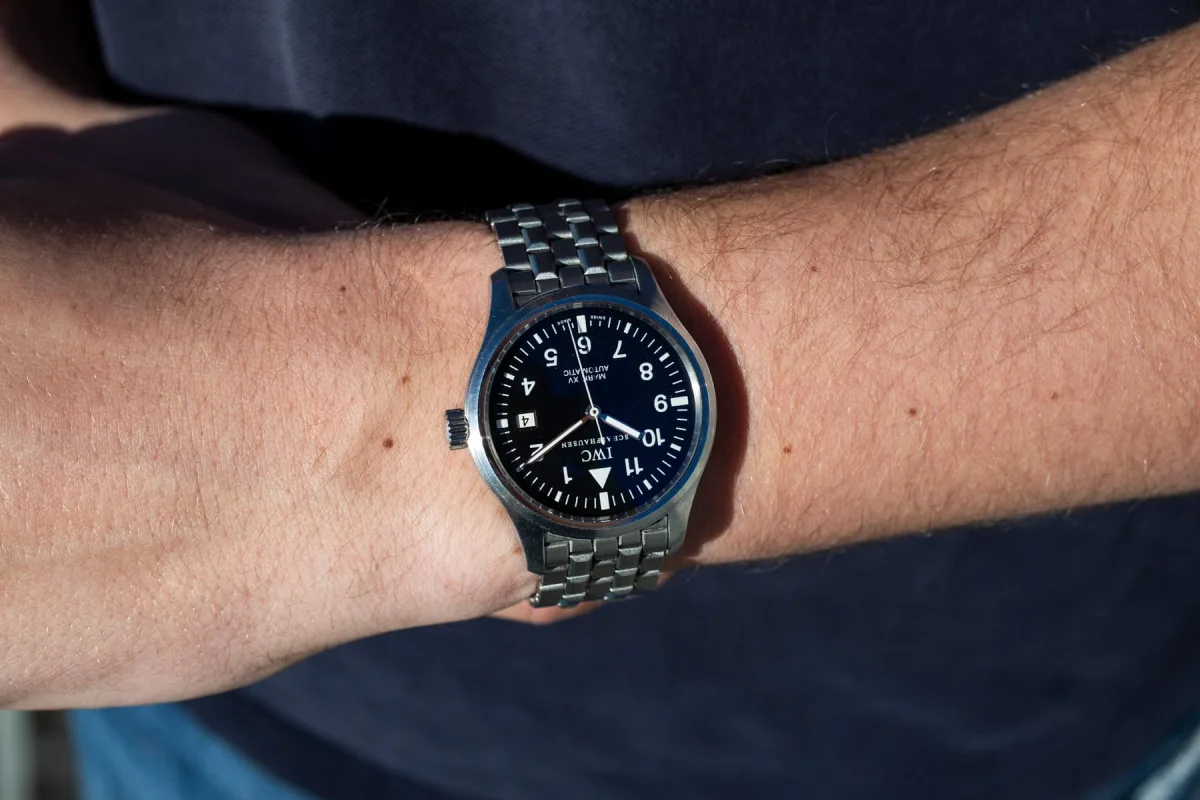
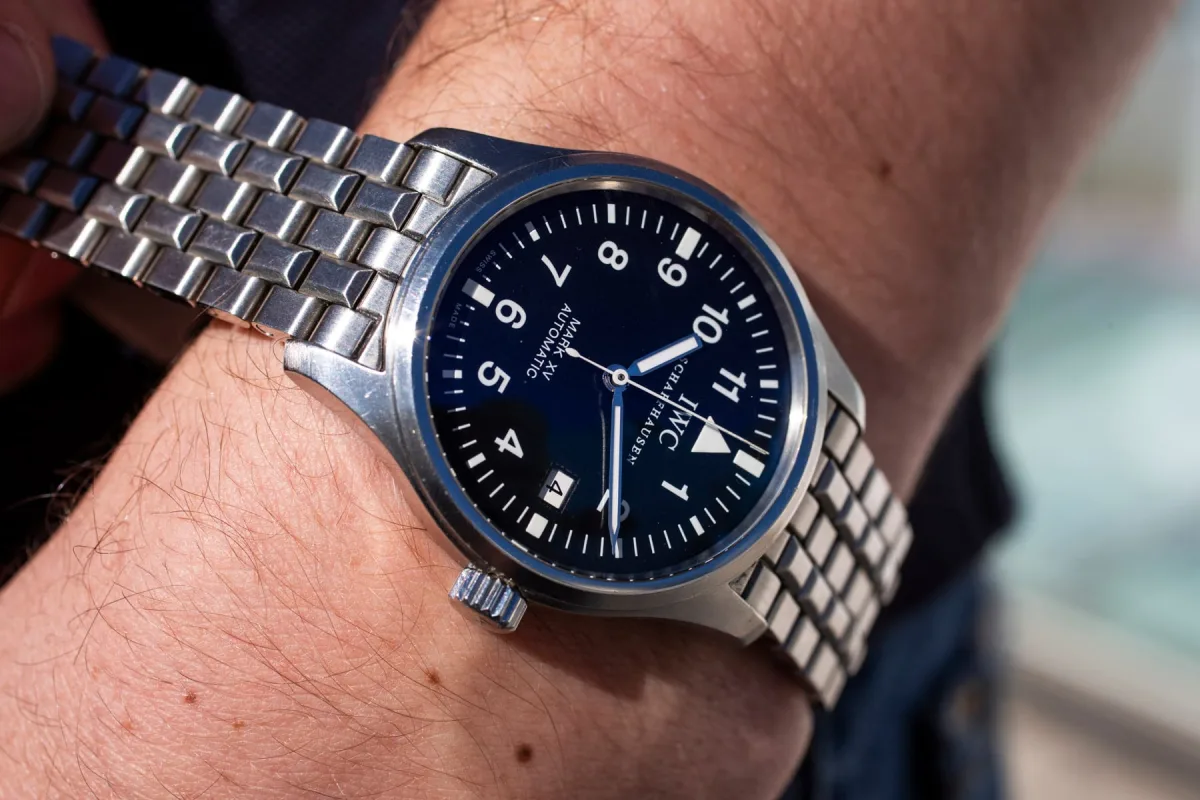
My Mark XV (ref. IW325301) wasn't bought from a dealer or at auction. They were given to me by my father in 2017, shortly before my move to Tasmania to work as a regional TV journalist. Before that, I only had one other watch accessory - a Seiko 5, which he also gave me a few years earlier when I moved to Southeast Asia. But the IWC watch on his wrist I admired for years. The simplicity and readability of the dial always drew the eye, and passing them down was one of those quiet, generous fatherly gestures without unnecessary words.
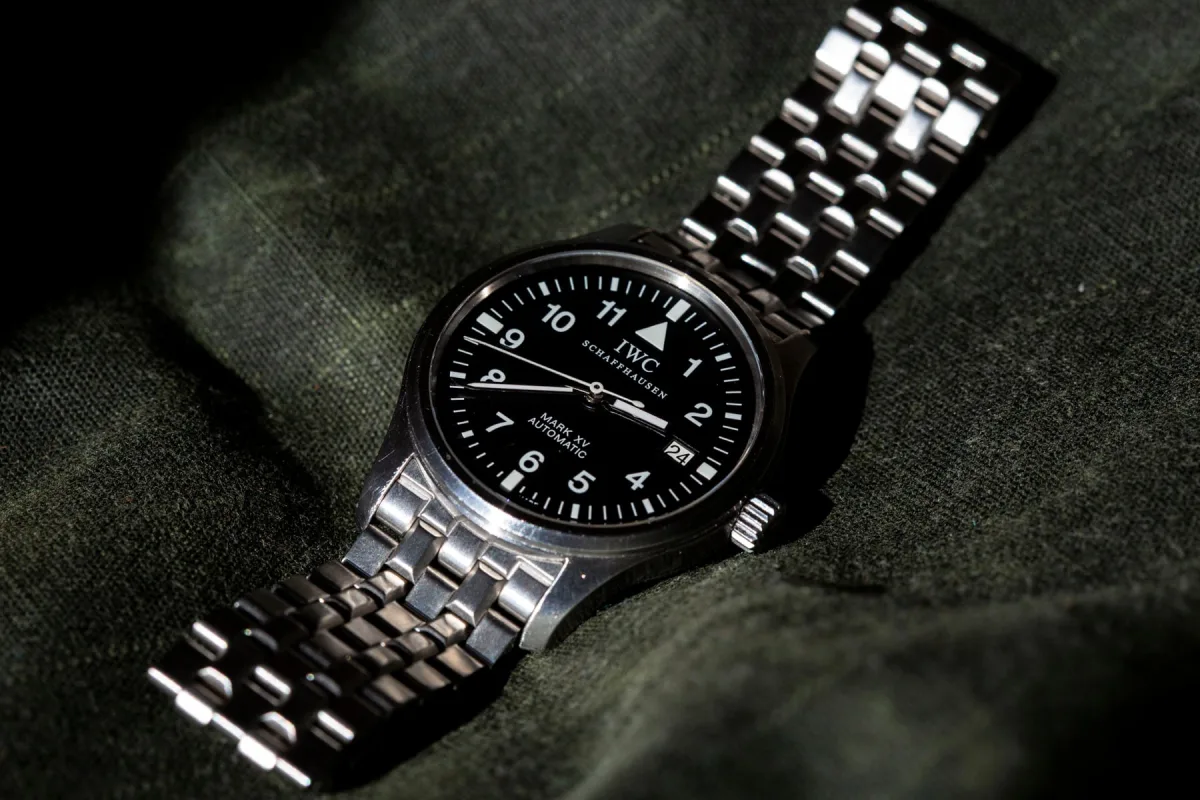
This watch accompanied me everywhere. They descended with me to a depth of 1100 meters in the decommissioned Mount Lyell mine - a place with a truly grim history, and all the while confidently glowed on the wrist when the lift reached the bottom. They traveled across Tasmania, peeking from the sleeve of a jacket on a 1985 BMW R80 motorcycle during my return in 2025 - a journey that was both a rethinking of a life stage and simply moving around. Throughout all this time, the Mark XV never seemed like the wrong choice.
A Magnificent Era for IWC
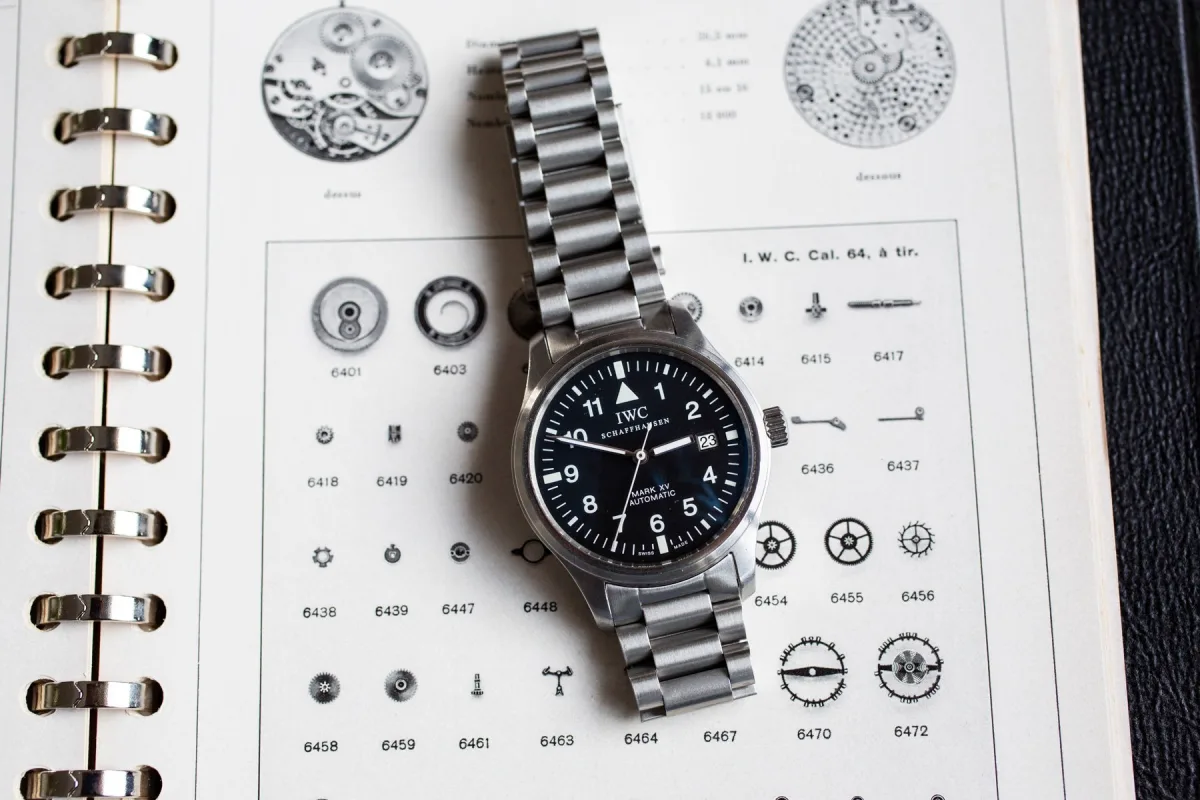
On paper, the reasons are obvious. The Mark series from IWC traces its roots to the post-war Mark 11, and the Mark XV, produced from 1999 to 2005, is today considered a neo-vintage model that pays homage to heritage while being convenient for everyday use. The 38 mm case has a profile slightly over 9 mm (excluding the crystal) and a lug-to-lug length of 47 mm. For me, these proportions are perfect.
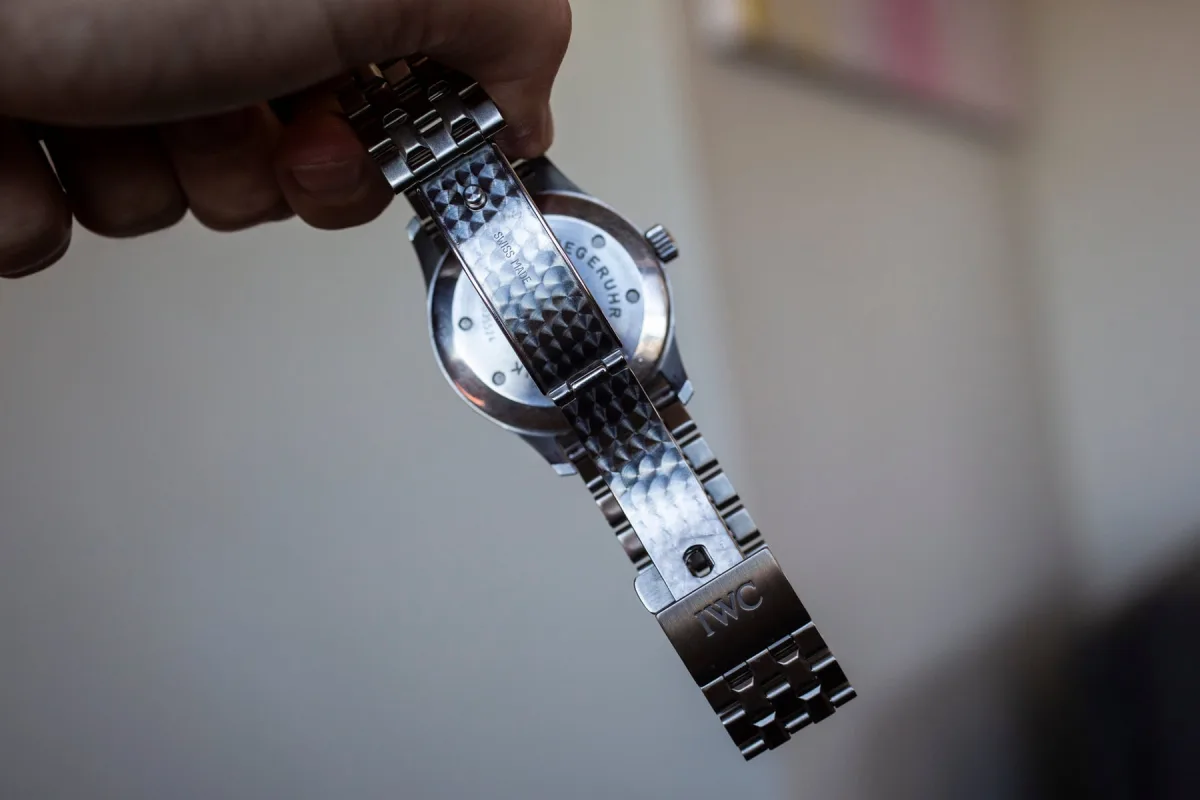
Inside is the caliber 30110 - a heavily modified ETA 2892-A2, chosen specifically for long-term reliability. Water resistance is rated at 6 bar, which, according to IWC, is sufficient for snorkeling. The dial offers just what is needed: hour markers, hands, date, and nothing extraneous to distract attention. The proportions of the dial are an example of restraint, which modern IWC should learn from.
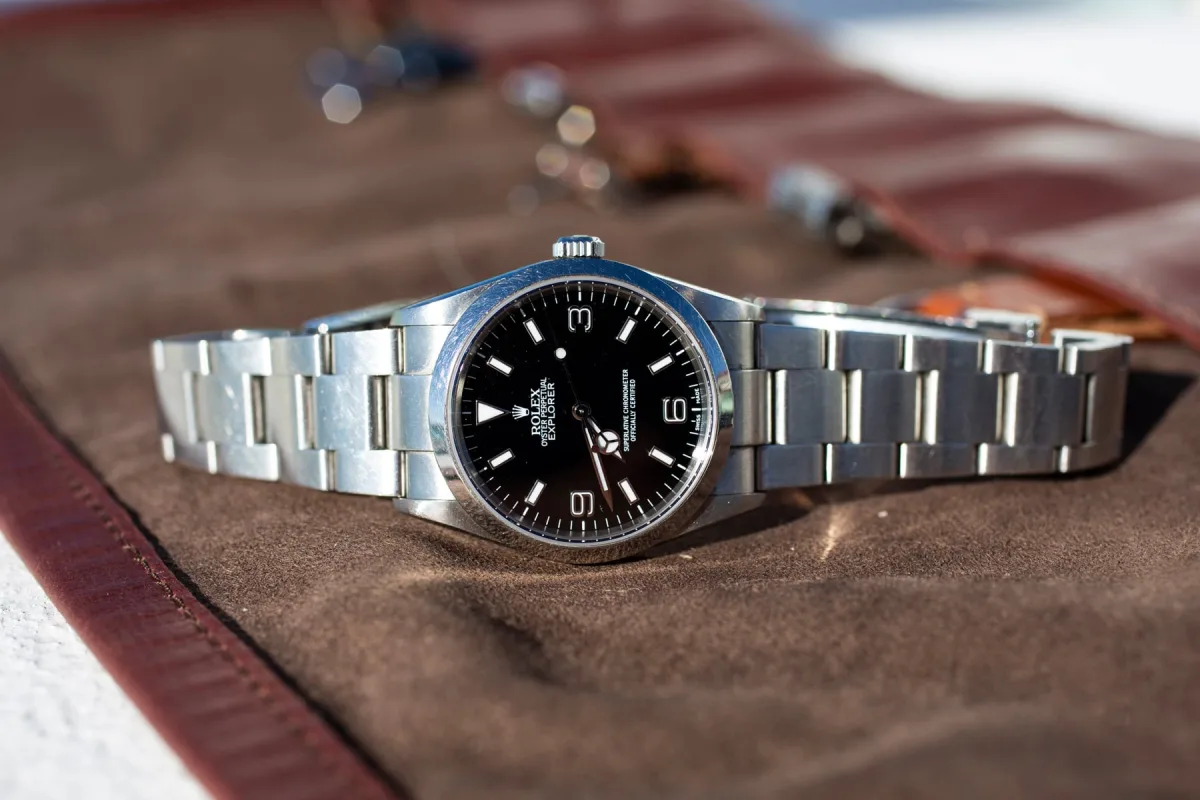
Rolex Explorer ref. 114270: A Colleague's Long Journey to Choice
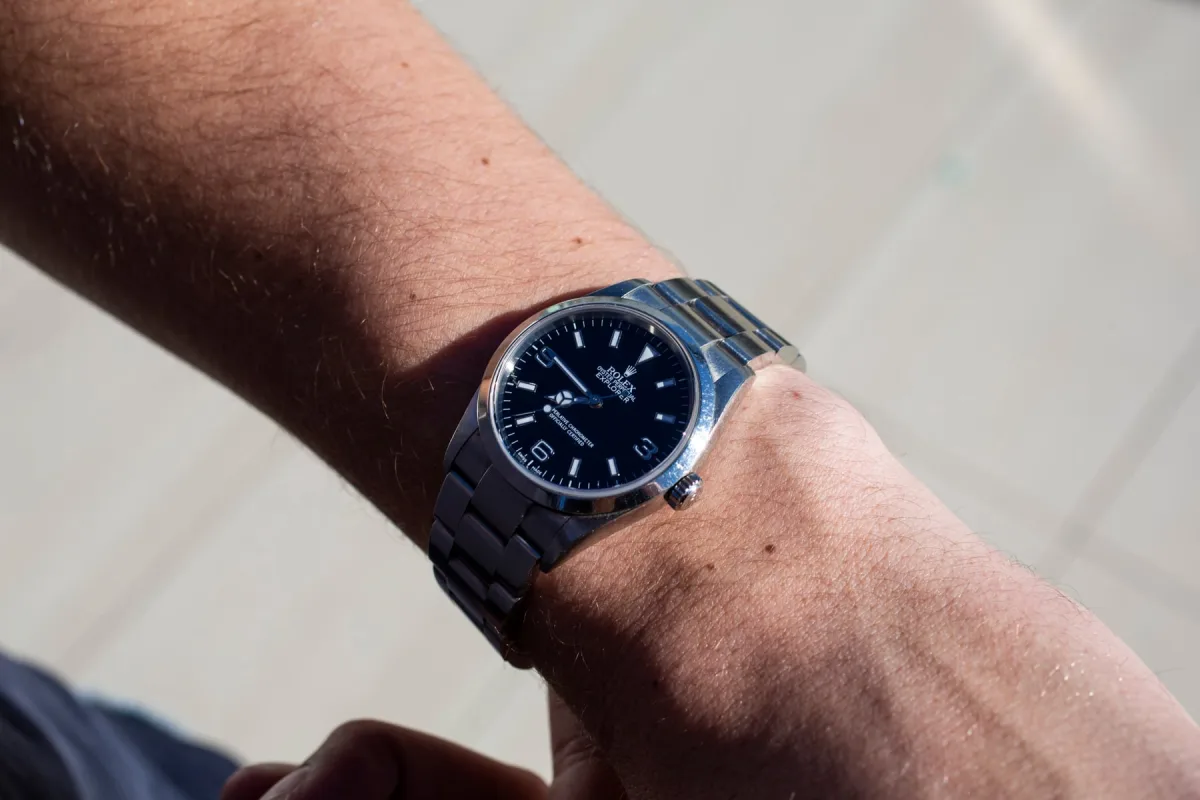
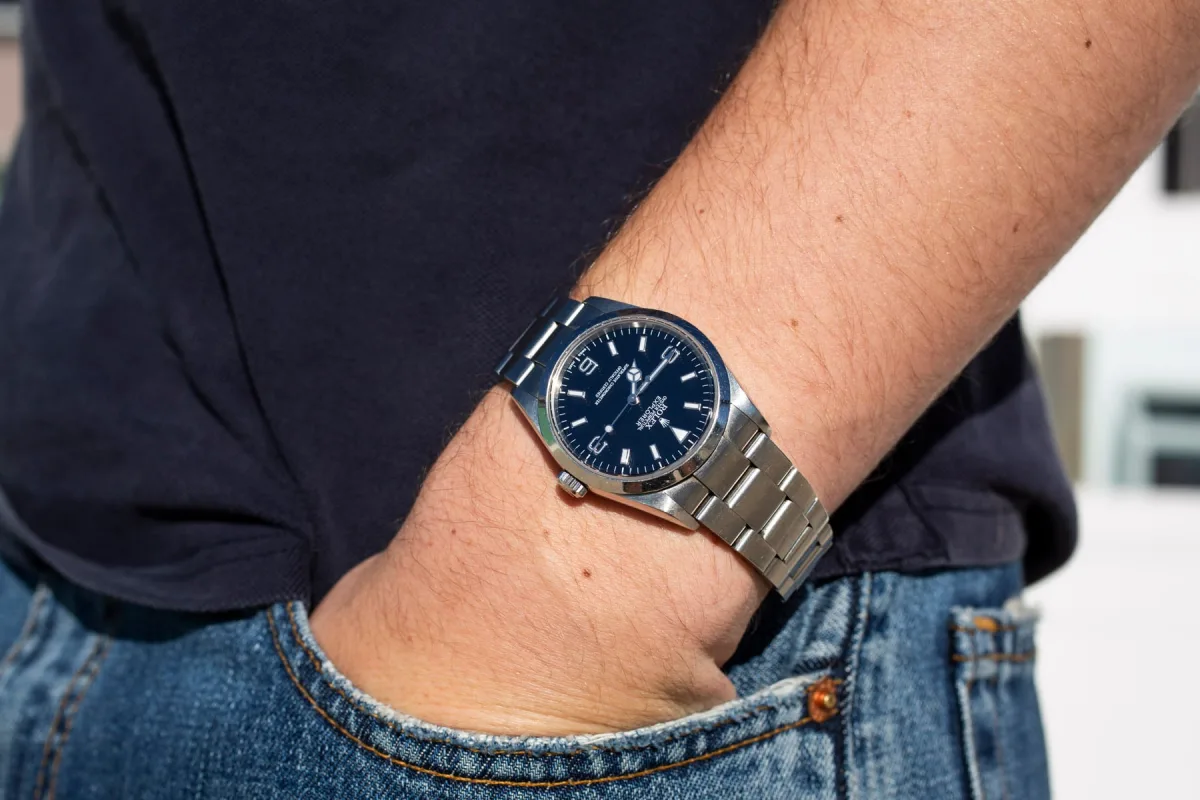
My colleague owns the second model to be discussed, and his path to it explains a lot. Initially, he bought a vintage Datejust ref. 1603, thinking it would suit him better, but sold it after a few months without satisfaction. Later, he realized that what he really needed was the Explorer watch. He has been wearing his 114270 for over three years, and it has become one of the most beloved models in his collection. The history of the Explorer goes back to 1953 - the year Tenzing Norgay and Sir Edmund Hillary conquered Everest. The 114270 model, which appeared in 2001, retained the black dial, 3-6-9 numerals, and 'Mercedes' hands characteristic of earlier versions.
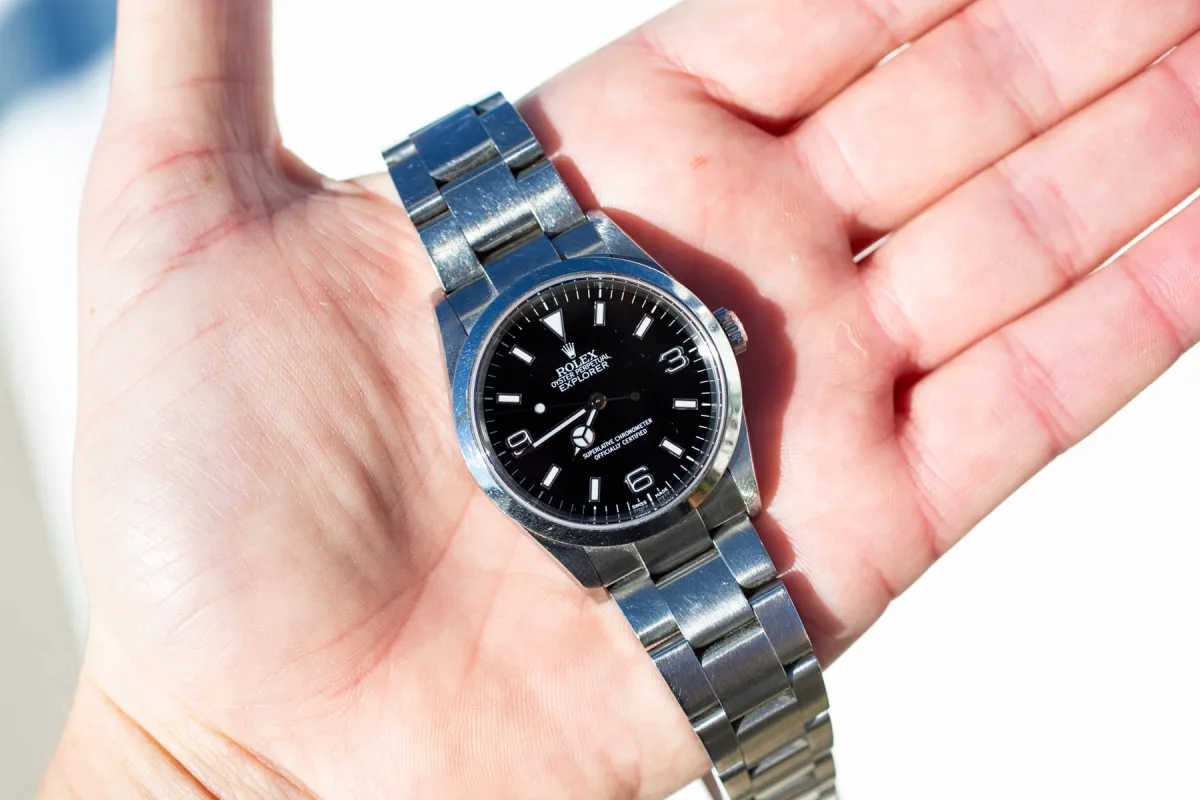
Compared to its immediate predecessor, the 14270, the watch received solid bracelet links and a newer, shock-resistant caliber 3130 - an automatic with 31 jewels, a frequency of 28,800 vibrations per hour, a 48-hour power reserve, and a Parachrom hairspring. Production of the 114270 model continued until 2010, when the Explorer line transitioned to the larger 39 mm case of the 214270 model. A feature often noted is the bracelet tapering from 20-16 mm, unlike the 19-14 mm of the current 36 mm Explorer version. This small difference on paper gives the older model noticeably more presence on the wrist. That's why he chose it, despite the updated movement and clasp of the newer version.
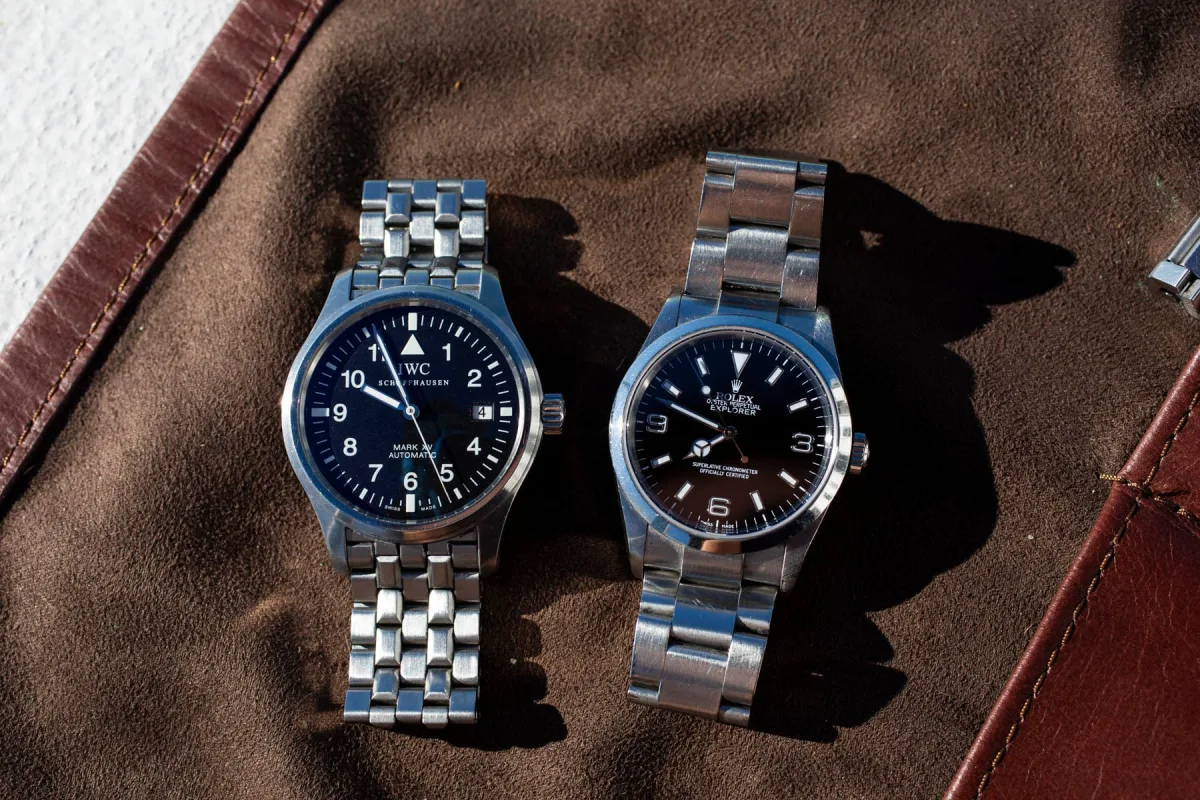
Why 38 mm and 36 mm Sizes Are Optimal
This is where the two watches truly converge. The 38 mm case of the Mark XV and the 36 mm case of the Explorer 114270 occupy the golden mean that the watchmaking industry of the 2000s and 2010s almost forgot, favoring larger sizes only to later return to moderation.
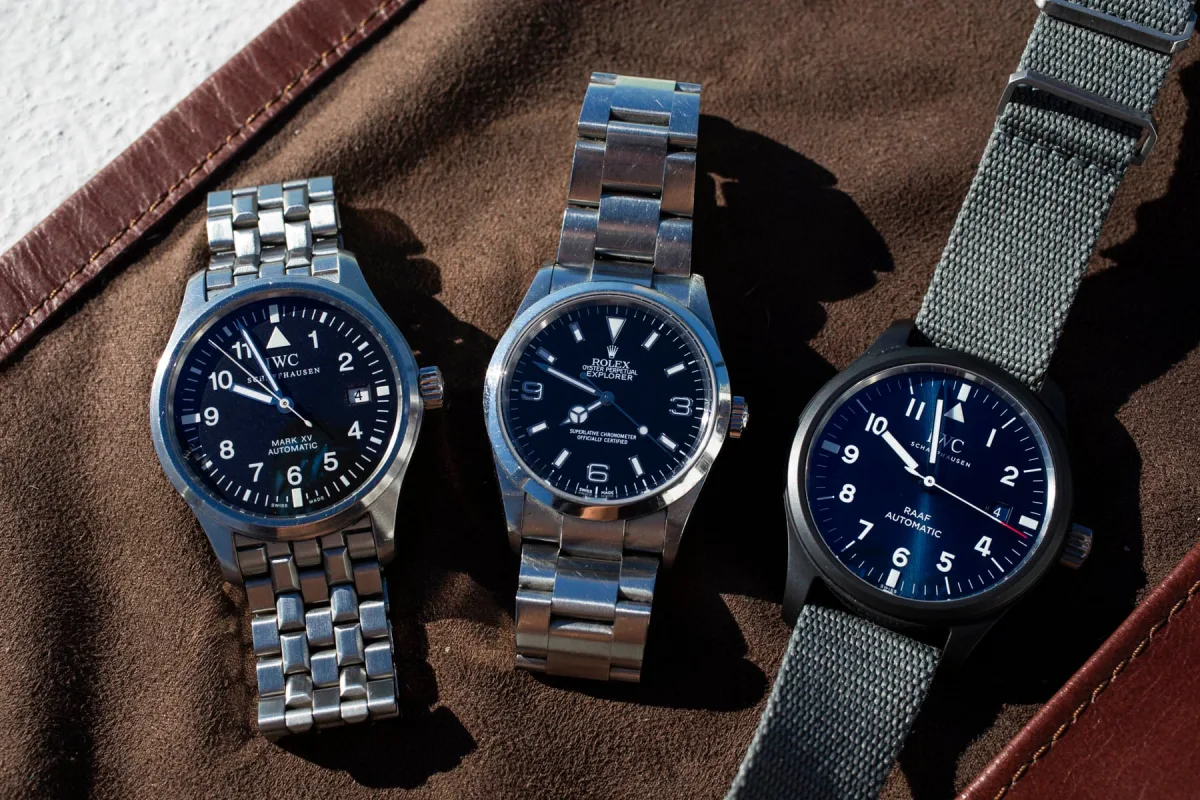
Neither model looks lost on a slender wrist nor small on a larger one, as the design considers overall proportions, not just diameter. From lug-to-lug length to bracelet tapering and the dial-to-case ratio - everything is calculated for a perfect fit. The comment about the wider Explorer bracelet isn't just numbers, but a matter of harmony in the entire design, and the same is true for the short lug-to-lug length of the Mark XV relative to the case width.
Neo-Vintage Price-Quality Ratio
The economic side confirms this. You lose the modern Chronergy escapement, the increased 70-hour power reserve, and the quick-adjust clasp feature of new models, but the Rolex caliber 3130 remains a proven and certified chronometer, and a 48-hour power reserve for everyday watches is not a limitation. Compared to the retail price of about €7,800 for the current 36 mm Explorer, €5,700–6,000 on the secondary market is a fair price.
The Mark XV occupies a similar niche in the IWC catalog. In my opinion, subsequent models in the Mark series - starting with the XVI and even the modern Mark XX - have not been able to replicate the perfect proportions of the Mark XV. IWC abandoned the simple and clear font and hand design that the Mark XV had, and since then the situation hasn't improved. With the Mark XX priced around €6,900, you can find a worthy Mark XV for €3,500–5,000.
Conclusion
I didn't choose the Mark XV as a bargain - in some sense, the watch chose me, inherited from my father before I understood much about Swiss watchmaking. But years of wearing them in mines, swimming, and traveling across Tasmania, as well as observing a colleague who came to the same conclusion about his Explorer after experimenting with the Datejust, convinced me: this period of watchmaking deserves close attention.
Both models prove that clarity and simplicity of design age better than complexity. If you are looking for genuine quality and value today, pay attention to what was done quietly and correctly at the beginning of the millennium.