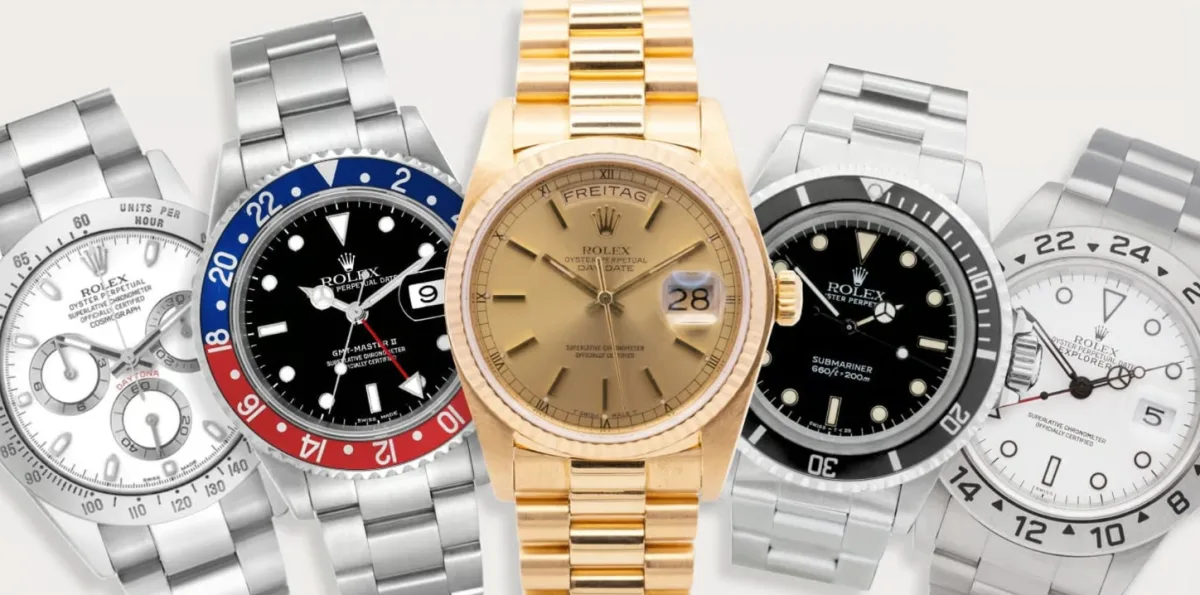
Neo-vintage Rolex watches occupy a unique niche between classic vintage models and modern references.
Collectors and enthusiasts use the term "neo-vintage" to refer to models released from the late 1980s to the early 2000s. These watches belong to an era of technological change when Rolex maintained traditional design elements while incorporating significant technical innovations. They combine features of older models with technical improvements that greatly enhance everyday usability.
Unlike true vintage models discussed in a previous article, neo-vintage variants are typically equipped with sapphire crystals, improved water resistance, and more powerful automatic calibers.
However, they significantly differ from modern references. For instance, they often have thinner cases, elegant bracelets, and aluminum bezels instead of modern ceramic inserts. The proportions are also often reduced and closer to the original designs of the respective series. This combination makes the neo-vintage era so appealing.
It combines the recognizable look of old Rolex watches with high reliability and practicality for daily use, meeting modern standards. Models like the Submariner 16610, GMT-Master II 16710, and Explorer II 16570 are striking examples of this transitional period and are among the most sought-after watches in the collectors' market today. In this article, we will take a closer look at five of the most popular neo-vintage Rolex models.
Rolex GMT-Master II 16710
The Rolex GMT-Master II 16710 is one of the most prominent sports models of the neo-vintage Rolex era and is considered one of the most popular GMT-Master references in history. The model was introduced in 1989 as the successor to reference 16760 and remained in the Rolex catalog until 2007. Many collectors appreciate these watches as a bridge between the classic GMT-Master and modern generations with ceramic bezels. The main additional function of the GMT-Master II is the display of a second time zone using an additional 24-hour hand.
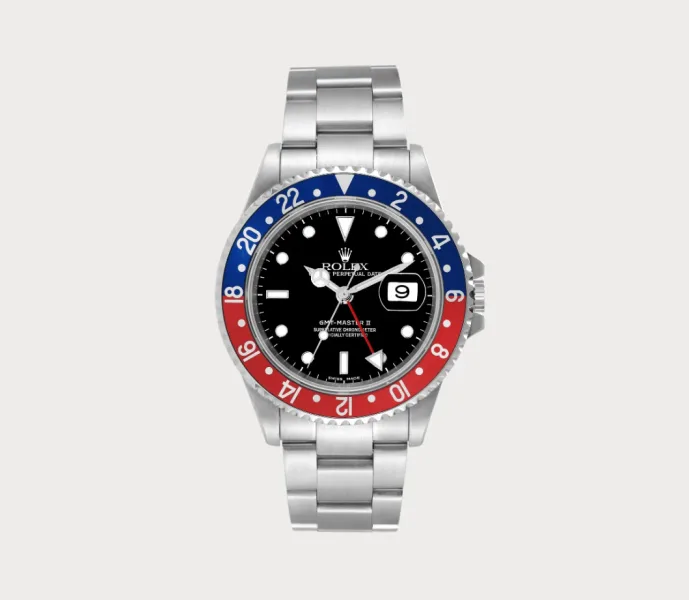
In combination with the rotating 24-hour bezel, it is possible to track even three time zones simultaneously. The 40 mm Oyster case made of stainless steel ensures water resistance up to 100 m (10 bar, 328 feet) and retains the classic proportions of the GMT-Master line. The aluminum bezel, available in black (LN), red-black (Coke), and red-blue (Pepsi) versions, stands out particularly.
Depending on the model, the watches are available with an Oyster or Jubilee bracelet. Throughout the production period, Rolex used various luminescent materials - from tritium to Luminova and Super-LumiNova. Early models were equipped with the automatic caliber 3185, while later ones had the slightly modified 3186 movement. Both calibers feature an independent hour hand adjustment, chronometer certification, and a date function.
Rolex Submariner Date 16610
With the Submariner Date 16610, Rolex introduced a Submariner that many aficionados consider the benchmark among classic models of the line. This reference was released in 1988 and was produced for 22 years - until 2010. Thus, it was created during a period when Rolex maintained time-tested design solutions while simultaneously improving technologies. For this reason, the 16610 is considered the quintessence of the neo-vintage generation. The case is 40 mm in diameter and made of stainless steel.
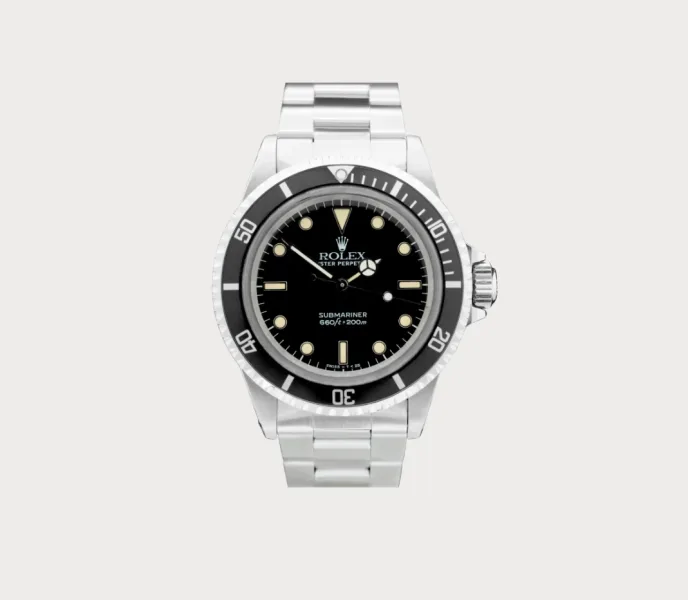
Distinctive features include a black rotating bezel with an aluminum insert, a black dial, and a date window at the "3 o'clock" position with a Cyclops magnifying lens. Over the production period, Rolex made minor changes: like the GMT-Master II, depending on the year of manufacture, tritium, Luminova, or Super-LumiNova was used for hour markers. The case design was also slightly altered - this is noticeable in different lug styles. The watch is equipped with the in-house automatic caliber 3135, certified as a chronometer.
The mechanism has a quick date-setting function. With water resistance up to 300 m (30 bar, 984 feet), the Submariner Date meets all the requirements of professional dive watches.
Rolex Explorer II 16570
The Rolex Explorer II 16570 is another key sports model from the neo-vintage era. The watch was produced from 1989 to 2010 and is considered one of the brand's few underrated models. This model faithfully continues the concept of the original Explorer II, designed for spelunkers and other explorers. The distinctive 24-hour hand - the so-called orange hand - allows differentiation between day and night and displays a second time zone. The 40 mm Oyster case made of stainless steel complements the fixed 24-hour bezel made of steel.
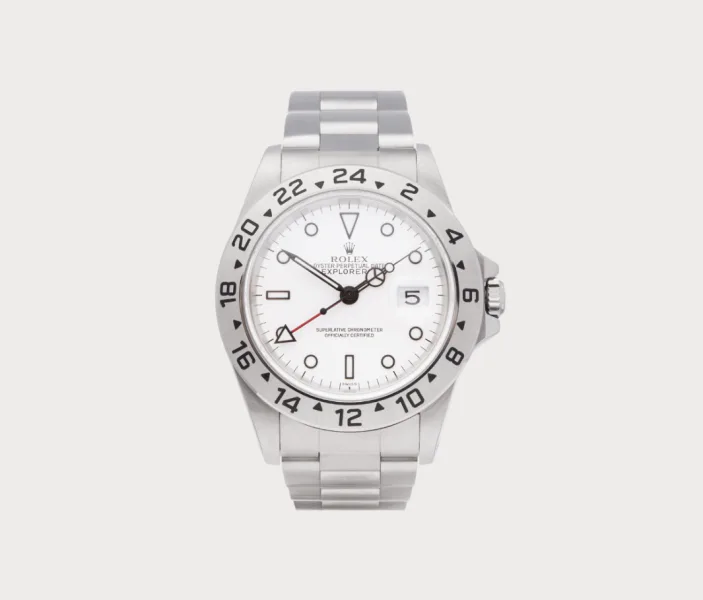
Rolex offered this reference with a black or white dial, with the white version known among collectors as Polar. Early models were equipped with tritium markers, mid-1990s versions used Luminova, and by the turn of the millennium, Super-LumiNova was introduced. Case details also changed, such as the transition from drilled to solid lugs. All versions have water resistance up to 100 m (10 bar, 328 feet). Besides the second time zone, the Explorer II features a date at the "3 o'clock" position with the signature Cyclops magnifying lens and independent hour hand adjustment.
Inside are the chronometer-certified automatic calibers 3185 or the slightly modified 3186. Due to its functional design, high practicality for everyday wear, and relatively understated appearance, the Explorer II 16570 is one of the most sought-after Rolex models of its time today.
Rolex Daytona 116520
The Rolex Cosmograph Daytona 116520 holds a special place in the history of the legendary chronograph as it is the first model equipped with an in-house movement. The model was introduced in 2000 and was produced until 2016. It replaced the Daytona 16520, which had a movement based on a modified Zenith caliber.
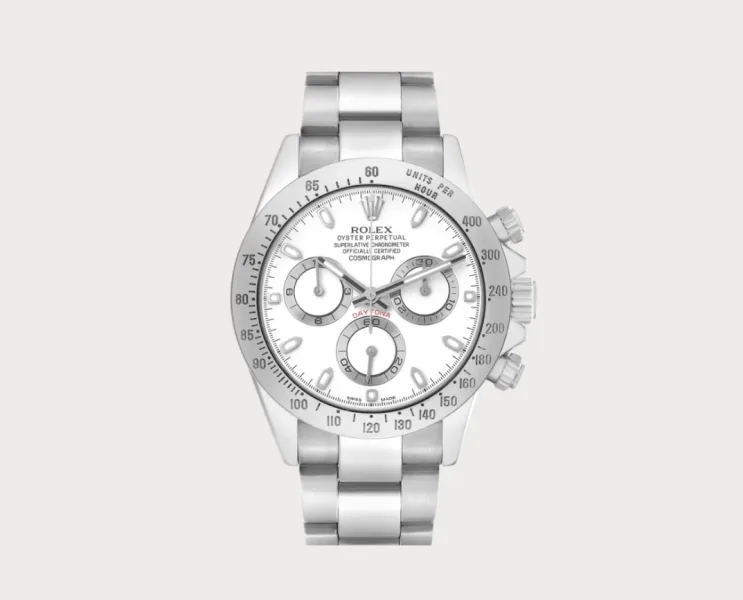
The 40 mm Oyster case is entirely made of stainless steel and is complemented by a fixed steel tachymetric bezel. Typical features of the reference include screw-down chronograph buttons, a screw-down crown, and water resistance up to 100 m (10 bar, 328 feet). The dial is available in black or white with a tricompax layout - three sub-dials at the 3, 6, and 9 o'clock positions. The in-house caliber 4130 with COSC certification plays a key role. This is the first chronograph movement fully developed by Rolex.
The mechanism is equipped with a vertical clutch and has a power reserve of 72 hours, or three days. Thanks to its classic design, innovative technologies, and historical significance, the Daytona 116520 is among the most sought-after neo-vintage Rolex models today. As the last Daytona with a classic steel bezel, these watches are especially popular among collectors.
Rolex Day-Date 36 (Ref. 18238)
In 1988, Rolex introduced the Day-Date 36 (reference 18238) - one of the most iconic models in the Day-Date collection, which is considered an absolute classic today. The watches were produced for 22 years - until 2000. Although the design remained true to the traditional style, the watches received several technical enhancements that improved usability.
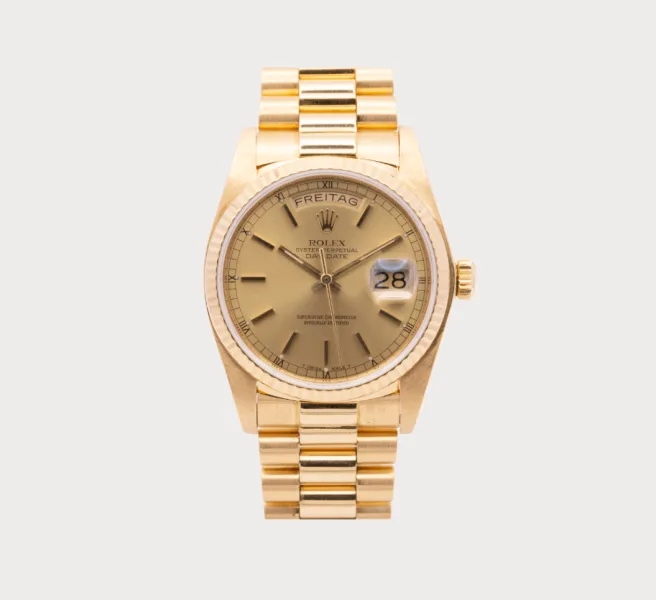
The Rolex Day-Date 36 is powered by the automatic caliber 3155. This certified chronometer was the first movement with a practical double quick-setting function, allowing the date and day of the week to be changed independently. The watch features a 36 mm Oyster case made of 18-carat yellow gold. The Day-Date and reference 18238 are characterized by a fluted bezel and a three-link President bracelet, also made of yellow gold. Rolex offered the model with a wide selection of dials: in addition to the classic colors - champagne, black, or silver - versions made from natural stone or wood were available.
Depending on the specific model, hour markers can be in the form of classic lines, Roman numerals, or diamonds. The combination of the classic Day-Date design, precious metal case, and enhanced movement makes reference 18238 one of the most sought-after Rolex models of its generation.
This selection of the most popular neo-vintage Rolex models demonstrates a unique combination of classic design and modern technologies, which ensures their high demand among collectors and brand enthusiasts.