Calling Urwerk traditional seems somewhat absurd, yet it is true.
The new UR-10 Spacemeter model comes closest to this definition than anything the brand has done before. And yes, we got a traditional Urwerk before Grand Theft Auto VI. Of course, Urwerk has used hands in models like EMC and AMC, but here it is different. This is the first time a mechanical Urwerk has made central hour and minute hands the main element of the dial. For a brand known for 'wandering' hours, satellite indicators, and dials more akin to sci-fi instruments than regular watches, this is a significant moment.
A New Take on Urwerk Traditions
What I like about the UR-10 is that it does not look like an attempt by Urwerk to soften its style. Rather, the brand has chosen a different path to the same goal. The time display here is a familiar element, and the quirks are focused around it. Yes, at first glance, this is a calmer Urwerk. It is simpler - but only partially. Spending time with it, it becomes clear that the model remains unusual, thoughtful, and slightly eccentric - exactly as an Urwerk should be.
Familiar Design, but Only by Urwerk Standards
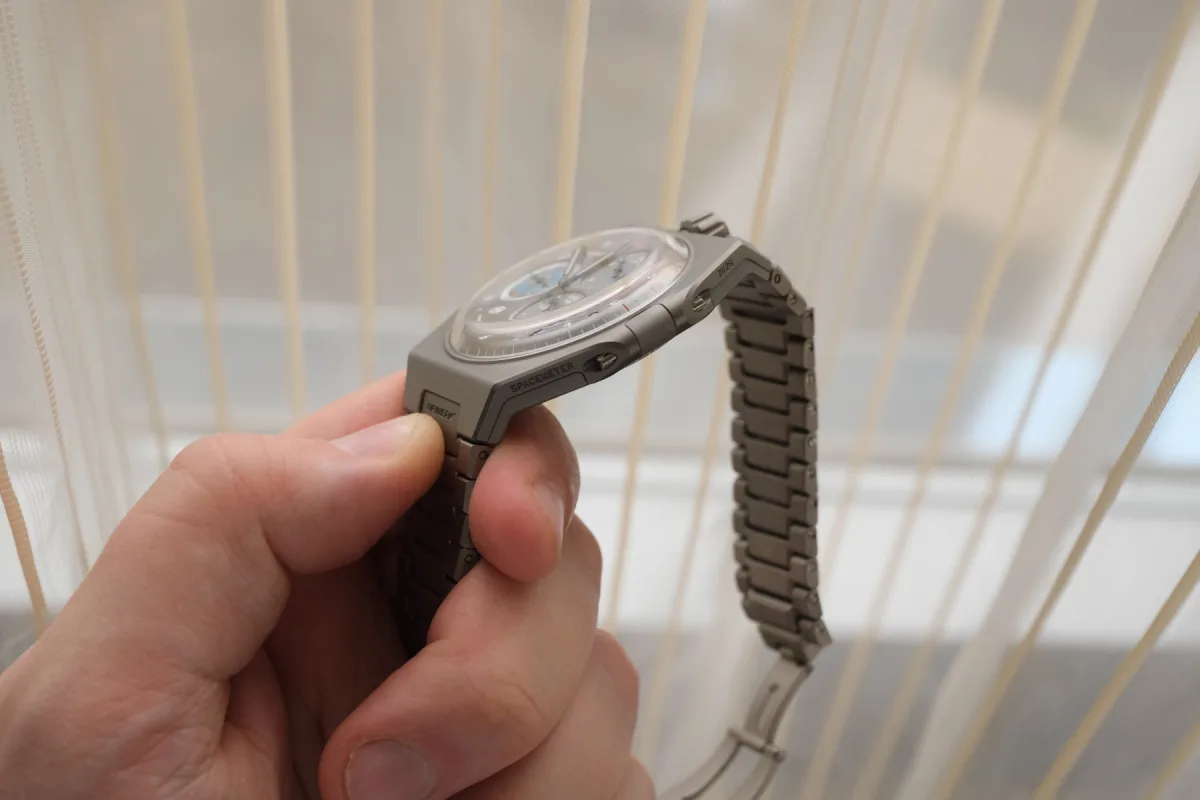
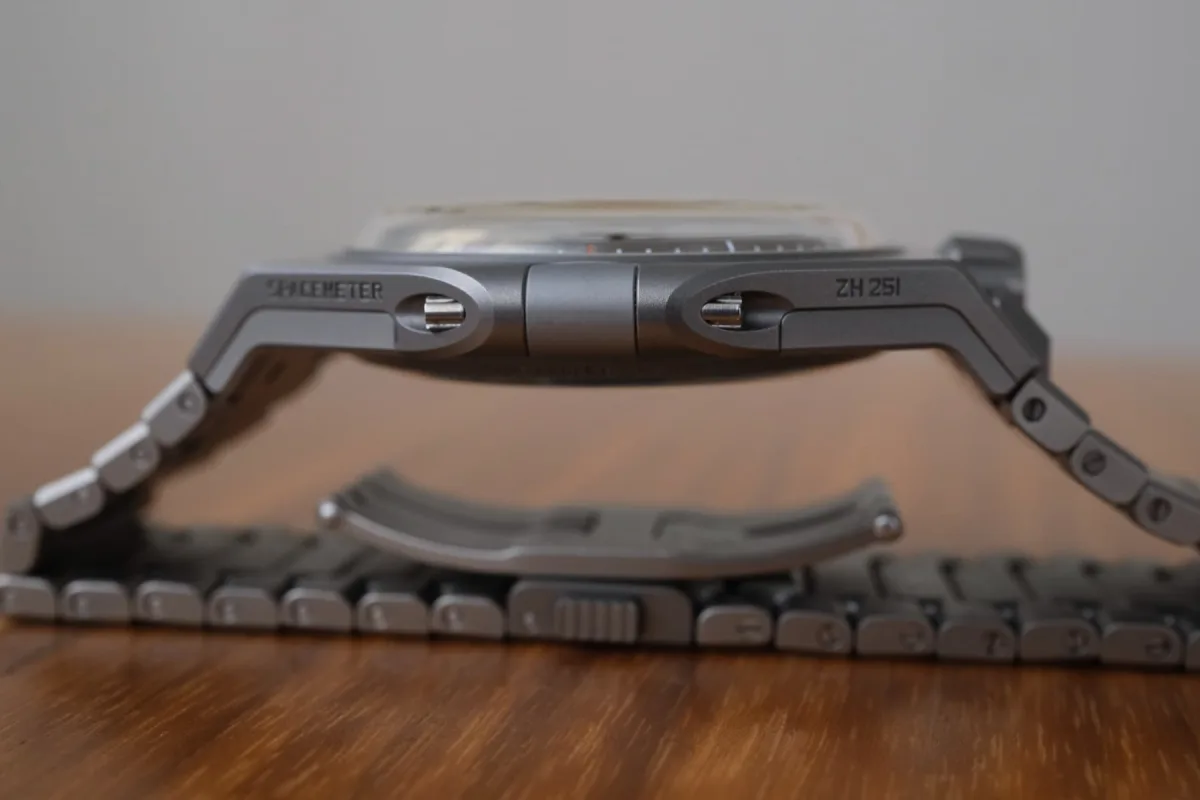
Although the UR-10 was introduced as a new collection at the end of last year, the case seemed familiar to me almost immediately. It echoes the UR-100. Perhaps it's due to the general shape and fit on the wrist, but the connection is obvious. The case is wide, with a low middle section, and clearly engineered rather than styled. It consists of upper and lower sections, held together at the sides by 'wings' and visible screws, giving the watch a slightly 'assembled' and open look - Urwerk's signature style.
The first thing that surprised me was how thin the watch looks in real life. The thickness of the middle part of the case is only about 5.5 mm - an impressive figure for such a massive model. By my measurements with calipers, the total thickness with the box-shaped sapphire crystal front and back is 12.5 mm. This makes sense since most of the thickness comes from the crystals, and the stainless steel case adds a bit of bulk at the back. Visually, this makes the watch much thinner on the wrist than one might think from the numbers.
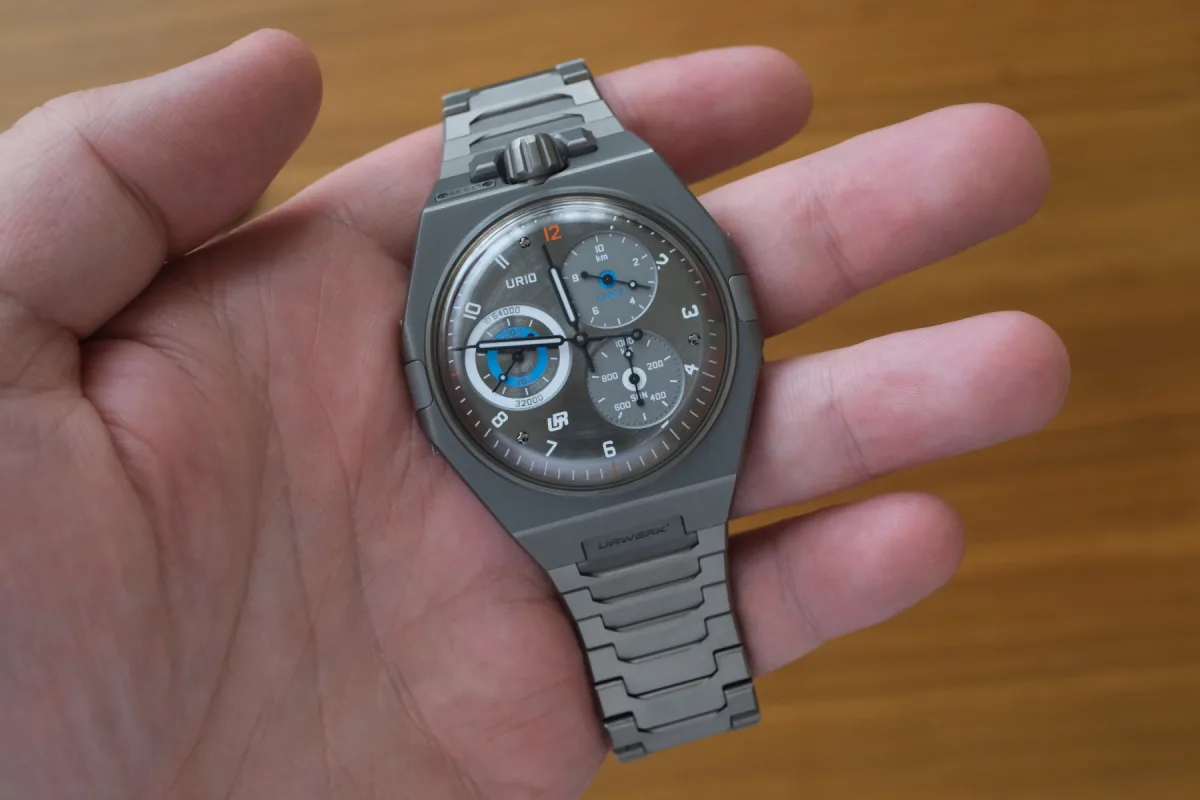
The box-shaped sapphire crystal visually enlarges the dial and creates a sense of space. It pairs well with the slight dome of the dial itself. There is depth, but it's not excessive, as is usually the case with Urwerk - here everything is more restrained. Add the crown at the 12 o'clock position, which does not interfere and emphasizes the vertical symmetry of the case, and the watch becomes much more comfortable for everyday wear than one might expect.
The Main Display - Just Part of the Story
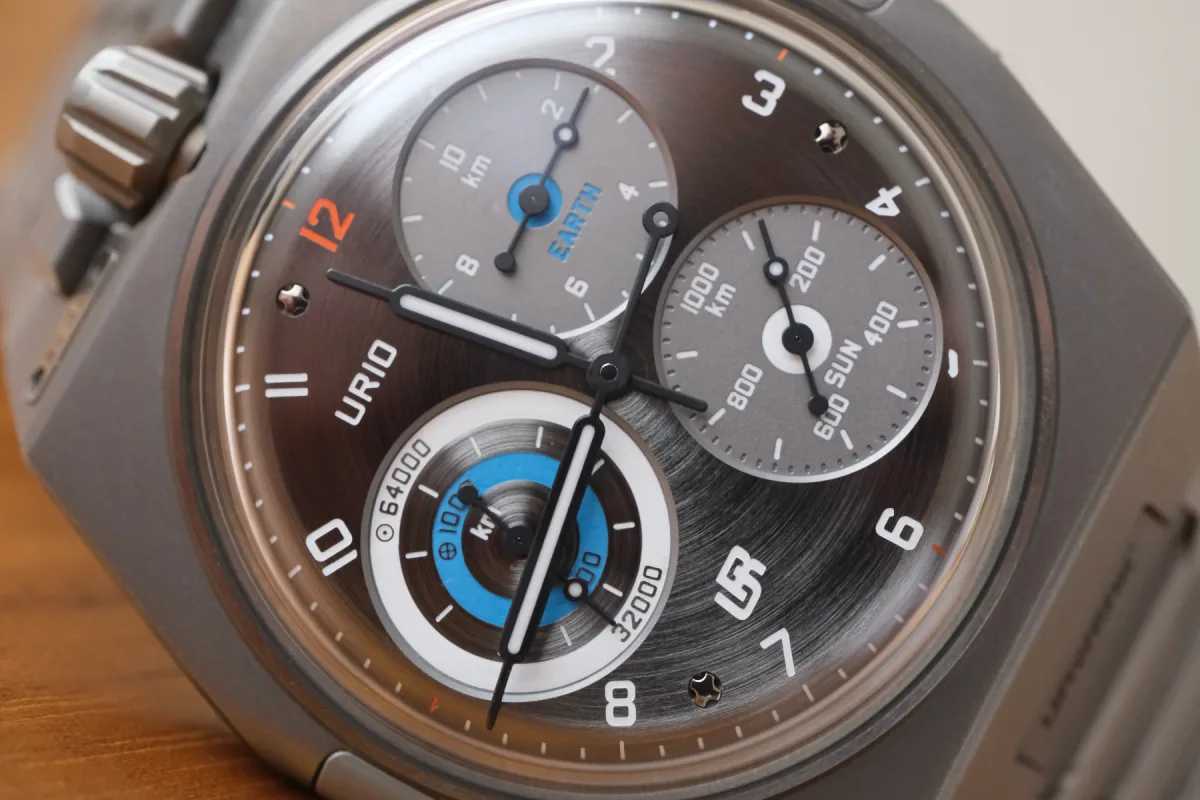
The main element that catches the eye - familiar hands. But this is not what makes the watch truly interesting. The essence of the model is revealed in three additional dials related to Earth's movement, giving the watch a true Urwerk style.
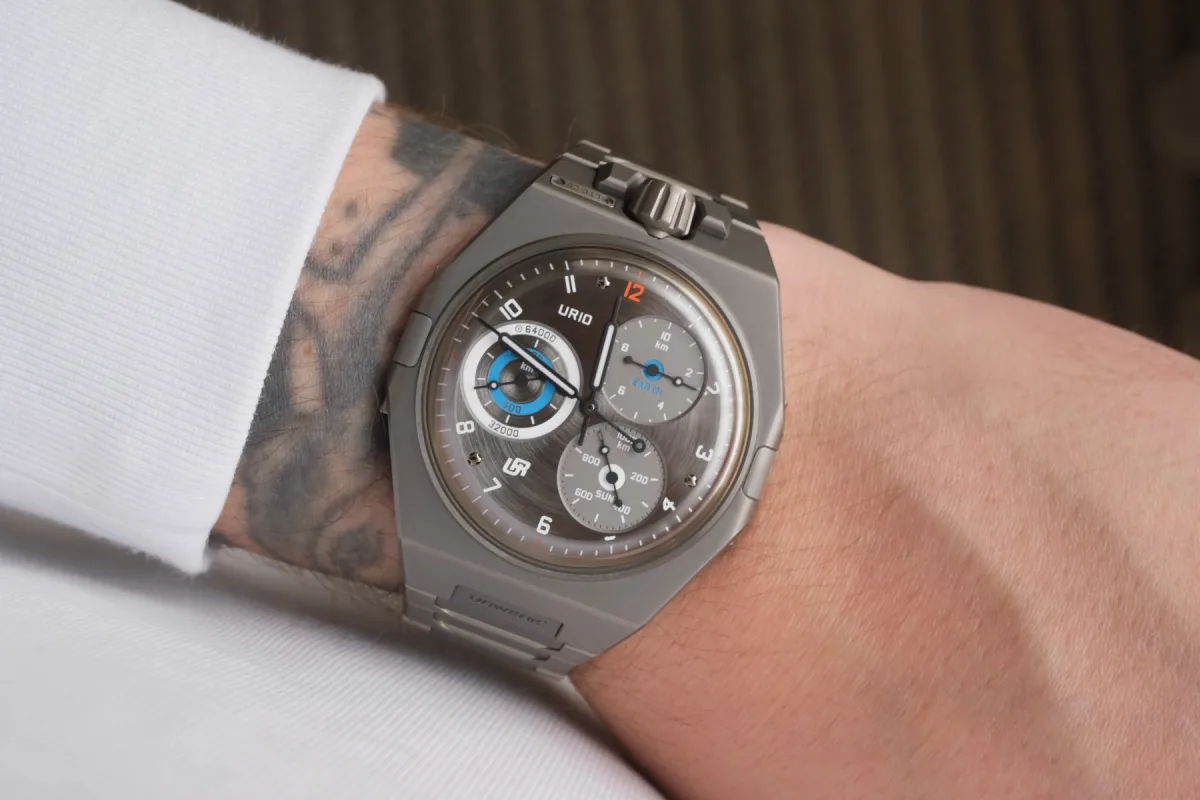
- At the 2 o'clock position is the 'Earth' indicator, which completes a full rotation for every 10 kilometers of the planet's rotation at the equator. Urwerk rounded this to 22 seconds, so the hand moves quite quickly, giving the dial dynamism.
- At the 4 o'clock mark is the 'Sun' indicator, which makes a rotation in 34 seconds, displaying the Earth traveling 1000 kilometers on its orbit around the Sun.
- The last sub-dial at the 9 o'clock position combines these ideas - its hand rotates once every 36 minutes, reflecting either 1000 kilometers of Earth's rotation or 64,000 kilometers of its orbital movement.
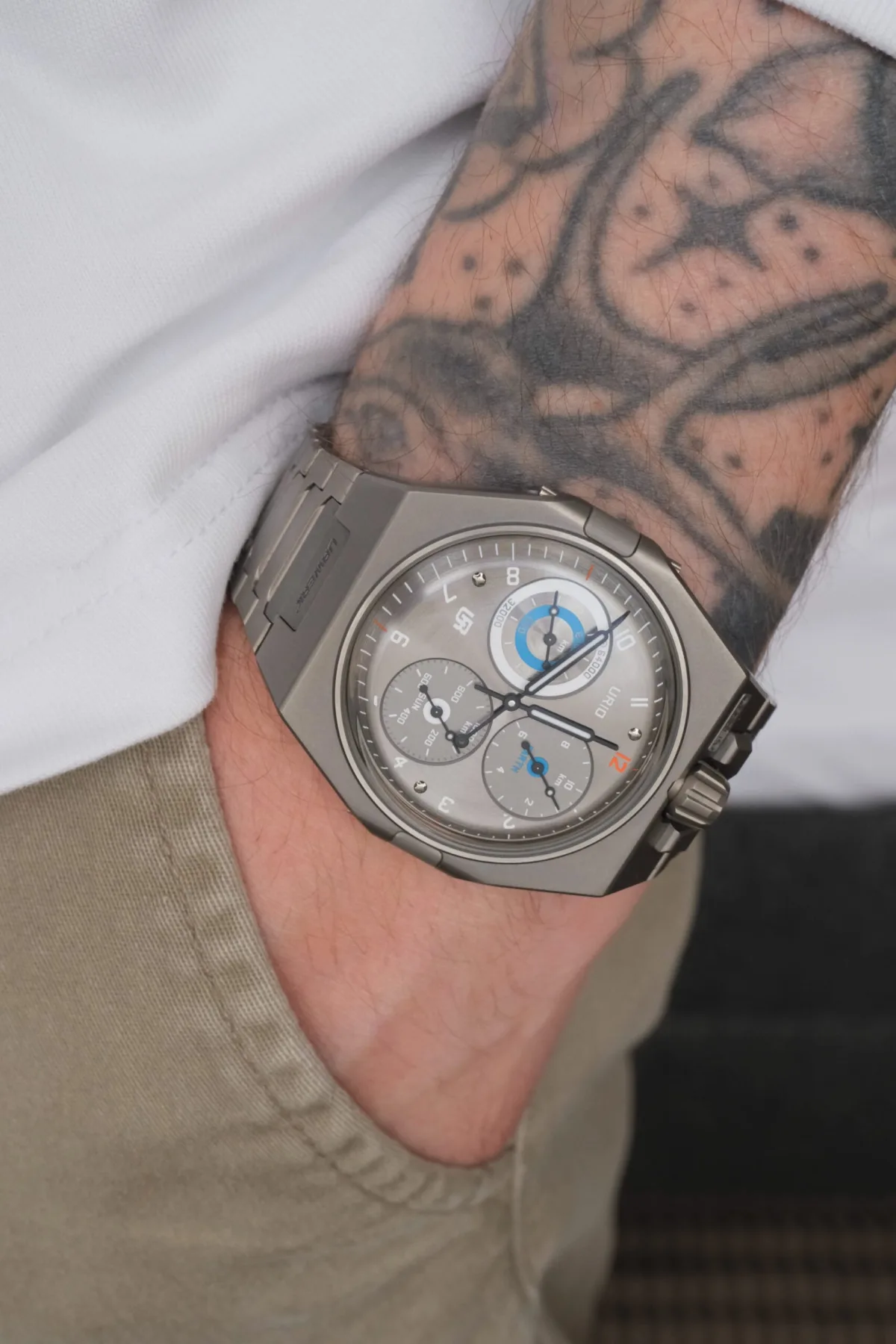
This concept is very 'nerdy', but it's important to understand that Urwerk is not trying to create a precise scientific instrument. These indicators are more interpretative, which fits the overall idea. The watch does not aim to turn astronomy into a technical trick, but rather offers a mechanical reflection on time, movement, and our place in the universe. This gives the UR-10 philosophical depth and makes it not just an instrument, but a symbol.
Impression of Sizes: More on Paper than on the Wrist
The UR-10 cannot be called a small watch. The width of the case at its widest points is 45.4 mm, but a significant part consists of the case 'ears'. The lug-to-lug distance reaches about 53 mm, which seems large on paper, but does not reflect the full picture due to the bracelet features.
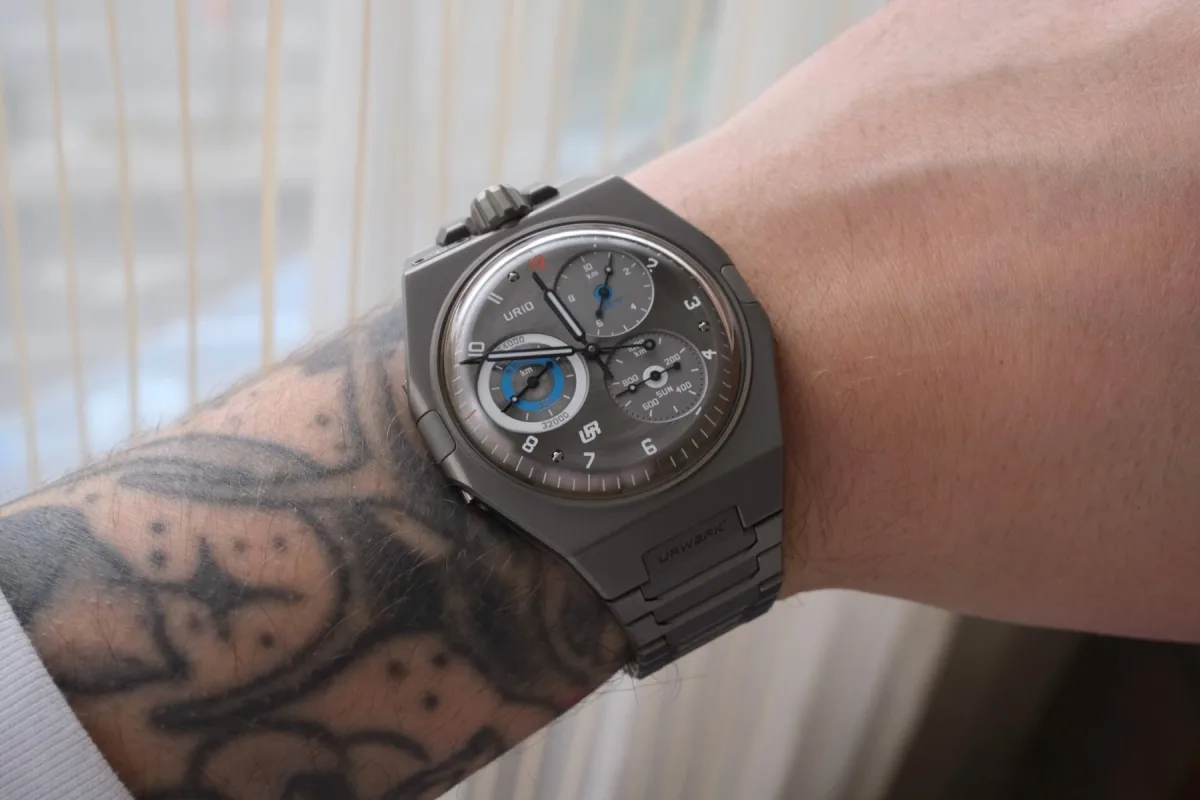
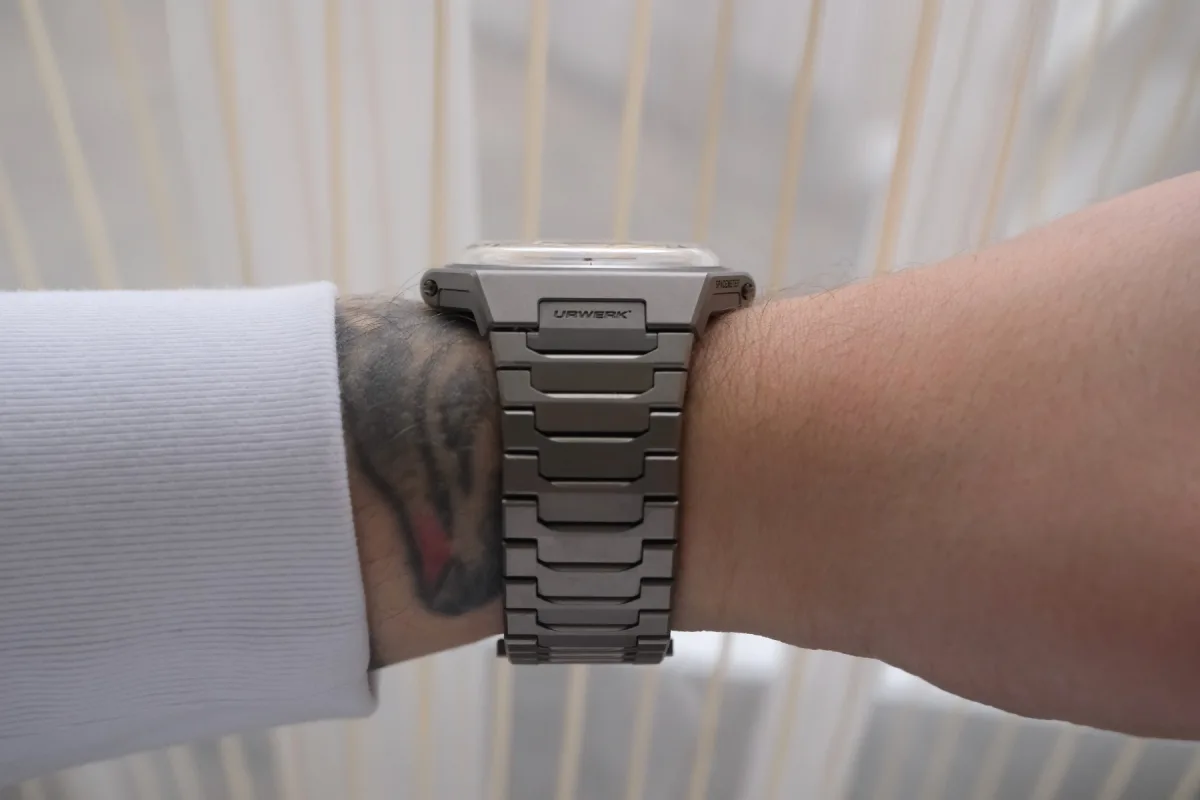
More importantly, where the first links begin to curve around the wrist - with this accounted for, the watch feels like 59 mm in width. This is still impressive, but the UR-10 is an example of how real sensations can differ from formal measurements. Thanks to the thin case and bracelet ergonomics, the watch sits on the wrist much better than one might assume.
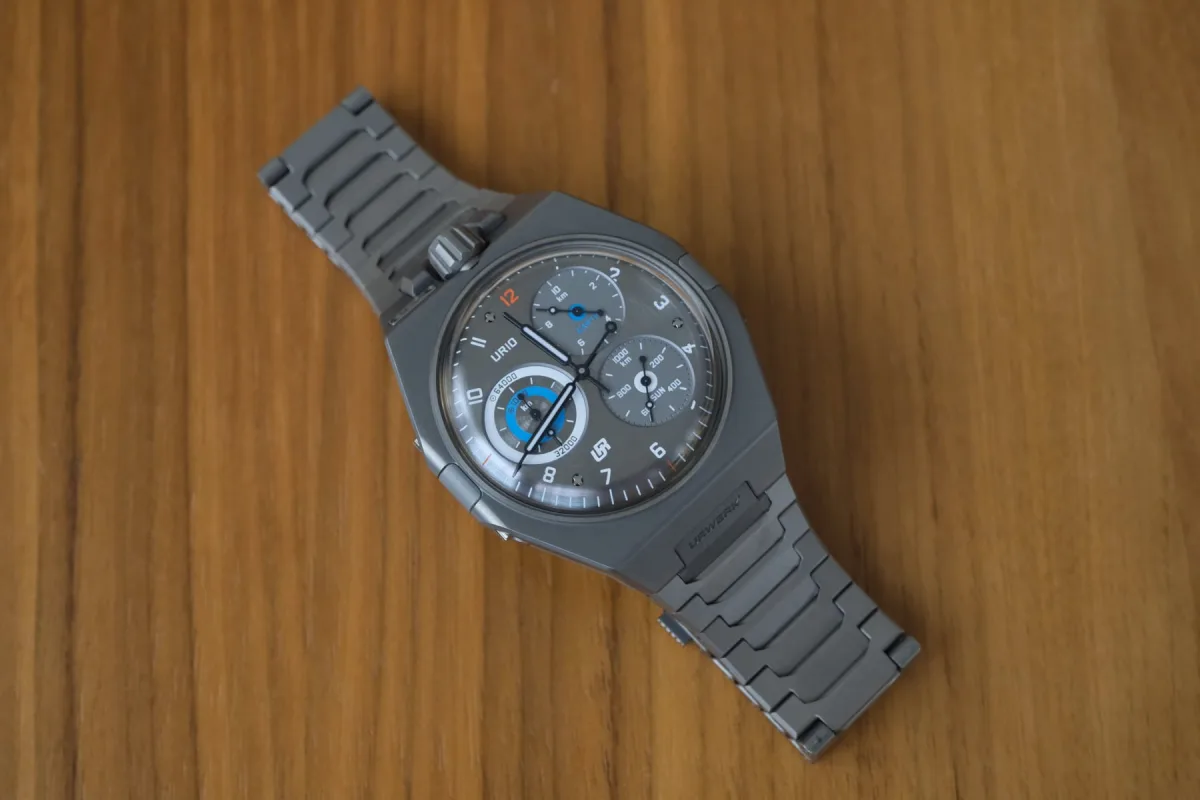
The bracelet deserves separate praise. I had similar impressions when reviewing the UR-100V FTJ - Urwerk should release bracelets more often, as they are usually excellent. The links are small and articulate well, allowing the watch to naturally hug the wrist. Although there is no on-the-fly adjustment, thanks to the short links, fitting remains simple. As a result, the bracelet is very comfortable, which is important for a watch of this class.
The Flip Side of the UR-10
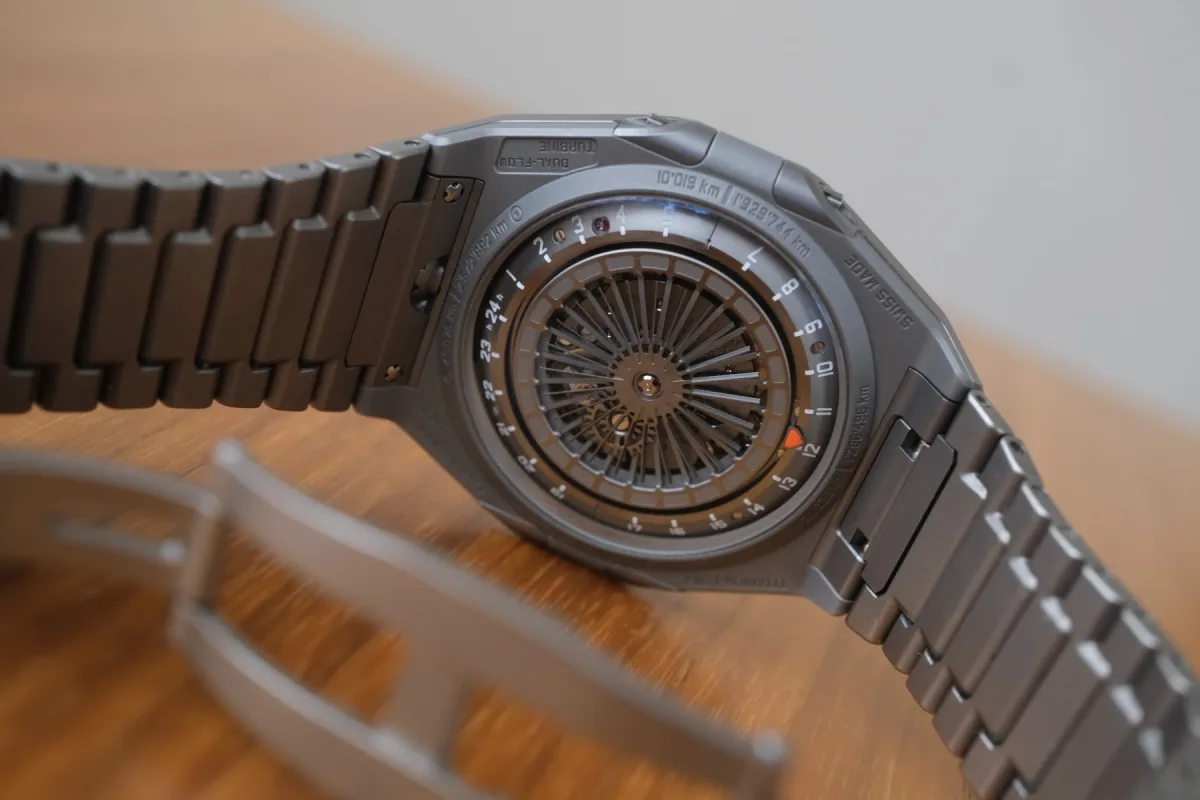
Turning the UR-10 over, we see a more familiar Urwerk solution. The case back features a 24-hour indicator around the circumference, linked with the main hour hand. This is not a GMT in the usual sense, but precisely a 24-hour display, which aligns with the watch's overall concept. Urwerk does not overload the back with unnecessary features - everything serves to support the main idea.
There is also a view of the rotor - one of my favorite details. Urwerk always manages to make such mechanisms not just beautiful, but functional and well-thought-out. In this case, the rotor is designed to slow down the return in the non-working direction, reducing wear and optimizing the mechanism's operation. This is not a decorative element, but a useful technical solution, characteristic of Urwerk.
A New Perspective on Urwerk
The UR-10 Spacemeter is undoubtedly an interesting watch. The main thing is that they show Urwerk can change its presentation form without losing its identity. The transition to central hands might have seemed like a simplification or softening of style, but in reality, it is just another path to the same idea.
This is what I like the most. The UR-10 does not try to be strange for the sake of strangeness and does not look like a compromise. It retains the characteristic conceptuality of Urwerk, but in a more understandable and convenient format.
With a price of 70,000 Swiss francs and a limit of 25 pieces per dial color, it remains a niche product, as expected from Urwerk. And that's right. The main thing is that even with familiar hands and a more traditional layout, the watch remains a true Urwerk - something not every brand can achieve.