The days when one had to scour numerous vintage ads online to find unique watches with a distinctive style of a certain era are gone.
Today, the watch industry is experiencing a renaissance, offering a wide selection where microbrands and major manufacturers create new, vibrant, and often affordable models. In this review, we will discuss a limited series of 100 pieces - the Nectere Eclipse watch priced at $880, featuring an impressively thin manual Sea-Gull movement (often referred to as Seagull). Let's examine them in detail.
Design and Concept of Nectere Eclipse
Reviewing these watches was an interesting task for me, as their design requires time to fully understand and appreciate. Naturally, my personal opinion should not influence your view - I am just one of eight billion people, and only 100 pieces were produced, ensuring complete satisfaction among the target audience. Fans of the brand have already enthusiastically embraced previous models from the 'Chaos' collection. For me, it was important to carefully study all the details and form an objective evaluation.
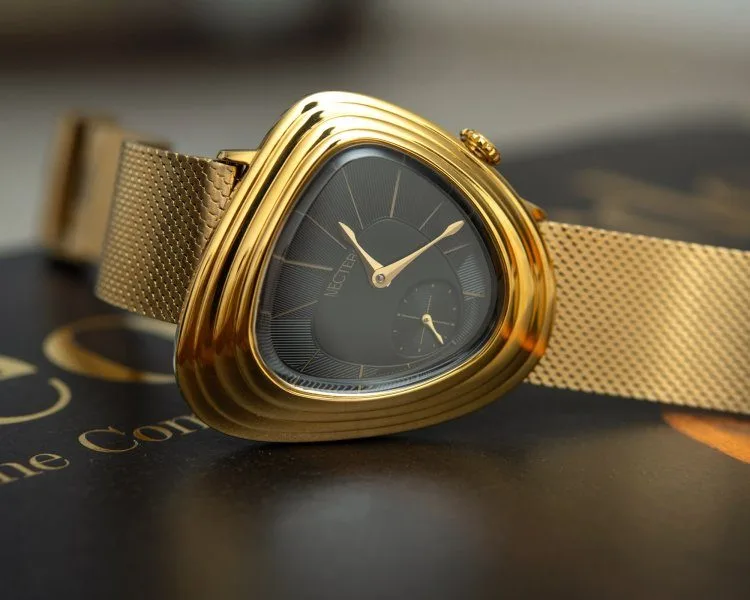
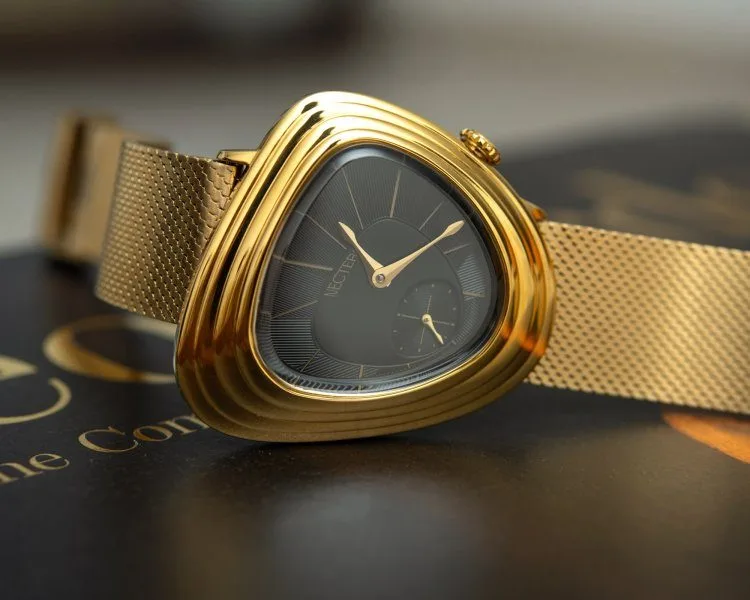
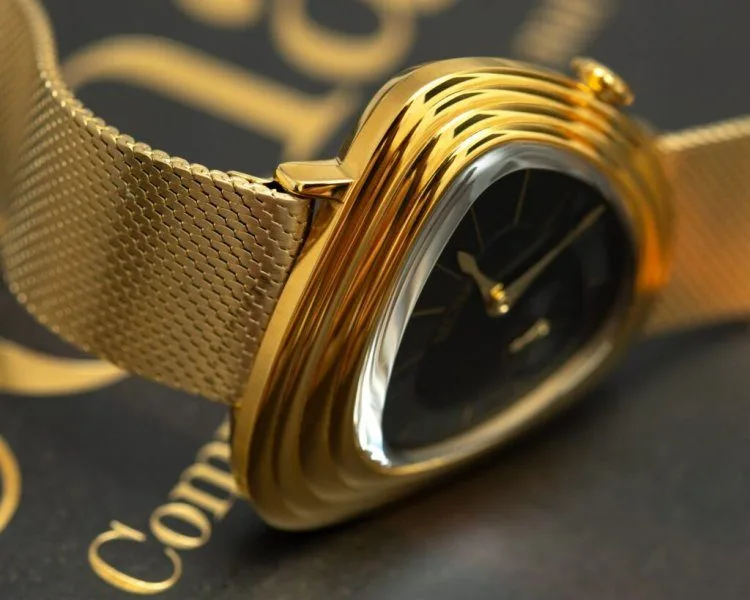
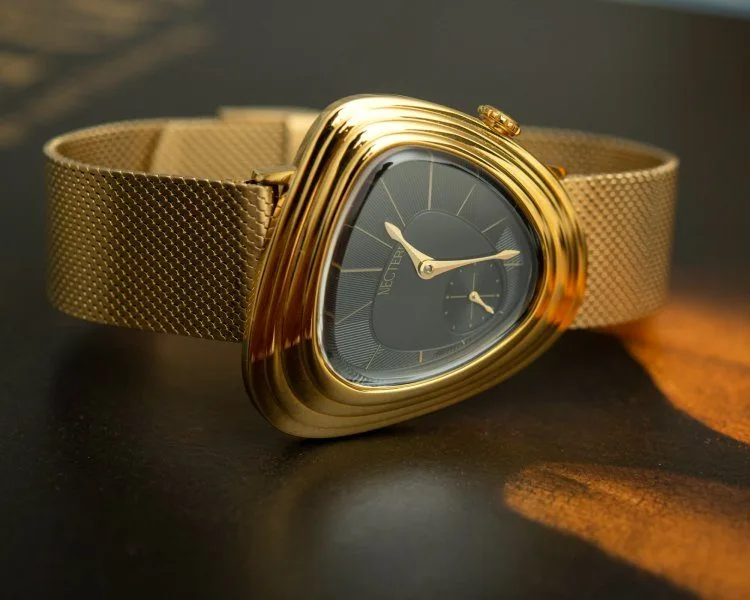
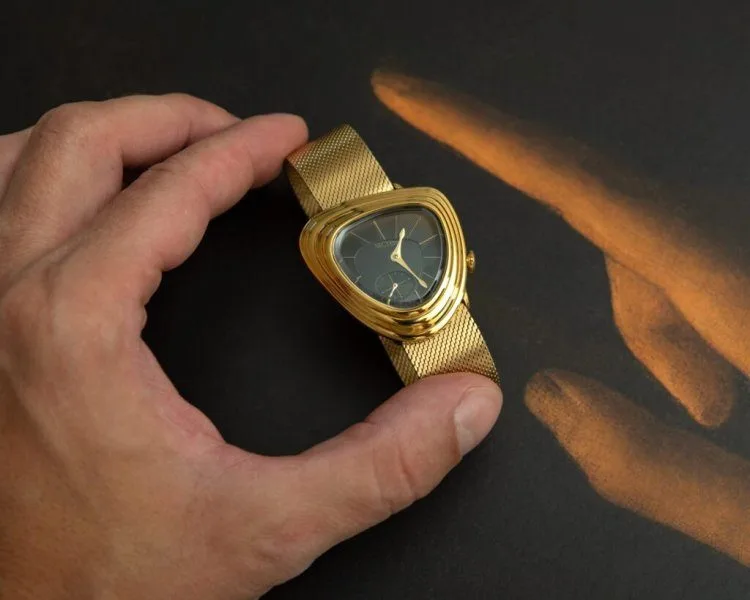
The name Nectere Eclipse reflects inspiration from a cosmic event - an eclipse, where the black dial and gold accents symbolize the moment of total eclipse, while the unusual case shape conveys the transitional moment when light begins to break through celestial bodies. The case is made of stainless steel with a gold-colored PVD coating. The diameter is 38 mm, the lug-to-lug distance is 40.5 mm, and the case thickness is just 8.5 mm.
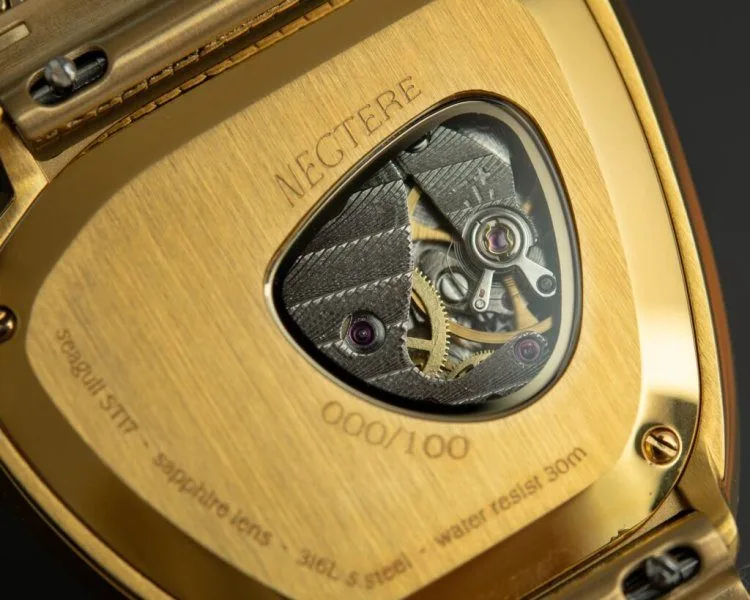
Case Thinness and Sea-Gull ST-17 Movement
The key attractiveness of the watch lies in its small overall size, which significantly enhances wearing comfort and aesthetic appeal. Creating massive watches is simple, but few brands strive to minimize case thickness, improving proportions and comfort. The Sea-Gull ST-17 movement assists in this - an 'ultra-thin' manual caliber with a thickness of about 3.2 mm (the automatic version is 4.6 mm thick). The availability of an affordable, thin movement from China allows achieving elegance without switching to quartz models.
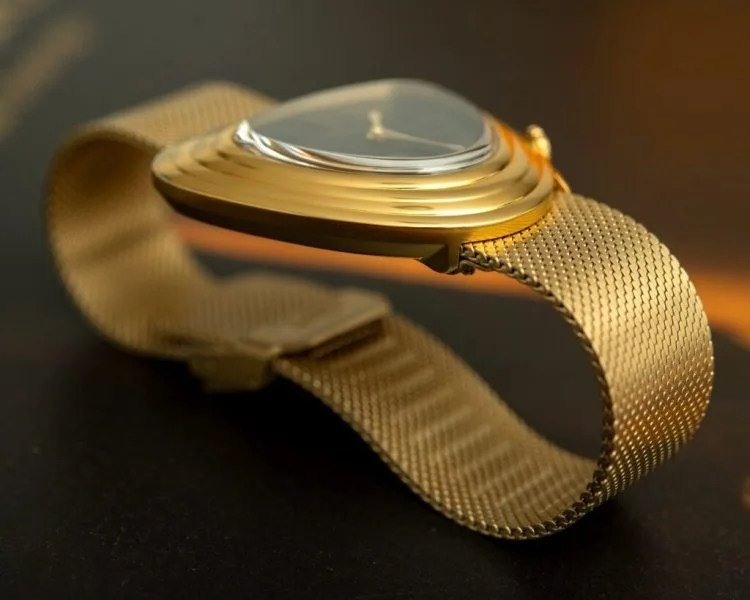
However, the movement has its features: the operating frequency is 3 Hz, and the power reserve is about 39 hours. Size and price constraints do not allow for significant improvement of these parameters, so thinness is achieved at the expense of performance. Nevertheless, winding the movement is convenient due to the thoughtful design of the crown - it is thin, elegant, and easy to rotate. The edges of the crown are smooth, eliminating discomfort during daily winding - an important aspect for manual watches.
Construction Features and Materials
The dial features a small 'triangular' window that reveals the Sea-Gull ST-17 movement with its industrial yet neat finish. Special attention is given to the shape of the window, which fits perfectly into the overall design. The case back is equipped with sapphire glass, as is the large convex front part of the case, while the small window is made of K1 glass - a combination acceptable for watches in this price category.
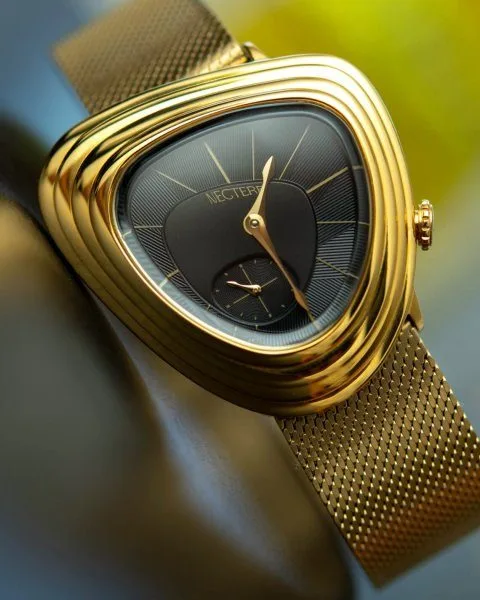
The multi-level bezel, complemented by sapphire glass, is one of the key design features of the model. Such a level of execution would have been practically inaccessible for small brands just a decade ago. The bezel consists of five levels, under which is a similarly multi-level dial. Associations with the works of Salvador Dali, Cartier Crash watches, Bernard's design solutions, and some Bulgari models are quite appropriate, yet Nectere offers its own take on this style.
Quality of Execution and Visual Perception
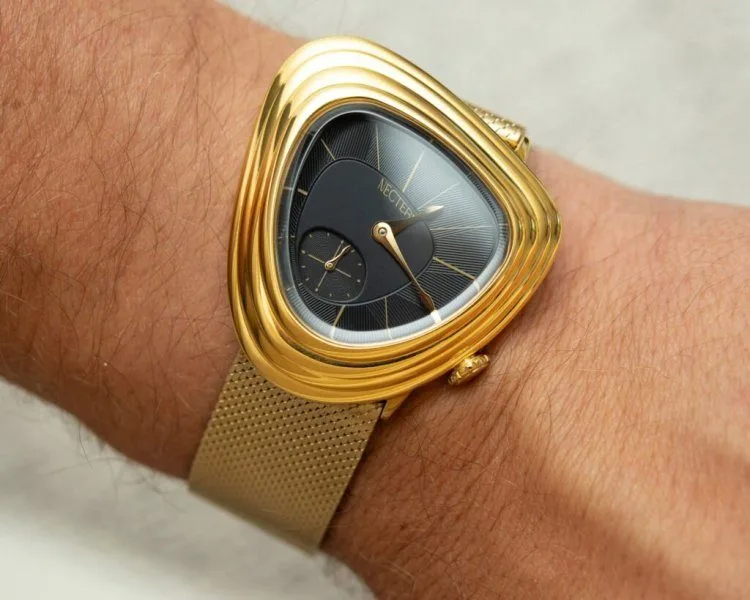
The level of execution corresponds to a price of less than $1000. There are no sharp angles on the case, and the bezel levels are clearly separated, creating a ripple effect reminiscent of melting and slightly dripping elements. The dial is adorned with various textures, adding depth and sophistication. On the wrist, the hands stand out, while the Nectere logo and gold hour markers blend with the black background, reducing overall readability but making the design more harmonious.
Comfort and Wearing Features
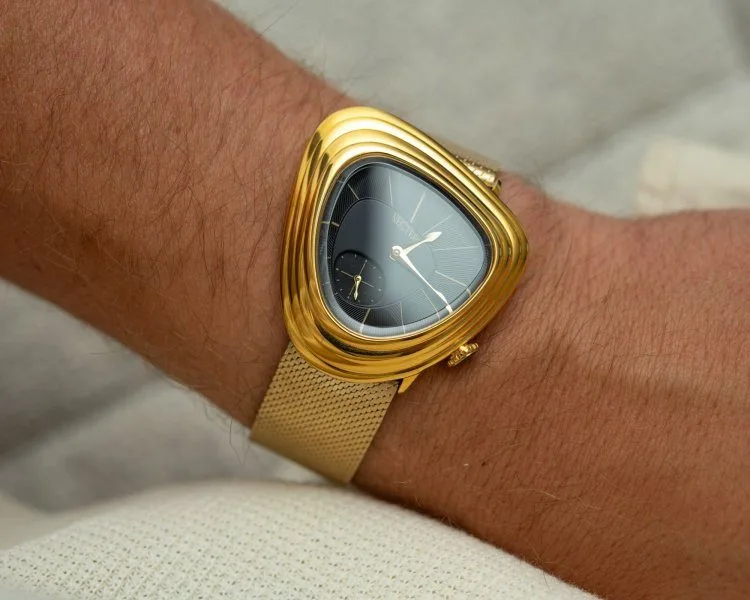
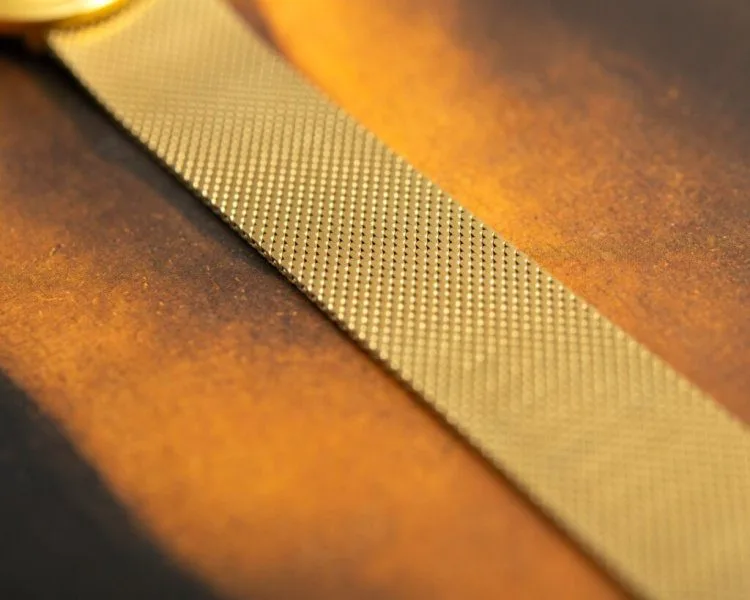
On the wrist, the watch looks as unique as it does off it. Its design requires a certain taste and readiness for unconventional forms. Despite its compact dimensions (38 mm wide and 40.5 mm lug-to-lug), the watch appears larger due to the unusual case shape, which seems ready to 'fly off' the hand. The gold mesh bracelet only accentuates this effect. Included will be an 18 mm wide leather strap with a gold PVD buckle (made in Hong Kong, where the brand is based), which will likely complement the model well.
Bracelet Clasp Drawbacks
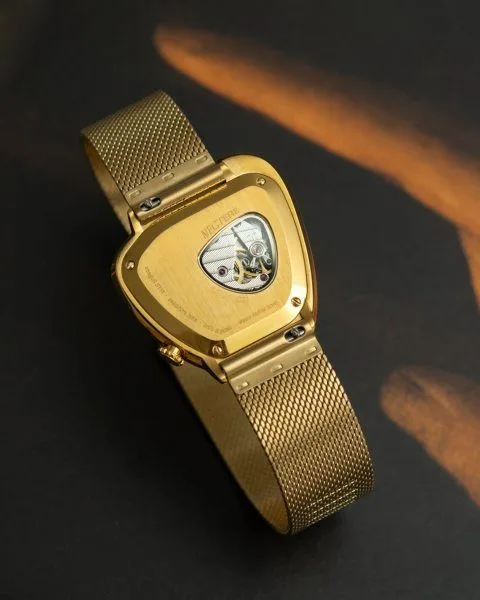
The main drawback of the model, in my opinion, is the bracelet clasp. It requires getting used to and is not convenient, increasing the risk of accidental watch drop. Unlike other bracelets with similar clasps, here you need to tuck in the long end of the strap, like a leather strap with a classic buckle. I found it difficult to keep the clasp open while tucking the strap and securing the lock. Even after some experience, the process remains inconvenient. Perhaps it's my clumsiness, and someone else will master the clasp on the first try. Personally, I prefer bracelets with clasps where one part secures the short end, and the other - the long end, and they snap together. Such a mechanism is slightly more complex to adjust but significantly more reliable.
Conclusion
The Nectere Eclipse is an attractive and interesting watch. The thin manual movement and the way it is displayed make this model not just a design experiment, but a full-fledged timepiece with elements of classic horology. The design evokes mixed reactions, but from the first glance, it's clear whether it suits you or not. I am confident that all 100 pieces will be sold quickly. The price is $880, with details available on the brand's official website.
This review considers important aspects of the design, mechanics, and practicality of the Nectere Eclipse watches, contributing to high ranking in search engines for queries related to ultra-thin mechanical watches, limited collections, and innovative solutions in the watch industry.