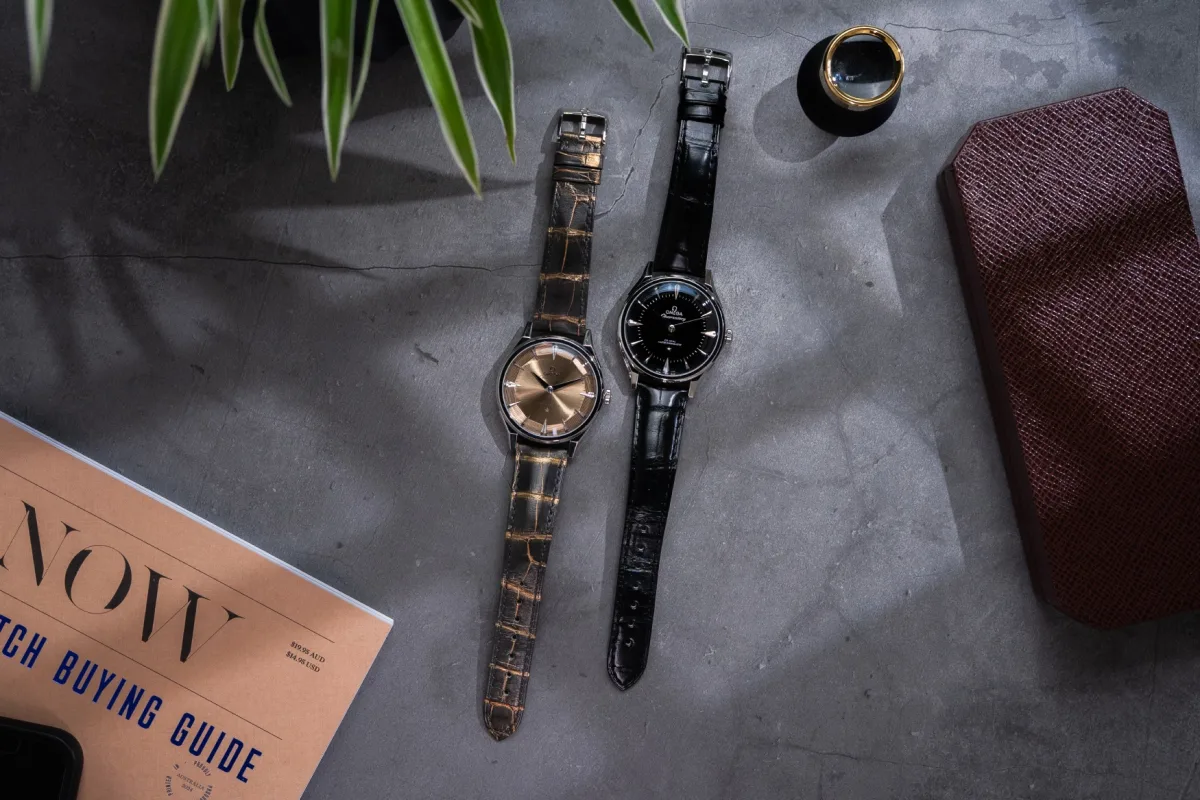
Omega has always been a pioneer in watchmaking, particularly in the pursuit of precision.
Whether it's the first wristwatch tourbillon in the world, the only brand to industrially implement the coaxial escapement, or an early adopter of METAS certification - Omega has consistently aimed to create watches that surpass all existing standards of precision. Now, the company has taken the next step by introducing a new line of Constellation models with an innovative method of chronometry testing. These are the first watches to receive chronometer certification without a second hand.
This article will examine the features of these watches in detail, as well as the new method of chronometry testing. Meanwhile, let's explore how the company managed to certify new models without using a second hand.
Double Metric Testing Technology
Traditionally, to verify a watch's compliance with chronometer standards (from -4 to +6 seconds per day), it was necessary to daily record the position of the second hand in different case positions over several days. This meant that classic watches without a second hand could not undergo a full-fledged verification and accuracy certification, regardless of the quality of the movement.
To bypass this limitation, the independent laboratory Laboratoire de Précision Omega developed a new system. It uses an audio recording of the escapement's ticking sound, which is continuously analyzed to identify any rate changes. Simultaneously, external parameters such as temperature, magnetic field, case position, and atmospheric pressure are recorded. This way, rate variations are monitored from the start of testing, and if there are deviations from the ideal value (-0/+0), the watchmaker immediately receives information about the cause.
If you are not familiar with Laboratoire de Précision, it is an independent Omega testing laboratory opened two years ago in two locations - Biel and Villere. It is designed to conduct tests according to METAS standards but is also available to other brands in the Swiss industry. The laboratory is accredited by COSC and SAS (Swiss Accreditation Service), ensuring independence and reliability of testing.
This new double metric testing technology and continuous audio recording perfectly complement the Omega Spirate system, which allows balance adjustment to an accuracy of 0.1 seconds per day. The Spirate system was introduced in 2023, and the new testing method appears to be a logical continuation and application of this fine tuning.
New Omega Constellation Collection
The new Constellation line includes three variants, differing in case material and movement. All three movements have the same base and level of regulation but differ in finishing and decorative elements. Several dial options are provided for each case, except for the platinum-gold, which is only available with a platinum-gold dial - a platinum base with a gold-toned PVD coating.
Case
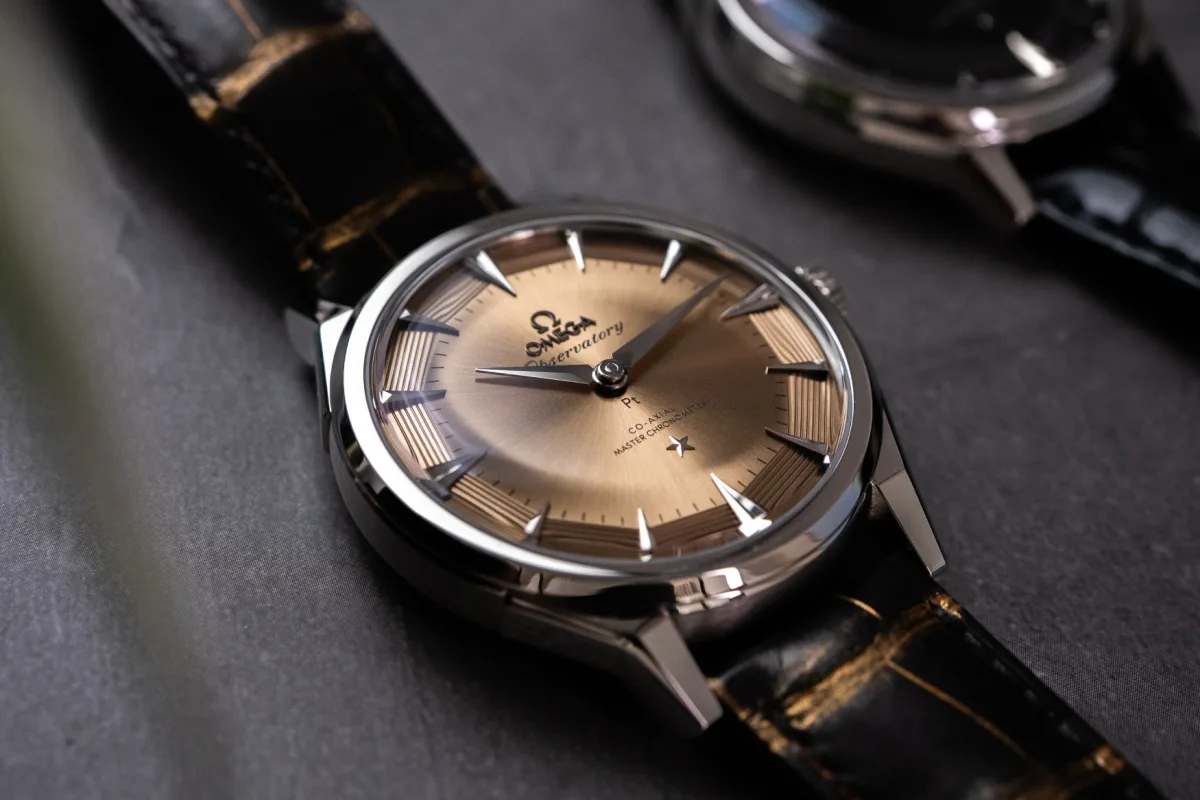
Let's look at the three case variants. All are designed with a unified look, bringing back popular elements that connect the new models to historically significant Constellation versions. The case diameter is 39.4 mm, which is an unusual but balanced size, neither too large nor too small. The case thickness is 12.23 mm, except for the platinum variant - 12.32 mm.
Special attention deserves the case lugs - the signature "dog-leg" faceted design known from the original Constellation. They have sharp angles and are carefully polished, extending downwards to the wrist. The lug-to-lug length is 47.2 mm. The lugs are screwed to the case, allowing for separate finishing and enhancing execution quality.
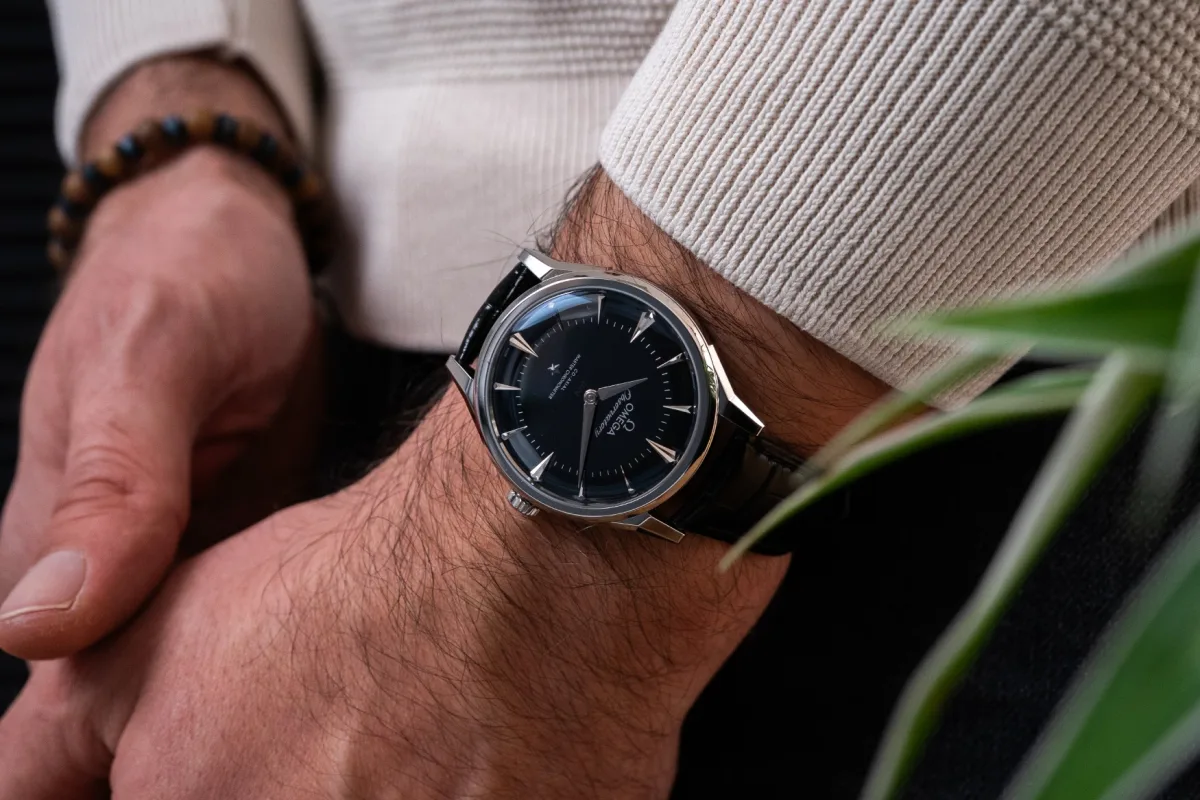
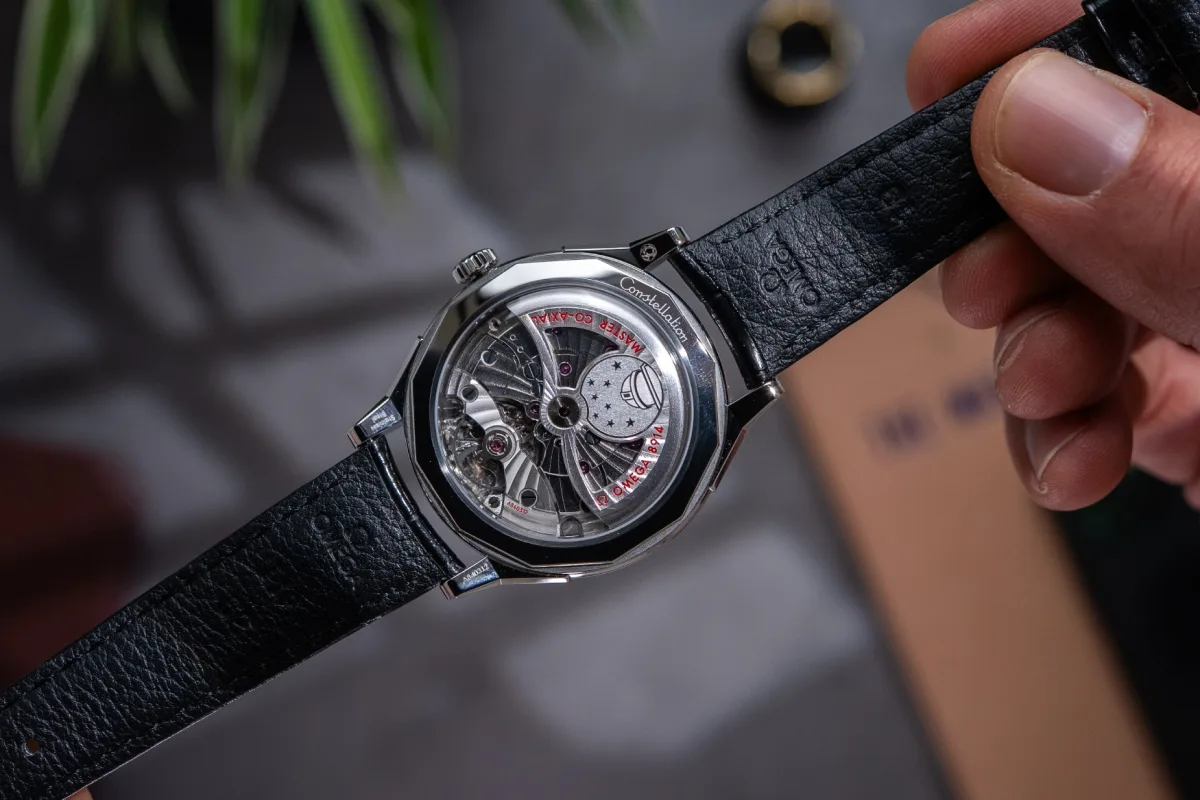
All cases feature a transparent case back showcasing the new calibers and have water resistance up to 30 meters. The bezel is minimalist to provide a full view of the "pie-pan" dial. The crown is fluted with a convex and polished Omega logo.
- O-MEGASTEEL - the basic version made of Omega's proprietary stainless steel, the lightest in the collection - only 70 g.
- Gold models - in three of Omega's proprietary alloys: Sedna (rose gold), Moonshine (yellow gold), and Canopus (white gold). Each variant has a dial matching the case tone.
- Platinum-Gold flagship - the case is slightly wider (+0.09 mm) and weighs about 120 g. The alloy contains about 85 g of platinum and 6.5 g of gold, creating a unique shine.
Dial
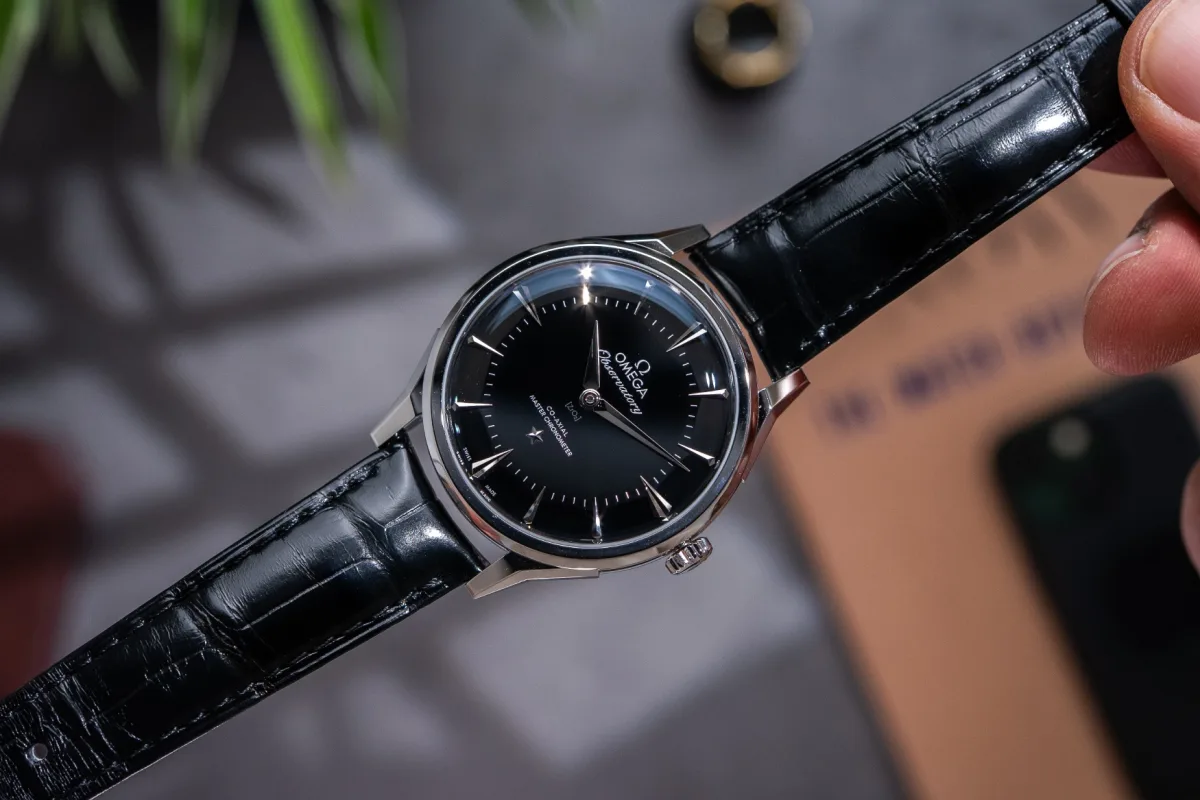
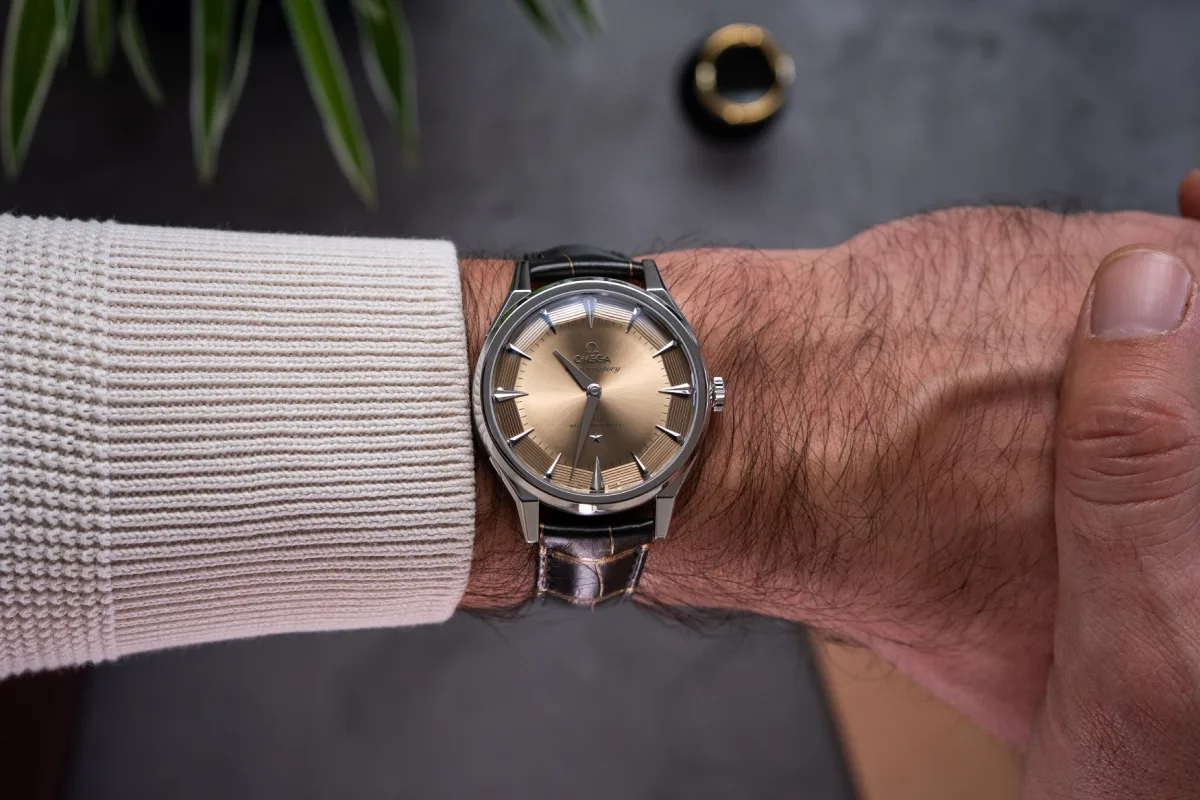
Various dial options are provided for each case material, all done in the iconic "pie-pan" style with a twelve-sided shape and sharp slope along the edges, forming between kite-shaped applied markers.
Many dials are adorned with a subtle atom symbol under the central axis of the hands, indicating the case material. Exceptions are the blue, green, and opaline dials in the O-MEGASTEEL version.
- O-MEGASTEEL offers four options: deep black ceramic with barely noticeable ZrO2 marking under the hand axis; blue and green PVD with a sunburst effect and white gold markers; opaline with pink Sedna gold appliques.
- Gold models have monochrome dials matching the case color with the same tone for all elements except printed text. The engraving is done by hand (guilloche), not stamped as in the steel versions.
- Platinum-Gold model features a platinum-gold dial with gold-toned PVD coating. The contrast is created by white gold and platinum-gold markers and hands.
Movement
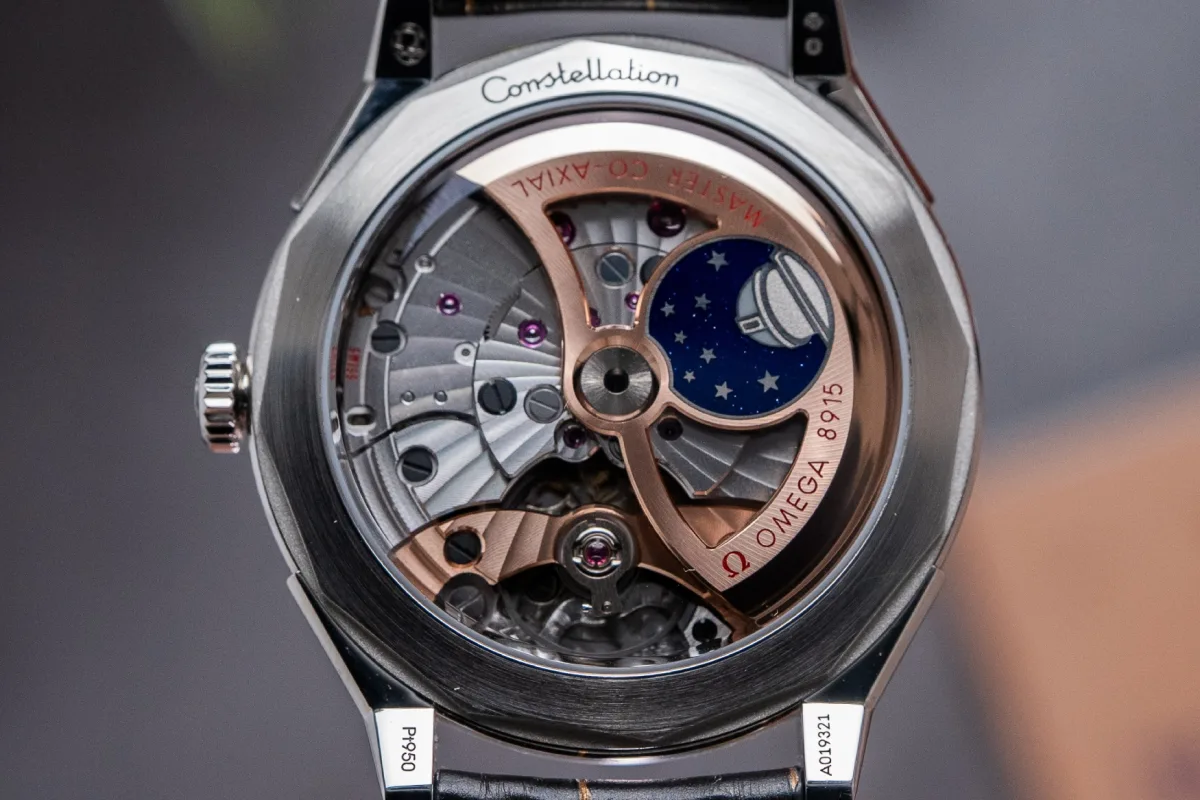
The three new calibers mark an industry breakthrough: the first movements to receive chronometer status with only hour and minute hands. This was made possible through the acoustic testing methods described above.
All movements are automatic with a 60-hour power reserve, equipped with Omega's coaxial escapement.
- Steel models are equipped with the basic Caliber 8914 Standard - a copy of the movement in the gold models with rhodium plating, creating a monochrome look through the case back.
- Gold models received the Caliber 8915 Luxe - the name refers to vintage Constellation models with exquisite bracelets. The rotor and balance bridge are made of Sedna or, for the first time, Moonshine gold.
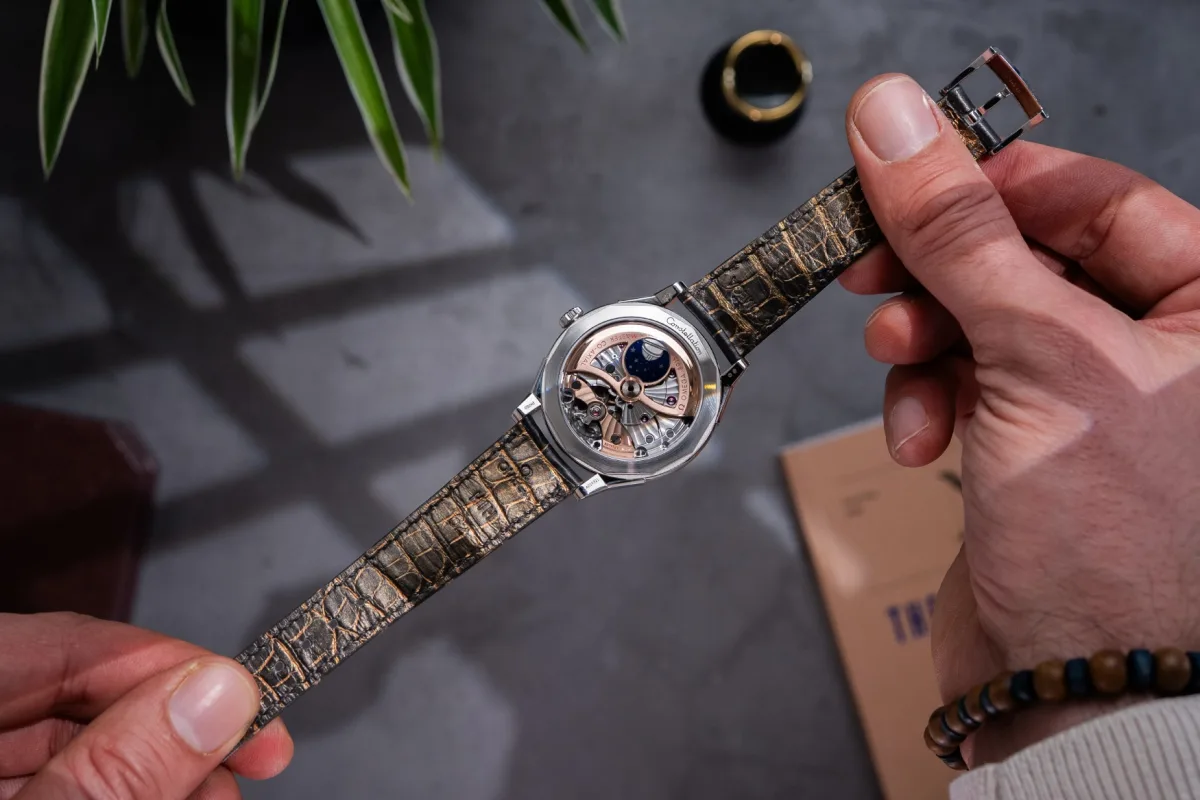
- Platinum-Gold model is equipped with Caliber 8915 Grand Luxe with a rotor and balance bridge in Sedna gold, and a medallion on the rotor with a night sky image in aventurine glass. The medallion is decorated with eight stars symbolizing Omega's successes in the first half of the 20th century chronometer competitions.
Straps and Bracelets
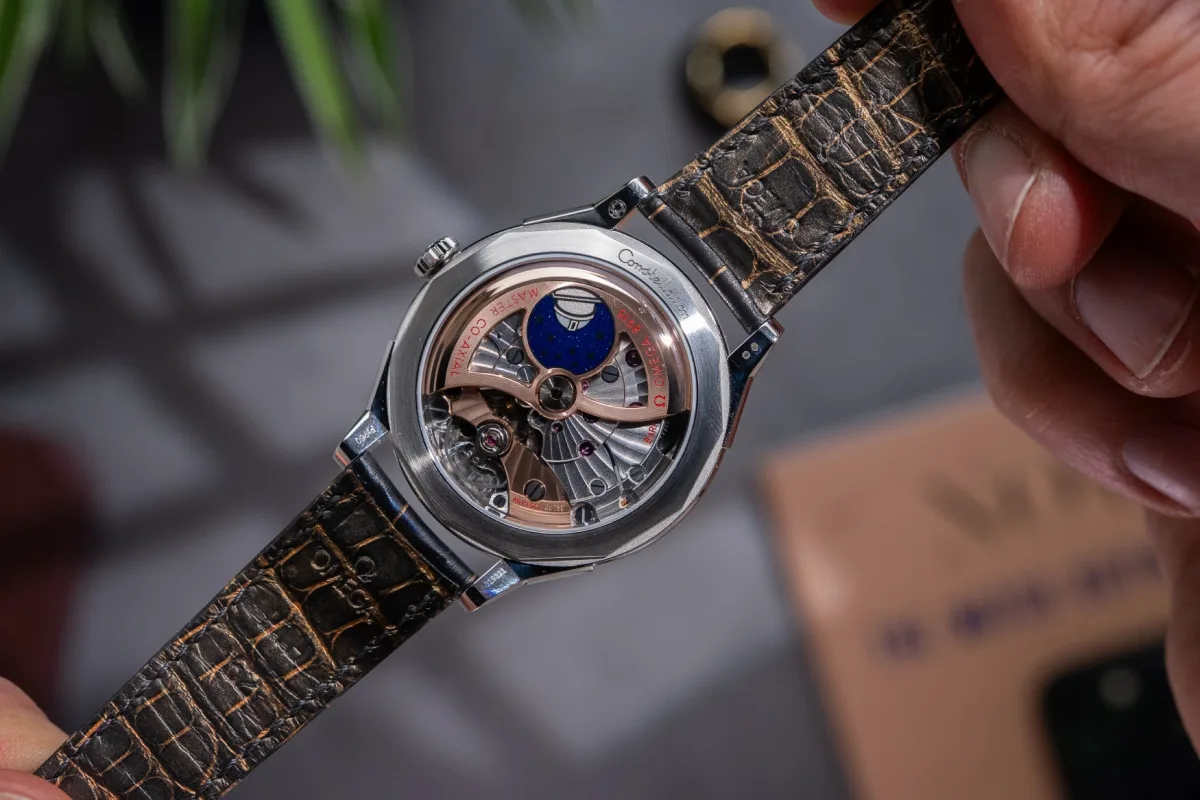
The choice of straps and bracelets is diverse and includes models referencing iconic Constellation versions sought after on the secondary market.
- Steel models come with leather straps matched to the dial tone, with classic buckles.
- Gold models can be equipped with a nine-row Moonshine gold bracelet - rare and desirable for collectors. Green leather straps are also available.
- The Platinum-Gold model comes with a dark gray leather strap with gold stripes, adding an elegant sheen.
Final Evaluation
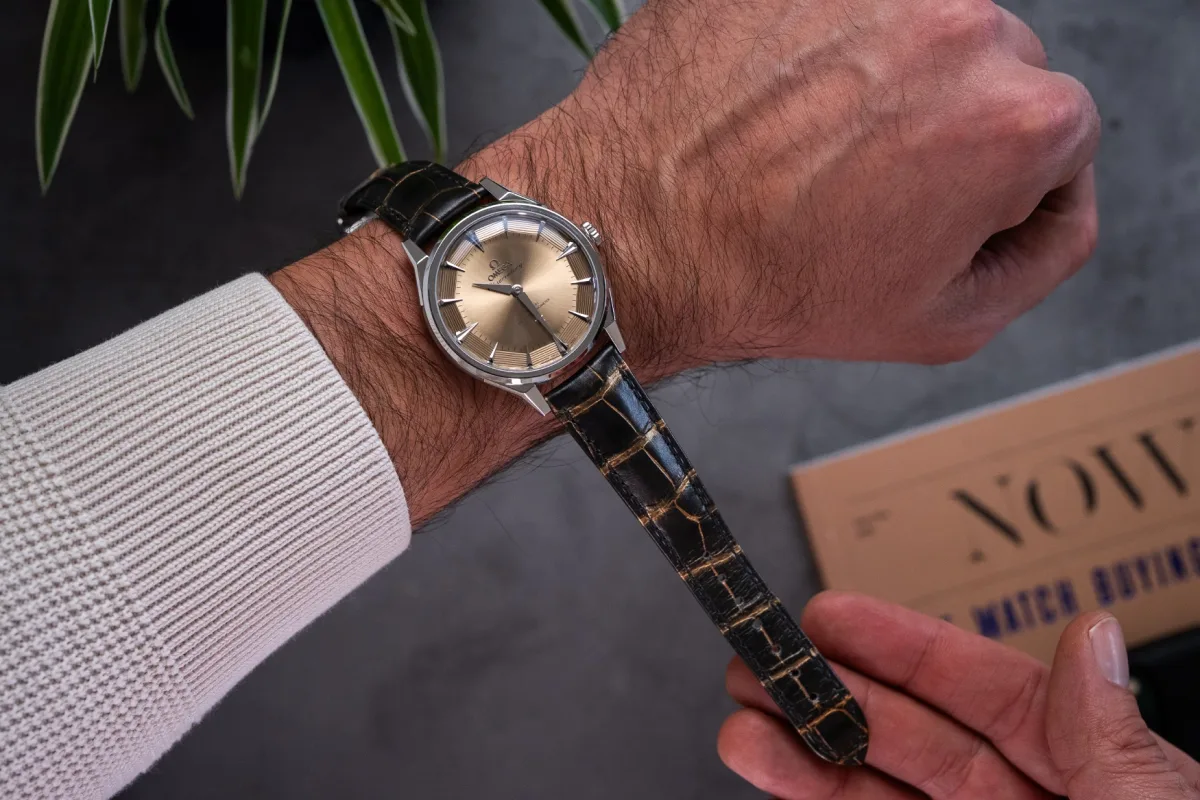
The new generation of Constellation is an unexpected but logical step for Omega. While the Speedmaster and Seamaster lines are filled with novelties, fans of precise chronometry had to settle for older models or search for them on the secondary market.
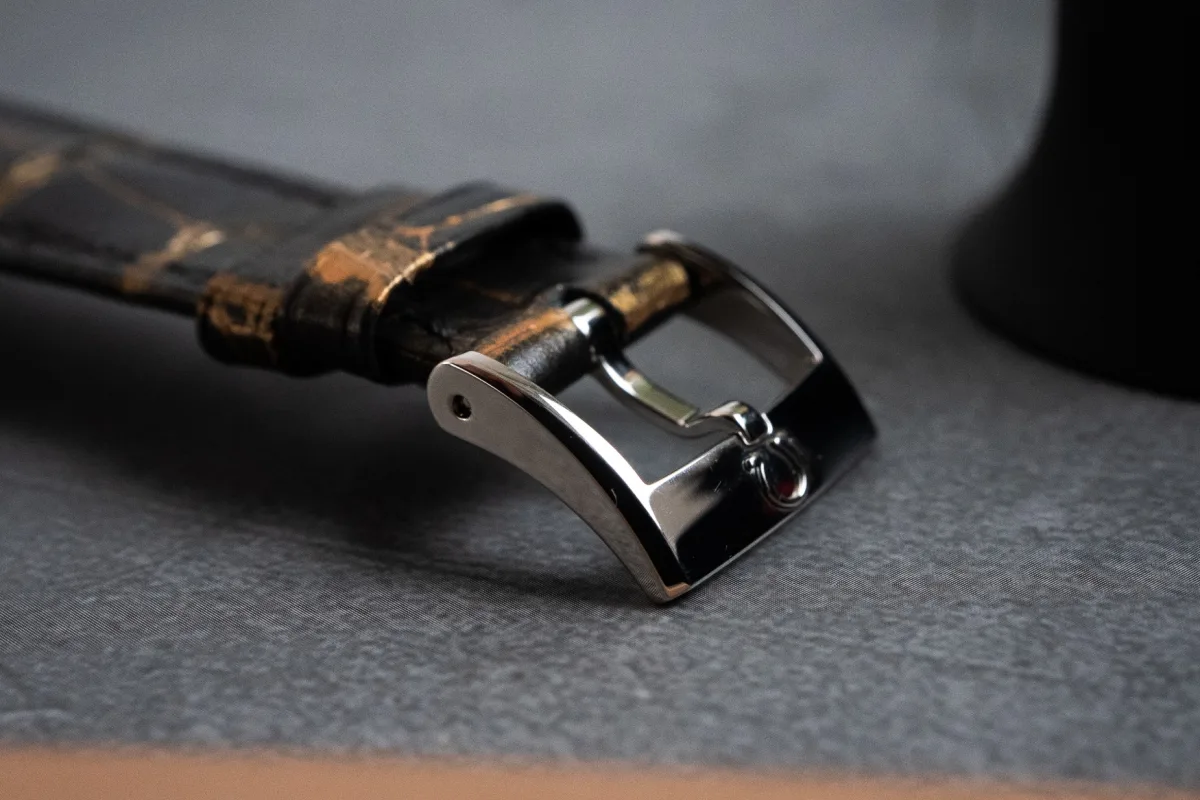
Combined with innovative testing at Laboratoire de Précision, these watches will be the choice for those who value precision and reliability above all. Previously, such a level of control was only available to independent high-end manufacturers with considerable expenses. Now Omega brings these technologies to mass production.
Although these watches may not interest the broad Omega audience (they haven't been to the Moon or appeared on James Bond's wrist), they highlight the brand's historical excellence in chronometry and demonstrate serious work in this area. A model for history enthusiasts and watchmakers open to innovation.
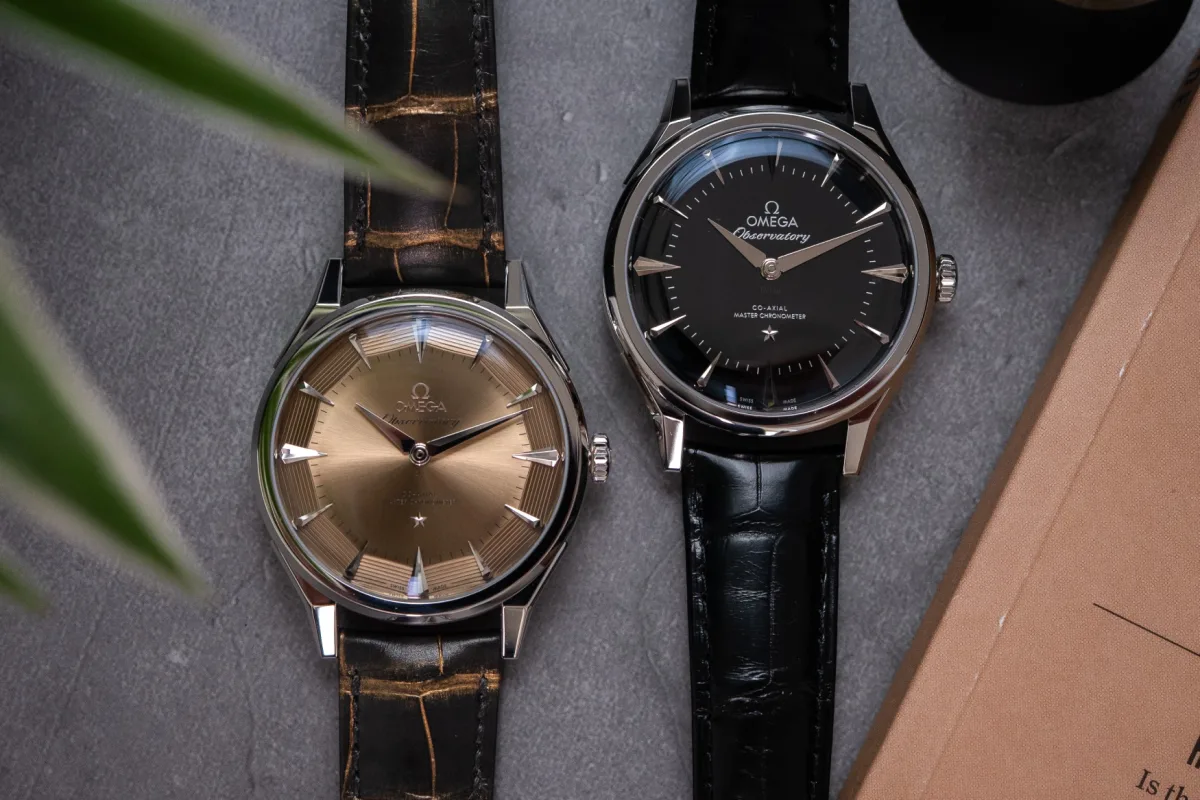
Prices and Availability of Omega Constellation (2026)
The new Omega Constellation models are already available in Omega boutiques and authorized dealers.
Price: from 10,900 to 59,100 USD
| Brand | Omega |
|---|---|
| Model | Constellation |
| Case Dimensions | Steel/Gold: 39.4 mm (diameter) x 12.23 mm (thickness) x 47.2 mm (lug-to-lug) |
| Platinum-Gold: 39.4 mm x 12.32 mm x 47.2 mm | |
| Case Material | O-MEGASTEEL |
| 18k Moonshine Gold | |
| 18k Canopus Gold | |
| 18k Sedna Gold | |
| Platinum-Gold Alloy | |
| Glass | Sapphire front and back |
| Water Resistance | 30 meters |
| Dial | Black ceramic, blue or green PVD, opaline (steel models) |
| Moonshine, Canopus, Sedna Gold (gold models) | |
| Platinum-Gold PVD (platinum model) | |
| Strap | Leather (black, blue, green, gray) with classic buckle (steel and gold) |
| Nine-row Moonshine Gold bracelet (Moonshine model only) | |
| Gray leather strap with gold stripes, classic buckle (platinum model) | |
| Movement | Calibre 8914 Standard (steel), automatic, in-house, METAS certification |
| Calibre 8915 Luxe (gold), automatic, in-house, METAS certification | |
| Calibre 8915 Grand Luxe (platinum), automatic, in-house, METAS certification | |
| Power Reserve | 60 hours |
| Functions | Hours, minutes |
| Availability | On sale |
| Price | From 10,900 to 59,100 USD |
This expert review reveals the technical and design features of the new Omega Constellation line, highlighting innovations in chronometry and precision, which will rank high in search engines for queries related to accurate and innovative Omega watches.