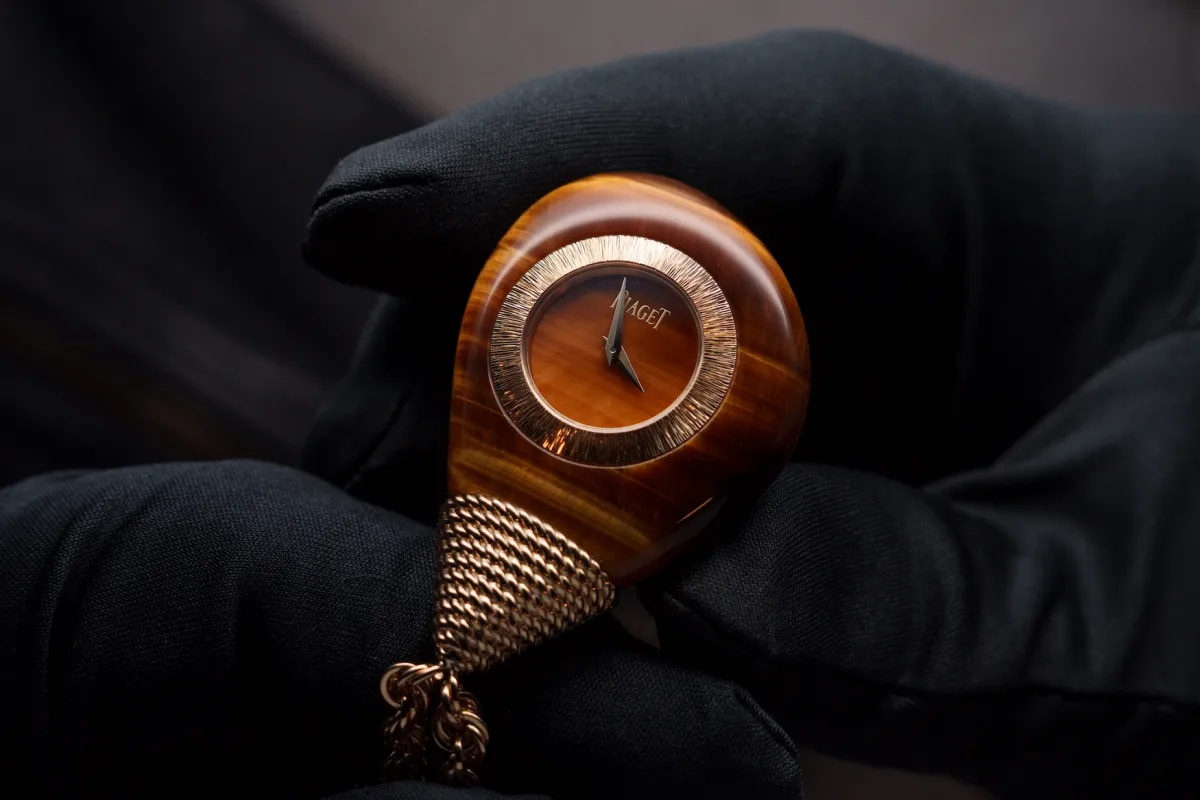
Piaget is a brand associated with sophistication and elegance, and the phrase "hold my beer" hardly seems appropriate here.
More fitting would be the phrase "hold my champagne," as Piaget's collection with decorative stone dials for Watches and Wonders 2026 truly impresses. While stone dials are widespread today, Piaget has long been ahead of the trends with years of experience working with decorative stone. The result is genuine mastery in watchmaking. In this article, we will review the key new releases from Piaget at Watches and Wonders 2026.
Piaget Swinging Pebble
The Swinging Pebble line best demonstrates Piaget's stone craftsmanship. What other watchmaker works with decorative stone in such a way? Each piece is carved from a single slice of stone - choose from tiger's eye, verdite, or pietersite - which is hollowed out to house the in-house movement and then sealed, forming a smooth, organic pebble-shaped case. Each of the three stones has a unique character: for example, tiger's eye stands out with warm, striped amber hues, verdite with deep green and speckled patterns, and pietersite with stormy blue tones.
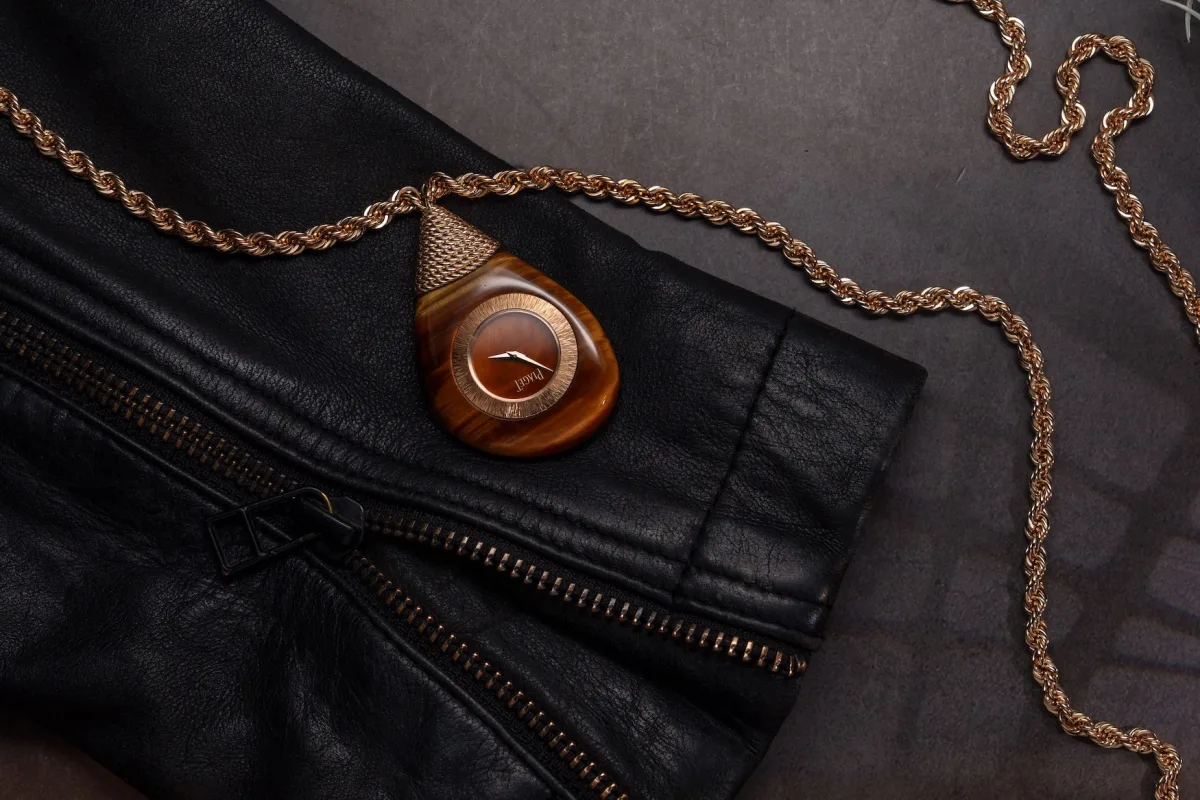
No matter which stone is chosen, no dial will be identical - that's the essence. Despite the apparent simplicity, the concept requires high precision: the stone must be crafted to accommodate the movement without disrupting its structural integrity and natural beauty. Each pendant is suspended on a twisted gold chain - a nod to Piaget's long-standing expertise in jewelry and chain-making. While today most people prefer to wear watches on the wrist, there's a special poetry here: a pendant watch is a unique way to keep time close to the heart. Now, let's move on to the Polo model.
Piaget Polo 79 with Sodalite Dial
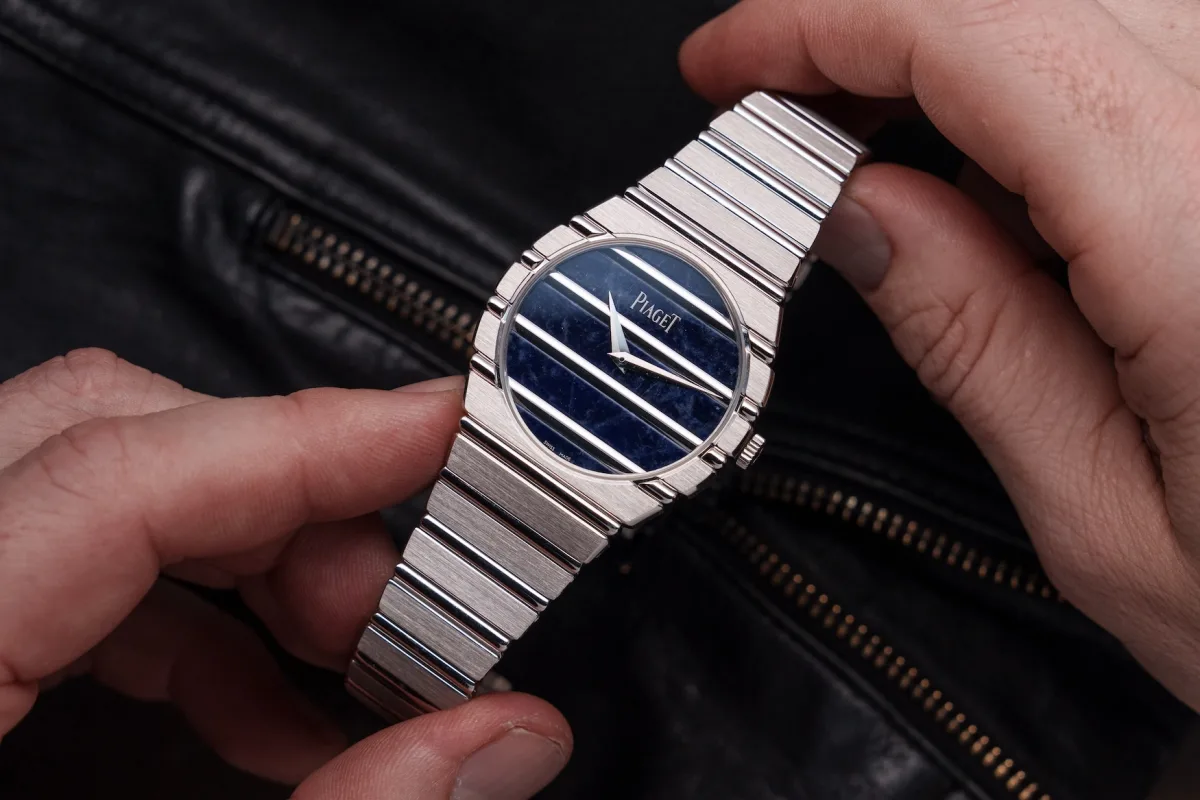
The Polo is back in the spotlight - and we're not talking about the Piaget Limelight Gala. In watch circles, the word "hype" often carries a negative connotation, but in this case, it's a positive: a broad audience is rediscovering one of Piaget's most iconic designs. The Polo 79 - a revival and reinterpretation of the original Polo model designed by Yves Piaget in 1979 - once again draws attention to the brand's most sporty collection.
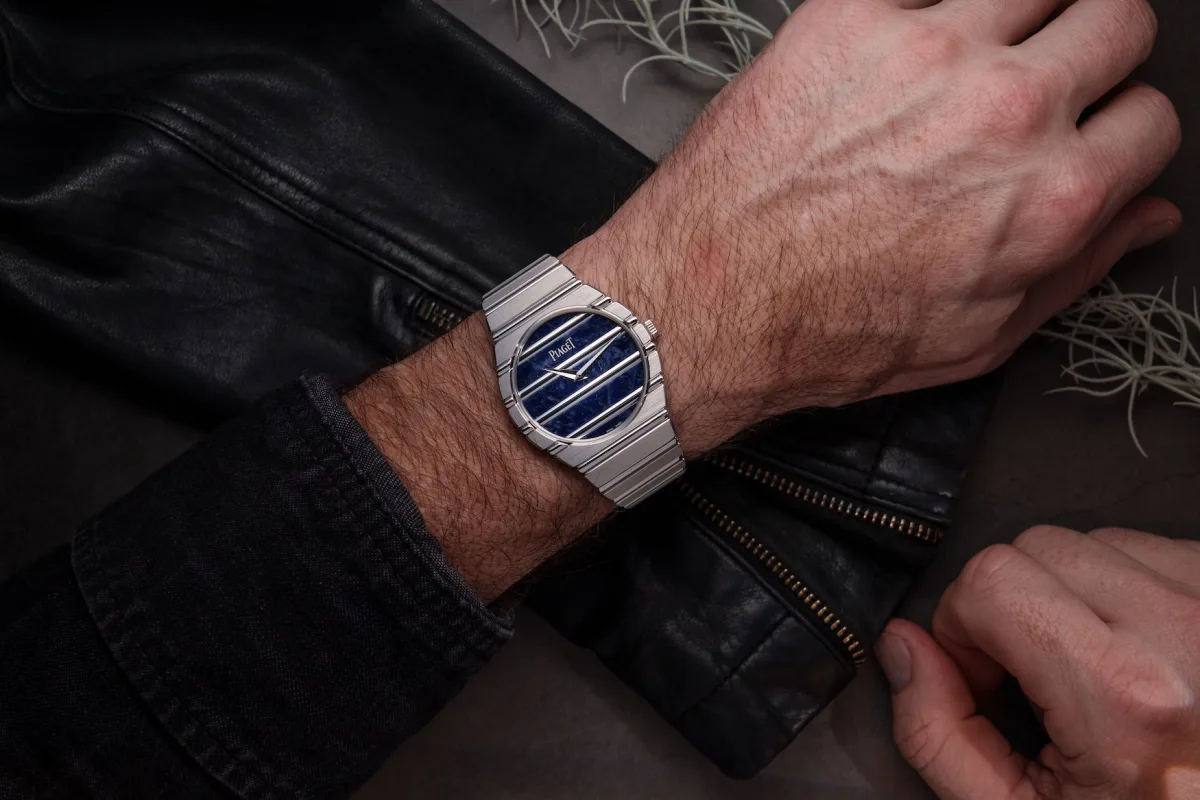
However, at Piaget, sporty style does not exclude glamour and elegance. Unlike most watches, which can be described as watches with bracelets, the Polo was initially designed as a bracelet with a watch. The result is a fluid design with continuous engraved patterns (gadroon) running along the bracelet, case, and dial.
This signature element was removed from the catalog but triumphantly returned in 2024 in unapologetic 18-carat yellow gold models. Later, white gold and two-tone white and yellow gold options became available.
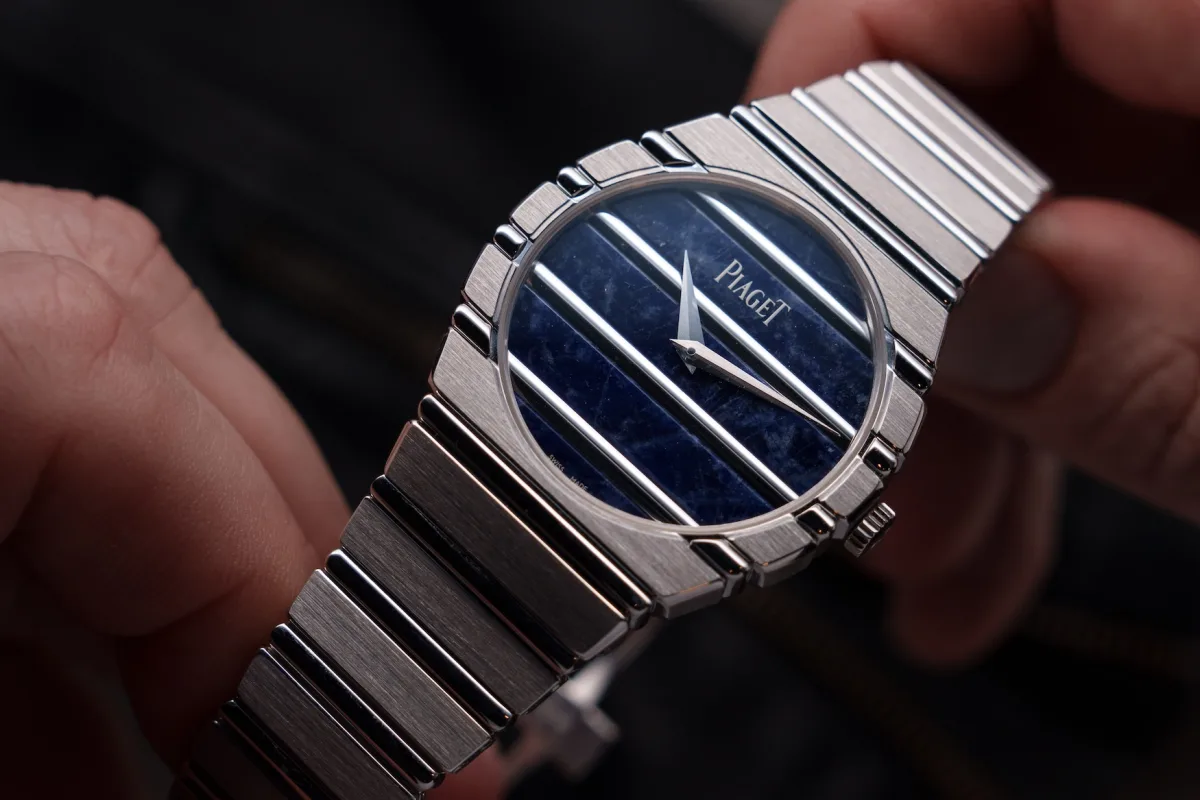
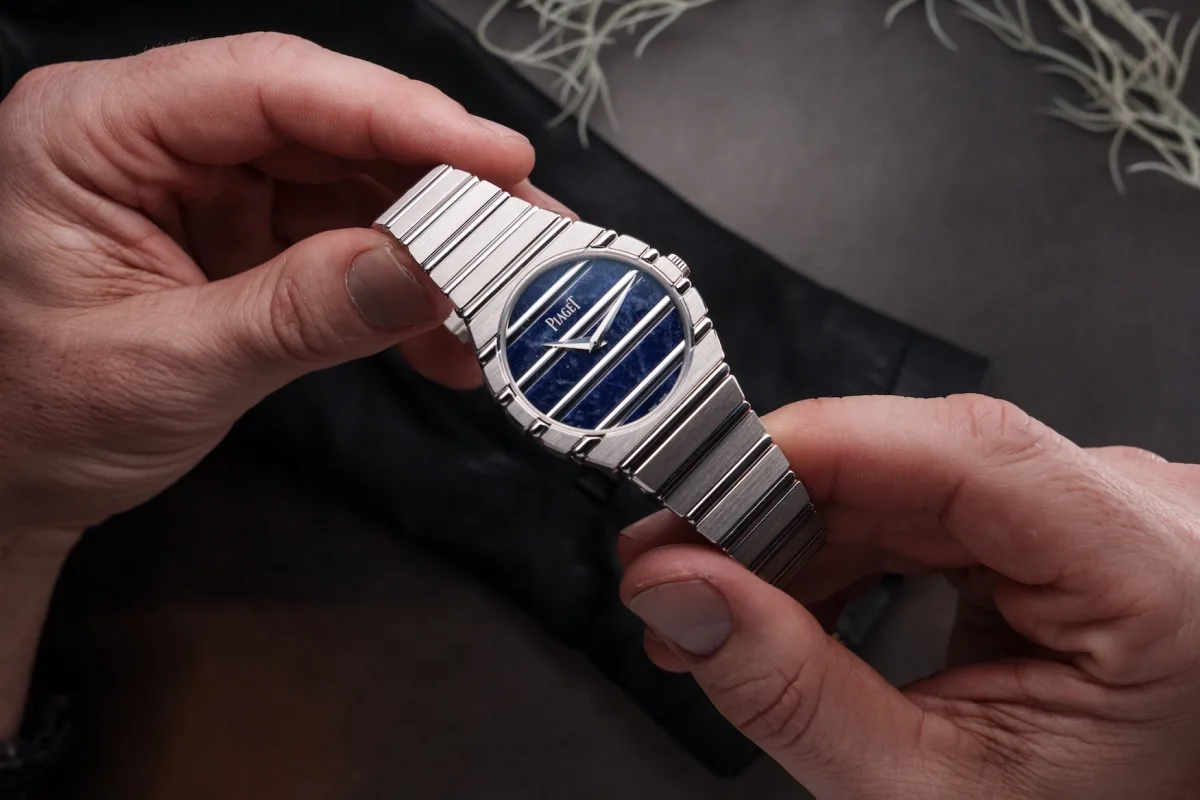
For the first time, the Polo 79 received a stone dial - sodalite, which pairs beautifully with the 18-carat white gold case. The spaces between the gadroons on the dial are filled with stone slices, each displaying a unique natural pattern.
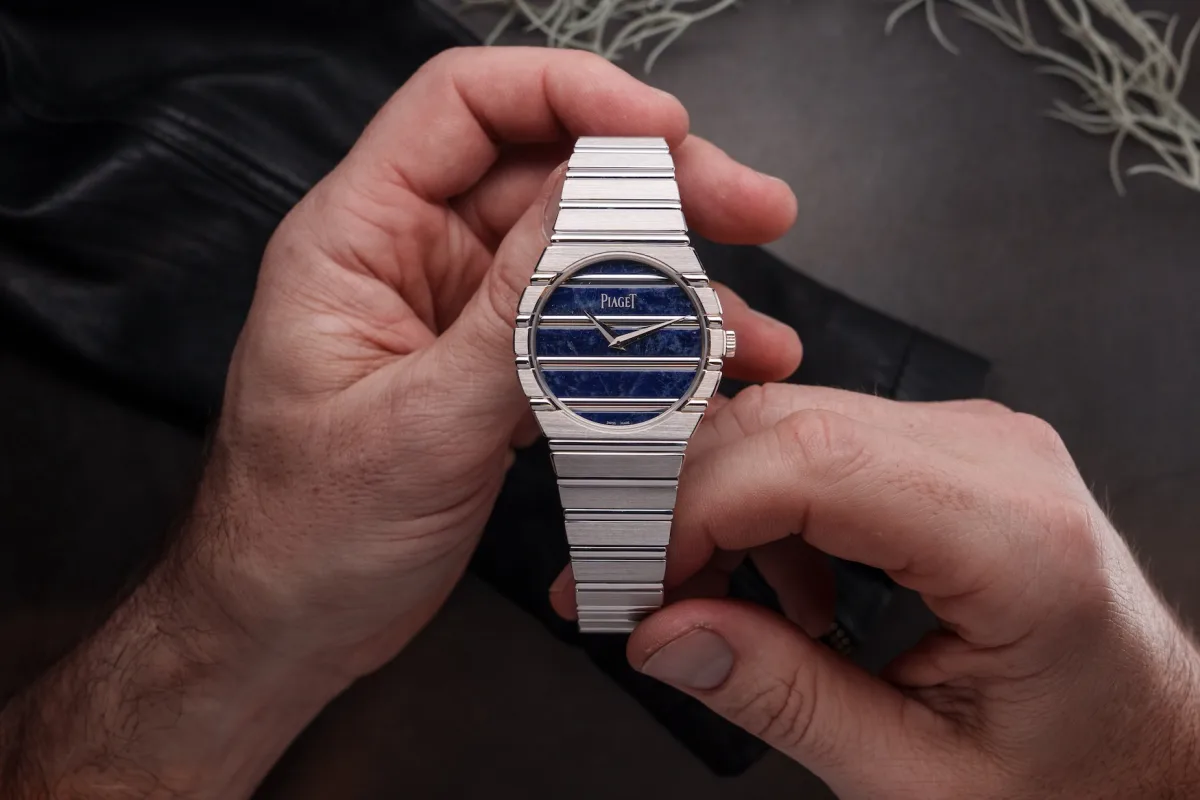
The blue of the dial is hard to describe simply as light white cloud swirls against a sky background - rather, it resembles sea foam. Although none of these comparisons are perfect, the dial possesses an unparalleled natural beauty, and none are duplicated, making each piece truly unique. Due to the use of sodalite, the dial lacks traditional hour and minute markers, which is a sensible decision, allowing the stone's natural beauty to shine without extra elements.
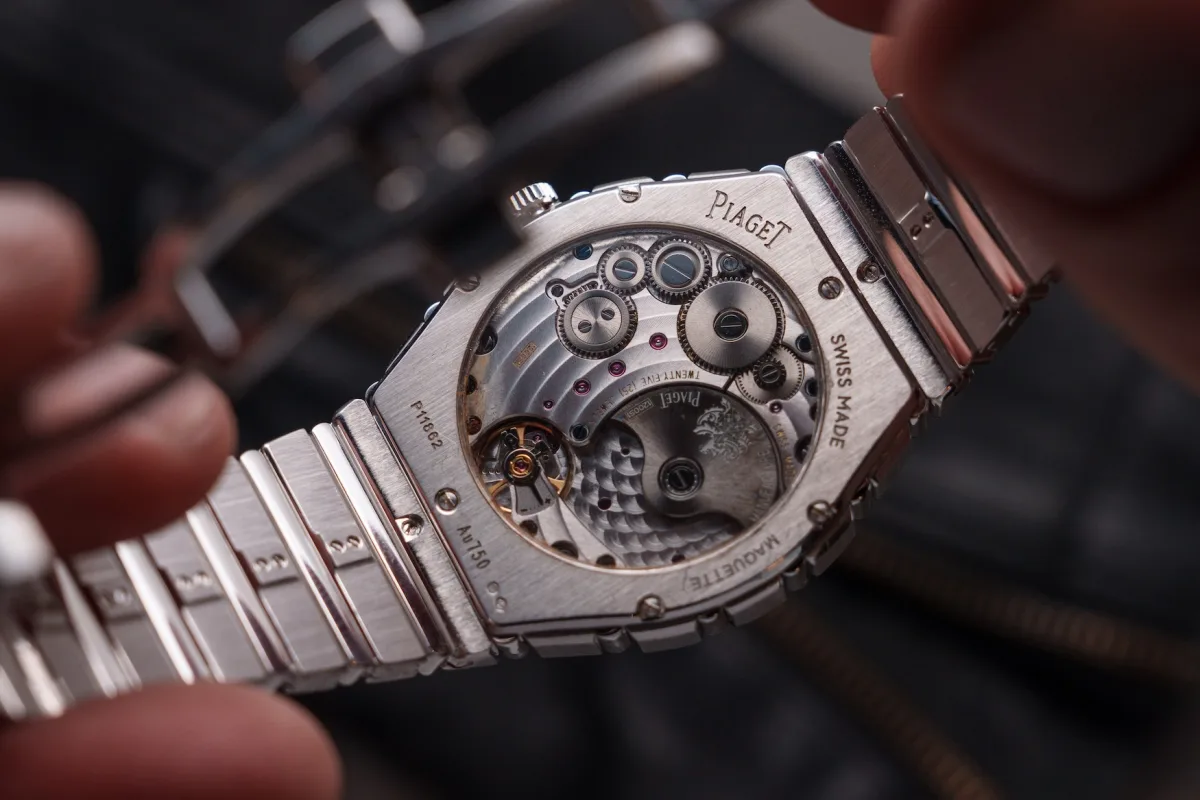
For those unfamiliar with the Polo 79, it's worth noting that the case has been modernized to 38 mm in diameter - an optimal size for modern users. The case thickness is just 7.45 mm, aligned with one of Piaget's long-standing trademarks - ultra-thin cases. This thinness is achieved thanks to the in-house automatic caliber 1200P1 with a 44-hour power reserve, viewable through a transparent case back.
Piaget Polo Perpetual Calendar Ultra-Thin with Onyx Dial
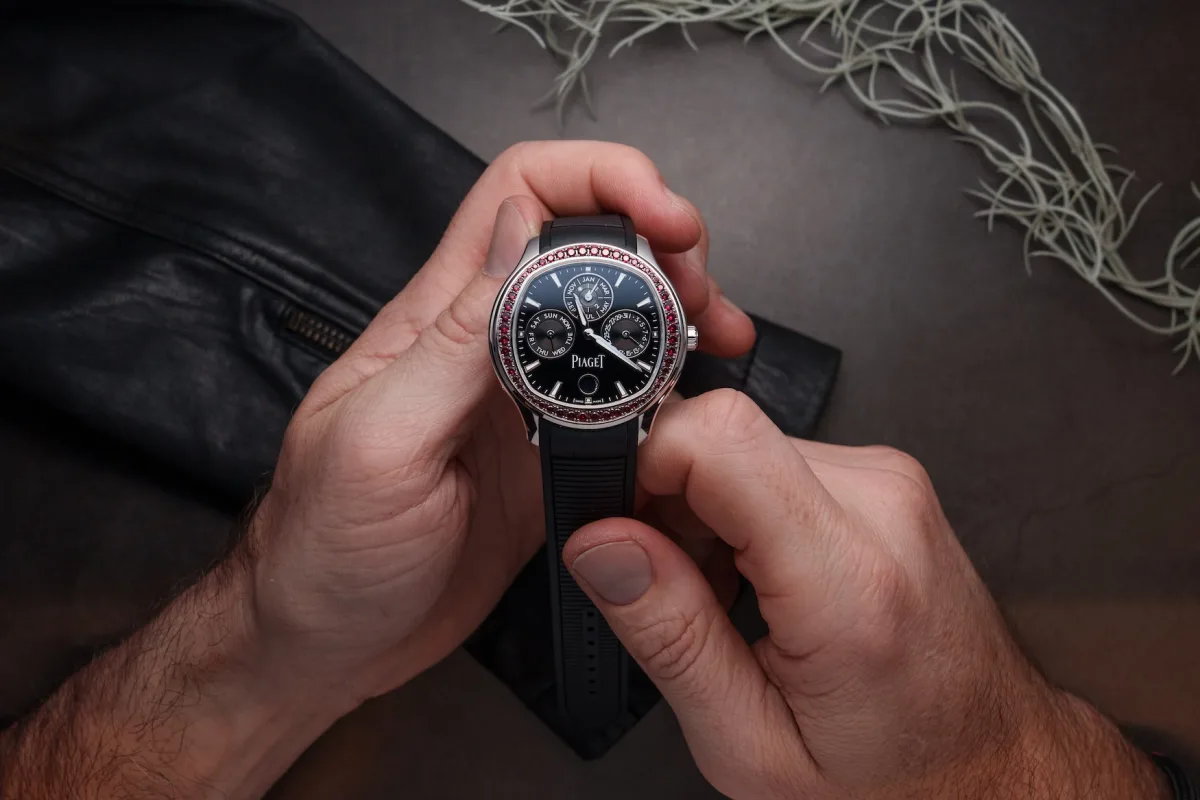
While the Polo 79 shows only hours and minutes, the Polo collection includes models with far more complex mechanics. The Polo Perpetual Calendar Ultra-Thin debuted at Watches and Wonders 2023 with a dark emerald dial, followed shortly by an obsidian dial version, and in 2025, a green obsidian variant.
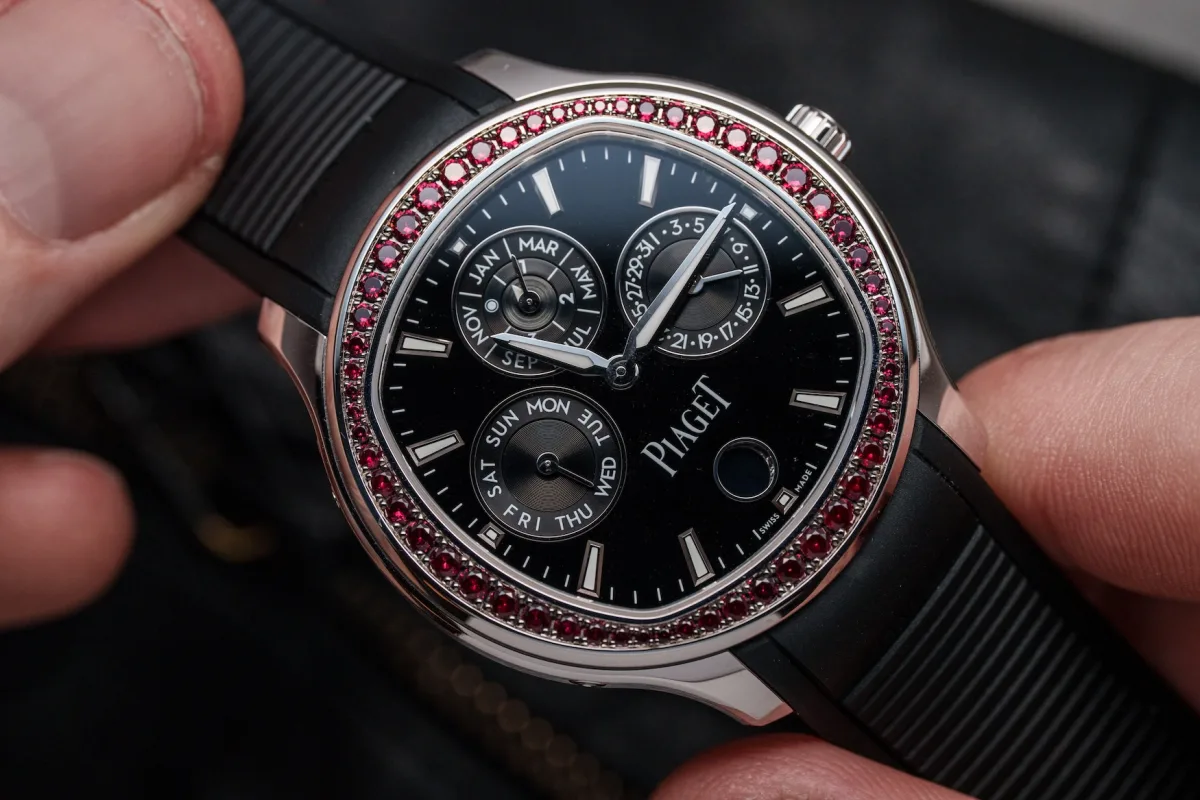
In 2026, Piaget added a model with an onyx dial - deep black in color, expressing restraint and contemplation rather than brightness. Despite the lack of bright colors, the dial appears clear and legible, which is especially important for displaying the perpetual calendar functions. The stones set into the bezel look even more expressive against the black background.
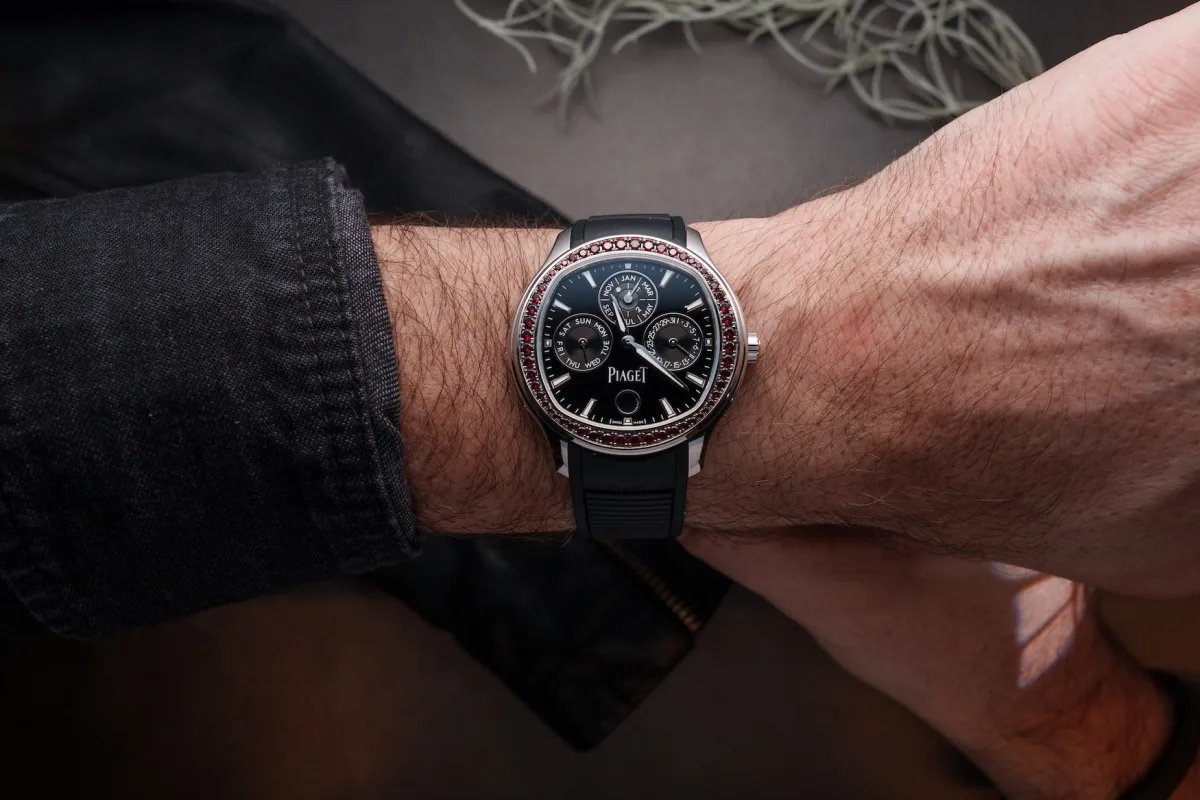
The 18-carat white gold case measures 42 mm in diameter and only 8.65 mm in thickness - very thin for a perpetual calendar watch. This is made possible by the in-house automatic caliber 1255P with a micro-rotor, only 4 mm thick, providing indications of hours, minutes, day of the week, date, month, leap year, and moon phases. The watch comes with a black rubber strap matching the dial, giving it a casual yet elegant look.
Piaget Andy Warhol Blue Quartz and Bullseye
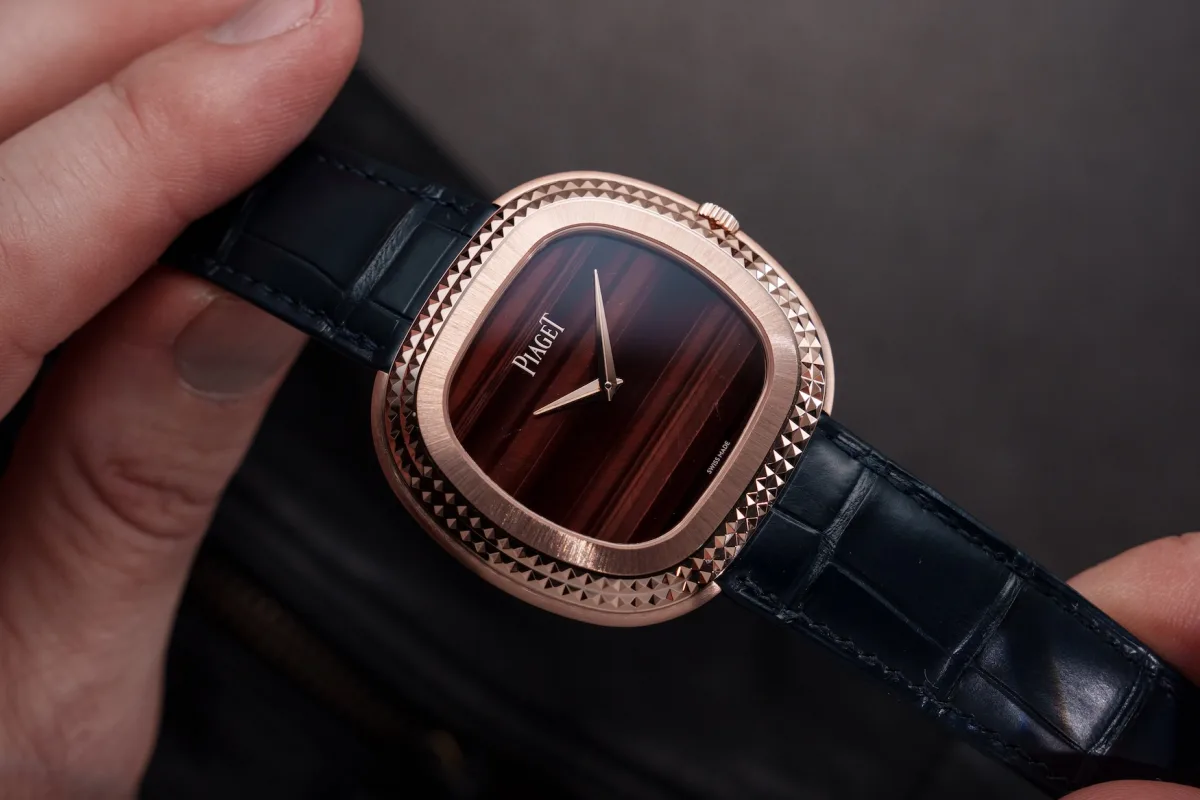
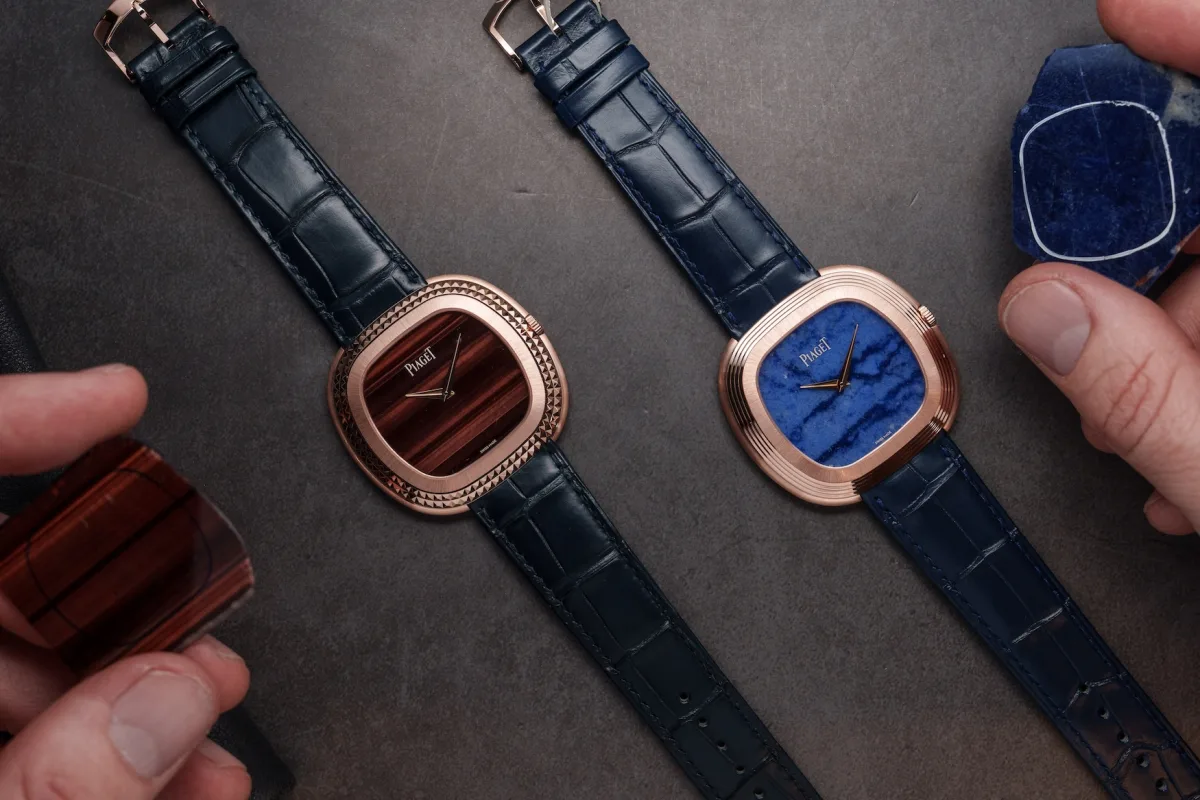
Previously known as "black-tie watches," now officially named Andy Warhol, the Piaget watches are presented at the exhibition in several new versions. We had the opportunity to explore two rose gold models - one with a blue quartz dial and the other with a Bullseye dial.
If you think tiger's eye and Bullseye are similar, it's logical: Bullseye, or red tiger's eye, is a thermally treated or oxidized variant of golden tiger's eye, giving the stone a deep red-brown hue. Thanks to the woody tones, the dial pairs excellently with the rose gold case. It's pleasing that Piaget went further and didn't just replicate the tiger's eye from the previous white gold model.
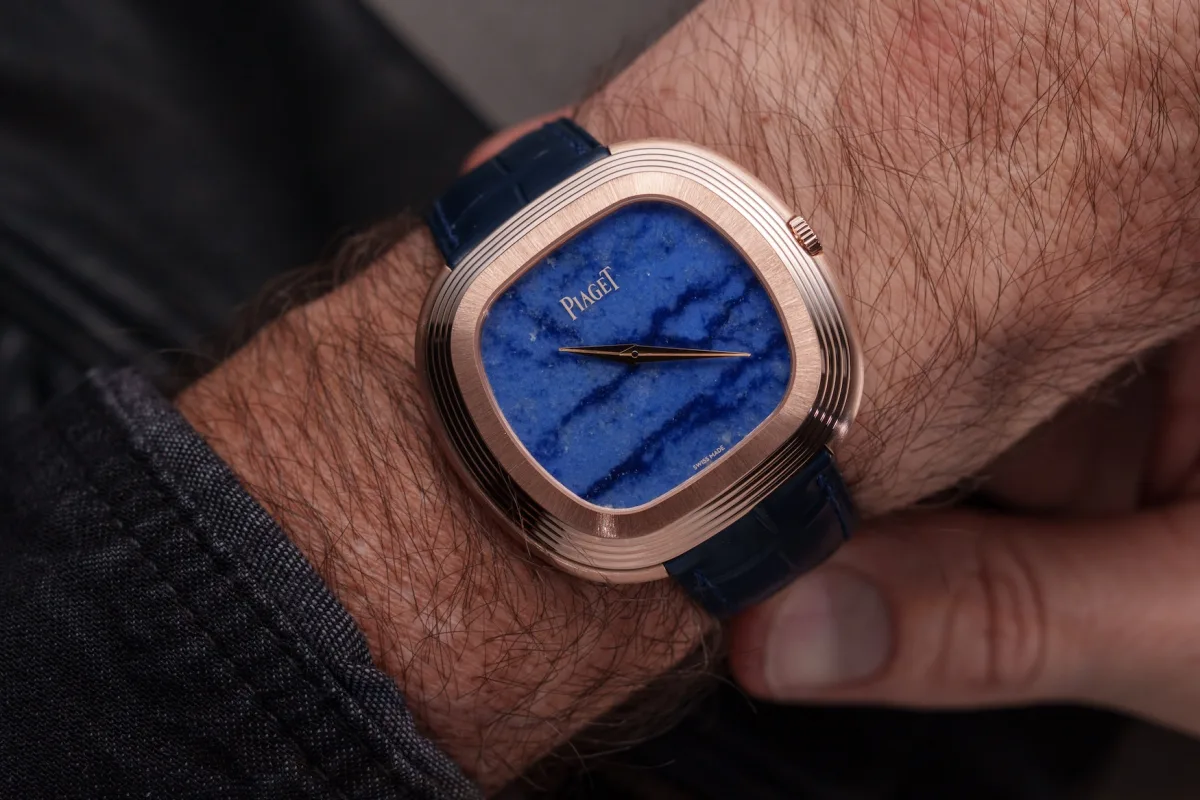
The Bullseye model's case is adorned with a "clous de Paris" pattern, while the blue quartz variant features fine polished steps. Both cases have a diameter of 45 mm, a thickness of 8 mm, and a lug-to-lug length of 43 mm. Inside is the in-house automatic caliber 501P1 with a 40-hour power reserve.
Piaget Sixtie
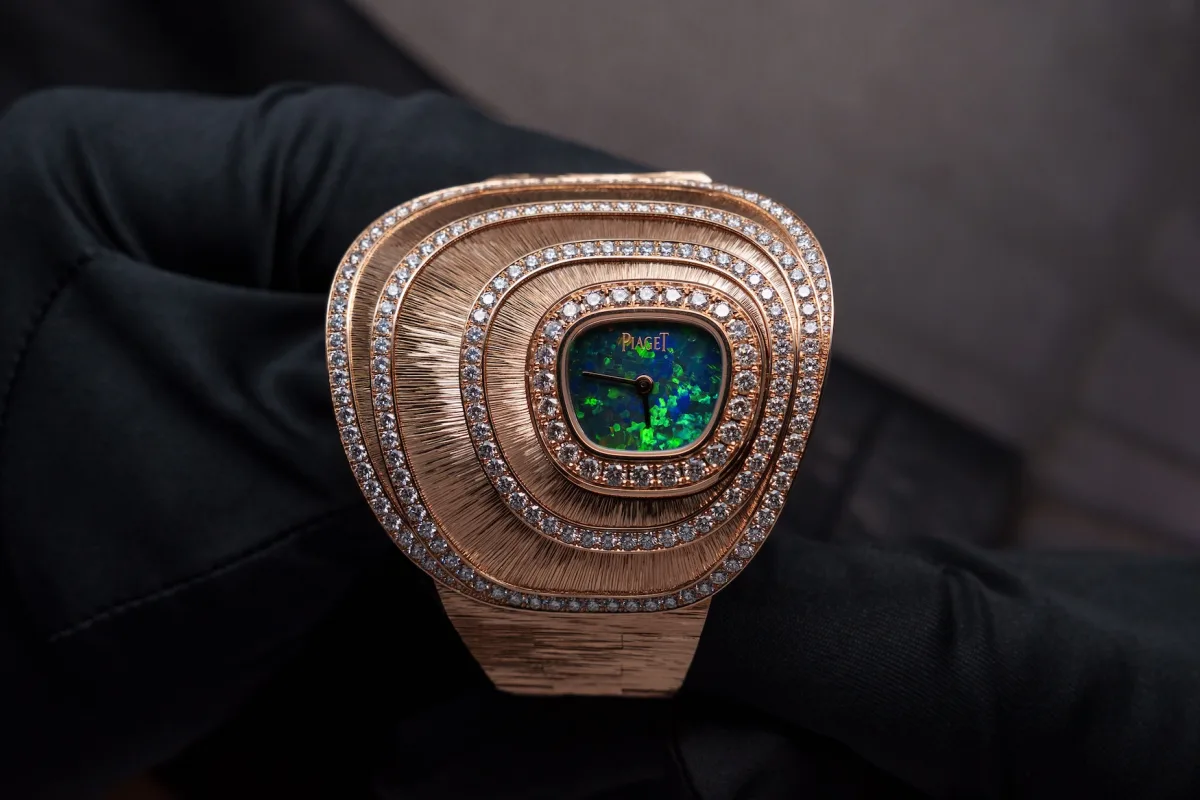
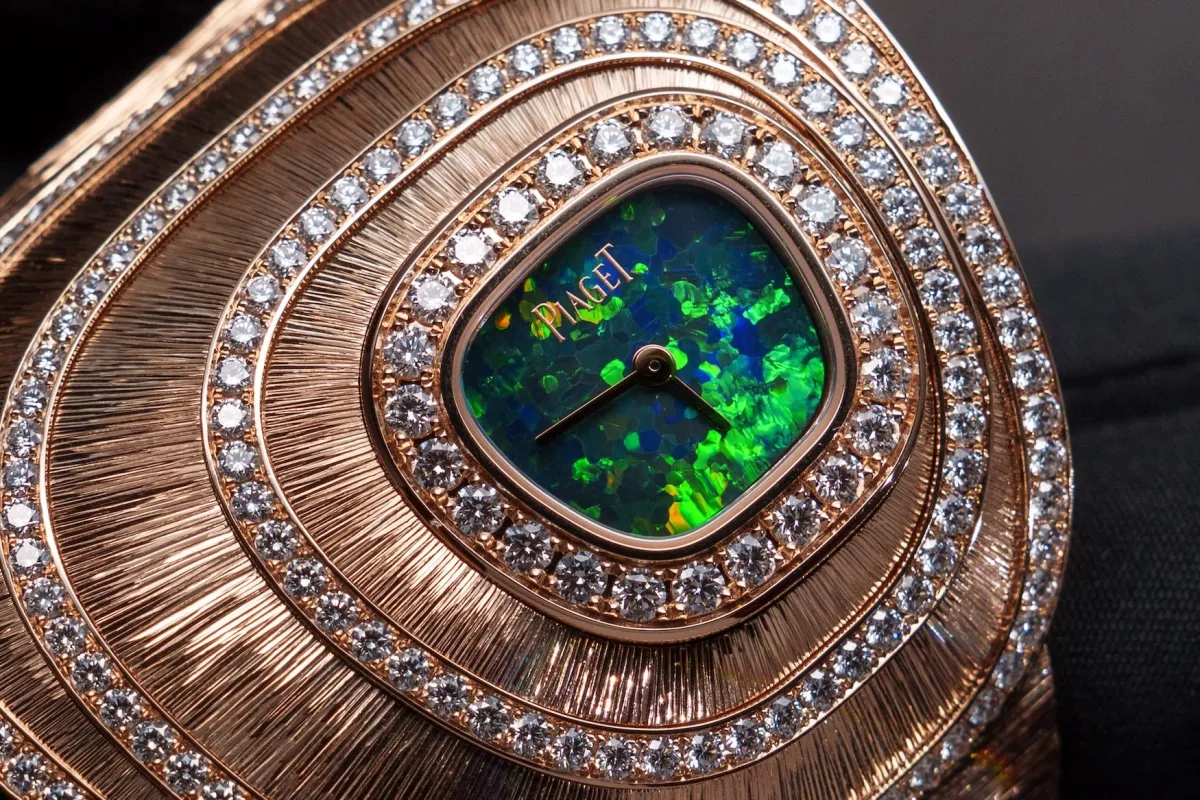
Finally, Piaget has introduced a new Sixtie version in the High Jewellery category, reimagining the legendary cuff watches of the 1970s using one of Yves Piaget's favorite stones - opal. The opal is set in the softly contoured and asymmetrical trapezoid-shaped Sixtie case, decorated with hand engraving in the Palace Decor style - Piaget's signature finish. These watches are expected to appear on the red carpet in 2026.
Final Conclusions
In recent years, stone dials have become almost a mandatory element of collections alongside popular steel sports watches. The dial is one of the most noticeable elements of a watch, and natural stone attracts attention through its variety of colors and textures, inviting watch lovers to pause and appreciate the piece.
Many manufacturers are just beginning to discover the possibilities of stone dials and how they can enliven a collection. However, Piaget is the true king of stone dials, likely observing the current craze and thinking: "And these brands are only now discovering stone?"
Today, stone dials are presented across a wide price range, but as the new releases show, it's not just about having stone, but how it's used. Some brands merely formally add stone to the design. Piaget, however, builds the design around the stone, paying homage to decorative stone through exquisite art, achievable only through over six decades of craftsmanship and deep respect for the material.