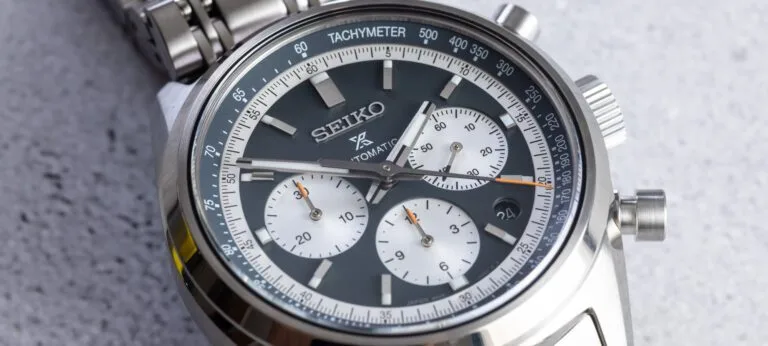
It's been a while since we last reviewed chronographs from Seiko.
Most chronographs produced by the Japanese company Seiko are quartz (solar or otherwise), yet Seiko is one of the leaders in the development and production of mechanical chronographs with modern calibers. The company does not produce many mechanical chronographs (perhaps Grand Seiko now produces more), but the models it offers are equipped with truly excellent mechanisms and provide high value in terms of price. This is especially relevant against the backdrop of rising prices for modern Seiko watches over the past few years.
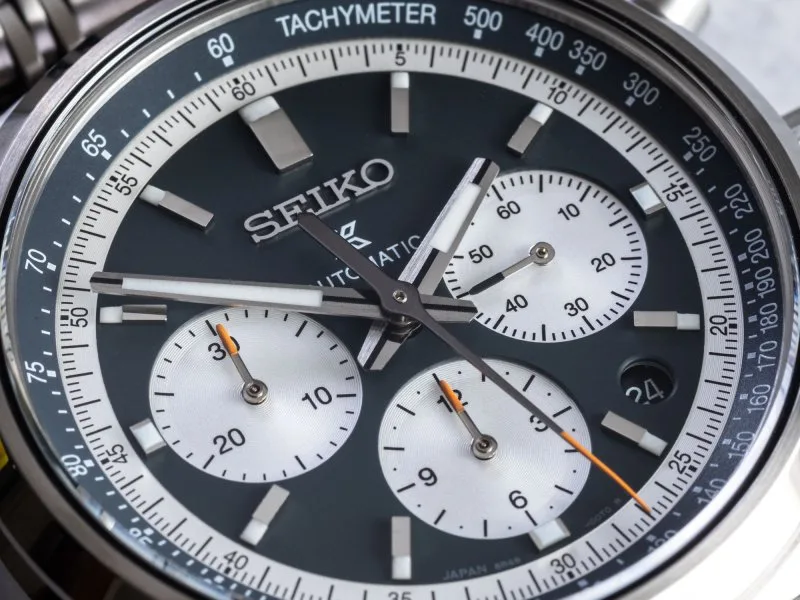
Today, we are looking at a limited series of 1000 pieces - the automatic chronograph Seiko Prospex Speedtimer SRQ049 (or SRQ049J1). These watches feature a 'reverse panda' dial style - a dark blue background with silver sub-dials and accents. In addition to this limited version, Seiko offers several other Prospex Speedtimer options without quantity restrictions, including the silver-black SRQ047J1, blue-silver SRQ051J1, and classic reverse panda black-white SRQ053J1.
Historical Heritage of Seiko Prospex Speedtimer
All models in the Seiko Prospex Speedtimer series have a deep visual and technical heritage rooted in the 1960s. This decade saw several important events, but one of the key ones was the 1964 Tokyo Olympics. For Seiko, this was a defining moment of the 20th century. The Olympic organizers invited Seiko to be the official timekeeper of the competitions.
The problem was that despite its experience in watchmaking, the company had virtually no experience in sports timekeeping. Official timekeeping required complex technologies and innovations both in the devices themselves and in the equipment at the competition venues. At the time, Swiss companies Omega and Longines (still closely linked to Olympic timekeeping through The Swatch Group) had years of experience that Seiko lacked.
Technical Innovations of the 1960s and Their Impact on Modern Models
In 1964, Seiko released its first wristwatch with a stopwatch function - the Seiko Crown Chronograph. In 1969, Seiko became one of the first companies to introduce an automatic chronograph (along with Zenith and Heuer) - caliber 6139. The Crown Chronograph was the first Seiko watch to use a column wheel to control the chronograph, while caliber 6139 introduced vertical clutch and column wheel. Although the name Speedtimer was not used in the 1960s, the design and technical heritage of modern automatic mechanical Seiko Speedtimer chronographs trace back to this period. Today's models are equipped with the high-tech Seiko caliber 8R48.
Seiko Caliber 8R48 Movement: Specifications and Features
The Seiko 8R48 movement operates at a frequency of 4 Hz, has a power reserve of 45 hours, and automatic winding. It is a 12-hour chronograph with time and date display functions. A feature is the column wheel and vertical clutch, ensuring smooth and precise chronograph operation. When pressing the chronograph buttons, the user feels the clarity and smoothness of operation, surpassing most counterparts in this price segment. Column wheels are highly reliable and require less maintenance.
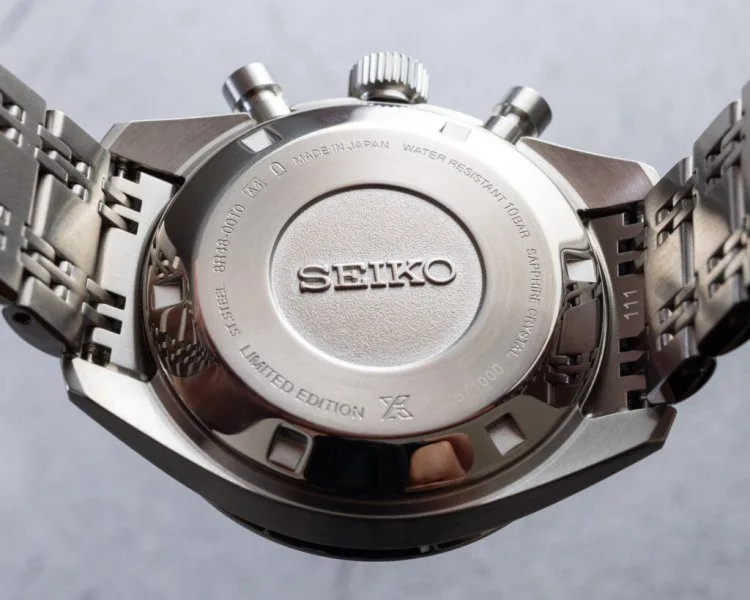
Despite its technical advantages, Seiko traditionally indicates rather conservative accuracy figures on its official site - from +25 to -15 seconds per day. This is due to legal and warranty aspects, and in practice, the movement performs more accurately. For comparison, Rolex claims a tolerance of +2/-4 seconds per day. It is important to understand these figures in context and not assume that automatic Seiko watches are less accurate.
Case and Design of the Prospex Speedtimer Watches
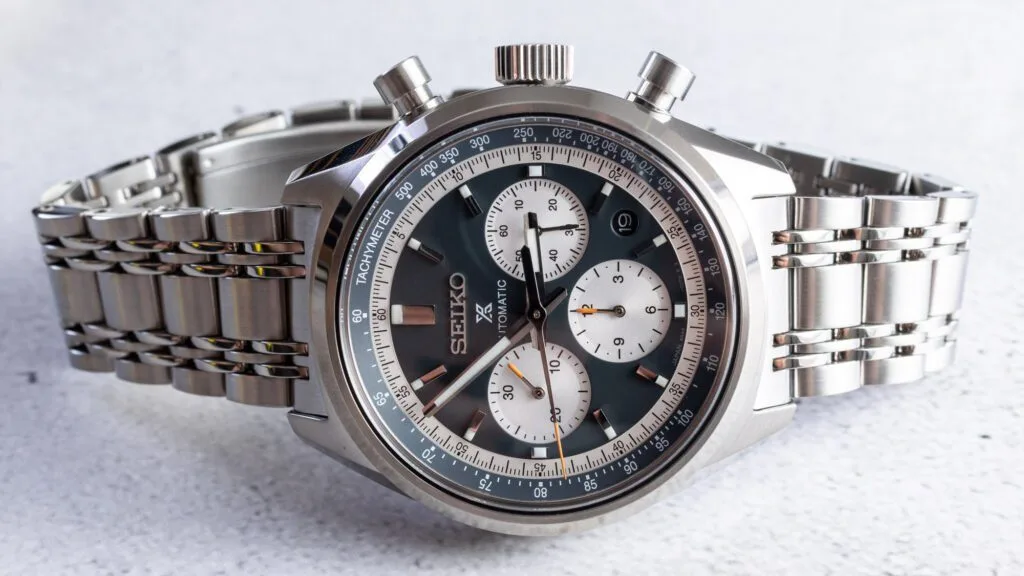
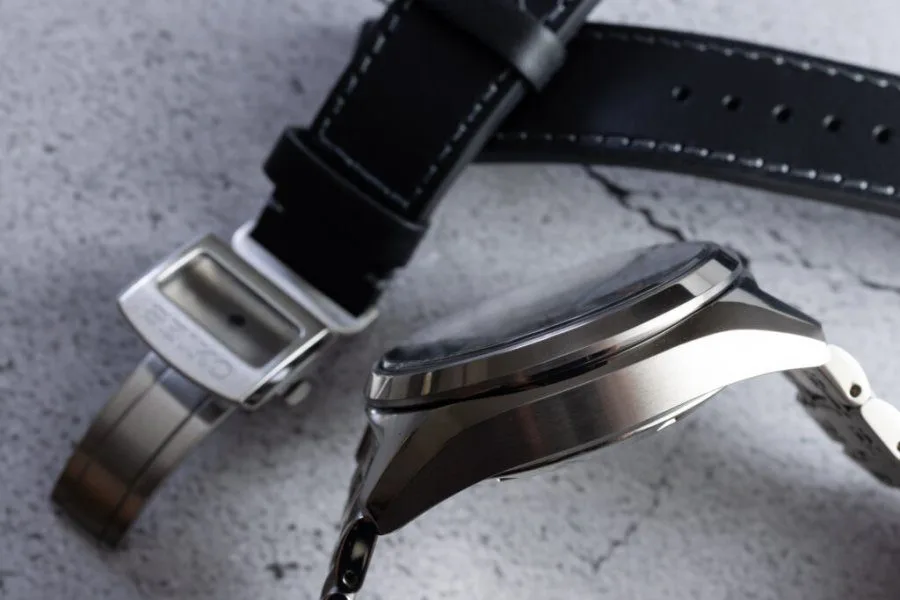
The main drawback of the 8R48 caliber is its thickness, which is typical for such complex movements. As a result, the Prospex Speedtimer case has a thickness of 14.6 mm, which is somewhat above average. The case diameter is 42 mm, and the lug-to-lug distance is 49.5 mm. The dial is protected by a domed sapphire crystal with anti-reflective coating, and the case is water-resistant up to 100 meters. The stainless steel case and bracelet combine polished and matte surfaces, and the steel surface is covered with a proprietary