Some evenings remind you why you fell in love with watches—not because of price tags or press releases, but because of real stories steeped in sea salt and gunpowder.
This evening was just such an occasion. Before a hall of devoted enthusiasts lay the rarest vintage military Tudor watches. We embarked on a journey through one of the most fascinating and underrated chapters in horological history. And I'll say it outright: I learned no less than anyone in the room.
A Beginning Worth Knowing
Let's start from the very beginning, because it truly impresses.
The "Working Man's Watch" by Rolex and the Genius of Its Creator
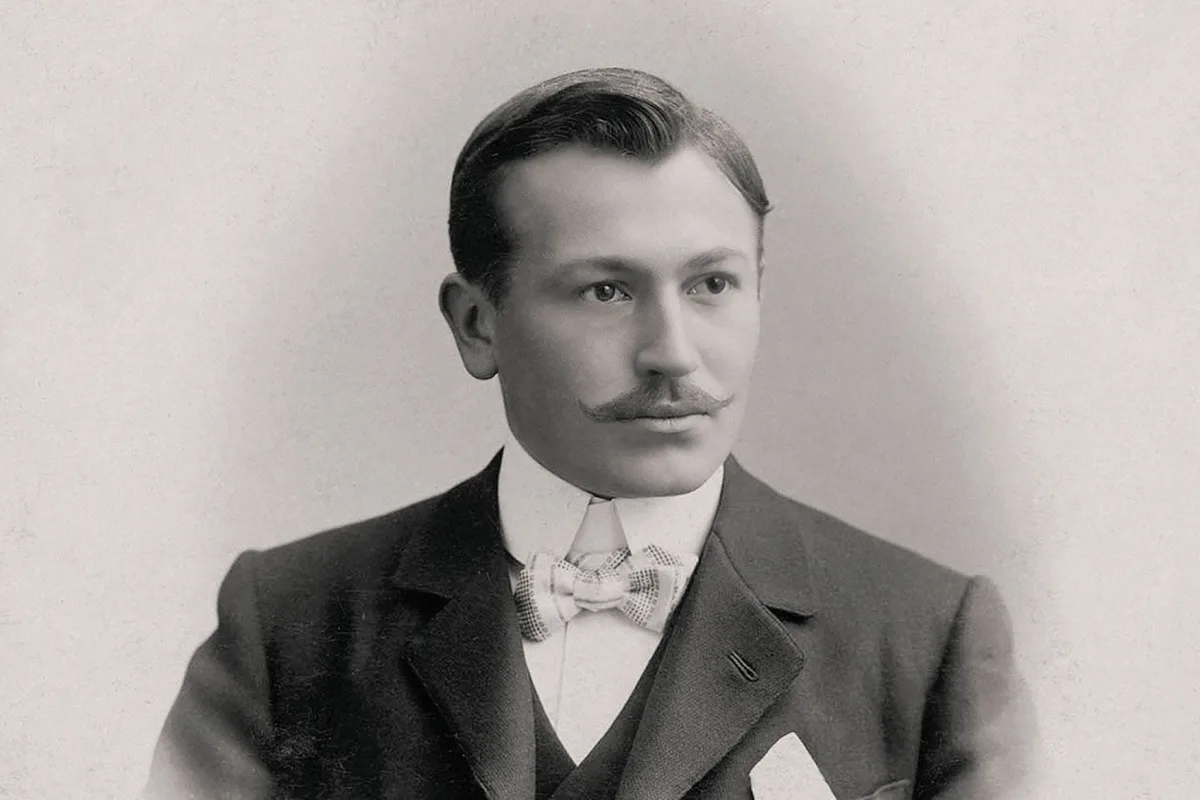
Hans Wilsdorf, a German by birth who became British and founded Rolex and Tudor, had an ambitious, almost audacious plan. He wanted to elevate Rolex into the premium segment. His method? Create a second brand positioned slightly lower, using the same cases, the same dials from the same suppliers, the same hands and bracelets, but with more affordable movements inside. Tudor was intended to be a Rolex at a more democratic price. The early Tudor Submariner was essentially a Rolex 5513 with an identity problem.
The room burst into applause—he was absolutely right.
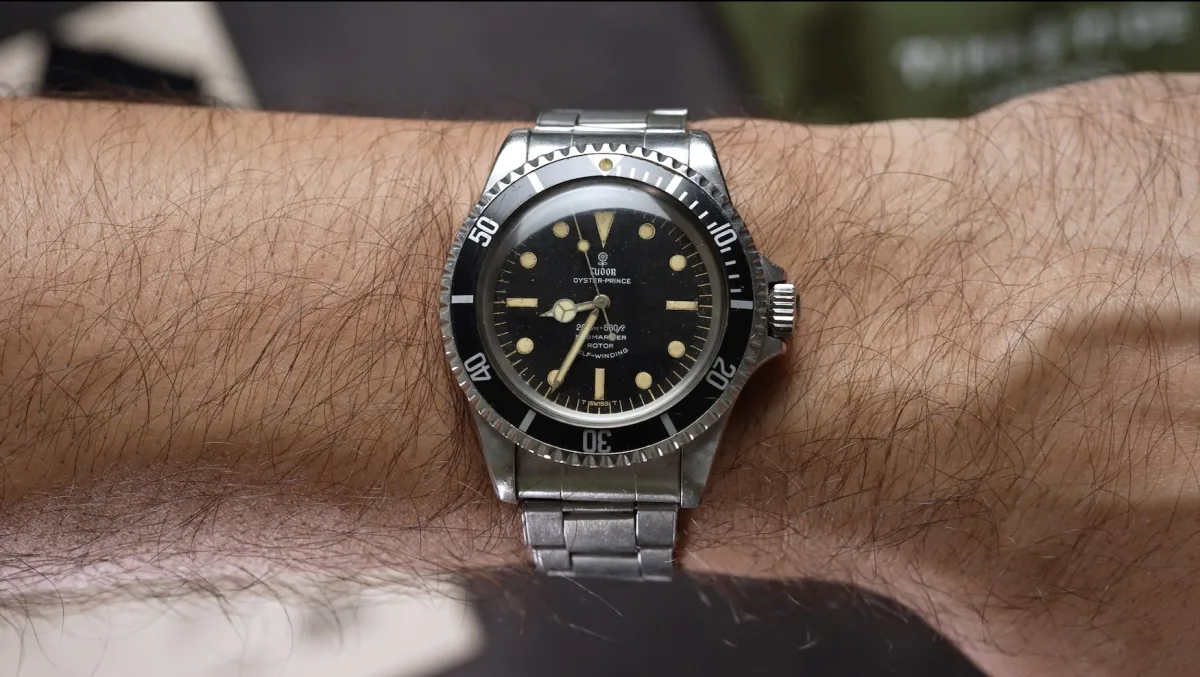
Before us stood reference 7928—a 1966 Submariner provided by a member of the WatchTested community. It vividly illustrated this point: the cases were identical, the bezels the same, the inserts identical. Even the dials and hands were produced by the same companies. The only significant differences were the print on the dial, the movement inside, and interestingly, the case back, as the ETA movement used by Tudor was significantly thinner than the Rolex 1530. This thinness made the Tudor Submariner about one and a half millimeters thinner than its "brother." In another era, this could have been an argument for purchase.
However, Wilsdorf's strategy raises the obvious question: if Rolex is the pinnacle of precision and reliability, why didn't it go to war?
Military Entry: The Snowflake Hands That Changed Everything
And here begins the most interesting part. Rolex's most productive period—from the late 1940s to the mid-1960s—was marked by the launch of the Datejust, Explorer, Submariner, and Day-Date models. Rolex did not aim to compete with itself, so the Tudor Submariner appeared just months after the first Rolex in 1954. And it was these Tudors that were almost immediately adopted by the French Navy.
Why France? Because the French invented the aqualung. Cousteau and Gagnan elevated modern diving to a new level, and the Marine Nationale became the first force in the world with a serious number of trained combat divers. They needed reliable diving watches. They chose Tudor. Later, the navies of South Africa and Israel trained alongside the French and adopted the same equipment. Then came Vietnam, and the Americans—the US Navy and Marine Corps—began using Tudor Submariners massively. They were the largest users of this model.
It was the American adoption that quietly laid the groundwork for one of Tudor's most famous design decisions: since American military often did not engrave the backs of their watches, it became nearly impossible to distinguish a genuine military piece from a civilian one. Something needed to change. The change came in the form of snowflake hands.
Snowflake Hands: A Revolution in the Design of Tudor Military Watches
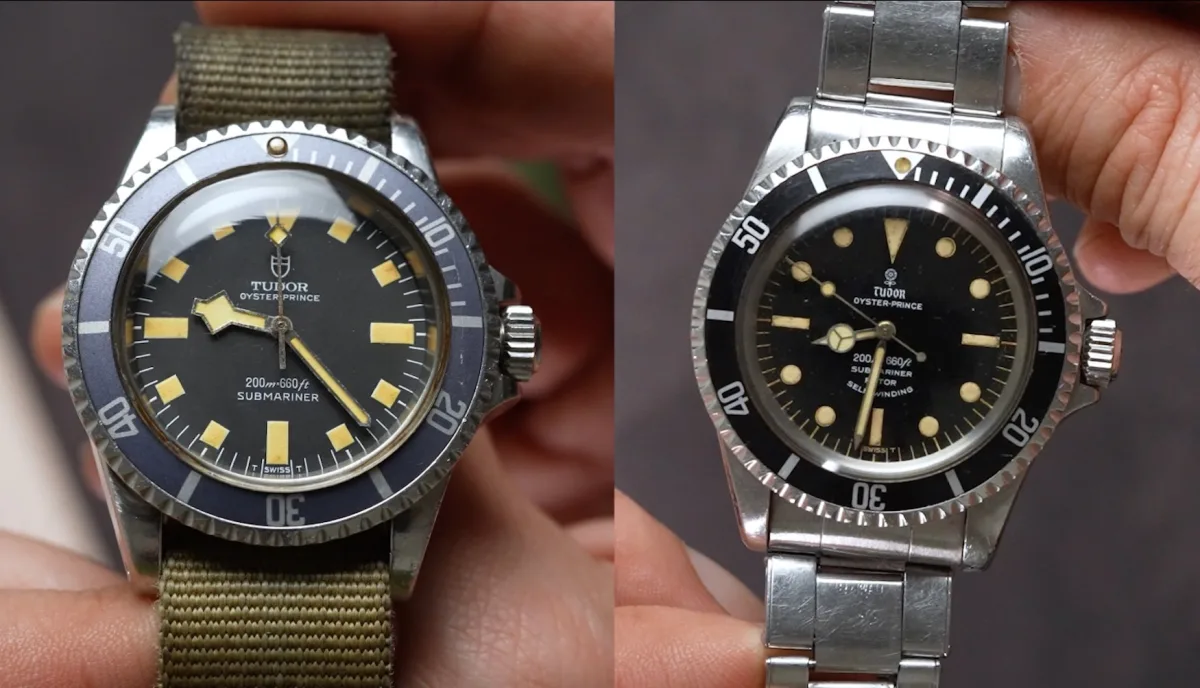
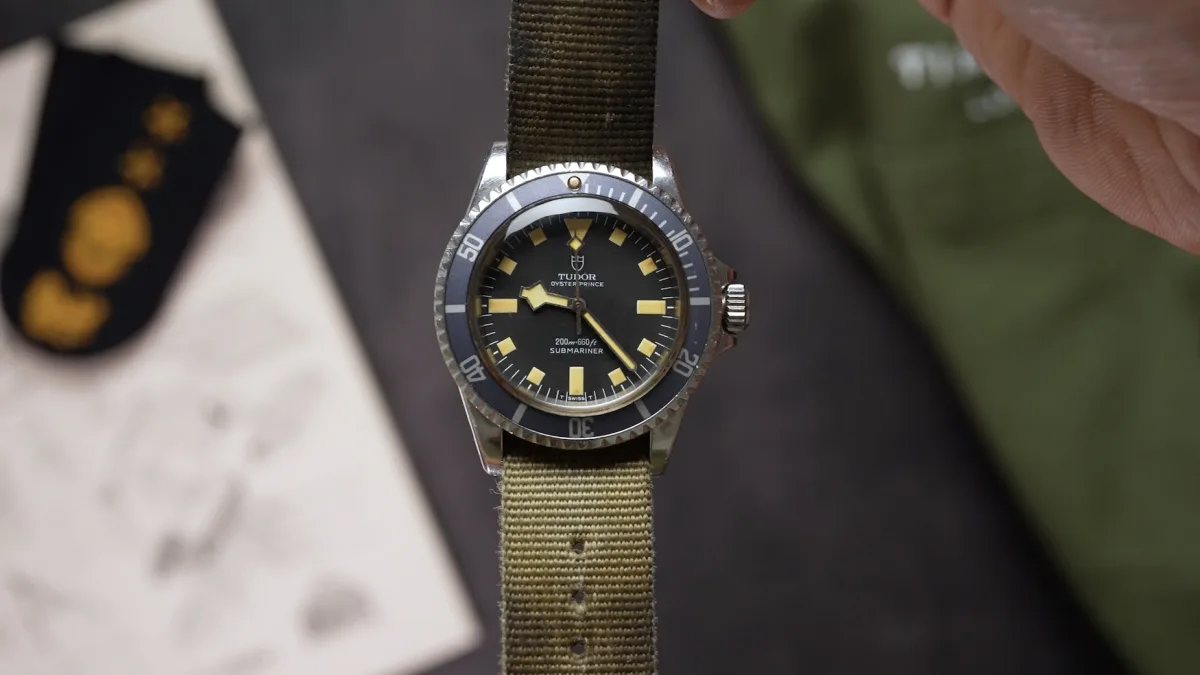
Looking at the 1976 Tudor Submariner for the South African Navy, model 7016, worn to legendary status, with café au lait-colored lume and a bezel insert that faded from glossy black to matte gray, the entire case covered in an honest patina that no vintage dealer could fake, became the reason for the most radical visual departure in the history of Tudor dive watches.
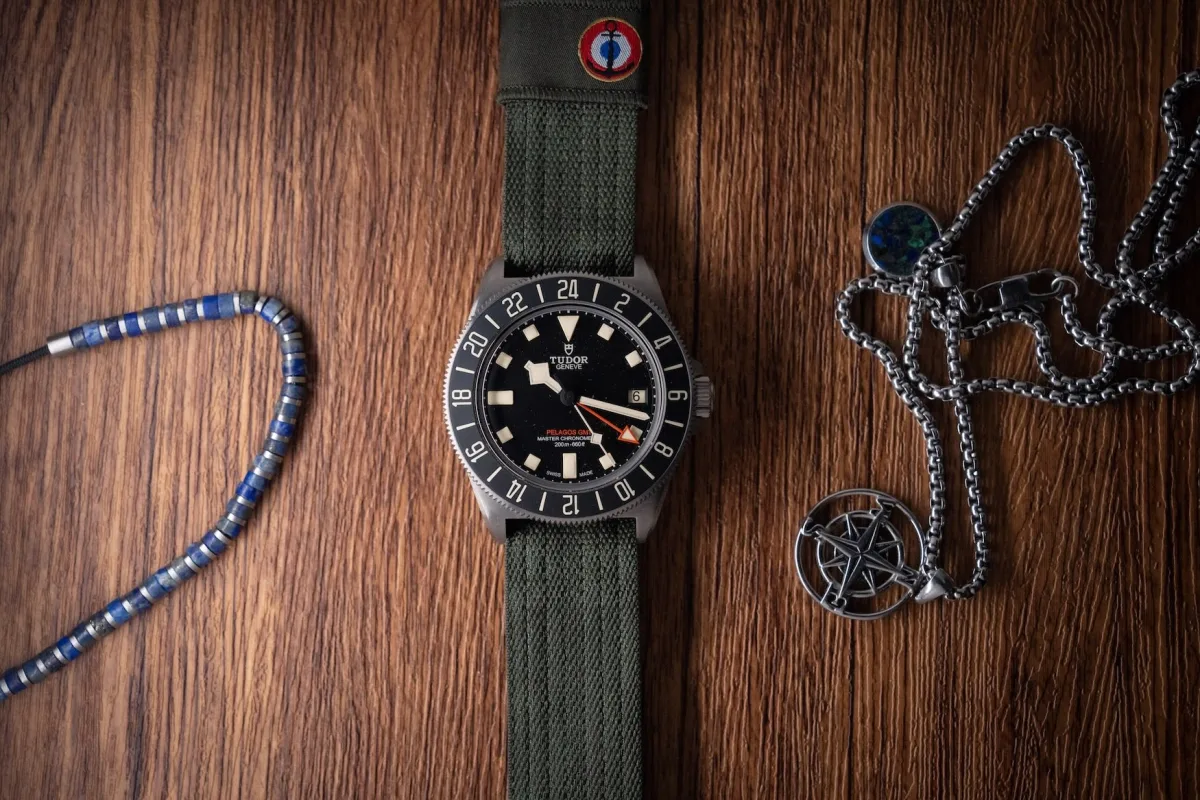
Marine Nationale approached Tudor with a problem: the luminescent compound constantly fell out of the triangular-tipped hands. Not because the design was bad for civilian use, but because military watches are treated as gear—that is, extremely harshly. When you don't pay for an item, you don't take care of it. The solution was the snowflake hand design: wide, with a flat surface, with a small paper backing that allowed the lume to be applied in a thick layer. The result was 27% better visibility underwater. The important thing was that Tudor extended this bold geometric style to the entire dial—squares and rectangles replaced circles and triangles, a square appeared on the seconds hand. They were the first military watches where the design was truly thought out.
I confess, I'll say publicly what I admitted in the hall: I once recorded an entire episode of the podcast About Effing Time with a slight touch of skepticism about snowflake hands, calling them too coarse. I apologize. After spending recent years closely acquainted with Tudor, wearing the FXD GMT on my wrist, I have not only accepted them but consider them the most powerful signature in the collection.
Tudor P01: Watches That Shouldn't Have Been (But Are)
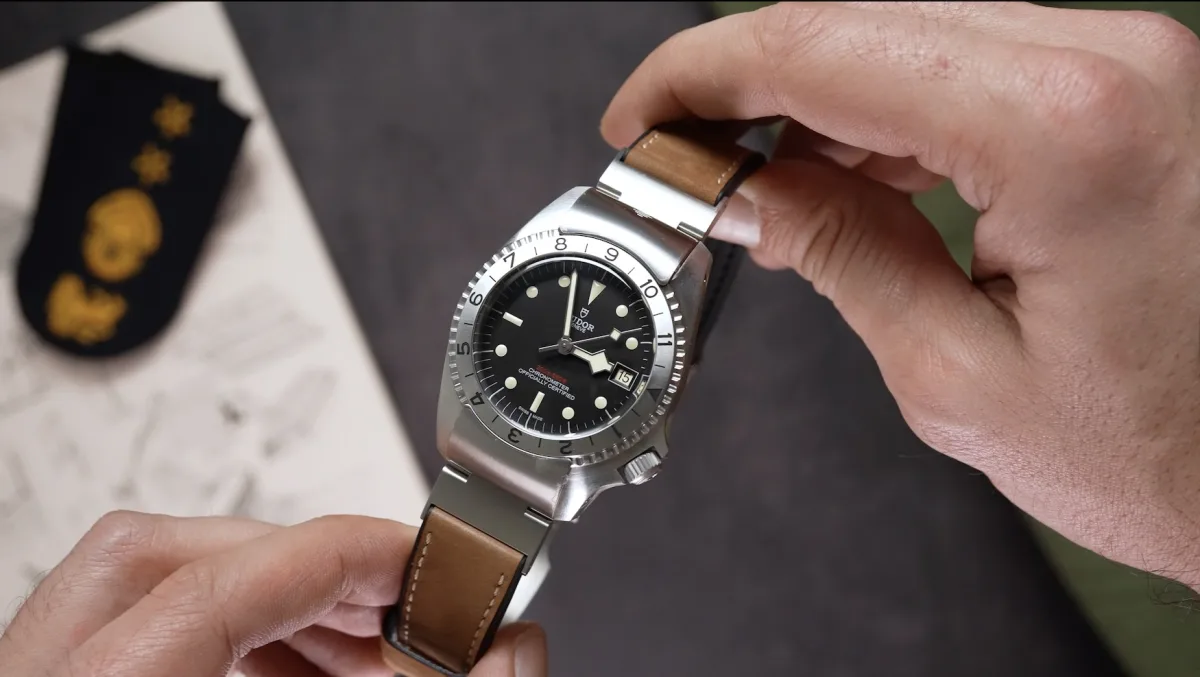
No evening dedicated to military Tudor is complete without oddities. The Black Bay P01 (where P stands for prototype) was originally developed and tested by the US Navy in 1969. Tudor participated in the tender along with Bulova and the American distributor of Blancpain—Tornek-Rayville. Tudor did not win. Tornek-Rayville won, and these watches became one of the vintage collecting holy grails. P01 was forgotten. Then, about seven years ago, one appeared at an Antiquorum auction. Steel case, prototype drawings with information from Tudor. Collectors were excited, but soon became wary: the movement was later than expected, and the case back was engraved with the phrase "US Marine," in the singular, suggesting assembly by someone for whom English was not native.
Forums laughed. The watch was still sold for serious money. And a year and a half later, Tudor introduced the P01 at Baselworld, and everyone in the hall said one thing: "I don't believe it." On the stand were the original drawings, the same ones that appeared alongside the "fake" at auction. The watches turned out to be real. They were always real. These are "Marmite" watches—a classic round case with stick and dot indicators but combined with a snowflake hand, which is not found anywhere else in the Tudor catalog. People either love them or hate them.
The Current State of Tudor Watches
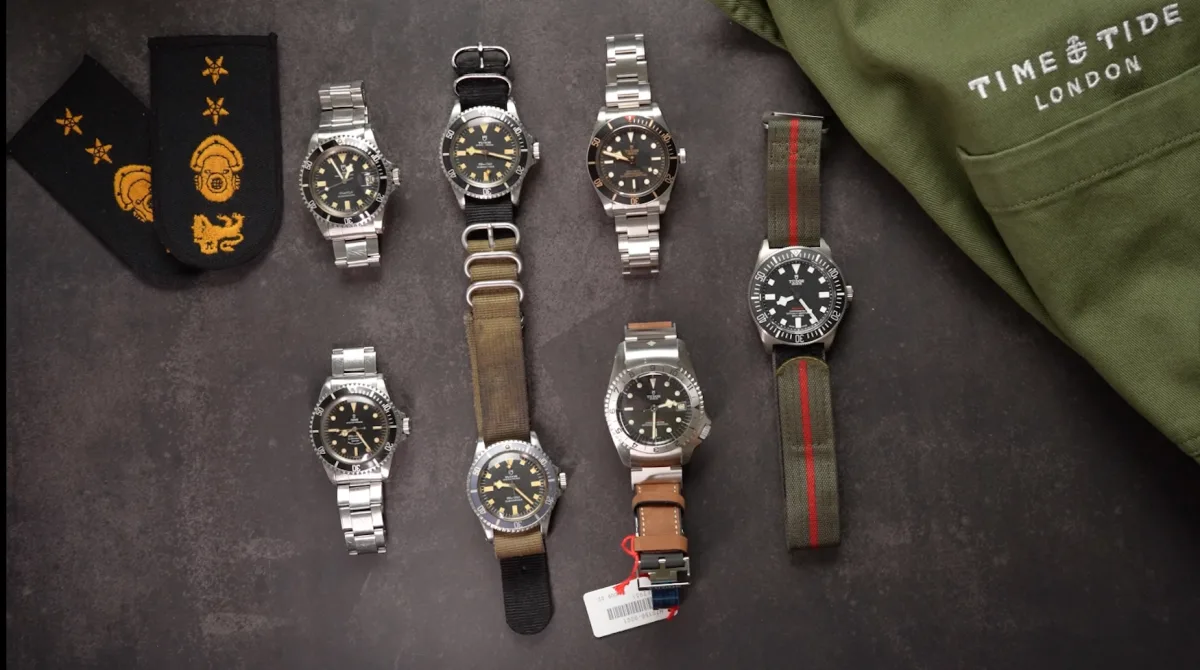
Before us lay the 1966 reference 7928, alongside the Black Bay 58, a worn reference 7016 from 1976 next to the modern FXD. The connection was obvious: the milled bezel, aluminum insert, large crown, riveted bracelet that echoed in the pressed rivet imitations on modern models. The snowflake hand was reborn. These are not replicas. These are "variations on a theme."
Today, Tudor, in its opinion, occupies the price segment that Rolex occupied about fifteen years ago. These are no longer the working man's watches. These are watches for everyone. Increasingly, the brand releases models like the pink-blue chronographs from the Daring collection, which sell for more than retail before anyone can buy them, and have no Rolex counterparts. "Skunk Works" has become a standalone direction. The first ceramic watches in the Rolex family were Tudor. The first titanium case—also Tudor. This is not an accident.
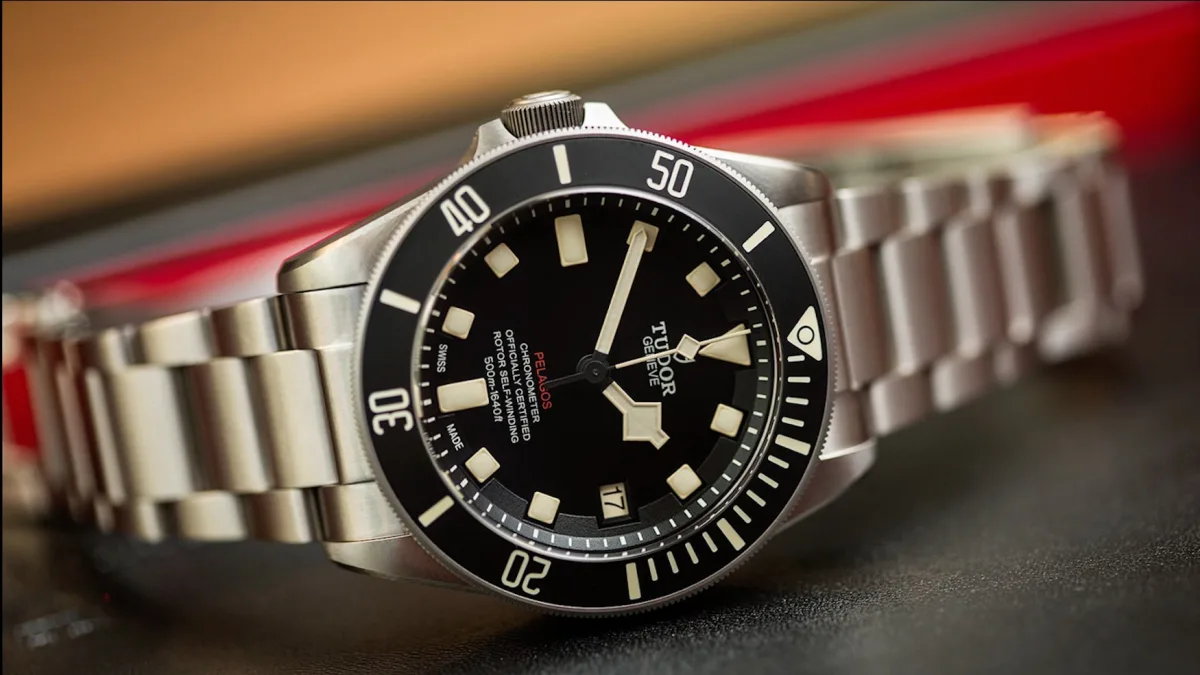
When I asked a colleague which watch best reflects the Tudor brand in 2026, he chose his own—a left-handed Pelagos in titanium with a date on a roulette wheel. Light, purposeful, strange in the best sense. There was no other owner of such a watch in the room. Perhaps there is now.
When our conversation ended, the bar reopened. The watches returned to their cases. And as I returned home, I thought, not for the first time, that the best watch stories aren't in press kits. They live in rooms like these, with the right people, the right artifacts, and fifty years of sea salt between them.