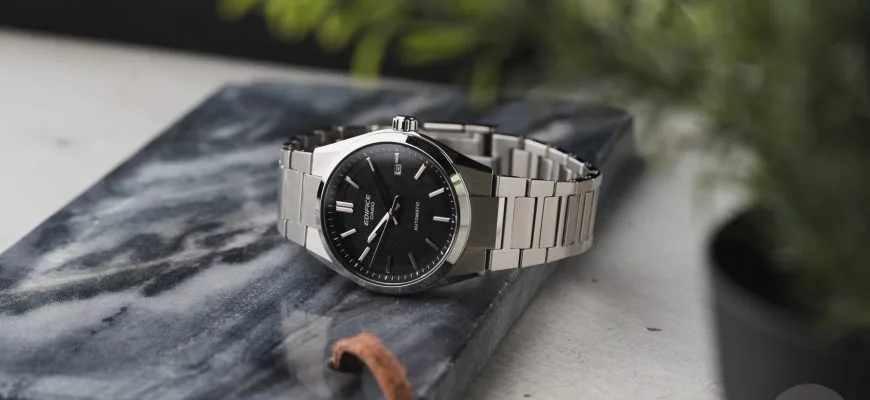
It's been just about six months since Casio released the Edifice EFK-100, which was widely recognized as the brand's first line of mechanical watches.
Therefore, the appearance of the new Edifice EFK-110 models surprised us. At first glance, it seems nothing has changed. However, upon closer inspection, the main update becomes obvious: the new versions are equipped with a different movement. This fact reveals the essence of the changes, but does not show the full picture of the EFK-110 series.
If you're wondering, one of the visual indications of the new mechanism is the different position of the date window. In the previous five versions of the EFK-100, the date window was located at the 6 o'clock position. In the new EFK-110 series, it has moved to the 3 o'clock mark, indicating the replacement of the Seiko NH35 movement with the Miyota 8215. But the changes don't stop there. Another result of the caliber change is the reduced and somewhat thinner case design. Has this update made the EFK-110 series even more appealing? Let's explore further.
Technical Specifications of Casio Edifice EFK-110
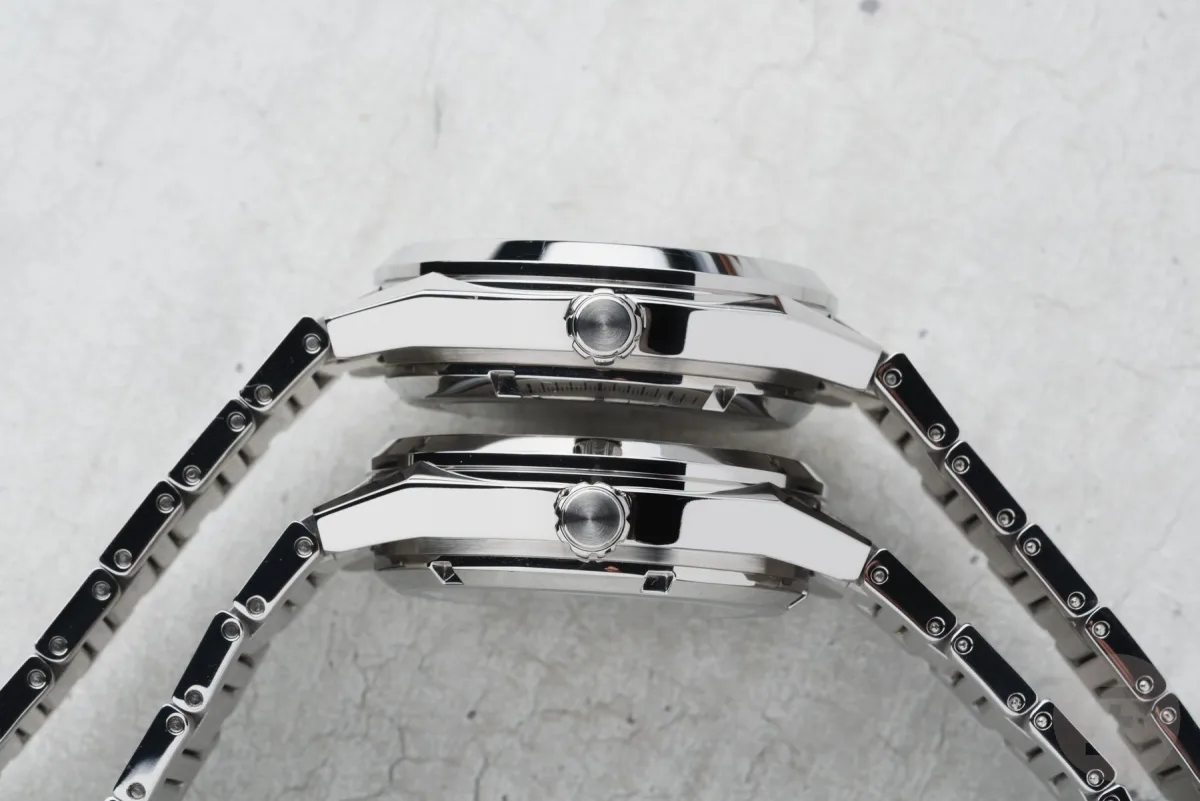
Let's start with the basic parameters of the new watches. The stainless steel case of the EFK-110 has a diameter of 38 mm, a thickness of 11.8 mm, and a lug-to-lug length of 43 mm. This is 1 mm smaller in diameter and 0.7 mm thinner compared to the EFK-100.
The lug-to-lug length has decreased by 0.5 mm, so the watch does not appear shorter on larger wrists. The change in dimensions will be appreciated by many users, as the thinner profile improves proportions and enhances wearing comfort.
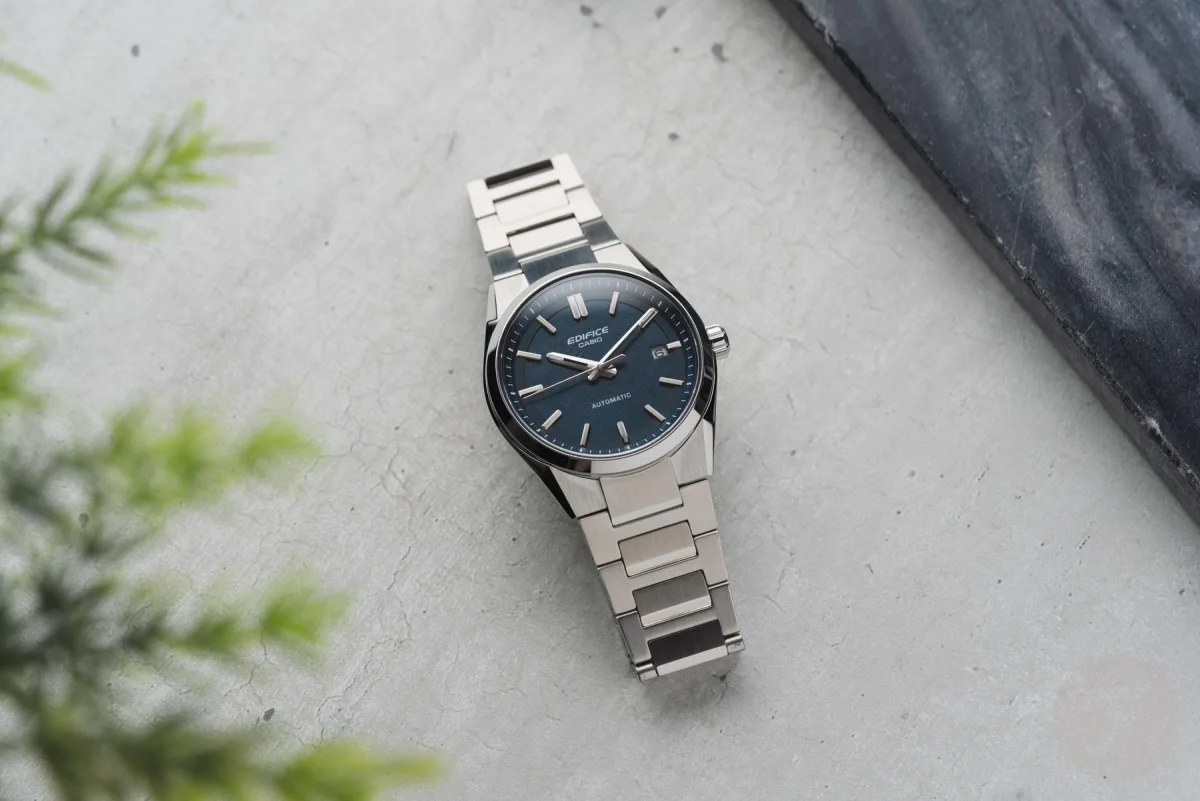
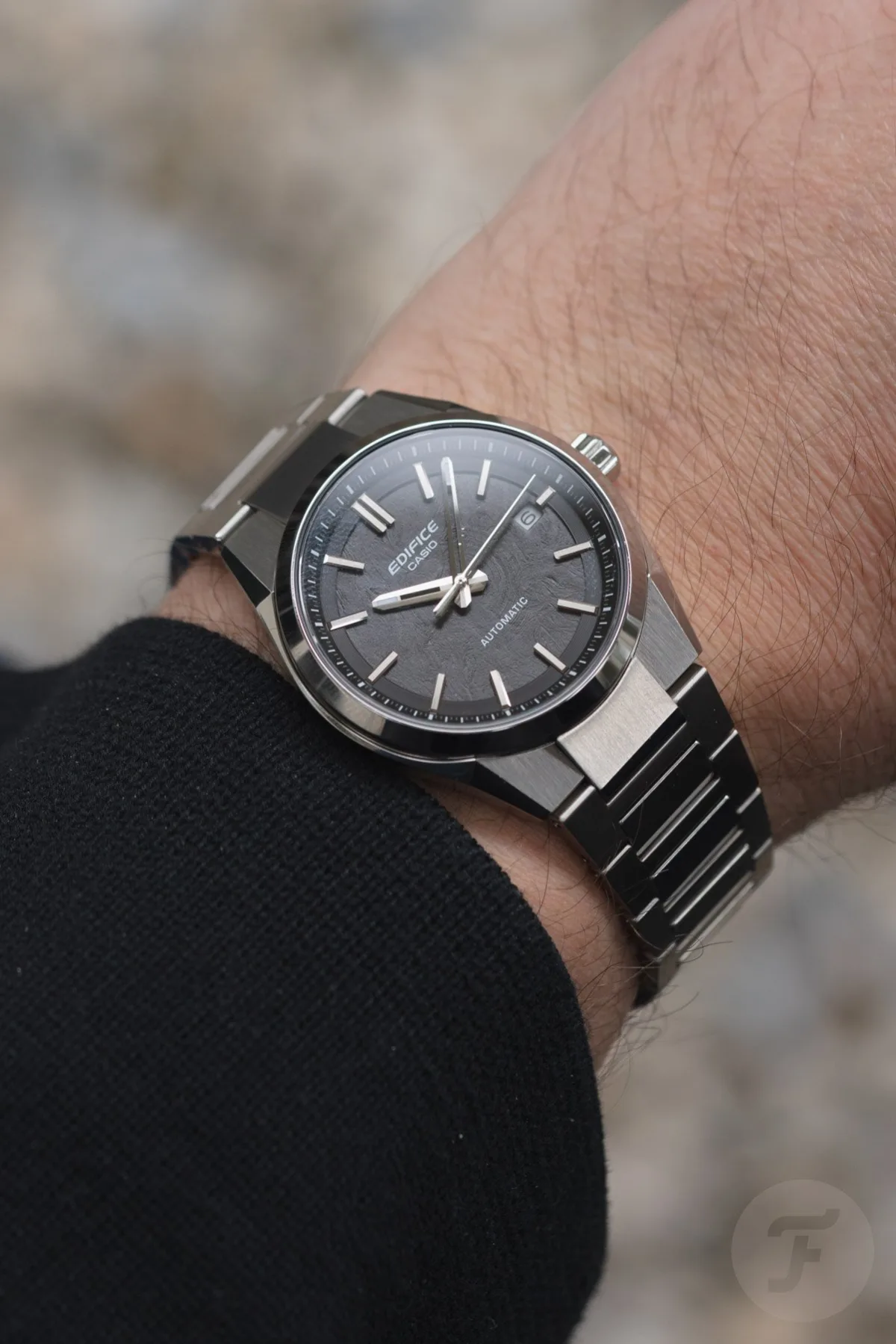
Casio offers three dial options for the EFK-110 series. All dials are made on the same electroformed base with applied silver metallic indices, as in their predecessors. However, the white version has a more pronounced texture compared to the previous one. The black and blue variants match their counterparts from the EFK-100 series.
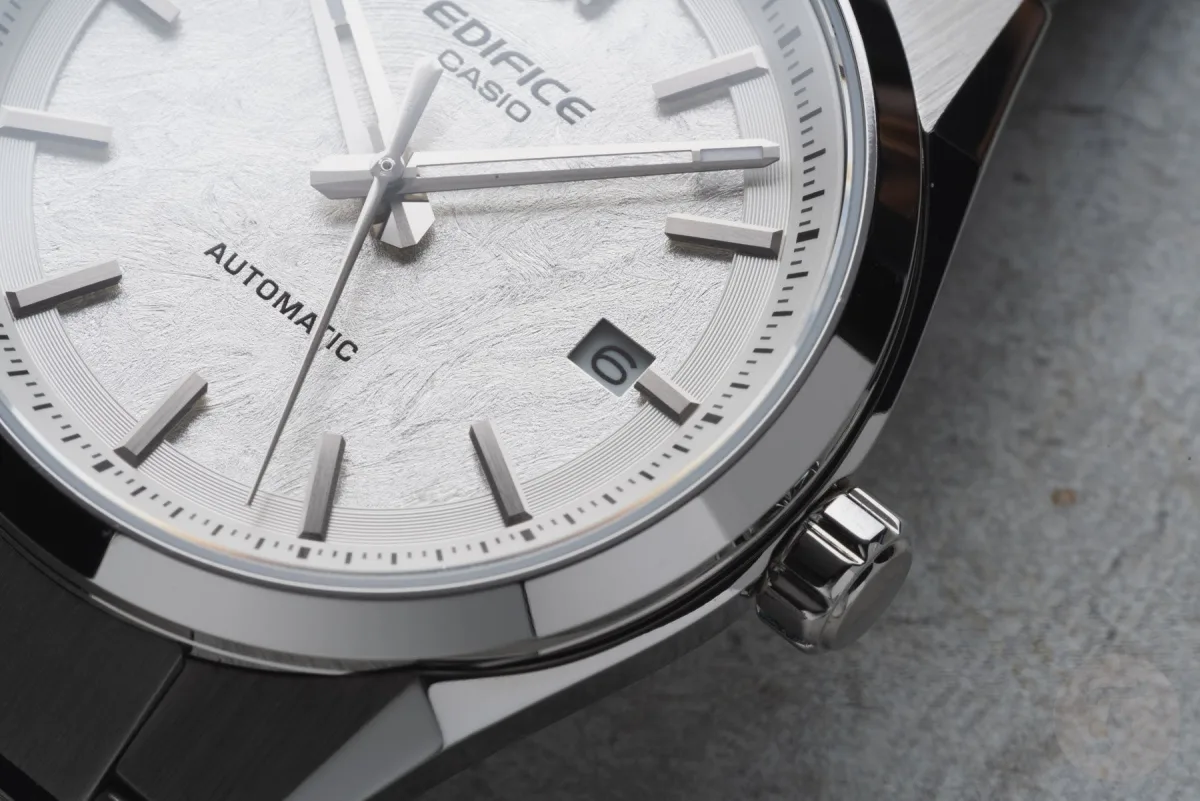
If you compare two white dials side by side, you'll notice that Casio designers have completely reworked or balanced the design using the same elements. I like the more compact feel of the case and the updated dial.
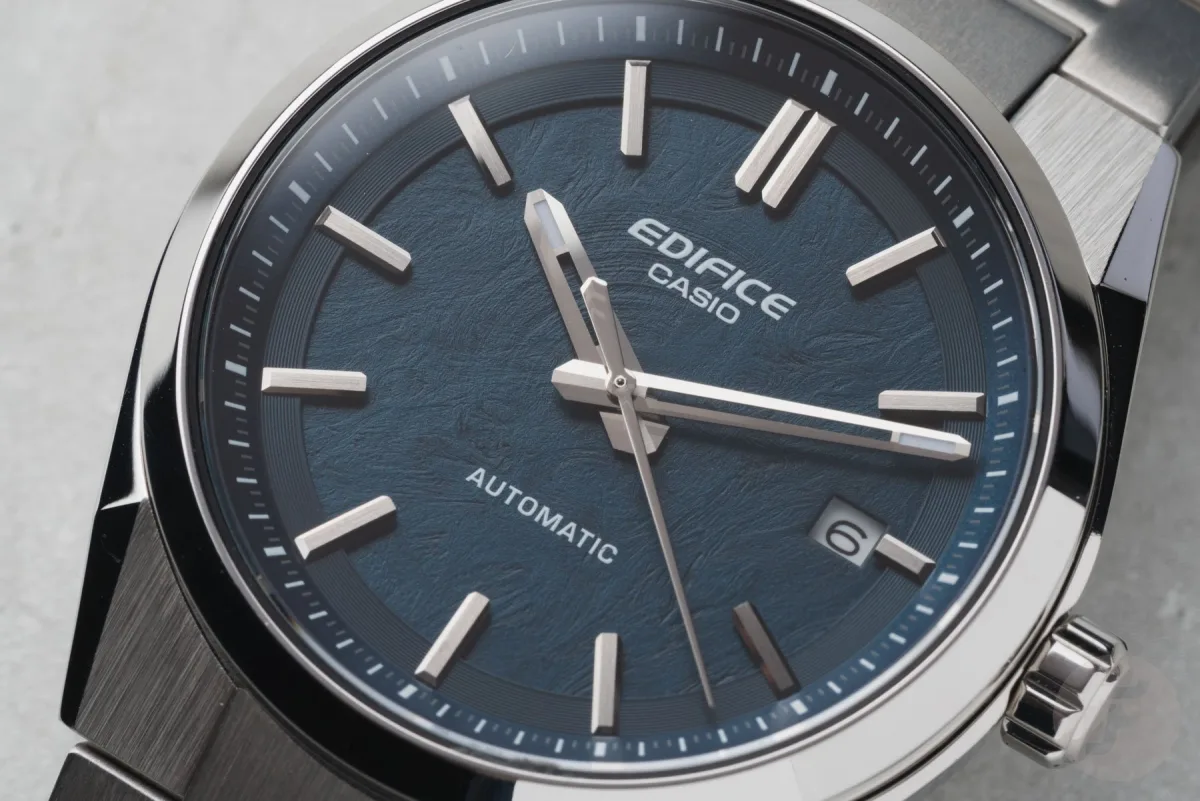
This gives the watch a more refined and sophisticated look. The three EFK-110 models are equipped with the same bracelet with H-shaped links as the EFK-100. It features a folding clasp with buttons and two micro-adjustments on both sides for precise sizing.
Updated Movement
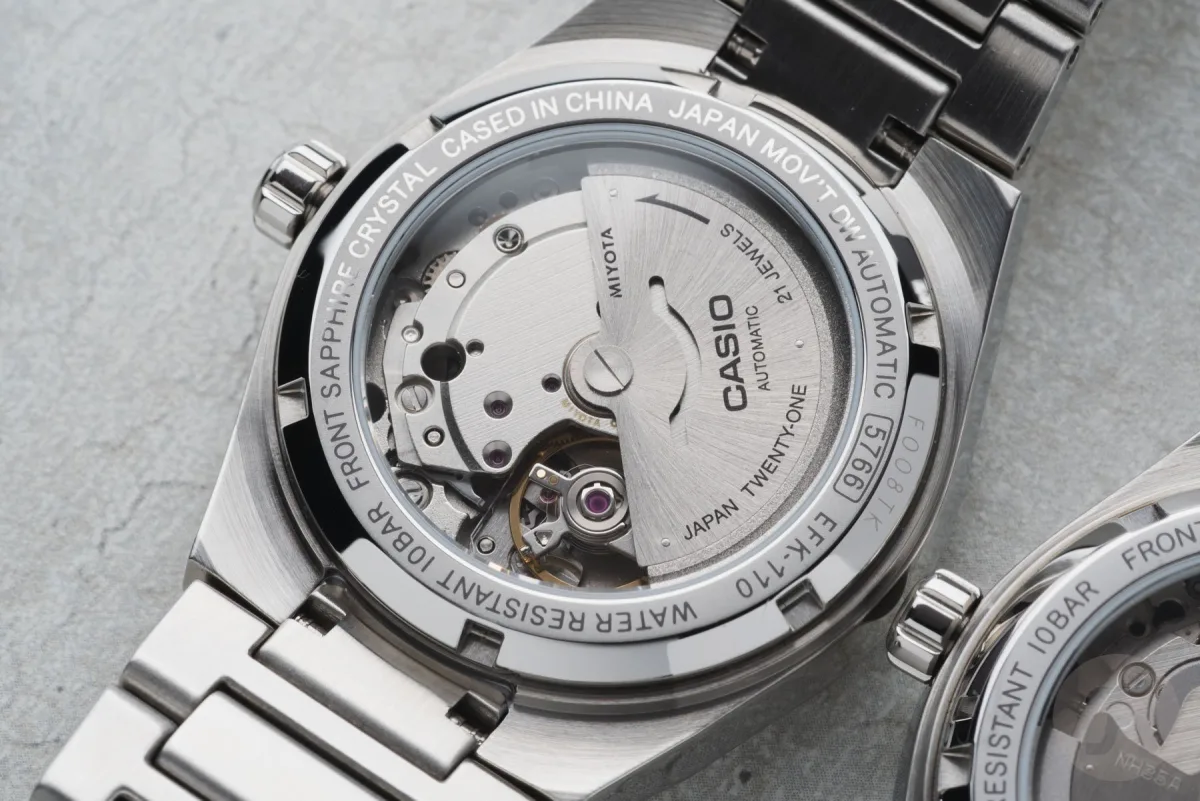
As previously mentioned, the EFK-110 model is equipped with the Miyota 8215 movement. This is an automatic caliber with 21 jewels, operating at a frequency of 21,600 vibrations per hour and a power reserve of about 42 hours. The average accuracy ranges from -20 to +40 seconds per day. When compared to the 25-jewel Seiko Instruments NH35 movement used in the EFK-100, there are many similarities. The NH35 has the same frequency, power reserve, and similar precision indicators. Both movements feature a hacking function.
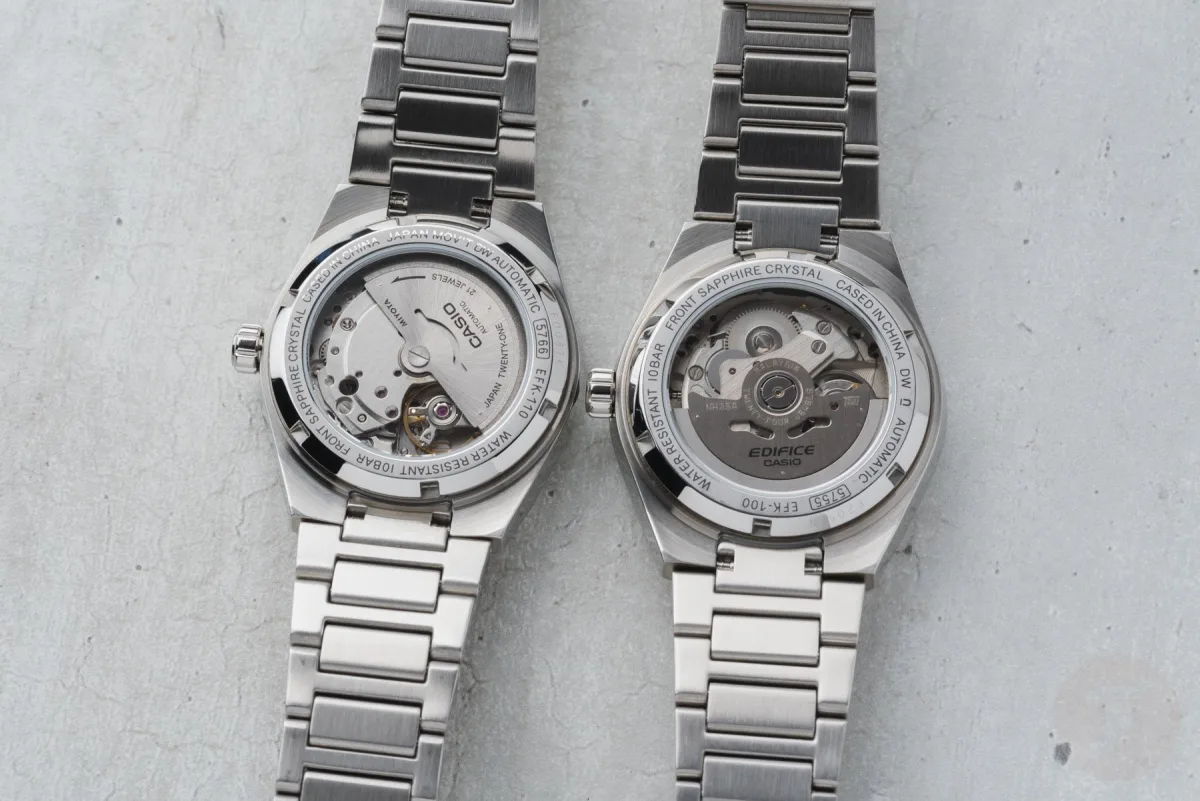
The main difference is that the Miyota 8215 has unidirectional automatic winding, whereas the NH35 is bidirectional. Unidirectional winding is a known feature of Miyota calibers, which causes a characteristic rotor wobble.
Additionally, the Miyota 8215 operates slightly louder compared to the NH35. However, an important advantage is the thinner movement, which allowed for a slimmer EFK-110 case. Otherwise, both calibers provide reliability and similar accuracy, making the replacement from NH35 to Miyota 8215 seem logical.
Wearing the Casio Edifice EFK-110
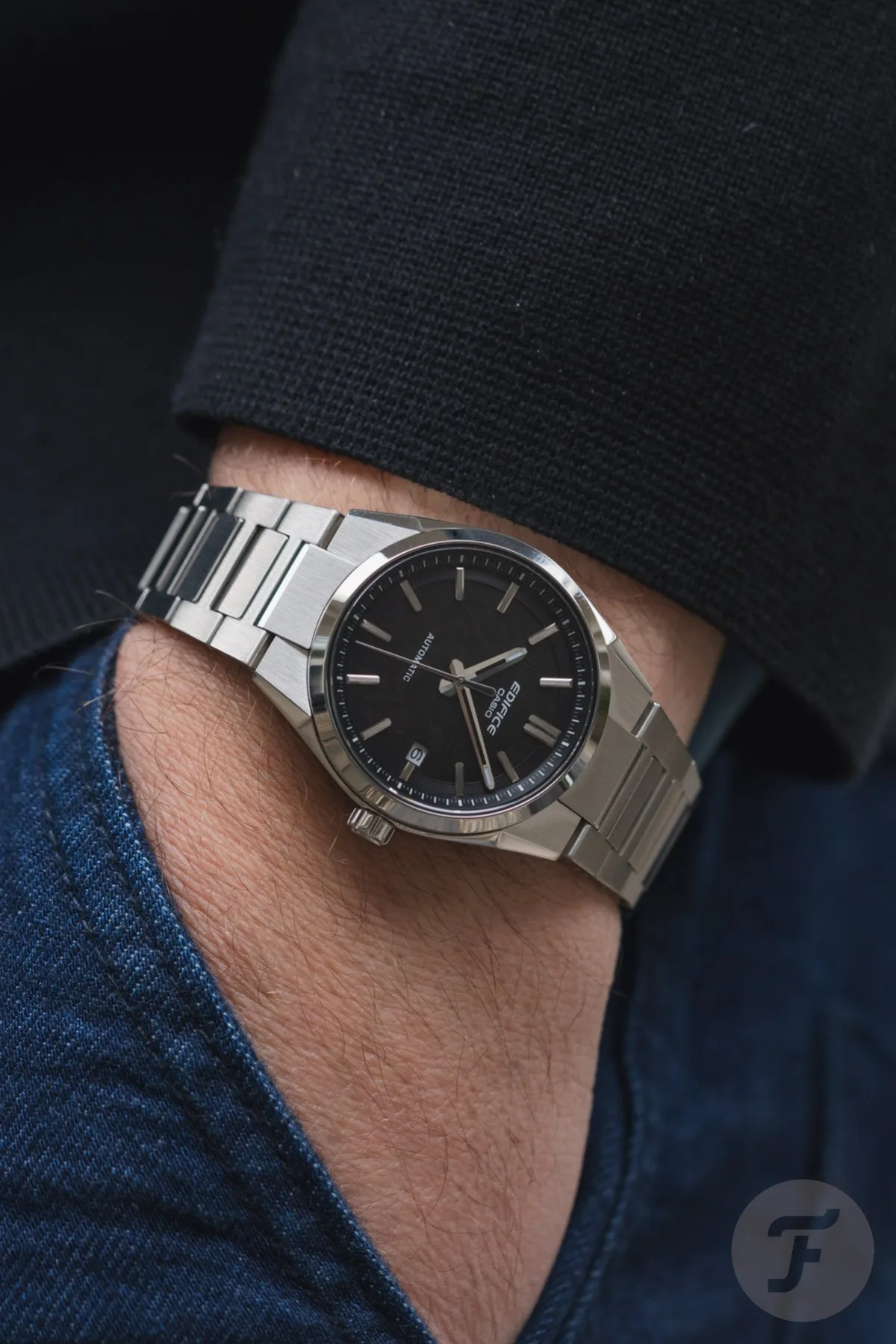
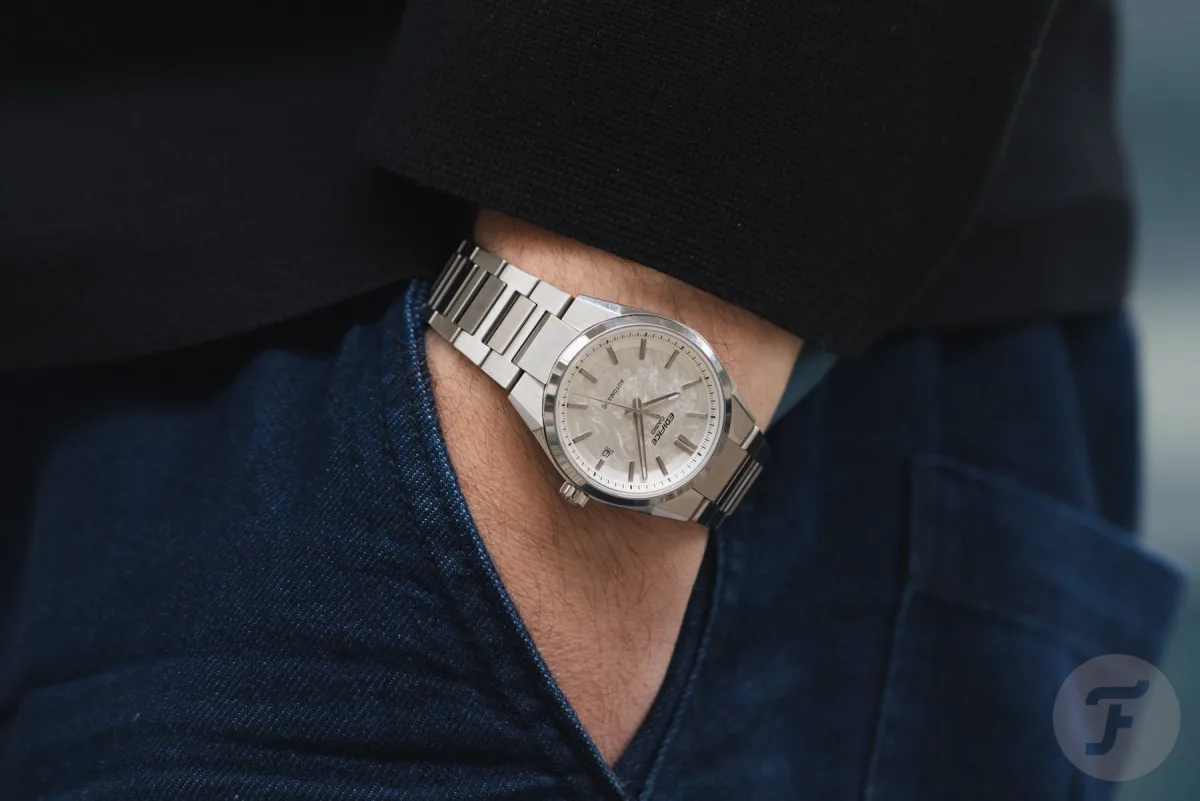
Casio kindly provided us with both models for testing - the EFK-100 and the new EFK-110. Visually, the watches are indeed similar, but when trying them on the wrist, the differences become apparent. First and foremost, the reduced case size makes the watch more compact, elegant, and gives it a slight vintage touch.
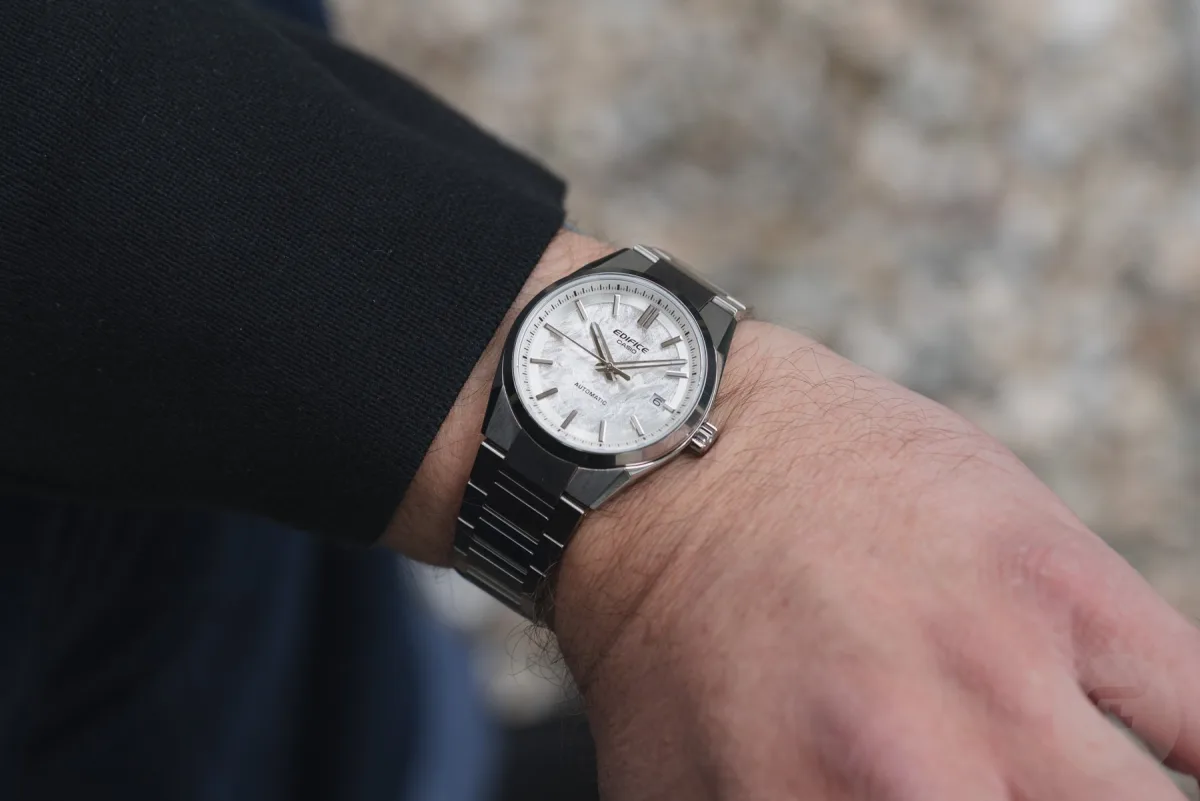
In addition, the more pronounced dial texture adds detail, although this is a matter of personal preference. I like the new texture of the white dial. However, there is no significant difference between the blue and black dials of the EFK-110 and their counterparts from the EFK-100.
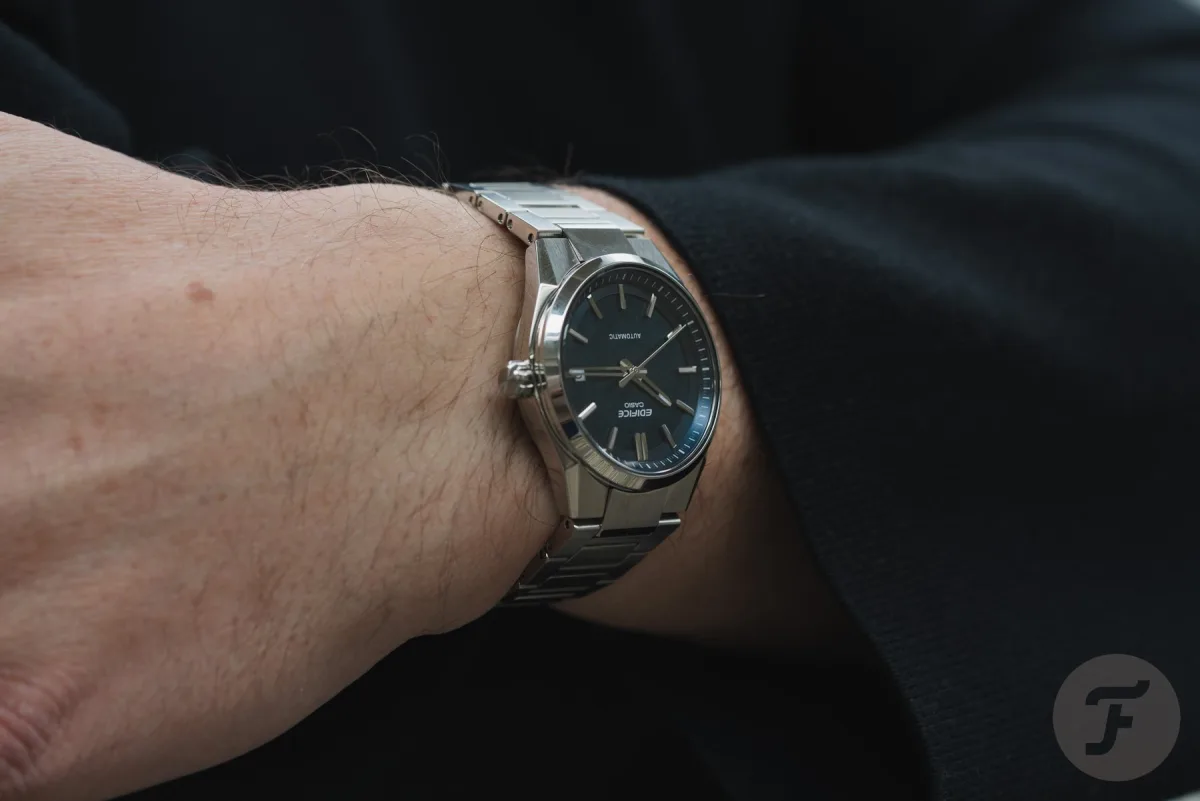
On the wrist, the watch is very comfortable. The size and proportions fit perfectly, and I enjoyed wearing all three models. The build quality is also at a high level, especially considering the retail price of the Casio Edifice EFK-110 - 279 euros.
Final Conclusions on the Casio Edifice EFK-110 Series
Overall, the update to Casio's mechanical sports watch line with an integrated bracelet was successful. The new caliber allowed for an improved design, making the watches more comfortable to wear and giving them a more sophisticated appearance, while maintaining reliability.
Considering that the cost of the EFK-110 remained at the level of its predecessor, it can be said that the update will appeal to many fans of the brand. For those unfamiliar with the EFK-100, the EFK-110 series will be an excellent introduction to the world of Casio mechanical watches. In the end, this is truly a quality and well-thought-out effort.