One of the most discussed topics in business worldwide is which traditional professions, previously exclusively performed by humans, will start being replaced by artificial intelligence (AI) technologies.
This is a valid question, as AI, like the personal computer or calculator before it, is a powerful tool for reducing labor costs and solving complex problems. The world is, on the one hand, justifiably curious and, on the other, concerned about how new automation capabilities will affect professions and jobs that until recently required human involvement.
In this article, we will explore the likely impact of AI on the luxury industry and high-end watchmaking in the coming years. I am neither a proponent nor an opponent of AI and have no specific agenda, but approach the topic as an enthusiast of new technologies and a futurist who usually welcomes innovations while being cautious about immature trends. Moreover, I have nearly 20 years of experience working in and studying the global luxury industry.
My aim is to alleviate fears in the industry about the 'AI threat' and explain why consumers choose luxury brands and why most of them emotionally and intellectually seek a human experience when spending their disposable income.
Historical Resilience of Luxury Brands to Technological Changes
Unlike many tech companies that have existed for a few years or decades, many manufacturers of high-end watches and luxury firms have been around for centuries. These established brands have endured numerous major changes in the consumer and industrial sectors, including wars, economic crises, and technological breakthroughs. Yet, some companies producing expensive goods for wealthy clients remain relevant despite conflicting social trends and technological obsolescence.
Irrationality of Luxury and Its Incompatibility with AI
The consumption and production of luxury goods have a distinctly irrational element that, in my opinion, is uniquely human. Modern AI systems can only imitate this aspect but are not capable of truly understanding or synthesizing it. Luxury is about excess, while programming is about speed and efficiency. These values are diametrically opposed. A machine will create a luxurious experience only if a human requires it, but it will not grasp its essence. Any machine focused on efficiency and calculated results will never participate in the creation of luxury, as it is based on human preferences that AI can only vaguely reflect, but not comprehend.
AI as a Tool, Not a Replacement for Humans
While AI has introduced new possibilities into technology, at their core, large language models remain a tool for accelerating task completion by humans. All industrial revolutions were based on new technology assisting or replacing manual labor. Workers typically felt threatened, while managers felt relieved. In mass production, the world eagerly embraced automation to replace hazardous and routine work. This allowed human resources to be redistributed to new tasks and opportunities.
Even today, despite the drive for automation, many tasks are performed by people because it is cheaper than creating and maintaining machines. The outcome of the industrial revolution and the AI era has not been the replacement of humans by machines, but the collaboration of humans and machines to achieve better results. Workers are provided with new AI tools to make their work easier, but fully replacing humans is still impossible. This is not an optimistic forecast, but a natural outcome of millennia of human history.

Historical Example: Role of Human Labor in Society's Development
Until recently, many unpleasant jobs were performed by forced labor, including slavery - undoubtedly a horrific phenomenon, but with the aim of conserving human resources. People were freed from basic tasks to engage in art, politics, and war. Modern survival shows teach us that mere survival is a full-time job that takes up all the time. Only when someone (a person or machine) takes over minor tasks can human culture develop further. Intellectual development is directly linked to delegating part of the labor to third parties. Anything that frees up human time and energy allows for focusing on more complex and revolutionary tasks. In this sense, I generally welcome the potential of AI, despite its currently limited universality and reliability.
Luxury Industry and Automation: Experience and Lessons
The luxury industry has long used technology to reduce labor costs and will continue to do so in key areas. As in other industries, cost savings and quality improvement through production audits and modernization are important. It was the USA that introduced the Swiss watch industry to conveyor production, part universalization, and the idea of mass-producing quality watches at a lower price, which expanded the market.
Automation did not destroy the profession of watchmakers but created a more complex ecosystem of specialists. The introduction of AI and other technologies, eliminating bottlenecks, rather creates more opportunities for creativity and experimentation. This explains why high energy prices hold back innovation: if costs are too high, companies reduce productivity and risk. People are just as much a cost factor, and automation helps them focus on creativity.
Art and Emotions as the Basis of Luxury
The ability to infuse art and emotions into products is a key feature of luxury goods. They are not just functional, but 'better than necessary.' Machines are incapable of imagination and experimentation - this is a fundamental principle of AI operation. Most systems are based on learning from patterns of human perception, but they merely imitate associations without understanding their deeper meaning. AI can mimic a brand but cannot create a unique personality and experience, which are renowned for decades-established luxury companies. These firms build their business on complex emotions and cultural experiments, which are unattainable for modern AI.
Luxury Consumers Value Human Work
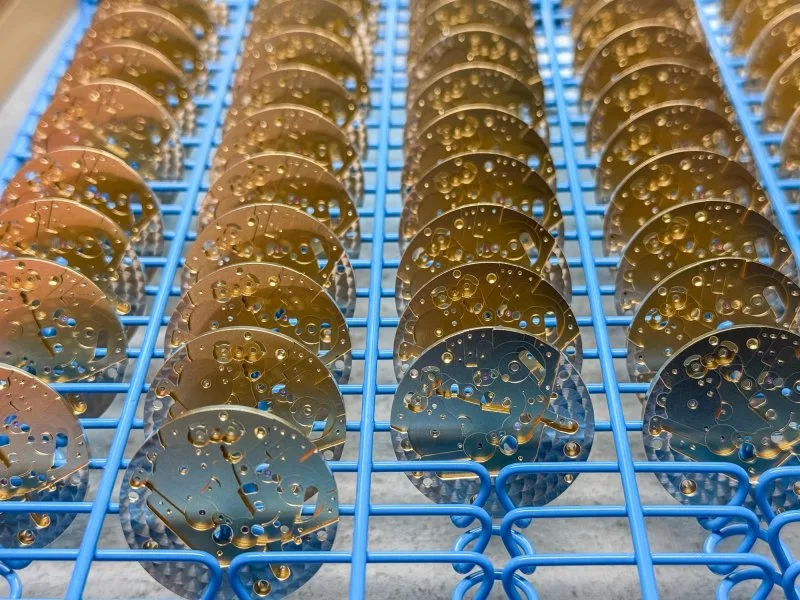
One of the strongest selling points of luxury watches is the number of hours of human labor invested in their creation. Exact figures are hard to calculate, but rough estimates impress buyers. The industry is filled with photos of craftsmen meticulously working on the smallest details. Decoration and polishing of parts are separate, often more labor-intensive processes, including miniature painting and hand-set gemstones.
The most exclusive items are those that are 'naturally limited' due to the complexity and duration of their production. The allure of such items is that most people cannot replicate them. For many, wearing an expensive watch is a symbol of human labor and dedication. The wealthy buy human labor, not just a commodity. If the impression arises that a product was made with less effort, its value decreases. Conversely, knowing about high labor intensity increases the value.

Role of the Creator in Luxury
Sometimes the desire to own a luxury item is not about the item itself but about its creator. This is a complex phenomenon that AI cannot predict, only imitate. Many luxury brands are led by charismatic personalities who attract fans. Buying a product is not only a utilitarian function but also a sign of belonging to a community sharing the values and ideals of the brand's 'art star.' Financiers do not always understand this psychology, focusing on numbers, but people buy not just a product, but a connection with a personality.
Intention and Uniqueness as Defining Features of Luxury
Luxury is defined not only by human labor but also by intention. A product is created to meet the high demands of one particular person. The more precise the specifications, the more complex and expensive the production. Consumers appreciate not only the effort but also the end result. Why does a master spend so much time? To make the product the most beautiful or functional? Human culture is interested in the goals and meanings of luxury goods just as much as in the goods themselves. Only a person is capable of setting and achieving such goals, which is why luxury brands and products are an exclusively human phenomenon. AI can only observe and analyze but not participate in the pursuit of satisfying human needs.
Consumer Preferences: Buying from People, Not AI
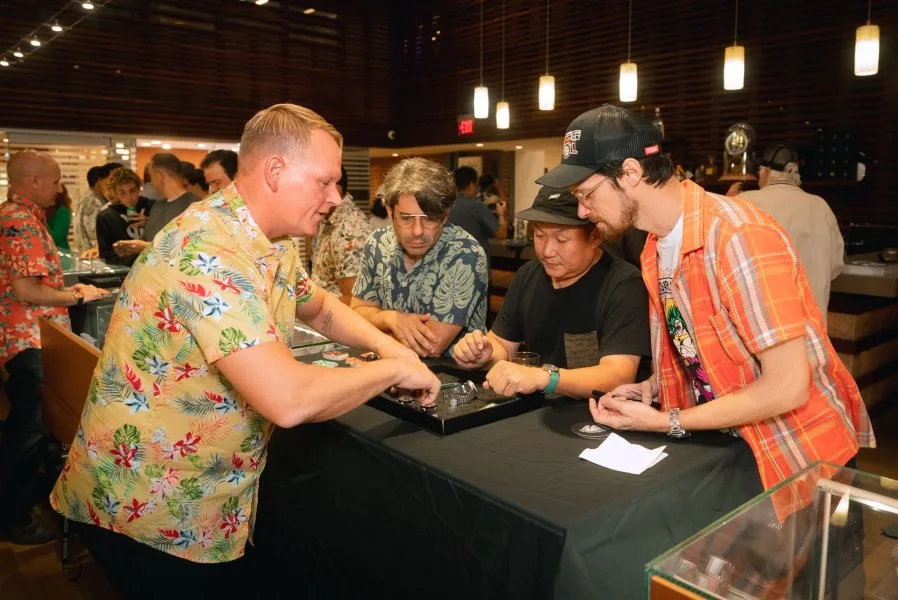
Luxury buyers are suspicious of AI chatbots on websites. Many try to 'catch' the system making a mistake. Although such bots exist on websites, their usefulness is limited, and they are more like an advanced search. Since the advent of the internet, the luxury watch industry has dreamed of websites that would sell products automatically, reducing marketing expenses. But reality is different: even with the opportunity to buy watches online, many prefer live interaction with a seller, especially with companies they have not dealt with before.
Why is this? People want to buy expensive things from other people. The transaction sometimes has therapeutic or romantic value. A buyer wants to be noticed, to receive confirmation of their attractiveness from another person. The variety of luxury goods allows them to express individuality and social status. All of this begins at the moment of purchase.
Example of Live Interaction in a Store
Imagine a situation: a man chooses a watch in a luxury store, assisted by an attractive female saleswoman. He tries on the watch, and the saleswoman says: 'They suit you very well, you look great.' Regardless of sincerity, this can significantly impact the buyer, especially if he is experiencing age-related changes and wants to maintain attractiveness. Such a compliment strengthens the connection with the product and increases its value in the eyes of the client.
AI can imitate such interaction but only in a remote and artificial way. People need compliments and attention from other people, not from programs. Until a machine can convincingly recreate such a situation in reality, virtual compliments will remain empty. Many companies promise that AI will replace sales, but most often buyers 'recognize' AI and demand live communication.
AI in Customer Service: The Necessity of Disguise
Experiments with AI in the service and sales sector will continue, but success is possible only by disguising AI as a human. The desire to replace a paid employee with AI is too great for businesses. Many brands are already testing such solutions. However, luxury is an industry where buyers want to personally visit stores, drink champagne, and feel human involvement.
Consumers want their shopping experience to be confirmed and shared by live people. Automation that eliminates humans is likely to be rejected, as it violates the emotional goals of the purchase. A luxury item is bought not for functionality, but for the feeling of comfort and status among people. Implementing AI in sales is likely to be limited to supporting sellers, not replacing them.
Luxury Media: People's Choice and Taste
While AI can describe watches better than a human, it cannot explain why people share their impressions of them. Watch collecting is a community of people discussing why watches are cool and appealing. AI merely repeats known patterns but does not create new cultural meanings and tastes. Media created by people is valued for authenticity and the ability to classify information, linking watches to culture, popularity, and politics.
Initial attempts to integrate AI into media, for example, through Instagram, showed that algorithms amplify the popularity of already known models, leading to monotony and boredom. Enthusiasts want to see novelty and challenge, not repetition of the same thing. Other experiments with AI in watch journalism have been unsuccessful. AI can help understand the structure and history of watches, but it will not replace human reviews and discussions.
Design of Luxury Goods: Role of the Human and AI
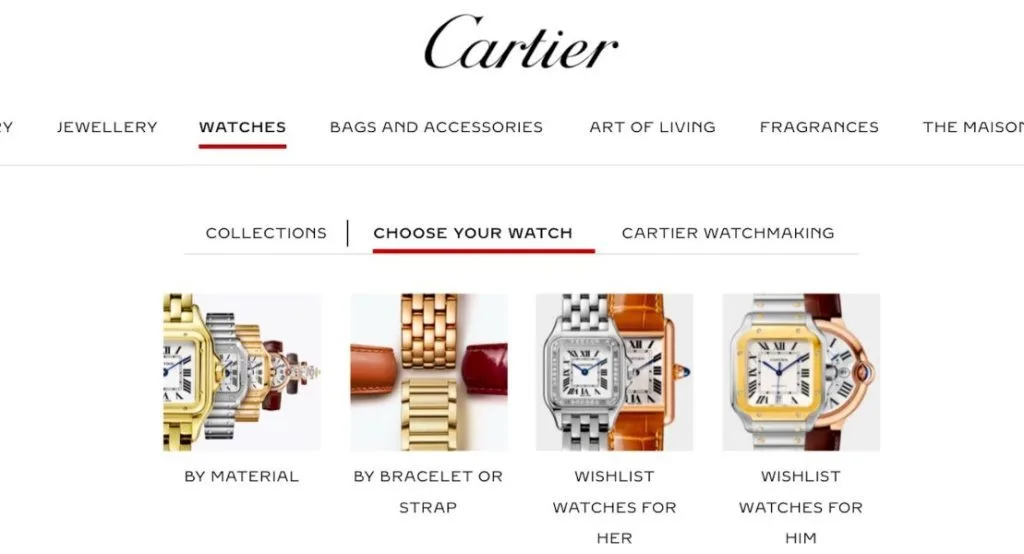
The most noticeable impact of AI in the luxury industry today is in design. Human designers increasingly use AI for generating ideas and experiments. This provides quick access to new visual solutions and inspiration. The ideal is for AI to serve as a tool for humans, not to replace them.
Danger arises when designers rely too much on AI and delegate the entire selection process to it. Generative programs offer options but do not have taste and do not know what will be in demand tomorrow. Decisions should be made by people who ensure the product's value and uniqueness.
AI excels at 'mixing' styles, which is relevant to the watch industry, where different brand DNAs are often combined. I recommend using AI for experiments, but with human control maintained. Generative AI is a powerful tool that is already impacting design and production and will only increase efficiency and reduce costs.
Conclusions: AI and the Future of the Luxury Industry
The luxury industry has little reason to fear AI as a threat but should reject the idea of completely replacing humans with machines. Consumers choose luxury brands precisely for live human interaction and recognition. Tools that help staff work better will be in demand. Attempts to eliminate humans from the client experience will lead to rejection and damage brand reputations.
AI is an integral part of the future, but it will not change the fundamental principles of manufacturing, selling, and wearing watches. The human factor will remain key in creating and consuming luxury items.