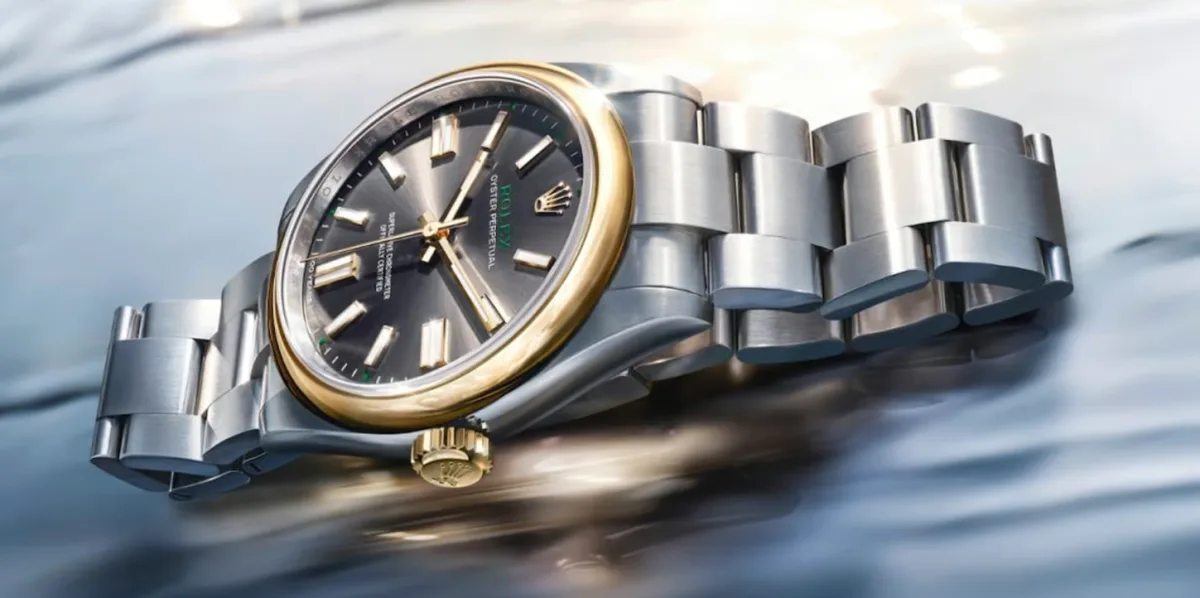
A hundred years ago, Rolex introduced an innovation that radically changed the world of watchmaking - the Oyster case.
Today, it seems obvious that watches can withstand water, dust, and external mechanical stresses, but in 1926, this was a true sensation. Suddenly, wristwatches, previously seen as delicate jewelry, became reliable companions for everyday life, capable of functioning even in the most challenging conditions. In honor of the centenary of this significant development, we will explore not only the invention itself but also the philosophy behind it: Rolex's constant striving to perfect tried-and-true solutions. In the world of watches, the Oyster case has long become not just a part of the mechanism, but a symbol of reliability, precision, and technological progress. It is a unique embodiment of the Rolex spirit.
What Does "Oyster" Mean in Rolex?
For Rolex, the term "Oyster" is much more than just a memorable name. It reflects a technical principle that continues to define the brand today. Inspired by the sealed shell of an oyster, this term denotes a case that reliably protects the movement from external influences. The key element of the design is the screwed bezel, case back, and winding crown, which form a waterproof block.
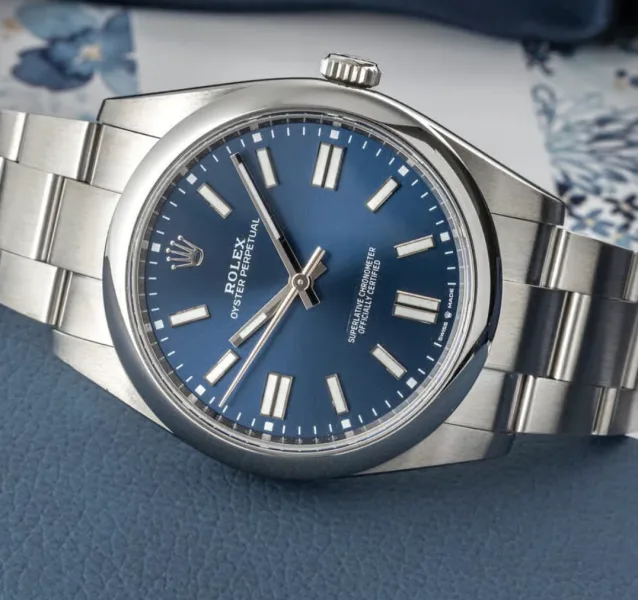
This system prevents water, dust, and dirt from entering the watch, making it suitable for everyday use in any condition. "Oyster" has become synonymous with strength and reliability and has been the foundation for many Rolex models over the decades.
Creation of the Oyster Case
The development of the Oyster case began with a clear engineering task: to create a wristwatch with a permanently sealed case, protected from water and dust. In the 1920s, Rolex introduced an innovative, patented case in which the bezel, middle case, and case back were fastened with screws, rather than just snapping or pressing into place, as was common before.
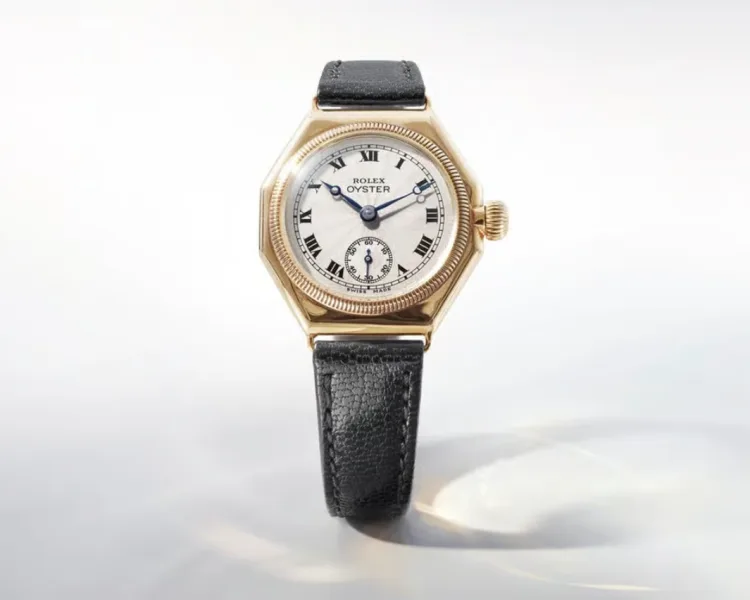
The essence of the solution lay in the mechanical fixation of all potential points of entry. The case back screwed onto the case, the bezel was fastened with screws to securely hold the crystal, and the winding crown tightly screwed onto the case threads. Special attention was paid to the area around the winding crown - here it was necessary to create a sealed yet movable connection. Rolex solved this problem by combining threads and gaskets into a single sealing system. At that time, the company laid the foundation for subsequent Twinlock and Triplock technologies used in winding crowns today.
Key Stages of Development
The release of the first waterproof wristwatches in 1926 laid the foundation for a new understanding of the practicality of watches in everyday life thanks to the Oyster technology. A real breakthrough occurred in 1927 thanks to English swimmer Mercedes Gleitze. During her legendary swim across the English Channel, she wore a Rolex Oyster watch, which worked flawlessly for over ten hours in cold sea water. Rolex used this endurance test for a large-scale advertising campaign on the front page of the Daily Mail newspaper. This case marked the beginning of a strategy of using real stories and testimonials, where the Oyster symbolized resilience and the spirit of adventure.

In the 1930s, the Oyster case was systematically used in extreme conditions: aviation expeditions, motorsports, and other fields. It proved its waterproofness, shock resistance, and reliability in real extreme situations. Simultaneously, Rolex was developing the Perpetual automatic movement with a winding rotor. Combined with the Oyster case, starting in 1931, this became the basis for future Oyster Perpetual models. An important stage was the appearance of specialized Oyster cases for professional diving watches. The Submariner model and its improved sealing system with two or three sealing zones (Twinlock and Triplock) provided increased pressure resistance.
With models like the Datejust, Explorer, GMT-Master, and Sea-Dweller, the Oyster case gradually became a platform for many Rolex watches, adapted for various tasks but based on the same robust design. Over the decades, Rolex continuously improved materials, manufacturing tolerances, and testing procedures, including modern tests at depths of several thousand meters in special Deepsea chambers. Thanks to this, the Oyster case has become a reliable foundation for the brand, constantly improving but maintaining its original goal - maximum reliability in real conditions.

Which Popular Rolex Models Are Equipped with the Oyster Case?
Today, the Oyster case is used in most models in the Rolex catalog. Besides the Oyster Perpetual watches, whose name directly contains the key word, this case is installed in the brand's most popular models: Datejust, Submariner, Sea-Dweller, GMT-Master II, Explorer, Yacht-Master, and the legendary Daytona. All these watches are based on the screwed waterproof case, providing functionality from diving to precise timekeeping.
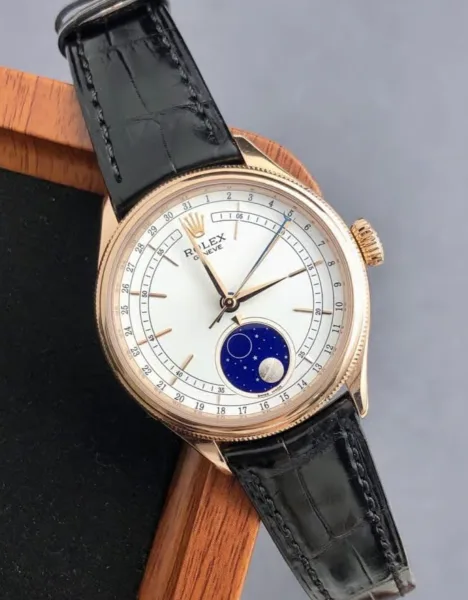
Interestingly, in the current collection, only the 1908 line (and before it, the Cellini collection) does not use the Oyster case, preferring more elegant and less technical designs. This highlights how much the brand has developed around one case over the last hundred years and how consistently Rolex focuses on watches perfectly suited for everyday wear.
100 Years of Rolex Oyster: Anniversary Model
In honor of the Oyster's centenary, Rolex is marking this event discreetly. The anniversary model is a 41mm Oyster Perpetual watch made of Oystersteel and yellow gold with a slate-colored dial. Instead of the inscription "Swiss Made" under the 6 o'clock mark, it reads "100 years." On the winding crown, under the Rolex emblem, the number "100" is depicted - subtle details that only true connoisseurs will notice.

Simultaneously, in the anniversary year, Rolex is expanding its own internal "Superlative Chronometer" certification. In addition to the criteria established in 2015 - accuracy from -2 to +2 seconds per day, water resistance, automatic winding, and power reserve - from 2026, three additional parameters will be evaluated: resistance to magnetic fields, reliability during prolonged use, and environmental sustainability. Importantly, Rolex tests these indicators on fully assembled watches in conditions as close to real use as possible. This way, the brand maintains high technical standards that the Oyster case has embodied since 1926.
Conclusion
The development of the Oyster case was a turning point when wristwatches emerged from showcases and entered the world of seawater, dust, temperature fluctuations, and other challenges of everyday life. Thanks to constant protection of the movement and standard water resistance, Rolex transformed wristwatches into a reliable tool for athletes, pilots, divers, and explorers. This became the foundation for the era of modern tool watches.
Simultaneously with screw-down fastenings, complex winding crown systems, and rigorous testing, the Oyster case laid down an engineering and design principle that allowed the construction to be continuously improved over a century without losing its essence. This revolution changed not only Rolex but the entire watch industry. To this day, water resistance, durability, and suitability for daily wear remain an integral part of the Oyster's legacy.