
There is a unique narrow perception surrounding steel sports models of Rolex.
When you imagine the Submariner, a complete image immediately forms in your mind: black bezel, black dial, and the seemingly seamless Oyster bracelet. The same is true for the GMT-Master, Datejust, Sea-Dweller... In fact, it's easier to list the models this doesn't apply to. The bracelet is not just the standard option for these watches; it has become part of their identity, and most owners don't even consider alternatives.
Why Do Most Owners Not Change the Bracelets?
An important question arises: why does this happen? Is the bracelet really that comfortable, reliable, perfectly integrated, and flawless that it cannot be improved? Or is it more inertia - the established notion that the 'proper' way to wear a Rolex means keeping the metal bracelet in its factory condition? It's likely a combination of both factors, but the second reason plays the main role, and it's worth disputing. After all, when you remove a steel sports Rolex from a Jubilee or Oyster bracelet and put it on a leather strap or NATO, it's not just the fit on the wrist that changes - its character changes too.
Two Examples: Two Different Transformations
I have already written about my two Rolex watches, so I will not repeat myself fully, but it's worth briefly recalling their stories, as the choice of wearing style reveals the essence of the topic.

The Oyster Perpetual ref. 1002 - a watch from the 1960s with a 34 mm case, equipped with the caliber 1560 and a service dial from the era when my mother wore them. This, in my opinion, is one of the purest forms of Rolex DNA: a simple Oyster case without frills that perfectly fulfills its function.

For a long time, the watch was worn on the original Oyster bracelet - a reliable and elegant engineering solution. However, when I switched the bracelet to a leather strap, the watch took on a new life. On the metal bracelet, the small vintage Oyster was perceived as a utilitarian tool, almost like a downsized version of a working model. On the leather strap, the same case and dial look thoughtful, warm, and distinctly dressy. The watch itself didn't change - only the strap did, and with it, the entire impression.
Neo-vintage Rolex Sea-Dweller
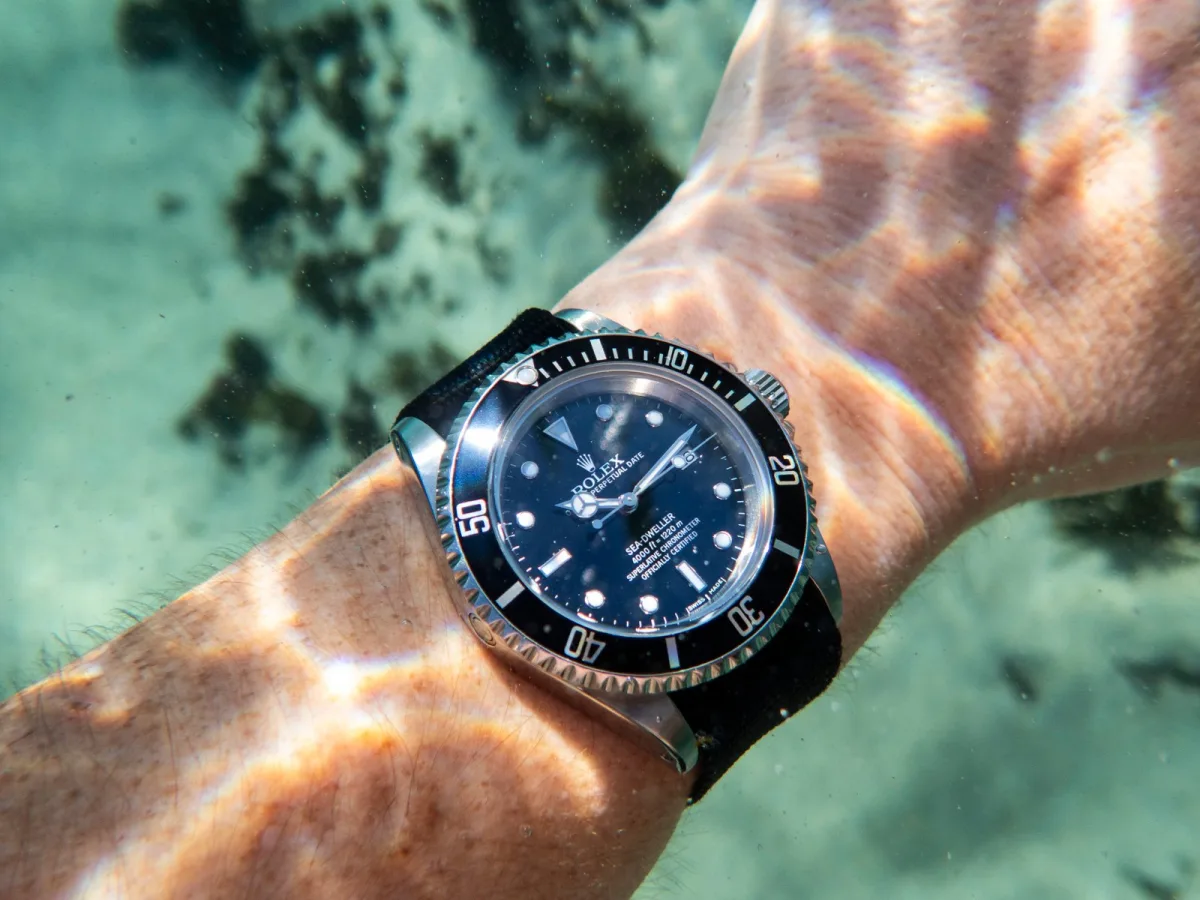
The Sea-Dweller ref. 16600 - a newer model that I acquired from a vintage dealer after a long search for the perfect neo-vintage diving Rolex. I chose the 16600 specifically for its aluminum bezel and more relaxed tool character compared to subsequent models with ceramic bezels. I bought this watch within the family, like the 1002, but in the company of my father.

On the factory Oyster bracelet, the 16600 is worn as its 1220-meter water resistance suggests: seriously, coldly, with a strength reserve for depths I will never dive to. After replacing it with a black NATO strap, the watch transformed into a mirror-like state, opposite to the 1002. The NATO removed the last formal accent from the watch, making it lighter, freer, more 'broken-in.' The Sea-Dweller stopped looking like a commercial diver's tool and became an accessory for everyday wear with a t-shirt. The case remained the same - 40 mm, with caliber 3135 and 904L steel, but the feeling was of a completely different watch.
The Bracelet Is Not Sacred, It's Just Familiar
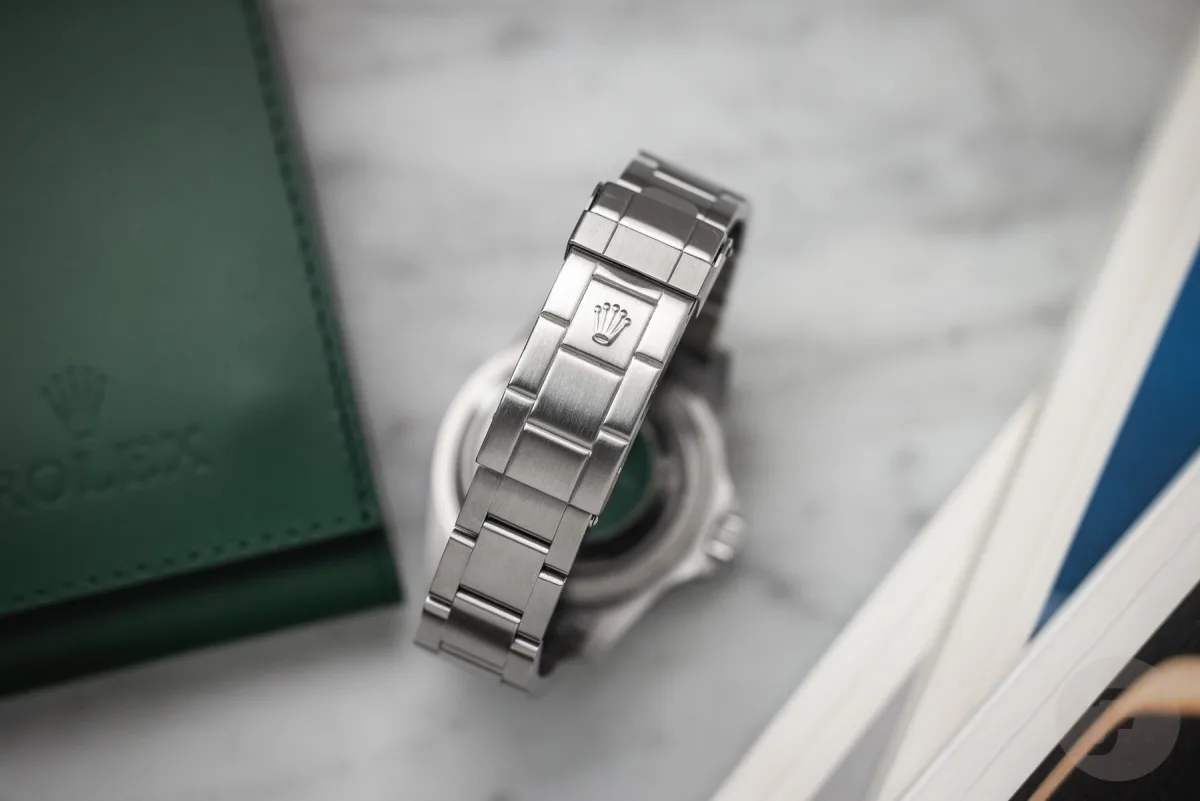
This is not an argument against Rolex bracelets. The modern Oyster bracelet is an outstanding engineering product: the Oysterlock clasp, the Glidelock extension system, the perfect form and finish. Even the older versions of Oyster bracelets with simpler clasps are excellent. The Jubilee might be an even more successful design move with five links, which harmonizes perfectly on the GMT-Master and Datejust without the slightest dissonance. These bracelets have earned their reputation. No one can convince me that the bracelet on the 16600 was excessively complicated.

However, 'excellent' does not mean 'the only correct option.' Many of us perceive the bracelet as the only right choice, almost unconsciously. Part of it is habit: the watch came on a bracelet - so that's how it should be. Part of it is the feeling that changing the strap is disrespectful to the design, as if it violates an unspoken agreement with the brand. And frankly, Rolex has photographed watches on bracelets for decades - in catalogs, advertisements, visually cementing this image in our minds. This is as much a result of marketing as it is a design truth.
Rolex Makes Excellent Bracelets
By stepping away from this association, the arguments for experimenting with straps and NATO become much stronger. A steel sports Rolex on a bracelet is one style: instrumental, reliable, somewhat cold, versatile, but always discreetly formal. On a leather strap, the same watch takes on a more dressy, warm, or relaxed look.

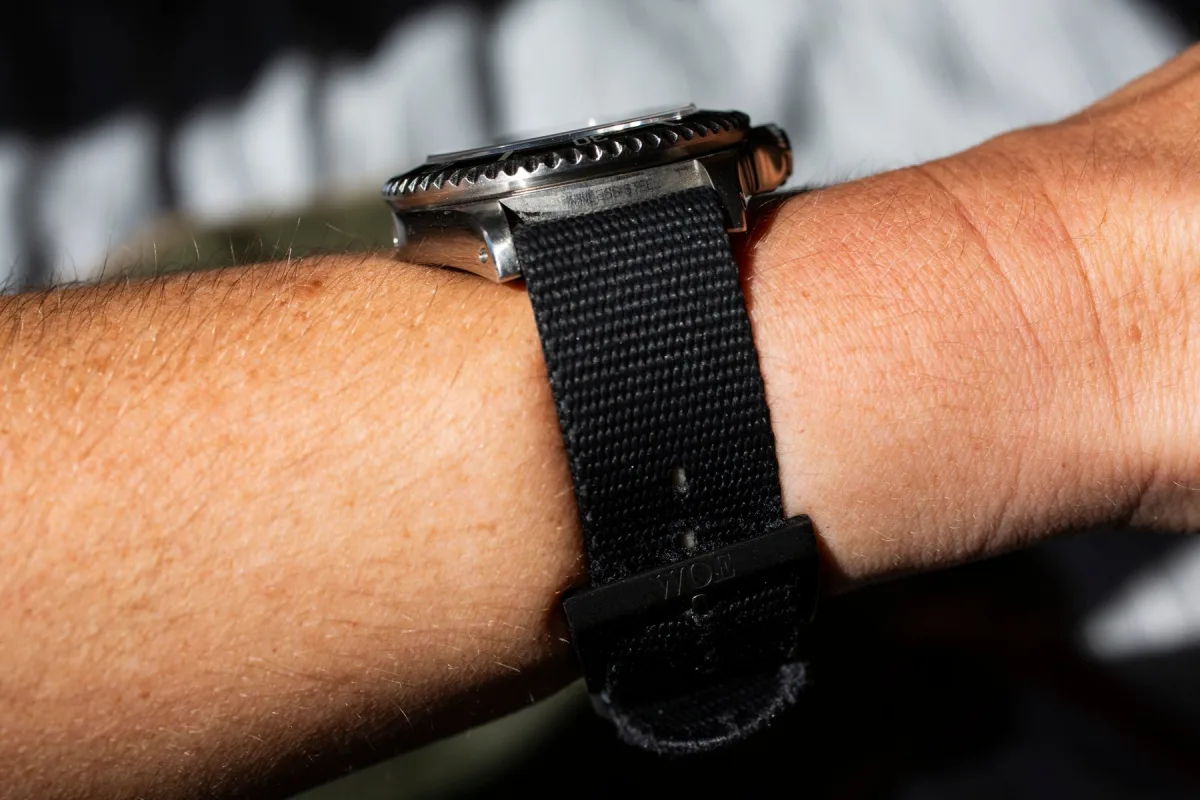
On NATO, the watch changes dramatically: becoming more sporty, rugged, more casual, closer to accessories for hiking than for office negotiations. The case and dial remain unchanged, but the character of the watch becomes a matter of choice.
Why Do We Rarely See Rolex Without Bracelets?
Considering that changing a strap does not require special tools (especially for NATO), and any experienced watchmaker or even an attentive owner can handle a leather strap, it's surprising how rarely steel sports Rolex watches are seen off their bracelets. The bracelet is the standard for owners, and if you're not an enthusiast, you're unlikely to see someone take a bracelet off a Rolex (in my opinion). Look through enough photos of watches - and you'll notice a pattern: Submariner on Oyster, GMT-Master on Jubilee, Sea-Dweller on Oyster, over and over, while straps and NATO are almost exclusively on vintage or more formal models where the bracelet was not a key element.

However, I would like the balance to change. Not because the bracelet is bad, but because it's just one of many worthy options. My Sea-Dweller on NATO and 1002 on leather are not compromises or innovations, but watches that have found another, equally legitimate style. Both pieces carry a family history: one from my mother, the other from my father. Changing the straps did not weaken this connection; on the contrary, it made wearing them more sincere and aligned with my everyday style, not just the way the watches came in the box.

Final Thoughts
If you have a steel sports Rolex that sits idle because it's uncomfortable in the heat or the bracelet feels too 'typical Rolex' for some occasions, don't rush to blame the watch itself. Try a leather strap, try NATO. You may have been looking at the same watch for years without noticing what else it could be.
How do you feel about this matter? Do you wear Rolex exclusively in its factory state or do you prefer to change straps? Share your opinion in the comments!