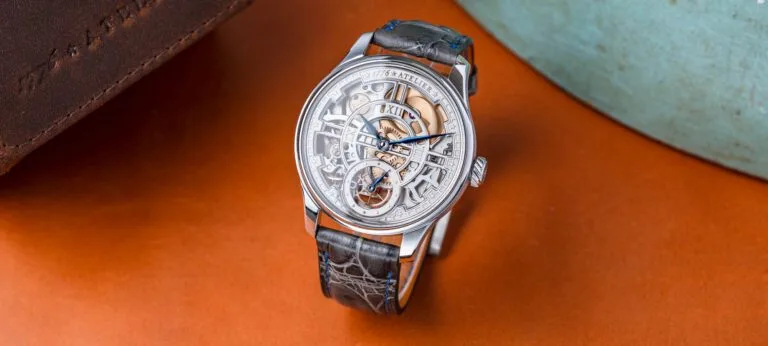
About a year ago, I had the opportunity to speak with 1776 Atelier founder Jason Lu.
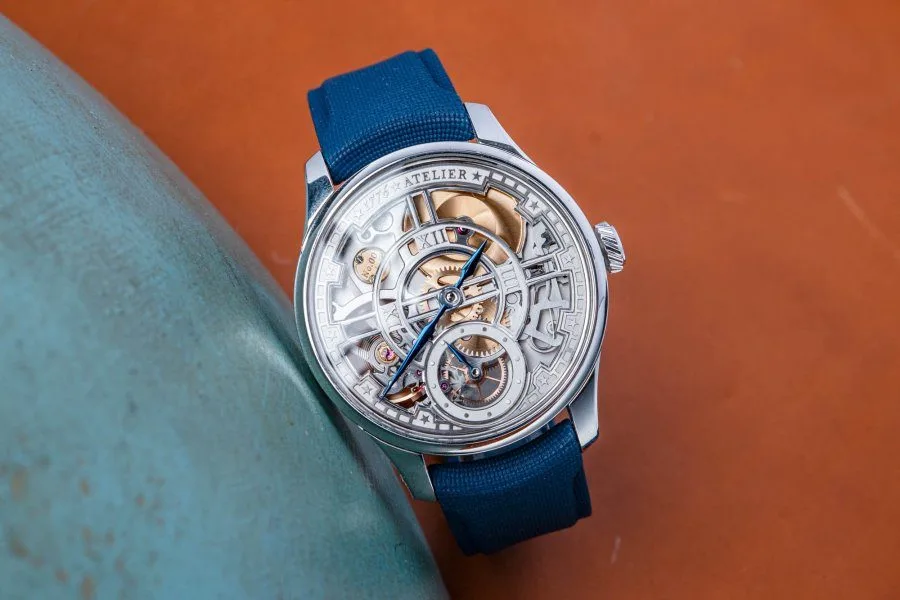
In short, he shared what you often hear from watch brand founders: he loves watches, which led him to start his own brand. However, there's more to it. A key feature of the brand is its commitment to maximize American manufacturing while maintaining reasonable prices. The debut model Mount Vernon was the first step towards this goal, and Monticello, released around the same time, also contributed. However, the 1776 Atelier Montpelier advances this concept significantly and does so quite elegantly, in my opinion.

History and Evolution of the Montpelier Model
The new Montpelier model, unveiled in October 2025, is essentially an evolution of the Monticello. After launching Monticello, Lu deemed it too rough, but saw an opportunity to use the platform to create a more refined product aligned with his brand vision. A significant development was the joining of watchmaker and precision component manufacturer Hour Precision owner Zack Smith as a co-owner.
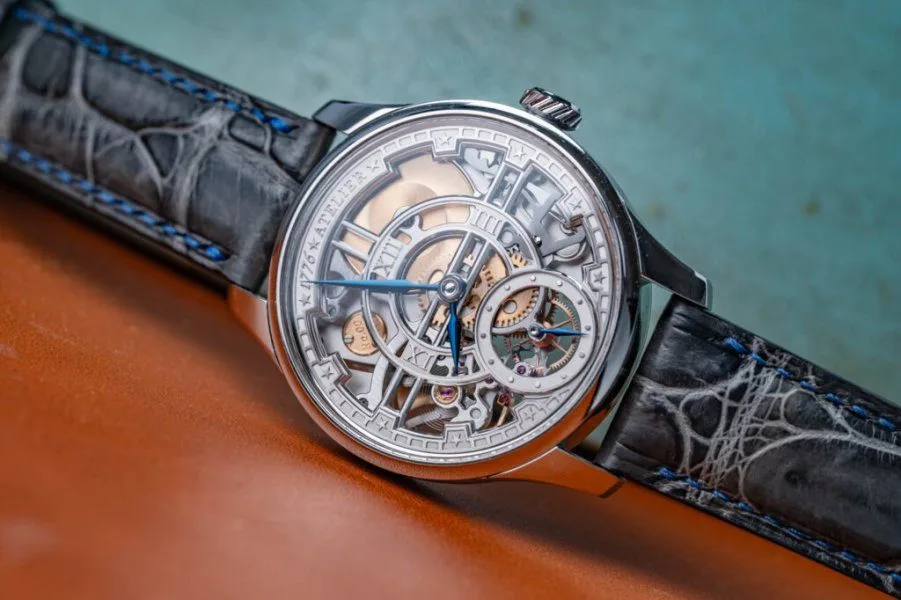
Combined with Lu's further development of his own skills, this partnership has allowed the creation of one of the most vertically integrated independent watch manufacturers in the USA. As a result, Montpelier offers a much more impressive experience than Monticello, with most of the manufacturing done in the USA, which the brand hadn't achieved before.
Case and Design of the Watch
Analyzing the details of the skeletonized dial is a challenging task, so let's start with the case. One of my remarks about the Mount Vernon case was that the fully polished surface softened the transitions between elements.
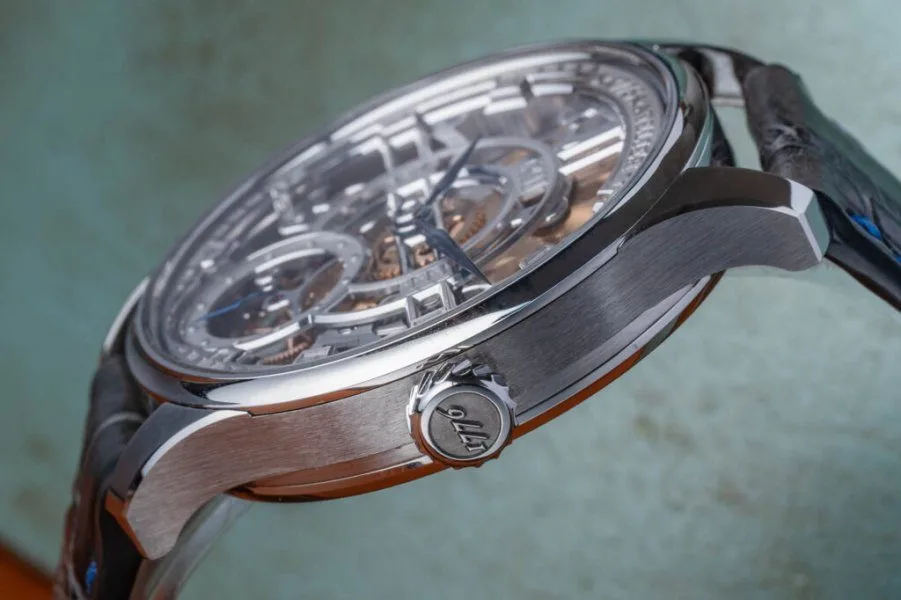
The Montpelier features an entirely new 41.5 mm stainless steel case with horizontal satin finishing across the center, sharp polished bevels, and curved lugs. This design breaks the case planes, emphasizing transitions, while the polished concave bezel enhances the premium feel.
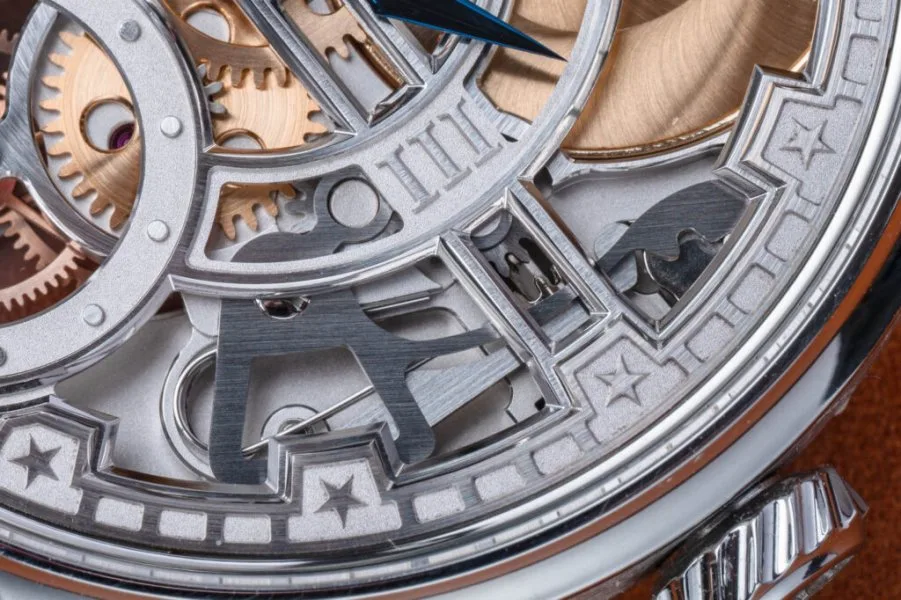
It's worth noting that the case is one of the few components not entirely made in the USA; it is manufactured in Germany by RP-Urgehäuse. The case dimensions are 49.5 mm lug-to-lug and 10.2 mm thick with a domed sapphire crystal. For my 7-inch wrist, the watch was comfortable and not bulky. The water resistance of 50 m is also pleasing, which is higher than expected for such high-end pieces, usually rated at 30 m. Water resistance is partly ensured by a screw-down crown with a ribbed spiral pattern.
Straps and Clasps: Choices for Different Styles
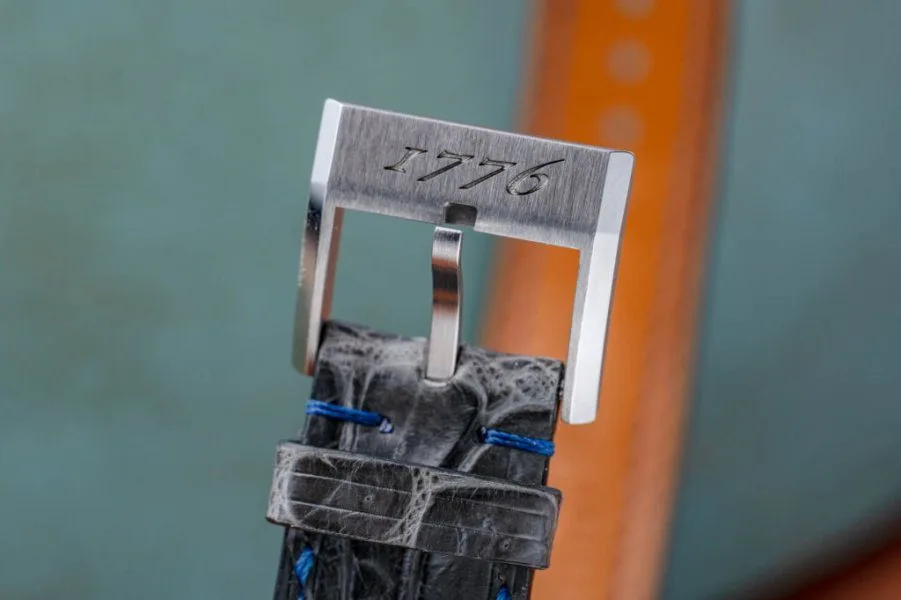
If you think water resistance of 50 m is irrelevant because a leather strap shouldn't get wet, you're in for a surprise. The watch comes with a soft gray alligator leather strap made in Florida, featuring contrasting blue stitching and a buckle entirely crafted and finished by hand at the brand's workshop - just the tip of the iceberg of craftsmanship applied in creating Montpelier.
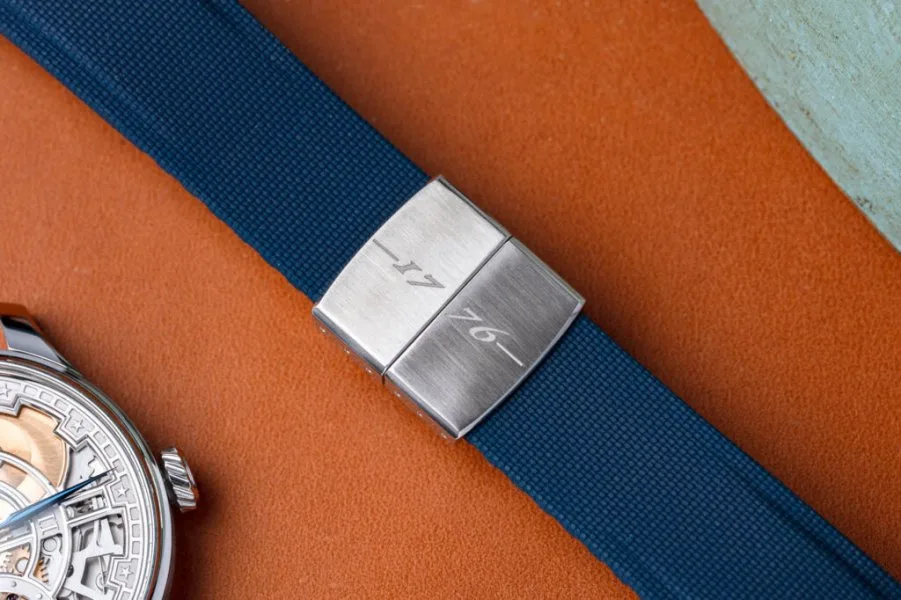
For those who prefer a sporty style, there's an FKM rubber strap included with sizing capability and a butterfly clasp with a spring-loaded mechanism. This was my first experience with such a clasp, which is gaining popularity. Despite some nervousness when trimming the strap, the clasp proved easy to use, allowing for easy removal and wearing, and provided a comfortable fit with the possibility of slight expansion and contraction throughout the day. Surprisingly, the blue color and texture of the rubber strap complement the watch design well.
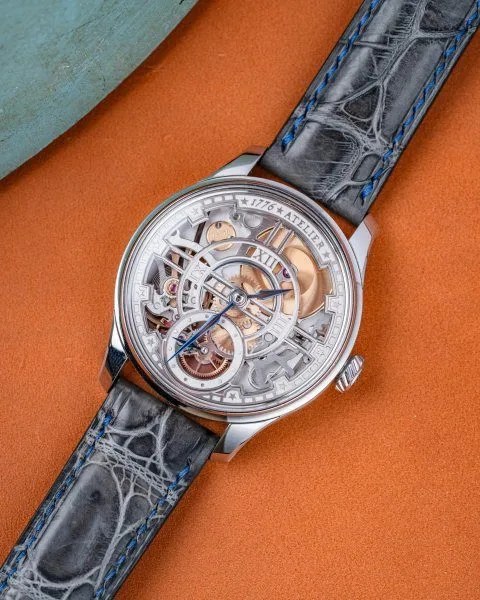
Features of the Montpelier Dial
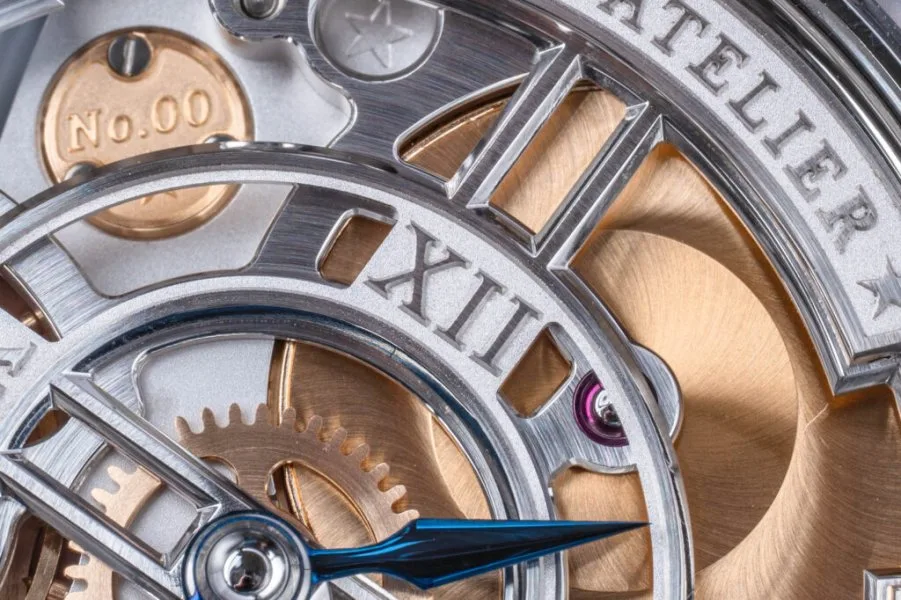
Each Montpelier dial takes over 40 hours of work, starting with milling and initial finishing at Hour Precision in Ohio, ending with final finishing by Jason Lu in Texas. For detail enthusiasts, note that the dial contains 62 inner angles, which are hard to count. For me, and I think for most, the main criteria for evaluating the dial are its attractiveness and readability.
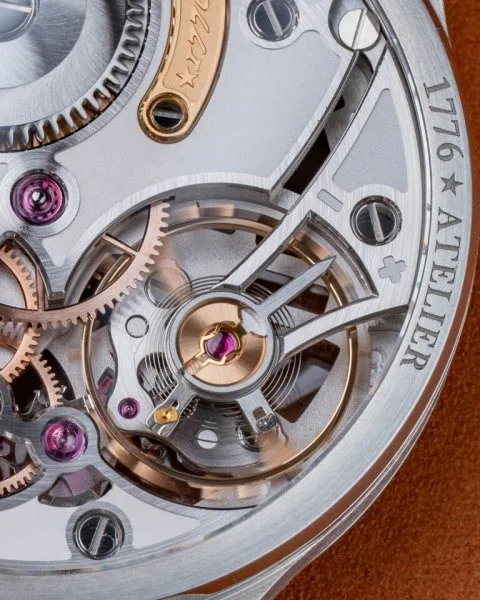
Skeletonized dials often sacrifice readability for design. Fortunately, this is not the case here. The hands are a rich blue color achieved through thermal treatment, each consisting of two parts (hand and hub) that are milled for several days and then finished by hand. This blue color stands out excellently against the galvanized brass dial, ensuring good readability in good lighting. There is no luminescent coating, but in this case, it raises no questions.
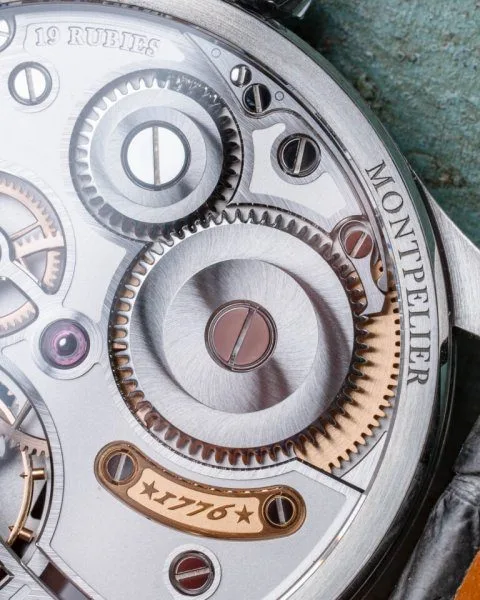
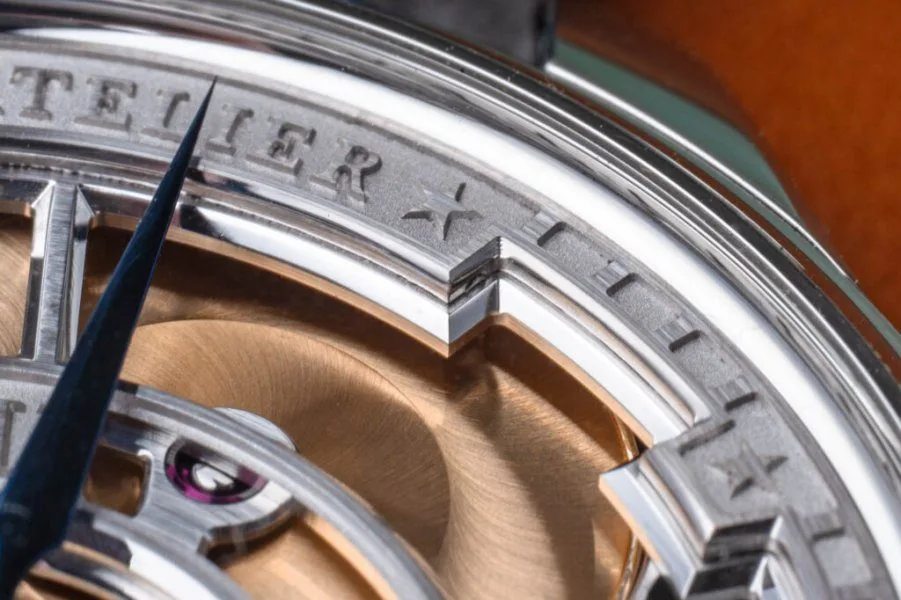
The dial itself showcases the mechanism while being an adornment in its own right. Despite the abundance of details, the design is not overloaded but unified into a harmonious whole. Minutes are marked with stars and segments on the outer flange, combining polished, satin, and matte surfaces - three types of finishes mirrored throughout the case.
As an American