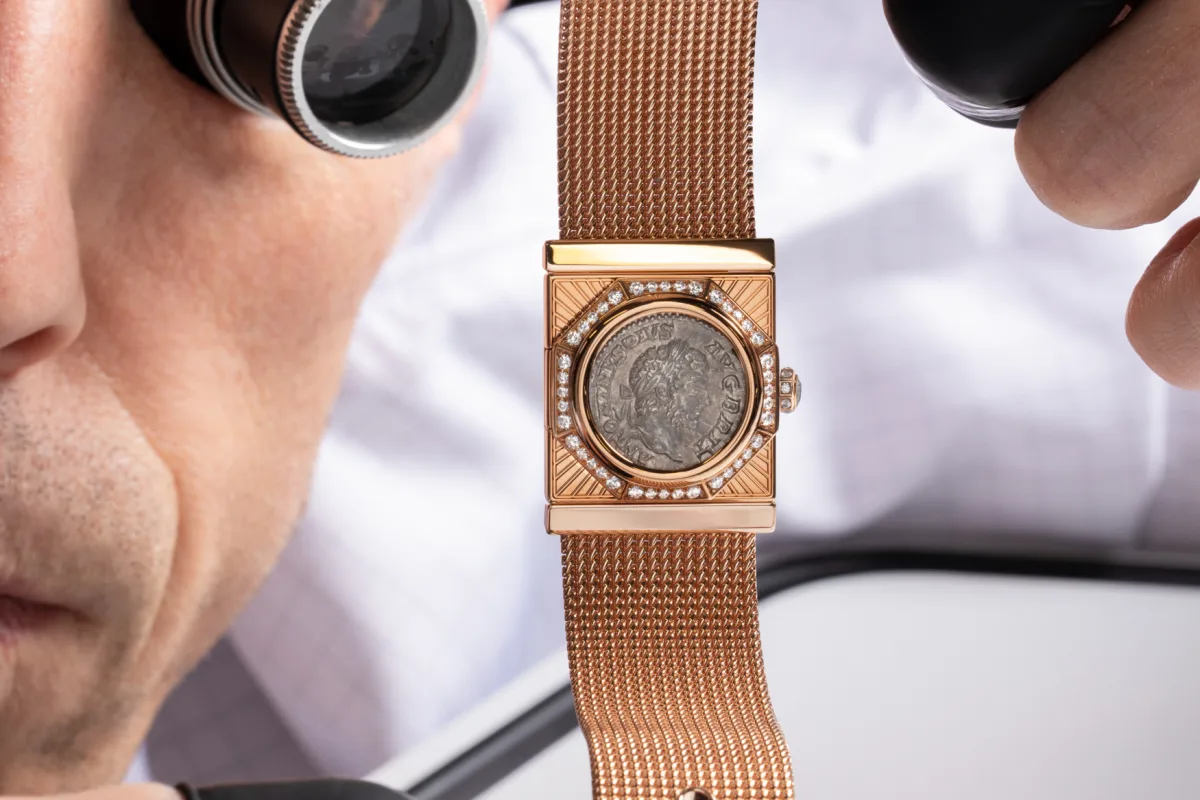
Bulgari is one of those brands where 'Roman' origin is not just a fashionable term, but the foundation of its identity.
The house traces its history back to 1884, when Greek silversmith Sotirios Bulgari opened his first boutique on Via Sistina in Rome. Later, the flagship store on Via dei Condotti solidified the brand's status in the city's elite geography. Even the logo on the dial emphasizes this heritage: the inscription BVLGARI, with its classical 'V', is inspired by ancient Roman inscriptions.
Roman Identity and Engineering Approach to Watches
Bulgari's Roman history is an important context for understanding its watches, as the brand has always viewed jewelry ideas as engineering challenges, not just stylistic exercises. In the Maison's official history, the Serpenti collection, introduced in 1948, is described as bracelet-watches with a twisted tubular band made using Tubogas technology and a geometric dial - a concise expression of the synthesis of craftsmanship, form, and mechanics. Bulgari's visual language is characterized by bold colors, balanced volumes, and recognizable motifs rooted in Rome - these codes work equally well in high jewelry art and the watch industry, be it an industrial spiral bracelet or ancient iconography.
New Models at LVMH Watch Week 2026: 'Art of Gold'
At LVMH Watch Week 2026, Bulgari focuses on the 'Art of Gold' concept, returning to two iconic directions - Monete and Tubogas. Among the novelties are the Maglia Milanese Monete secret watch in rose gold, combining the concept of a coin with a Milanese mesh, and the Tubogas Manchette bracelet in yellow gold with gemstones, referencing the geometry of the 1970s. Behind the jewelry spectacle lies clear watchmaking craftsmanship: Monete is equipped with the Piccolissimo BVP100 caliber with a winding crown, while Tubogas Manchette features the automatic Lady Solotempo BVS100 caliber with updated decoration.
Maglia Milanese Monete Secret Watch
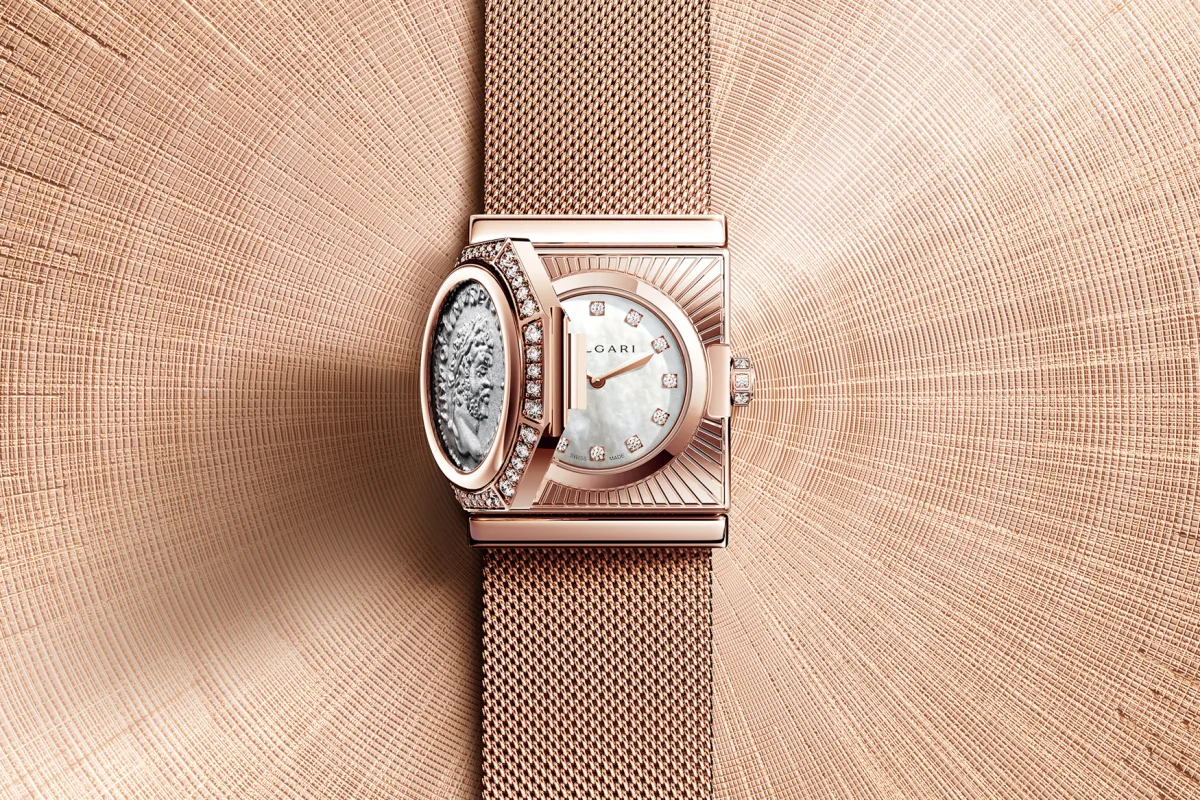
The Monete concept is one of Bulgari's most unique: taking an object already filled with meaning - a coin, a fragment of history - and making it the central element. In 2026, the Maglia Milanese Monete secret watch reimagines this idea, emphasizing tactility. The 'secret watch' format is key: the dial is not visible, but hidden under a genuine ancient coin - in this case, a replica of a coin from 198-297 AD featuring Emperor Caracalla.
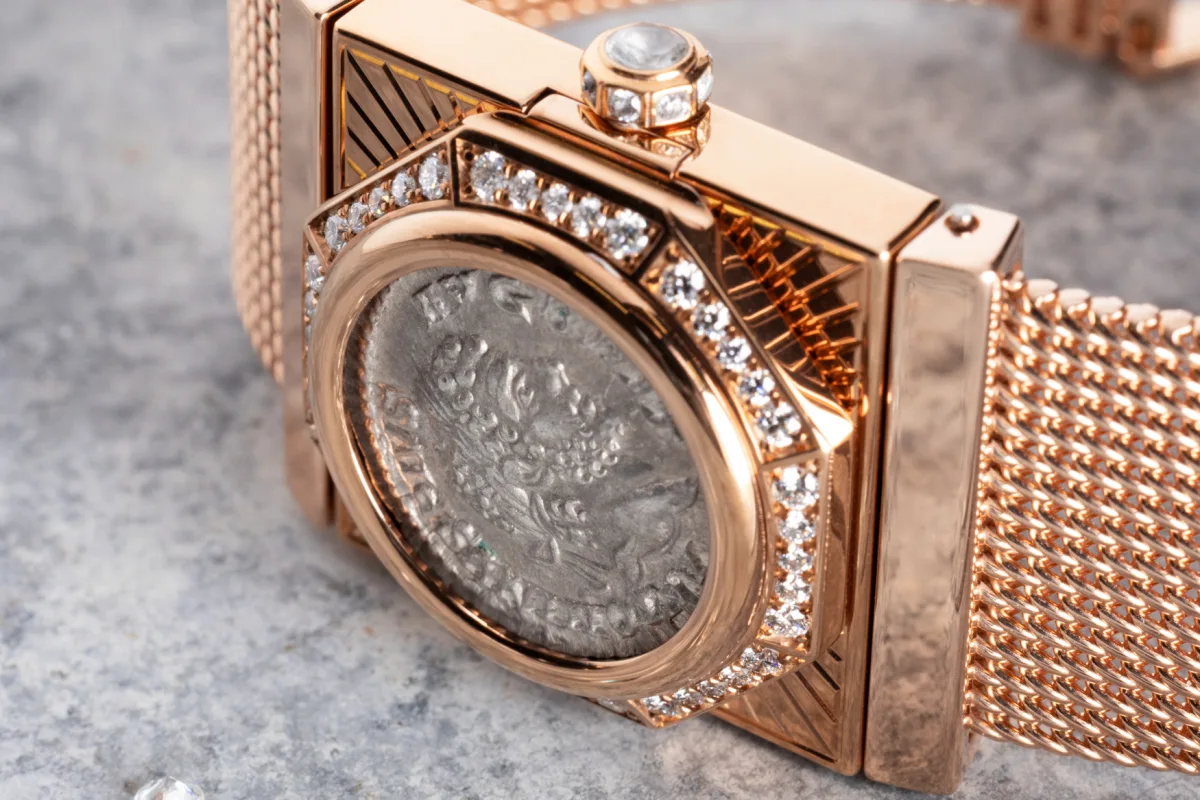
Another important element is the bracelet. For the first time, Bulgari uses the traditional Milanese mesh for the Monete watch, describing it as 'masterfully flexible'. The Milanese mesh is not just a general term for a finely woven bracelet, but a specific technique developed by Milanese jewelers of the Renaissance era and introduced in Milan - the 'cradle' of this technology. From a design perspective, it is an intentionally eclectic combination: a coin, a geometric octagon, and the texture of the mesh, which harmonizes with Bulgari's preference for bold, clear forms.
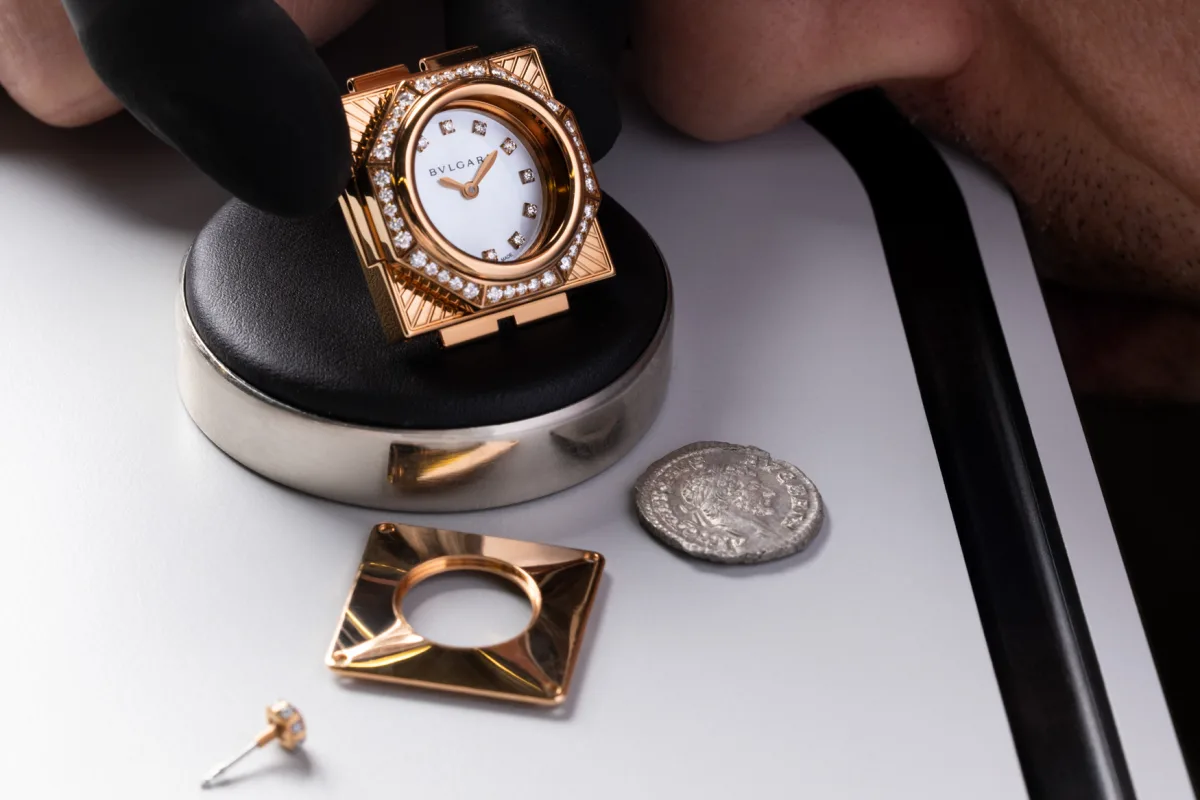
When the coin is opened, the dial looks soft: a white mother-of-pearl background, diamond hour markers, and minimalist hands. This is more of a jewelry piece inside than a traditional dial. For this model, a classic pin buckle is used for the first time.
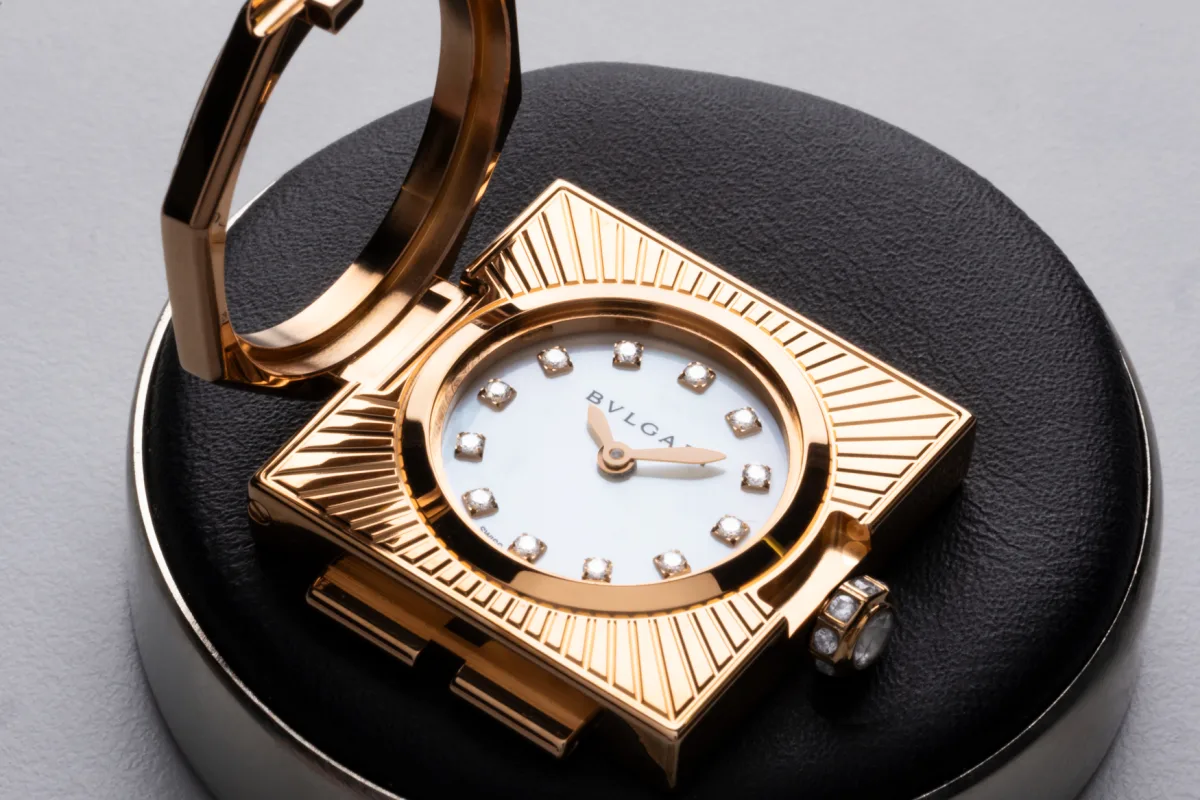
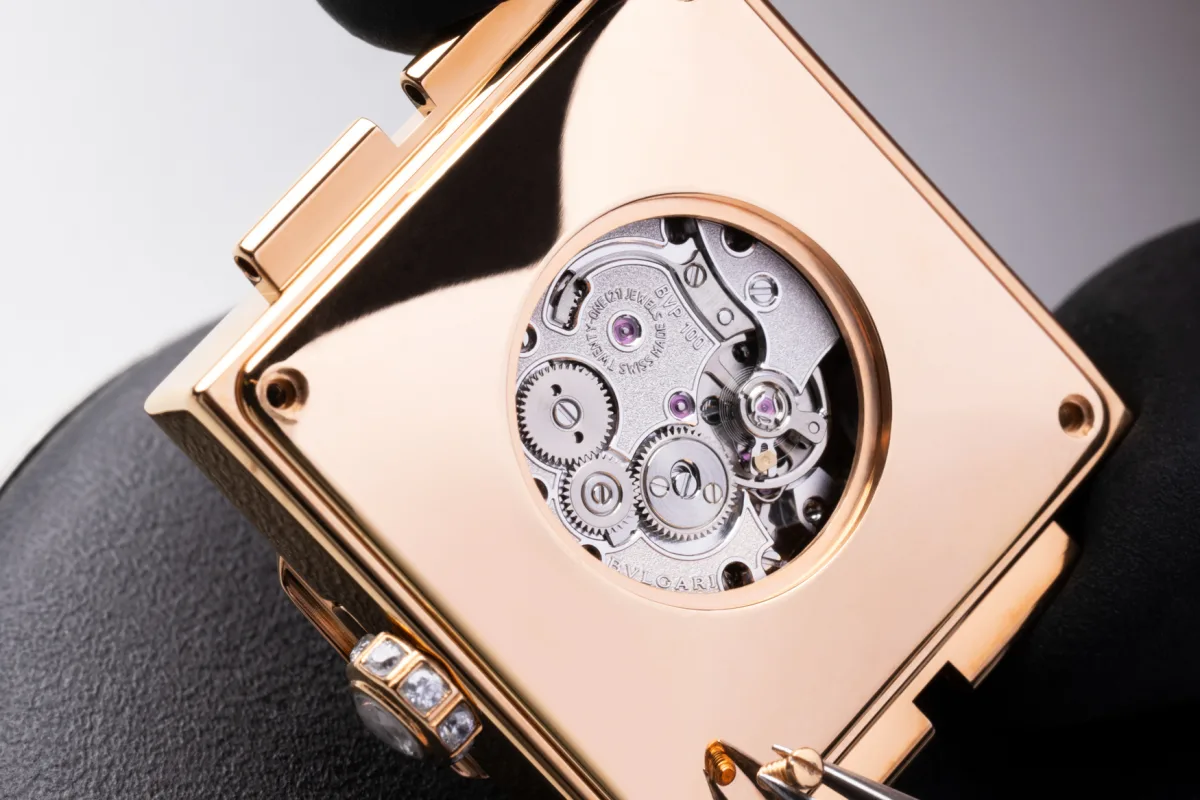
Inside is the Piccolissimo BVP100 caliber, introduced in 2022 and recognized as the smallest round mechanism in the world. It operates at a frequency of 21,600 vibrations per hour and provides a 30-hour power reserve. The main updates are the winding crown and a sapphire case back, allowing one to see the movement at work. This is an important step: the watch not only hides the time under a coin but also showcases technical perfection. Price: 254,000 Australian dollars.
Tubogas Manchette
If Monete is Bulgari's direct connection to ancient Rome, then Tubogas is a way to turn industry into glamour. The history of Tubogas at Bulgari begins in the 1940s, initially in the form of a snake, and in the 1970s, it becomes a signature style. Tubogas Manchette returns to an archival model from 1974 with a wide bracelet in the form of a single twisted spiral.
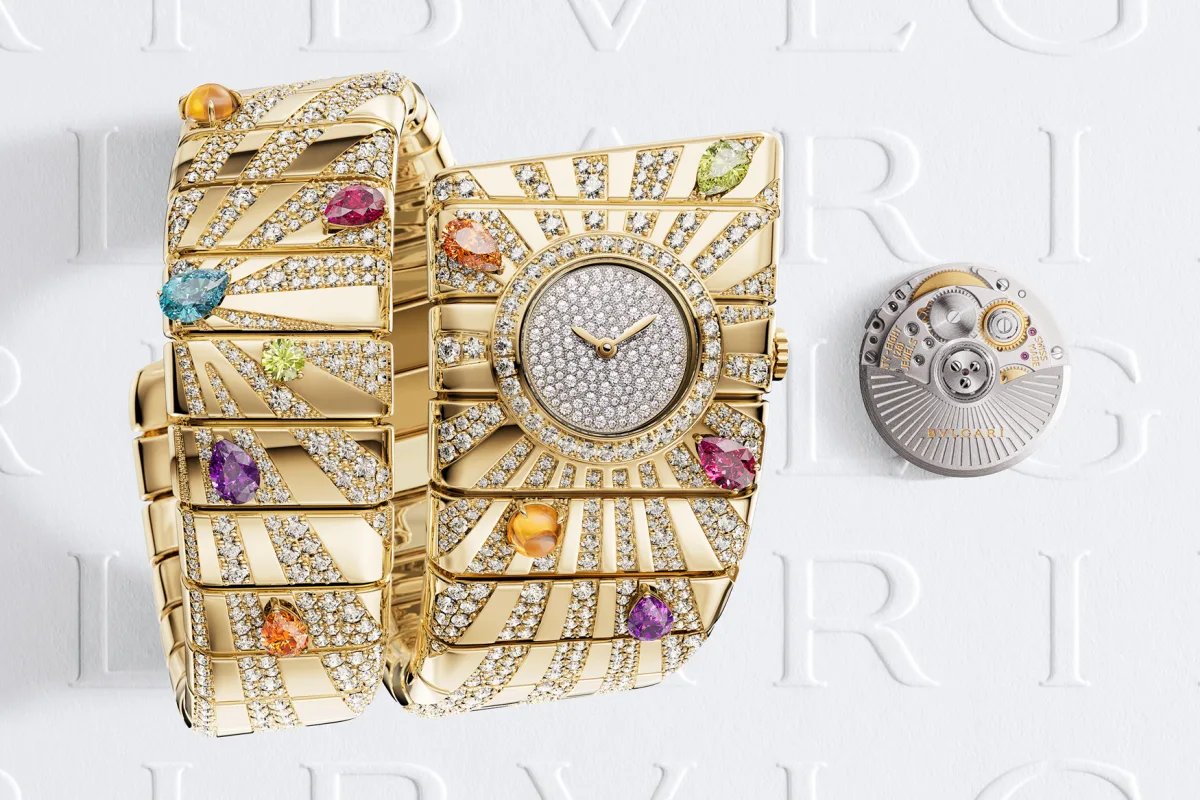
The Manchette format is important: it is a piece of jewelry that can tell time, not a watch styled as a piece of jewelry. The case is compact - only 16 mm, allowing the bracelet to be the main focus. The dial is minimalist: diamond pavé, two hands, and minimal details. The watch is designed to be read from a distance in the context of the full look, rather than studying small details.
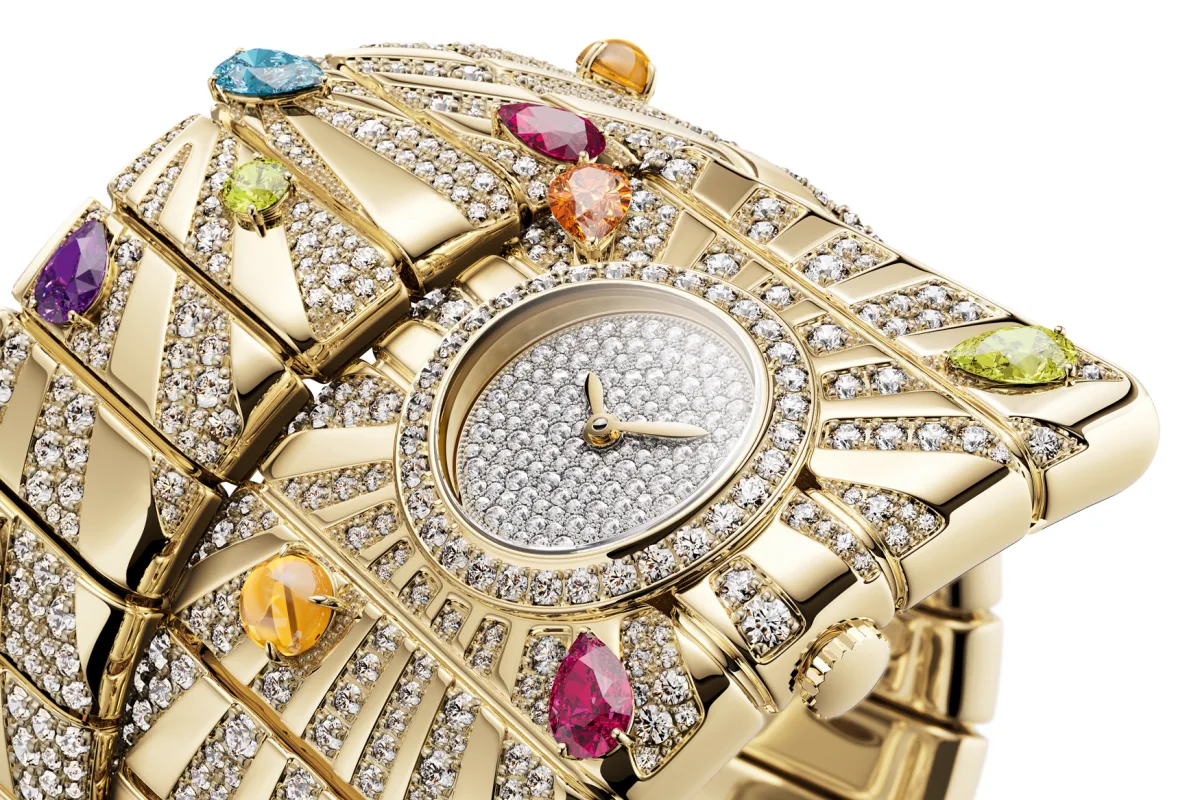
The main difference in the 2026 version is the color palette and rhythm of the surface. The release describes the stones: citrines, rubellites, peridots, amethysts, topazes, and spessartines, complemented by nearly 12 carats of diamonds on the bracelet's loops.
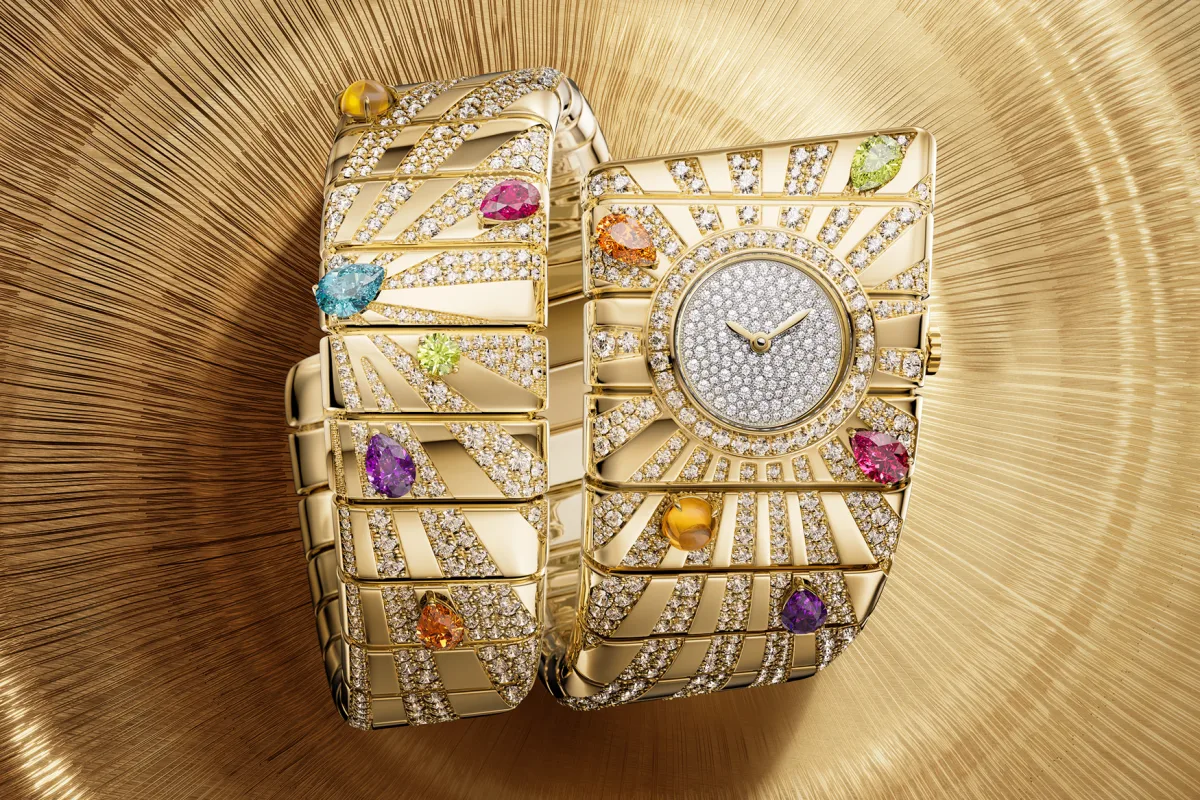
Technically, the bracelet is also improved: each link is formed and polished separately, then carefully mounted on a titanium frame. This 'frame' is crucial for maintaining the bracelet's architectural integrity while preserving the softness and flexibility that make Tubogas come alive on the wrist.
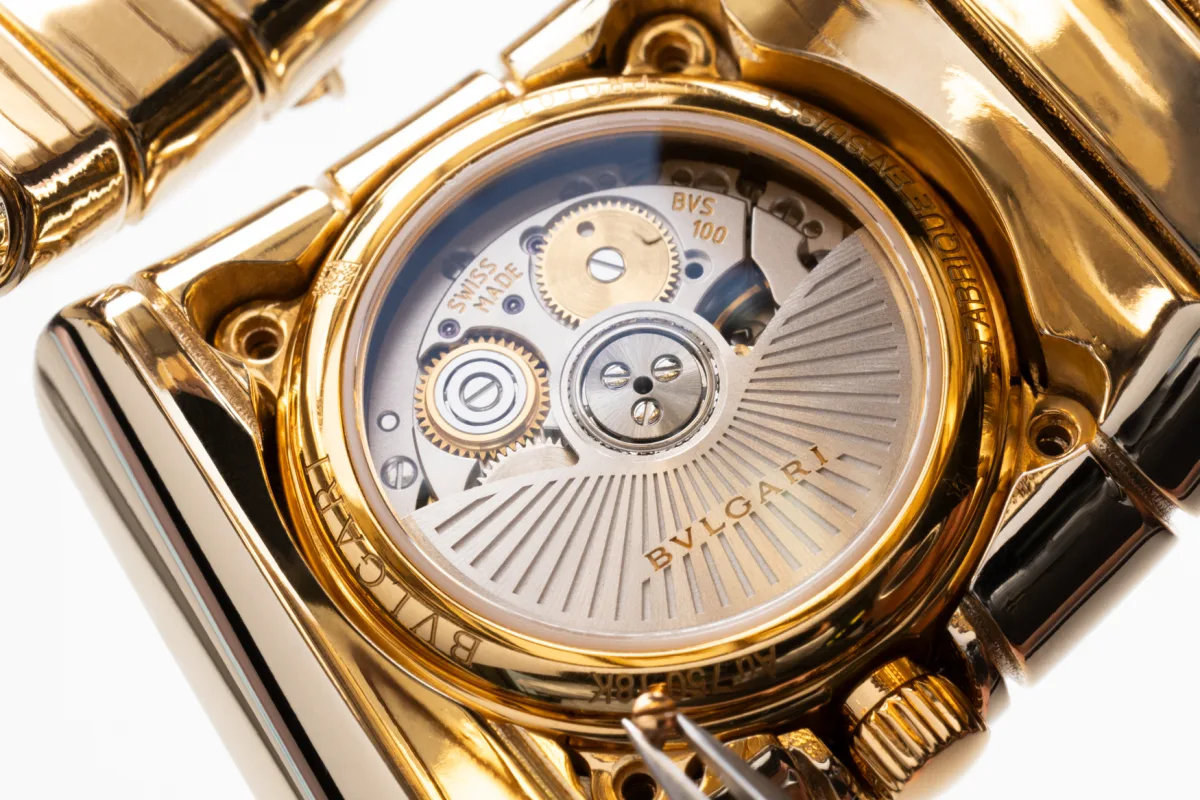
Inside is the automatic Lady Solotempo BVS100 caliber, introduced last year along with the Serpenti Seduttori and Serpenti Tubogas models. It operates at a frequency of 21,600 vibrations per hour and has a power reserve of 50 hours. Functions include hours and minutes, and the rotor is adorned with the Bulgari logo and a sunburst pattern, emphasizing the radial geometry of the watch. A transparent case back highlights the seriousness of the mechanism, not just a decorative bracelet. Price: 313,000 Australian dollars.
Final Conclusions
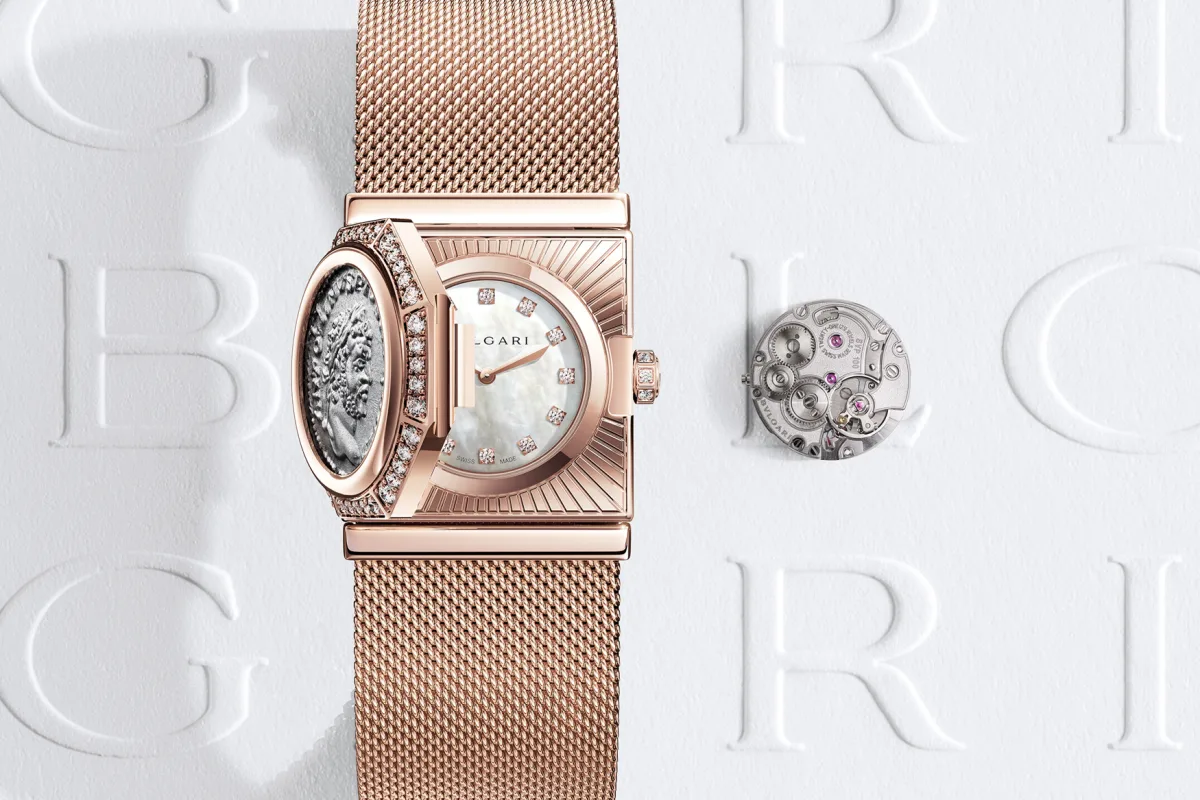
The two new models at LVMH Watch Week 2026 are like two chapters of one story. The Maglia Milanese Monete uses an ancient coin and Milanese mesh to show how Bulgari makes history tactile and modern, supported by an ultra-compact mechanism with convenient winding and a transparent back. The Tubogas Manchette brings back the 1974 bracelet with a bright color palette, a new link construction, and an automatic caliber adapted for compact jewelry watches.
Bulgari's 'Art of Gold' concept works effectively: it translates the conversation from simply listing new models to deeper themes - texture, construction, and the idea that Italian jewelry craftsmanship and Swiss mechanics do not compete but complement each other. These watches do not attempt to be everyday functional models. They make a more precise statement about what Bulgari does best: turning recognizable design codes into objects that are worn, engineered, and unequivocally belong to their creator.