
I am not a big fan of Casio G-SHOCK.

I own one such model, like most watch collectors, but I rarely wear it due to the low level of comfort. However, it cannot be denied that almost all G-SHOCKs deserve respect. They impress with their reliability and versatile design, which Casio constantly demonstrates. In my opinion, this is where the strength of G-SHOCK lies. These are not just durable and reliable watches - they are a platform for countless collaborations and design solutions. The collection has an option for almost everyone. The new Casio G-SHOCK Origami uses two classic models - DW5600 and DW6900 - to bring popular Japanese craft into the lineup and once again prove that iconic digital watches can withstand almost any design.
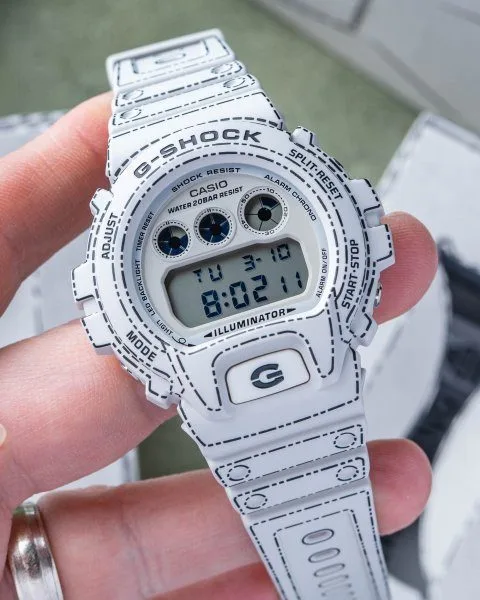
Features and Key Differences of the Models
Do not expect these watches to be fundamentally new models. They are still the DW5600 and DW6900 that you may already know and love. The differences boil down to three elements: the case pattern, the backlight, and the case back. Everything else remains unchanged. For a more detailed acquaintance with each model, I recommend checking our previous reviews of the DW5600 and DW6900.

Main parameters are as follows:
| Model | Case | Case Dimensions | Display | Functions | Battery and Accuracy |
|---|---|---|---|---|---|
| G-SHOCK Origami DW5600RGM-1 | Black resin | 42.8 mm × 13.4 mm | Classic rectangular | Alarm, timer, stopwatch, LED backlight | 5 years, ±15 seconds per month |
| G-SHOCK Origami DW6900RGM-5 | White resin | 50 mm × 18.7 mm | Rectangular + 3 circles | Alarm, timer, stopwatch, LED backlight | 5 years, ±15 seconds per month |
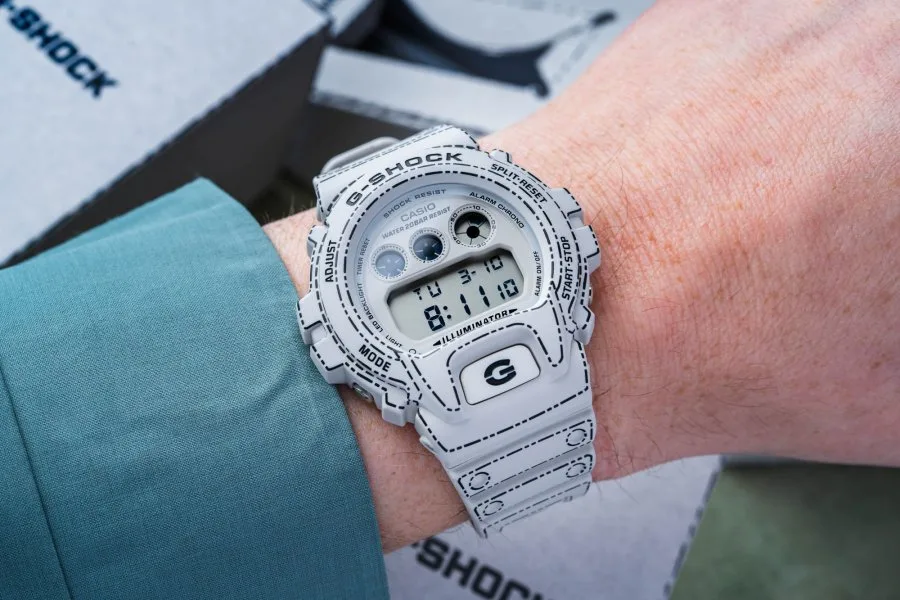
Case Decoration: Imitation of Origami Folds
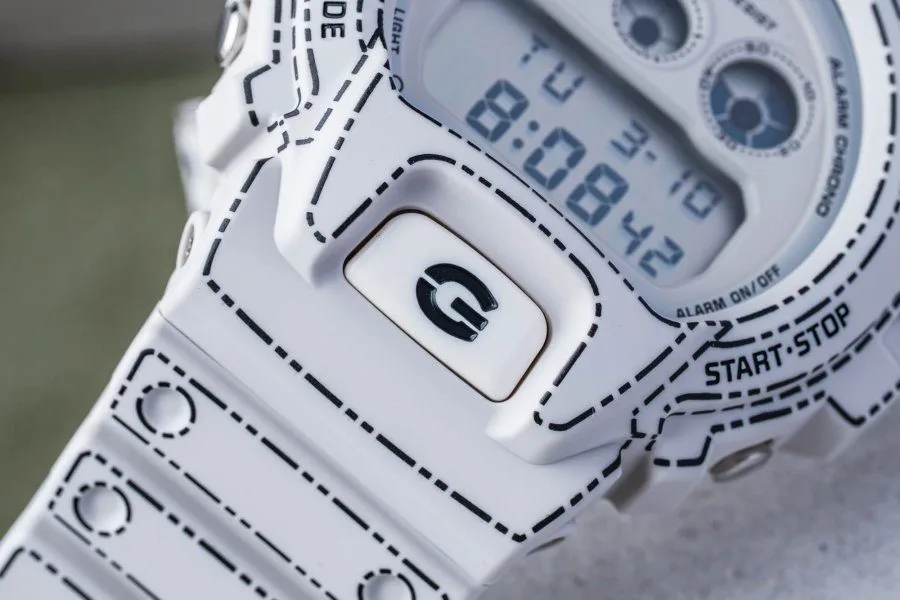
The most noticeable difference is the case design. Inspired by the folds of origami - "valleys" and "mountains" - dotted lines run along all the edges of the case and bracelet, contrasting with the main color. This gives the watches character without the excessive flamboyance inherent in some other G-SHOCK models. At first glance, it seems that the brand limited itself to this, creating a rather restrained design. Of the two options, I like the white DW6900RGM-5 more, despite its impressive size. It seems more thoughtful, while the black DW5600RGM-1 is perceived as a standard black model with small decorative accents.
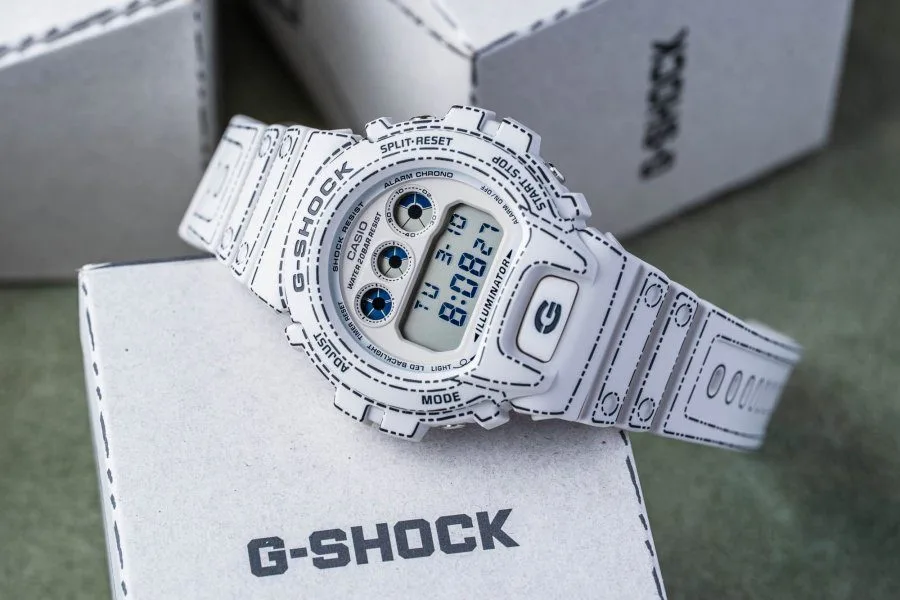
Details Emphasizing the Connection to Origami
Two more elements enhance the thematic connection with Japanese art.
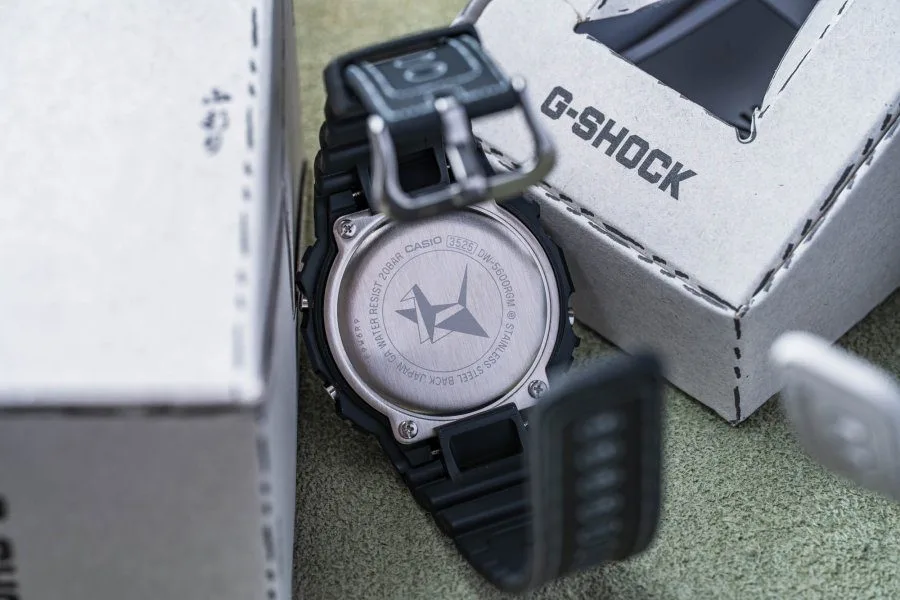
On the case back, a paper crane - a symbol of peace and hope - is engraved. Note that on the white version of the DW6900, it is done with lighter shading, while on the black DW5600, it is darker. This is a subtle but thoughtful design solution that is rarely found in mass models.
Backlight with a Surprise: Crane in Red
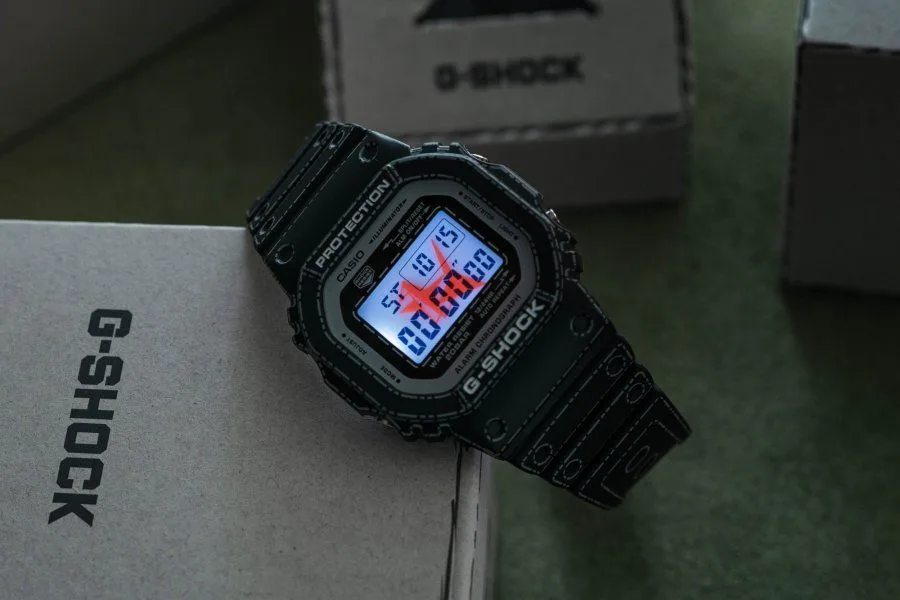
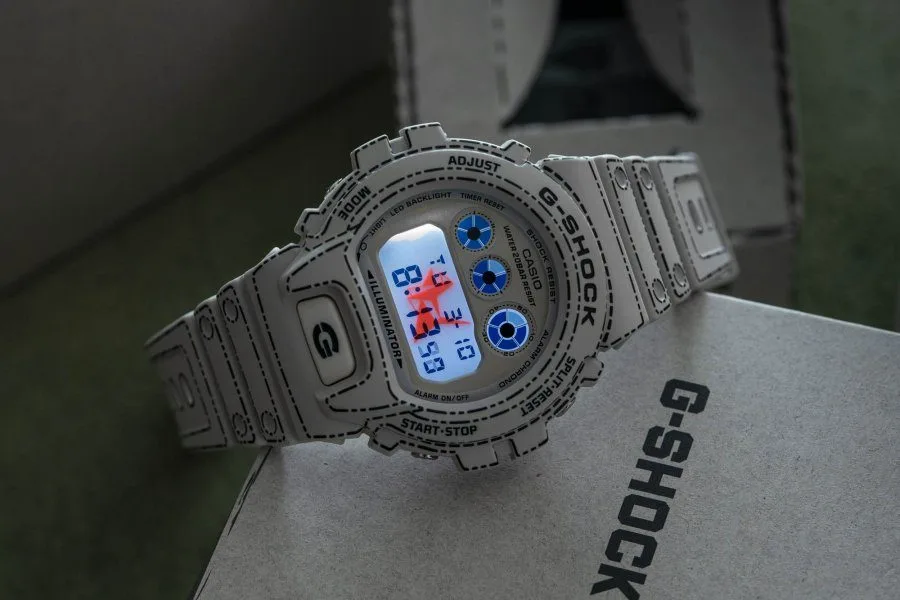
The most interesting "origami" detail is in the backlight. When you press the backlight button, the classic LED background is complemented by an image of a crane, which appears on the display in bright red. This is a pleasant touch that adds individuality to the watches. By the way, in this aspect, I also like the DW6900 more: it has a large central button with the letter "G", which is easier to press, while the button on the DW5600 is recessed and requires more effort.
Conclusion: Classic with a Japanese Accent
These watches do not claim to revolutionize design, but they perfectly show how classic G-SHOCK models can serve as a platform for creative ideas. Casio G-SHOCK Origami DW5600RGM-1 and DW6900RGM-5 are a successful combination of traditional Japanese craftsmanship and time-tested reliability. Both models are offered at a price of about $165, making them an affordable option for G-SHOCK fans and lovers of original design.

Key Features of Casio G-SHOCK Origami
- Use of classic DW5600 and DW6900 platforms
- Case decoration with dotted lines imitating origami folds
- Engraving of a paper crane on the case back with different shading
- Unique backlight with a red crane on the display
- Standard set of functions: alarm, timer, stopwatch, LED backlight
- Reliability and durability inherent in all G-SHOCK
- Price around $165

This review demonstrates how modern technology and classic forms can harmoniously combine with traditional Japanese art, creating unique watches with character and history.