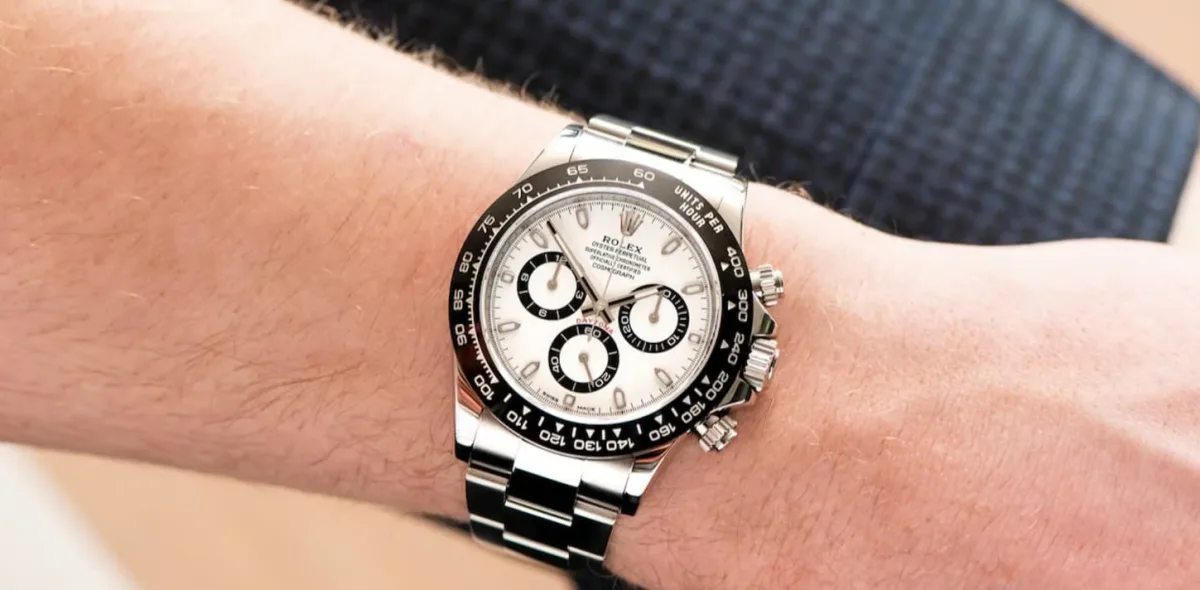
Chronographs are among the most versatile wristwatches.
The additional sub-dials and buttons catch the eye at first glance, but upon closer inspection, you can often find additional scales along the edge of the dial or on the bezel. These scales are not merely decorative elements: they transform the chronograph into a measuring instrument that allows you to determine speed, distances, or even heart rates. Today, few owners use these functions daily, as modern smartphones and smartwatches perform many of these calculations faster. Nevertheless, tachymeters, pulsometers, and telemeters remain some of the most intriguing features of classic chronographs.
They tell the story of a time when wristwatches were essential tools for race car drivers, doctors, engineers, and soldiers. These scales play a particularly important role in vintage chronographs: they not only give the watch a recognizable appearance but often reveal the model's original purpose. Some watches have one scale, others have several, turning the dial into a small analog instrument. Understanding how these scales work opens a new dimension to mechanical chronographs. Below are the most important scales, explained with specific examples, as well as watches that best illustrate their features.
Tachymeter: The Classic Chronograph Scale
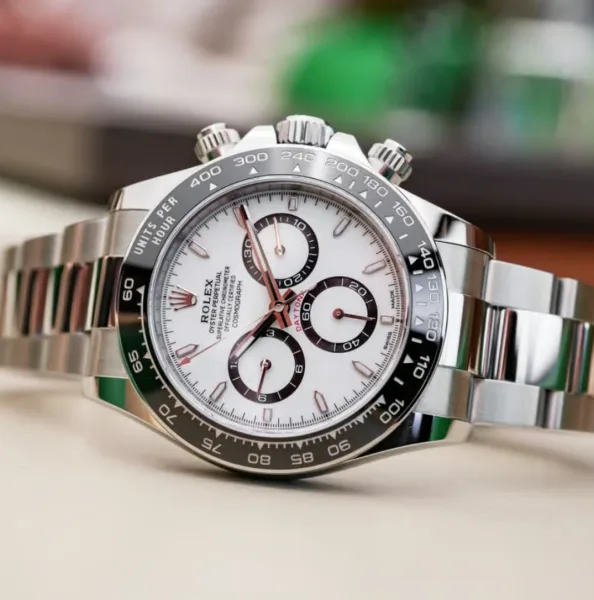
The tachymeter is the most famous and widely used chronograph scale. It appears on many sports and racing watches and is inseparably linked with models like the Omega Speedmaster and Rolex Daytona for many collectors. The purpose of the tachymeter is simple and practical: it allows you to calculate the average speed over a known distance. The main condition is that the object must move at a constant speed, and the length of the measured section is known (usually one kilometer or one mile).
How the Tachymeter Works
The process consists of a few simple steps:
- Start the chronograph when the object crosses the start of the measured section.
- Stop the chronograph at the end of this section.
- The central chronograph second hand will indicate the average speed on the tachymeter scale.
Example: A car travels 1 km in 30 seconds. The hand stops at the 120 mark. This means the car's average speed is 120 km/h. No conversion is required - the scale is calculated to account for the number 3600 (seconds in an hour) and performs the calculation automatically.
Applications Beyond Speed Measurement
Many owners do not realize that the tachymeter is much more versatile. It can measure any event per hour - be it kilometers, the number of manufactured parts, or processes. For example, if a machine in a workshop makes a part in 45 seconds, stopping the chronograph at this mark will show approximately 80 on the tachymeter, indicating 80 parts produced per hour. Similarly, you can assess the performance of a packaging line, printer, or assembly conveyor. This function was especially useful in the 1950s-1960s.
Scale Variations
The tachymeter scale can look different. The classic version is a fixed bezel, as seen in the Rolex Daytona or modern Speedmaster models. This design improves legibility and frees up space on the dial. Scales can also be applied directly to the dial - this is often found in vintage chronographs. Some manufacturers use spiral tachymeters, which expand the measurement range and allow timing intervals of more than one minute.
Famous Examples
The tachymeter is most prominently featured in the Omega Speedmaster Professional with its black tachymetric bezel, a symbol of the legendary 'Moonwatch'. Equally well-known is the Rolex Cosmograph Daytona with its tachymetric bezel, historically associated with motorsport. Modern models are equipped with a ceramic bezel, while early vintage versions had metal or acrylic ones. TAG Heuer Carrera, Zenith Chronomaster, and many historical Heuer Autavia also demonstrate the elegance of integrating a tachymeter into sports design.
Pulsometer: Chronograph as a Medical Tool
Even before the advent of smartwatches with optical heart rate sensors, doctors used chronographs. As early as the 1920s, special wristwatches with a pulsometer scale appeared, allowing quick and accurate measurement of heart rate. These watches were not a status accessory but a true professional tool. Many medical professionals wore them daily in hospitals and clinics.
How to Use a Pulsometer
The procedure is simple: the doctor simultaneously starts the chronograph and begins counting the patient's pulse. Usually, 15 or 30 heartbeats are counted (depending on the scale). After reaching the desired number of beats, the chronograph is stopped, and the second hand shows the pulse rate in beats per minute without additional recalculation.
Example: A scale for 30 beats. If 30 heartbeats take 20 seconds, the hand will show 90 beats per minute.
Why Are There Different Scales?
Most pulsometers are designed for 15 or 30 beats. A 15-beat scale provides a quick result, which is useful in emergency situations, but small counting errors have a greater impact on the result. A 30-beat scale takes more time but provides more accurate measurements. Scales for 20 or 60 beats are less common.
Historical Elegance
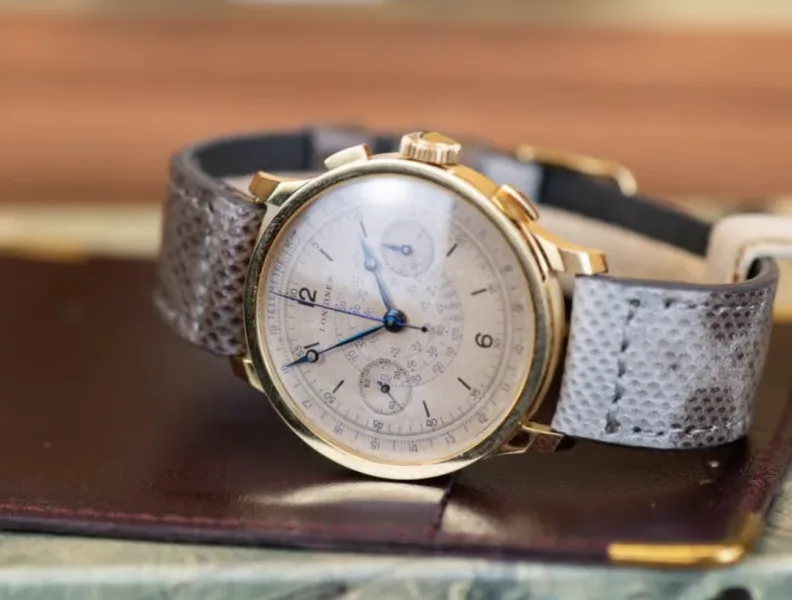
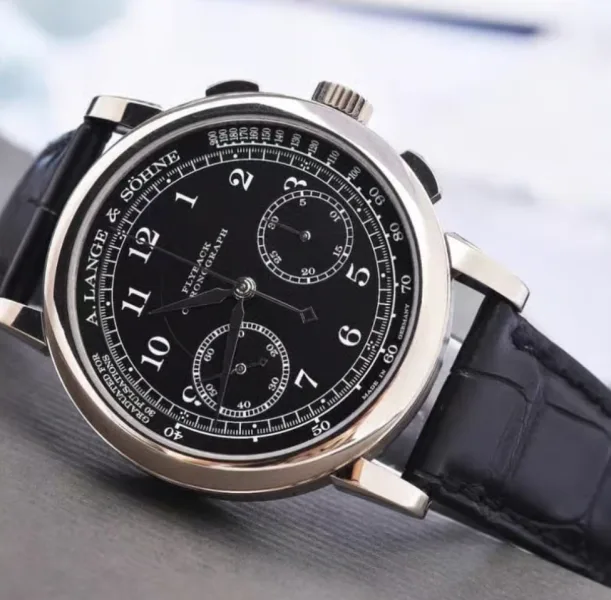
Many vintage pulsometers are considered some of the most elegant classic chronographs. Particularly valued is the Longines 13ZN Chronograph with its harmonious combination of functionality and elegance. A modern interpretation is offered by the A. Lange & Söhne 1815 Chronograph Pulsometer with a finely crafted scale, demonstrating how classic instrumental watches look today. In recent years, models with pulsometers have also appeared from Montblanc, Frederique Constant, and Baume & Mercier.
Telemeter: Measuring Distances Using Light and Sound
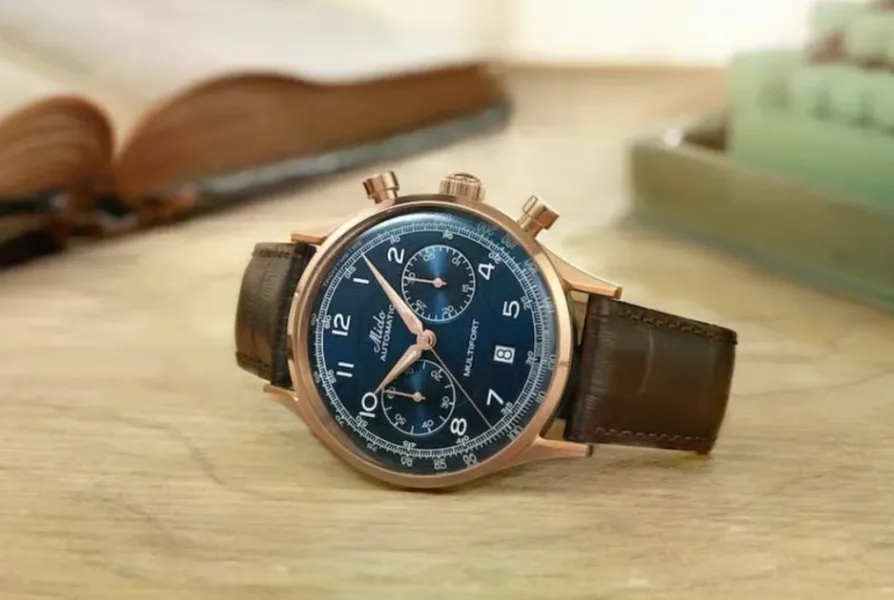
While tachymeters and pulsometers were used in everyday life, the telemeter has a distinctly military origin. Artillery observers of the early 20th century used this scale to estimate distances to explosions or shots. Today, the telemeter is perfect for determining the distance to a thunderstorm. The principle is based on the difference in the speed of light and sound propagation: light reaches the observer almost instantly, while sound travels much slower - about 343 m/s at 20 °C. The telemeter accounts for this time difference.
How to Use a Telemeter
- Start the chronograph when you see a flash of lightning.
- Stop it when you hear the thunder.
- The chronograph hand will indicate the distance to the thunderstorm on the telemeter scale.
Example: If 6 seconds pass between the flash and the thunder, the storm is approximately 2 kilometers away. The calculation is performed automatically.
Kilometers or Miles?
Depending on the manufacturer, the scale may be marked in kilometers or miles. European models more often use kilometers, while American and British ones use miles. Some vintage chronographs combine the telemeter and tachymeter on one dial, giving them a special historical charm.
Recommended Models
The Longines Telemeter Chronograph is particularly famous, its design based on historical military chronographs. The Mido Multifort Patrimony Chronograph combines a telemeter scale with classic vintage proportions. History enthusiasts will also find many worthy examples in the collections of Universal Genève and Minerva.
Decimal Scale: Measuring Time for Industry and Science
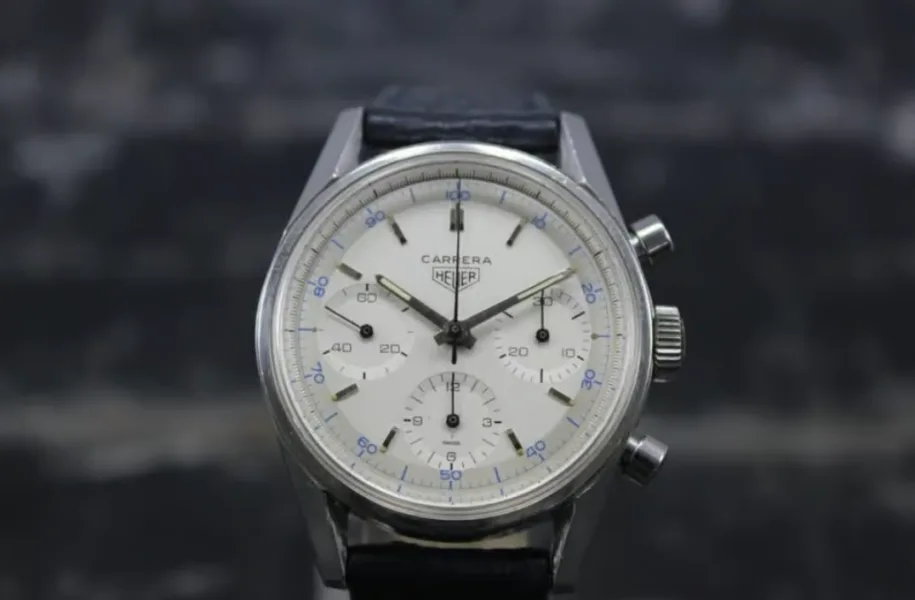
The decimal scale is much rarer. At first glance, it resembles an ordinary minute scale, but it is intended for other purposes. While standard time is divided into 60 seconds per minute, the decimal scale uses tenths and hundredths of a minute. This significantly simplifies calculations and is important for industry, engineering, and science.
How the Decimal Scale Works
Start and stop the chronograph as usual. Instead of seconds, read the decimal value of the minute. For example, 30 seconds is 0.50 minutes, 45 seconds is 0.75 minutes. This eliminates the need to convert seconds to decimal minutes, which is especially convenient for tracking work time.
Practical Example
A process takes 18 seconds. On regular watches, this value would need to be converted first. On a decimal scale, it immediately displays approximately 0.30 minutes. If the process repeats 100 times, the total time is easily calculated. Therefore, such scales were popular in manufacturing and engineering firms.
Rare Specialists
Today, decimal scales are almost exclusively found on vintage chronographs. One of the most famous examples is the Heuer Carrera 2447D with a concise dial and harmonious scale integration. Some historical chronographs by Universal Genève, Gallet, and Excelsior Park also used decimal scales for professional tasks.
Chronograph Scales: More Than Decoration
The dials of chronographs remind us of a time when mechanical wristwatches were not just decorations or status symbols, but precise measuring instruments for doctors, racers, engineers, and soldiers. Although smartphones and digital devices have largely replaced their practical function, these scales give many chronographs a unique appeal. Understanding their operation allows a fresh look at the Speedmaster, Daytona, or vintage Longines. After all, each dial tells its own story - and this is what makes mechanical chronographs still the most captivating instrumental watches.