Chronoswiss has long been associated with classic watch design.
Despite maintaining a traditional style, the brand has radically altered the appearance of its models by using new materials and bold colors. Additionally, Chronoswiss has introduced a design that demonstrates how their signature style can evolve into modern watches with a bold character. The Pulse series is the best example of this, successfully combining modern design with the classic traits of Chronoswiss. The new Pulse GMT is further proof of this, and I had the opportunity to personally explore the titanium and rose gold versions.
History of the Chronoswiss Pulse GMT Model
In creating the latest model, Chronoswiss designers used the modern Pulse style to develop a new GMT model. At the same time, they delved into the archives and drew inspiration from the classic Chronoswiss Tora. Specifically, they based the design on the dual time zone watch from the 1990s to create new travel watches. The result is a contemporary sports GMT watch that pays homage to the brand's history.
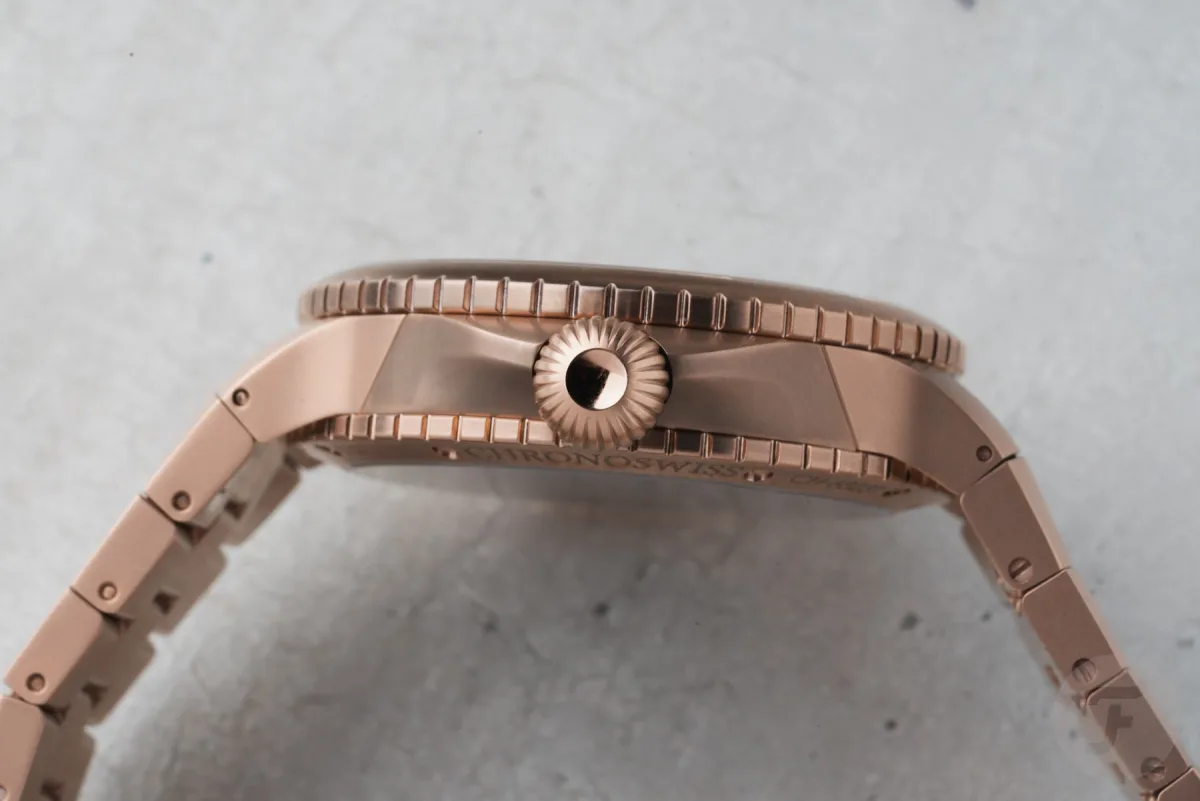
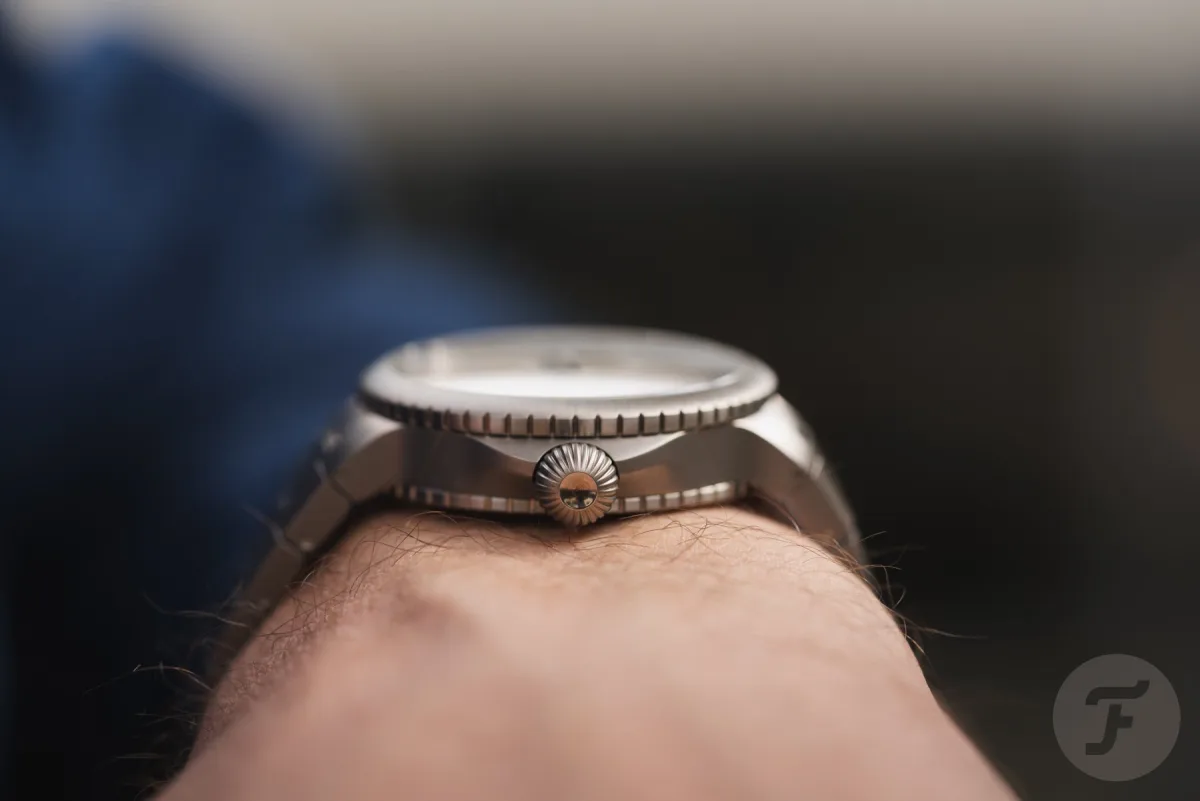
Before delving into the design, let's examine the technical specifications. Both models feature a round case with a 41mm diameter, a fluted bezel, and an integrated bracelet. The case thickness is 13mm, the lug-to-lug distance is 46.27mm, and protective lugs are installed on the right side to safeguard the enlarged onion-shaped crown.
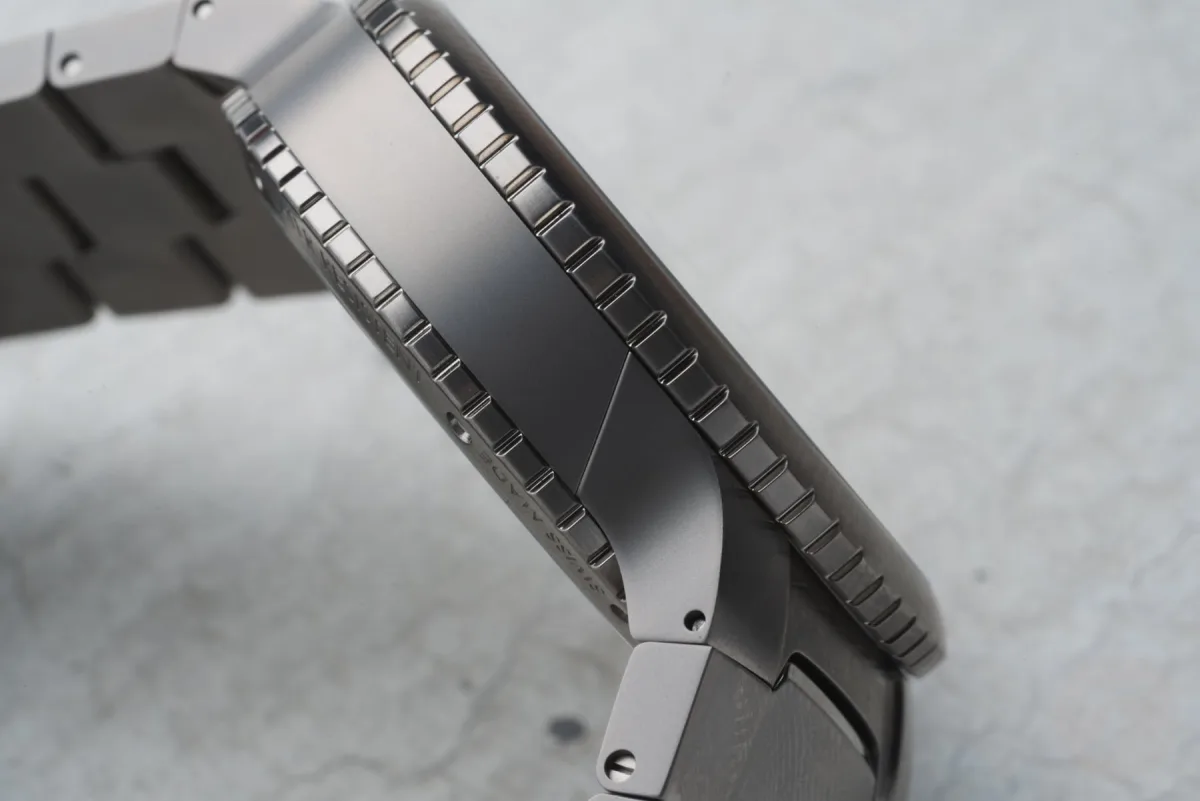
Most Chronoswiss models lack protective lugs for the crown, but in the Pulse GMT, they add a modern touch that blends well with the design. The side of the case for both models is matte sandblasted, harmoniously contrasting with the brushed bezel and case back. This thoughtful mix of surfaces deserves special praise.
Integrated Bracelet: Engineering Perfection
The case seamlessly transitions into the 23mm end links of the integrated bracelet, uniquely developed by Chronoswiss. The transition from the case to the bracelet is flawless, and the bracelet showcases high-quality engineering and craftsmanship. When flexed, the predominantly matte links reveal neat polished sections on the lower connections.
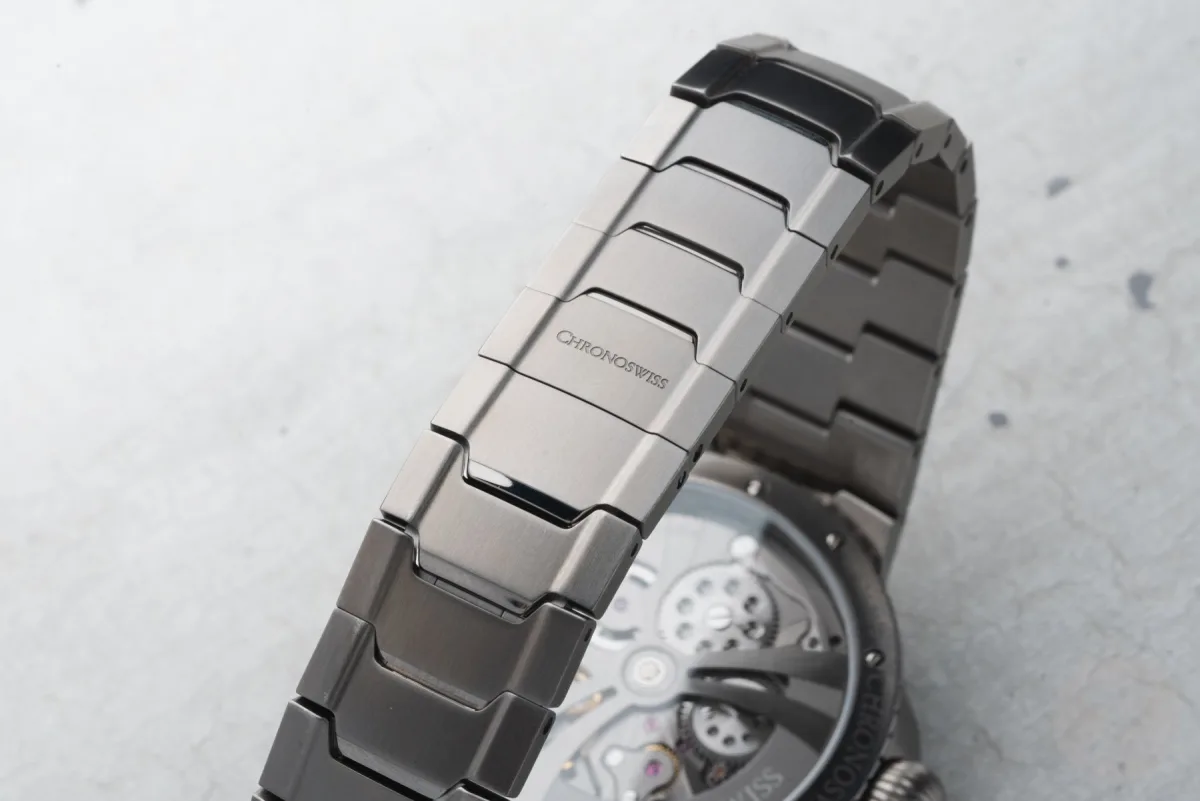
The bracelet's width gradually reduces to 18mm at the hidden butterfly clasp. The clasp is crafted with high engineering skill: the last three links of the bracelet have recesses, allowing the clasp to fit perfectly against the inner surfaces. As a result, the watch fits comfortably around the wrist, and the clasp levers remain invisible from the top and side. Frankly, the design and engineering of this bracelet deeply impressed me, and it's hard to understand why such a solution hasn't become a standard in the luxury watch industry with bracelets and butterflies.
Titanium Version of the Pulse GMT
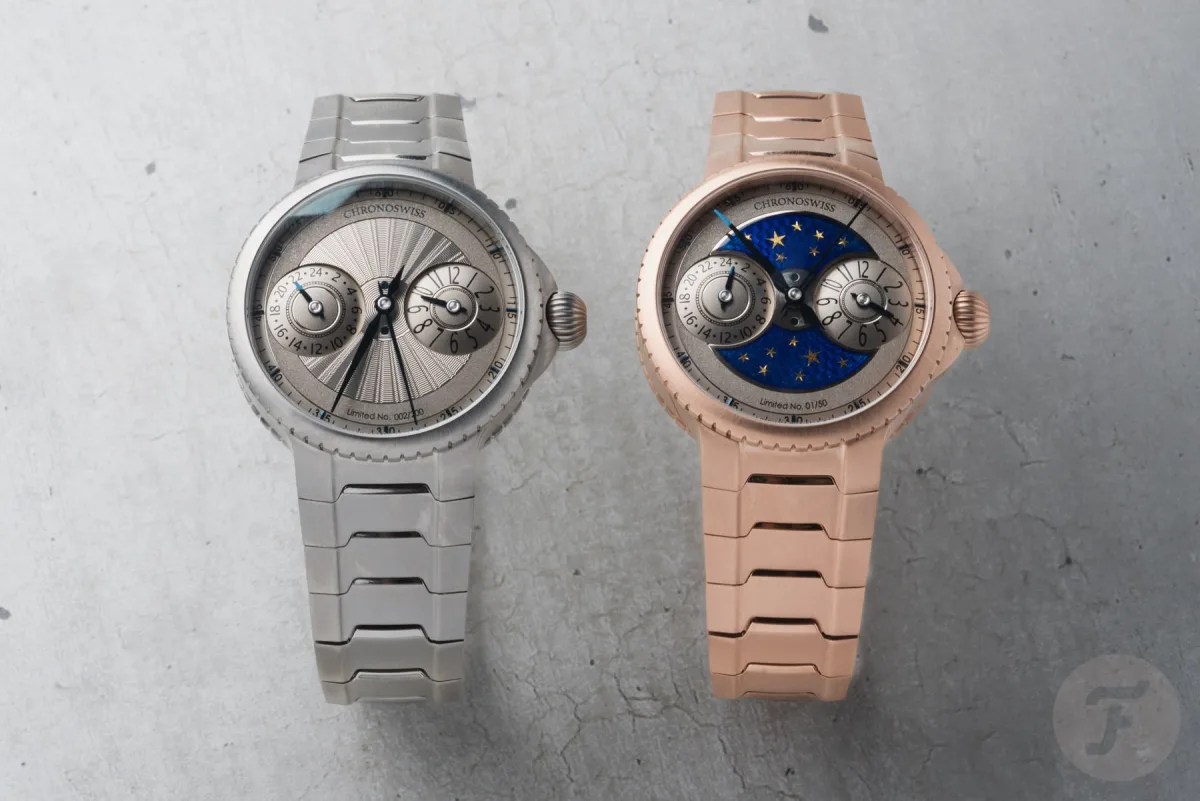
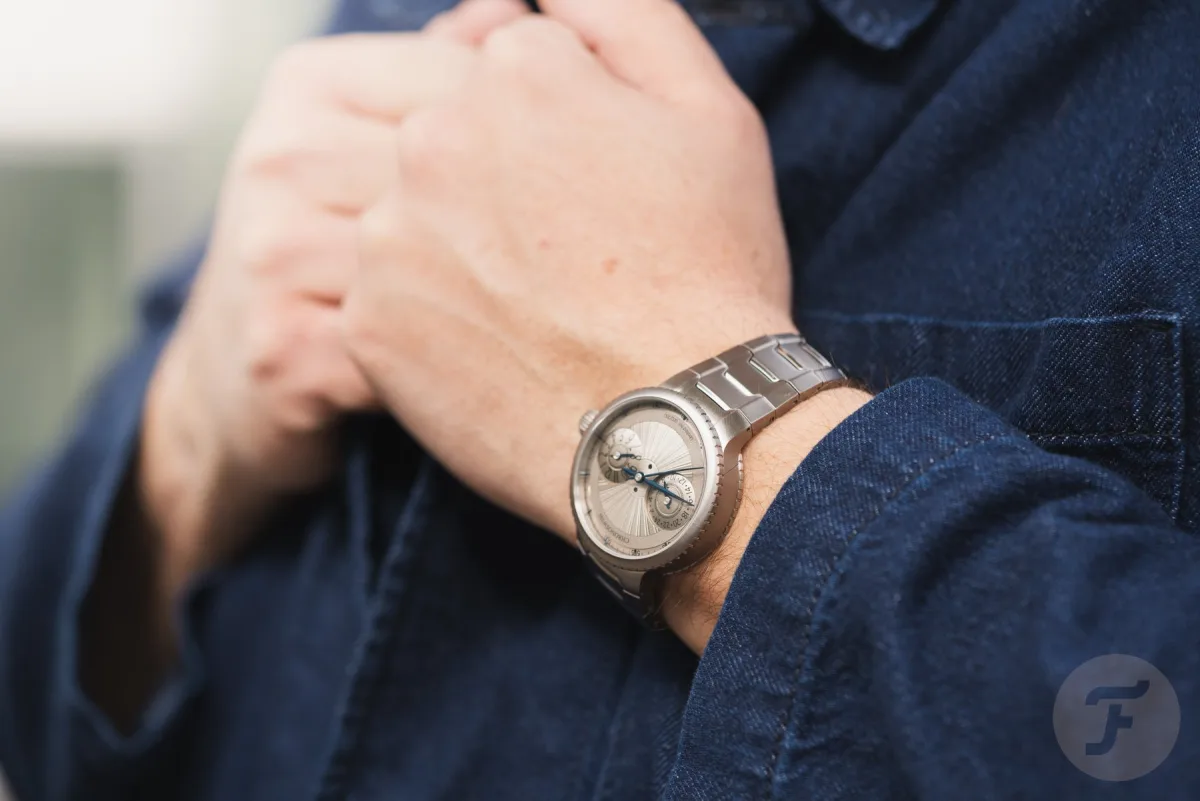
Let's take a closer look at the two versions of the Pulse GMT. The first is the lightweight titanium model featuring a detailed convex brass dial with nickel electroplating. The dial is complex in structure, so let's start with the outer elements. The slightly inclined outer ring contains minute markings and Arabic numerals every five minutes. Between the numbers are polished blue PVD-coated markers, adding a splash of color. The second ring is untreated sandblasted brass with a black Chronoswiss logo. At the "6 o'clock" position is the individual numbering from the limited 200-piece series. The center of the dial is adorned with two patterns of hand guilloché. Thin polished rings between the three parts of the dial add visual depth.
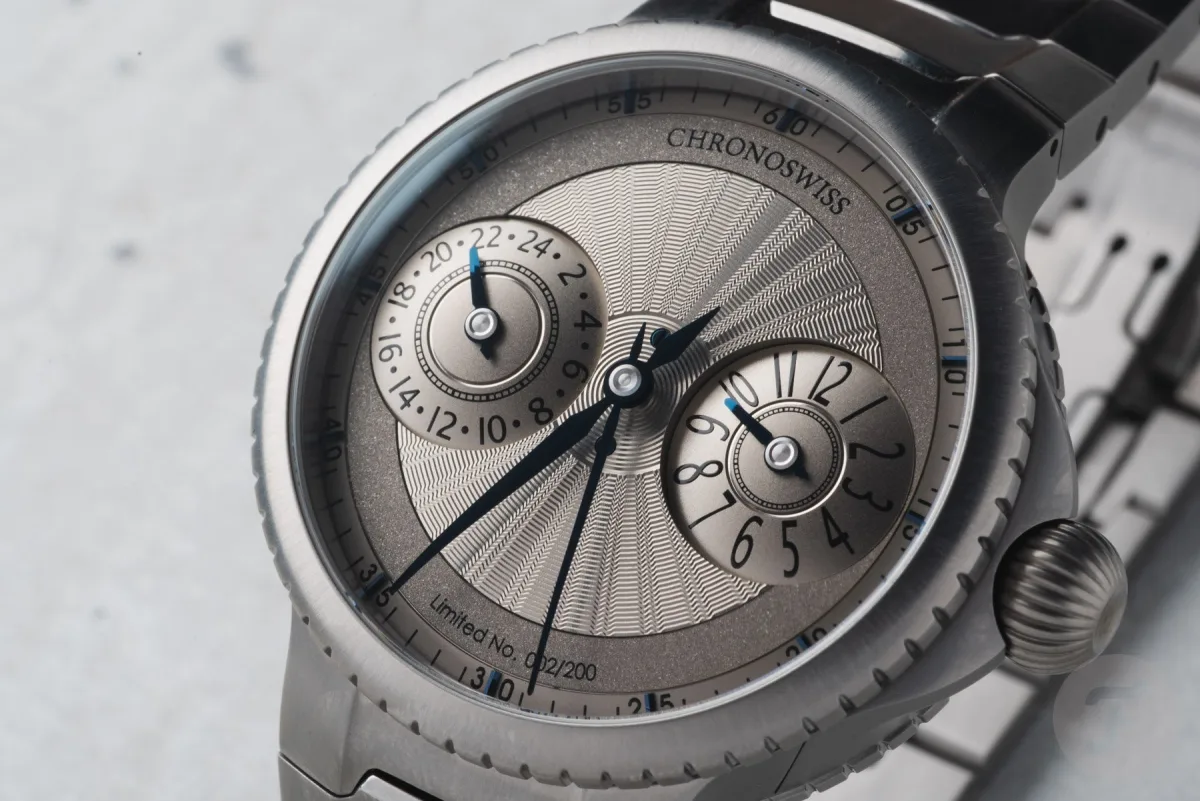
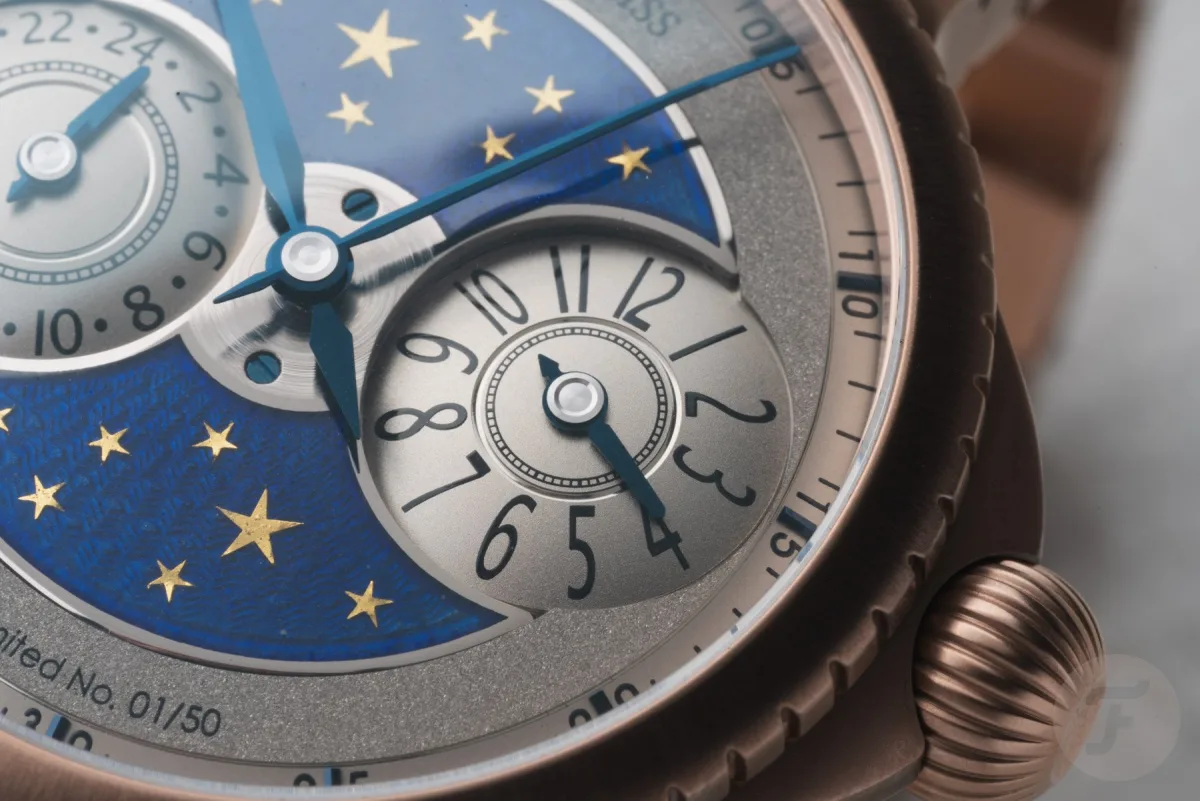
The main highlights are the two convex brass subdials at the "3" and "9 o'clock" positions, sandblasted and electroplated. The right subdial displays local time with large numerals, while the left one shows a 24-hour scale for home time. The numerals on both scales are printed in black.
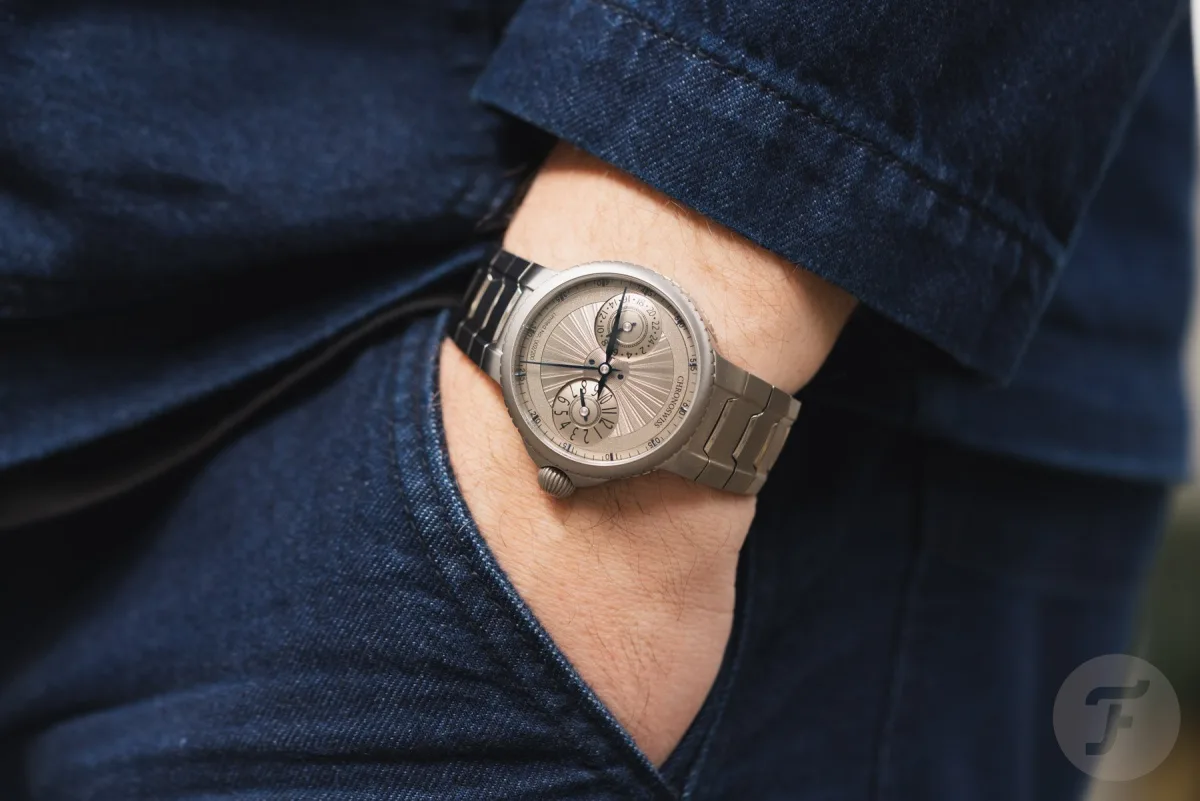
In both versions (titanium and rose gold), the small hands of the subdials, as well as the central minute and second hands, are polished and coated in blue. An interesting detail is the curved tips of the central hands, echoing the shape of the dial. Overall, the level of detail is impressive - small nuances are constantly revealed upon close examination.
Rose Gold Version
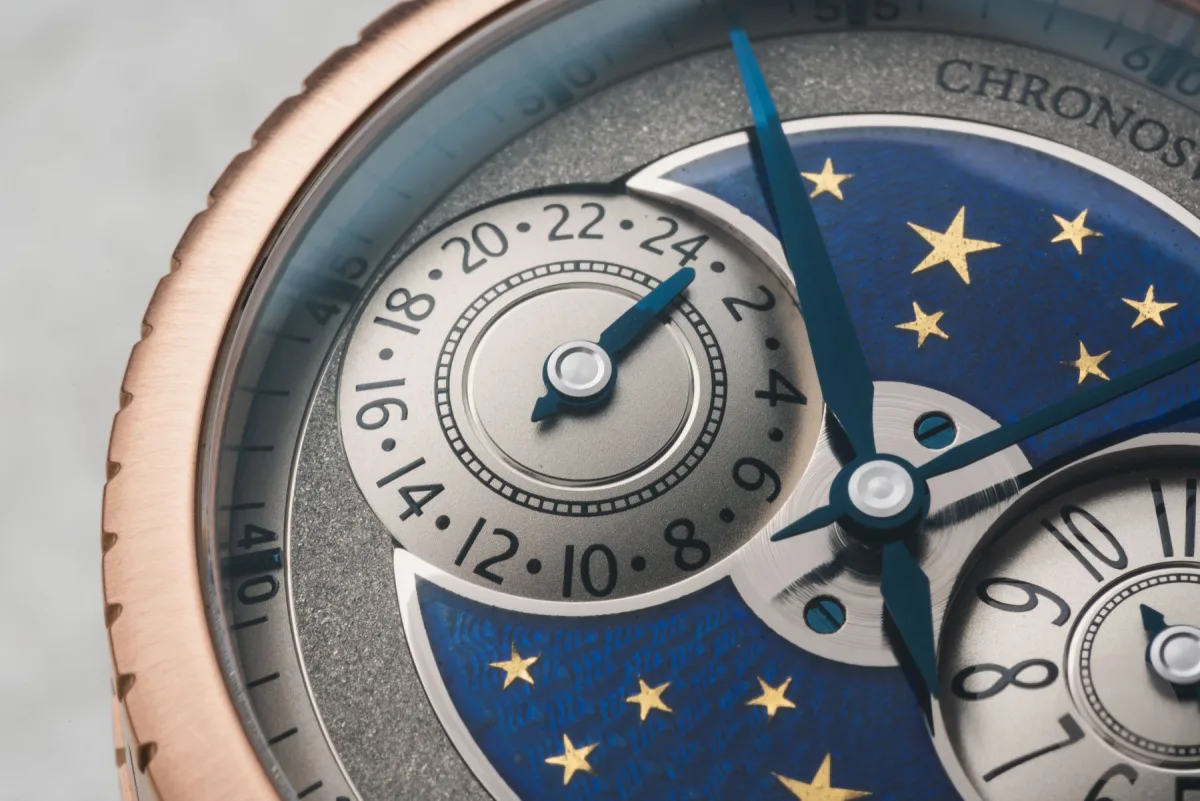
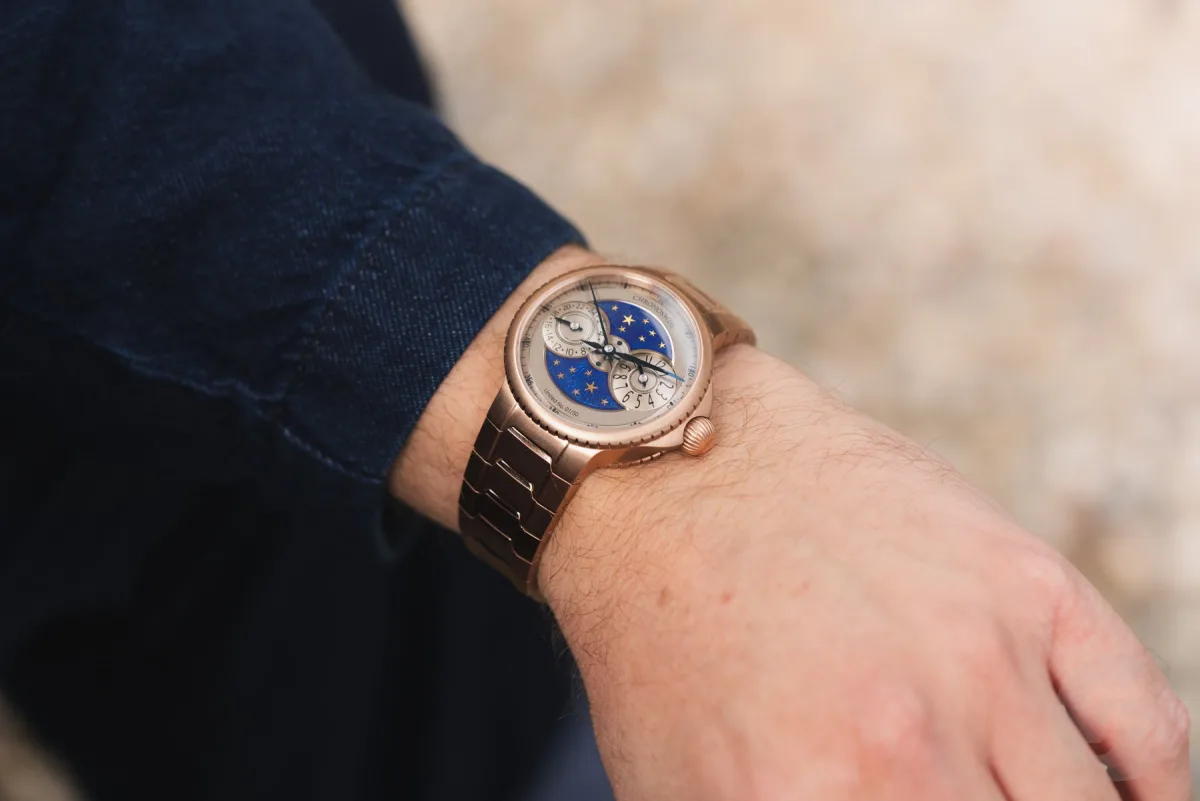
For the rose gold version of the Pulse GMT, the center of the dial is executed differently, while the other elements match the titanium model. The center is made of curved white gold with wave guilloché and covered with several layers of transparent blue enamel, adorned with stars of fine gold foil. This radically changes the perception of the watch and perfectly complements the rose gold case and bracelet. The detailing and craftsmanship are awe-inspiring.
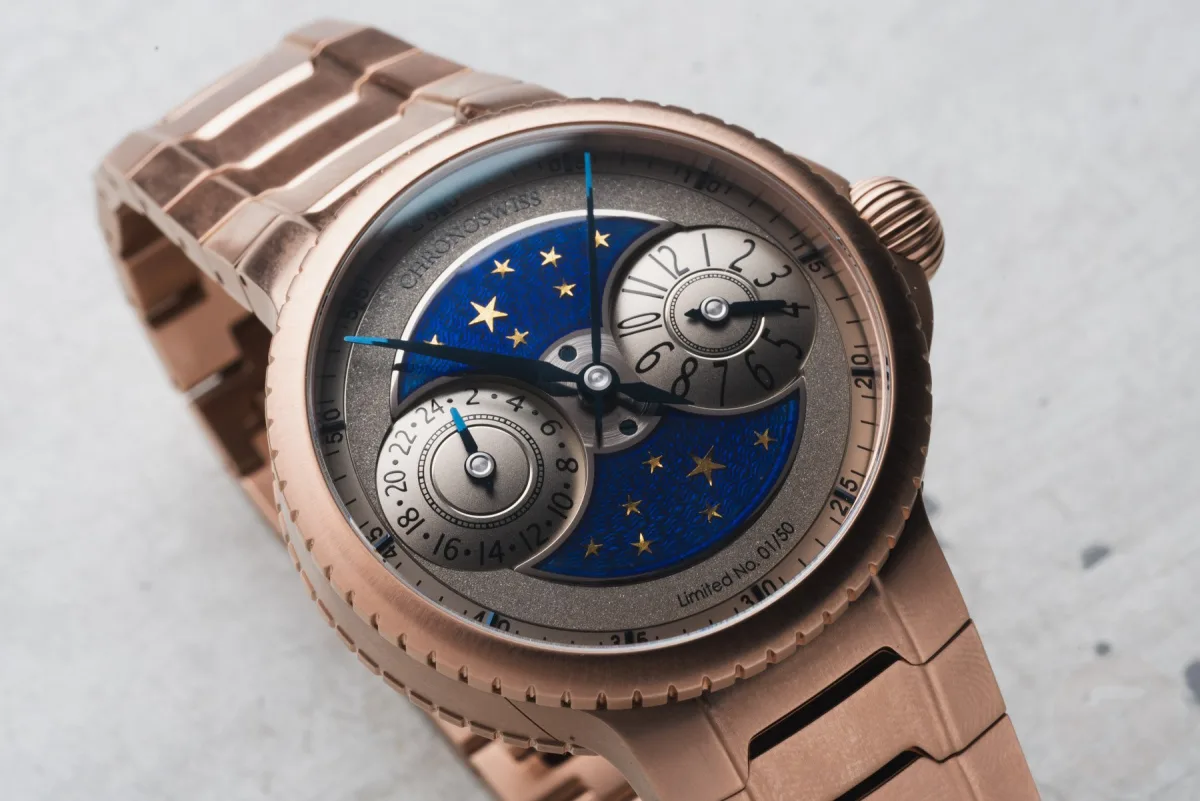
Looking at these watches brings to mind the Breguet Marine Alarm Musicale ref. 5547 model, which I reviewed in 2020. Those watches impressed with their rose gold bracelet, which remains one of the most striking I've seen. Although the Pulse GMT bracelet doesn't reach that level, it is still an excellent bracelet for the magnificent watches released in a limited edition of 50 pieces.
Chronoswiss C.6002 Movement
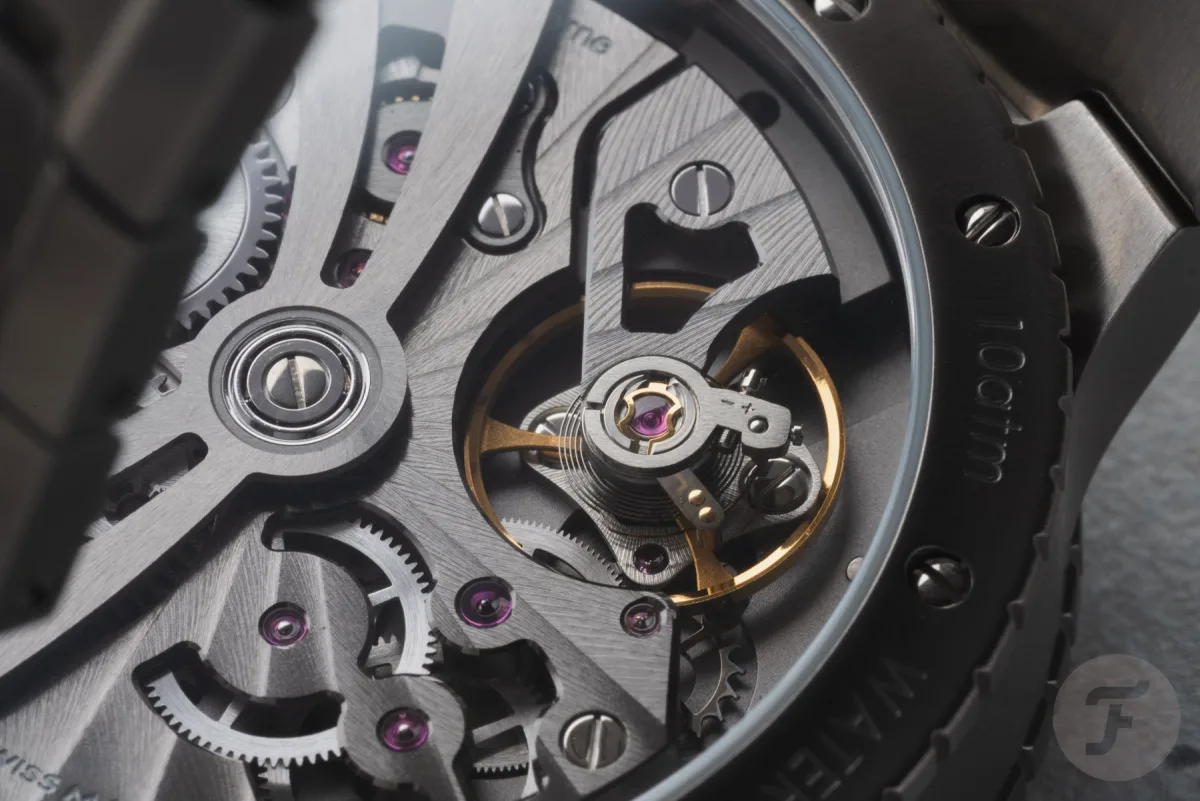
Turning the watch over, you can see the Chronoswiss C.6002 caliber. This is an automatic movement with 29 jewels, created in collaboration with La Joux-Perret. The movement's diameter is 33.4mm, the frequency is 4 Hz (28,800 vibrations per hour), and the power reserve is 55 hours. The construction uses a Glucydur three-spoke balance wheel, Nivarox 1 balance spring, Incabloc shock protection, and a skeletonized tungsten rotor with the Chronoswiss logo.
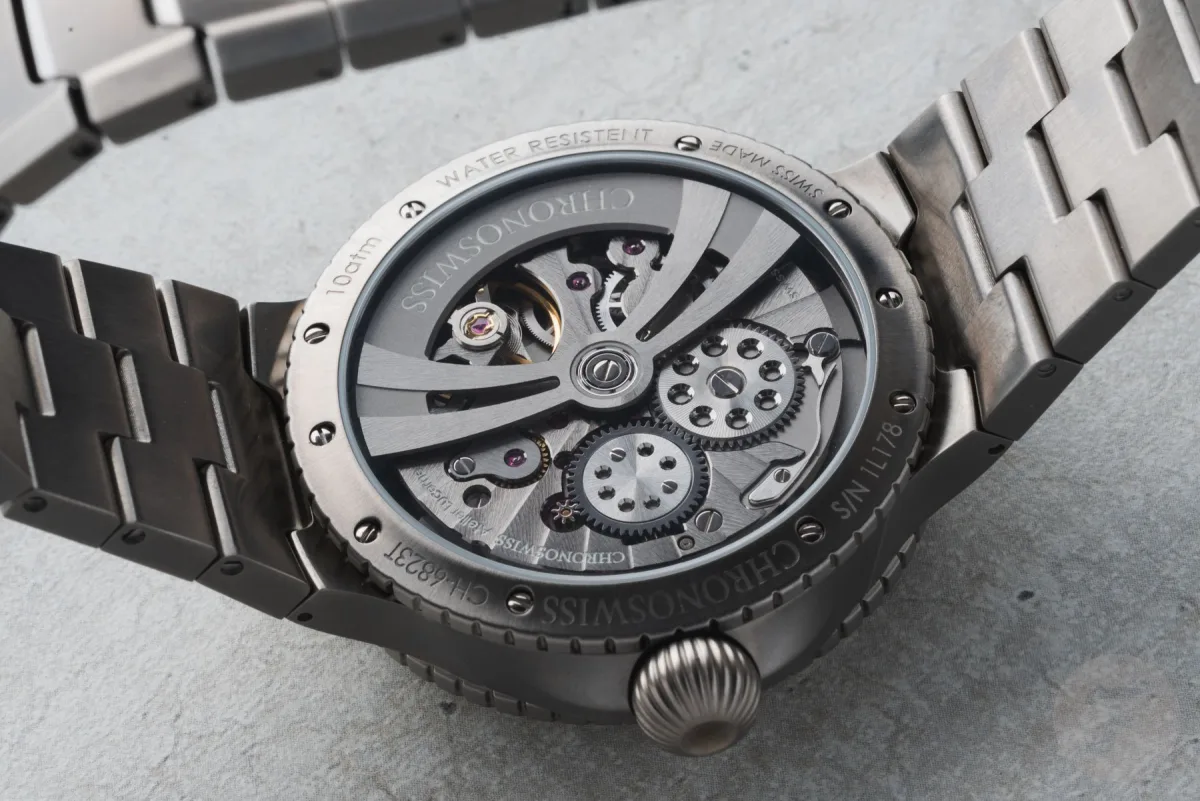
The ruthenium-coated movement is neatly finished at the brand's workshop in Lucerne, adorned with Geneva stripes and polished screws. Practicality is ensured by the adjustment function: pulling the crown to the first position allows for adjusting the 24-hour time zone hand at "9 o'clock" in one-hour increments.
Pulling to the second position allows setting the local time, displayed by the central minute and hour hands at "3 o'clock." The 24-hour hand at "9 o'clock" syncs with the local time.
Wearing the Chronoswiss Pulse GMT
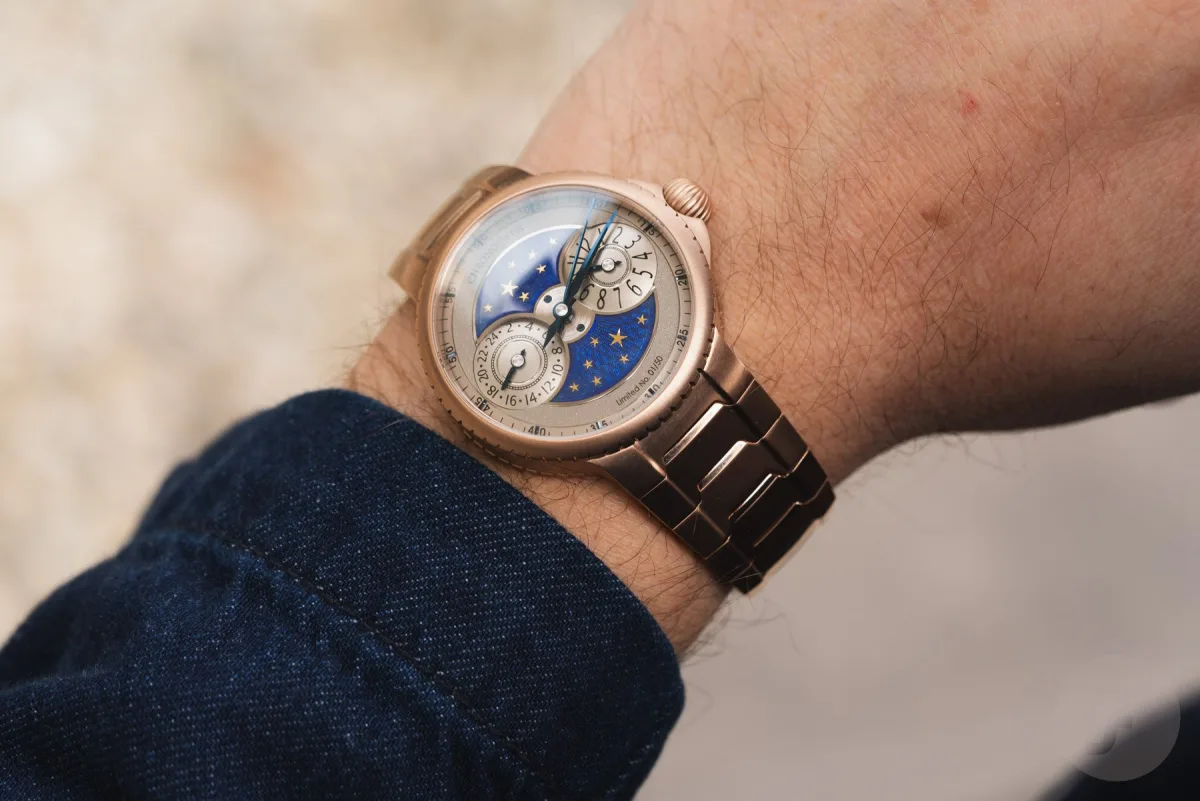
On the wrist, the titanium version impressed me more than the rose gold. It is not only a more expressive option but also a lightweight watch with a dual time zone function, which is very comfortable to wear. Despite its significant size, the watch sits comfortably due to the curve of the case and bracelet, perfectly matching the wrist shape.
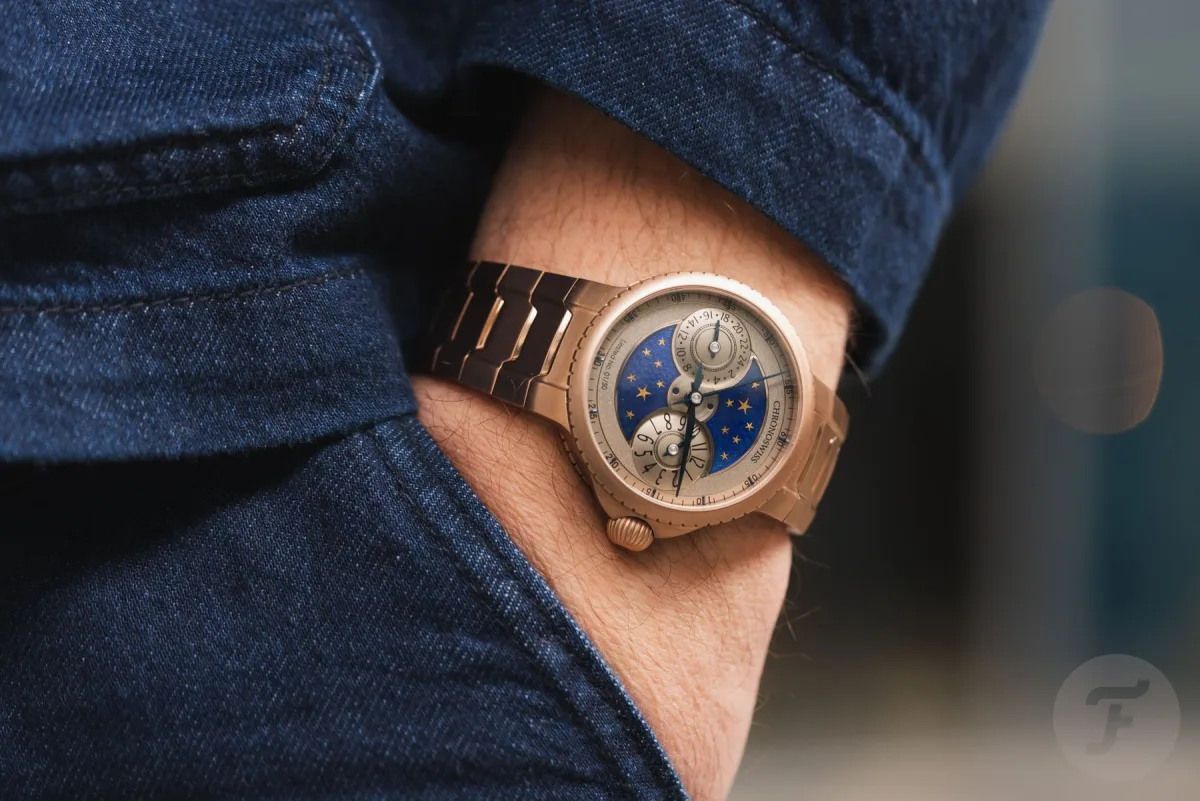
Additionally, the "disappearing" clasp in the bracelet links adds convenience. Frankly, I did not expect such a strong impression from the Pulse GMT, but wearing the watch turned out to be a real pleasure.
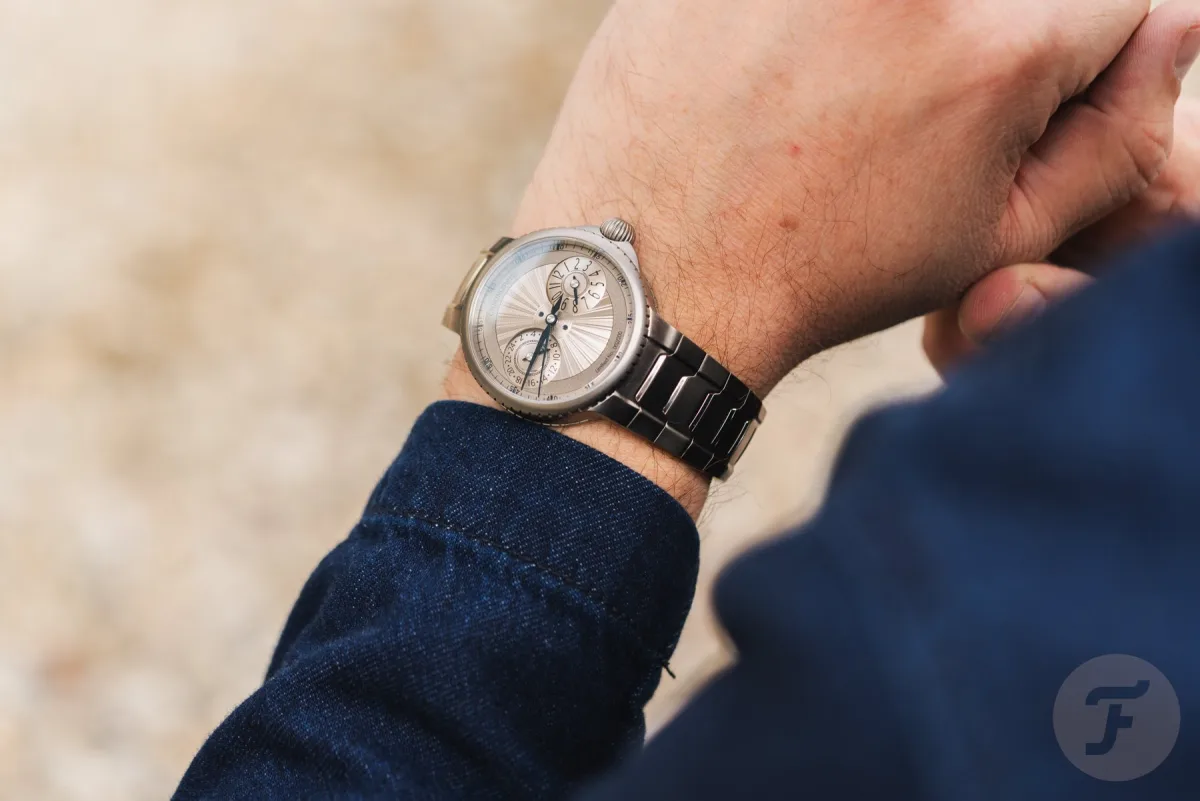
In terms of appearance, the detailed dials of both models look impressive. The guilloché of the titanium version beautifully contrasts with the matte surfaces of the dial and case, creating a harmonious balance between traditional watchmaking art and modern materials and finishes. The monochromatic color scheme is particularly appealing to me.
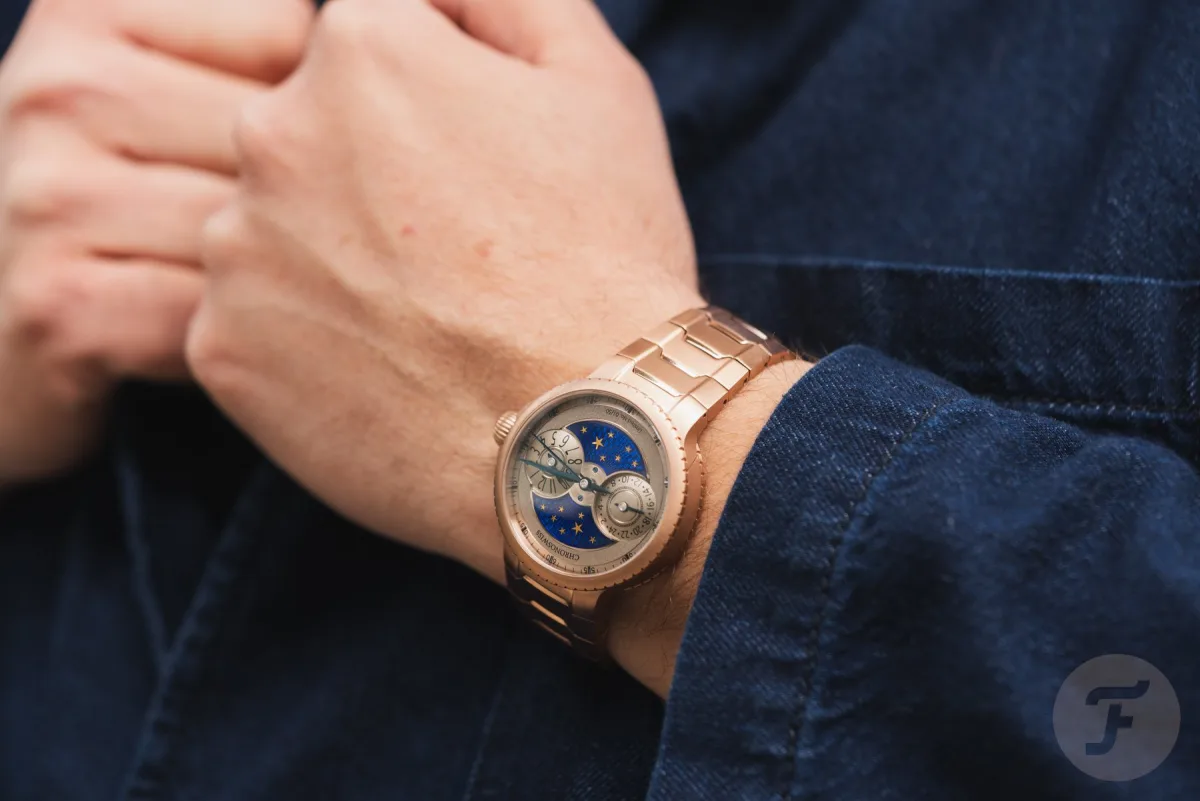
Rose gold gives a more classic look, and the guilloché dial with transparent blue enamel perfectly matches the case and bracelet. The weight of the gold (192 grams in the case and bracelet) is felt, although these are not the heaviest rose gold watches I have encountered. The overall weight of about 200 grams creates an impressive sense of solidity.
Final Thoughts on the Chronoswiss Pulse GMT
Overall, the time spent with the two Chronoswiss Pulse GMT models left an exceptionally positive impression. Although I initially doubted whether these watches would suit me, it only took a single wear of the titanium version to be convinced otherwise. I thought the design of the subdials resembled owl eyes, but in person, they perfectly complement the curved dial. This once again proves that watches need to be seen and worn personally to truly appreciate them.
The style of the new models organically continues the Pulse One line. I understand that the design may not be for everyone, but Chronoswiss has always been a brand for devoted fans. Considering how successfully the Pulse GMT combines past and present, I am confident that brand enthusiasts will appreciate this modern direction.
As for the prices, the titanium version costs €18,500, and the rose gold is €87,000. These prices are comparable to other watches with integrated bracelets from luxury brands. Production is limited to 200 pieces for titanium and 50 for rose gold, making them collectible items for Chronoswiss fans. After personally encountering these watches, I wouldn't be surprised if all units quickly sell out. For me, the time with the titanium Pulse GMT was one of the most vibrant and impressive experiences recently and a pleasant surprise at the start of the year.