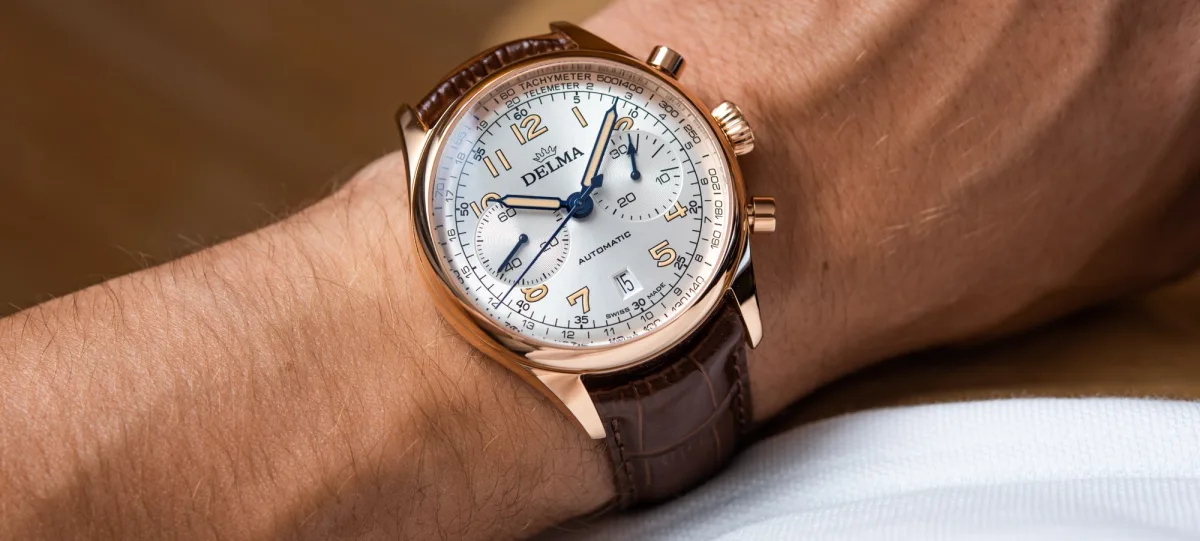
The Delma Heritage Chronograph would be quite a charming watch, perfectly suitable for everyday wear, but since we live in an era where celebrating anniversaries, milestones, and historical achievements has become paramount, it seems every new watch must have some historical connection. Don't worry, because the Delma Heritage Chronograph traces its history back to 1946.
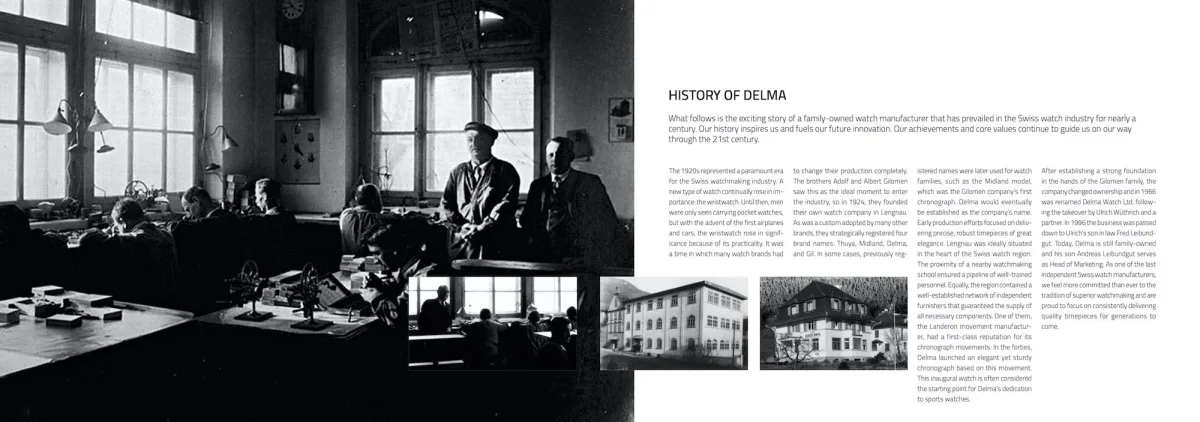

Seventy-five years ago, Delma released the Delma Midland, a typical two-subdial chronograph of its time with some atypical features, such as a dual flange scale with a tachymeter and telemeter combined with a beautifully refined dial center and long, legible hands. Delma's history as a watch manufacturer has been discussed before, so we won't repeat it here, but just note that Delma is essentially a small yet proper Swiss brand, located a stone's throw away from industry giants like Breitling, ETA, and other well-known companies like Eterna, Fortis, Epos, and several other ETA enterprises. The company's hometown, Lengnau, and the neighboring Grenchen are home to some true Swiss watchmaking hubs.
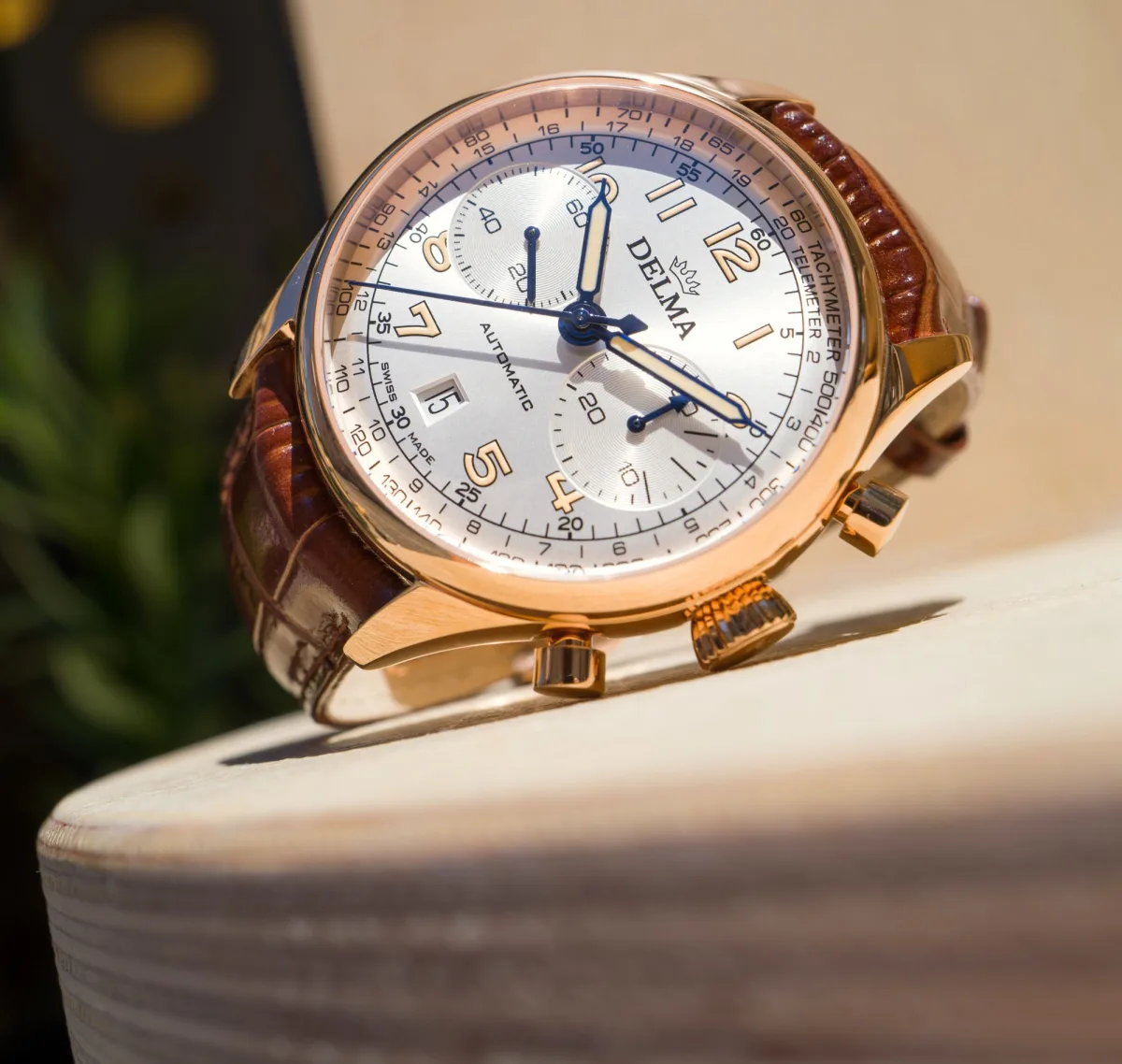
We'll talk about design, wearability, and execution soon enough, but first, let's note the remarkable aspect of the Delma Heritage Chronograph LE: it is released in only 75 pieces in rose and yellow gold-plated versions, as well as a polished stainless steel version. This is a low volume for what seems like it could easily become a permanent collection offering. It irks me every time I hear the word "exclusivity" because exclusivity only matters when there are many people eager to become watch owners.
In other words, watches released in limited numbers can be exclusive, but this exclusivity only matters if it's of interest to others. I don't think the Delma Heritage Chronograph (and literally metric tons of other limited edition watches that the industry releases year after year, including many of its biggest brands) will be in high demand when such strict production limits will matter.
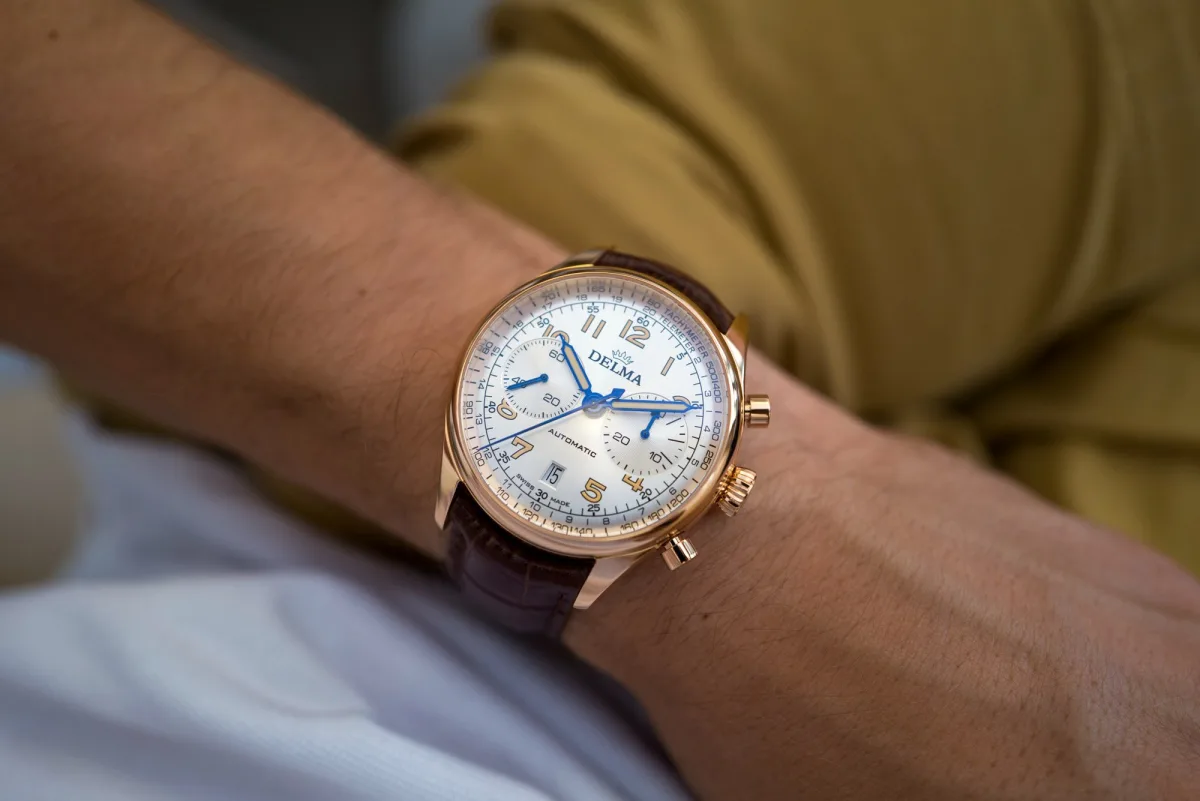
But where it truly matters is in the feeling that comes from knowing there are only 74 other watches like yours. And that's great. Forget about resale and whether it matters to others or not, and just celebrate the fact that you own a piece of horological art created for a limited time. Perhaps such a level of flexibility should become a more common trait among smaller manufacturers - it's a game that big brands dominating the sub-€3,000 segment simply cannot play.
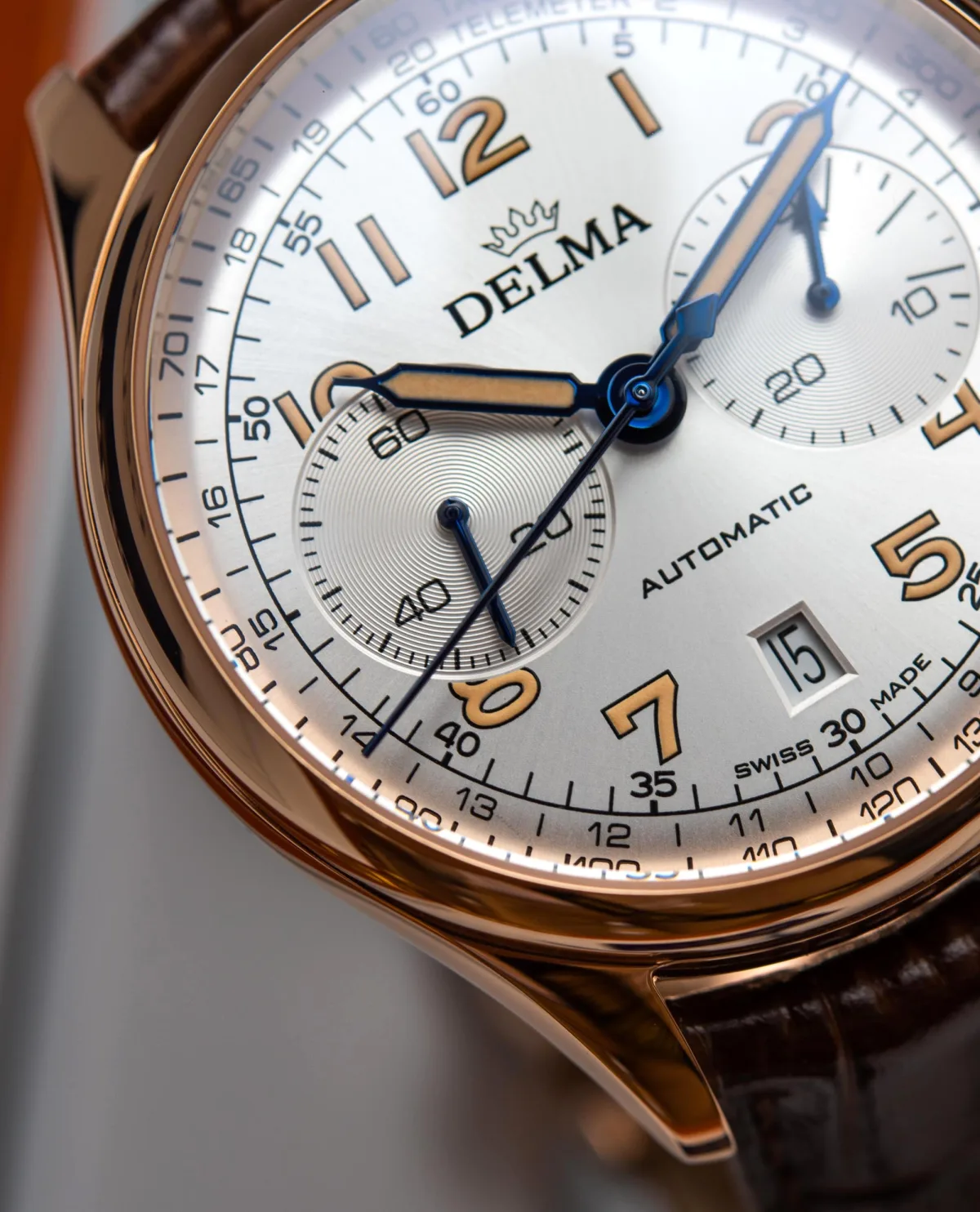
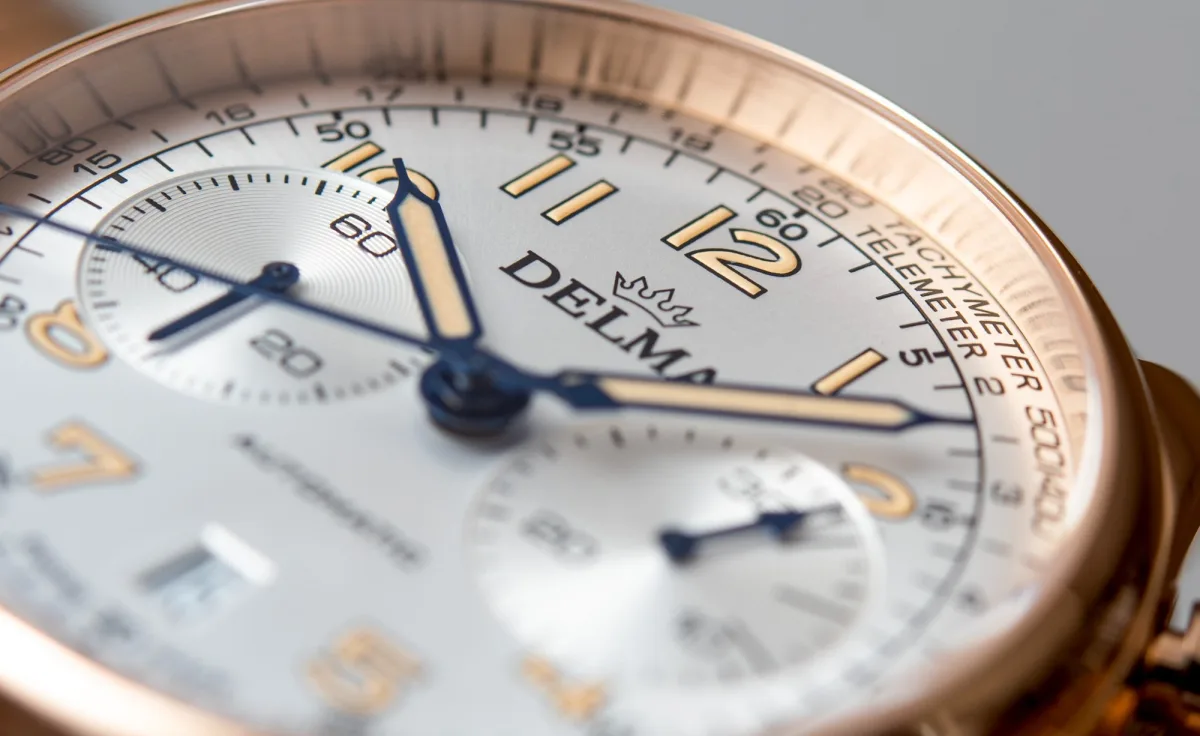
And this largely applies to the Delma Heritage Chronograph. It's a beautiful vintage-style watch with a dose of carefully thought-out fine details to create a pleasant mood. The price of €2,700, including the hefty European VAT, matches the price of a Longines for a vintage automatic chronograph and is just over half the price of a Breitling for a vintage chronograph with an in-house movement.
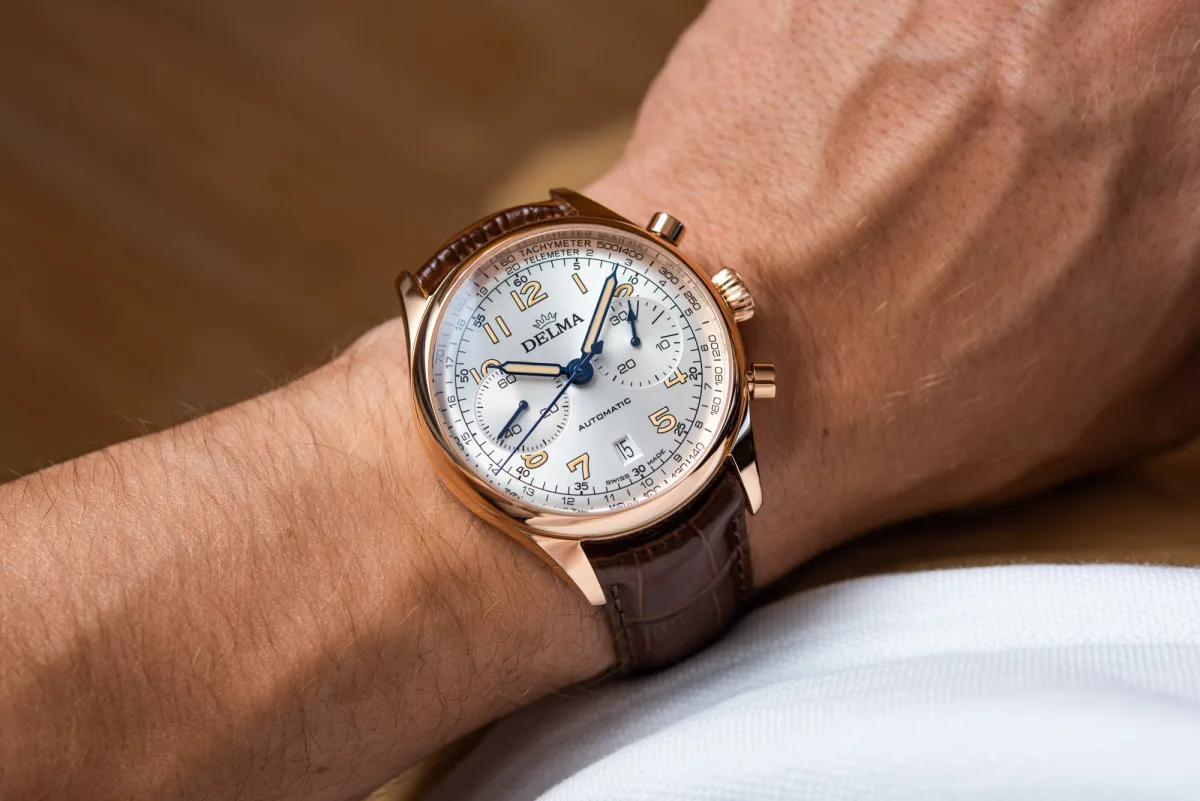
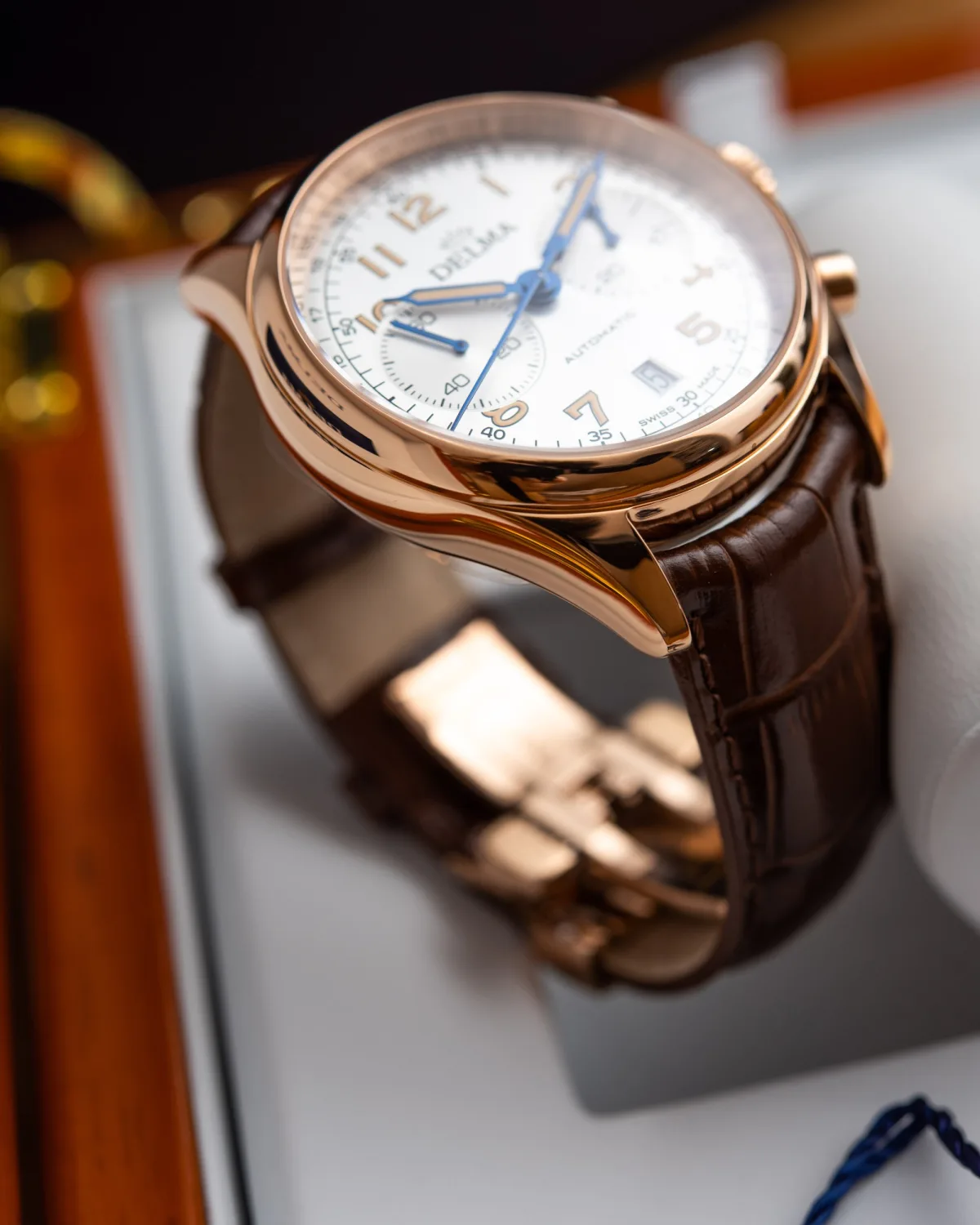
Like many other quasi-vintage chronographs, the Delma Heritage Chronograph LE looks very elegant on the wrist. It has an air of timeless sensitivity combined with a touch of old-school coolness that modern watches struggle to capture (and this is coming from someone with a soft spot for modern design). The 75-year-old flange ring with tachymeter and telemeter scales is neatly scaled (see what I did there?) to this large 43 mm diameter.
Everything looks very proportional right out of the box, making these one of the few "modern vintage" watches that don't make me want to immediately downsize to 38 or 39 millimeters. The subdials don't look silly small or positioned too close to the center (once again, even large brands with big egos often get this wrong - I'm looking at you, AP). While many numeral hour markers are cropped (which some people love), this too is a legitimate vintage design element characteristic of the mid-1900s.
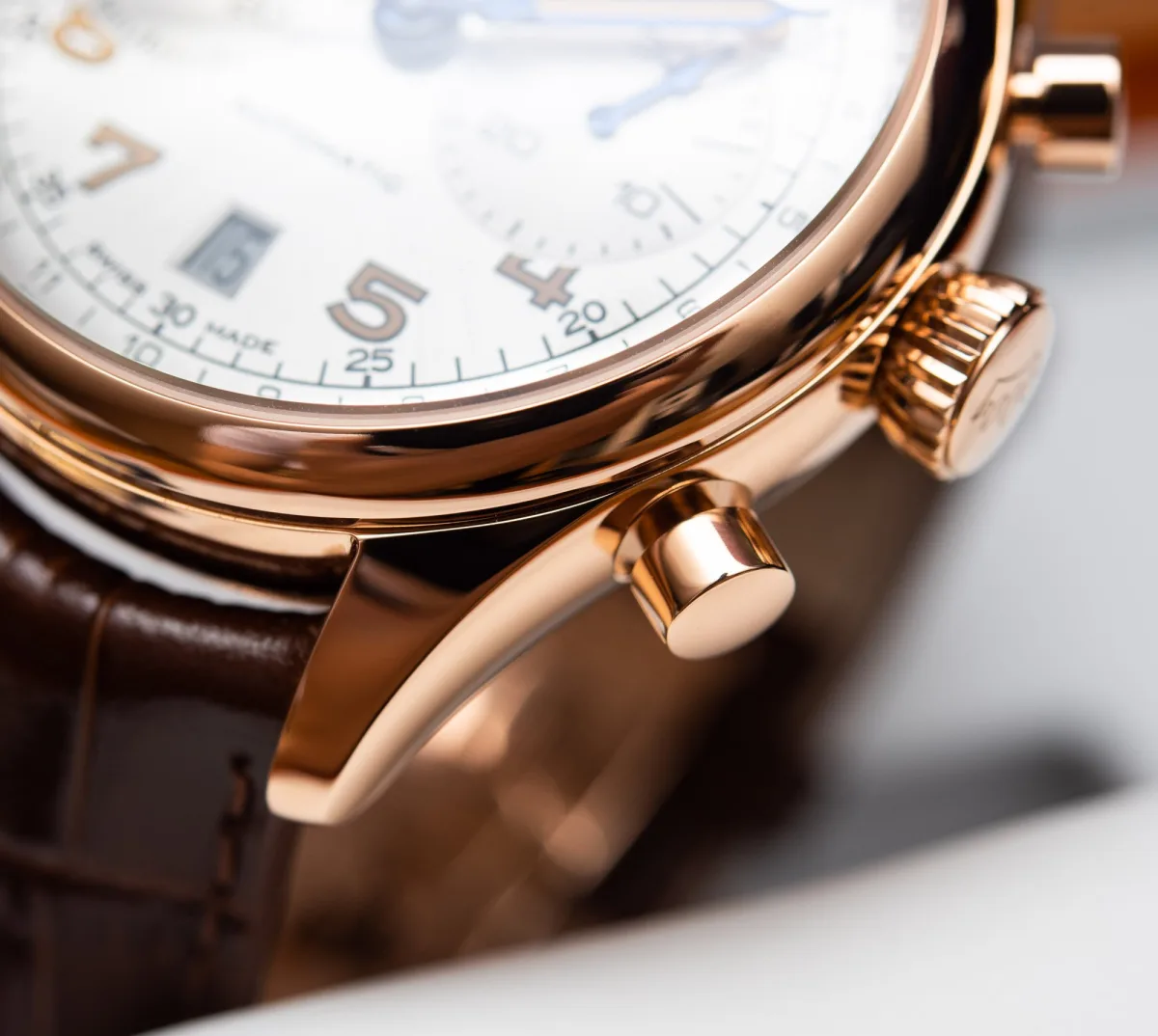
Get closer to this rose gold PVD-coated look, and you'll find that a multitude of rather uninteresting individual details create a pleasant overall picture. The lugs lack fancy chamfers, and the pushers are regular piston pushers. (Interestingly, the textured/marked top surface of these buttons and the "Grand Prix" style strap with large holes could have created a motorsport atmosphere, but we'll never know). Similarly, the bezel has a regular domed shape; everything is polished; perhaps the onion-shaped crown adds a bit of flair. Yet, when you look at the watch from top-down, the entire package doesn't appear primitive or dull.
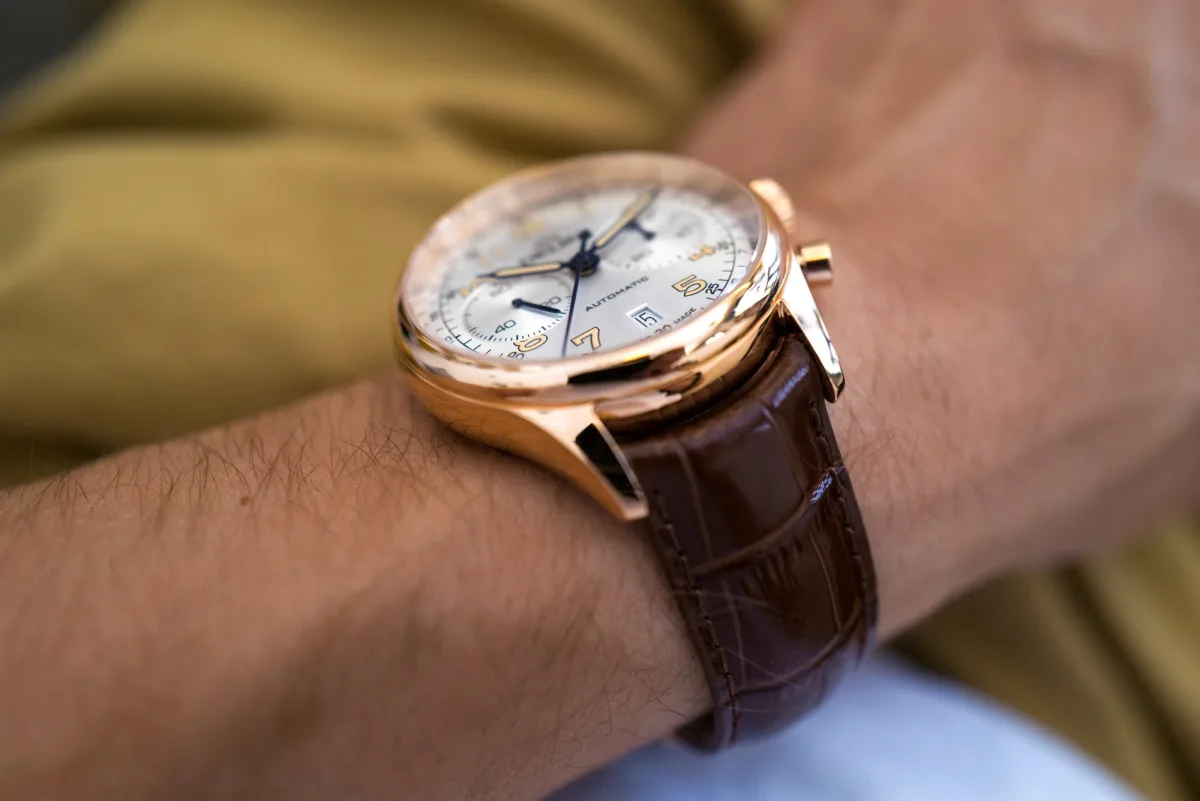
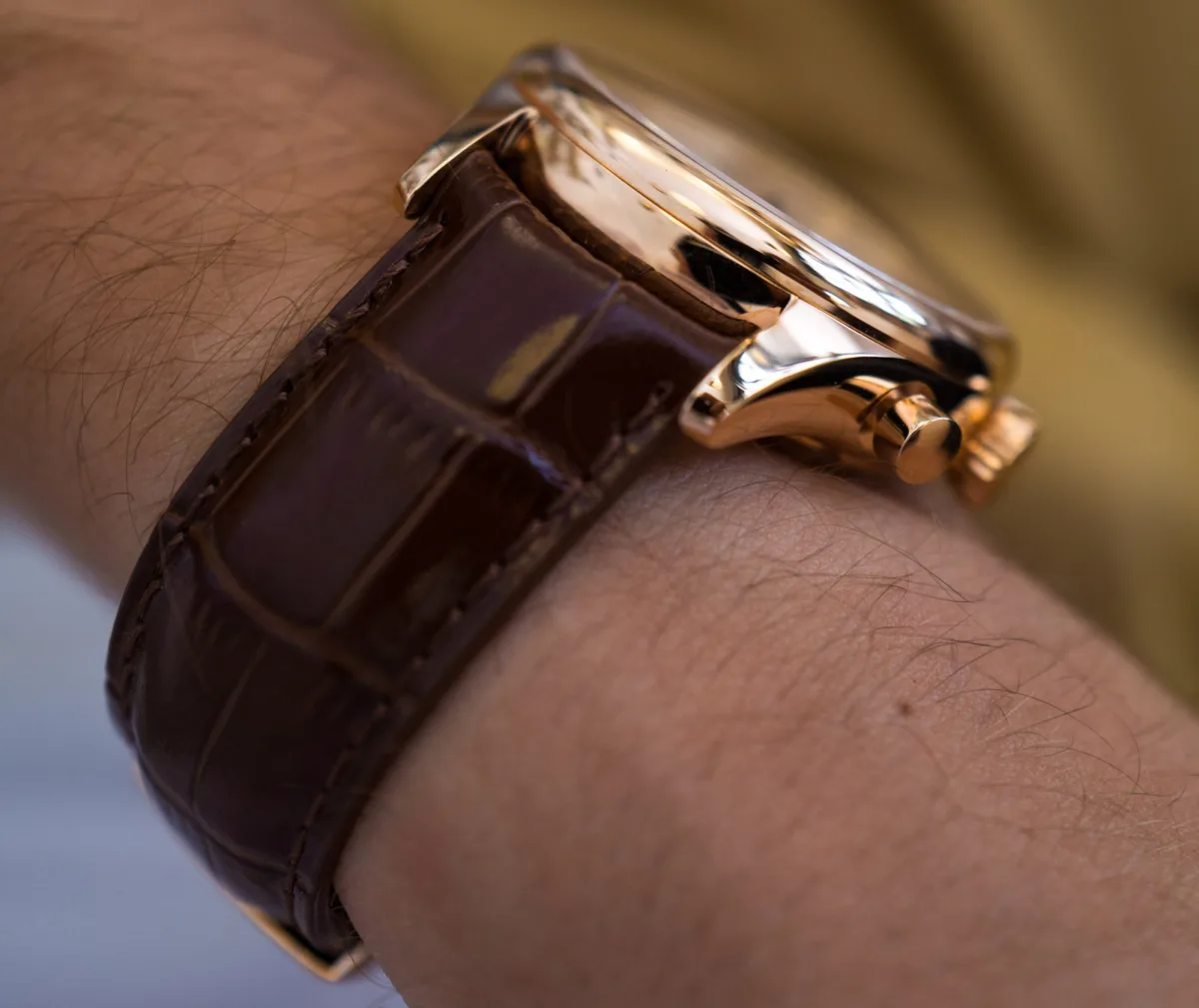
Water resistance of up to 10 bar (equivalent to 100 meters) allowed Delma to give the Heritage chronograph some peace of mind - they could have tried to manage with a measly 30 m or 50 m, but it's right that they didn't. The case thickness is 15.7 mm, as befits a chronograph equipped with the 7750/SW510. This time there's no magic with a thin bezel and heavily domed crystal; in fact, it's the opposite. The domed bezel reaches the very top of the crystal, which in turn is flat. This could create a hockey puck aesthetic, but somehow (perhaps also thanks to the increased diameter of 43 mm), everything looks tolerable even from a side view, which is traditionally the least preferred angle for these robust watches equipped with 7750/SW510.
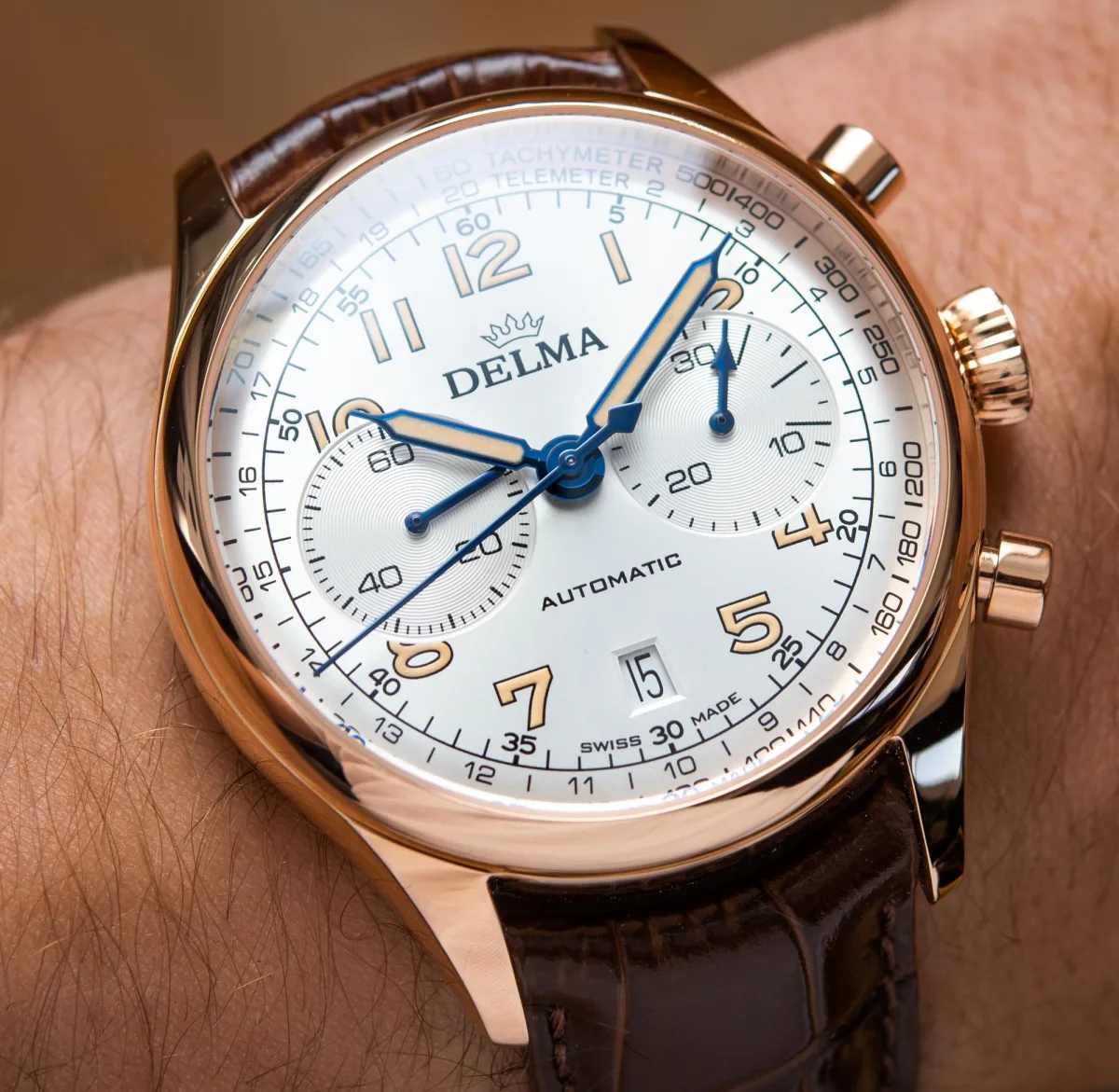
On the wrist, the Delma Heritage Chronograph LE feels and looks expensive - except for the strap, but more on that later. For us watch lovers, it's a fun exercise to ponder the rather odd discrepancy between watches that look expensive and watches that are simply... expensive.
We, of course, know which stainless steel watches hold their own in the five-digit segment - but release such a watch into the real world, and your non-watch-savvy colleagues and friends will rightly conclude that you're not as wealthy as you used to be, because they wouldn't dare to imagine that regular production steel watches can cost that much money.
Of course, if your game is hidden wealth, then all this is for the better, but I'm sure many of us know more than a handful of dilettante watch buyers who spent a hefty sum on very expensive watches only to find out that the people they were trying to impress have no idea what they're wearing or how expensive those watches are.
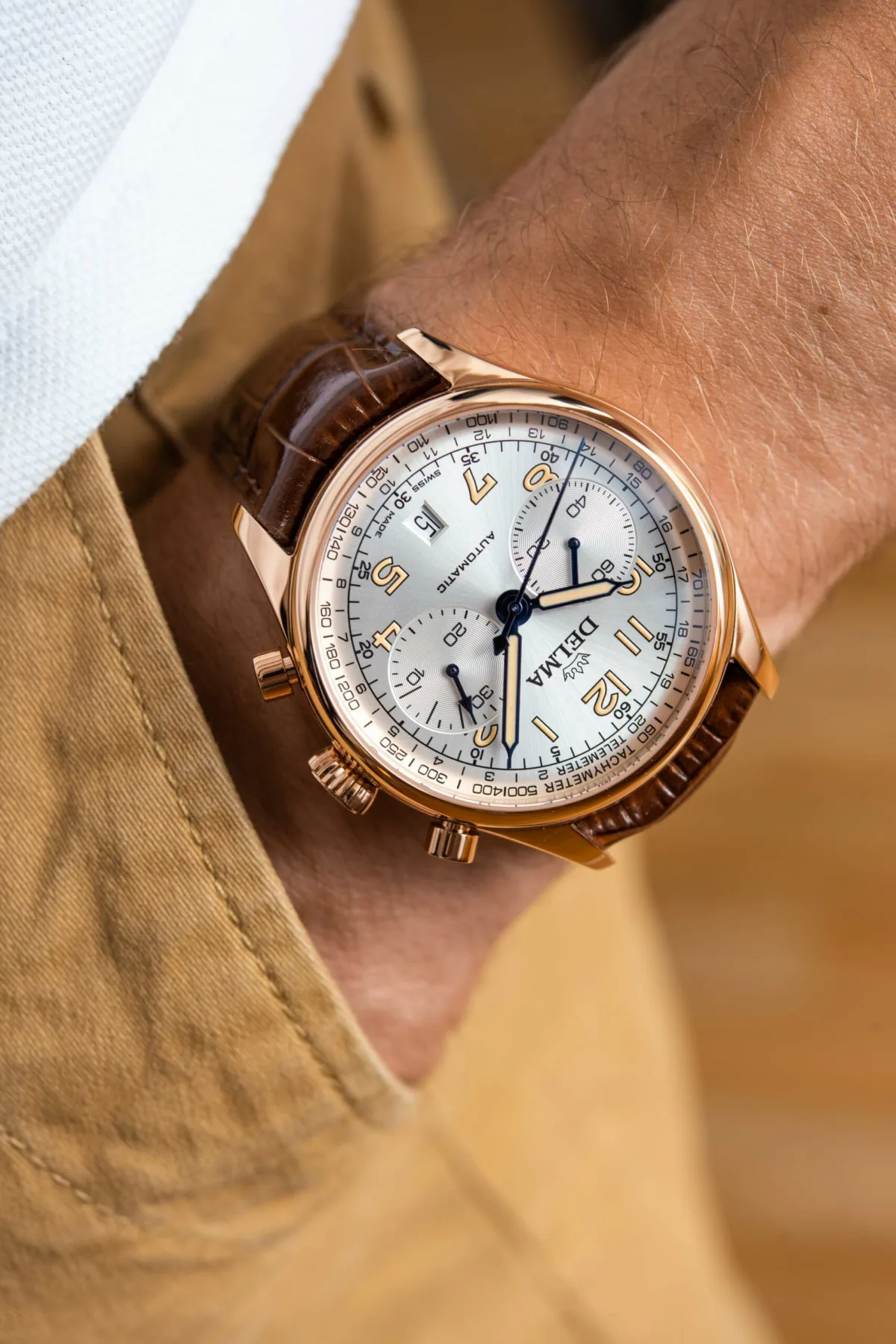
Conversely, some watches, including this gold-plated chronograph priced at €2,700, look several times more expensive to the uninitiated than their price tag. I love testing this with friends and family sometimes: I extend my hand, show the watch from a step or two away, and ask how much they think it costs. Spoiler: people have no idea about the difference between solid 18-carat gold and gold-plated watches. Of course, if you wear gold-plated watches with worn-out clothes and handle them poorly, then people will probably realize they're not that expensive. But if you wear them with pride and in decent clothing, you'll soon feel the opposite effect.
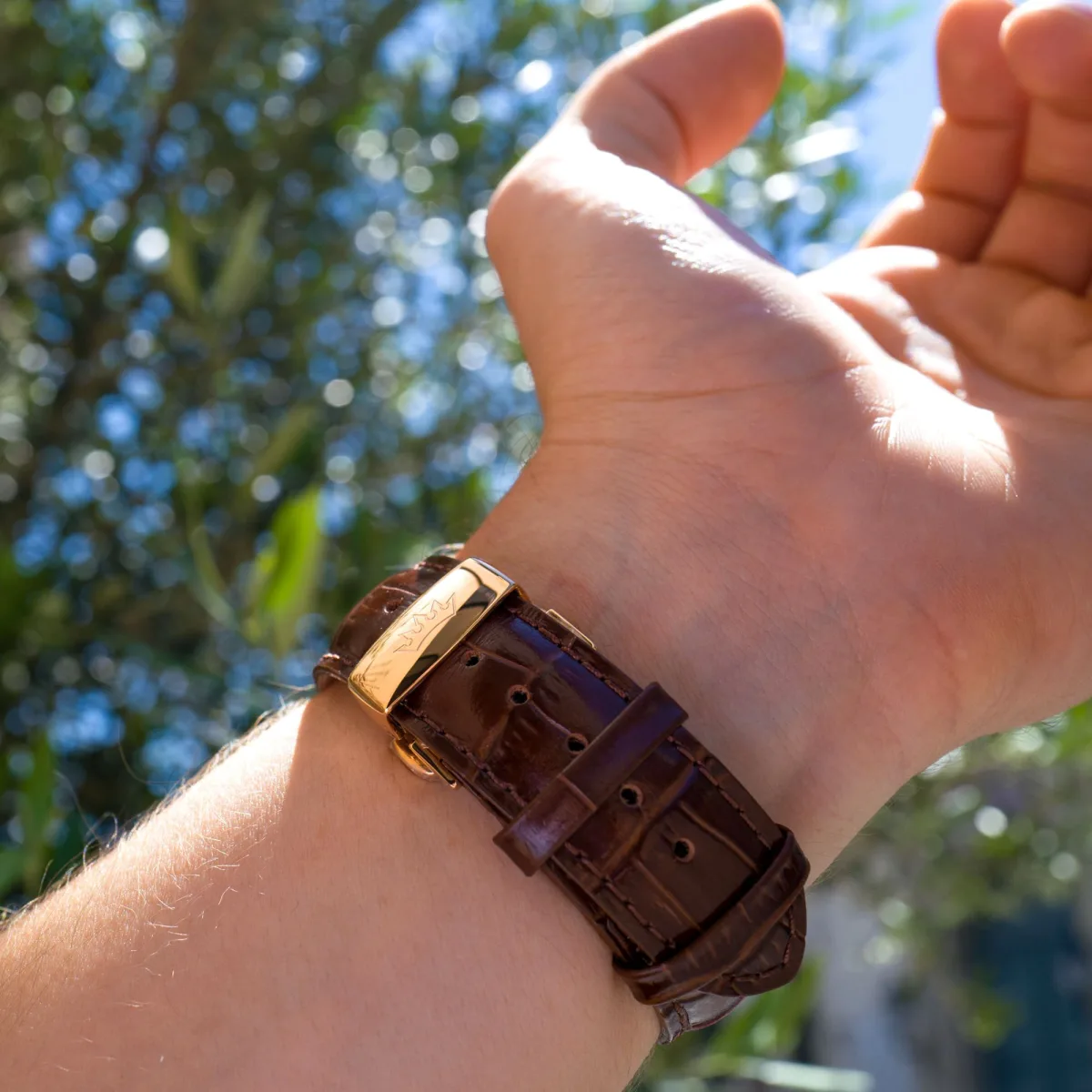
Anything I didn't like? I understand that strict regulations in California and elsewhere have either completely banned or greatly complicated the sale of watches (and other products) with alligator leather elements, and so I sympathize with brands trying to find alternative solutions.
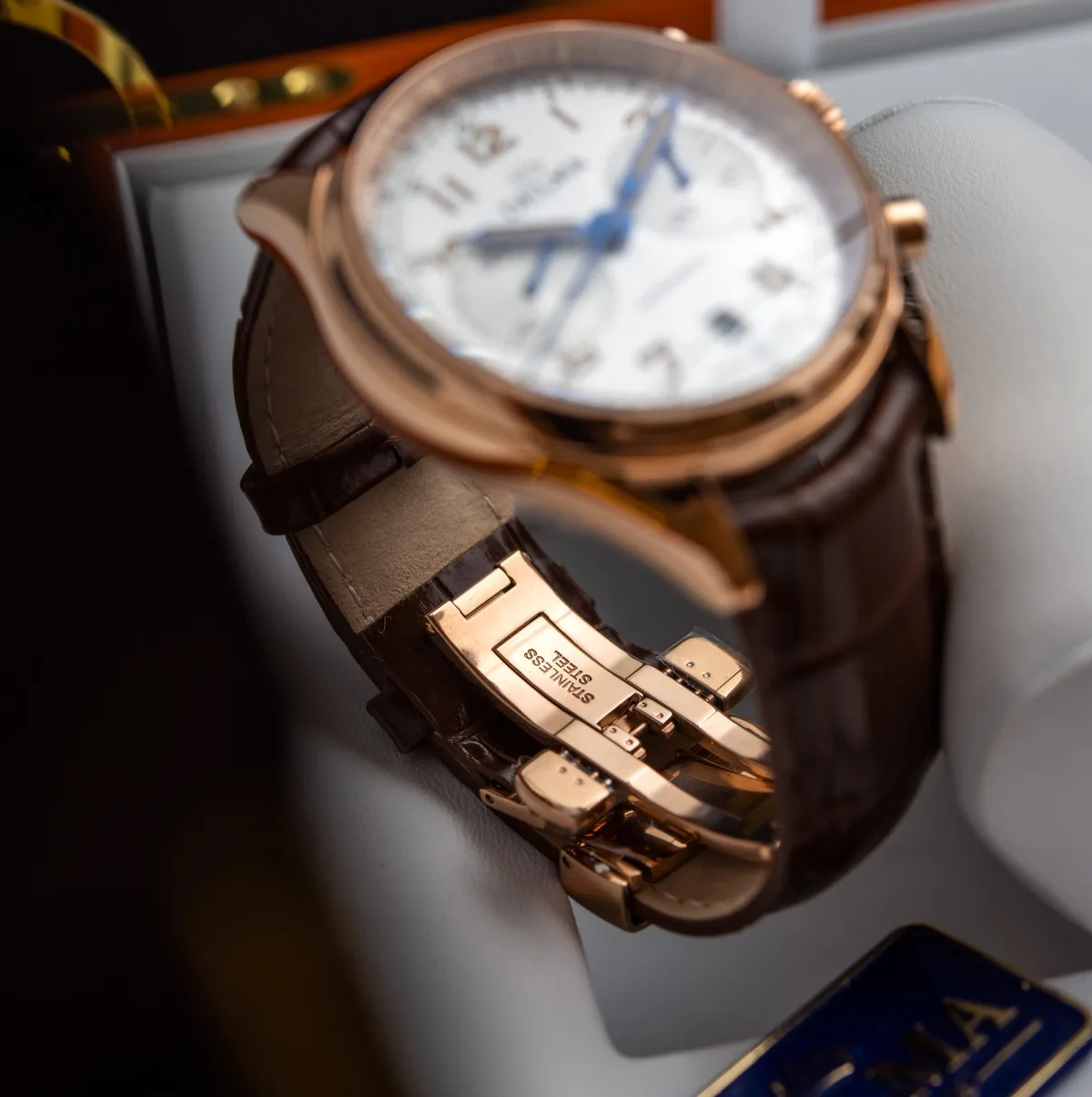
However, while the alligator leather strap used by Delma seemed expensive to many of my test subjects, its glossy, lacquer-like surface doesn't feel pleasant enough. I still haven't reached the climax of my crusade against deployant clasps; although this double deployant clasp closes with a reassuring click and opens with twin buttons, I've never worn a watch with this specific OEM clasp that didn't press into the inside of my wrist.
I would prefer a higher-grade strap on a tang buckle. Nevertheless, it's known that regular customers not only prefer deployant clasps (just look at the offering of watches equipped with them to get an idea of demand), but I also believe the average buyer won't be able to tell the difference between a lacquered embossed leather strap and a genuine alligator strap unless the latter is very high-end.
Nonetheless, at a price of €2,700, there's enough budget left from the €3,000 to spend on a high-quality strap that will transform the Delma Heritage Chronograph LE - as well as any other watch in this segment, no doubt.
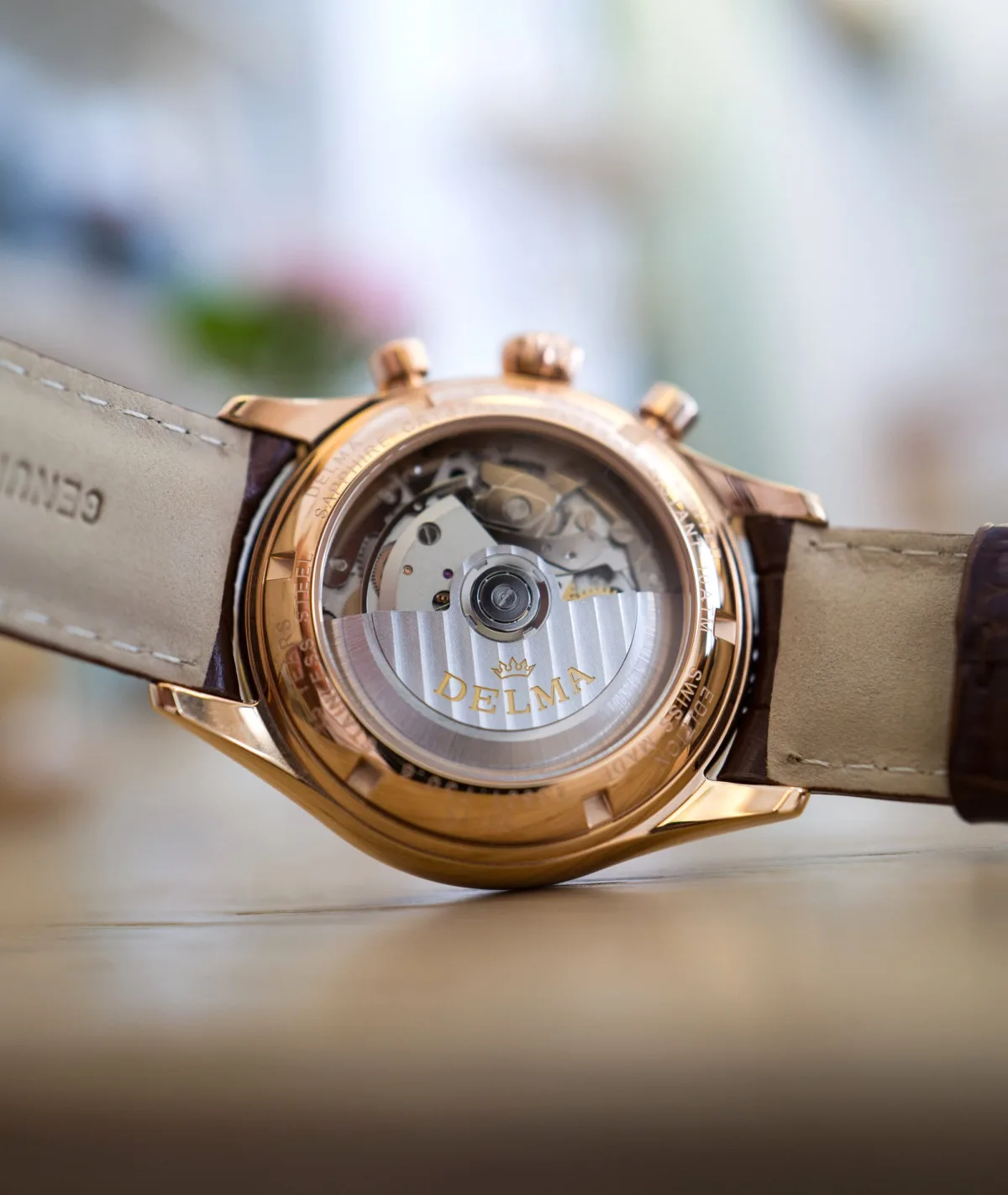
The Sellita SW510 movement with the aforementioned 100-meter WR protection is a popular alternative to the ETA/Valjoux 7750, which was developed to replace it when ETA moved away from brands outside the Swatch Group (& friends) and stopped supplying them with the 7750. As such, the SW510 provides a 48-hour power reserve combined with a preferred operating frequency of 4 Hertz and pairs them with a decently attractive case back view.
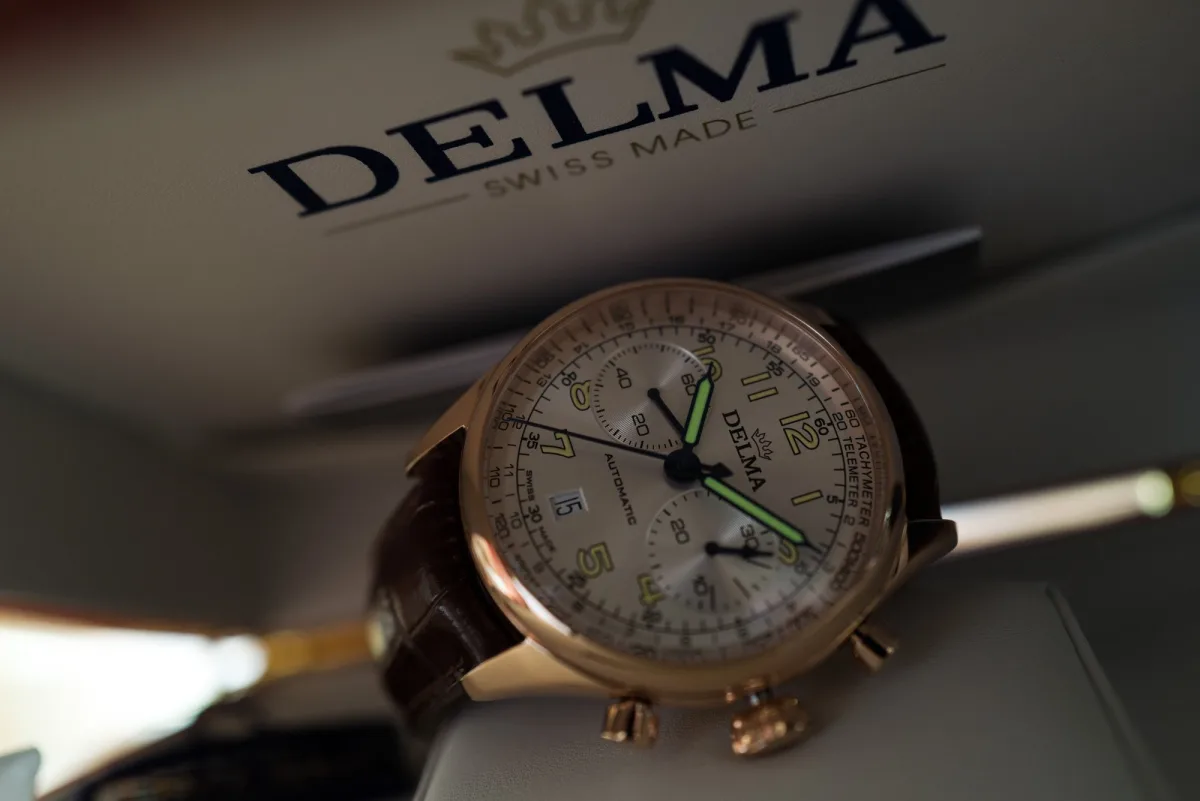
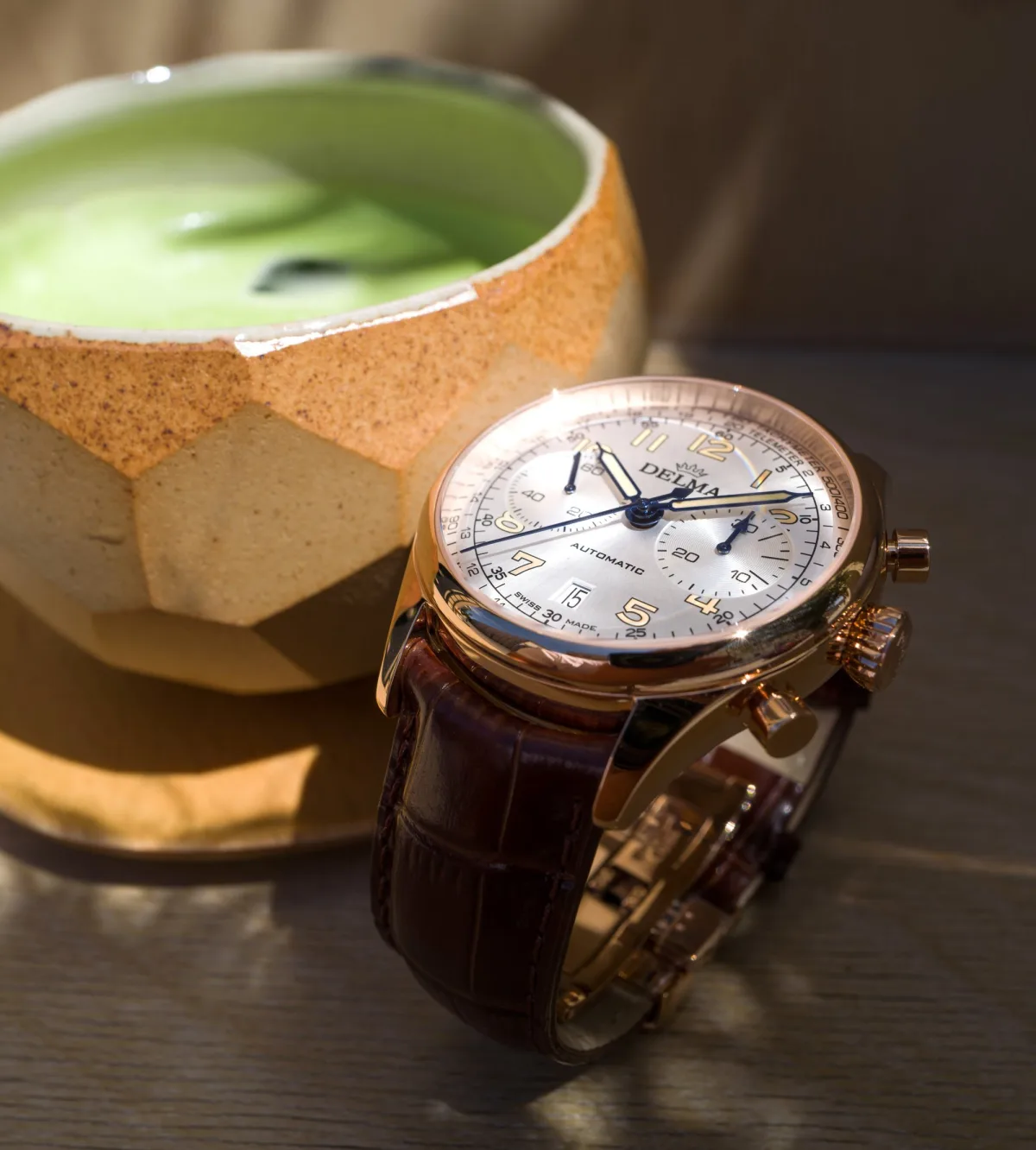
Overall, the Delma Heritage Chronograph is a well-made, charming wristwatch with a deeply appealing overall mood. It's precisely the type of design that I believe will be very good, because it dresses up and down with great agility, has character without trying too hard in this vintage game, and ages well over time - if you take sufficient care to protect the gold plating.
The stock strap is good enough until it wears out, I agree, but then it's time to get a suitable ‘gator and elevate this model even higher on the "expensive look" chart. The Delma Heritage Chronograph LE is priced at €2,700 / $2,850 in rose or yellow gold-plated versions and €2,600 in the pure stainless steel variant. All three versions are limited to 75 pieces each. More information can be found on the brand's website.
Necessary Data
>Brand: Delma
>Model: Heritage Chronograph LE 43601.730.6.062
>Price: €2,700 / $2,850
>Dimensions: 43 mm wide, 15.7 mm thick, and 52 mm lug-to-lug distance.
>When to wear it: Weekdays.
>Friend we'd recommend it to first: An elegant person who always dresses appropriately.
>Best characteristic of the watch: Vintage elegance with effortless grace. Well-made, competitively priced, neatly presented.
>Worst characteristic of the watch: I would swap this deployant clasp for a more luxurious strap.