Welcome to another edition of the 'Back to Basics' series, aimed at newcomers to the fascinating world of watchmaking.
Today, we will explore ebauche movements. You might ask, "What is an ebauche movement?" - it refers to third-party watch movements used by multiple brands. Therefore, as you browse watches from different companies, you will frequently encounter the same calibers. This article aims to help you understand the most popular options and their differences.
This is the first of three parts. In this article, we will focus on movements with time-only and time with date functions. In future editions, we will discuss chronographs and GMT calibers. Note that the terms "movement" and "caliber" are often used synonymously, although technically they have different but overlapping meanings. Let's get started!
Japanese and Swiss Ebauche Movements
While there are many manufacturers and various movements worldwide, Japanese and Swiss versions are the most popular. In practice, you are likely to encounter products from only a few key manufacturers.
Japanese Manufacturers
In Japan, the main suppliers are Seiko and Miyota. Both brands adhere to a philosophy of efficiency, mass production, and consistent quality. As a result, their movements are usually cheaper than Swiss ones and more commonly found in more affordable watches.
Swiss Manufacturers
In Switzerland, the most renowned are ETA and Sellita. ETA has traditionally been the largest producer of ebauche movements, but since the 2010s, under the influence of its owners from the Swatch Group, the supply of movements outside the group has gradually ceased. This allowed for the growth of Sellita and other companies like La Joux-Perret, Soprod, STP, and others. In high fashion watchmaking, there are also Swiss ebauche manufacturers, but we will not cover them in this article.
Miyota 8xxx and 9xxx Ebauche Series
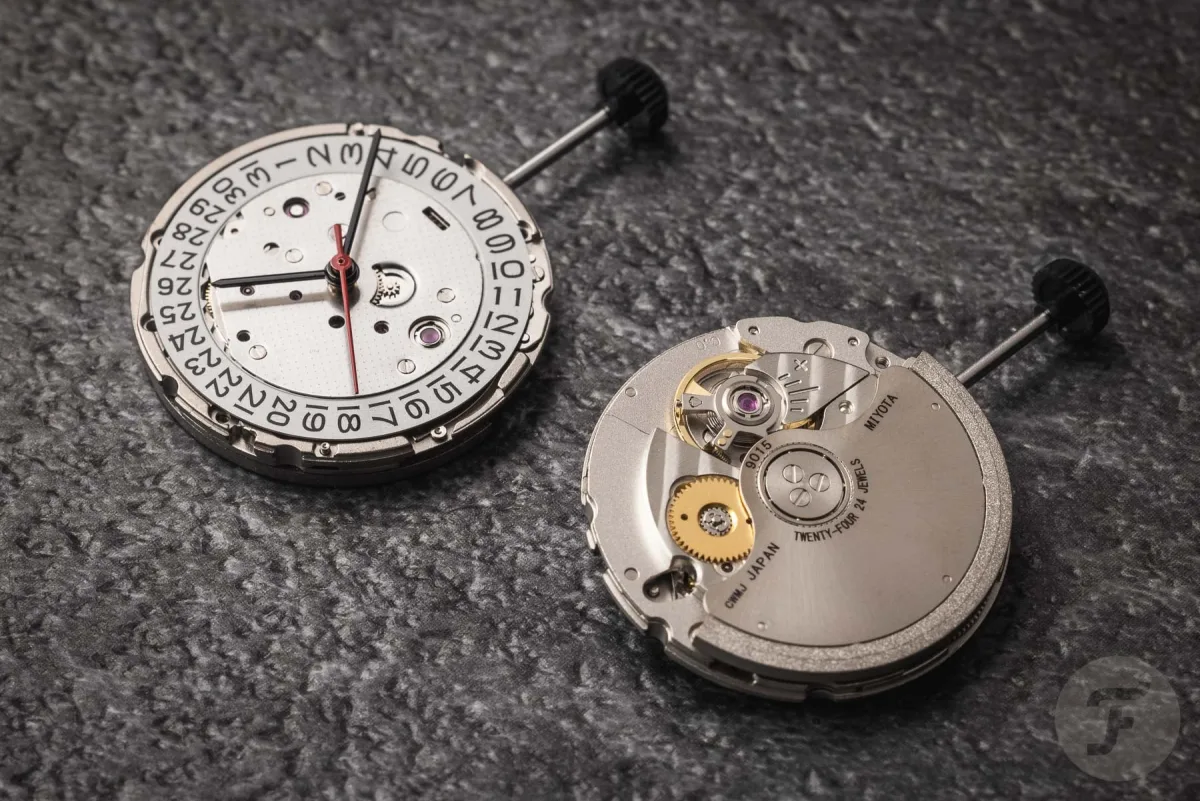
Let's start with Miyota - a Japanese manufacturer that is part of the Citizen Group and dominates the budget segment. I previously published a more detailed profile of the company, which can be found here. For now, let's focus on the most popular calibers.
- 8xxx Series - basic movements with a frequency of 21,600 vibrations per hour, a power reserve of 42 hours, and a thickness of 5.7 mm. Versions with and without a date exist. These movements are extremely simple, although new versions feature manual winding and hacking. Until around 2019, the hacking function was absent.
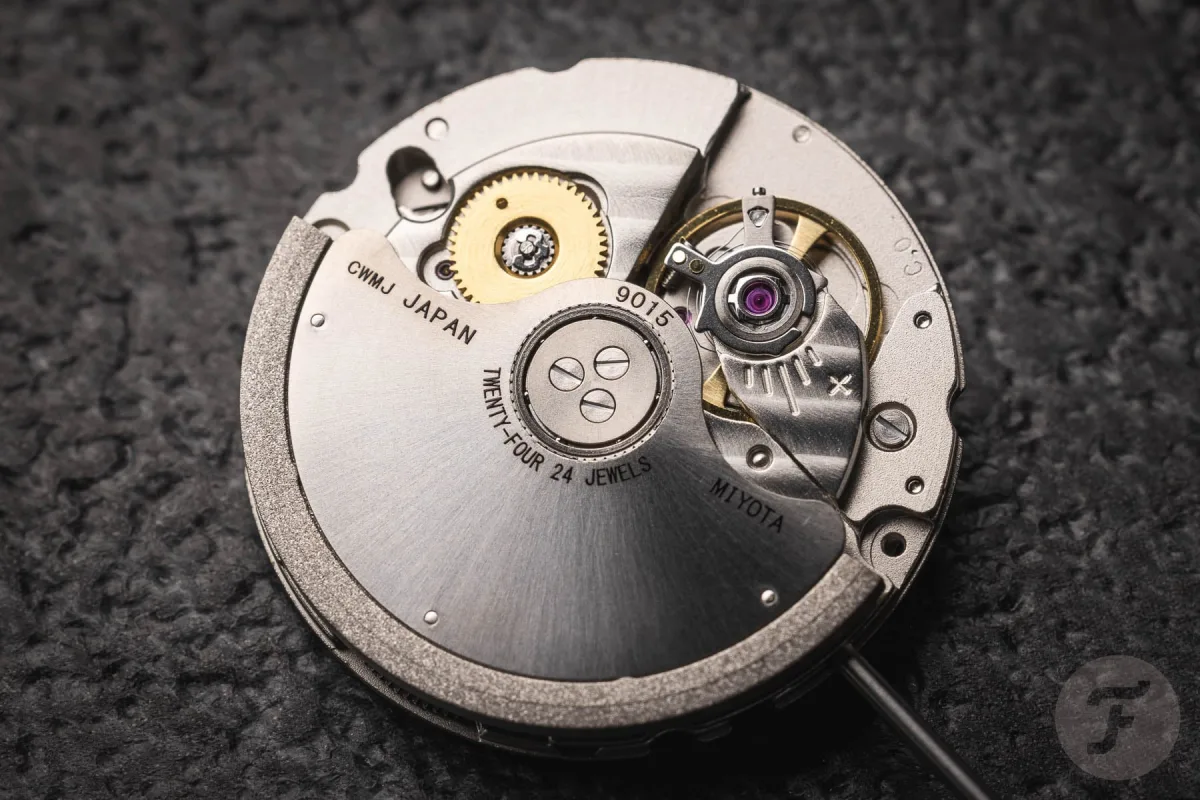
- 9xxx Series - more advanced movements with a thickness of 3.9 mm and a frequency of 28,800 vibrations per hour. The most well-known models are 905S and 9039 (time-only) and 9015 (time with date). The 905S caliber has a skeletonized section around the balance, making it visible through the dial ("open heart"). All 9xxx series movements feature hacking and manual winding.
Seiko NH35 - Reliable Japanese Movement
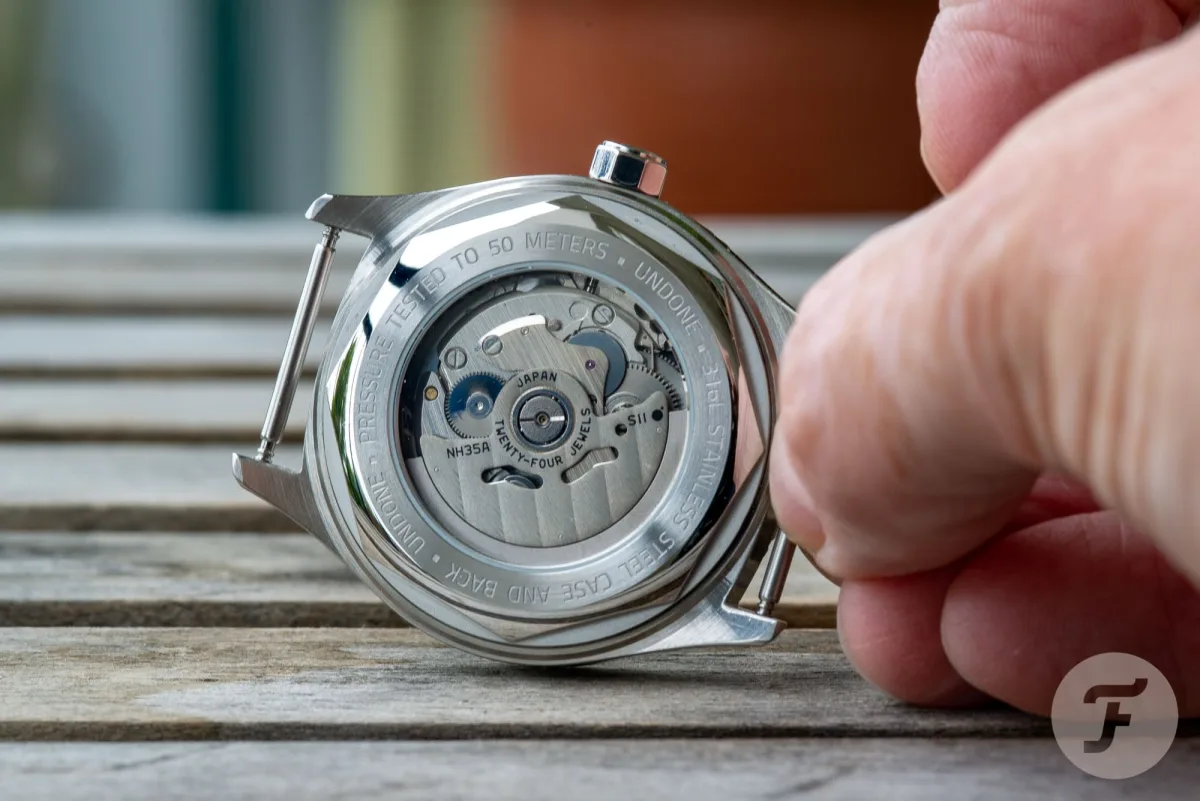
We cannot overlook the Seiko NH35, also known as 4R35 in Seiko watches and NH35 when supplied to third-party brands. This automatic movement with a frequency of 21,600 vibrations per hour and a power reserve of 41 hours has become a popular choice for entry-level microbrands.
The factory accuracy of the NH35 is +40/-20 seconds per day, but it improves significantly with regulation. The movement is equipped with hacking and manual winding features. Diameter - 27.4 mm, thickness - 5.3 mm.
ETA 2824, Powermatic 80, and ETA 2892 - Swiss Standards
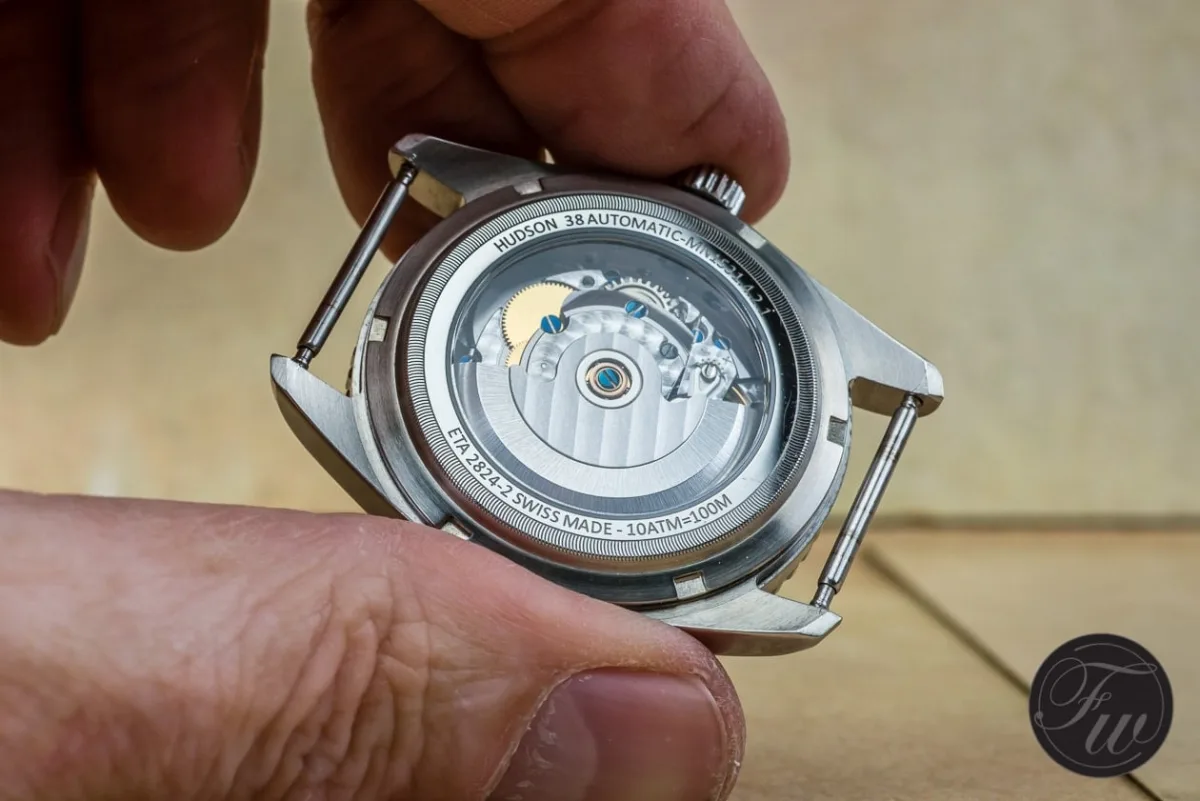
ETA 2824 is one of the most well-known and reliable ebauche movements. Released in 1971, it is considered a "workhorse" of the watch world. With proper servicing, it lasts for decades. The movement has been updated, with versions 2824-1 and 2824-2. Dimensions - 25.6 mm in diameter and 4.6 mm in thickness, frequency - 28,800 vibrations per hour, power reserve - 38-42 hours. Movements are produced in various "grades," determining component quality and accuracy.
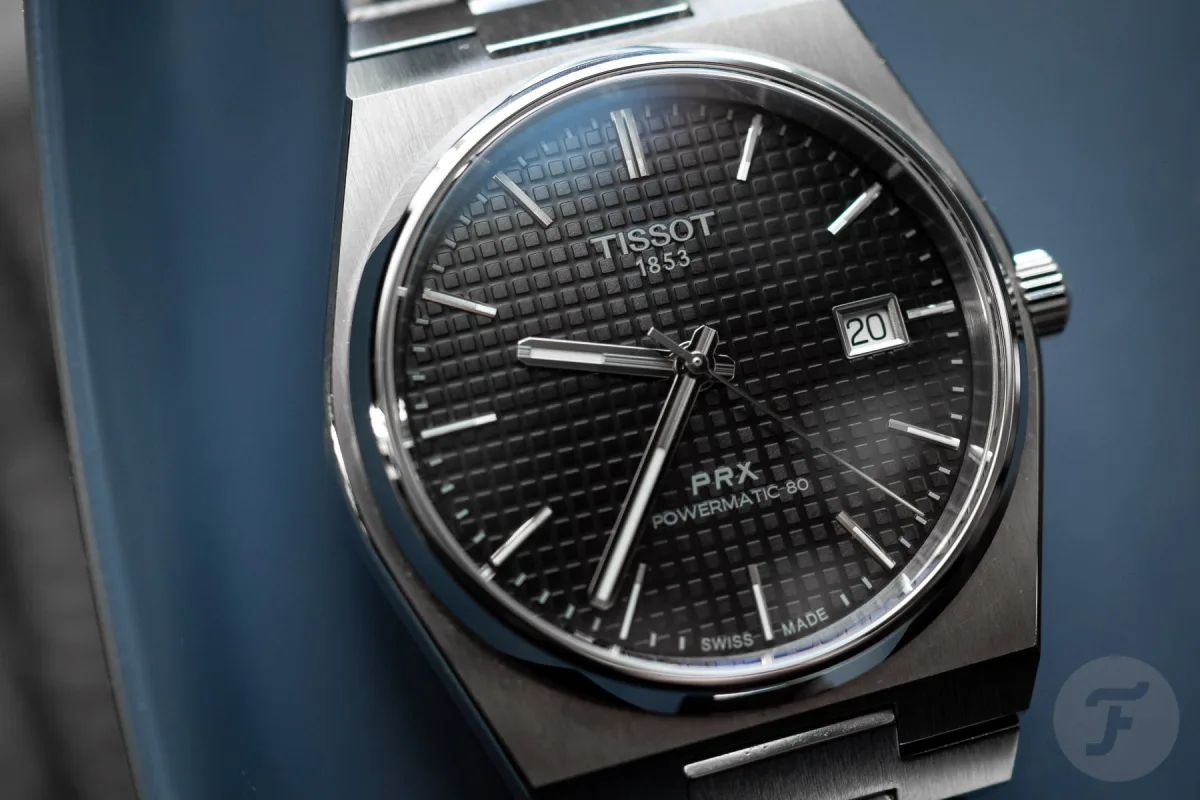
In 2013, the Swatch Group introduced Powermatic 80 - an evolution of 2824 with an increased power reserve of 80 hours. To achieve this, the frequency was reduced to 21,600 vibrations per hour, and the mainspring was lengthened. Optimized transmission and lower frequency provide longer service intervals. Some versions feature a silicon balance spring. Powermatic 80 is used in watches by Hamilton, Tissot, and other brands in the group.
ETA 2892 was introduced in 1975 as a thinner and more sophisticated movement with a diameter of 28.6 mm and a thickness of 3.6 mm. It features a smaller balance, hacking, and quick date setting. Later, the diameter was reduced to the standard 25.6 mm. The 2892 became the standard for thin automatic watches and is often used in modular systems, for example, with a chronograph on top.
Sellita SW200 and SW300 Families
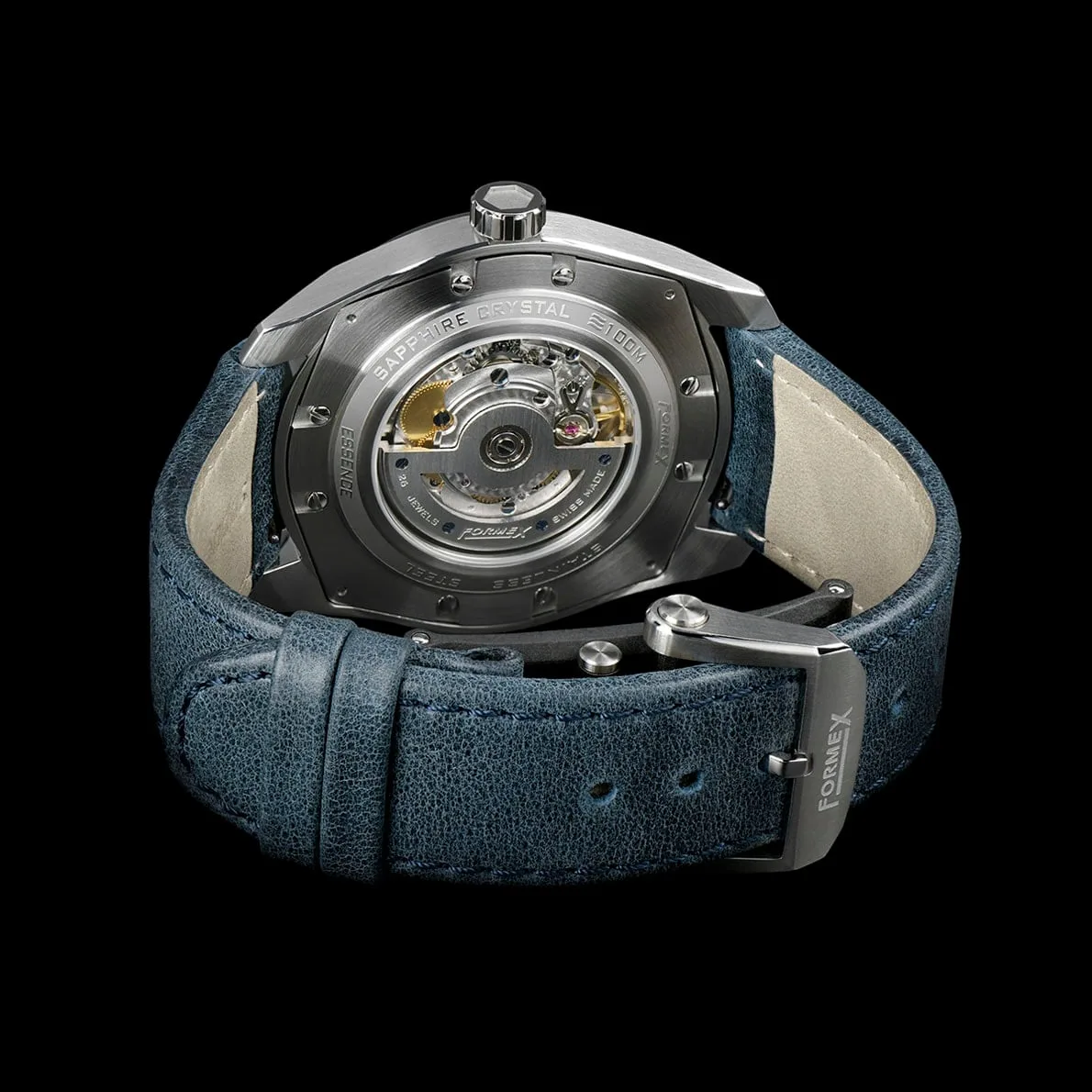
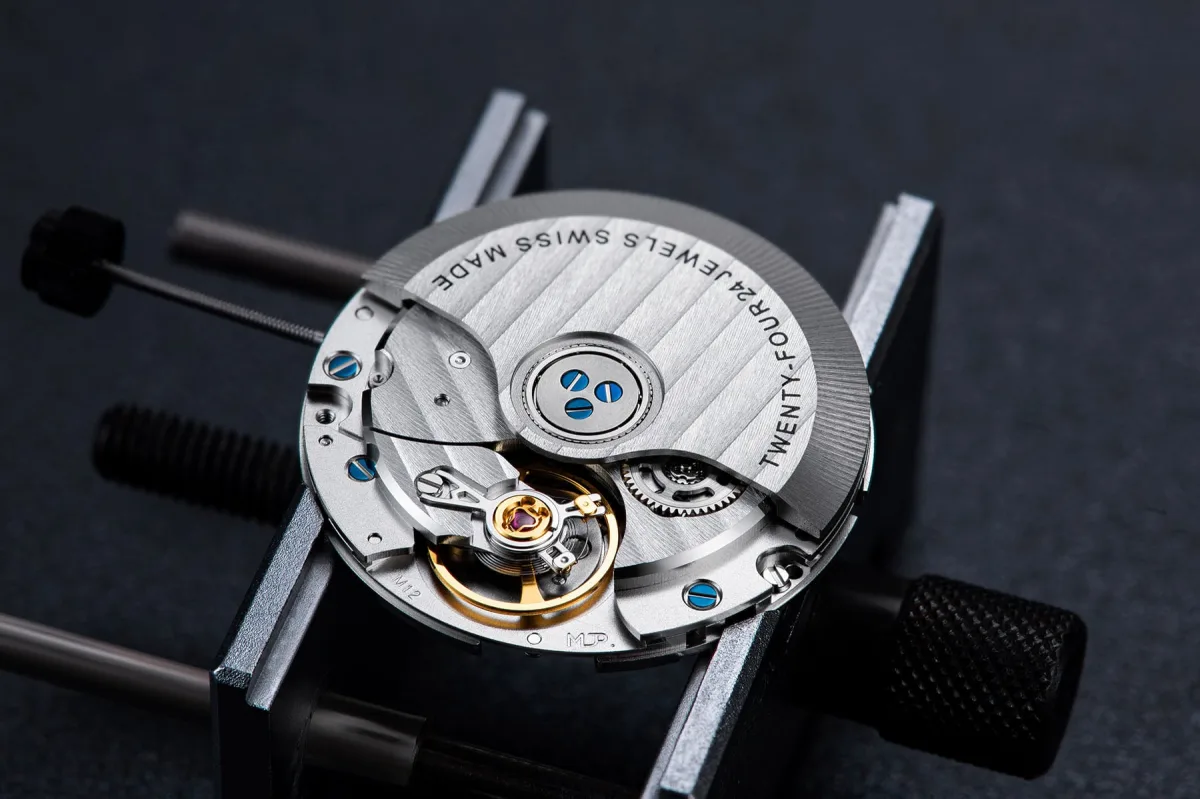
With ETA's departure from the market for external brands, Sellita took over. The company copied the architecture of 2824 and 2892, creating the SW200 and SW300 families with similar sizes and functions. In the 2020s, the SW200-2 Power+ version with a 65-hour power reserve emerged.
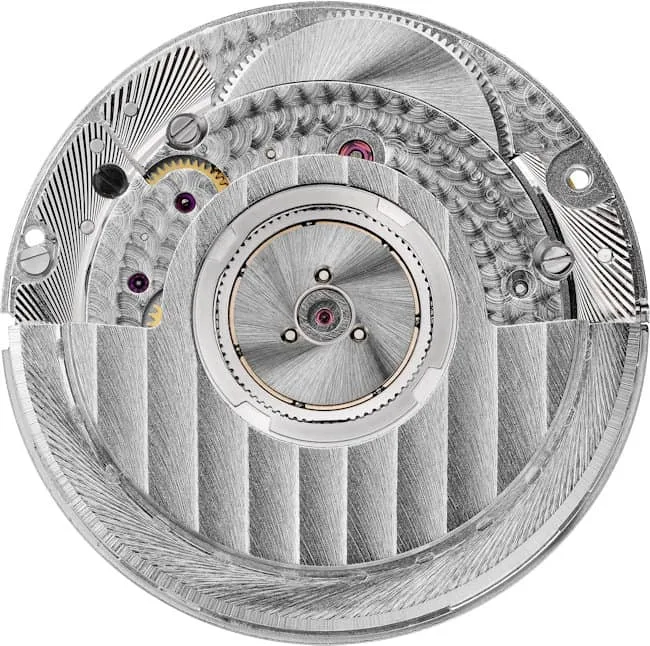
Sellita produces numerous variants - automatic and manual-winding, with or without a date, with various complications. There are several levels of finishing:
- D2 - sandblasting, nickel plating, possible tool marks, some parts with "snailing" pattern;
- D3 - added circular graining on bridges and "Geneva stripes" on the rotor;
- D4 - expanded circular graining on the main plate and rotor edge, possible blued screws, rhodium and gold plating, engravings.
There are three levels of regulation:
- Elaboré - deviation not more than 20 seconds per day;
- Top - up to 15 seconds;
- Chronometer - meets the COSC standard (-4/+6 seconds per day), with the possibility of official certification.
Cost varies significantly depending on finishing and accuracy.
La Joux-Perret, Soprod, and STP - Other Swiss Manufacturers
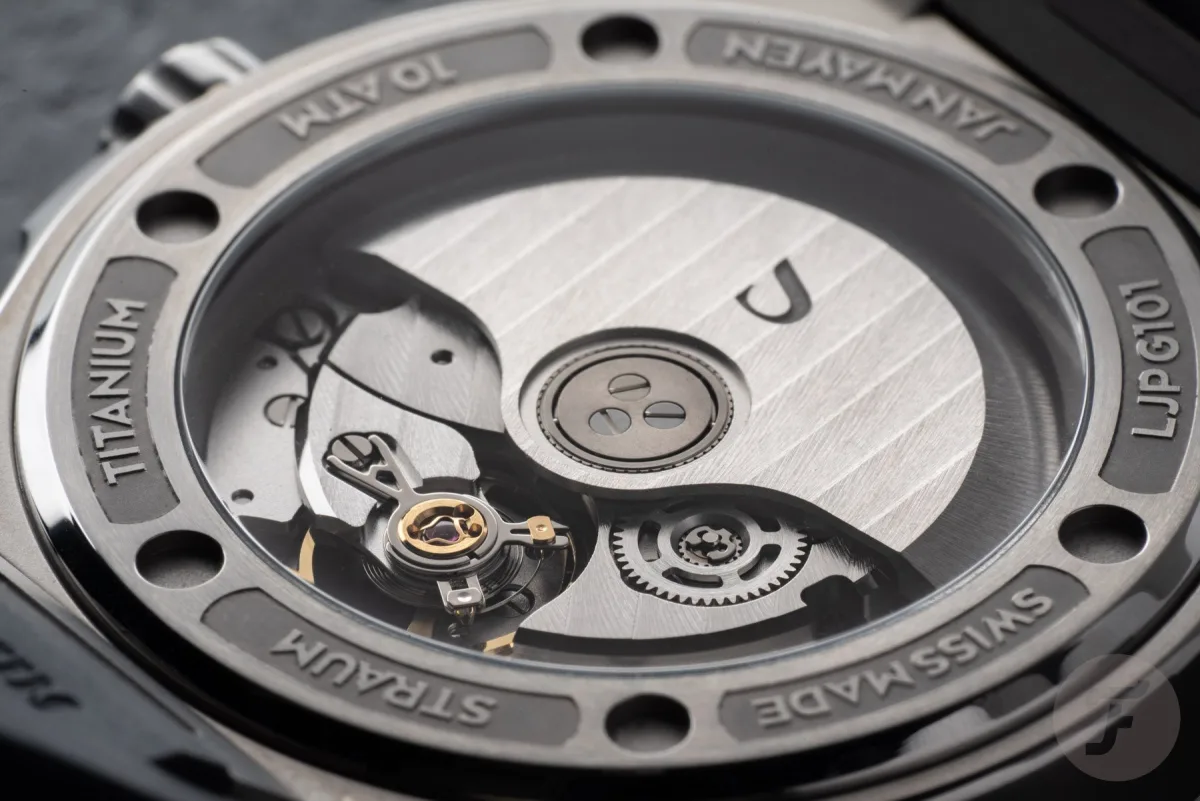
La Joux-Perret is the "Swiss brother" of Miyota within the Citizen Group. Their popular automatic caliber G100 is based on the Miyota 9039 architecture but completely redesigned and produced in Switzerland. Dimensions - 25.6 mm by 4.5 mm, frequency 28,800 vibrations per hour, power reserve - an impressive 65 hours. The movement comes in several finishing options.
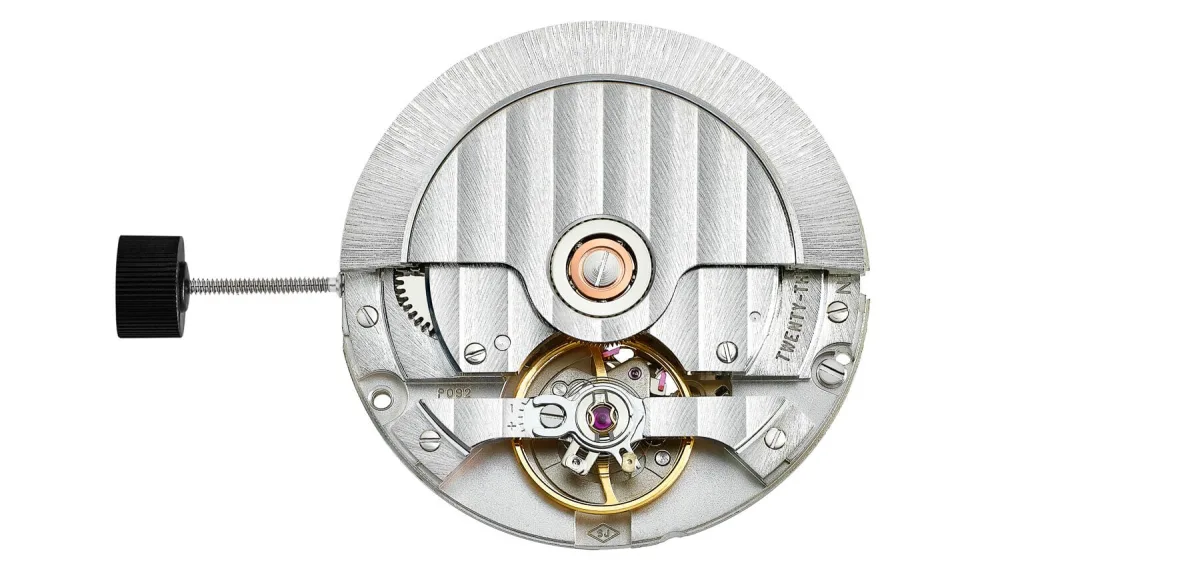
Soprod and STP also produce ETA-standard size movements based on their architecture but with various modifications - jewel count, power reserve, regulators.
Final Conclusions
Here is a brief overview of the most popular ebauche movements with time and date functions. Comparing them directly is difficult as they are created with different philosophies. For example, the Seiko NH35 is a simple and reliable movement, while the Sellita SW300 is more complex and expensive. Within the same movement, finishing quality and regulation level significantly affect characteristics.
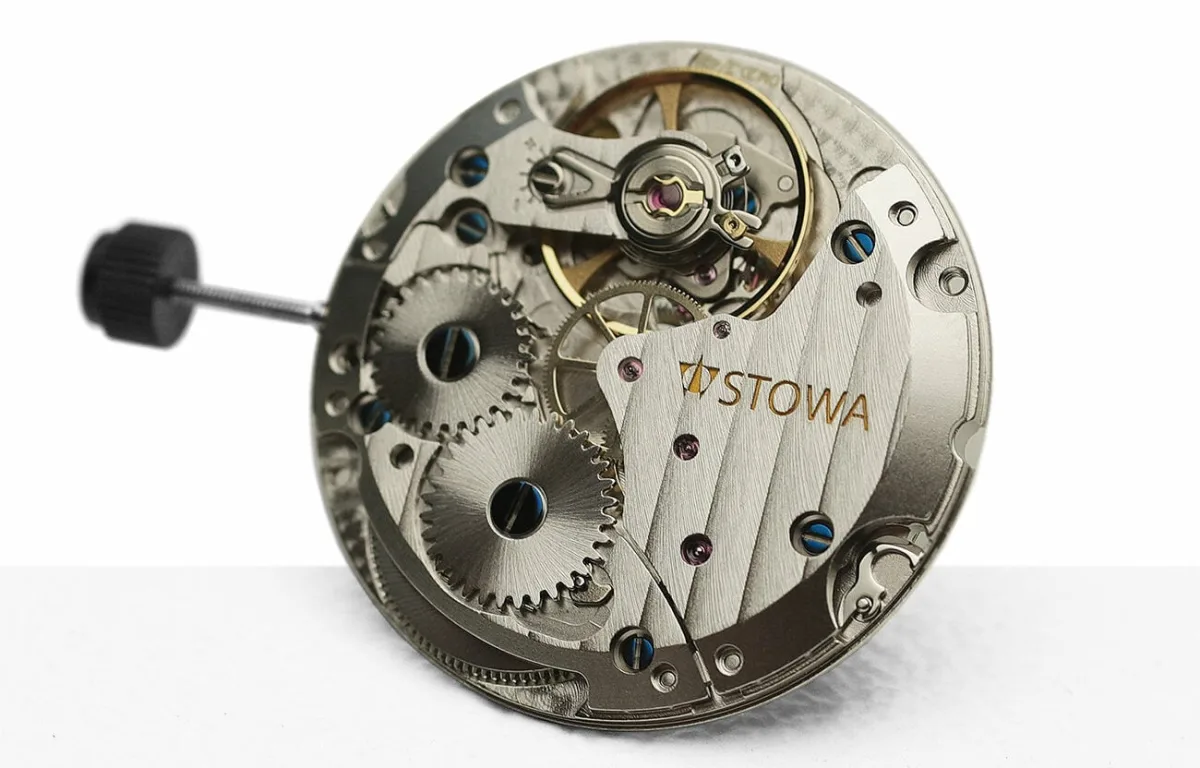
For some affordable calibers, it is cheaper to replace the movement than to repair it - this can be a downside for those who value serviceability. On the other hand, the simplicity of some movements allows enthusiasts to undertake repairs and adjustments themselves.
It's also worth noting that not all manufacturers disclose exact movement data, sometimes changing names or describing them as "Swiss ebauche," making it difficult to understand which caliber is used and how modified it is.
Your Experience and Opinion
This list is not exhaustive. We invite experienced readers to share their knowledge: what other ebauche calibers do you know, and how do they compare to those described above? Write in the comments!