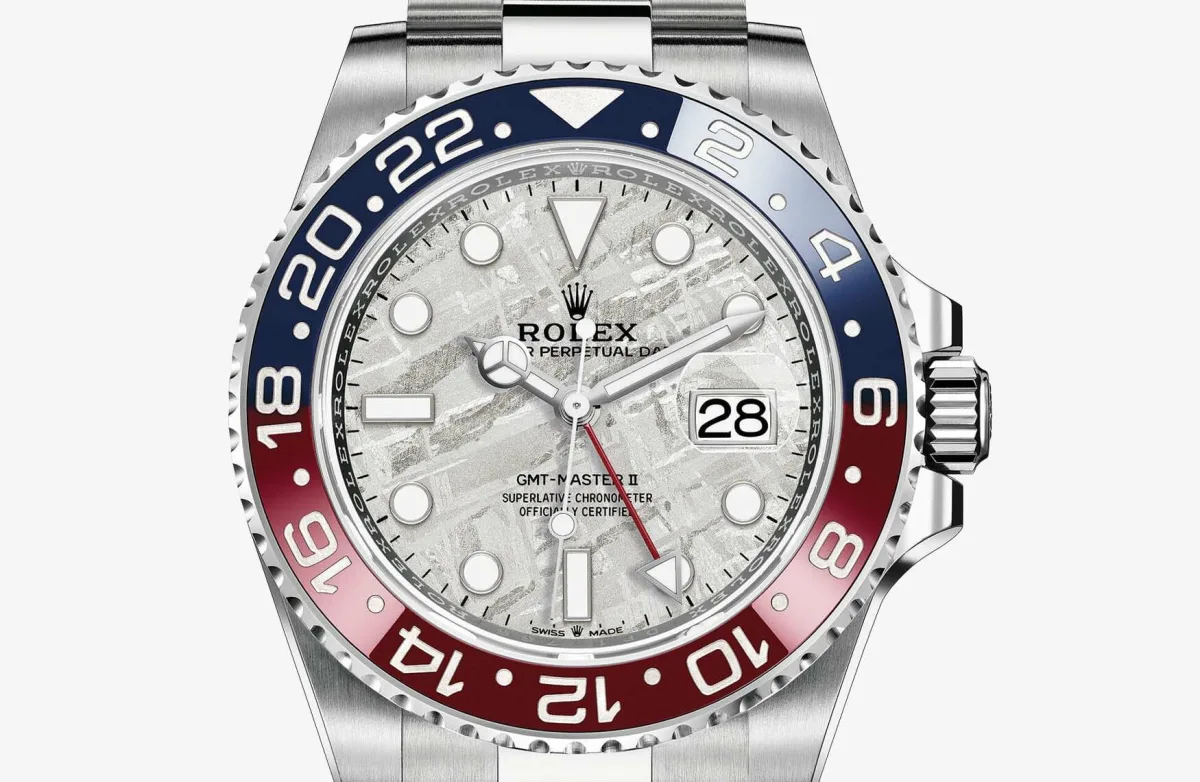
As the watch industry continues to experiment more and more with dials, it's no surprise that meteorite dials have become almost commonplace.
Rolex became the first company to use this material in 2002, although several rare Corum watches released in the late '90s may have been the first. Pieces of meteorites are forged in the molten cores of planets across the galaxy and then ejected into the vacuum of space, cooling incredibly slowly. Regardless, they are now found everywhere, even in entry-level microbrands. No matter how much you pay, it's amazing that you can wear a piece of space on your wrist. However, the more meteorite dials we see, the more often we hear about the Gibeon meteorite and its superiority over other types. Is this really the case, and what is the Gibeon meteorite?
History
Named after the nearest Namibian village to its discovery site, Gibeon was identified as a meteorite in 1836 by John Herschel after receiving samples from English Captain J.E. Alexander. Before this, local Nama people used its pieces to make tools and weapons. It consists of 91.8% iron and 7.7% nickel, making it naturally a very useful alloy. Gibeon fell at some point in the prehistoric period, and although this is a broad time frame, it must have occurred between 5,000 and 30,000 years ago. Whenever it fell, it was devastating. 26 tons of material were embedded into the Earth over an area 390 kilometers long and 120 kilometers wide - the largest area affected by a single meteorite known to science.
Process
In addition to its massive size, the Gibeon meteorite is best known for its beautiful Widmanstätten pattern. This pattern was first noticed in 1808 by Count Alois von Beckh Widmanstätten. It represents a very specific crystalline lattice that forms when molten metal cools incredibly slowly in the vacuum of space. It features a distinctly octahedral structure, but the individual fine needles vary greatly, so no two sections are exactly alike. To achieve the best results, the surface of the meteorite needs to be cut, polished to a shine, and then etched with acid to reveal all the contrasting alloys and minerals.
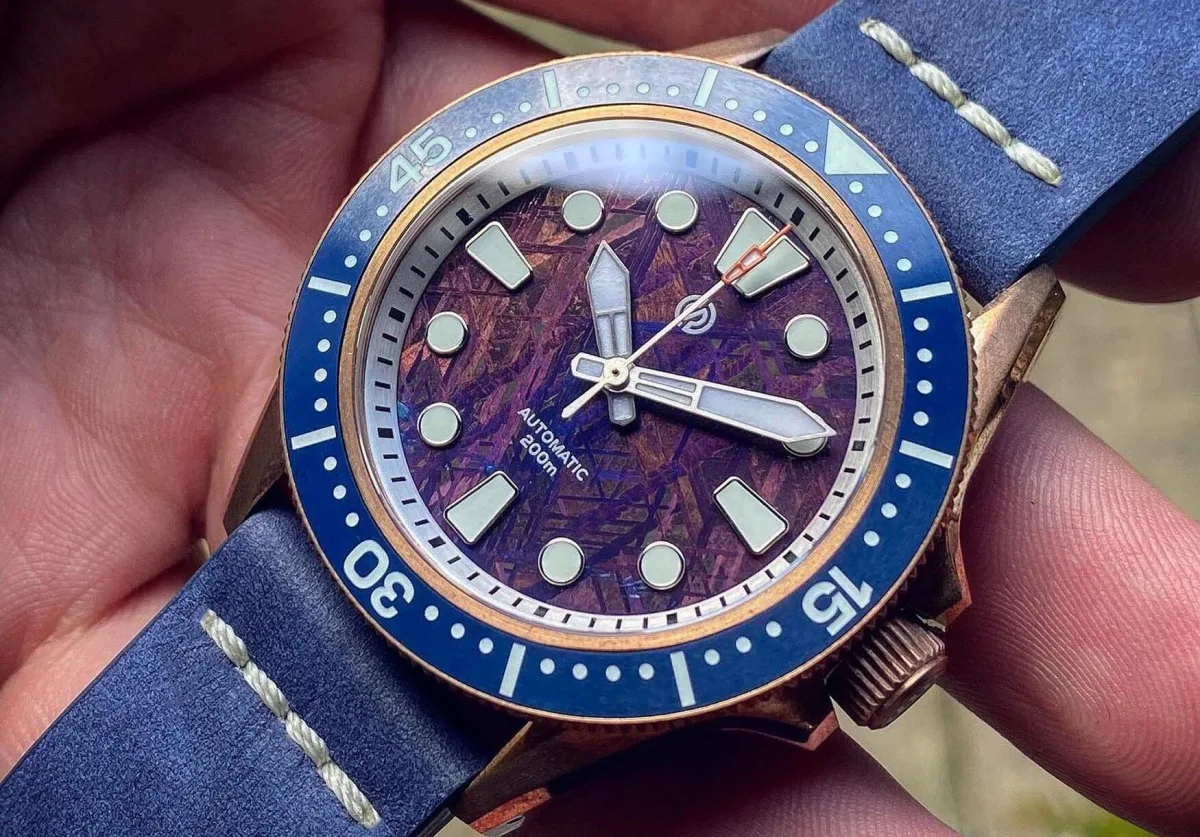
There are many meteorites with similar crystalline patterns, but Gibeon is distinguished by its attractive gray-silver sheen. Some manufacturers apply different treatments to achieve certain colors. Heat treatment can result in mystical shades of blue, purple, orange, and yellow, while a translucent lacquer provides a uniform layer of any color you choose.
Rarity or Lack Thereof
Do you think the Gibeon meteorite is really as valuable as its marketing suggests? A quick Google search for Gibeon meteorite jewelry should tell you everything you need to know. It is absolutely everywhere, and its appealing appearance has made it popular among jewelers worldwide. The reputation for rarity is due to Gibeon being protected as a Namibian National Monument since 1950, and modern samples are not allowed to be cut, sold, or even moved from their discovery site. All this is true, but considering how many tons of material were collected in the first century of its commercialization, it's no surprise that there are still many meteorites available for industry, mined before 1950. It can be sliced into pieces as thin as 0.1 mm, so in theory, an unprocessed fragment only 3 cm thick could produce 3,000 watch dials.
This abundance may alleviate any concerns about Gibeon meteorite forgeries, as there is little point in faking it. Complex stamping processes can imprint a pattern on a dial, but the coloring will be distorted, and each dial will look identical. Acquiring meteorite from other sources may prove more expensive since Gibeon was so large, and the results are likely to look not as good.
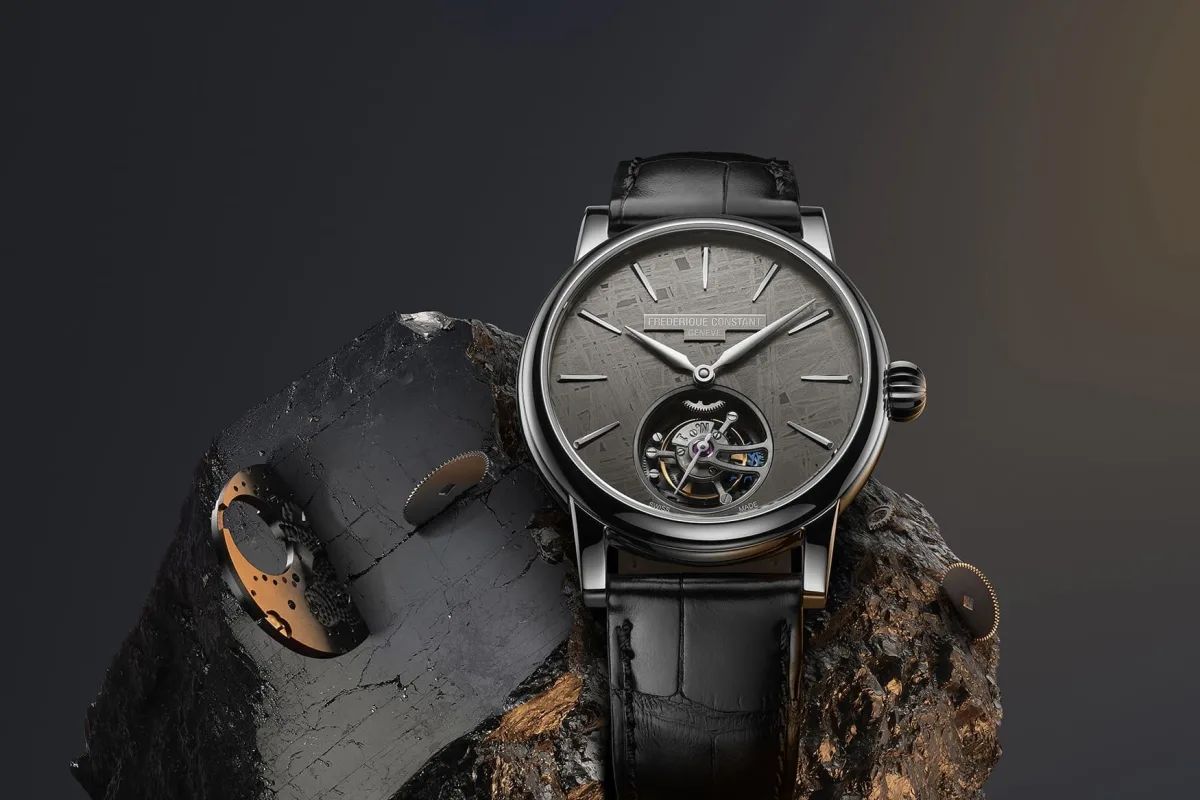
Perhaps rarity is not a particularly strong factor for the Gibeon meteorite, even if it eventually runs out, but that doesn't mean it hasn't earned its special reputation. Whether it's the Widmanstätten pattern that draws you in or simply knowing that this meteorite can be tied to a specific time and place, it has always been true that people just cannot ignore a beautiful stone.