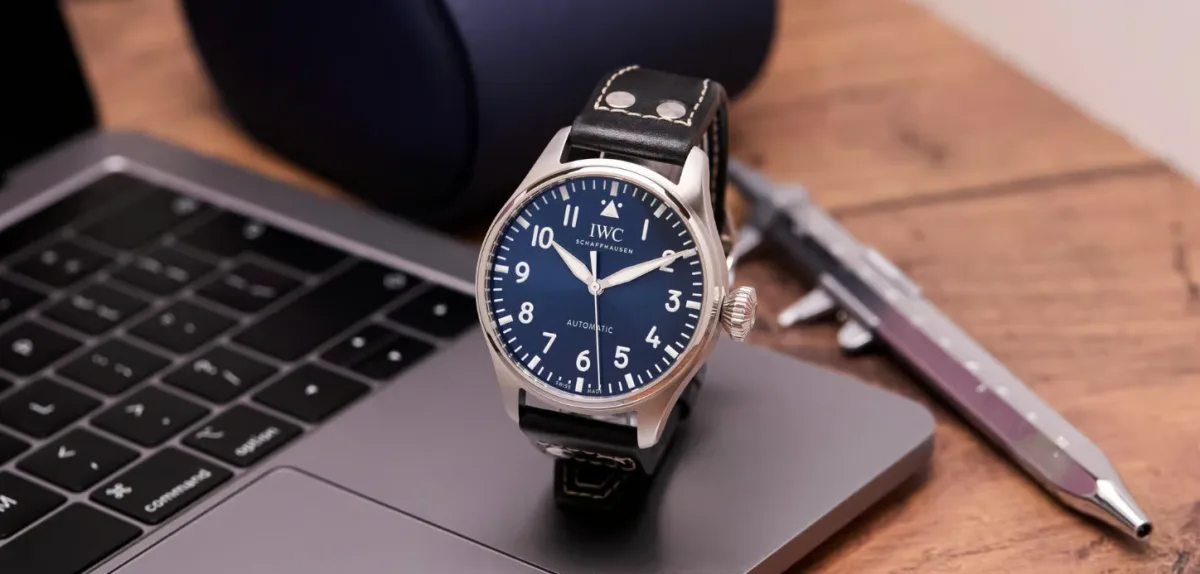
Large, expressive, and easily recognizable.
The IWC Big Pilot’s Watch is one of the most famous pilot watches in the world. With its noticeable case, distinctive large crown, and clearly structured dial, it has been associated with functional design and technical precision for decades. Originally created as a tool for pilots, the Big Pilot’s Watch has long become an icon appreciated by collectors and watch enthusiasts. It combines tradition and modernity: historical design elements are paired with advanced in-house movements, high-quality materials, and modern production standards.
In this article, we will explore five key aspects you should know about the IWC Big Pilot’s Watch - from its history and technical features to size, practicality, and pricing trends.
1. History: A Brief Overview
The history of the IWC Big Pilot’s Watch begins in 1940 with reference 431 - observation watches (B-Uhr) developed by IWC for the Luftwaffe. Alongside brands such as A. Lange & Söhne, Laco, Stowa, and Wempe, the company was among the top five manufacturers of specialized navigation watches.
These watches were not used as ordinary wristwatches but served as highly precise instruments for navigation in flight. The design was maximally functional: a 55 mm diameter case, a large "onion" crown convenient for winding in gloves, and a large dial with contrasting luminous Arabic numerals. The dial design follows Model A: large Arabic numerals from 1 to 11, an outer minute scale, and a distinctive triangle with two dots at the "12 o'clock" position. Inside reference 431 was the IWC caliber 52 T.S.C. - a manual pocket watch movement.
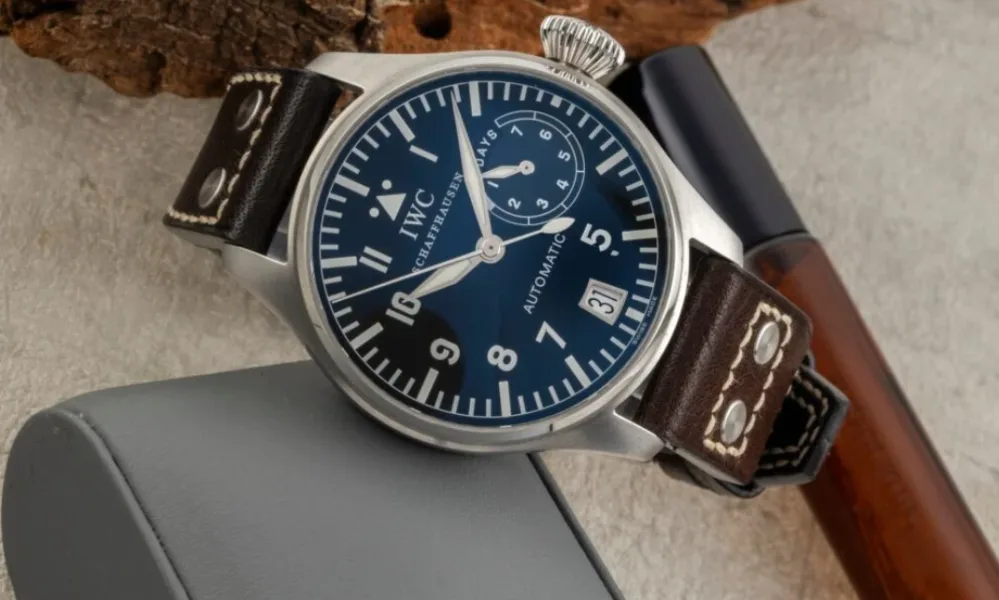
In 2002, IWC revived the historic model in the form of the Big Pilot’s Watch ref. IW5002. The new edition retained the recognizable design but was equipped with a modern automatic in-house movement 5011 with a "Slow Beat" function. The balance of this movement performs only 18,000 semi-oscillations per hour, providing a record power reserve of seven days. Since then, the Big Pilot’s collection has expanded to include various models made from different materials with numerous complications.
2. Materials, Features, and Technologies
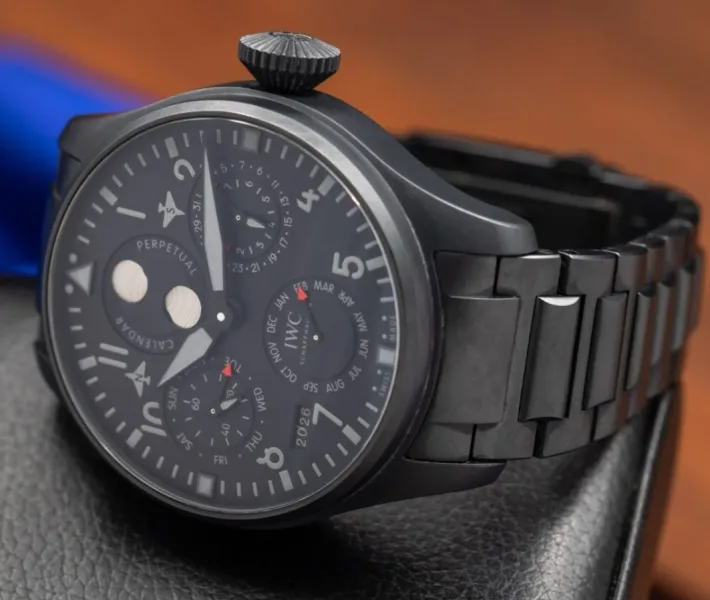
Modern versions of the Big Pilot’s Watch are produced not only in the classic stainless steel case but also in titanium, bronze, ceramic, as well as yellow and rose gold. A special place is held by the innovative material Ceratanium - a blend of titanium and ceramic developed by IWC. It combines the lightness of titanium with high scratch resistance and a matte black finish. Ceratanium is used, for example, in the Big Pilot’s Watch Top Gun ref. IW503604.
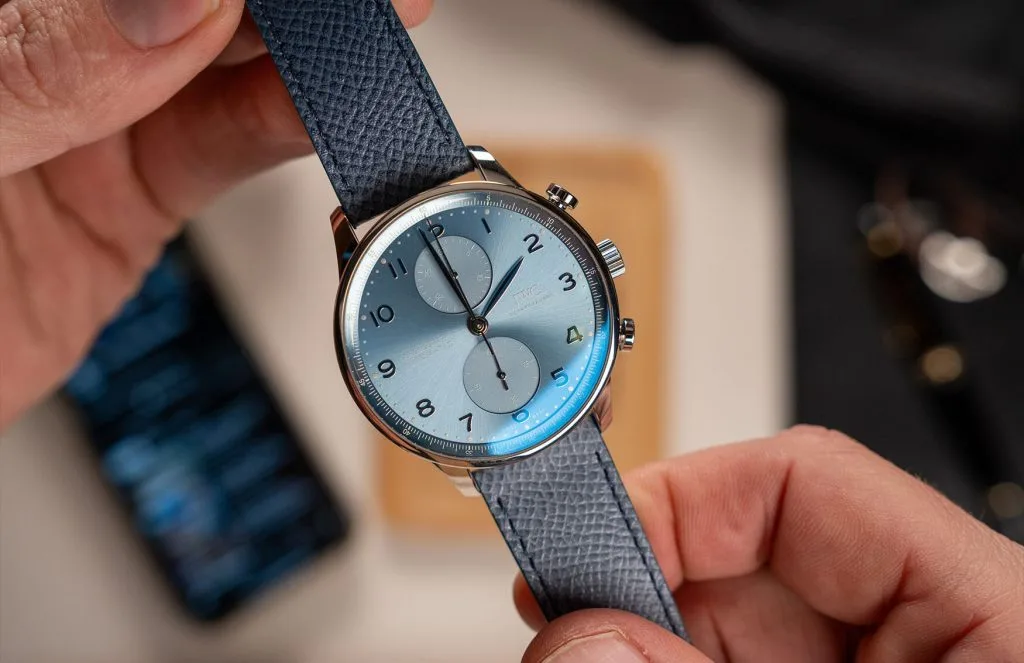
For the limited series ref. 505801 (only 250 pieces), the material Ceralume - luminous ceramic, is used, in which the entire case is coated with luminescent pigments and glows blue in the dark after exposure to light.
Inside modern models are in-house movements from the 52000 and 82000 series with the Pellaton automatic winding system, working in both directions. Critical movement parts are made from low-friction ceramic. Depending on the model, the power reserve reaches seven days, and functions include a power reserve indicator, date, perpetual calendar, second time zone, and other complications. Top models, such as the Big Pilot’s Watch ref. IW329502, are equipped with a tourbillon.
3. Case Size and Water Resistance
Modern Big Pilot’s Watches are available with a case diameter of 43 mm or 46.5 mm. Although they are significantly smaller than historical prototypes, the watches remain substantial and are better suited for larger wrists. For example, the model with a 43 mm case has a lug-to-lug distance of 52 mm, a case thickness of 13.6 mm, and a lug width of 21 mm. These watches are water-resistant to 100 meters (10 bar).
Models with a diameter of 46.5 mm have a lug-to-lug length of 57 mm, a case thickness of about 15.5 mm, and a lug width of 22 mm. Such watches stand out noticeably on the wrist and have water resistance up to 60 meters (6 bar).
4. Comfort and Suitability for Everyday Use
Modern Big Pilot’s Watches are functional and reliable pilot watches, ideal for daily use. High-quality craftsmanship is combined with technical improvements over historical models. Precision cases, sapphire crystals with anti-reflective coating, and a well-thought-out dial design provide a premium appearance and excellent readability in any lighting.
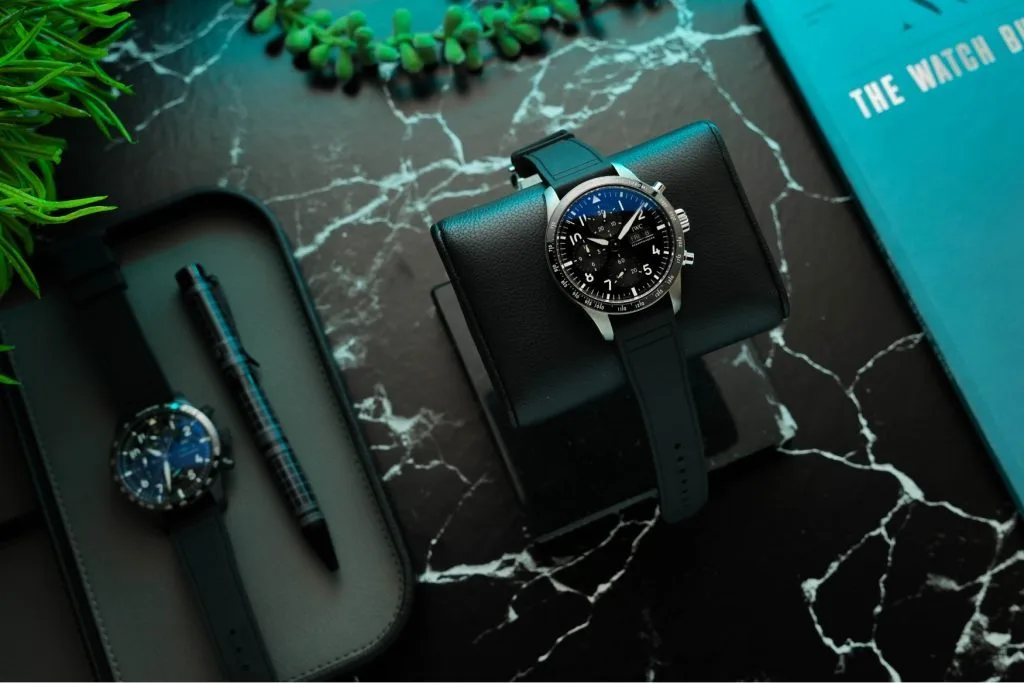
Modern straps made of rubber, leather, or metal are equipped with the EasX-CHANGE quick-change system, allowing bracelet changes without tools, enhancing convenience and versatility. Water resistance up to 60 or 100 meters allows the watch to be used in various situations. Overall, the collection combines the classic look of pilot’s watches with the comfort of modern luxury sports models.
5. Price to Quality Ratio
The IWC Big Pilot’s Watch is one of the brand's models with high resistance to depreciation and stable demand, especially on the secondary market. Although standard versions do not reach the price peaks of some sports watches from other brands, they stand out for their comparatively stable resale value.
Early versions of ref. IW5002, released in 2002, are particularly sought after. In good original condition with a complete set of boxes and documents, their price in July 2026 was more than 11% higher than in the same period the previous year. Rare examples with the original "fish" crown sometimes sell at a significant premium.
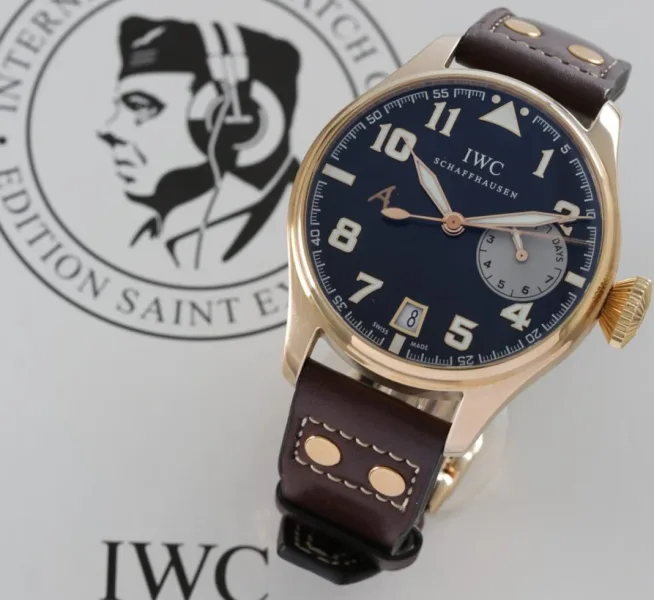
The Saint Exupery Big Pilot’s Watch (ref. IW500421) with a 46 mm case in 18-carat rose gold also shows a similar trend. Limited series, models made of precious metals, and with complex complications often exceed the market's average performance. To maintain value, rarity, originality, a complete set of accessories, and a verified service history remain key.
Conclusion
The IWC Big Pilot’s Watch is a blend of historical heritage and modern technology, making this collection one of the most recognizable and sought-after in the pilot's watch segment. Understanding the history, technical features, materials, sizes, and market trends allows you to appreciate the true value of these watches for both everyday use and investment purposes.