
It's no secret that I was impressed by a model from the Cartier 'Watches and Wonders 2024' collection.
In the end, I wrote an introductory article and mentioned it in my piece on W&W favorites. If you missed both, I'm talking about the Cartier Tortue Monopoussoir Chronograph. I had the chance to try it in action, and it did not disappoint. So, let's delve a bit deeper into studying this complex Cartier model.
The Cartier Tortue Monopoussoir Chronograph is available in platinum or yellow gold. Both versions are limited to 200 pieces. The platinum model costs €53,000, and the yellow gold version is €46,000. Therefore, calling this review a consumer guide would not be quite accurate. Nevertheless, these watches can be admired from afar, like a favorite painting. That's exactly what I'll do after spending some time with them in Geneva.
Cartier Tortue 101
Most people associate Cartier watches with the iconic Tank model, but the Tortue model appeared five years earlier. It was the House's second case shape, following the Santos-Dumont. However, it wasn't until 1928 that it became a platform for complications. In one year, Cartier introduced a minute repeater and a monopusher chronograph (monopoussoir in French).
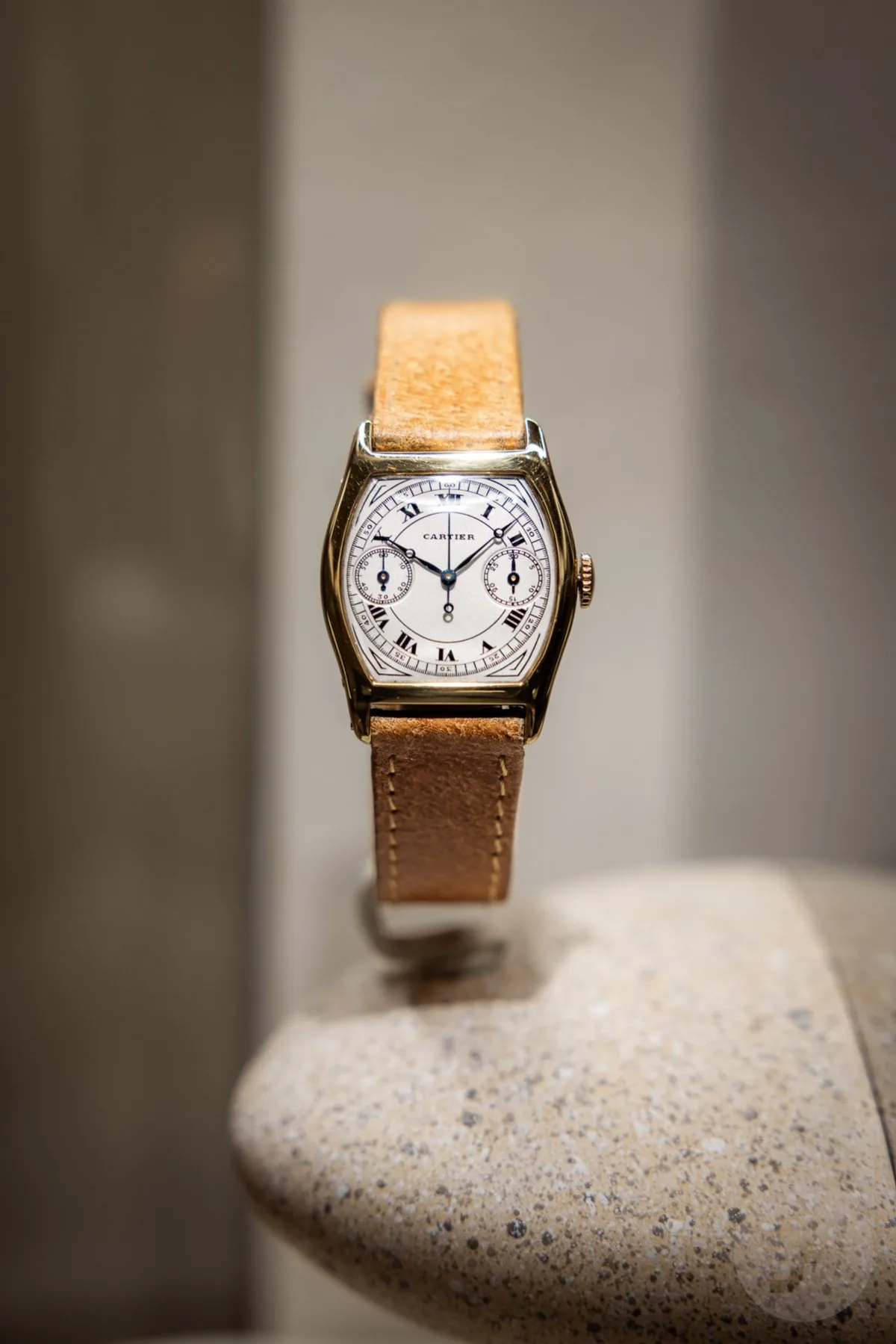
The original Monopoussoir measured only 25 mm × 35 mm and looked quite different from modern versions. The bezel was much narrower, and the crown was wide and flat. The caliber inside was made by the European Watch & Clock Company, a joint venture between Edmond Jaeger and Cartier. Original Tortue Monopoussoirs are extremely rare. Even among the few known examples, there are variations in dial placement.
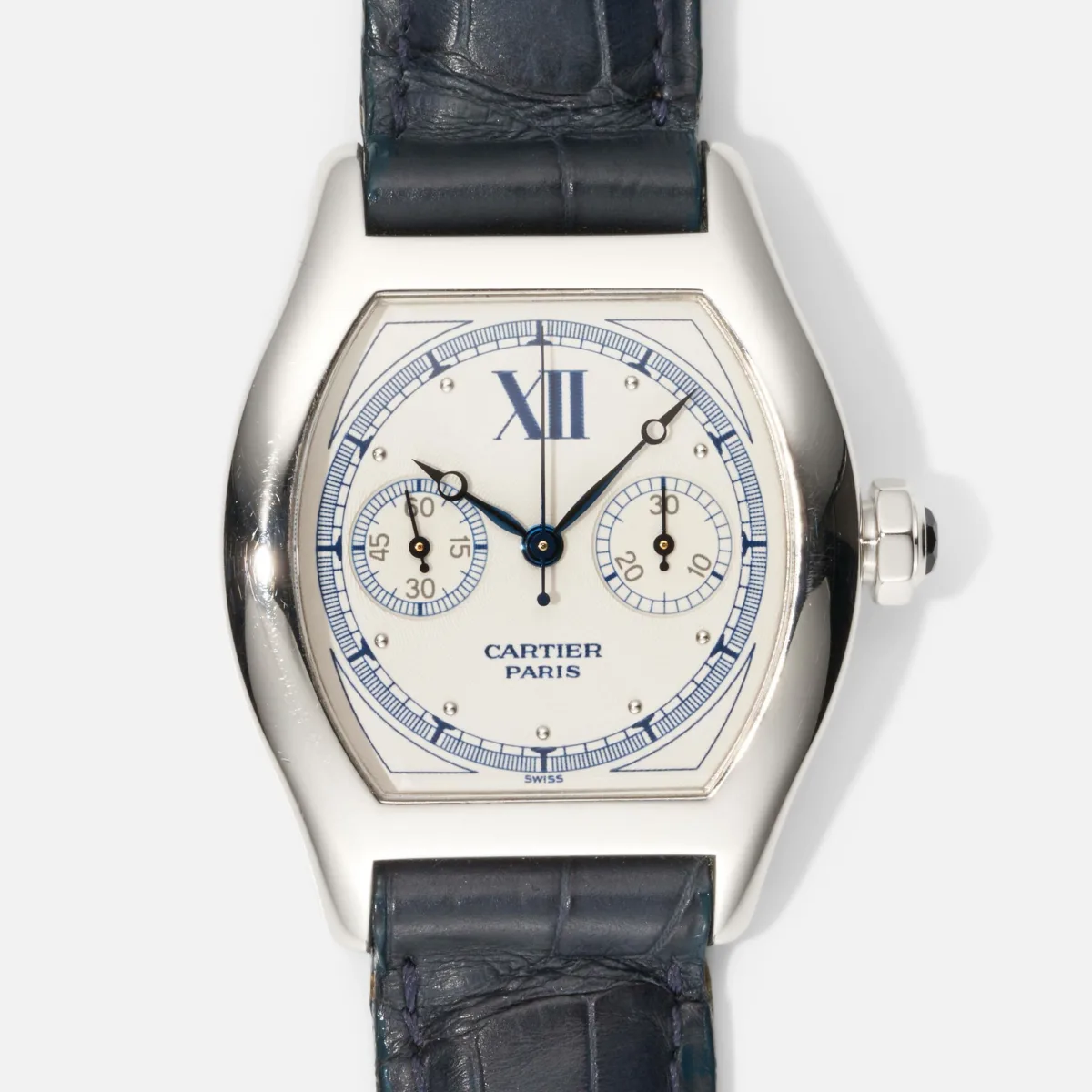
The Tortue Monopoussoir Chronograph returned during the Collection Privée Cartier Paris era (1998-2008), this time with a caliber from THA, created in collaboration with Vianney Halter, François-Paul Journe, and Denis Flageollet. The Tortue model received a new 34 mm × 43 mm case and a round sapphire window on the case back.
There are several dial options: some with the original round minute scale, others with a tonneau dial filled with Roman numerals. There has been no other Cartier Tortue Monopoussoir chronograph model since. Until now.
New Cartier Tortue Monopoussoir Chronograph
It seems Cartier doesn't intend to make this rare beast widely available. The new Tortue Monopoussoir model is released in a limited edition of only 400 pieces in two versions. The tortoise will remain an endangered species in the Cartier universe.
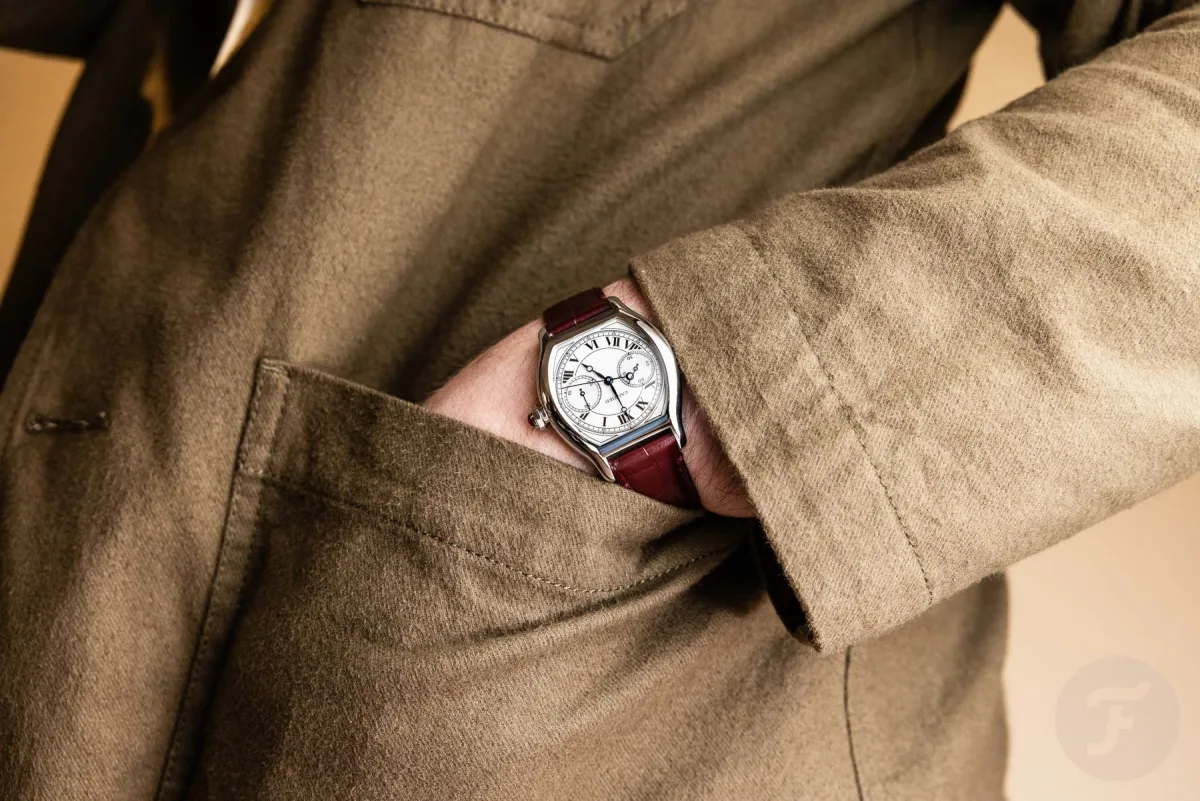
The new version closely resembles the models from the CPCP era. The dimensions have remained almost the same: 43.7 mm in length, 34.8 mm in width, and 10.2 mm in thickness. However, the dial arrangement seems to more accurately replicate the 1928 original. There are CPCP models with a similar dial arrangement, but most of them are a bit more intricate.
For example, they have more numerals on the sub-dials. The new models look cleaner and more classic. Decorative triangles in the corners also return, complementing the dials. The dial surface is now opaline (with a fine matte finish) instead of white or guilloché.
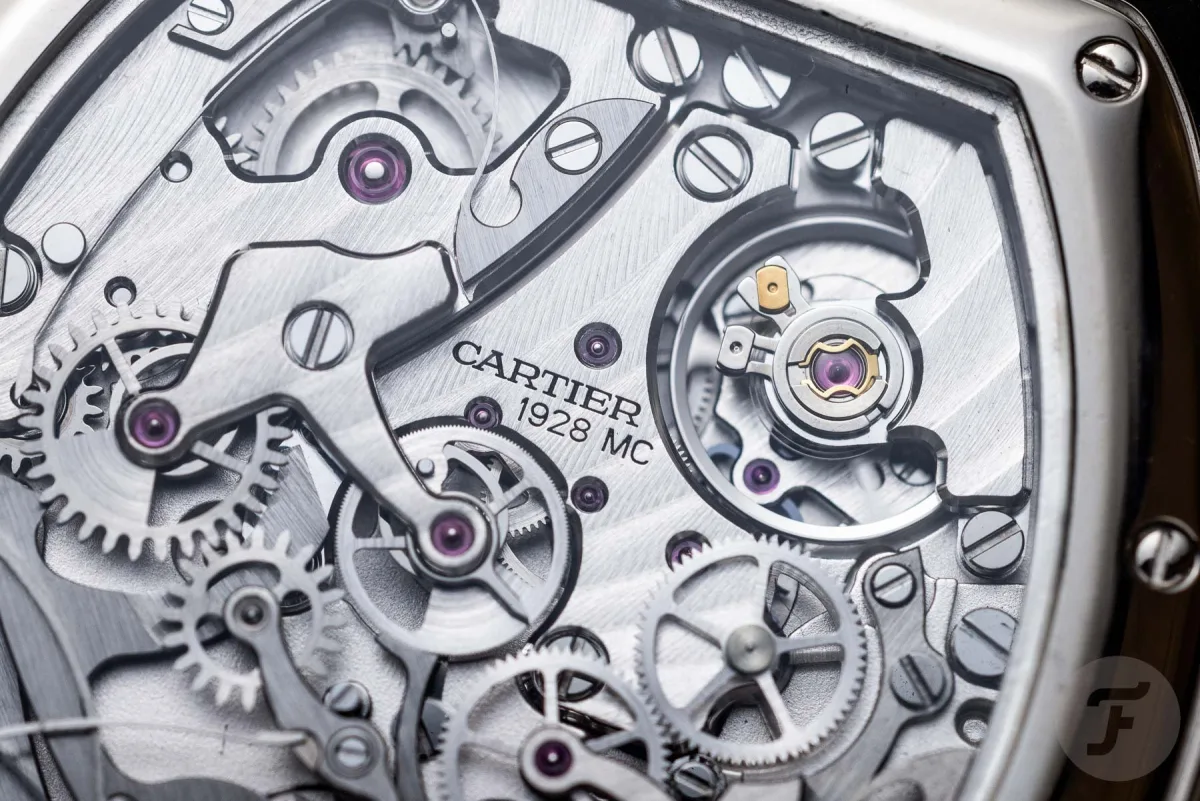
The biggest changes have occurred inside, where the new caliber 1928 MC is now housed. You will immediately notice that this movement now has the shape of the Tortue case. The round sapphire display has been replaced with a barrel-shaped window. Technically, the caliber is no longer equipped with the THA signature oscillating pinion chronograph engagement system.
We now see a more traditional column wheel setup. The hand-wound caliber runs at a frequency of 4 Hz and requires winding approximately every 44 hours. It is beautifully finished, including bevelled bridges and a curved Côtes de Genève pattern, as expected in this segment.
Cartier Tortue Monopoussoir Chronograph Design
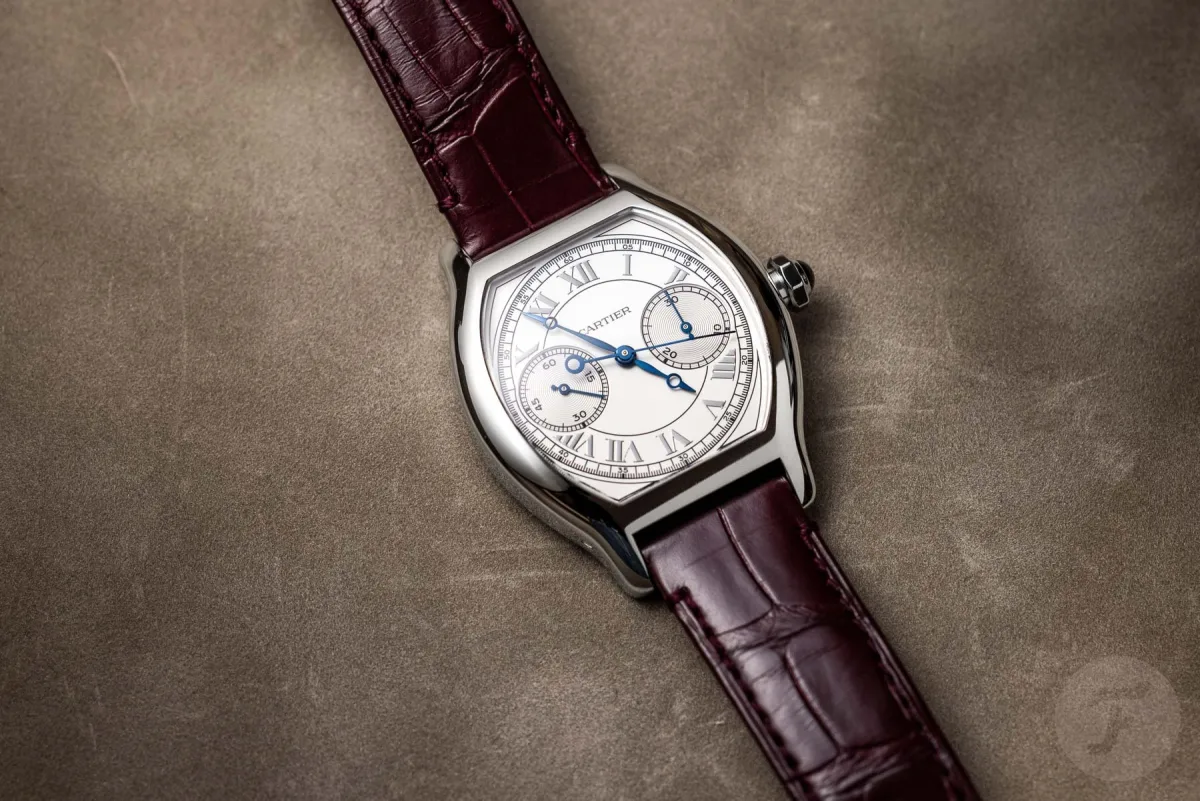
The Tortue Monopoussoir Chronograph is the epitome of Cartier, if you ask me. It has all the classic Cartier hallmarks: Roman numerals, distinctive blued hands, and a cabochon on the crown. It possesses that early 20th-century Parisian charm that you won't find with any other brand.
However, in the Tortue chronograph, it is combined with a more sporty and muscular look. In my opinion, very few Cartier watches balance this as well. I see this in the discontinued Santos Galbée XL ref. 2823 model.
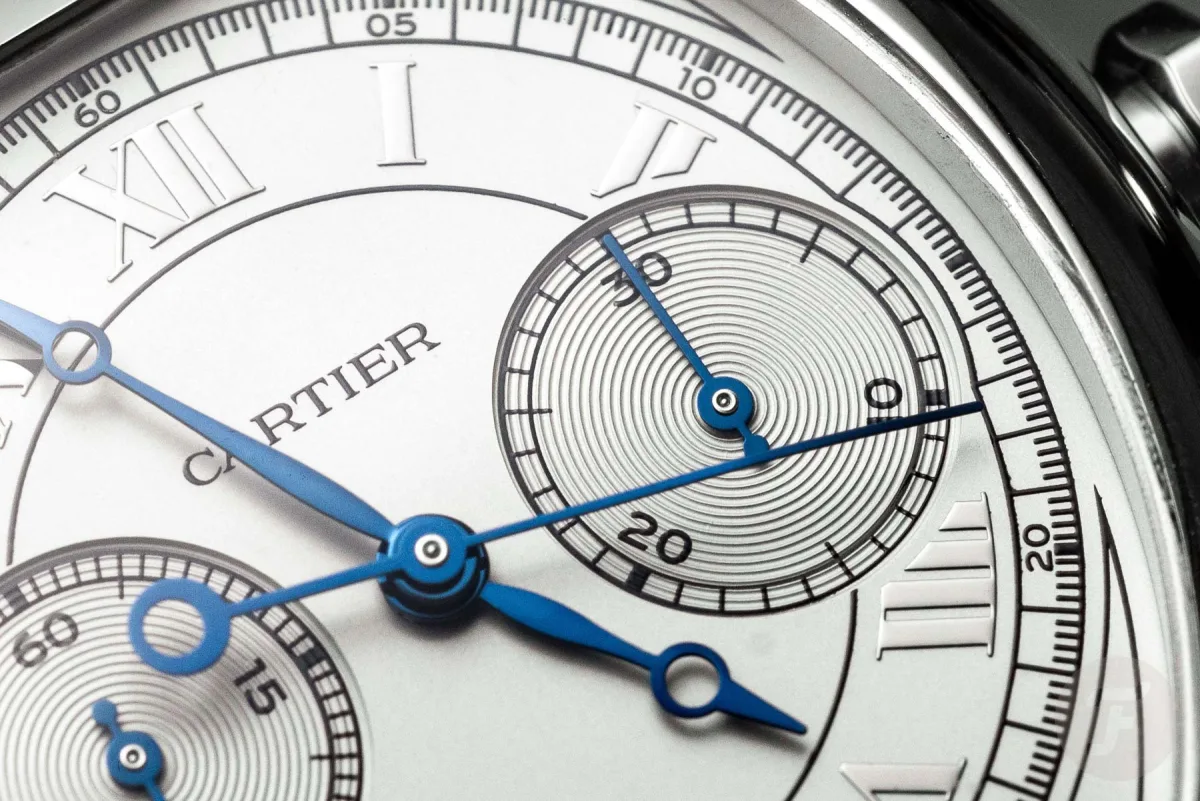
Compared to the time-only Tortue model, the Monopoussoir has a more intricate dial and a slightly thicker case. I am a proponent of subtlety and elegance, but since there is already plenty of that in the design language, the Monopoussoir benefits from a slight addition. I call it balance because I feel that in larger Cartier models, this is overdone. Their size and design somewhat diverge. In the Tortue Monopoussoir and Santos Galbée XL models, everything is done correctly.
The dial arrangement is close to perfection. I prefer the 'circle within the barrel' scheme over the previous filled dials. The triangles in the corners visually anchor it in the overall shape. The sub-dials are carefully matched in size and placement. It's a stylistic choice. They could have been smaller, leading to a more formal look. However, now they complement the stricter Tortue aesthetic.
Wearing the Cartier Tortue Monopoussoir Chronograph
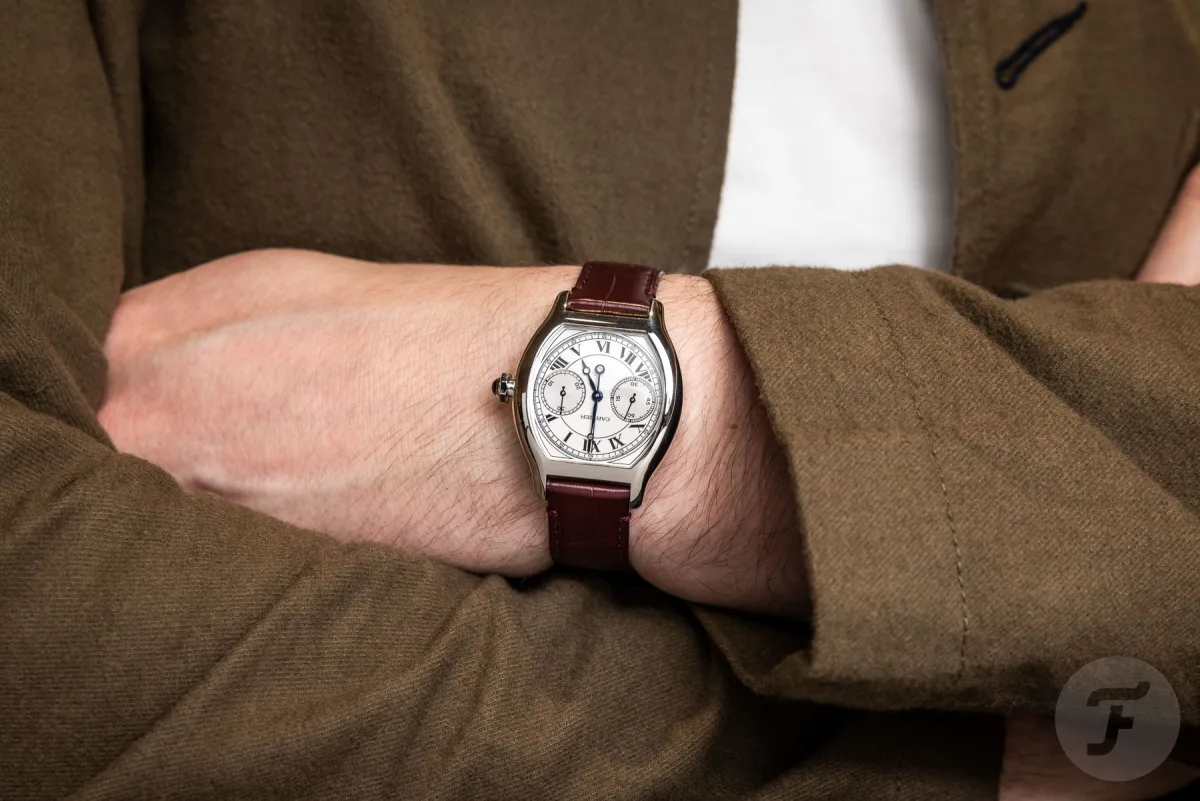
As you have already gathered from the above, the proportions of the Cartier Tortue Monopoussoir Chronograph are precisely maintained. Subjectively, I would call the size neutral - neither small nor large. The models intended only for timekeeping are a bit more sparse, but not here.
The robust case provides everything one could wish for, and the modest proportions and strong curvature ensure a beautiful and comfortable fit on the wrist.

While some consider Cartier generally formal and dressy, I see these watches as perfectly suitable for everyday use. You can easily dress them up or down. They pair most naturally with a suit and tie. However, the contrast with ripped jeans, sneakers, and a white T-shirt might be even cooler.
I prefer the yellow gold model. It's not just about the metal itself, but also the printed black numerals. This provides a stronger contrast compared to the applied numerals on the platinum model.
Final Thoughts
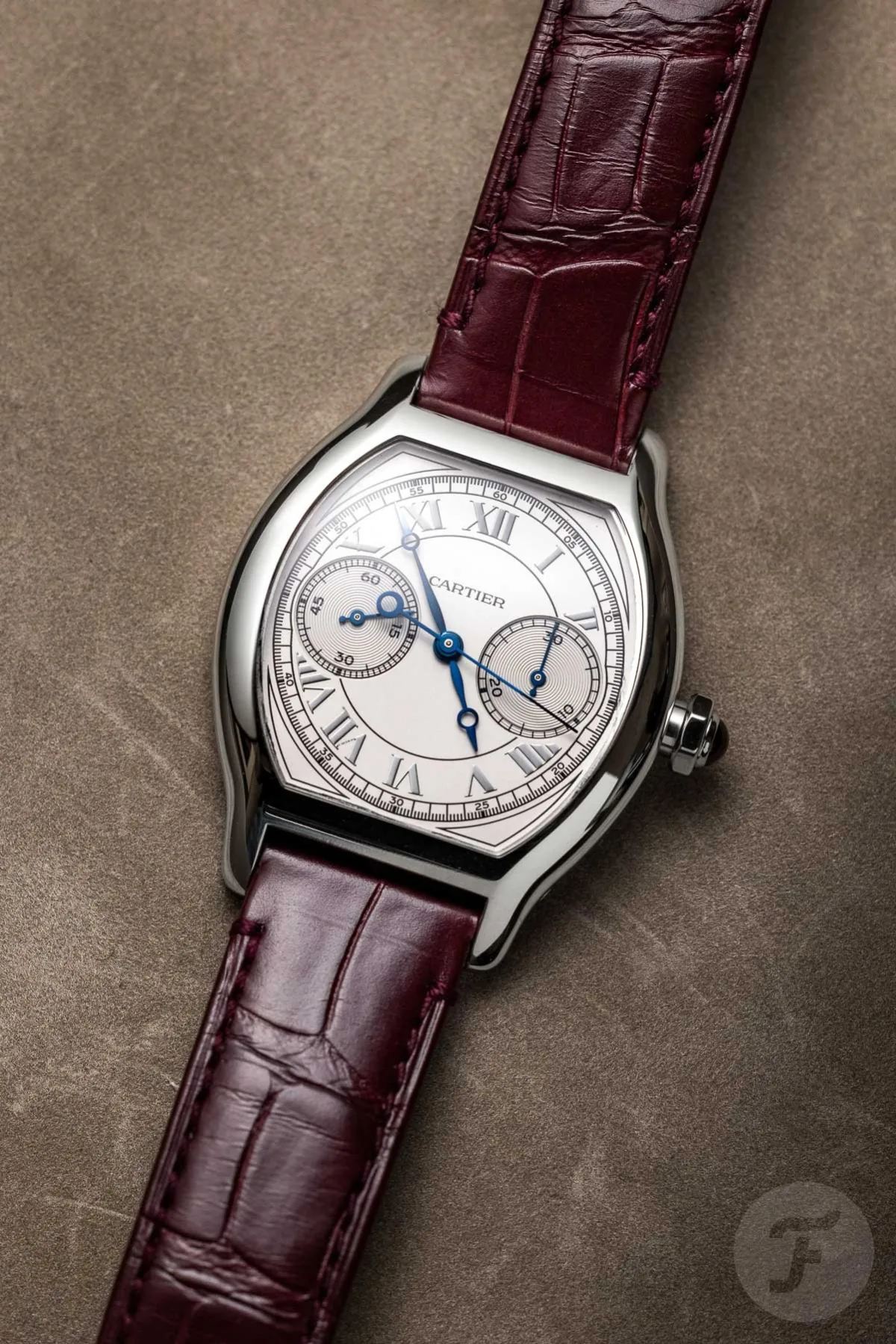
Rarely do I find no flaws in a watch. I consider myself quite critical, but occasionally a watch just overcomes that barrier. This is one of those cases. I wouldn't change a single trait or feature if I could.
The only downside I can think of is the fact that I'll never become the owner of such a watch. In reality, no matter how rare and expensive they are, I'm unlikely to even see them in real life. I would love to see the Tortue in a regular collection available to mere mortals like myself. Unfortunately, this is unlikely to ever happen. The Tortue watches have always been elusive and rare, and Cartier is right to keep them that way.
What do you think about the new Cartier Tortue Monopoussoir Chronograph? Tell us in our Telegram channel!