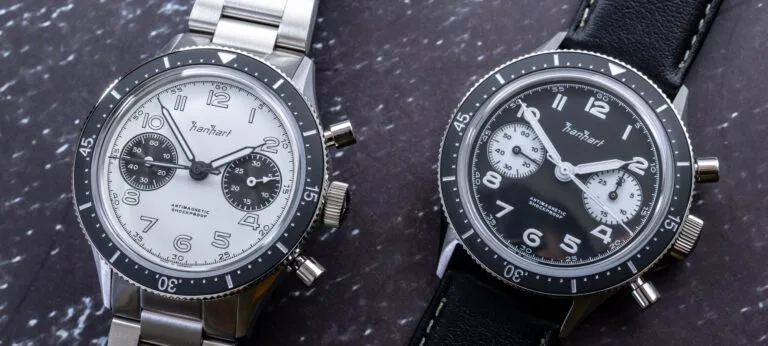
I was extremely pleased with the latest Hanhart watches I reviewed on WatchTested, and as far as I know, my colleagues from the team share this opinion.
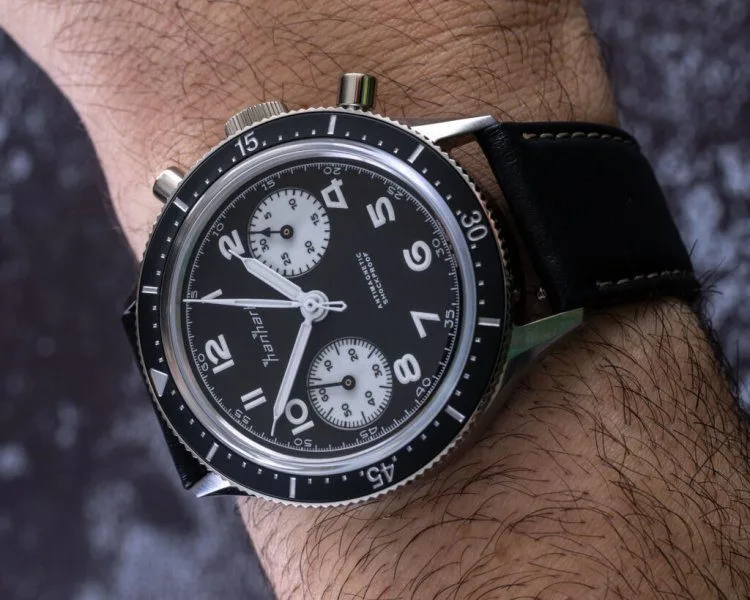
The contemporary sports watches of this traditional German brand, located near the Black Forest, often feature a retro style that resonates with many enthusiasts. Additionally, Hanhart is the last European company still producing mechanical stopwatches, adding uniqueness and niche acclaim to the brand.
Today, I will review the Hanhart 415 ES aviation chronographs. These watches are relatives of the previously reviewed Hanhart 417 ES Chronograph (first review - 2022) on WatchTested, a family in which Hanhart has released several versions. In 2023, I also reviewed the Hanhart 417 ES Flyback, and more recently, a review of another dial variation of the Hanhart 415 ES with a 39 mm diameter appeared on WatchTested.
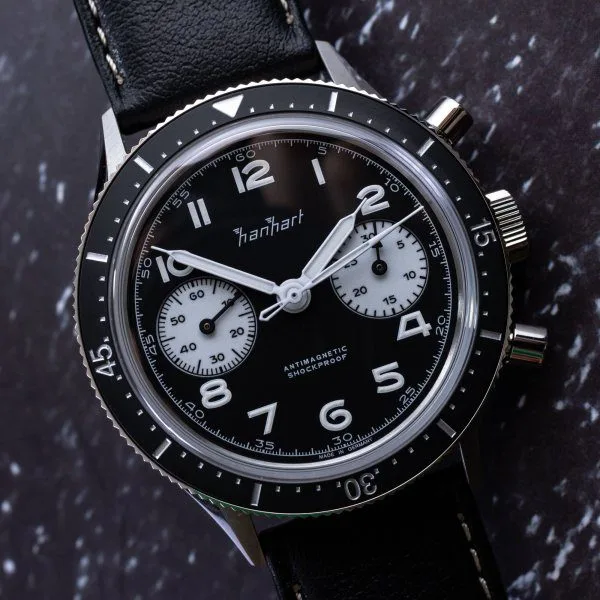
Design and Model Family of Hanhart 415 ES and 417 ES
Despite the fact that the 417 ES index is higher, the design of these watches is more retro-oriented. The 415 ES model is a classic aviator sports watch, but technically it looks more modern compared to the 417 ES, which pays homage to historical style. The 417 ES versions come in 39 mm and 42 mm diameters, while the 415 ES is 39 mm. They all belong to one family, honoring the legacy of the German company in producing professional pilot watches of the mid-20th century.
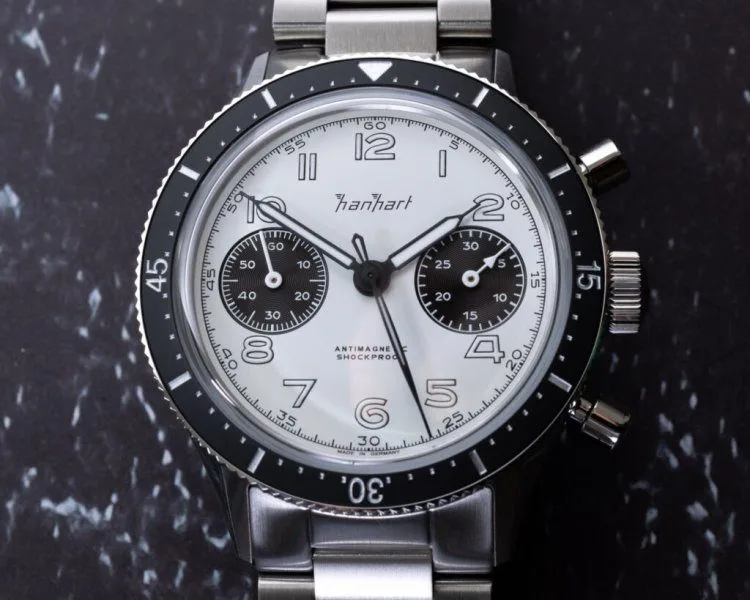
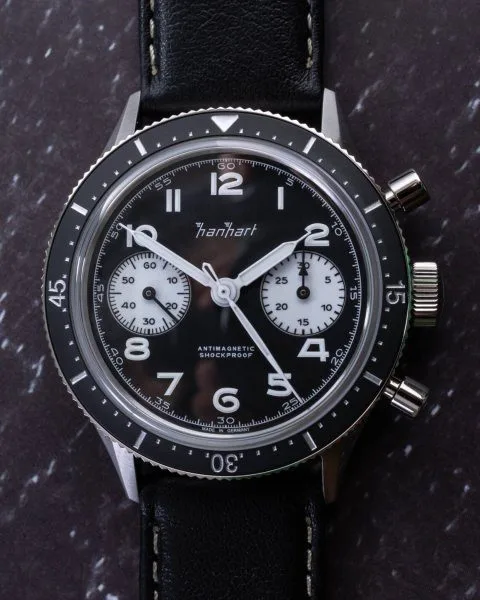
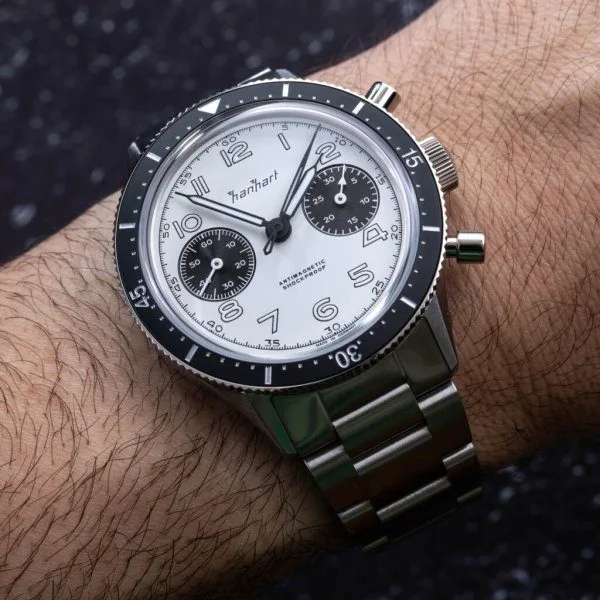
The differences between the models are often minimal: different bezels, dial designs. However, the choice of models is vast - the Hanhart website features about 26 variants of the 415/417 ES, most of which have similar prices. Buyers need to choose the case size, dial color, bezel style, and strap or bracelet option. This article examines two versions of the 415 ES: white with black subdials (“panda”) and black with white subdials (“reverse panda”), as well as versions on a steel three-link bracelet and a comfortable black leather strap.
Mechanisms and Features of the Chronograph
Most Hanhart 415 and 417 ES models are equipped with identical mechanisms, with one nuance - the flyback function in the chronograph. This function is not obligatory, but it is important to note that the 415 ES is equipped with a Swiss Sellita SW510 M hand-wound movement, while some 417 ES versions feature the Sellita AMT5100M with a flyback function. Both calibers are 30-minute chronographs with a frequency of 4 Hz and a power reserve of 58 hours. The AMT5100M model is an enhanced version of the SW510 with a flyback function, produced by the AMT division of Sellita.
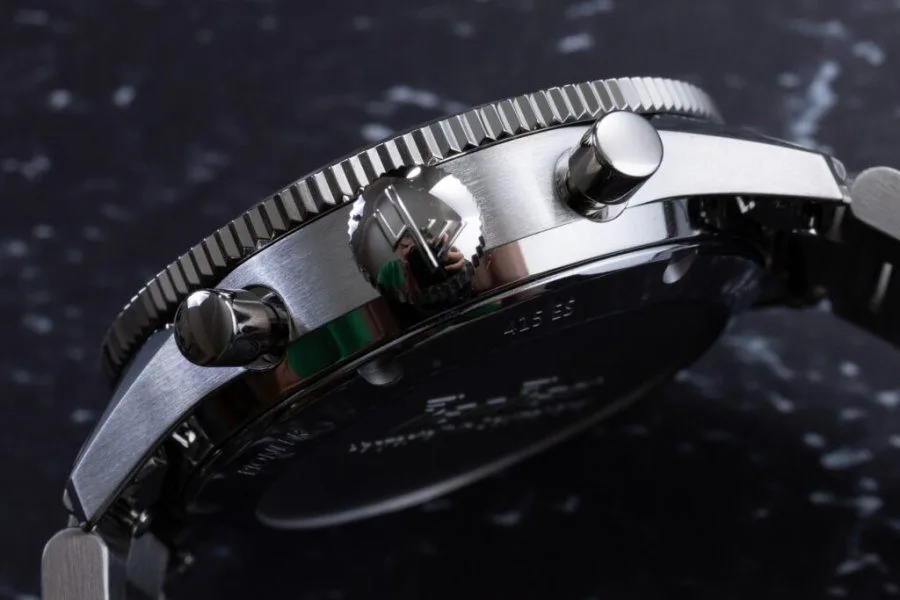
Both mechanisms are reliable and functional, but they are hidden behind a solid metal case back, which excludes the possibility of observing the mechanism's operation.
Manual Winding - The Only Option
My only significant drawback of the Hanhart 415 and 417 ES collection is the exclusively manual winding mechanisms. Essentially, the SW510 is an automatic movement without a rotor. This technically increases the thickness of the case, but the 415 ES is already quite a thick watch (13.5 mm). I do not consider this a downside, rather noting that the case could accommodate an automatic caliber. For historical reasons, Hanhart prefers to maintain a classic manual winding for retro sports models. Although this decision is understandable, today it seems somewhat arbitrary. Users could have thinner watches with automatic winding. Personally, I am accustomed to automatic watches and often forget to wind the 415 ES, although the habit of winding the crown compensates for this drawback.
Anti-Magnetic and Shockproof Properties
The dial features the inscriptions “anti-magnetic” and “shockproof,” which refer to the characteristics of the mechanism. The watch is equipped with a traditional soft iron case protecting the mechanism from magnetic fields, as well as a shock protection system for the regulator. However, the term “shockproof” should not be taken literally, like the G-Shock level of protection. In the mid-20th century, these watches were the equivalent of modern shock-resistant models.
Historical Heritage and Design Features
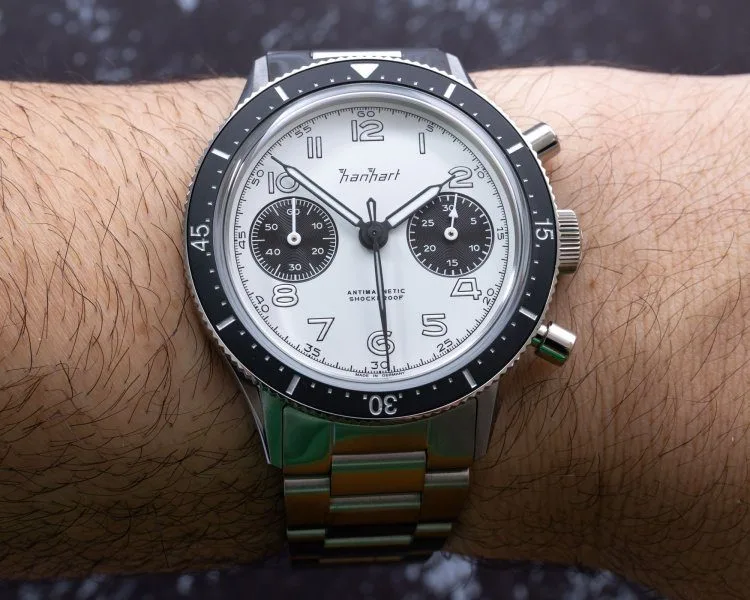
According to Hanhart, the original 415 ES watches were produced in the 1960s. At that time, many models looked more modern, so the 415 ES were considered traditional. The modern version retains the classic bi-compax chronograph with an aviation style and a bidirectional rotating bezel for counting 60 minutes, borrowed from diver's watches. The bezel insert is made of matte ceramic, resistant to scratches, maintaining the tool-like style.
Size and Wearing Comfort
Ten years ago, I would not have worn medium-sized sports watches like the 415 ES, preferring larger models. However, I really liked the 39-millimeter case of the 415 and 417 ES. The 13.5 mm case thickness gives the watch a balanced look, and the dials are highly legible. The proportions of the dial, bezel, case, and hands are perfectly combined in the 39 mm size. Although I like the 42 mm version of the 417 ES, visually, 39 mm looks more harmonious.
The case is water-resistant up to 100 meters, with a lug-to-lug distance of 46 mm. The dial is protected by a convex sapphire crystal with anti-reflective coating. Although the watch is not limited, a unique serial number is engraved on the case back.
Dial Legibility and Luminescence
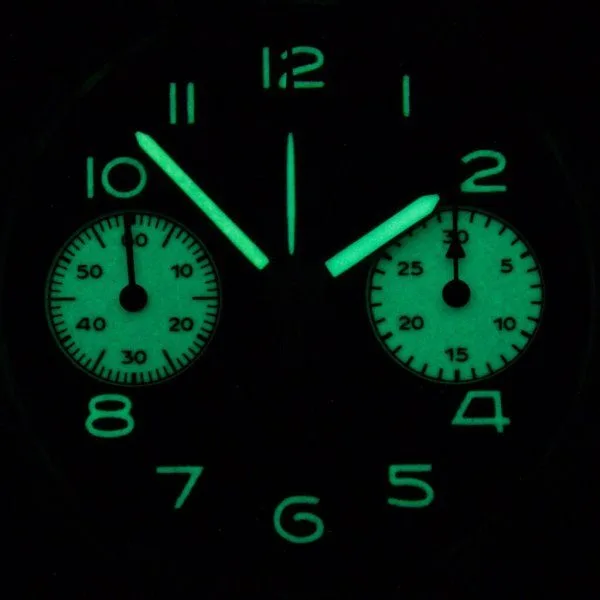
It is worth noting the excellent legibility of the dial. The Super-LumiNova luminescent compound is applied not only to the hands and main markers but also to the subdials of the black version. The absence of glossy elements eliminates glare and improves time readability. The hands have an optimal length, and some are slightly bent downwards to improve visibility. Overall, the design is very functional and tool-like - exactly what good German watches should be.
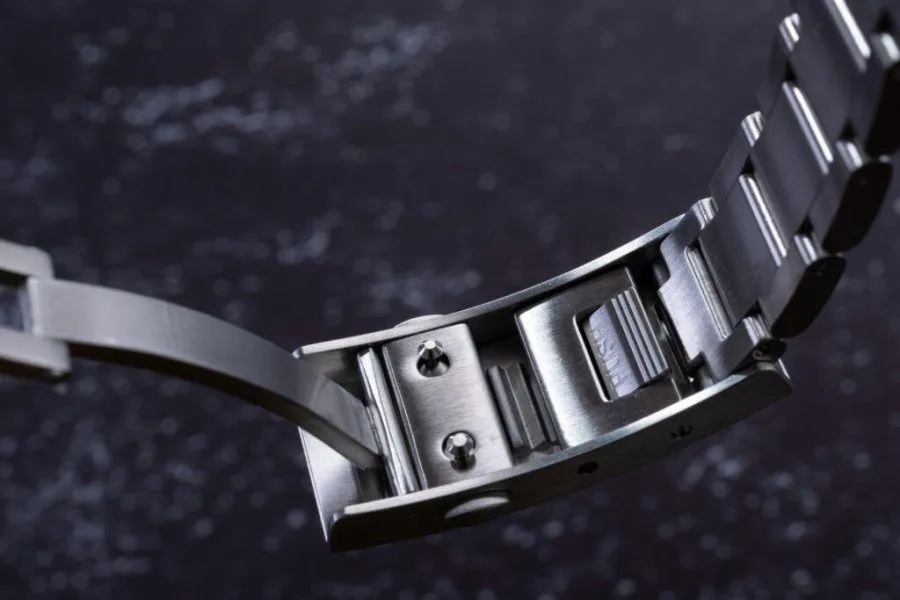
In everyday wear, I more often chose the black version on a steel bracelet with micro-adjustment in the clasp. The Hanhart 415 ES seemed to me a comfortable and versatile watch with a classic masculine character, suitable for different clothing styles. The model has a wide variability, which explains the large number of versions on the market. However, for some buyers, the choice can be a difficult task without fitting.
German Design and Philosophy
What I particularly like about German tool watches is their ability to look recognizable and attractive without excessive design frills. Unlike Swiss sports watches, which are sometimes overloaded with unnecessary details to create an effect of luxury and uniqueness, German watches look more authentic and functional. This does not mean they are boring, but their design is thoughtful and minimalist, which is appreciated by connoisseurs.
Personally, I prefer German tool watches to Swiss ‘showy’ models, and the Hanhart 415 ES is an excellent example of that.
Price-Quality Ratio
Speaking of value, Hanhart's three-hand models offer the best price-quality ratio. Chronographs are more expensive, but these German tool watches are often about half the price of similar Swiss models. The build and component quality is high. The only minor drawbacks are the relatively simple case back design and the lack of automatic winding, which may be a downside for some buyers.
At the time of writing this review, the price of the Hanhart 415 ES on a black leather strap is about 3,782 USD, and the version on a steel bracelet with modern micro-adjustment is 4,086 USD.