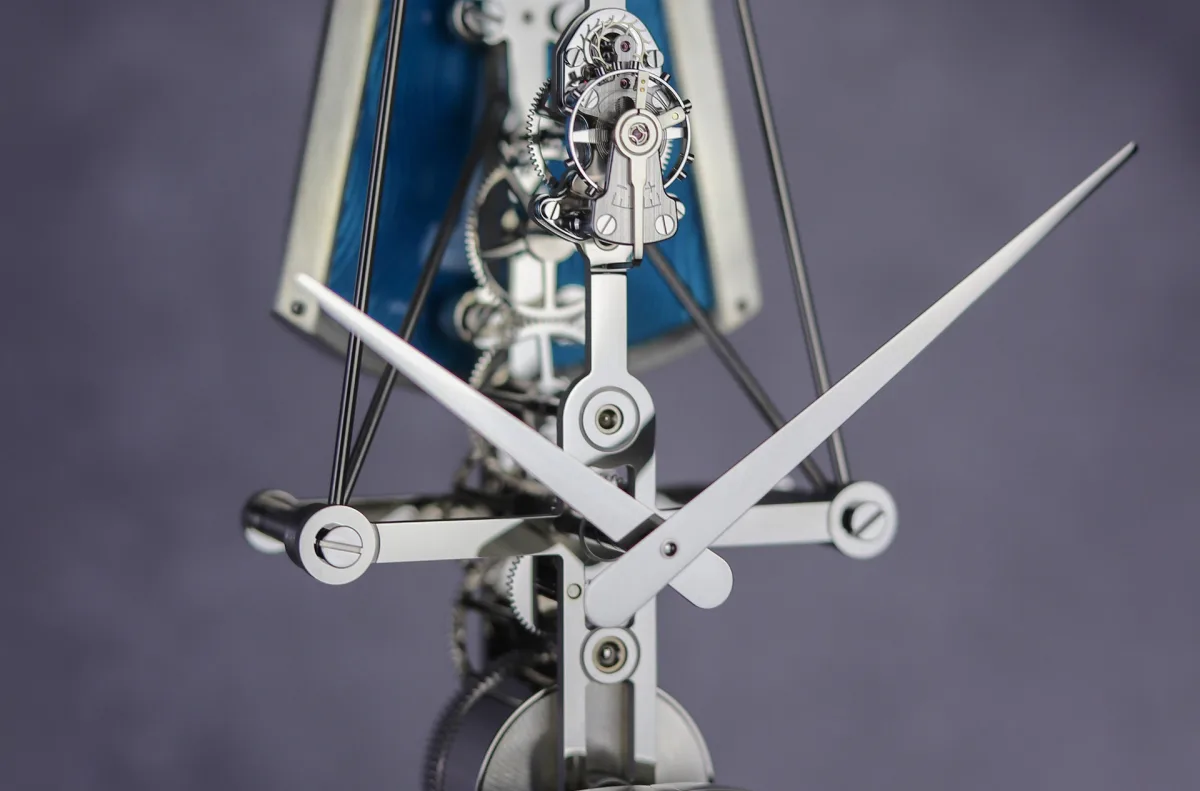
Interior clock styled as a racing sailboat.
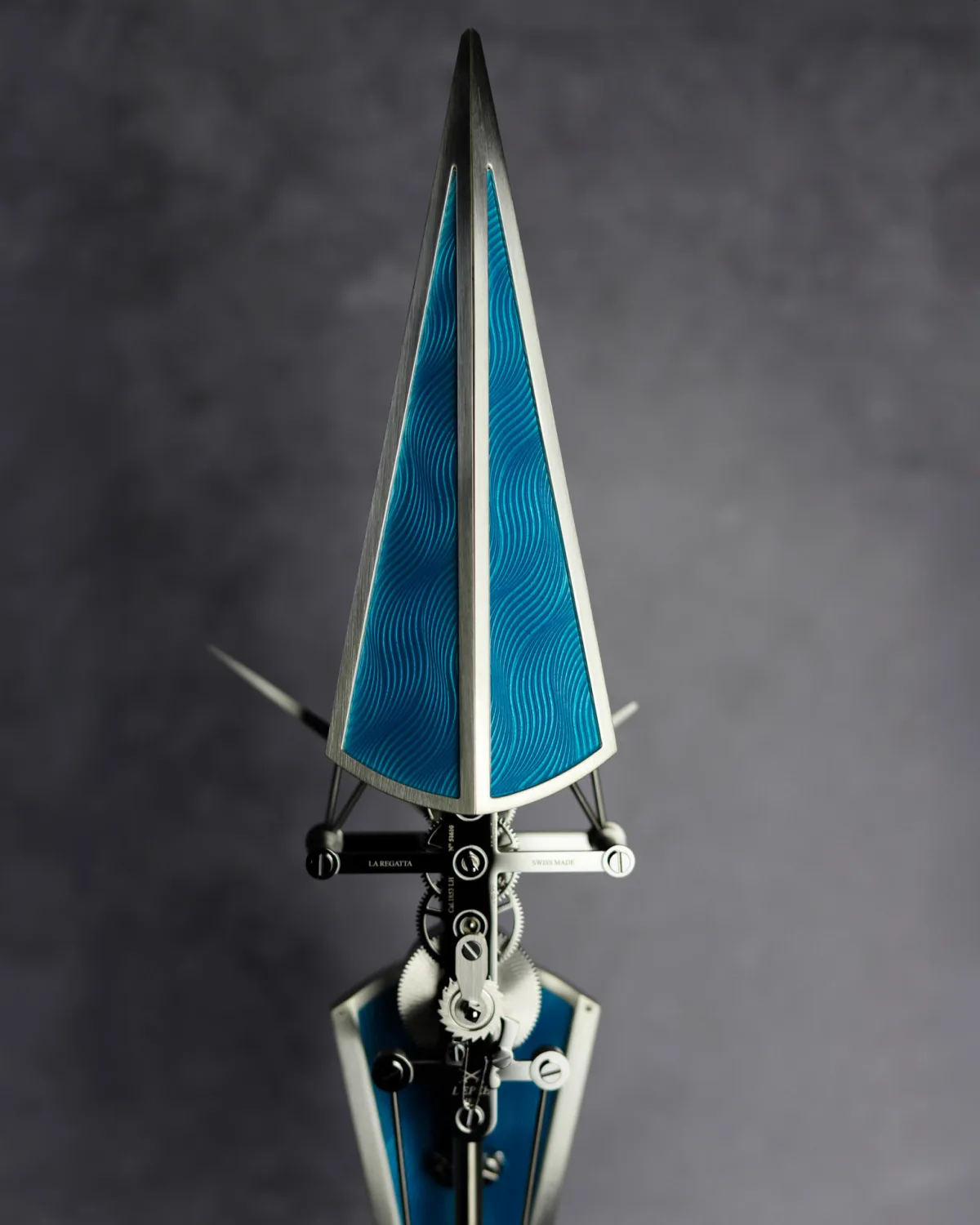
Most of us know L’Epée 1839 for its futuristic sculptural clocks, created in partnership with the independent brand MB&F. However, among connoisseurs, this brand, with a history of nearly two centuries, is known for carriage clocks and a variety of complex mechanisms. Recently, L’Epée 1839 became part of the LVMH group. During LVMH Watch Week in Milan, the company presented an interior clock styled as a racing yacht.
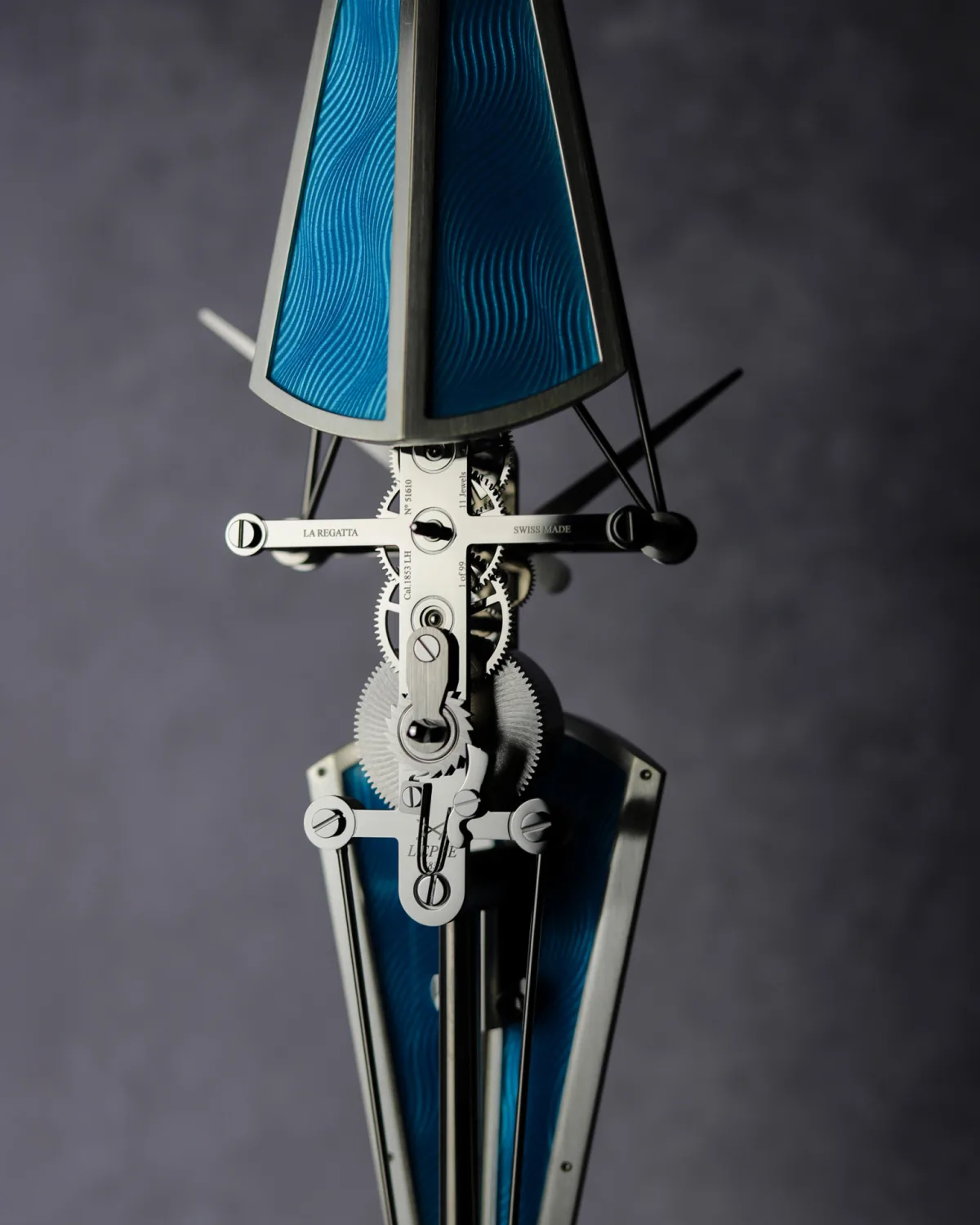
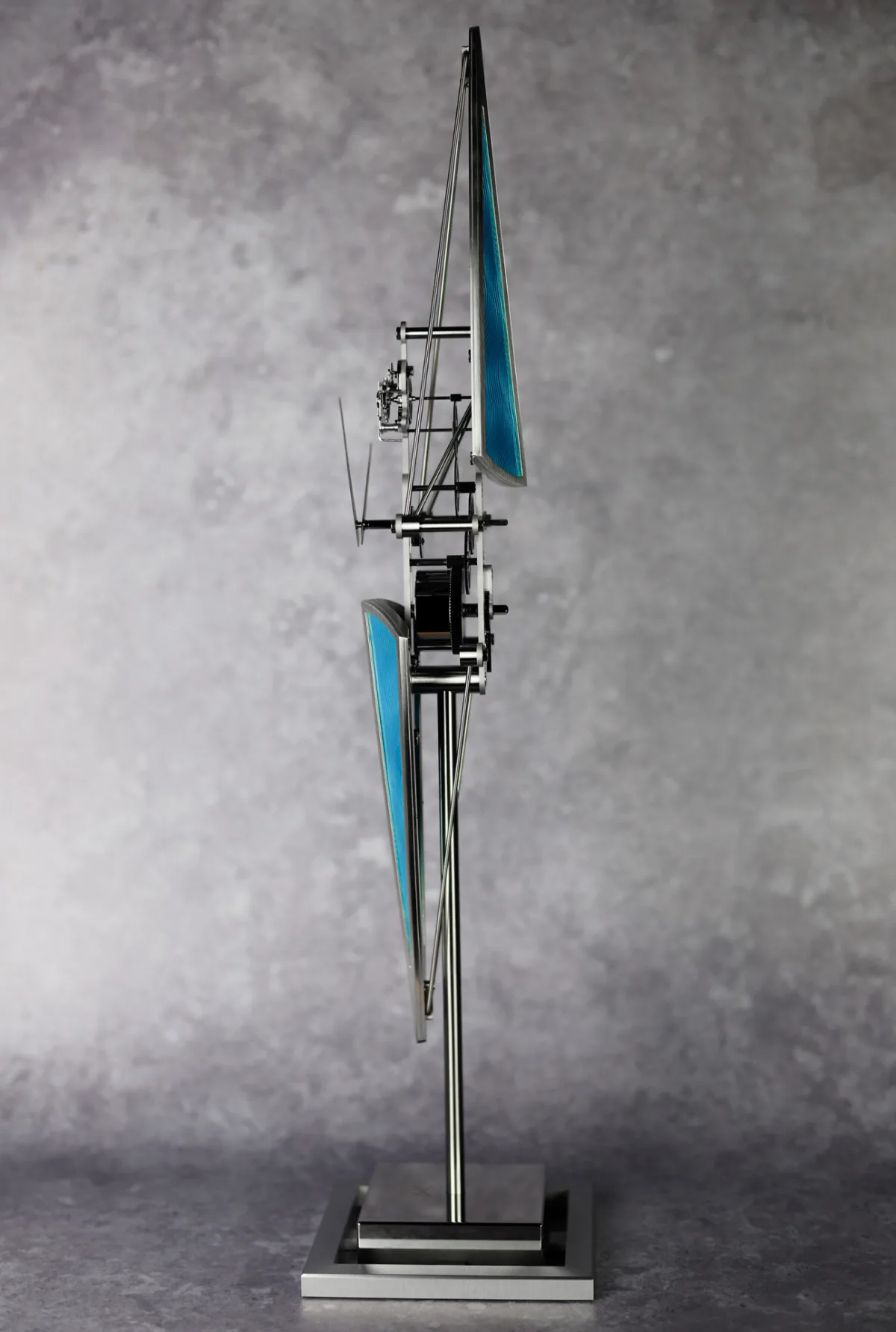
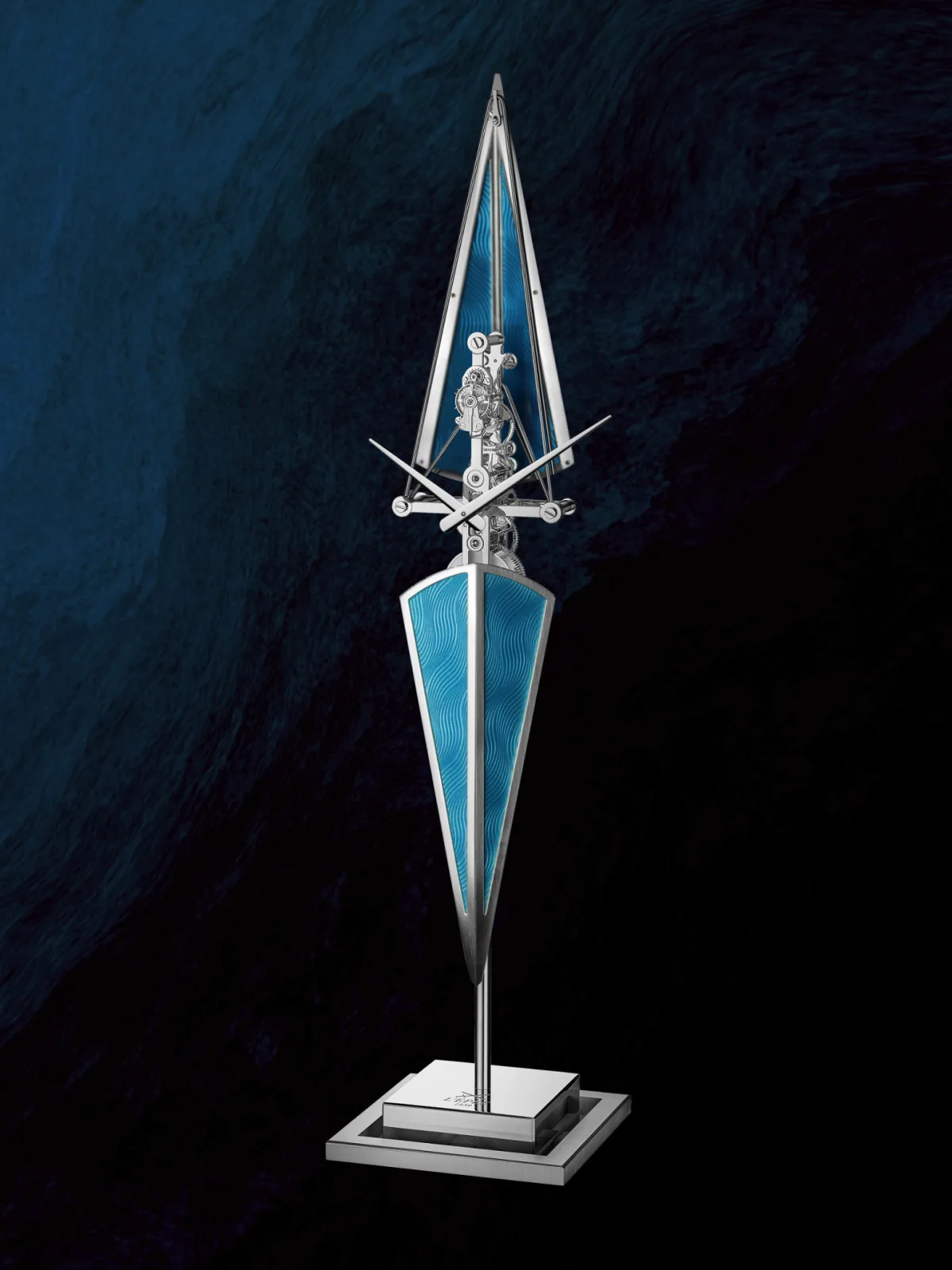
The clock's construction consists of two sharp triangular plates - reminiscent of a racing boat slicing through the water. The design of the model is distinctly minimalist, with a minimal number of traditional case elements. The case, measuring 518 x 120 mm, is made of steel and brass coated with palladium. The clock itself is crafted with various enamel techniques. All three versions of the new model are hand-painted by masters from the Georgian workshop David Kakabadze Enamel.
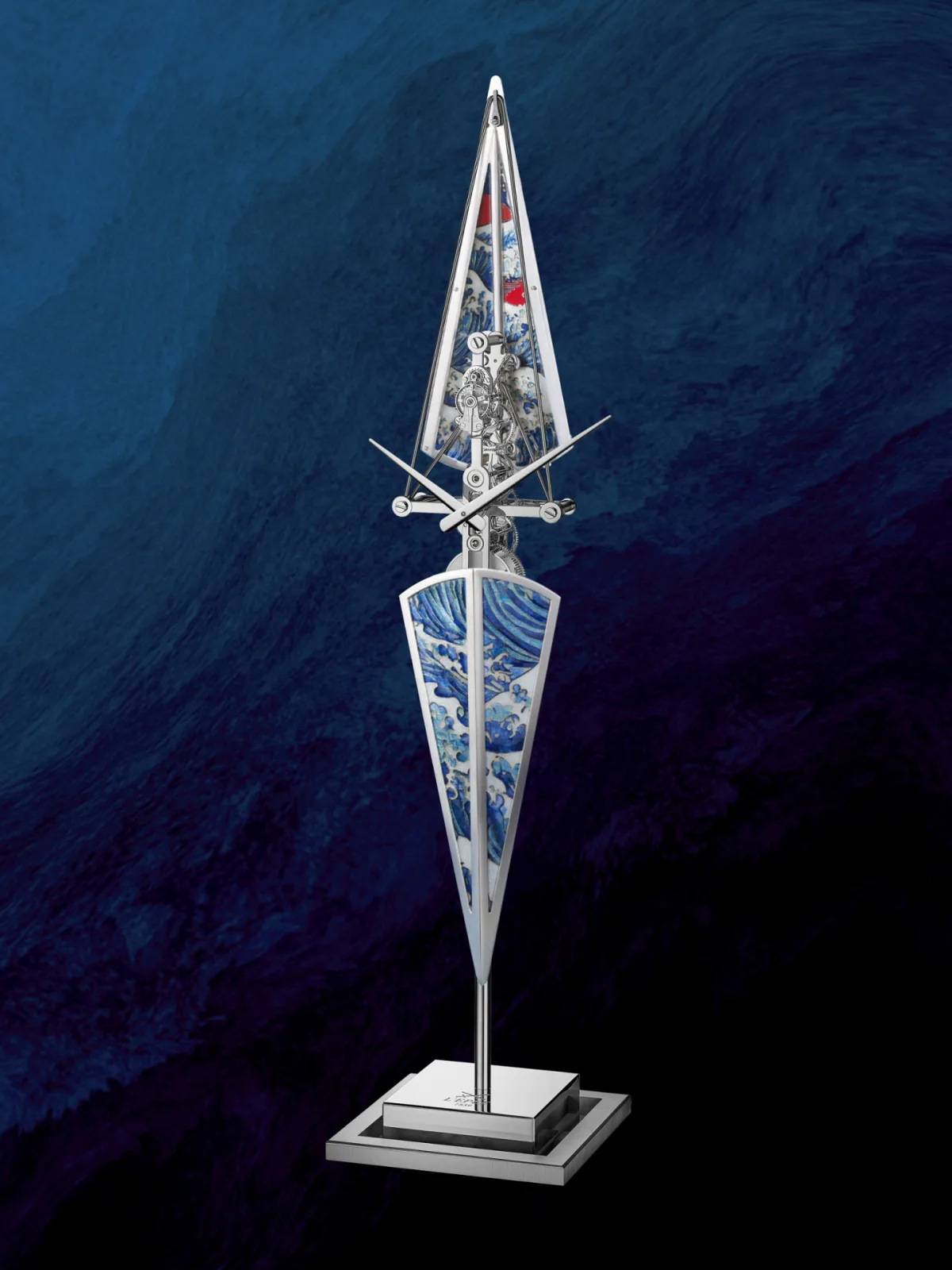
The first version is called "Umi," which means "sea" in Japanese. The inspiration for this clock came from the waves in the iconic engravings by Katsushika Hokusai. The model is made using the cloisonné enamel technique, with wave contours formed by the thinnest gold wire. Silver sparkles are added to the design to give depth and texture, a technique known as paillonné.
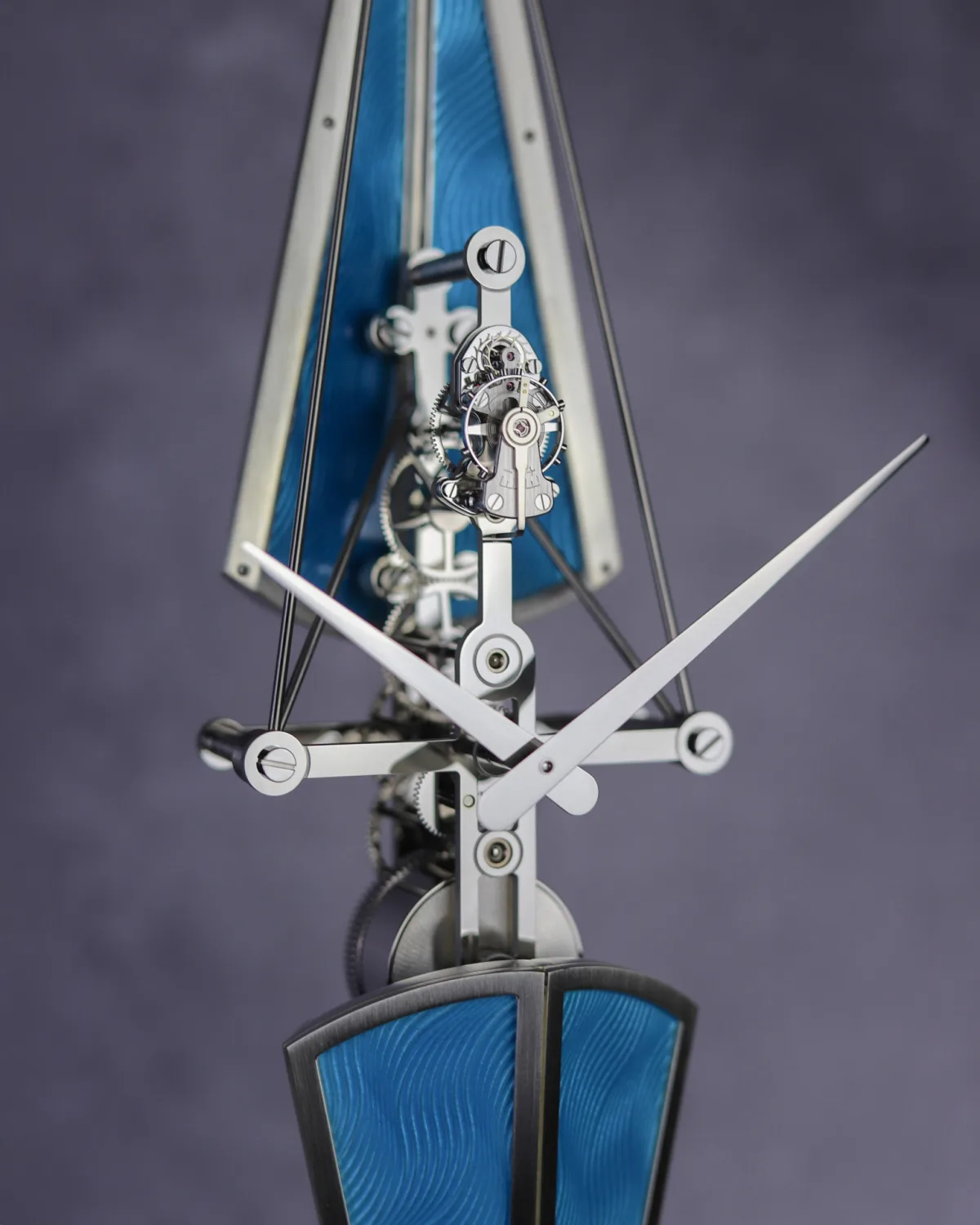
The model named Blue Horizon at first glance appears to be a very simple clock. From a distance, it looks like a wide blue expanse, resembling the open sea. Up close, delicate guilloché patterns can be seen on the clock. To add depth and warmth to the chosen shade of blue, the soft waves of guilloché are covered with several layers of translucent enamel.
The design of the model Prism is built from numerous small polygons. Although the composition resembles cloisonné enamel, the clock is made using the more complex plique-à-jour technique. There is no metal base under the design. Instead, the enamel is fired in open cells of a metal frame, creating a stained glass effect.

The hands of the clock are powered by a manufacture movement with manual winding and an 8-day power reserve. They operate at a leisurely frequency of 2.5 Hz, typical for clocks of this type. To protect against shocks, the balance-spring assembly is protected by the Incabloc system.
The estimated price of the clock is CHF 95,000.