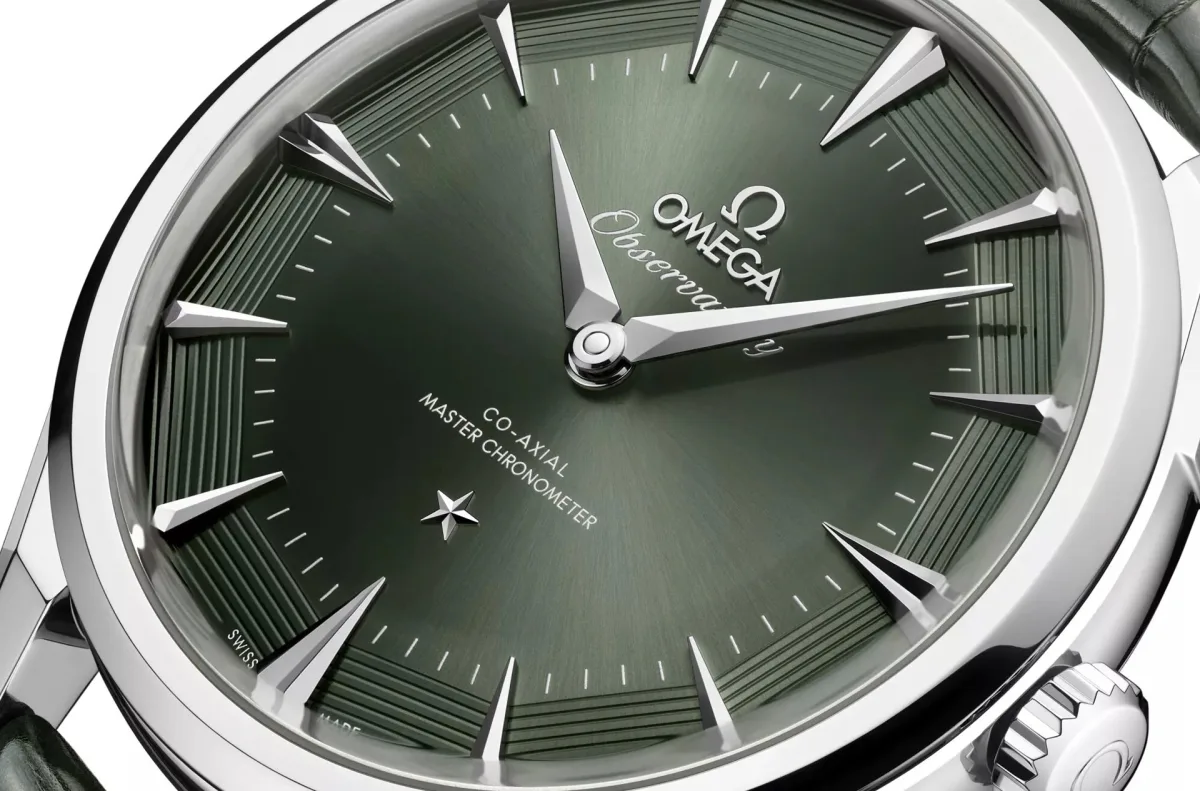
The new Omega collection features the first two-hand watches to receive the Master Chronometer certification.

Omega has unveiled a new range of watches within the Constellation collection. The Constellation Observatory models reinterpret the design known since 1952 in a modern case, available in steel, gold, and a bi-color (gold + platinum) version.

With a diameter of 39.4 mm, the overall case thickness is relatively small - 12.23 mm. From lug to lug, the watch is quite compact at 47.2 mm. Sapphire crystals are present on both sides. The classic case shape is complemented by the curved lugs characteristic of vintage Constellation models.
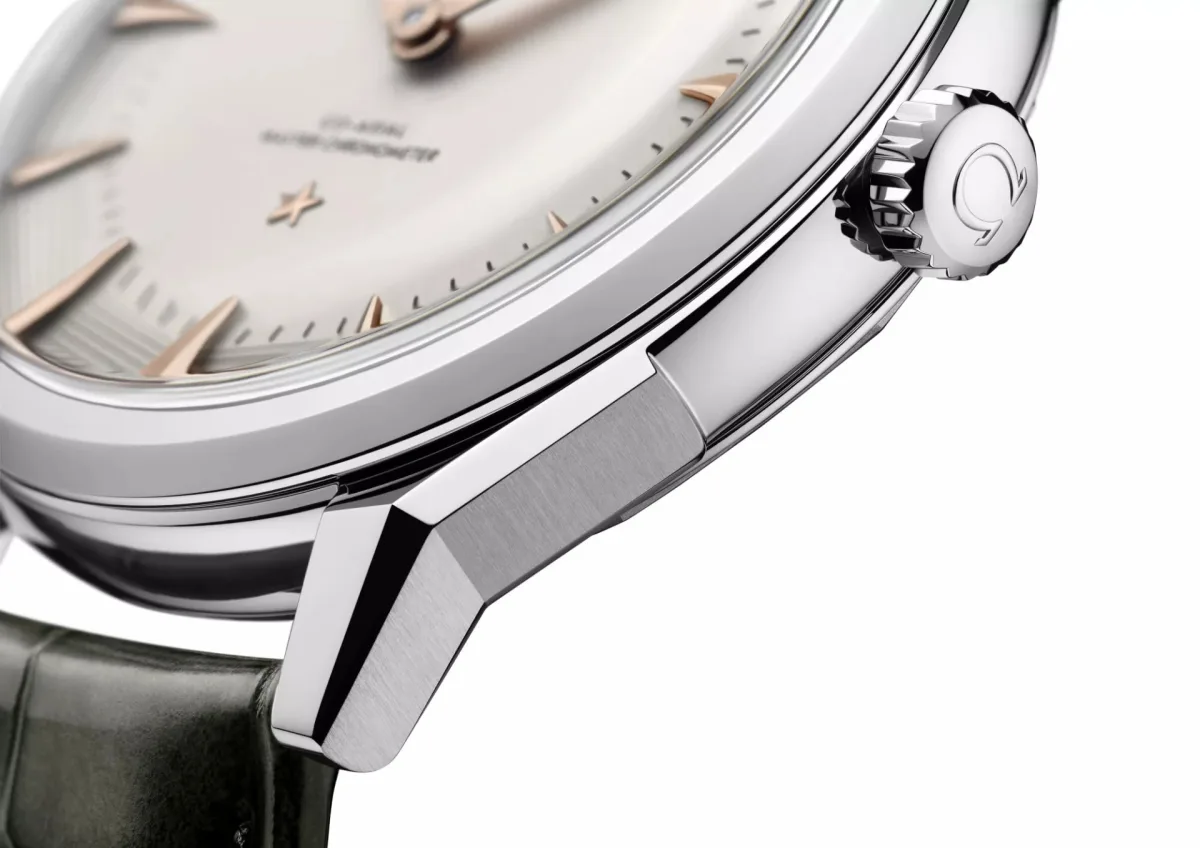
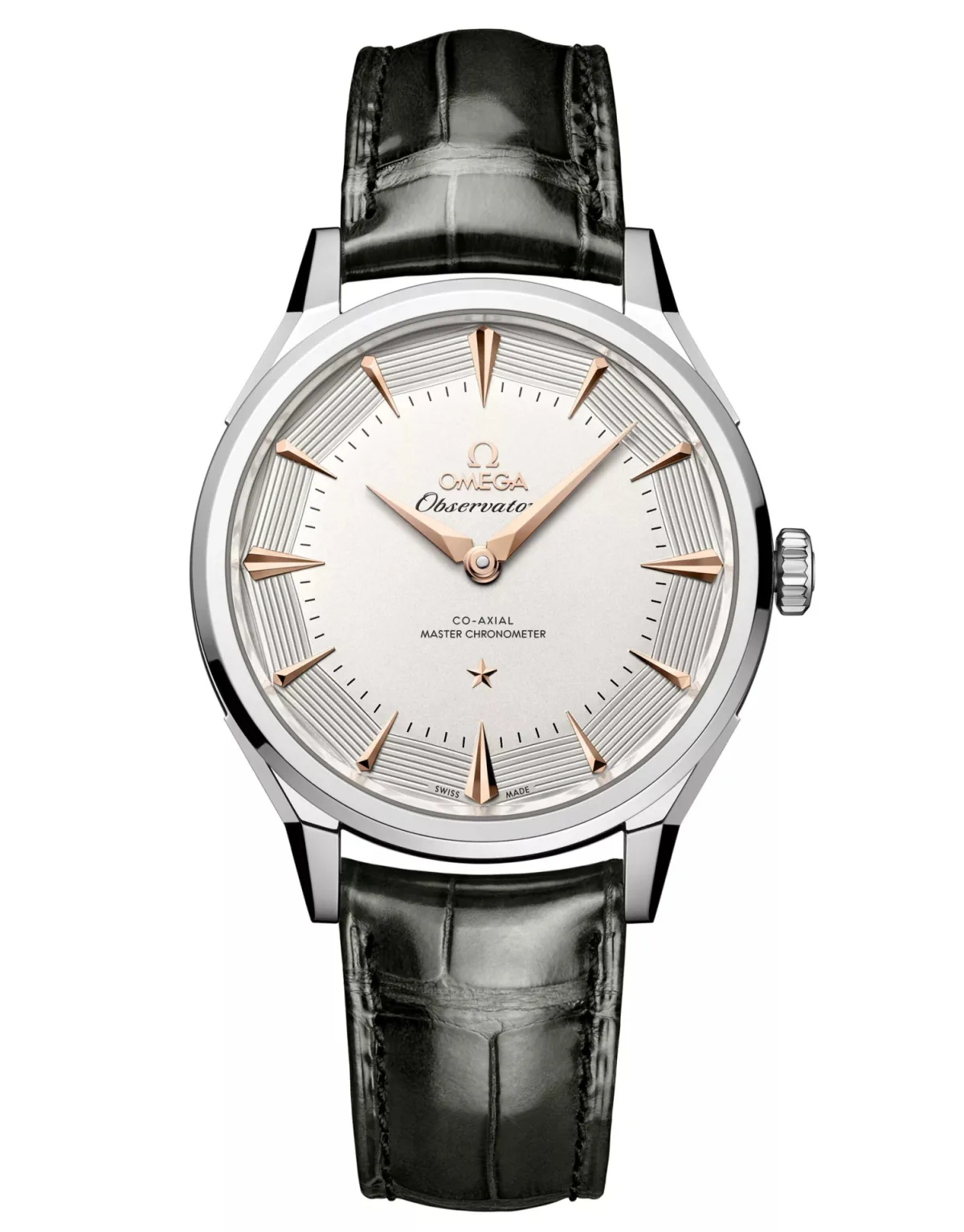
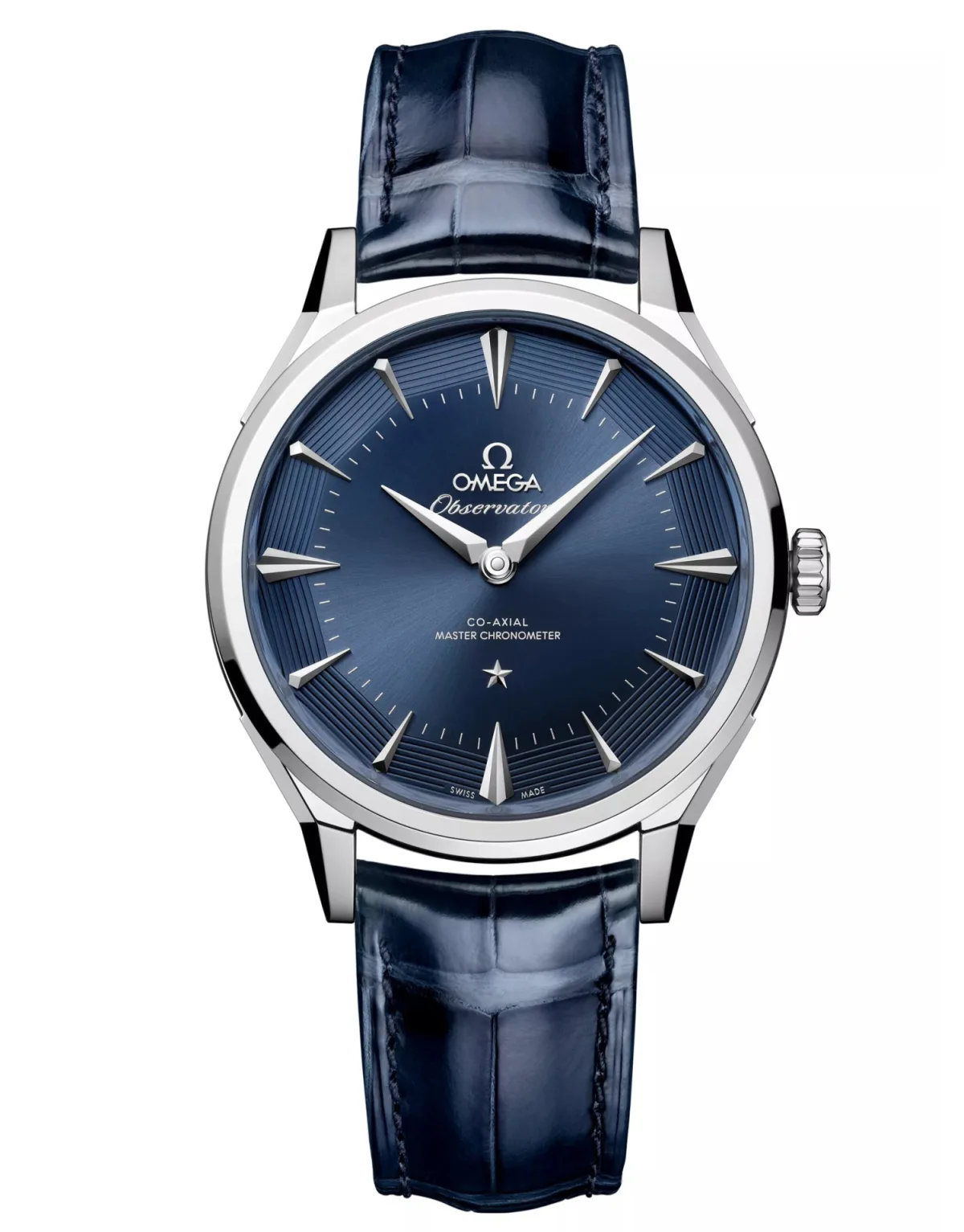
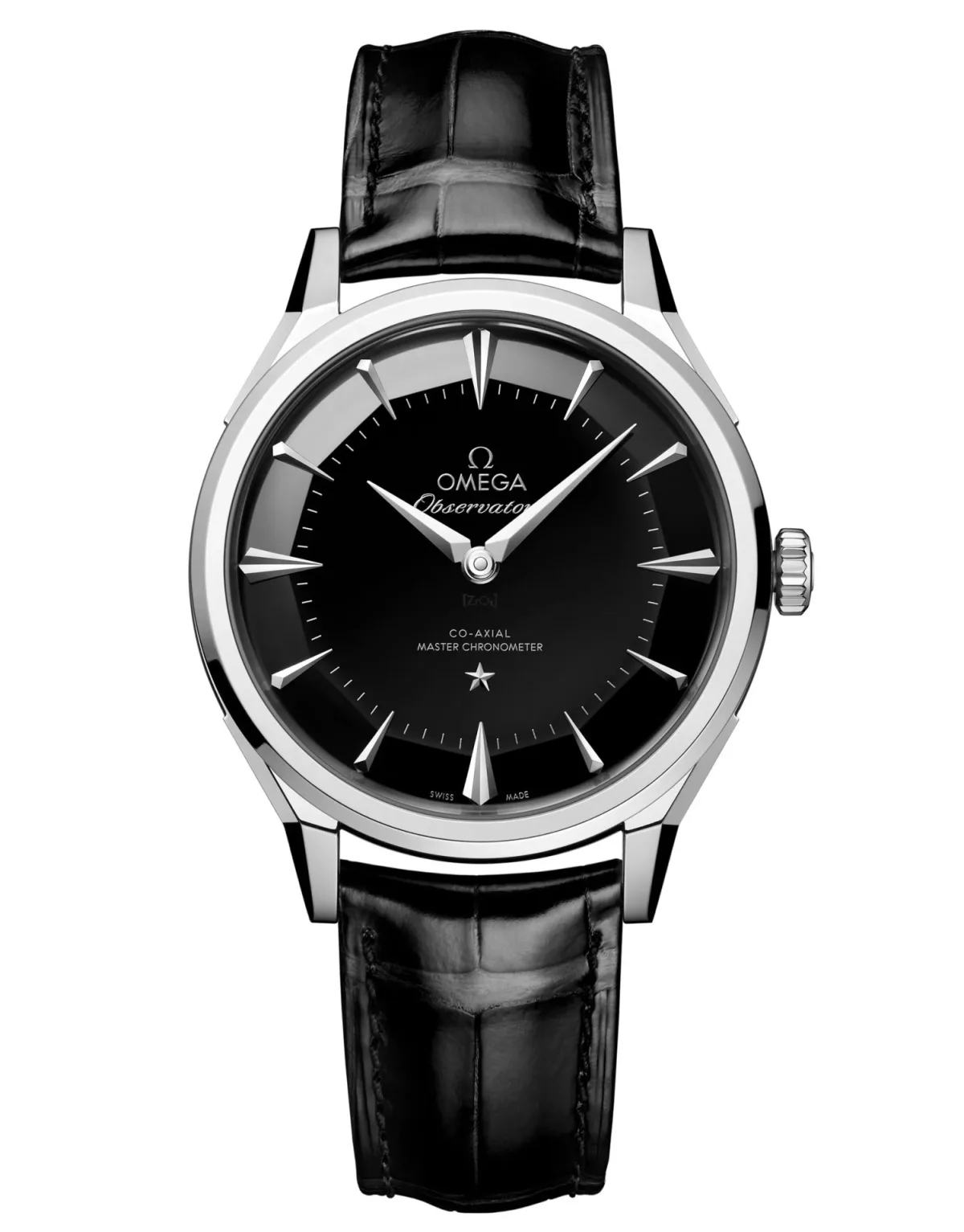
Another nod to the past is the return of the Pie Pan dial. In all models of the collection (except one version), the outer edge of the dial features a guilloche pattern of strict straight lines. Applied hour markers (kite-shaped) echo the faceted hands. The collection name is placed under the Omega logo, and at the bottom, you can see the star - a must-have attribute of Constellation models.

The material distribution across different versions is as follows:
Models with cases made of Omega's proprietary steel alloy called O-MEGASTEEL. The watches are available with silver, blue, or green dials with applied gold markers, accompanied by hands with blue or green PVD coating, and also with a polished black ceramic dial. These options come with an alligator leather strap.
Models with cases made of Omega's proprietary gold alloys:
The Moonshine yellow gold version features a matching dial and can be ordered with either a leather strap or a corresponding gold bracelet with "brickwork" links, reminiscent of early Constellation models.
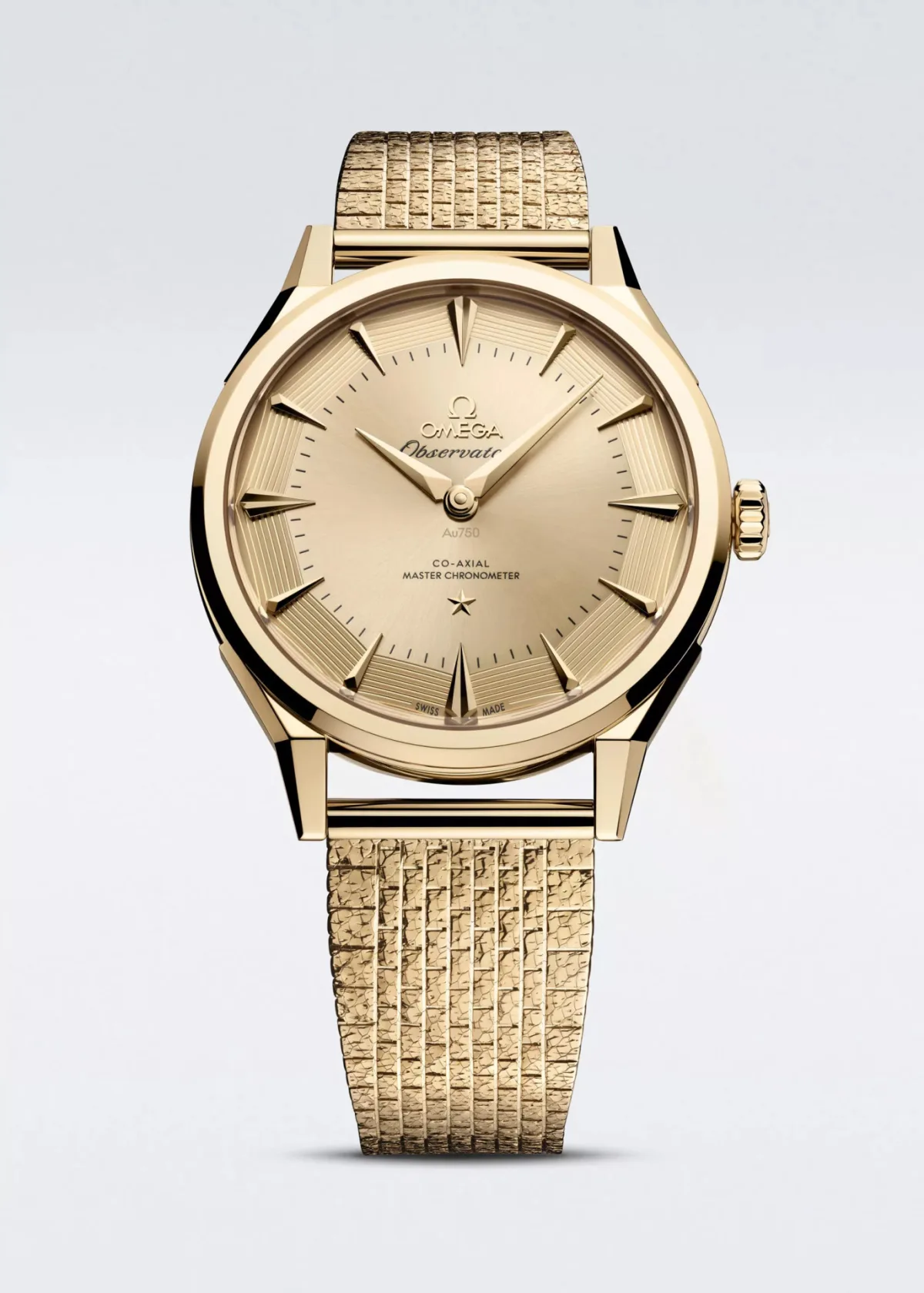
Models with cases made of Omega's proprietary gold alloys:
The Moonshine yellow gold version features a matching dial and can be ordered with either a leather strap or a corresponding gold bracelet with "brickwork" links, reminiscent of early Constellation models.
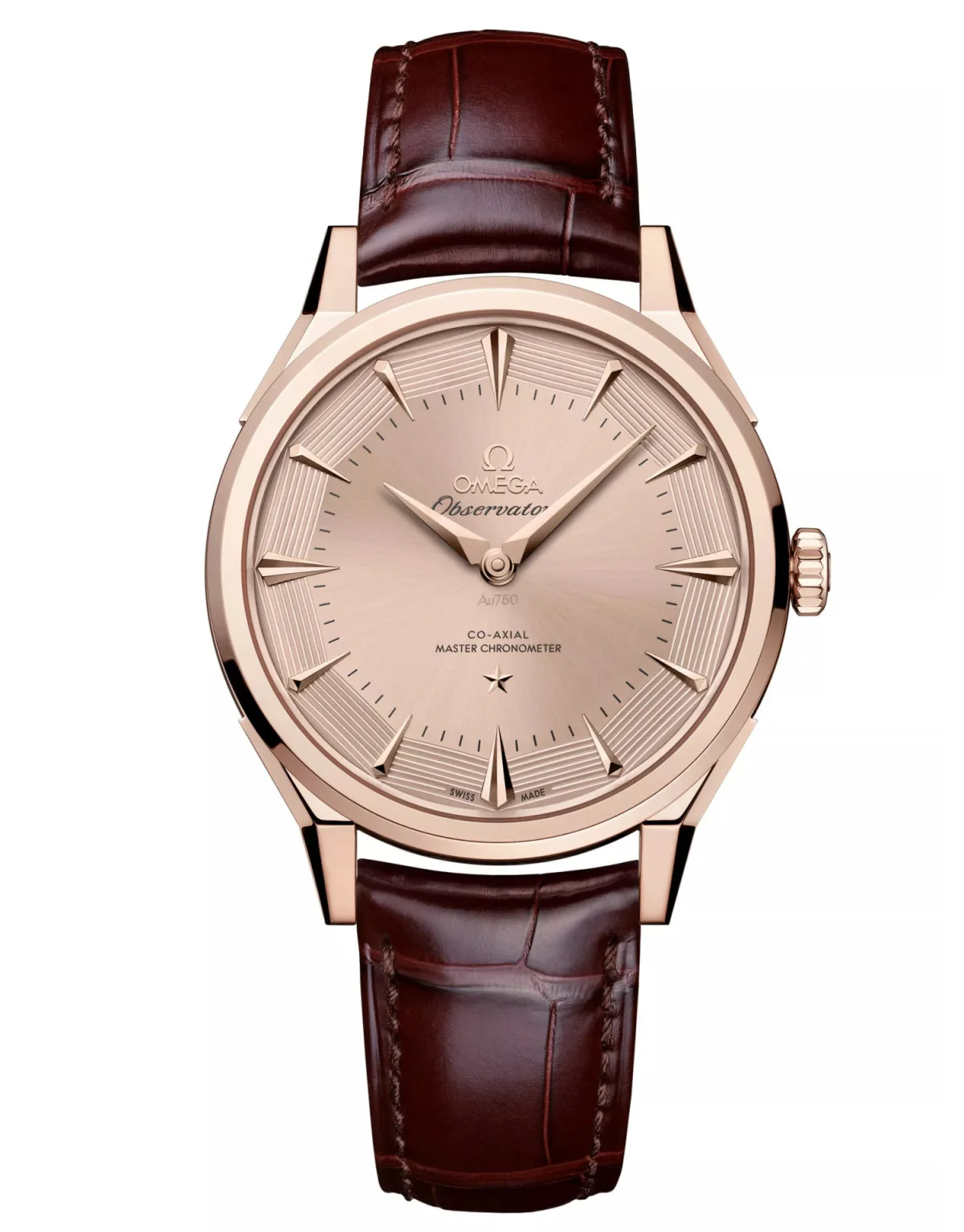
Versions in Sedna rose gold and Canopus white gold cases also have matching dials, but are available only with leather straps.
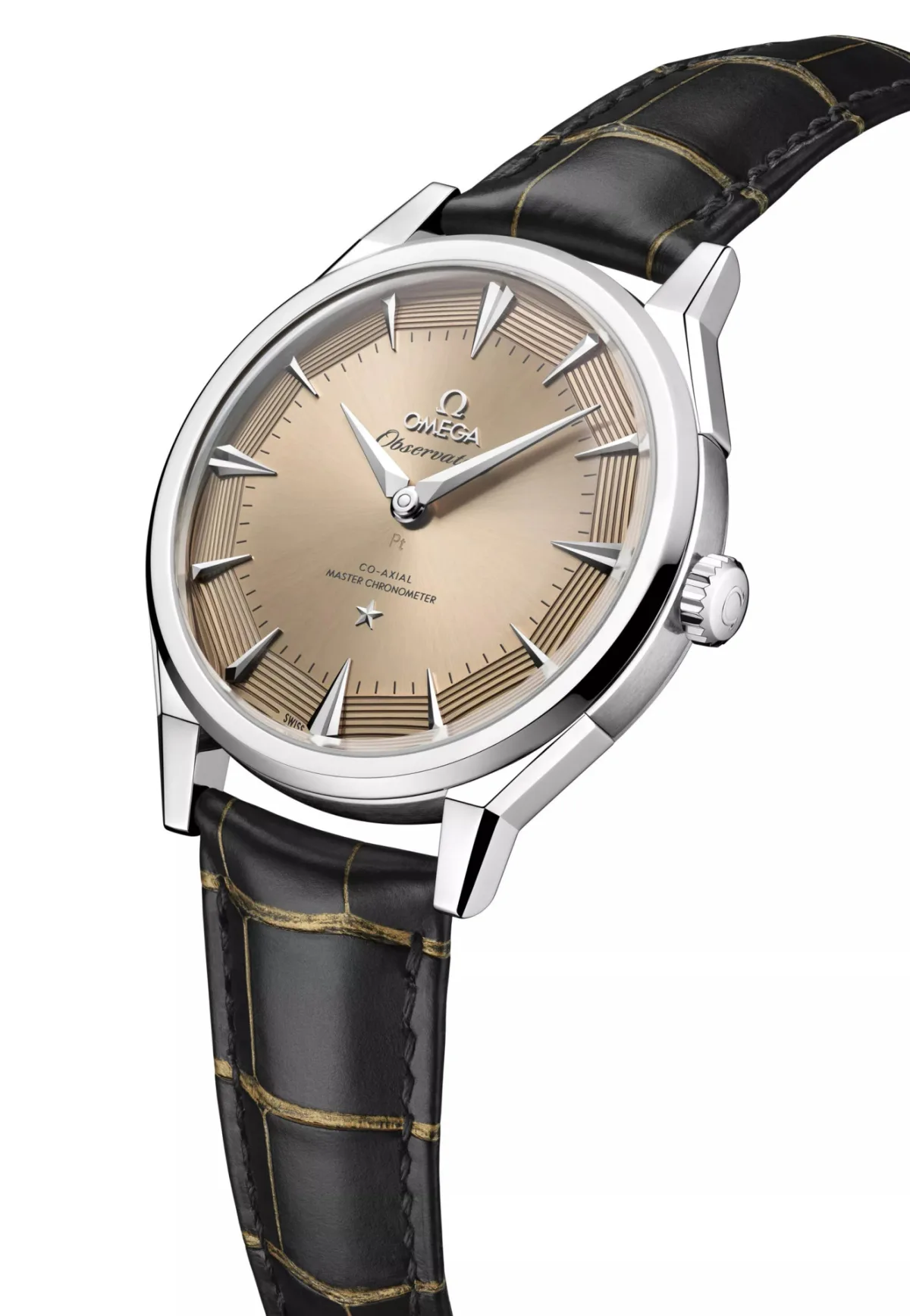
A combination of platinum and gold, bringing together four signature Omega alloys in one collection.
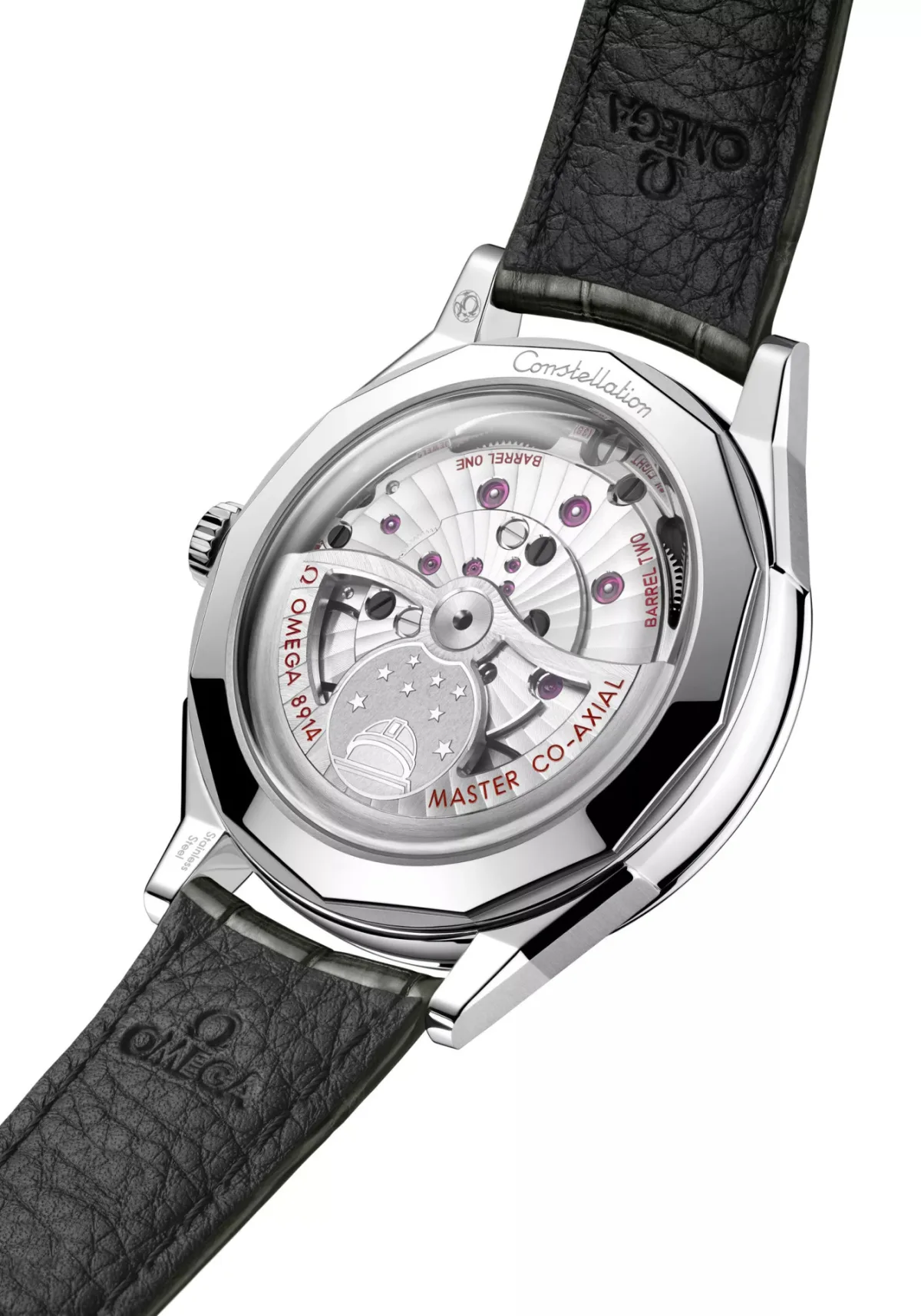
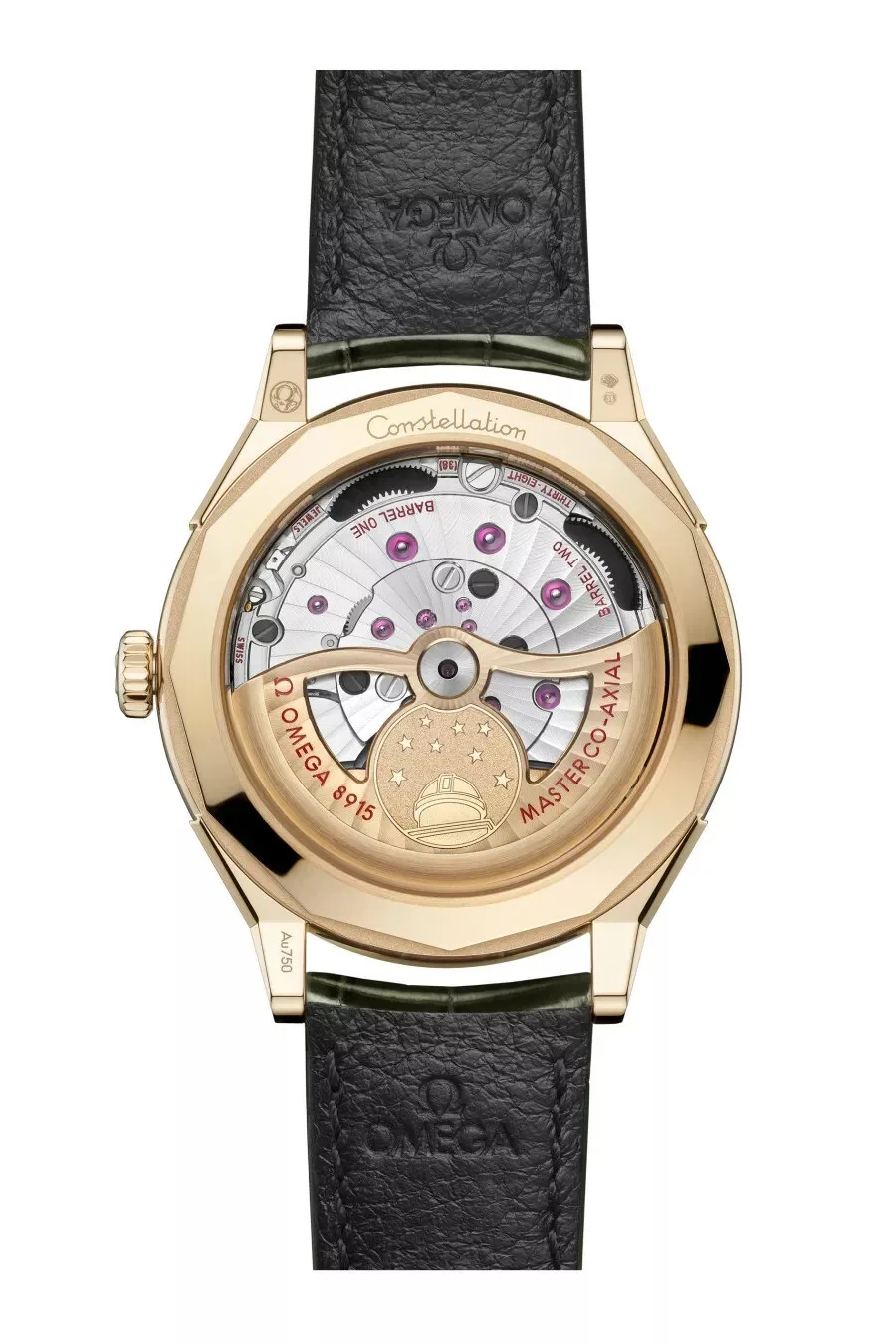
The watches are powered by two new calibers, based on the 89xx series mechanisms. These mechanisms share a skeletonized rotor with a medallion engraved with an observatory.
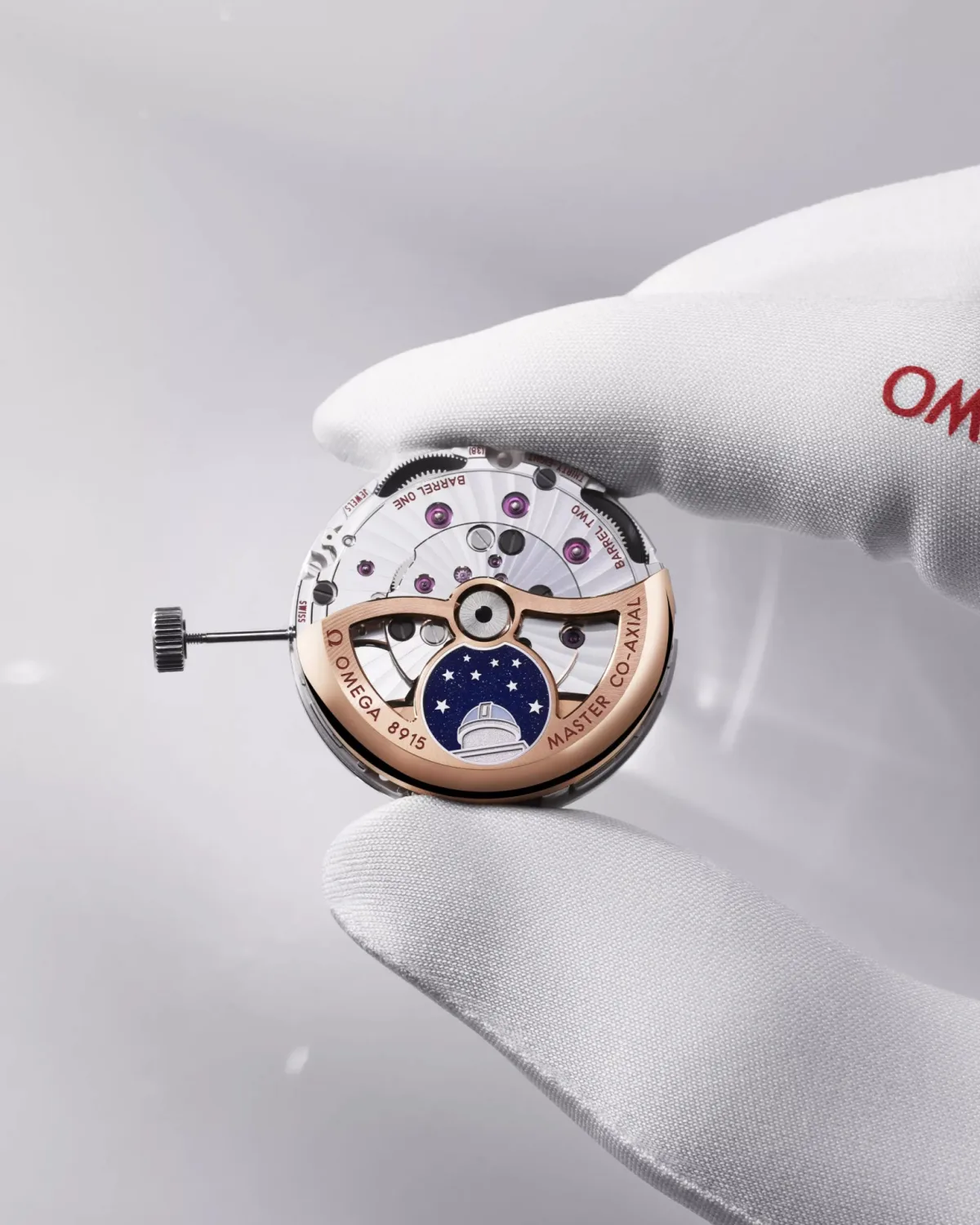
The 8915 Grand Luxe caliber powers the platinum-gold model of the collection. It features an 18-carat white gold medallion engraved using laser ablation. Aventurine and enamel depict a dark blue sky with 8 stars on the medallion. The observatory dome is filled with translucent white enamel.
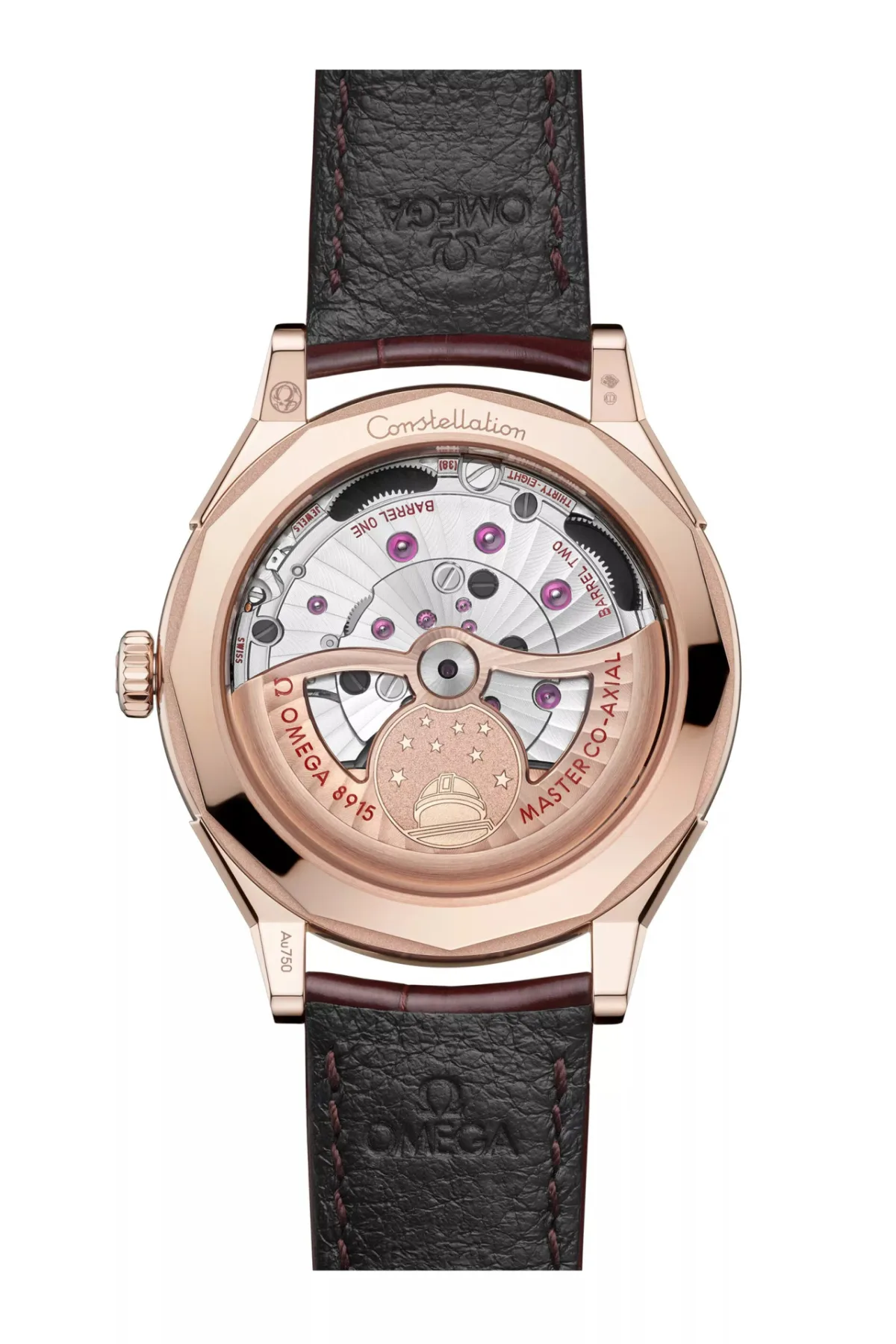
The 8914 Standard caliber drives the hands on the steel versions of the model. It has the same decoration as the 9815 caliber but with an added rhodium finish.
The word "Observatory" in the collection name hints at an interesting fact: although these watches lack a second hand, they are certified as chronometers. Moreover, they are certified to the Master Chronometer standard. Let's recall some differences between this certification and the classic COSC tests:
In Master Chronometer tests, not only the mechanism is tested but also the assembled, ready watches (the assembly process can affect accuracy).
The permissible accuracy deviation in COSC tests is -4/+6 seconds per day. The Master Chronometer standard is stricter - from 0 to -5 seconds.
If in COSC laboratories mechanisms are not subjected to high-intensity magnetic fields, the Master Chronometer standard requires watches to withstand fields up to 15,000 Gauss, equivalent to contact with an MRI machine.
Water resistance and power reserve are also tested, which in the case of COSC will only be available within the new Excellence Chronometer certification.
An important innovation regarding Omega watch testing is the continuous analysis of the escapement's oscillations. For this test, Omega developed a technology called Dual Metric Technology. The watches are placed in a wireless, autonomous testing unit that combines all certification processes. Over 25 days, this unit continuously records the sound of each beat while simultaneously registering environmental parameters: temperature, position, magnetic fields, and atmospheric pressure.
The approximate cost of the watches is €10,700 (steel models on a strap), €12,000 (steel with black ceramic dial). Gold and platinum versions are priced between €37,300 and €58,200.