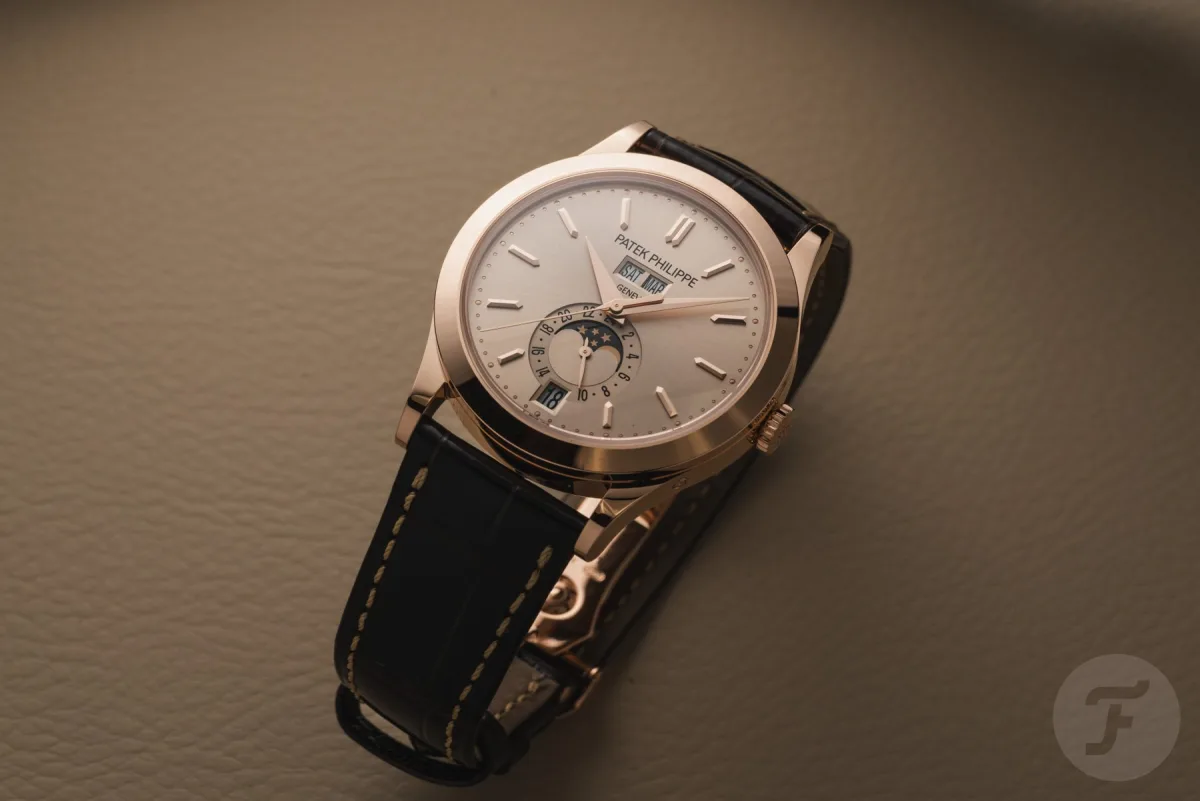
In 1996, Patek Philippe introduced a model designed to fill the gap between classic wristwatches and perpetual calendars.
At that time, the brand needed to boost sales: the Nautilus had not yet achieved cult status. What did Patek do? They released classic watches with a calendar that outwardly resembled a perpetual calendar but were actually equipped with a patented calendar requiring adjustment only once a year. The Ref. 5035 model was the world's first wristwatch with an annual calendar. Thanks to its complex yet succinct design, these watches were in demand and sold for almost half the price of the Ref. 3940 with a perpetual calendar. Thirty years later, the annual calendar has become an integral part of the collection. The latest version - Patek Philippe Calatrava ref. 5396R-016 - is dedicated to the 30th anniversary of this complication. This review provides a detailed analysis of this model.
The History and Significance of the Ref. 5035 with Annual Calendar
When the Ref. 5035J with an annual calendar debuted in 1996, it was enthusiastically received. Collectors and experts appreciated not only its appearance but also the advent of a truly useful, simple, and innovative complication. The Patek Philippe annual calendar occupies an intermediate position between a complete calendar, which requires adjustments five times a year due to months with fewer than 31 days, and a perpetual calendar, which does not need adjustment even in leap years.
Features and Design of the Patek Philippe Calatrava ref. 5396R-016
A full calendar is too simple for Patek and its clients, while a perpetual calendar is priced high. The patented annual calendar, which requires adjustment only once a year and closely resembles a perpetual calendar, is a true Patek in every sense. The Ref. 5396 - an annual calendar in a Calatrava case - was introduced in 2006. The latest version, Ref. 5396R-016, unveiled at the Watches and Wonders 2026 exhibition, continues this tradition.
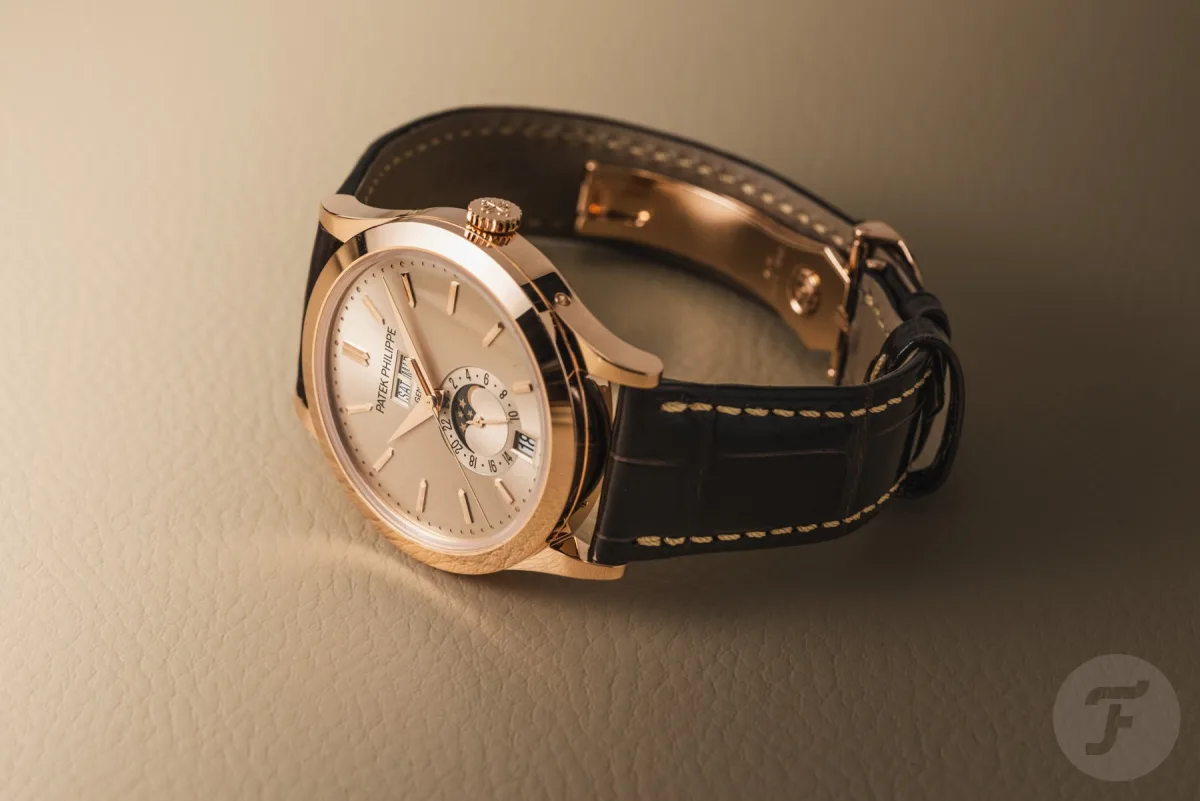
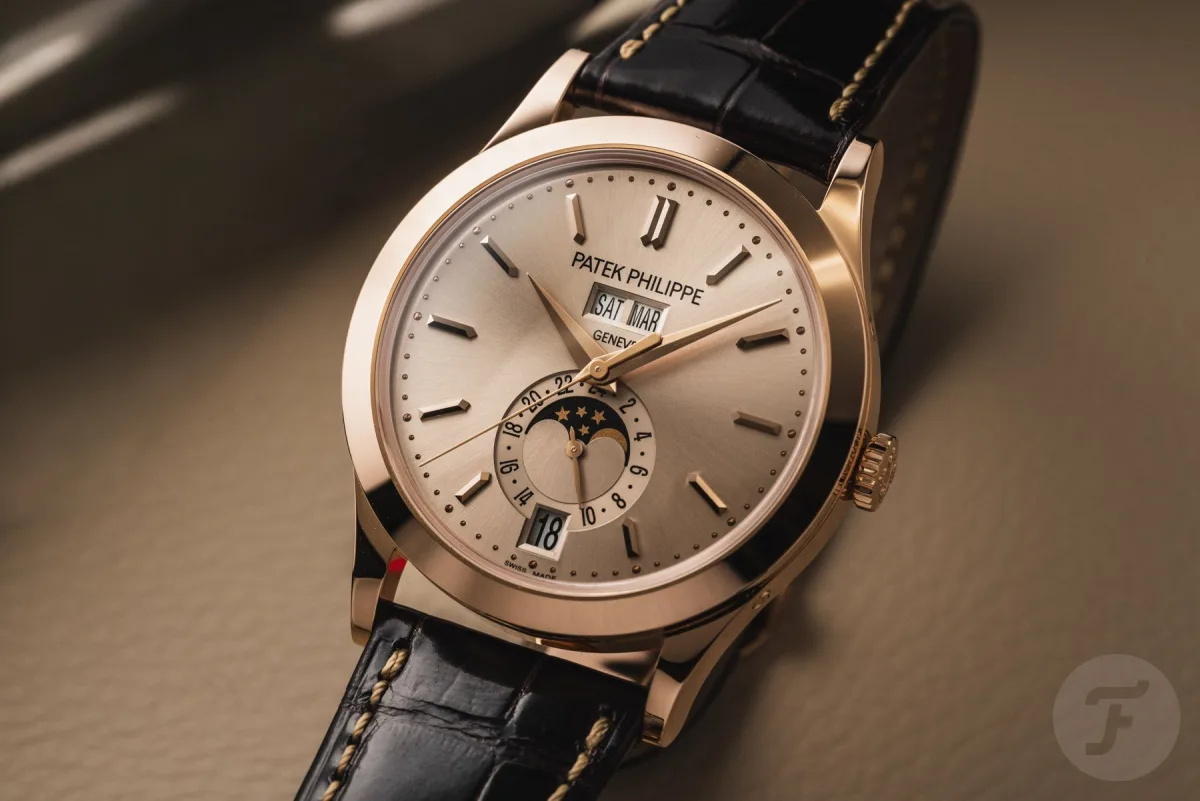
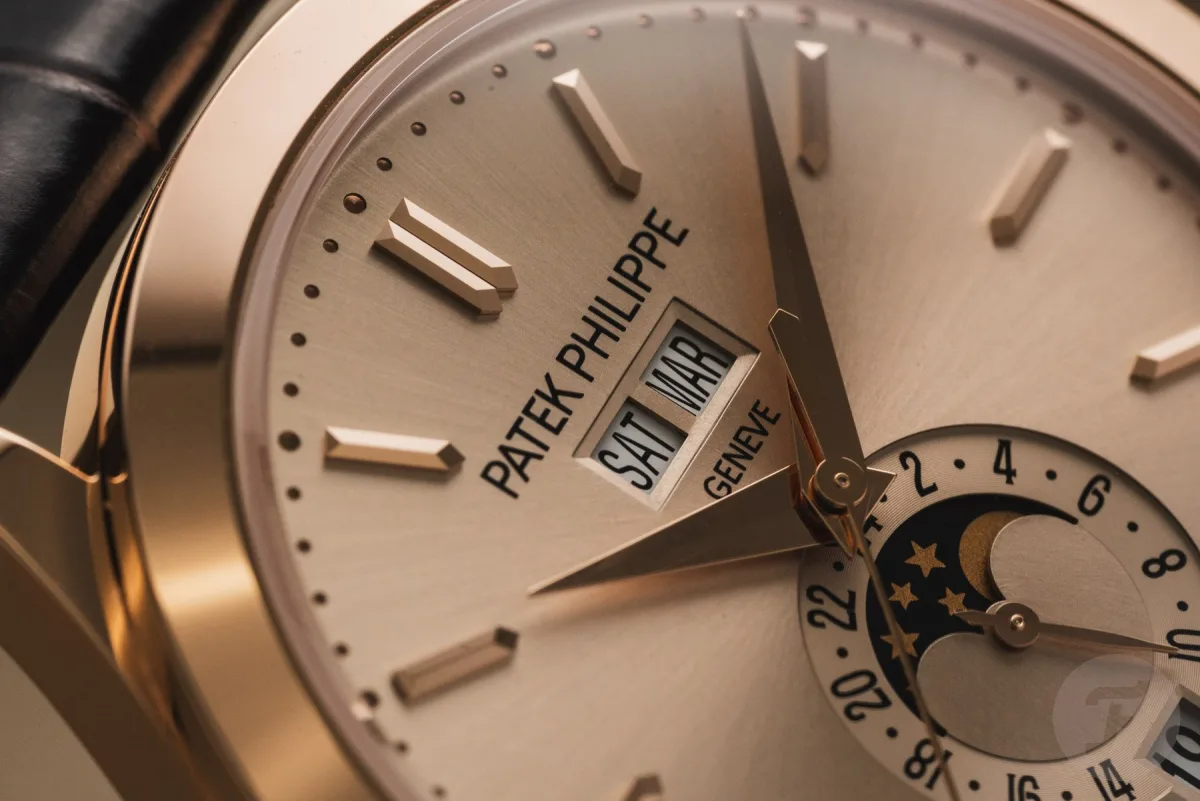
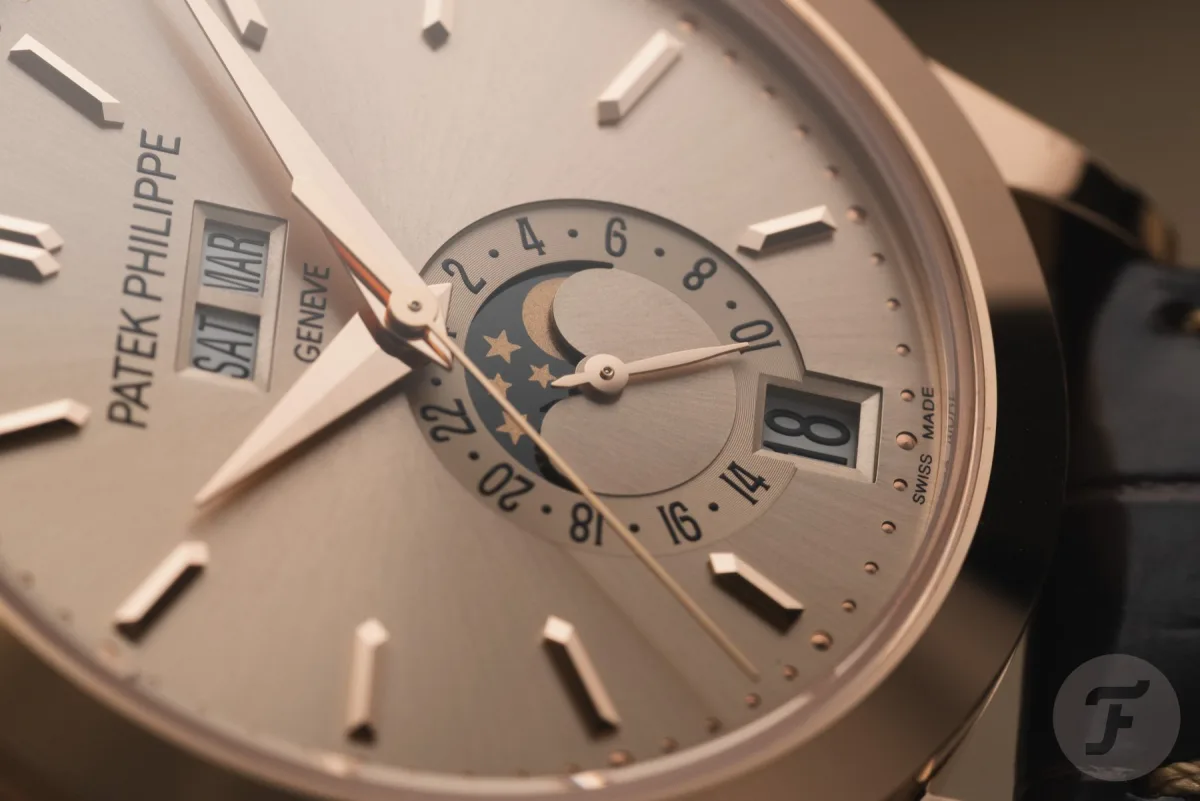
The original Ref. 5035 had a classic three-sector dial layout. Ten years later, the Ref. 5396 appeared with a 38.5 mm case and the famous double window for displaying the day of the week and month at the "12 o'clock" position. The date window is located at the intersection with the sub-dial at the "6 o'clock" position, which combines the moon phase display and a 24-hour indicator. The new rose gold Calatrava ref. 5396R-016 retains this layout but has acquired a more modern yet classic look. The dial's warm sunburst pattern is officially called "sandy beige." It pairs beautifully with the rose gold case, creating a harmonious and cohesive image.
Early versions of the Ref. 5396 with a 38.5 mm diameter were produced in rose and white gold. They featured clear sectors on the dial, giving the watches a vintage style. Later, Patek introduced versions with the classic Calatrava dial, applied baton hour markers, and dauphine hands, similar to those in the latest ref. 5396R-016 version.
Wearing Features and Appearance of Ref. 5396R-016
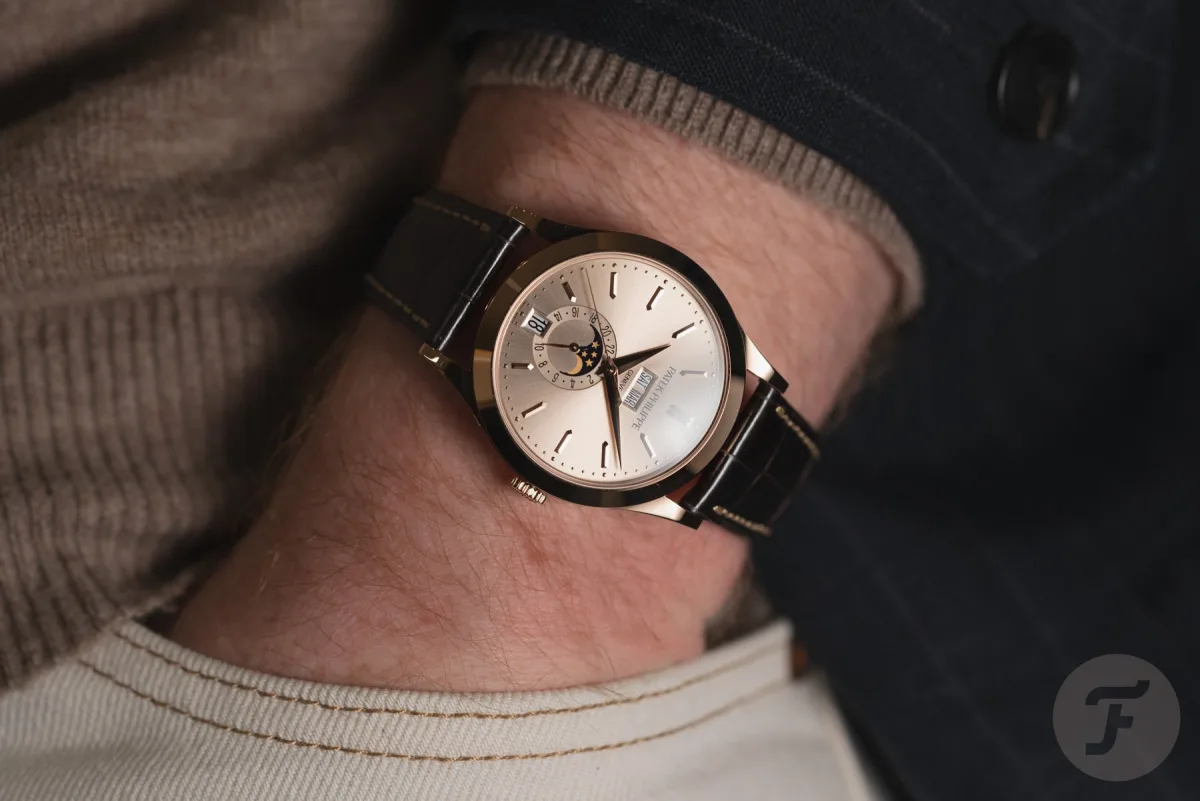
The new Ref. 5396R-016 model features a fully polished, proportionate rose gold case with a diameter of 38.5 mm and a thickness of 11.2 mm. Like almost all new Patek watches presented at Watches and Wonders 2026, this model is equipped with a strap with contrasting stitching. The dark chestnut alligator leather strap with square scales is adorned with beige stitching matching the dial color.
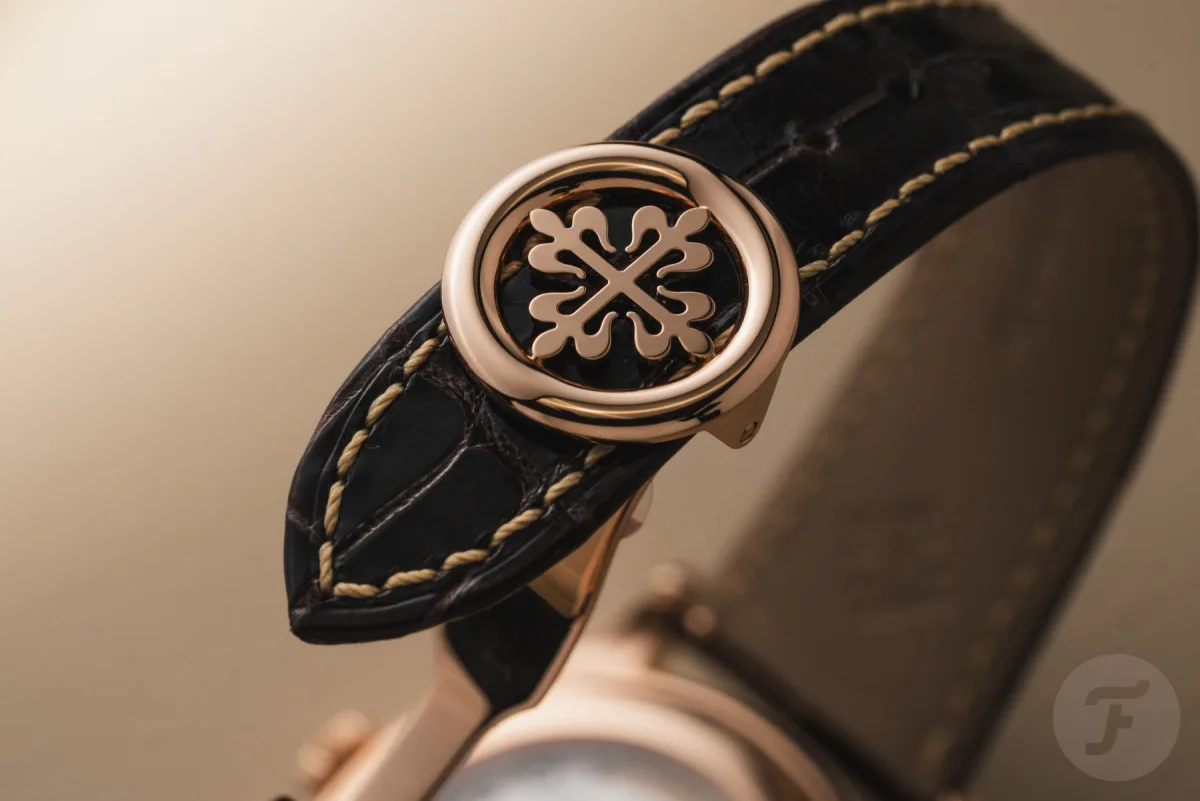
The watch is secured on the wrist with a rose gold folding clasp bearing the Patek Philippe logo. Despite some pomp, the clasp is well-crafted and matches the overall style of the watch. You get a classic gold case, traditional high-level finishing, and a restrained tone-on-tone design.
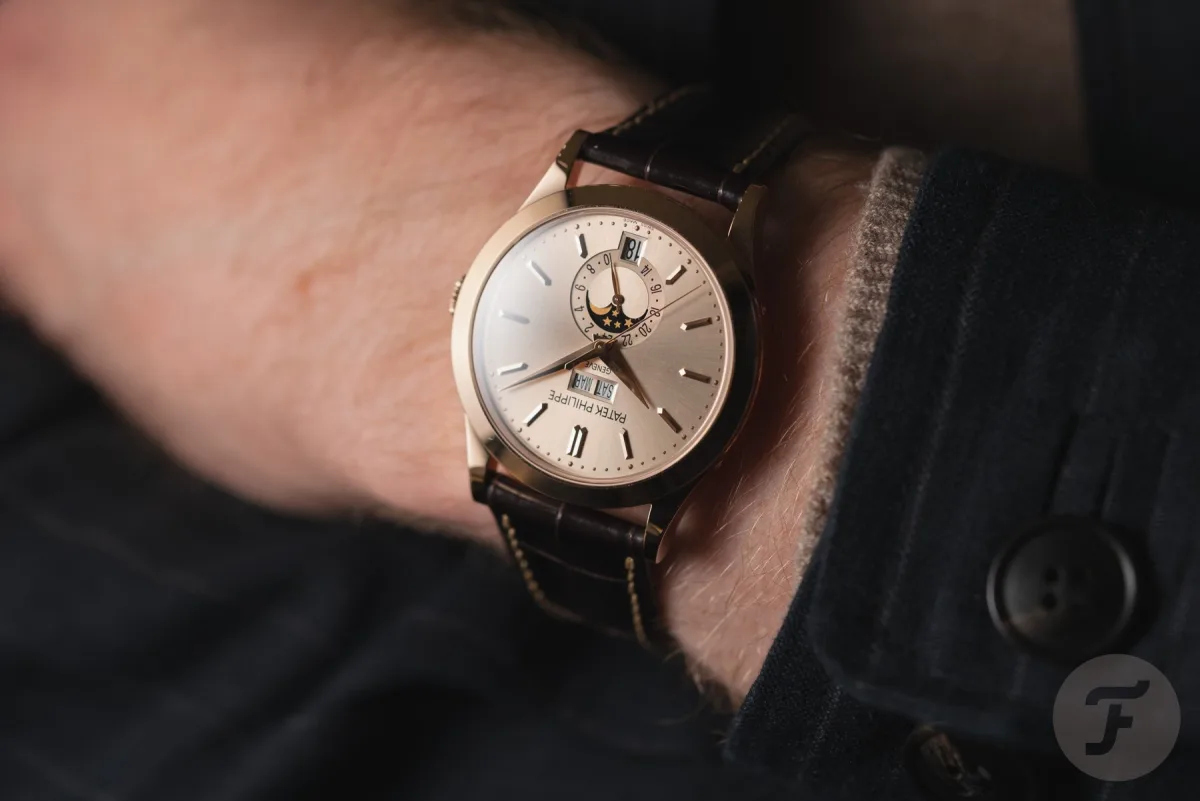
The 38.5 mm diameter and 11.2 mm thickness ensure a comfortable fit on the wrist. Neutral colors make the appearance restrained, yet the watch looks elegant and noticeable. The sunburst pattern on the dial and its soft beige shade create a pleasant impression, while the applied rose gold "obus" hour markers blend harmoniously, ensuring good readability. Rose gold dauphine hands enhance this effect. Sapphire crystals on both sides of the case guarantee a clear view of the dial and movement.
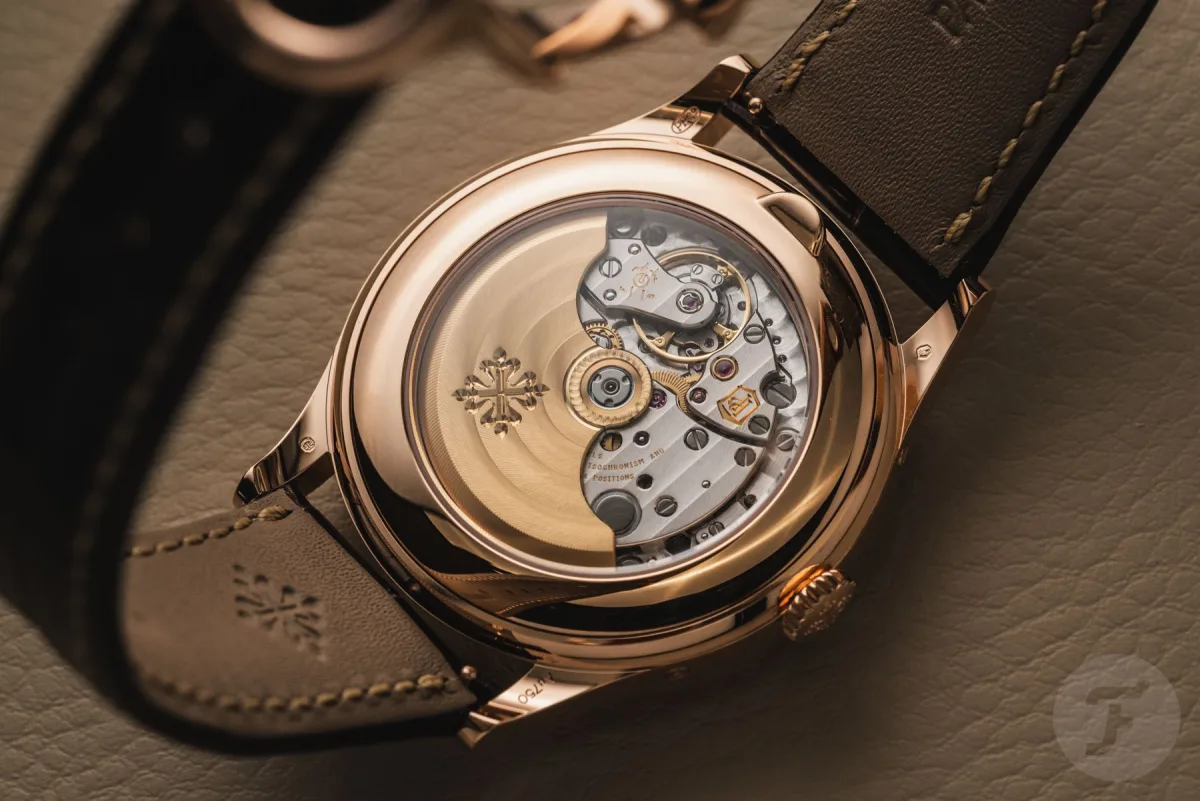
Automatic Caliber and Technical Specifications
The rose gold case, water-resistant up to 30 meters, houses the automatic caliber 26-330 S QA LU 24H. The balance frequency is 4 Hz, and the central rotor is made of 21-carat gold and adorned with the same emblem as the clasp. The annual calendar is simpler than the perpetual in terms of construction and maintenance but is not an elementary mechanism.
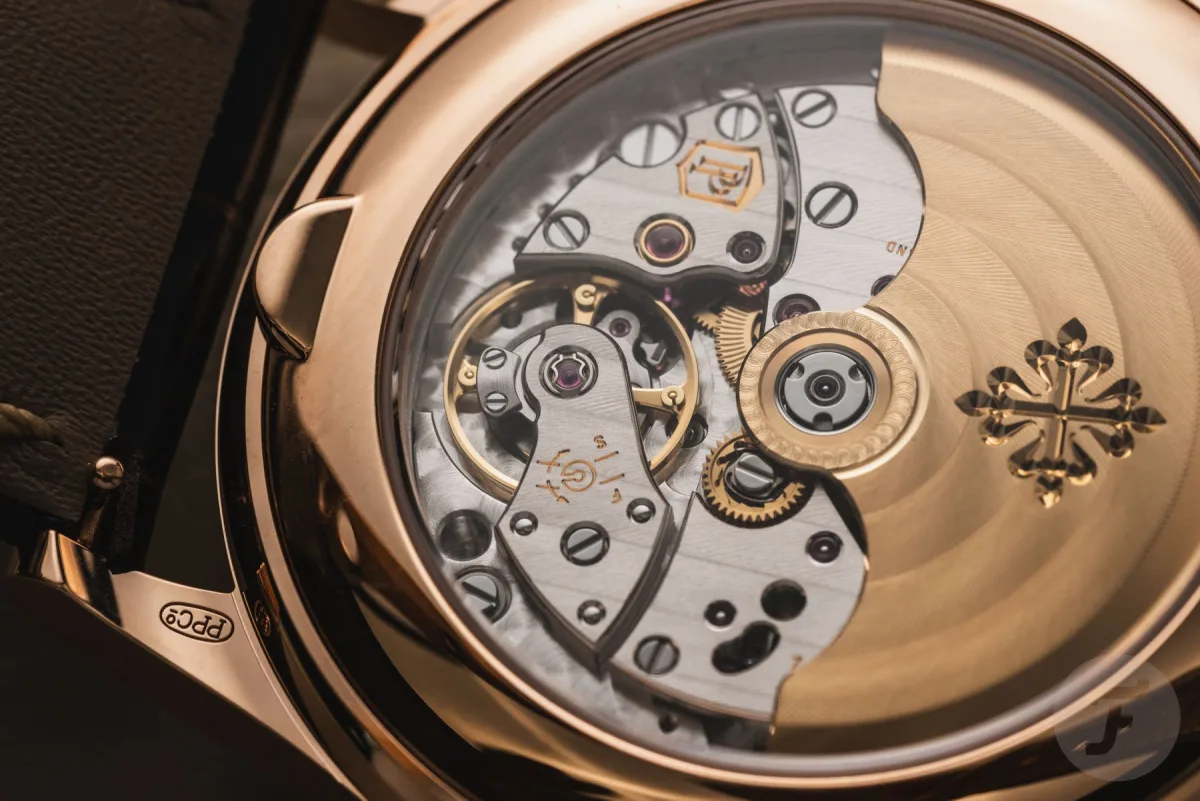
The annual calendar mechanism does not use a complex system of spring-loaded levers, cams, and racks as in a perpetual calendar. Instead, it employs a rotating set of gears and wheels located on the calendar plate between the base movement and the dial.
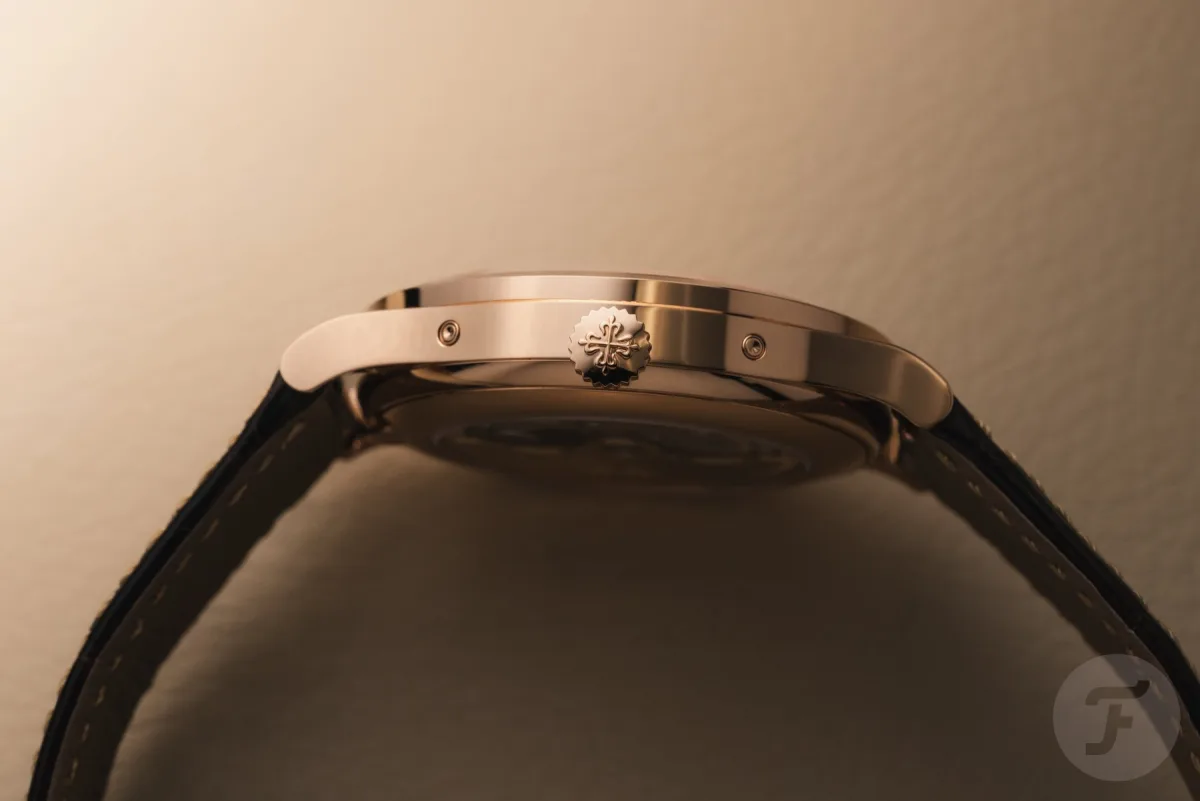
Inside the Calatrava ref. 5396R-016 are 339 components. This is a user-friendly micromechanical mechanism, adjustable via the crown and additional correctors on the case for setting the calendar and moon phases. The mechanism's autonomy is approximately 35-45 hours.
Conclusion: The Relevance of the Annual Calendar After 30 Years
The model 5396R combines tradition and modern trends. Its monochrome design targets a younger audience but does not change the fundamentals of Patek Philippe's calendar style. Thirty years ago, the annual calendar helped the brand successfully navigate the 1990s and became a worthy addition to the collection. The new color scheme looks relaxed, allowing the watch to be used as a classic accessory with a recognizable design language that aligns with contemporary tastes.
The annual calendar was initially positioned as a relatively accessible complication. In 1996, the Ref. 5035J cost $19,500, which was half the price of the perpetual calendar Ref. 3940. Adjusted for inflation, $19,500 in 1996 is equivalent to approximately $41,000 in 2026.
Compared to the perpetual calendars in Patek's current collection, the price of the Calatrava ref. 5396R-016 (€63,600 / $67,517 / CHF 54,000) remains more accessible. These are not watches for everyone, but they offer hope for owning a complex Patek Philippe mechanism with a signature complication.
What do you think of the Patek Philippe Calatrava ref. 5396R-016? Does the annual calendar concept remain relevant after three decades? Do you plan to purchase such a watch someday? Share your thoughts in the comments.