There is a phrase often repeated by Christian Selmoni - his colleagues have heard it so many times they could say it in their sleep - and it's something I constantly ponder.
“The intelligence of the hand.” It dates back to Ancient Greece and implies that manual dexterity is as significant as intellectual thought. They are of equal importance. In a world immersed in software, this idea seems almost radical.
Christian Selmoni has been with Vacheron Constantin for 36 years. During this time, he has led and, in many ways, personally initiated the revival of decorative watchmaking arts as a serious discipline, forming an entire category. As Justin Hast diplomatically noted in our second episode of the series “Vacheron Constantin: Behind the Archives,” Selmoni is “a very special person in the watchmaking world.” What Justin did not say directly is that without people like Christian, the crafts of enameling, engraving, guilloché, and gemstone setting might have quietly disappeared between 1975 and 1995, taking with them a whole part of the Genevan identity.
This almost tragic moment deserves sincere recognition before turning to the objects themselves.
The Crisis of Decorative Watchmaking Arts in the 70s and 80s
The 1970s and 1980s were harsh. Decorative watchmaking art - already a narrow niche - nearly collapsed. When Vacheron Constantin began restoring these crafts in the mid-2000s by creating a specialized métiers d’art workshop, they were starting almost from scratch - a fact the communication department would prefer not to publicize. Four historical crafts - enameling, engraving, guilloché, and gemstone setting - became the foundation of what is today considered one of the most recognizable and technically complex directions in watchmaking.
Heritage and Unique Archival Objects
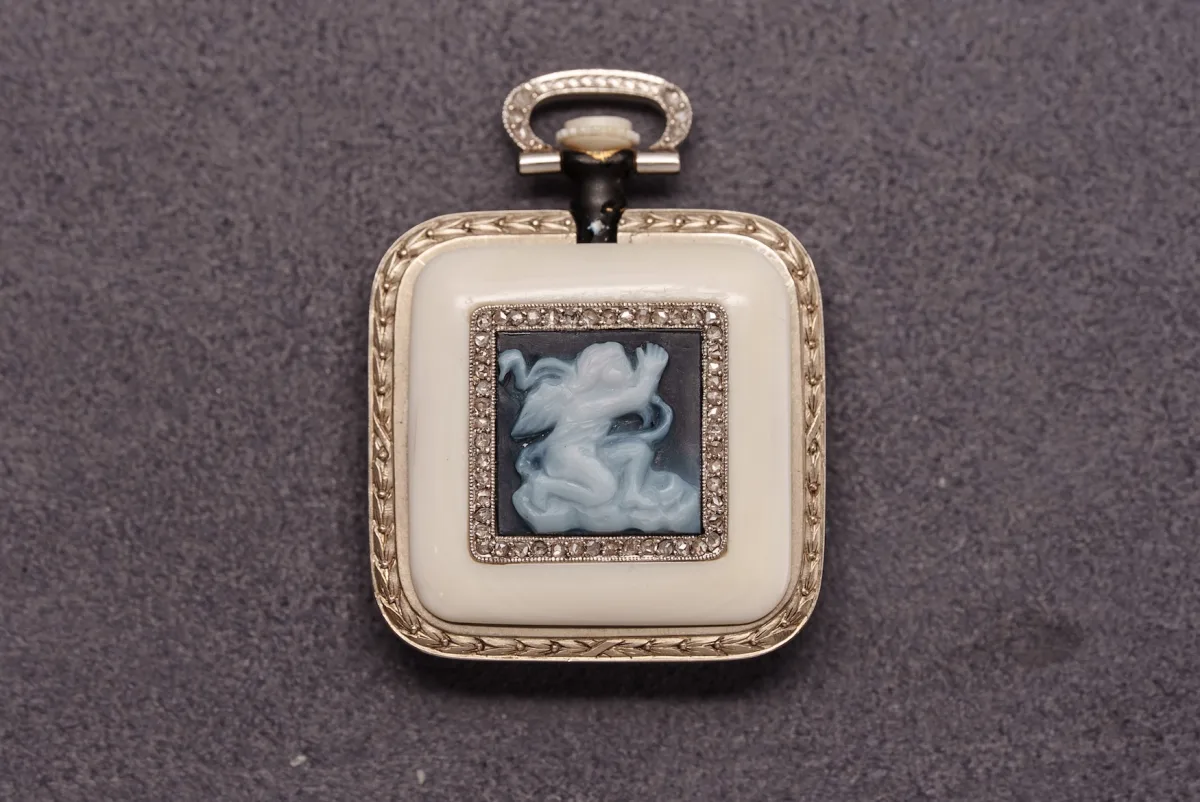
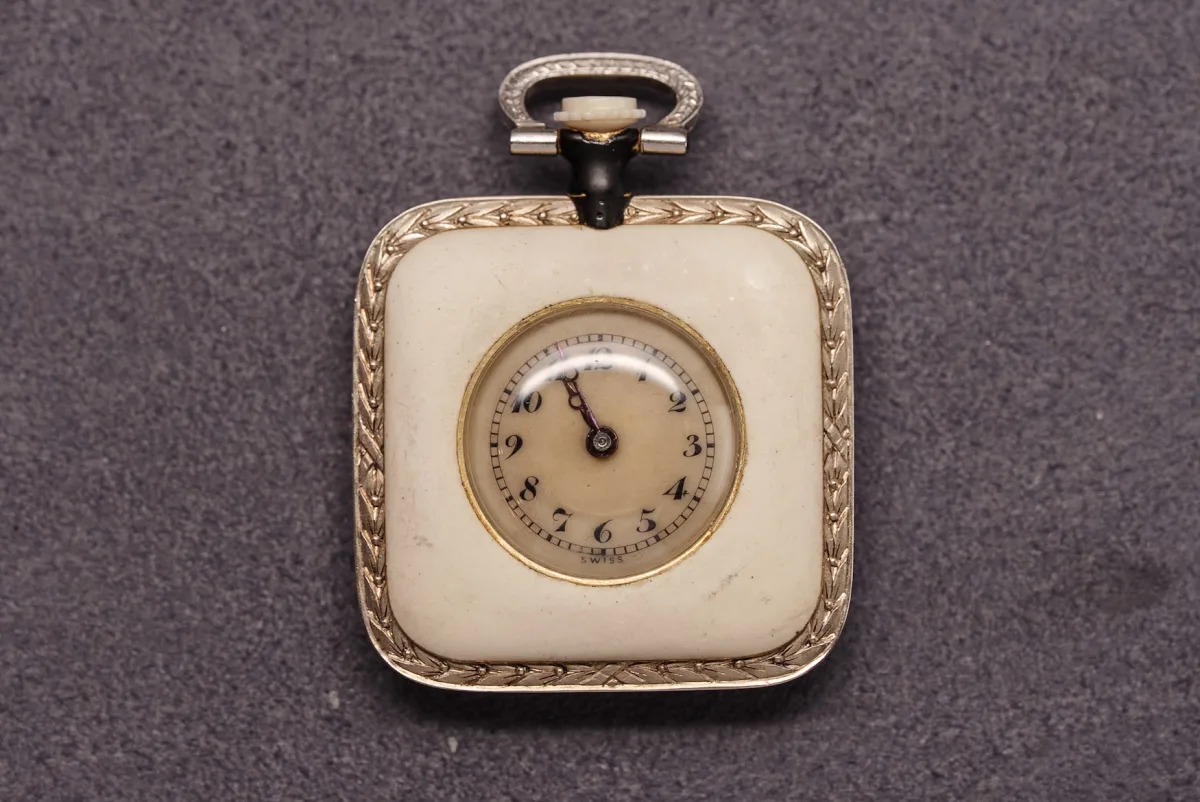
The archive provides insight into the continuity of traditions. We held in our hands a pendant watch from 1915, stunning in its beauty: a cameo of two types of agate, diamond inlays, an engraved pendant, and inside - a mechanism so miniature that it reminds us it predates almost all modern technical achievements.
The case is made of ivory - a material no longer used today, making this piece a temporal island, unique. The pendant itself belongs to the tradition of “hidden” watches for women - at that time, wristwatches were not yet widely distributed - alongside chiming brooches and other exquisite yet discreet watches that Vacheron Constantin had been producing since the 19th century.
Sample from 1924: Platinum Cocktail Watch
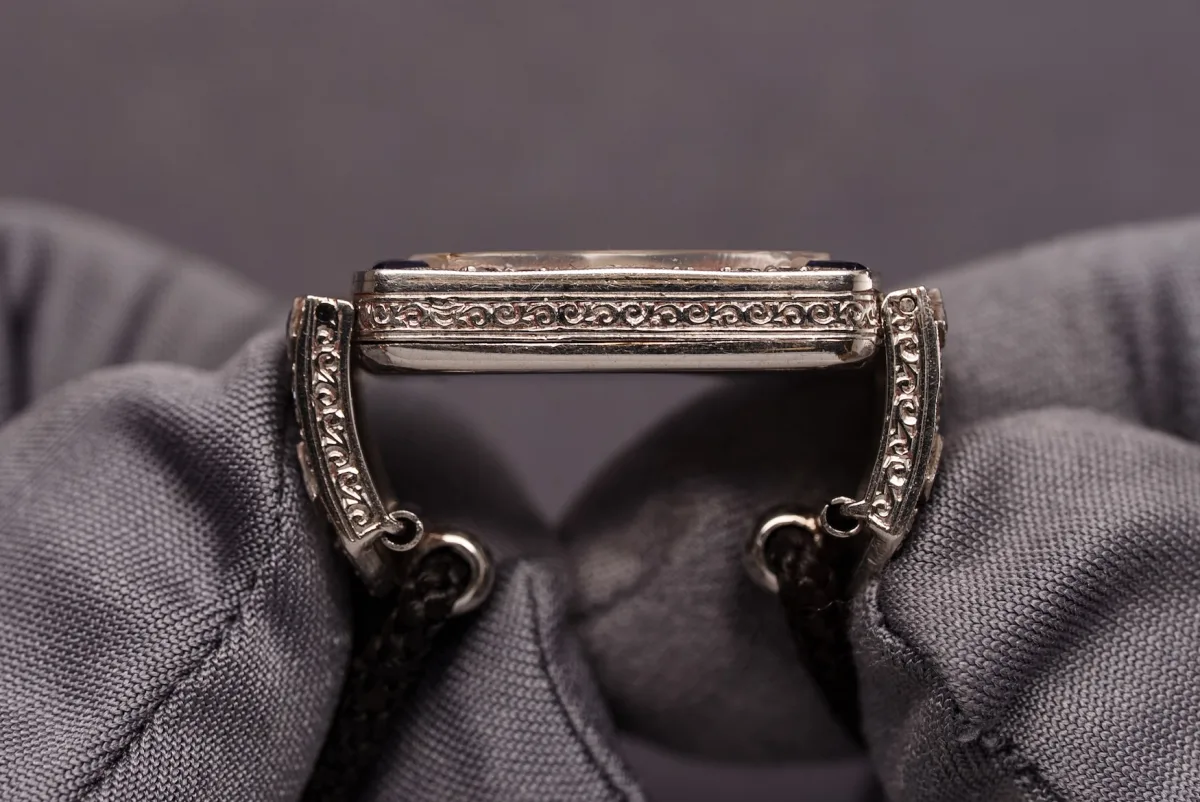
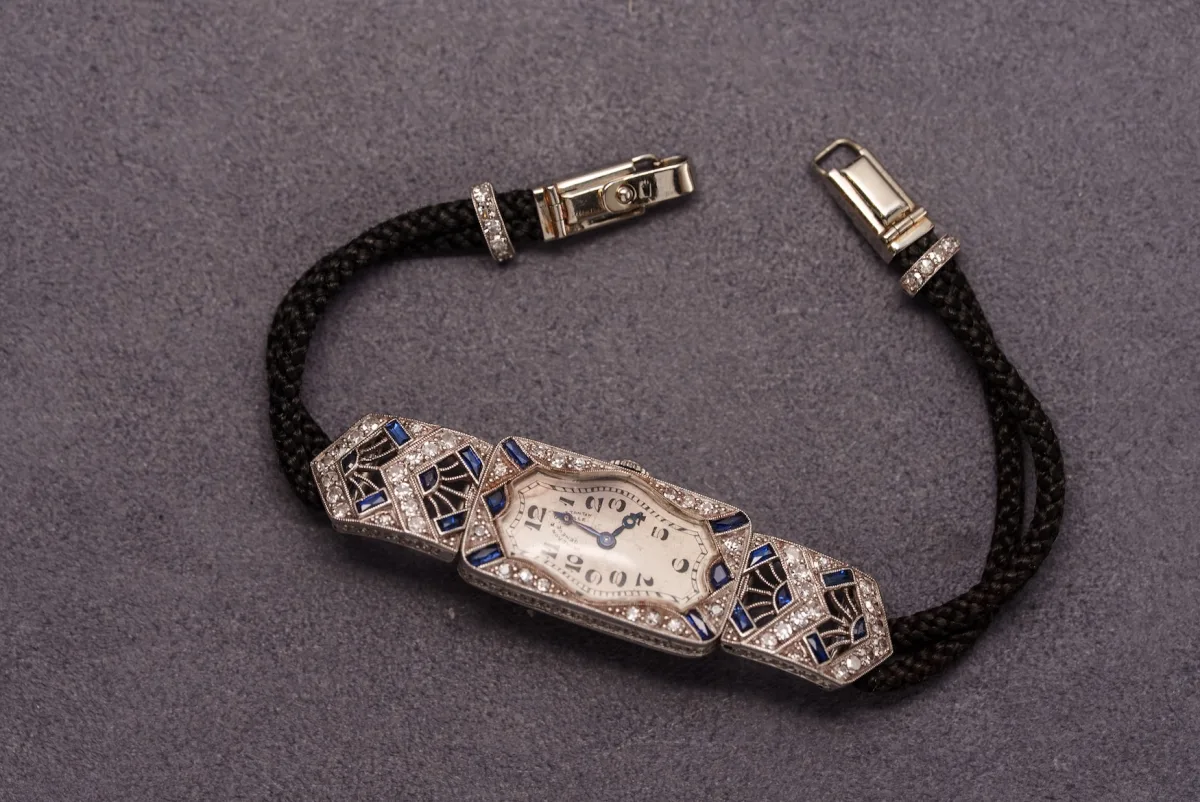
The archive also holds a platinum cocktail watch from 1924, demonstrating what pelage is - a fine enamel surface characteristic of that period. White metal, extremely fine diamond inlays, and the feminine drama inherent in the best evening watches of the era. At that time, white gold did not exist - these are exclusively platinum pieces, and the weight of the metal is immediately felt.
Enamel Dials of the 1950s
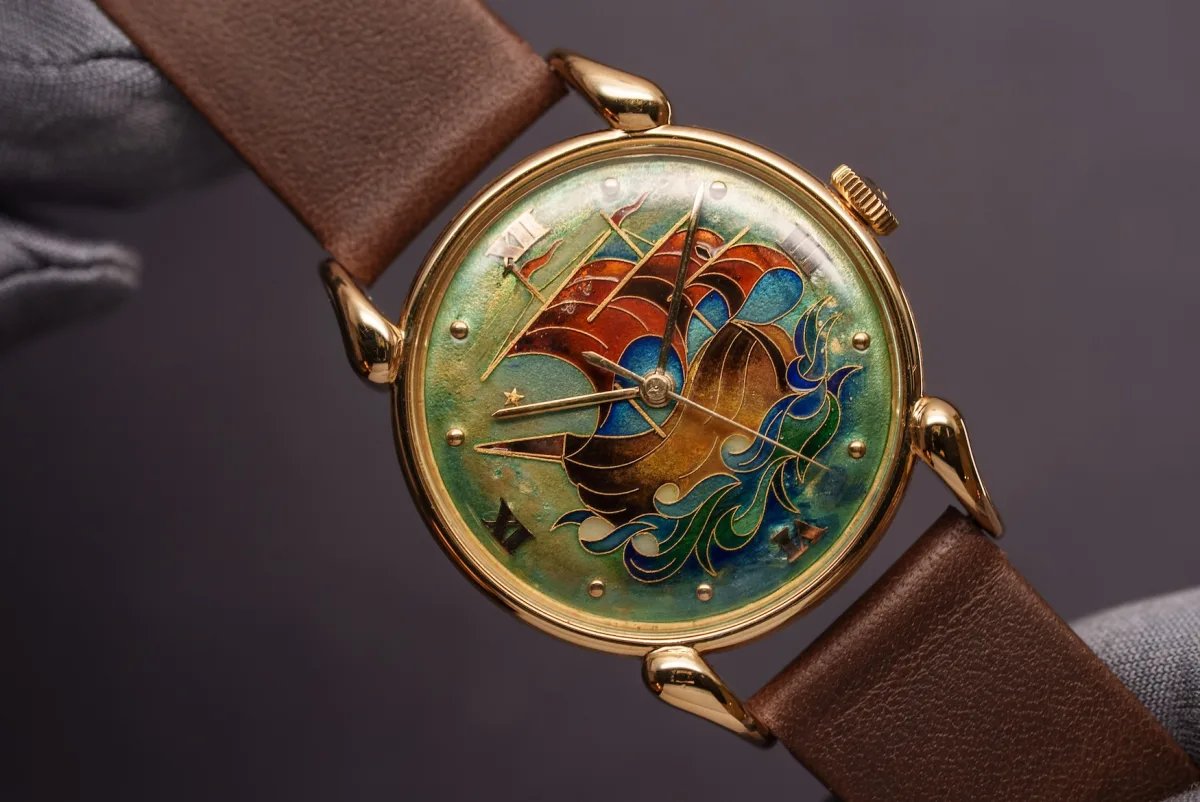
The cloisonné dial from the 1950s deserves special attention. A caravel, executed in bright, slightly naive colors, achieved by the best mid-century enamel masters. The theme of animals and vehicles on the dials of that time, as Christian notes, is “highly valued” at auctions - which in Genevan means collectors are willing to pay high sums for them. The watch diameter was about 31-32 mm, which, according to Selmoni, was still a standard for men’s classic Vacheron watches in 1990. The scale of changes since then is impressive.
Turn to Modernity: Métiers d'Art Masques (2005)
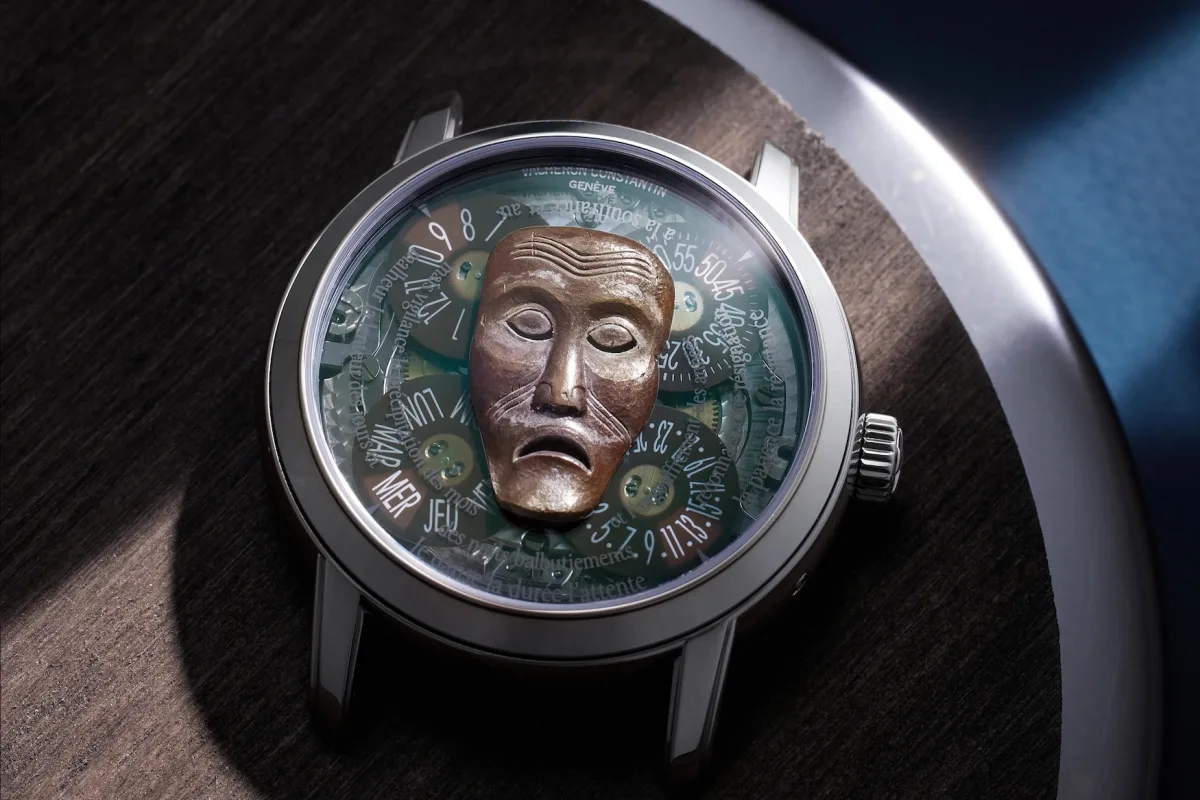
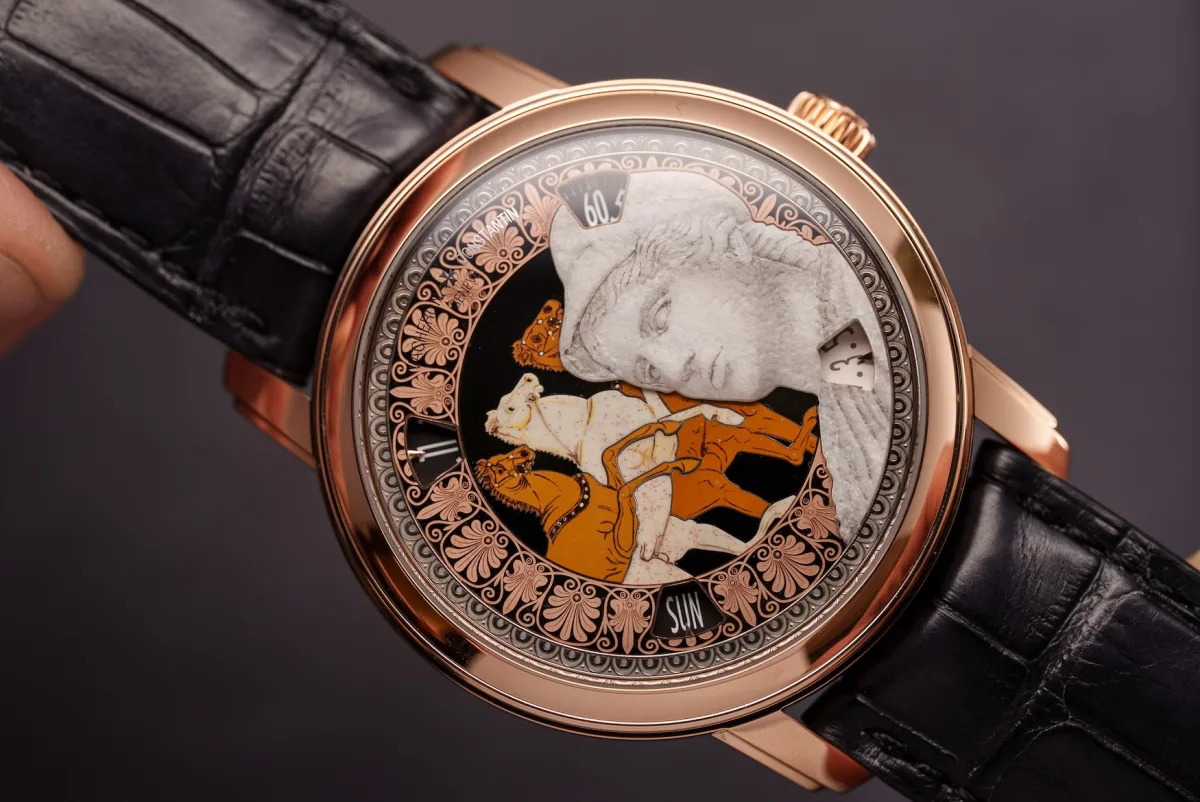
For Selmoni, the turn to modernity began with the Métiers d’Art Masques collection in 2005. Context is important: the mid-2000s was the peak of avant-garde in Swiss watchmaking, when brands were releasing large 47-mm models with black coatings. Vacheron chose a different path. If they were to do something bold, they decided it should be in the field of métiers d’art - a creative platform that would become their own territory, not someone else's.
The Masques collection was so bold that Selmoni doubted the project every evening on his way home for a week. However, the reception was overwhelming and has shaped Vacheron's view of this segment to this day.
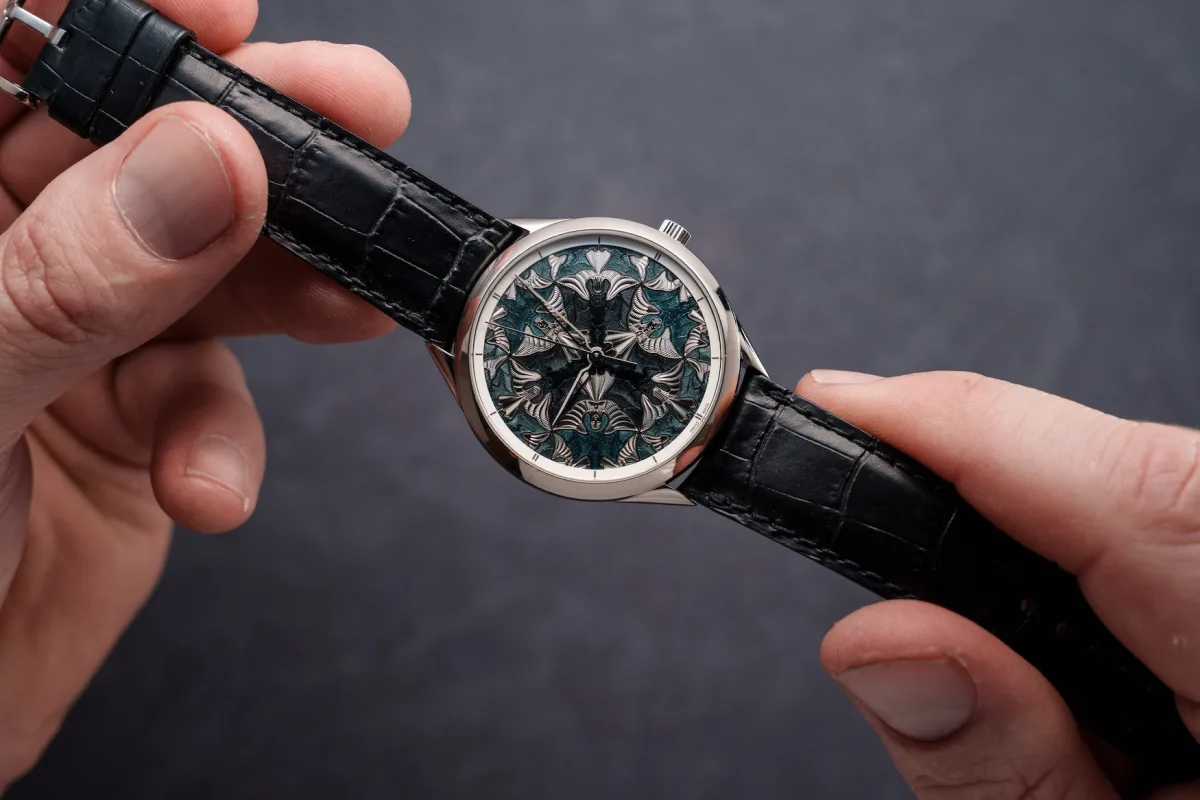
Modern Series Tribute to Great Civilizations
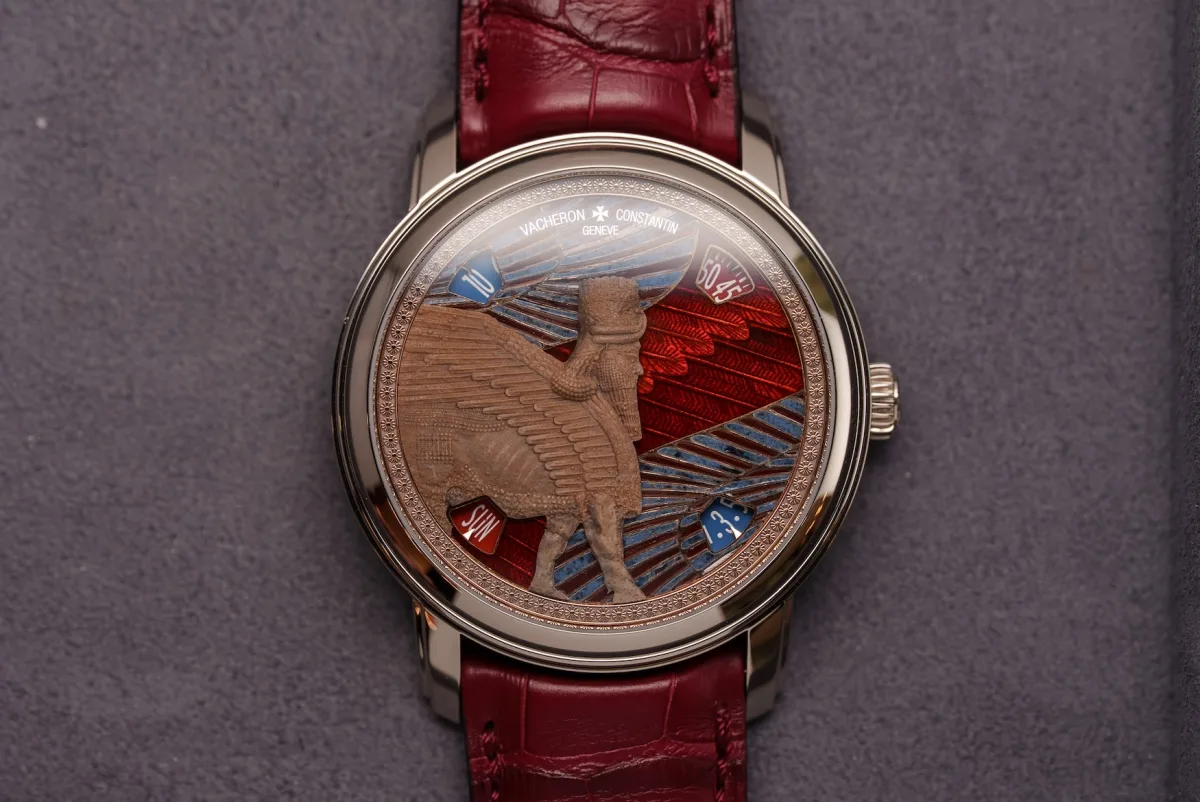
The modern embodiment of this concept is the Tribute to Great Civilizations series, presented in 2022 at the Louvre. The first series included five copies of each design. The second, released recently, advanced further thanks to designer Katinka, who refined the original's compositional approach. When Selmoni saw the results, he was, by his own admission, speechless.
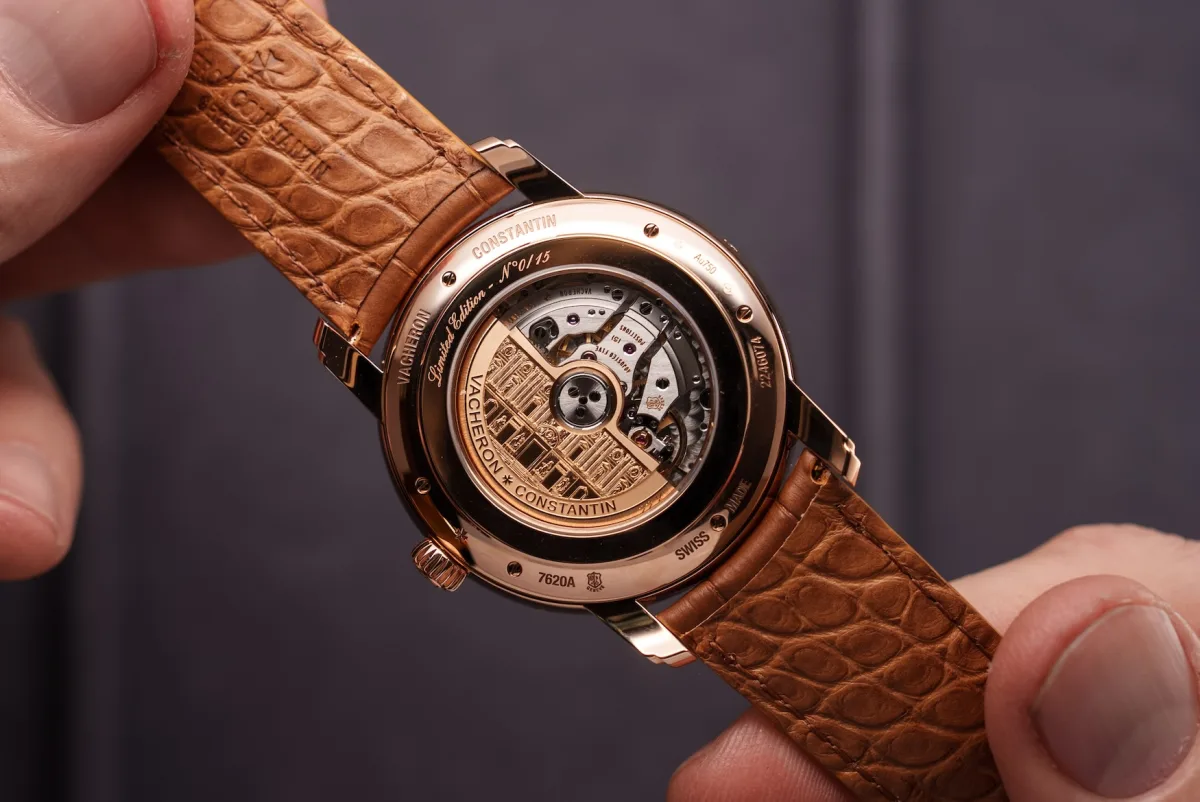
Particular attention is due to the model with the Mesopotamian lamassu - material from the 8th century BCE, executed in micro-mosaic technique and using gold leaf, with hand engraving of the outer frieze. All this looks not outdated but modern. The series uses authentic materials sourced from the regions where the corresponding civilizations lived. The stones in the collector's hands are from the same land as the depicted cultures. Fifteen copies of each version were released, each accompanied by a certificate of authenticity signed by Vacheron Constantin and the Louvre.
The Story of "Angels and Demons"
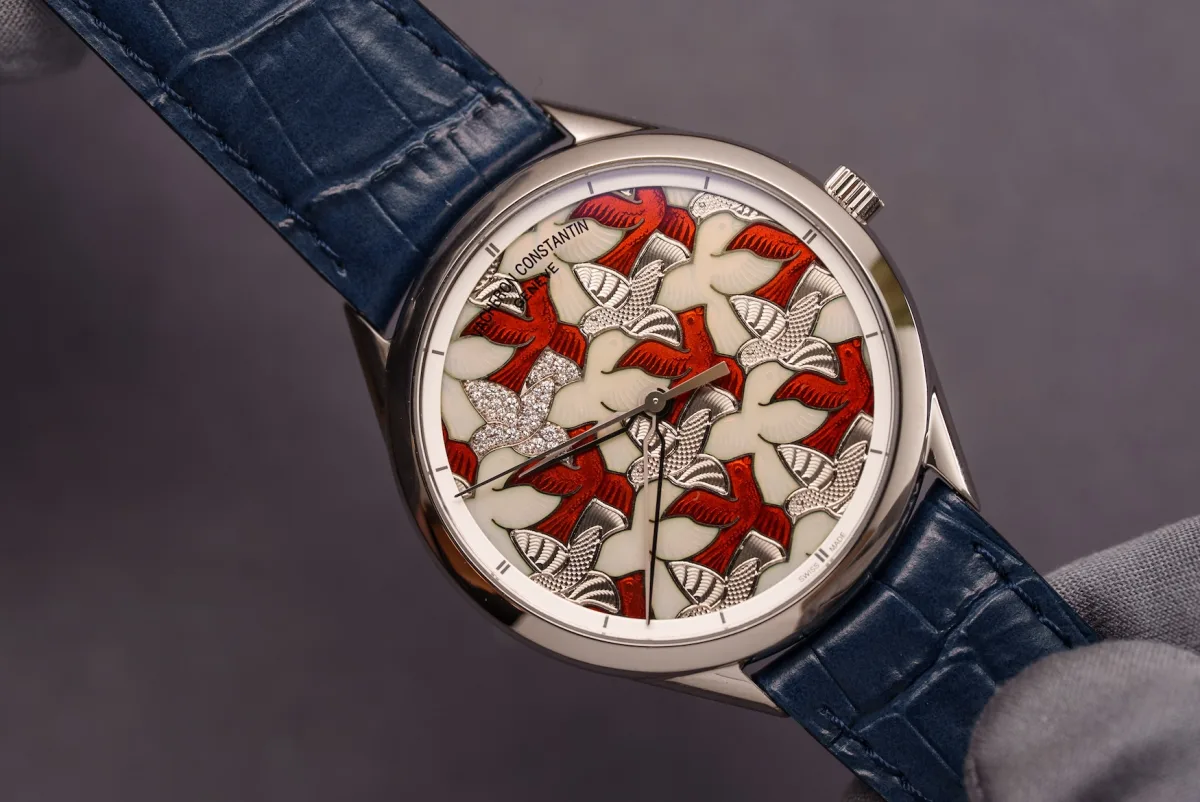
A special place is occupied by the story of the “Angels and Demons” dial from the Infinite Universes series, inspired by M.C. Escher's mosaics, where angels intertwine with demons. The first prototype was made by the workshop with a demonic composition - it was phenomenal, according to Selmoni. However, it was placed in a safe for a year while Selmoni and co-author Vincent decided to launch the series with angels. The demonic dial was never sold. Christian wore the version with angels and asked people: “What do you see first?”
This speaks volumes about the nature of these watches.
The Importance of Preserving Decorative Watchmaking Arts
The main conclusion we came to repeatedly is that decorative watchmaking art survived thanks to the conscious efforts of people who decided to preserve it and collectors who decided to buy it. None of these decisions were obvious. As Selmoni points out, complications in watchmaking are becoming increasingly standardized, but decorative art is not. Artisans creating these pieces need to train a new generation, and this chain will only continue if there is a market.
The Unique Role of Handcraft and the Impossibility of Replacement by AI
Moreover, what is important is that these crafts are fully protected from artificial intelligence. There is no model that could determine the melting temperature of blue enamel and calculate whether a subsequent red layer will destroy the first. There is no shortcut to the thousands of hours of manual preparation that allows the artisan to steadily apply a tiny bubble of vitreous material onto the dial surface. I personally tried enameling in the Louis Vuitton workshop - despite considering myself quite coordinated, I did not progress beyond the painting stage.
“The intelligence of the hand” is a reality, irreplaceable and unique. At Vacheron Constantin, it has a 270-year advantage over the rest of the world.