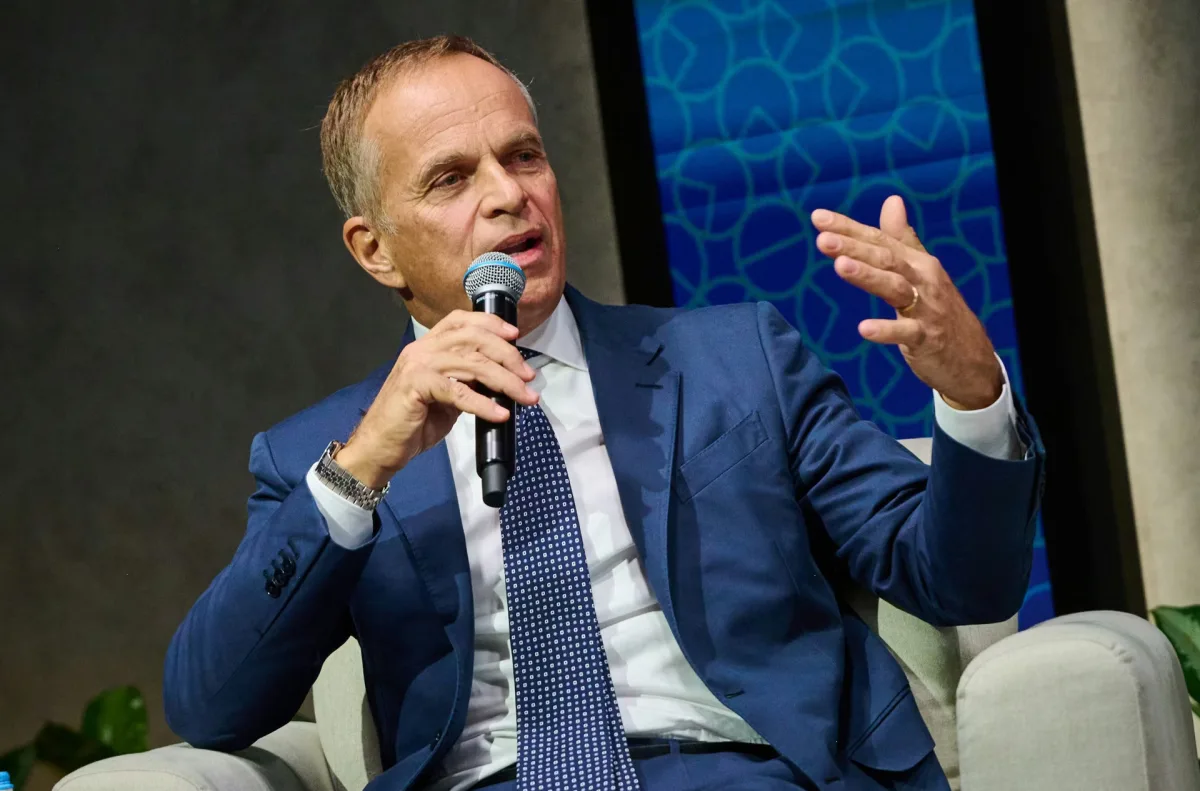
Excerpts from Mr. Dufour's conversation with Revolution magazine founder Wei Koh.
Jean-Frederic Dufour is a key figure in the Swiss watch industry. He was appointed CEO of Rolex 12 years ago. Under his leadership, the company has grown so much that, with over 30% of the watch market share, it is considered almost a monopoly in the industry. In November 2025, during Dubai Watch Week, Dufour gave an interview to Revolution magazine founder Wei Koh. Here are the most interesting excerpts from this interview, published on watchpro.com.
WK: I believe that brands like Rolex and Patek Philippe elevate the entire industry to a new level. Why do you think it's important for new [independent] voices to bring new energy to this sector?
JFD: We need young people; they push us forward. They challenge institutional brands. It's nice to see newcomers. An industry without newcomers is a dying industry.
It's very important that we maintain the industry's appeal to young talent, and I don't just mean people with talent in design, concept, or art, but also young technicians and engineers graduating from our technical schools.
For example, our research and development department employs 85 PhDs - the highest level of qualification in the Swiss education system. We have over 2000 engineers. We need to do something to attract people to our industry. They don't want to work in a boring industry. They want to work in an industry that makes them dream about the future and possibilities. This is very important.
WK: You mentioned Apple. Let's go back to 2014, the year of the Apple Watch launch and around the time you joined Rolex. Back then, many said, "That's it. Mechanical watches are done." But the opposite happened: a new generation fell even more in love with horology. Why?
JFD: Perhaps saying "all is done" was a bit much. Firstly, Apple doesn't really make watches; I call them a phone you strap to your wrist. Since from a marketing standpoint it doesn't sound very appealing, we say "smartwatches." But timekeeping is probably 1% of everything they do. It's a completely different ecosystem.
The two worlds - smartwatches and mechanical watches - can coexist. In fact, smartwatches help us; they teach young people to wear something on their wrist. So when young people become interested in transitioning from digital to mechanical watches, the habit is already formed.
At the entry level, Apple Watch is a strong competitor. For 500-1000 Swiss francs, you get an entire digital environment. This affected low-cost Swiss watches, but for high-quality mechanics, smartwatches pose no threat.
WK: We live in a world of digitalization and artificial intelligence. Mechanical watches effectively counter this - they are tangible, enduring, and constant. Is this why mechanical watches are so popular among the younger generation?
JFD: It's hard to give a clear explanation because we don't have consumer research like, say, in the food industry.
You can ask people why they like a particular yogurt. With watches, you can't just go out and ask, "Will your next watch have a white, black, or blue dial?" People don't know. In a way, we're driving at 200 km/h on a highway in fog. That's what makes our industry so challenging.
I think young people like mechanical watches precisely because they don't know what to expect. They like being surprised, when their emotions are captured by something unexpected. When this experience is positive, they are genuinely inspired.
WK: We live in an era of astounding AI achievements. How does watchmaking maintain its integrity and even use AI to its advantage without losing its humanity?
JFD: We already use AI in many areas. We have a very modern machine fleet. The average age of our machines is about 8 years, and we invest around 100 million Swiss francs annually in upgrading and modernizing these machines.
This isn't done because it's fun. It's because we always want to have state-of-the-art equipment capable of producing components of the highest quality and precision. AI helps program and service machines. It expands human capabilities.
But we don't use AI for human interaction. When you call Rolex after-sales service, you won't be talking to an AI-based chatbot. Our customers want real human interaction.
Artificial intelligence can help in final quality control, as it can replace the human eye and inspect 100% of the product with greater accuracy than ever before. But we can't do everything with robots. Watchmakers are still extremely important.
WK: We often say the next generation is less materialistic, more experience-oriented, and deeply concerned about sustainability. In light of everything discussed, why might watches attract them?
JFD: Because everything around them is digital. Watches give them the opportunity to experience something mechanical; something physical, with history, durable, that can be discussed, exchanged, compared, and shared with friends.
Not everyone is interested, but for those who can afford watches, they become a way to express taste, success, education - much like cars were in my youth.
When I was 17, I would have given my arm to be able to drive at 18. Back then, a car meant freedom. Today cars don't symbolize freedom in the same way. There are no more large auto shows; automakers have lost direct contact with consumers. People see cars as just a means to get from point A to point B - or they use Uber and don't buy a car at all.
In watches, we still maintain this emotional connection. It's one of the last luxury industries built on this principle. It resonates with young people looking for something real and lasting that speaks to who they are.
WK: I had a Rolex watch that belonged to my grandfather, then my uncle, and then me. This is an incredible example of sustainability. This brings us to Rolex Certified Pre-Owned. Why was it important to create something like this?
JFD: The idea came from the United States. We noticed that in some retail locations, the number one brand was Rolex, and the number two brand was pre-owned Rolex watches. Such a level of business, without confidence in the absence of issues with the watches, without any guarantees, was somewhat risky.
That's why we created Rolex Certified Pre-Owned. It's a long-term commitment and a powerful way to build trust. There's nothing worse than feeling betrayed after buying something expensive. It can ruin relationships.
WK: If you had to give one piece of advice to the next generation, what would it be? Do you agree that it's important for young people to go out, gain new experiences, make friends, and help promote this deeply human industry?
JFD: Of course. They should also discuss their ideas with peers. Creativity is important, but you can't just sit alone, believing your idea is perfect. You might be disappointed. You need feedback to understand if you're moving in the right direction. Work hard, believe in your ideas - but test them in the real world.
Young people want to be everywhere at once. If you try to be everywhere at once, you won't have a team, money, or sometimes even a product. You simply can't be everywhere.