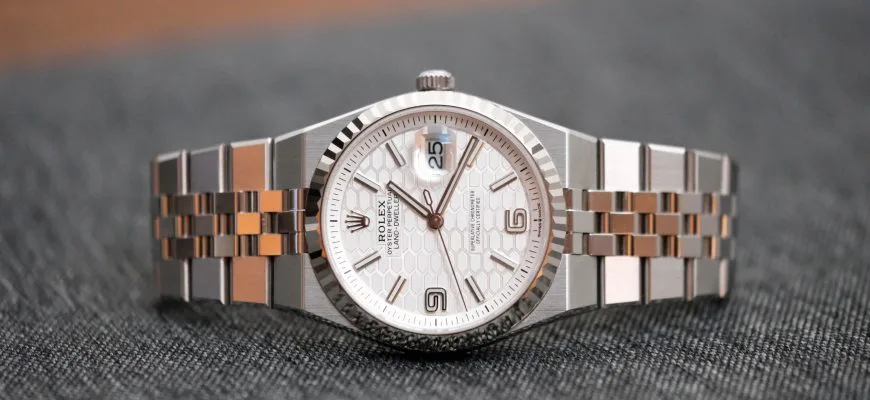
Before my trip to Barbados with the Doxa Army team a few weeks ago, I had a strange premonition that I might receive the long-awaited call about the Rolex Land-Dweller 36mm.
At that point, I had been waiting for about 9 months since expressing interest in the model on the day of its official release in April 2025. While I was away, no notifications came through, but literally the day after returning home, I received the long-awaited message from my favorite official Rolex dealer - Royal De Versailles in Toronto: the Land-Dweller Ref. 127234 was waiting for me if I wanted to pick it up. I immediately scheduled a pick-up date and rearranged my schedule to dedicate a whole day to the trip, as the round trip from Montreal to Toronto takes about 6 hours.
The Land-Dweller was a watch model I immediately recognized as worthy of a place in my personal collection. On the release day at Watches and Wonders, I was already considering options with an integrated bracelet, with the main candidate being the Royal Oak 37mm. This model seemed like the perfect alternative to the Royal Oak but with some important advantages: increased water resistance up to 100 meters compared to the RO and a more attractive retail price. I prefer to wear watches in any conditions - whether swimming in the sea, relaxing in a jacuzzi, or traveling with gear. In this regard, Rolex better suits my active lifestyle than Audemars Piguet. The RO would require more careful handling and probably limited wear, so I switched to the Land-Dweller.
First Impressions on the Day of Acquisition
Like many hard-to-get Rolex models, trying on the Land-Dweller can be challenging, especially juggling family and work obligations, as was my case. Before acquiring it, I had only seen the watch in Rolex displays and already knew that the 36mm size would perfectly fit my 16.5 cm (6.5-inch) wrist. I already have an Air-King 34mm, which is slightly small, and a daily Daytona 116500 - an excellent sports size, though reducing by 1-2 mm wouldn't hurt. I also understood that the integrated bracelet and bright white dial would visually increase the size to approximately 38mm. Fortunately, my assumptions were confirmed, and upon trying it on at the official dealer center, I was convinced it was the best size for me among all Rolex watches.
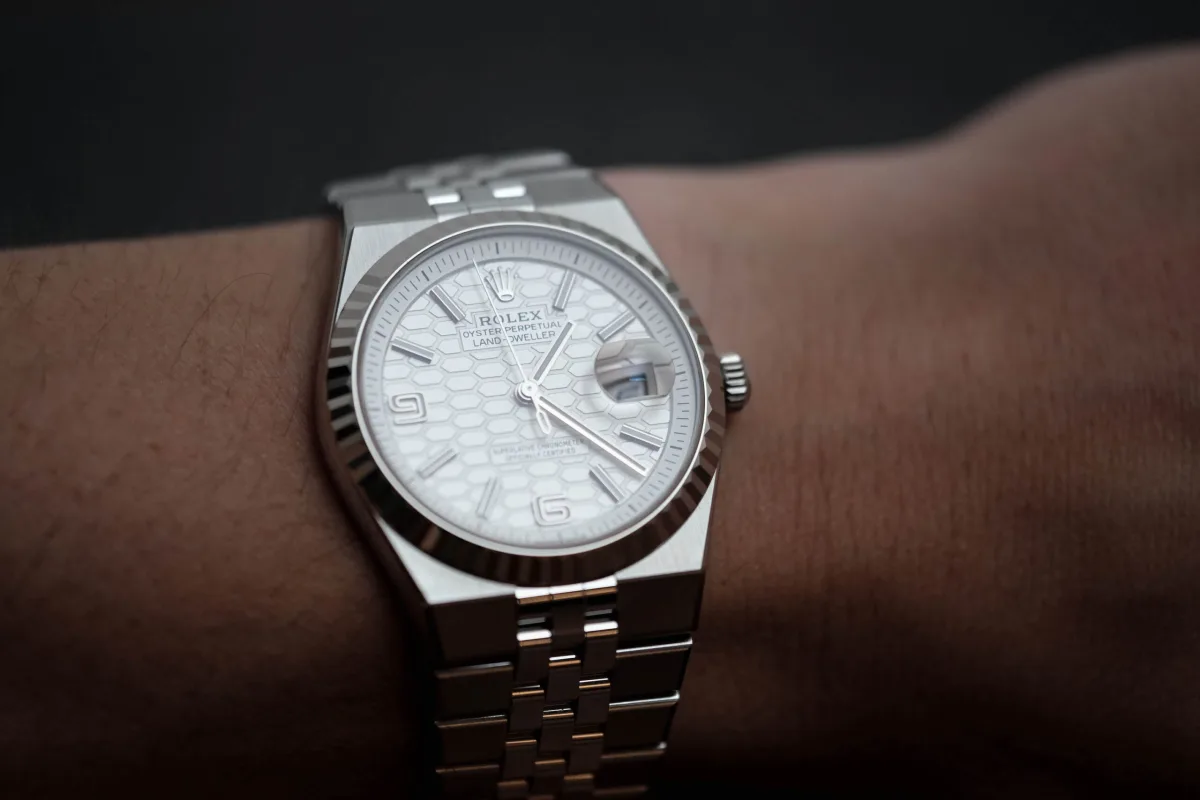
The watch sits comfortably at the center of the wrist, with the curve of the integrated lugs starting at the edges of the wrist. There is enough space between the watch and the skin for it to move freely without appearing sloppily. From a top view, part of the magnificent bracelet is well visible.
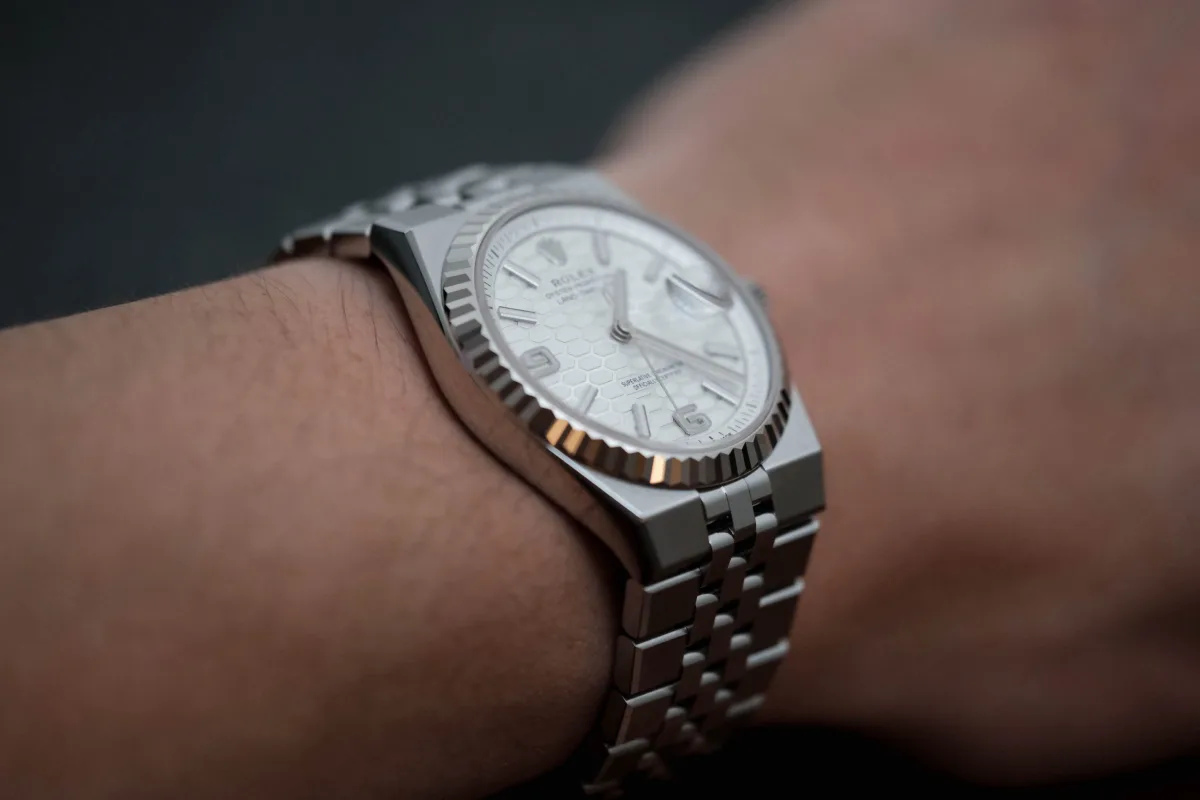
The flat Jubilee bracelet is one of Rolex's most impressive engineering solutions. It elegantly follows the contours of the wrist, shimmering in the light and making a characteristic jingle when moving the hand. Combined with the lugs, the bracelet has a distinctly retro 1970s style, much more pronounced than I expected. In my opinion, it surpasses the Royal Oak bracelet in build quality, which I appreciated comparing several RO models in the Audemars Piguet boutique in New York.
Honeycomb Pattern Dial and Caliber 7135
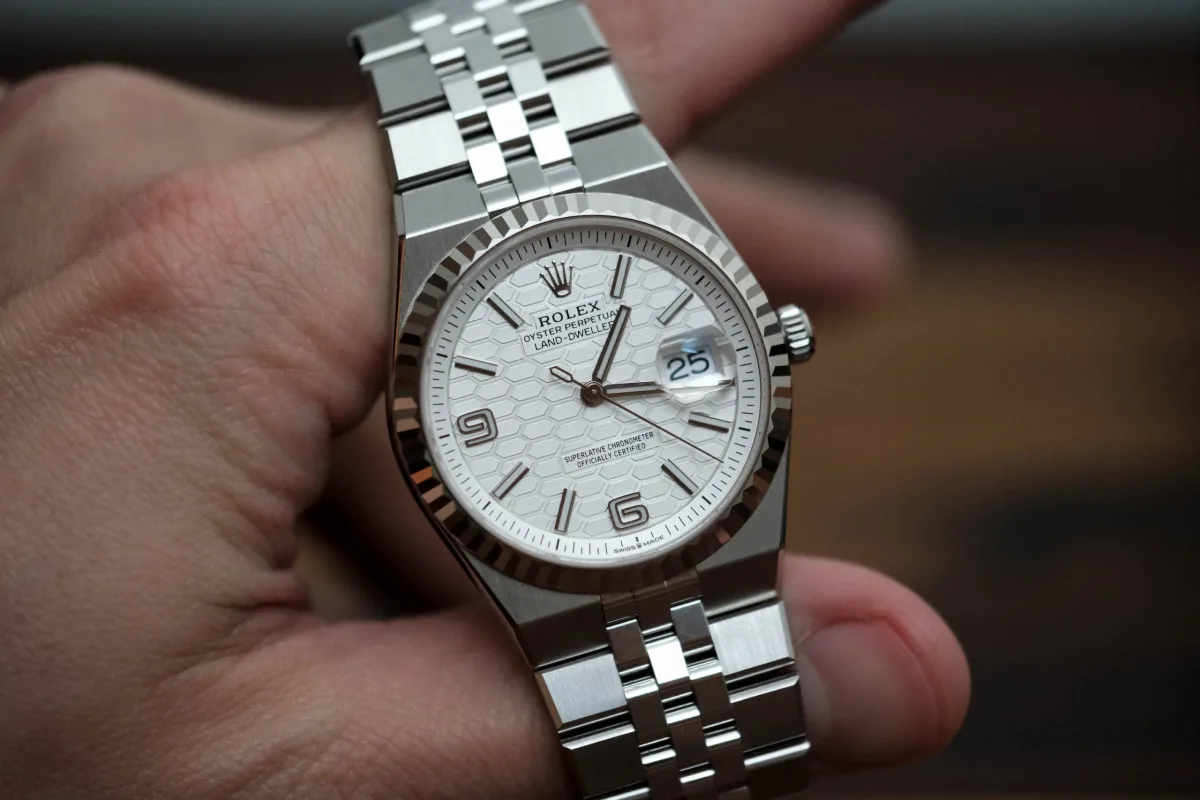
Apart from the overall integrated form and hype surrounding the novelty, the model features two key design innovations previously unseen in Rolex: an “intensely white” dial with a laser-engraved honeycomb pattern and a new in-house automatic caliber 7135.
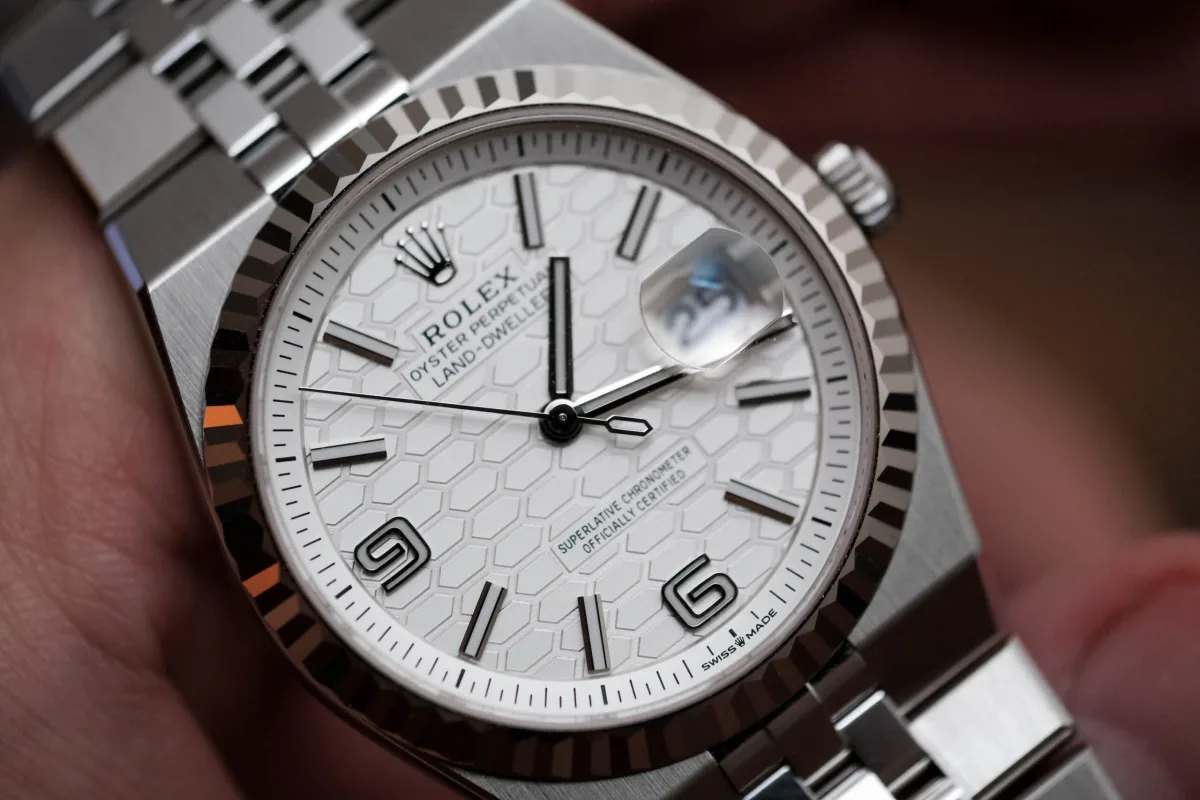
The intensely white dial is interesting because it sits on the edge between satin and sunburst finishes. Rolex is known for its ability to create dials that change shades depending on lighting. In direct light, the dial appears bright white, but in twilight or low light, it takes on a warm, almost silver hue. The honeycomb engraving looks futuristic and very precise, sharply contrasting with the classic linen or tapestry textures on vintage Datejust models.
A closer analogy would be the recently discontinued Datejust motif dials, but with a more voluminous and three-dimensional effect due to laser engraving. The indexes are applied separately, filled with luminescent material, featuring reversed Arabic numerals 3 and 6, and neat rectangular markers. Although some questioned the dial design, I personally appreciated Rolex's fresh and unconventional approach in a modern execution.
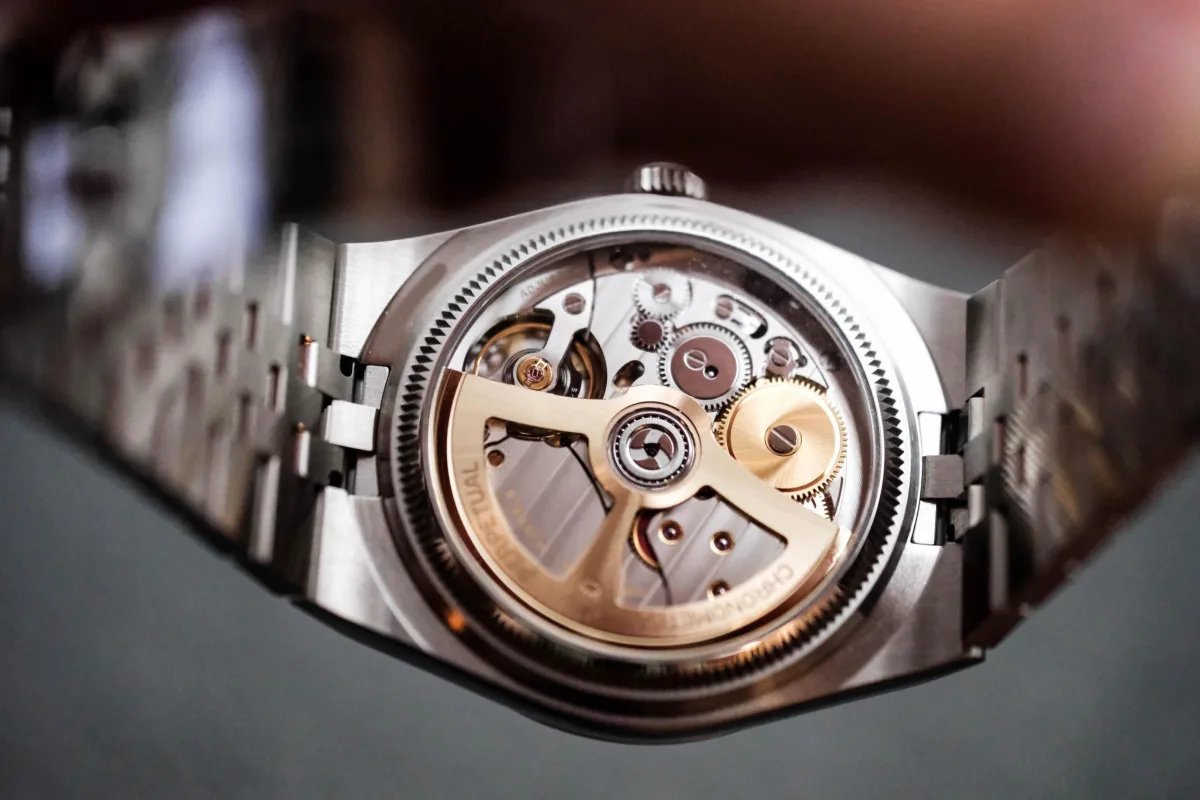
The caliber 7135 was a real surprise at launch, especially considering it's visible through the sapphire case back. For me, this was one of the major pluses - a Rolex with a visible movement, not only in platinum, which is unusual and eccentric. The movement is a new high-frequency development with the proprietary Dynapulse escapement, operating at 5 Hz (36,000 vibrations per hour). As once said in a video review, it's like buying a sports BMW with an exclusive and limited V8 engine. The movement's finish is at a high level: bridges with Côtes de Genève decoration, polished bevels, and an interesting Syloxi hairspring that can be observed in action.
Final Thoughts
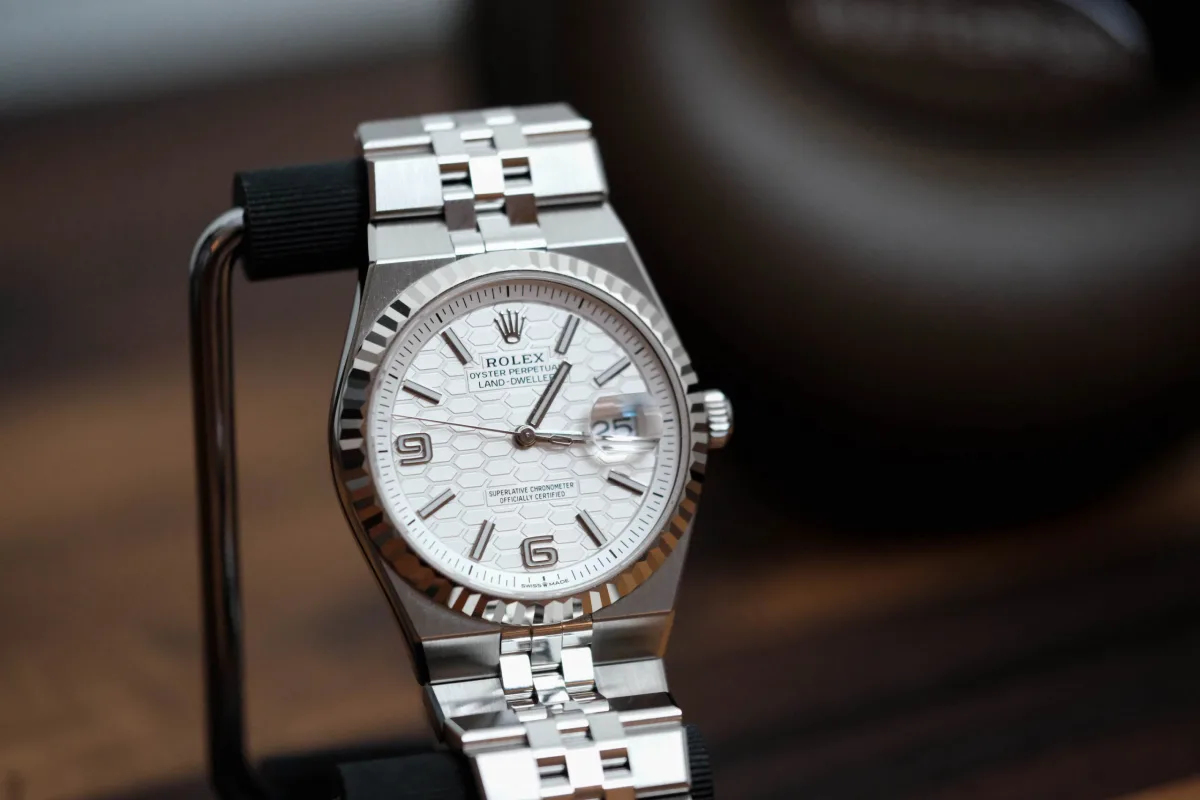
It can be said with confidence that I am more than satisfied with this purchase. I was fortunate to add this model to my growing Rolex collection, which exceeded all expectations both technically and emotionally. Essentially, it's a modern reinterpretation of the Oysterquartz with an intriguing approach to the movement and high manufacturing standards, significantly surpassing past versions.
As this is the first reference of the new line, it's reasonable to assume that the model in its current form won't last long. Rolex is known for launching new collections with unpublished “special editions.” It's quite possible that new dial options and slight modifications to the Land-Dweller of all sizes will appear in the coming years, and this version will gradually leave the market. Currently, I wear this model more often than the Daytona, and I'm curious if this trend will continue in the future.