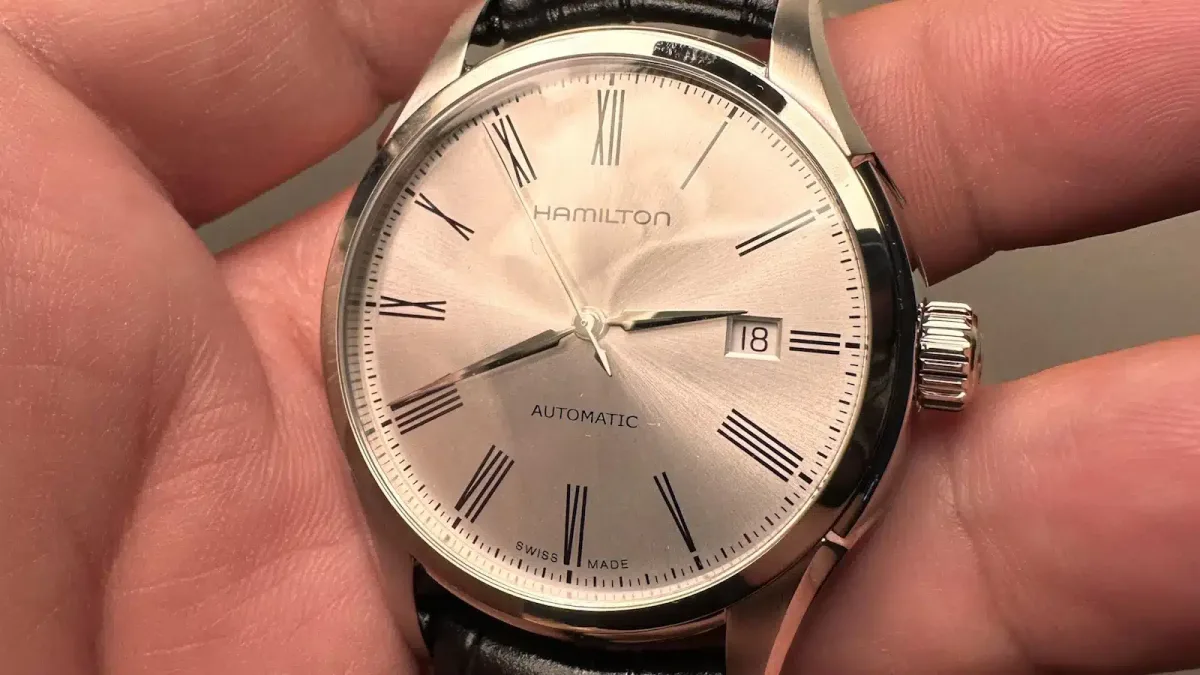
Why do we still use watches with Roman numerals to tell time, and where did it all begin? Find out in this article.
History of the Roman Numeral Dial
Where to begin with the Roman numeral dial? This type of dial has been used since 1000 BC and continues to be applied today.
It interprets time elegantly, classically, and timelessly. Amazingly, this form of timekeeping has changed very little over nearly 700 years.
Take, for example, antique pocket watches and place them next to modern Ulysse Nardin watches. Both will have the same scale with Roman numerals.
Roman numerals are a classic design element in watches, giving them an eternal charm. Watchmakers use them in thin and bold fonts on traditionally styled dials.
While baton and stick markers add a modern touch to watches, many collectors prefer dials with Roman numerals.
This unique number system combines with various styles of hands, offering a wide range of options.
Let's explore why the design of the Roman numeral dial remains popular today and answer the question: "What are Roman numerals?".
What are Roman Numerals?
Roman numerals are an ancient numerical system that originated during the Roman era. It's an additive and subtractive system still used today to denote numbers.
Basic and arbitrary numbers are denoted by Latin letters. For example, the letter V represents the number 5. The number six is "one plus five," so I is used to denote the unit. The number six is written as VI.
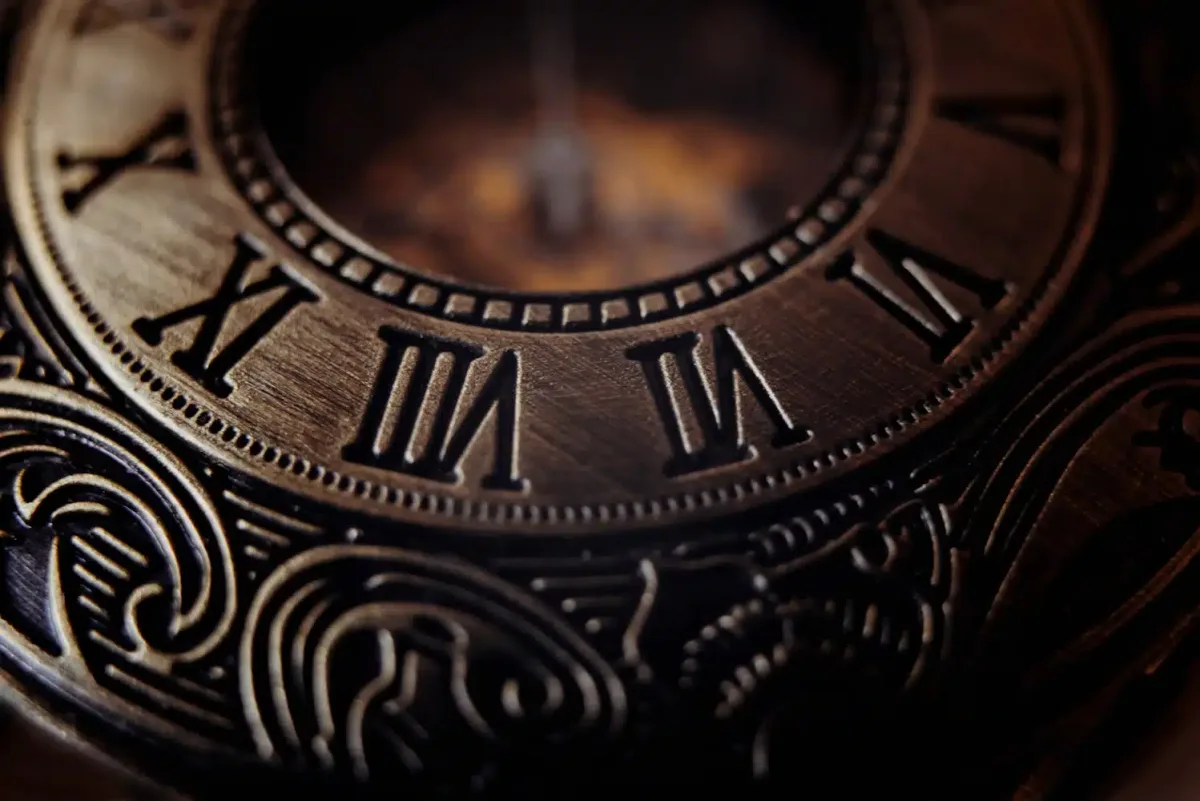
The subtraction system is also used for counting backwards. IV represents the number four. For the numbers four and nine, the letter I is placed before V and before X (IV and IX, respectively).
Today, Roman numerals are used for bullet points in documents, numbering monarchs, and on classic watch dials.
Which Roman Numerals Exist?
So, what exactly are Roman numerals? They are the designations you see on watch dials. Examples: IX and VII.
They help to quickly determine the time. However, Roman numerals are more complex than the familiar Arabic system, which appeared in the mid-14th century.
Roman numerals are also used for numbering chapters in books and dividing acts in theatrical productions.
- One = I
- Five = V
- Ten = X
- Fifty = L
- One hundred = C
- Five hundred = D
- One thousand = M
The letters are arranged in a specific order to denote each number. The rule usually states that no more than three identical symbols can be placed in a row.
For example, VIII is eight. But for nine, IX is used. However, there is an unusual exception concerning the display of time.
Why is IIII Used Instead of IV on Dials?
If you have a watch with Roman numerals, you may have noticed something strange.
In traditional style, Roman numerals from one to twelve look like this: I, II, III, IV, V, VI, VII, VIII, IX, X, XI, XII.
However, look at your dial. The fourth hour, which should be IV, is displayed as IIII. Why is that?
There is no definitive answer. We can only speculate.
The Arabic numeral system replaced the Roman one only in the mid-14th century. Before that, an updated version of Roman numerals was used.
The system, based on Latin letters, belongs to the Romans. But the Romans confused IIII and VIIII with III and VIII.
The change in numerals eliminated the confusion but does not explain why IIII is still used on dials and why VIIII is not used for nine.
One logical explanation is a religious aspect. The supreme god of Rome was Jupiter, whose name was written as IVPPITER. It can be assumed that using IV on the dial was considered disrespectful to the deity.
Other reasons may be aesthetic. IIII creates a symmetrical and balanced look on the dial.
The simplification of the notation may have made it easier for people with limited education in ancient times. Many were illiterate and poorly versed in mathematics. Simple subtraction was too complicated, and this solution eliminated the problem.
Examples of Dials with Roman Numerals
Now that we have sorted out the Roman numeral system, let's look at examples of beautiful dials using them.
Hamilton American Classic Valiant Auto
Hamilton's American roots are tied to timekeeping on railroads in the late 19th century. These watches pay homage to the brand's heritage with a classic Roman numeral scale.
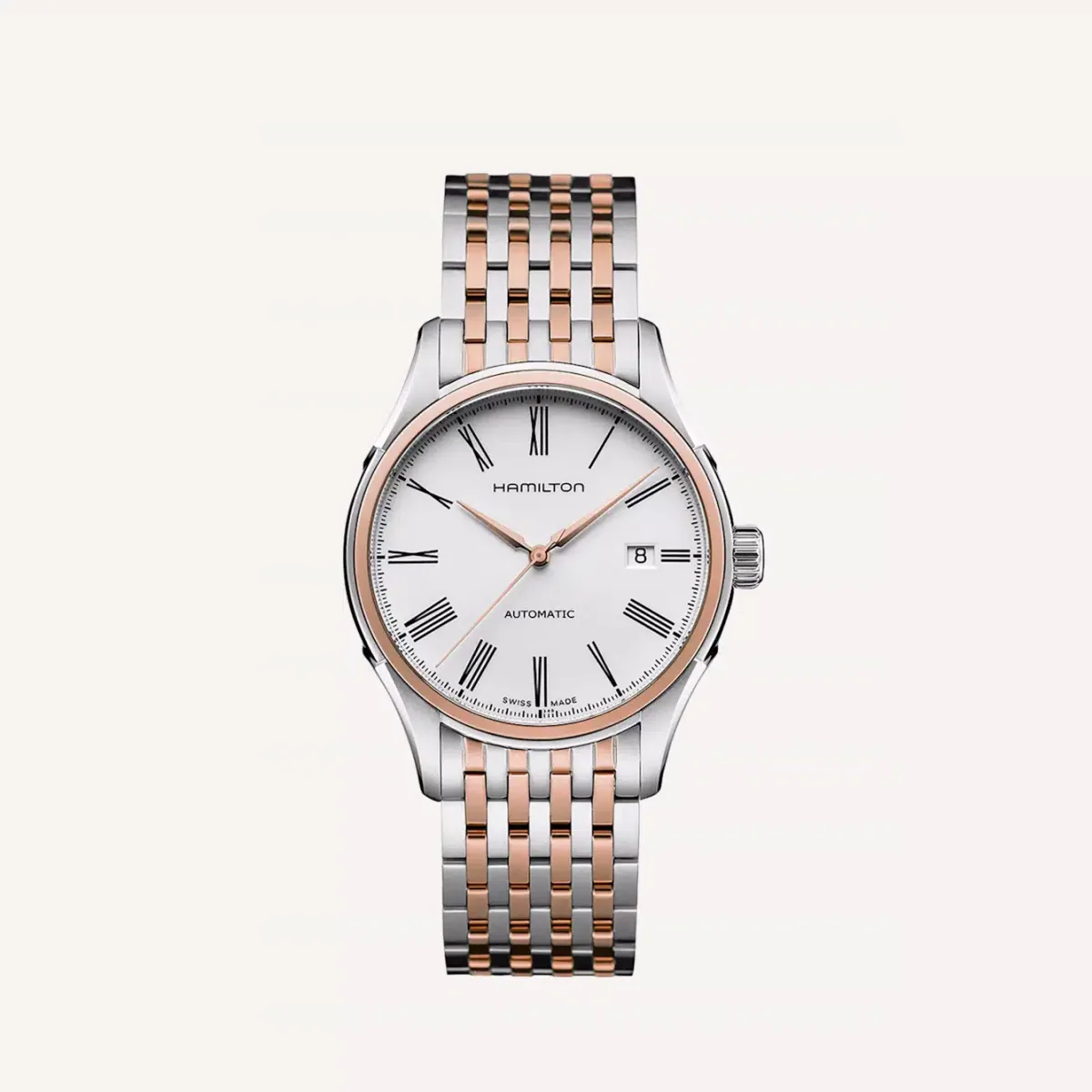
Black numerals on a white dial pair beautifully with the rose gold bezel. A 40mm stainless steel case with rose gold perfectly suits collectors of classic watches.
Nomos Glashütte Ludwig Neomatik
Nomos is one of my favorite brands. The Ludwig Neomatik model is an excellent example of a Bauhaus-inspired design. Roman numerals survived this style and remained relevant.
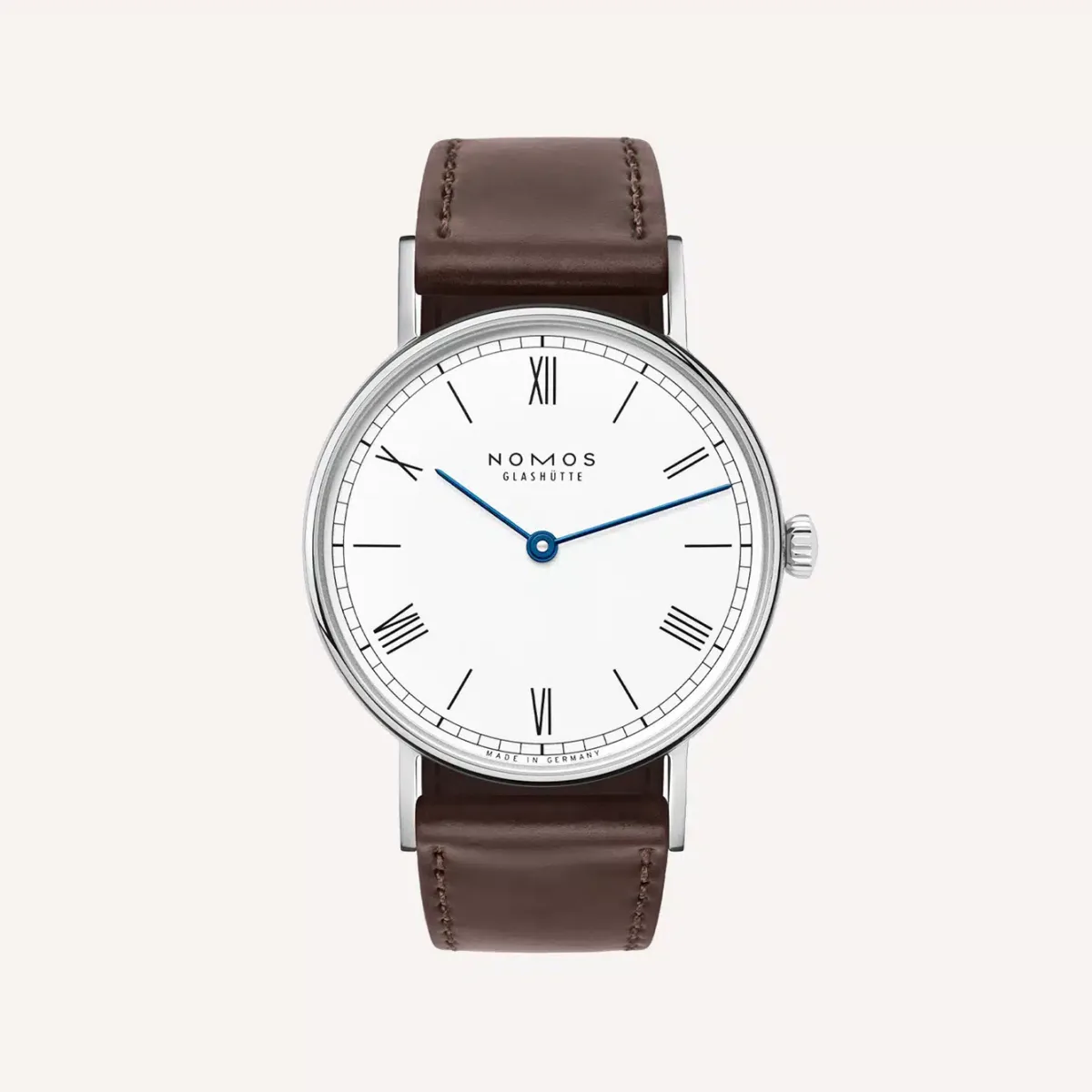
The steel case combines clear Roman numerals, a two-hand mechanism, and a bright accent on the seconds counter.
Orient Bambino
I love the vintage look of the Orient Bambino watch. Bronze Roman numerals on a silver dial pair with a detailed minute and second scale.
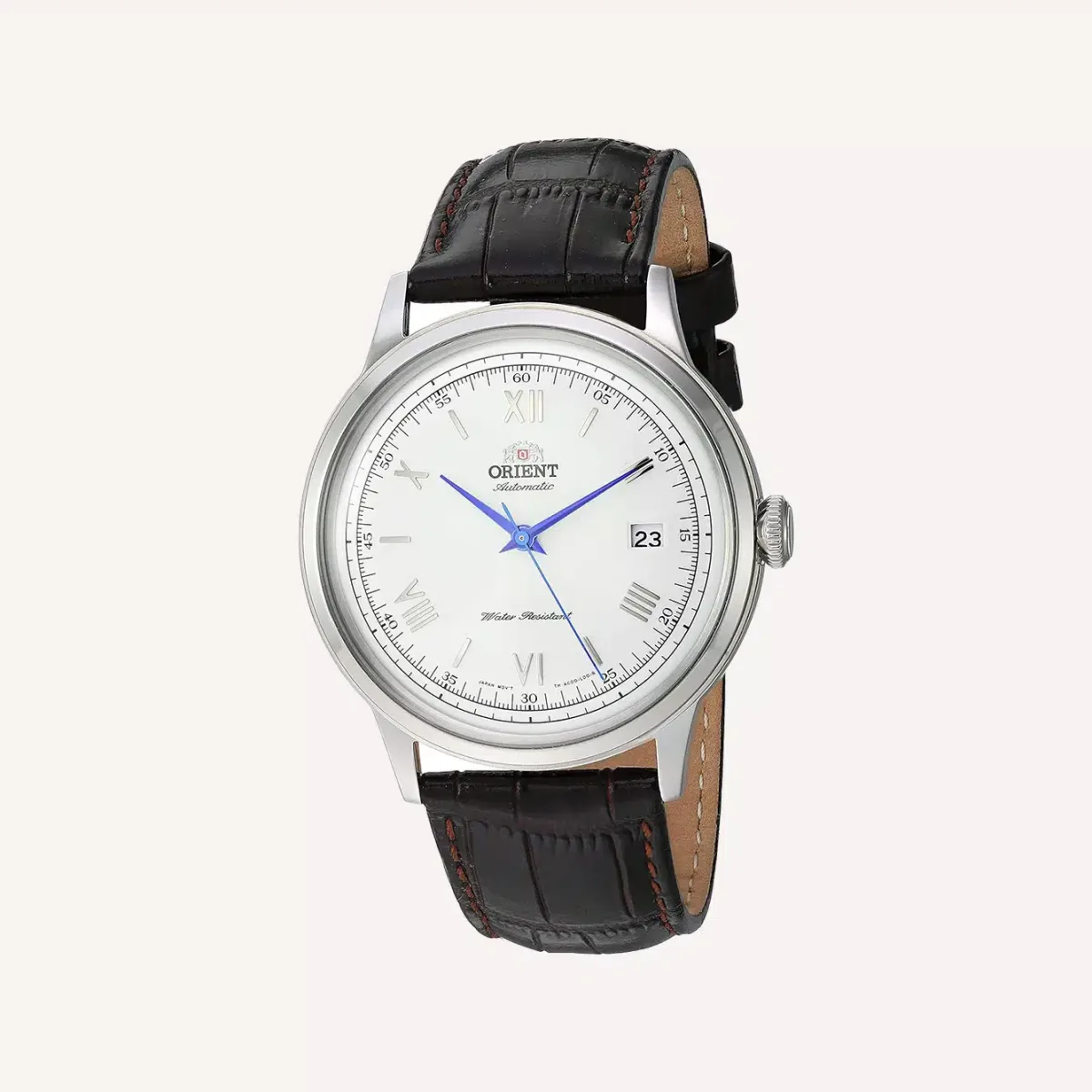
Note the classic shape of the winding crown. These watches suit retro enthusiasts. The brown leather strap emphasizes their old-fashioned charm.
Tank Louis Cartier
One of the most iconic models in the world is the Cartier Tank watch. They perfectly demonstrate the advantages of a dial with Roman numerals.
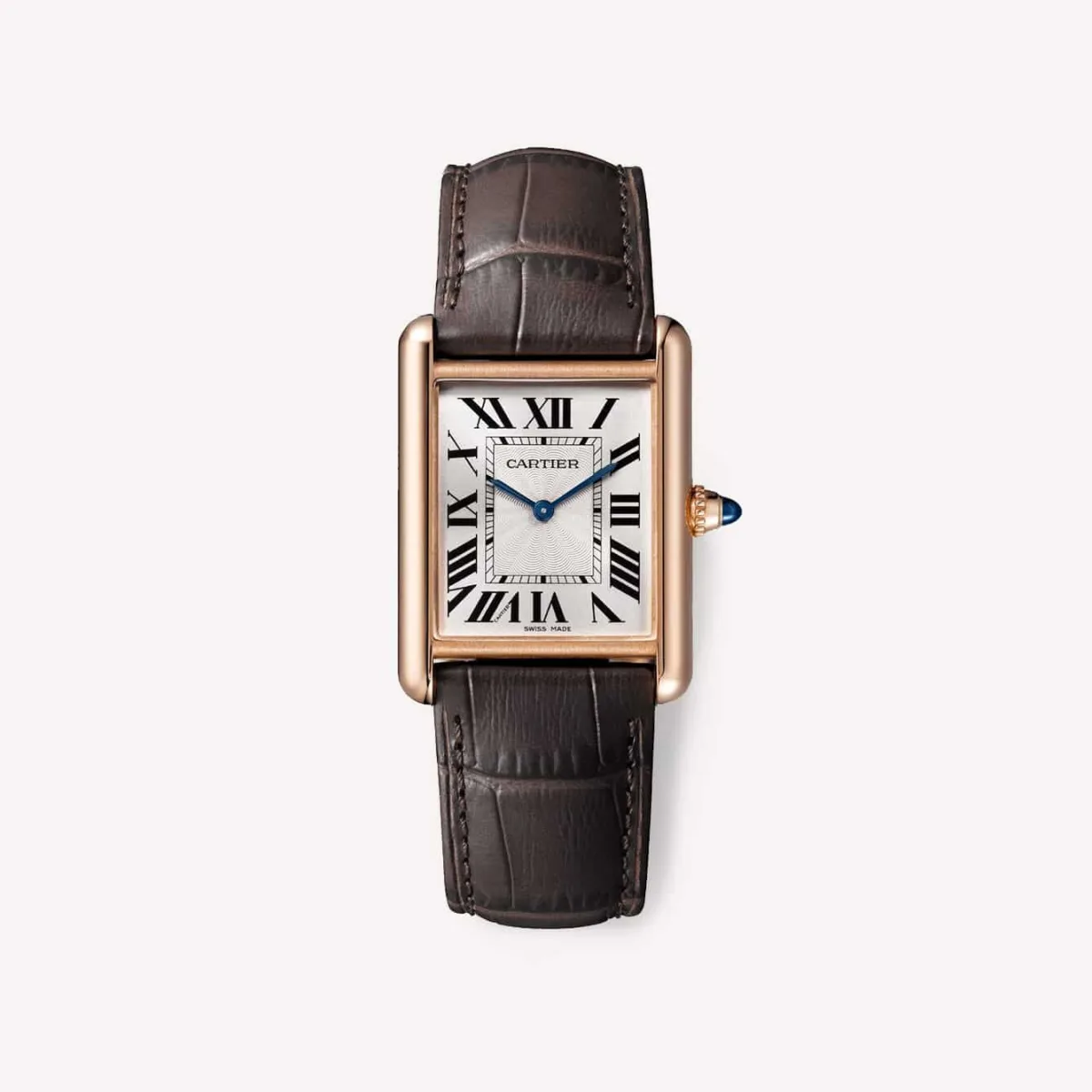
The hour markers adorn a rectangular 18-karat gold case with a white dial. Blue steel hands and the sapphire winding crown complete the recognizable Tank image.
Conclusion
Many collectors still prefer watches with Roman numerals. They add classic charm and are presented in various styles - from volumetric applications to fine painting.
The basic scale with numbers from 1 to 12 is simple, readable, and easily perceived at a glance. This is one reason why such a form of timekeeping remains in demand.
Moreover, watches with Roman numerals offer classic elegance. Collectors of traditional models especially appreciate this style, particularly for dress watches.
In recent decades, watch scales have become more abstract, and minimalist dials have emerged. However, dials with Roman numerals remain popular, and long may it continue.