Last year we reviewed the Berlin model from the Hamburg-based brand Sternglas.
Back then, it was a quartz watch inspired by the first railway connection between Hamburg and Berlin, opened in 1846. Now the Sternglas Berlin model has returned, but without the engraving on the case back dedicated to the opening of the Berlin station in Hamburg. Instead, the watch features a transparent sapphire case back, through which the new Japanese Miyota automatic movement can be seen.
Innovations in the Sternglas Berlin Automatic Model
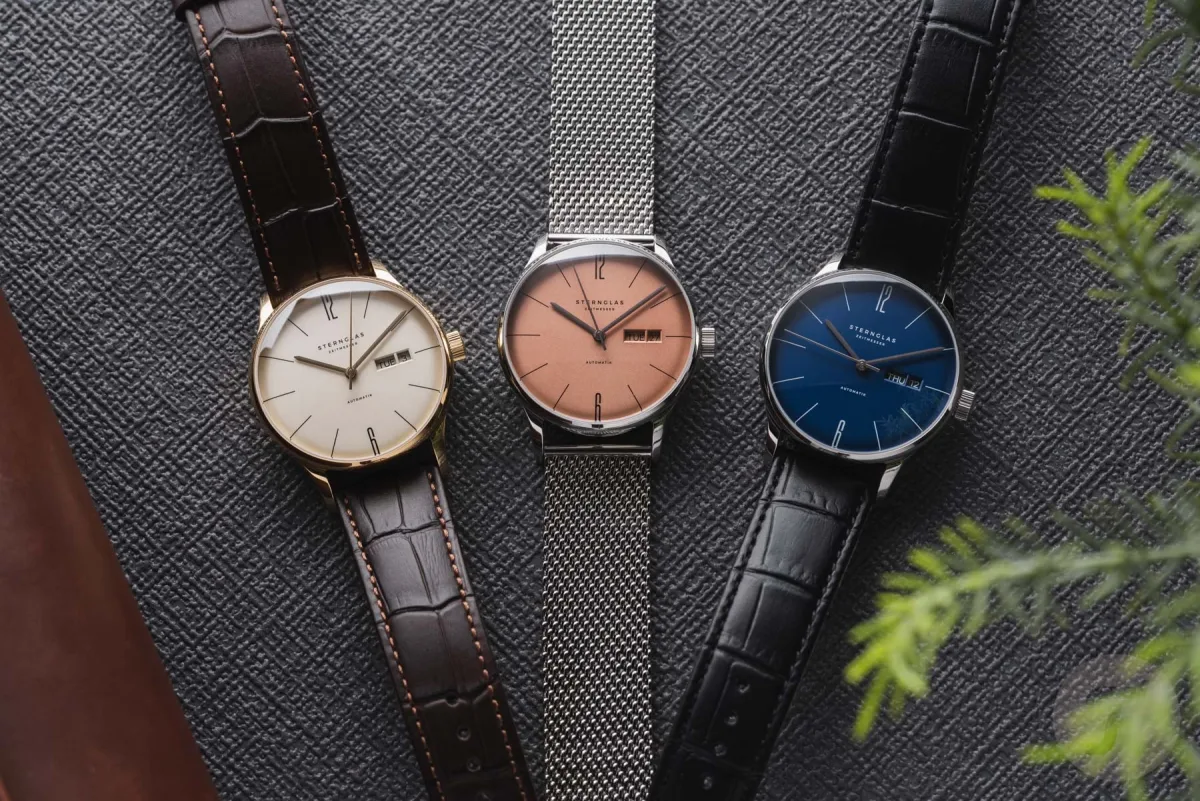
In addition to the new movement, Sternglas introduced the Berlin Automatic with updated dial colors. The quartz version is available in black, white, green, and sepia-gold colors. The Berlin Automatic comes in a stainless steel case without coating with new copper and blue dials, as well as in a gold PVD-coated case with the same sepia-gold dial as the quartz version. Let's take a closer look at all the innovations.
Design and Features of Sternglas Berlin Automatic
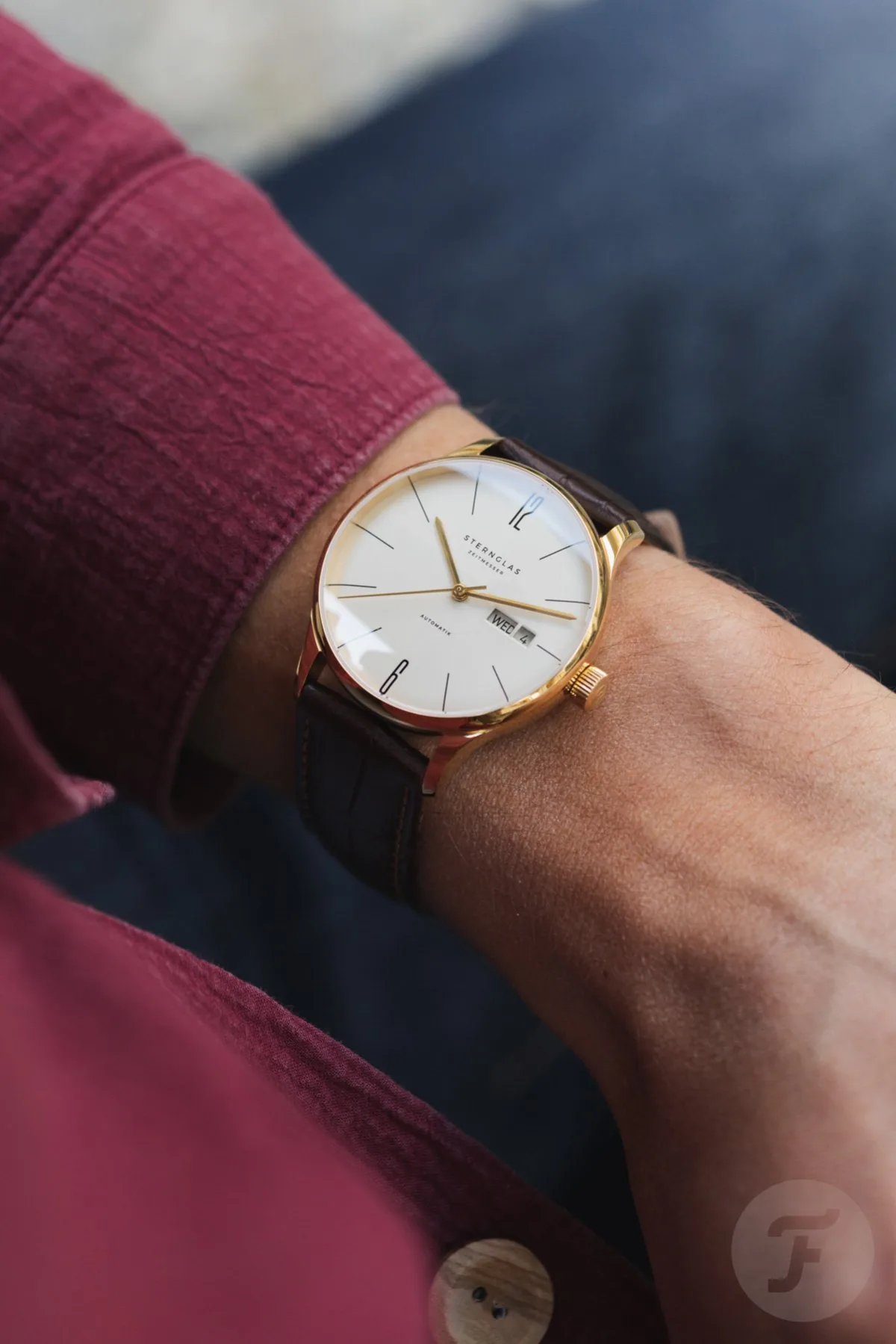
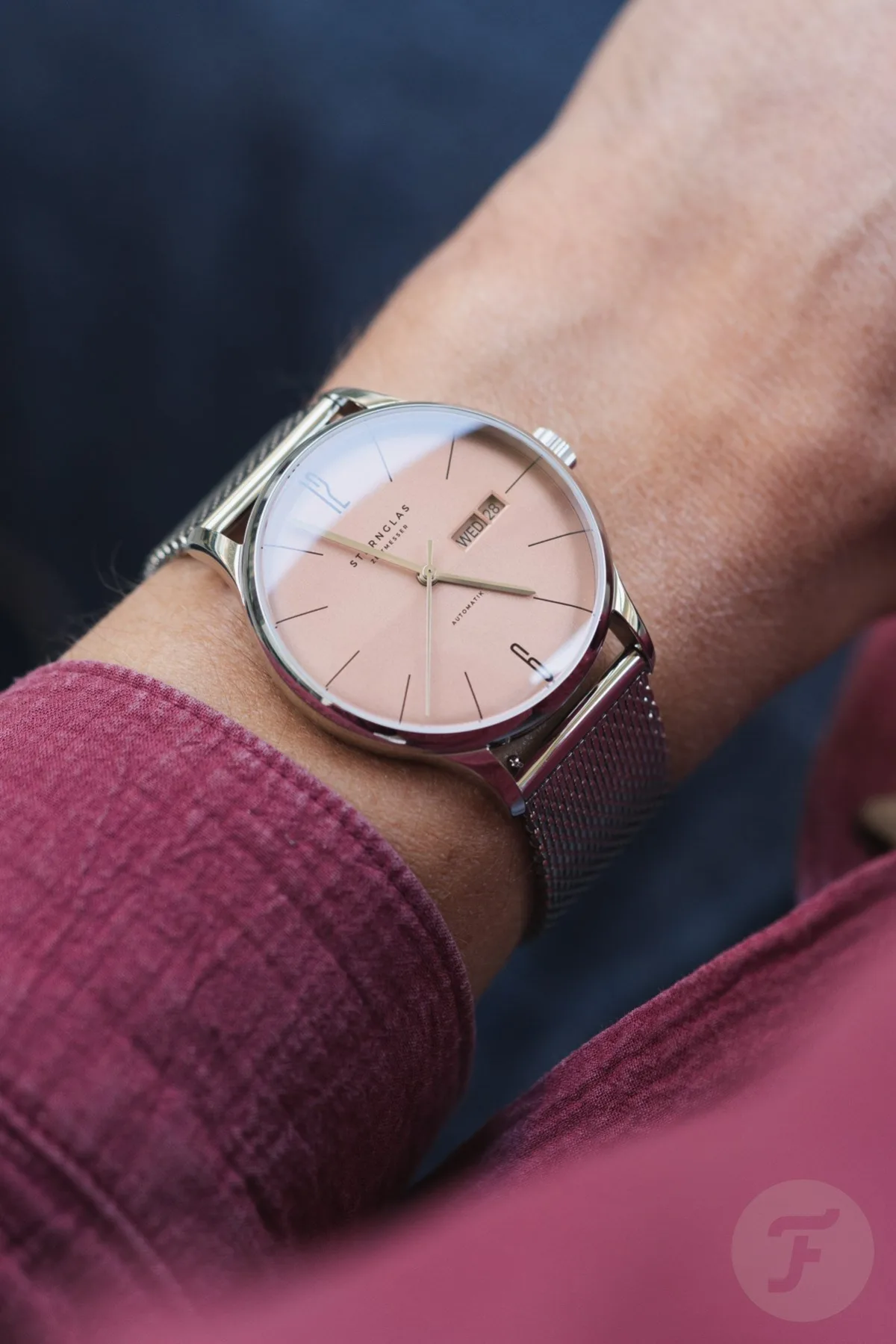
Don't worry - despite the new colors, the overall Bauhaus-style design of the watch remains unchanged. The dial features contrasting elongated numbers "12" and "6", while the other hours are marked by printed stick indices. The straight hands are beveled and colored to match the case. At the "3 o'clock" position, there are two windows: one for the day of the week and the other for the date. Besides the inscription "Sternglas Zeitmesser" at the top of the dial and "Automatik" at the bottom, there are no other elements, emphasizing the minimalist design.
As mentioned, the stainless steel models are available with dials in an exquisite midnight blue and a more playful copper shade reminiscent of salmon. The version with gold PVD coating has a sepia-gold (beige) dial, familiar from the quartz model. All dials have a grainy texture that gives them a noble shine in different lighting. The color of the date and day of the week discs is matched to the dial, which is a nice touch in the finish.
Case: 38 mm, but with Increased Thickness
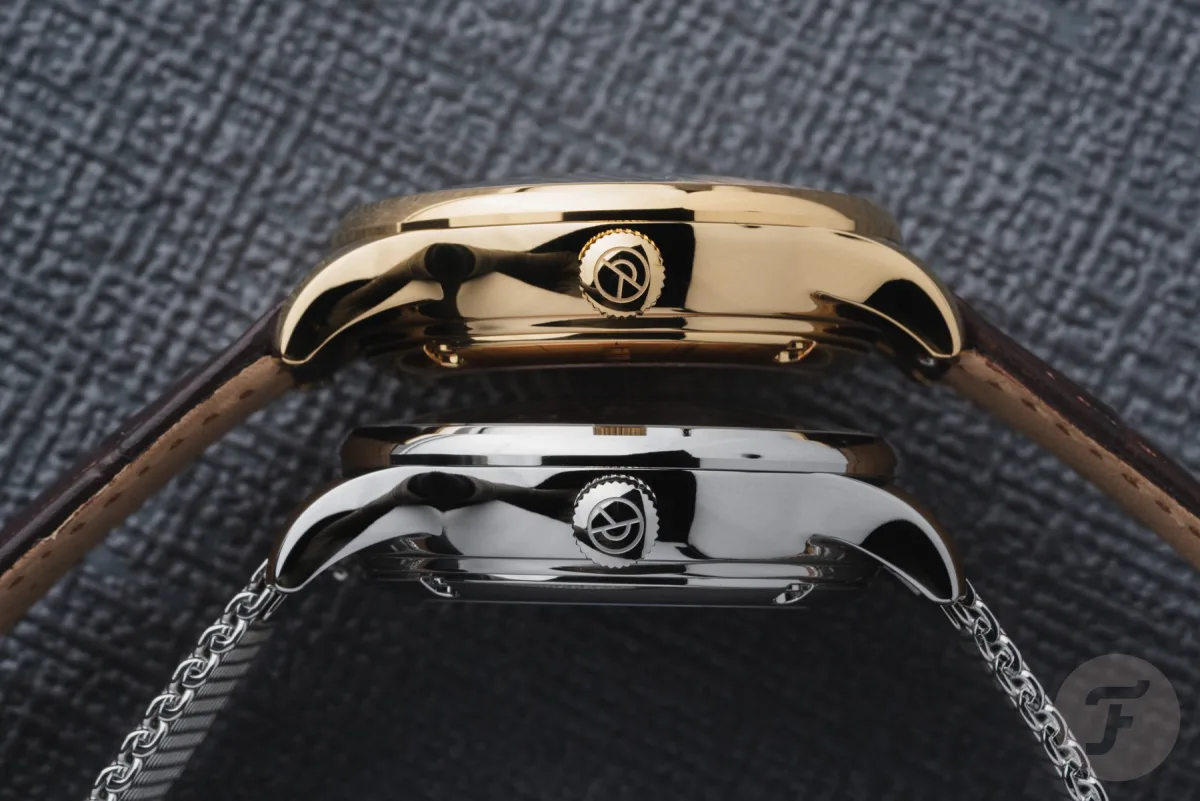
The switch to an automatic movement required a bit more room inside the case. The diameter of the Sternglas Berlin Automatic case remains 38 mm, but the thickness has increased to 14.5 mm (including the double-domed sapphire glass), which is significantly more than the 10 mm of the quartz version. Fortunately, the designers at Sternglas successfully concealed the increase in thickness. The middle part of the case, to which the lugs are attached, remains similar to the quartz model. A bezel has been added on top to accommodate the movement, and the case back has become tapered.
Importantly, the tapered case back almost completely fits against the wrist, providing comfort when worn. Additionally, the presence of a bezel on top does not look out of place. Thanks to these features, the increase in thickness is not visually or physically noticeable. This is important because classic watches should not appear as bulky as dive models. The automatic version may require a bit more attention when putting it under a shirt cuff, but thanks to the fully polished and aerodynamic case, it won't be a serious problem.
Miyota 8205 Movement: Technical Specifications
The quartz model of Sternglas Berlin used the Miyota GM02 movement. The automatic version is equipped with the mechanical caliber Miyota 8205. It operates at a frequency of 21,600 vibrations per hour, features 21 jewels, and a power reserve of 42 hours. The accuracy is stated to be between -20 to +40 seconds per day. The movement and the uni-directional winding rotor are visible through the transparent case back, adding to the aesthetic and highlighting the technical aspect of the watch.
Comfort and Wearability
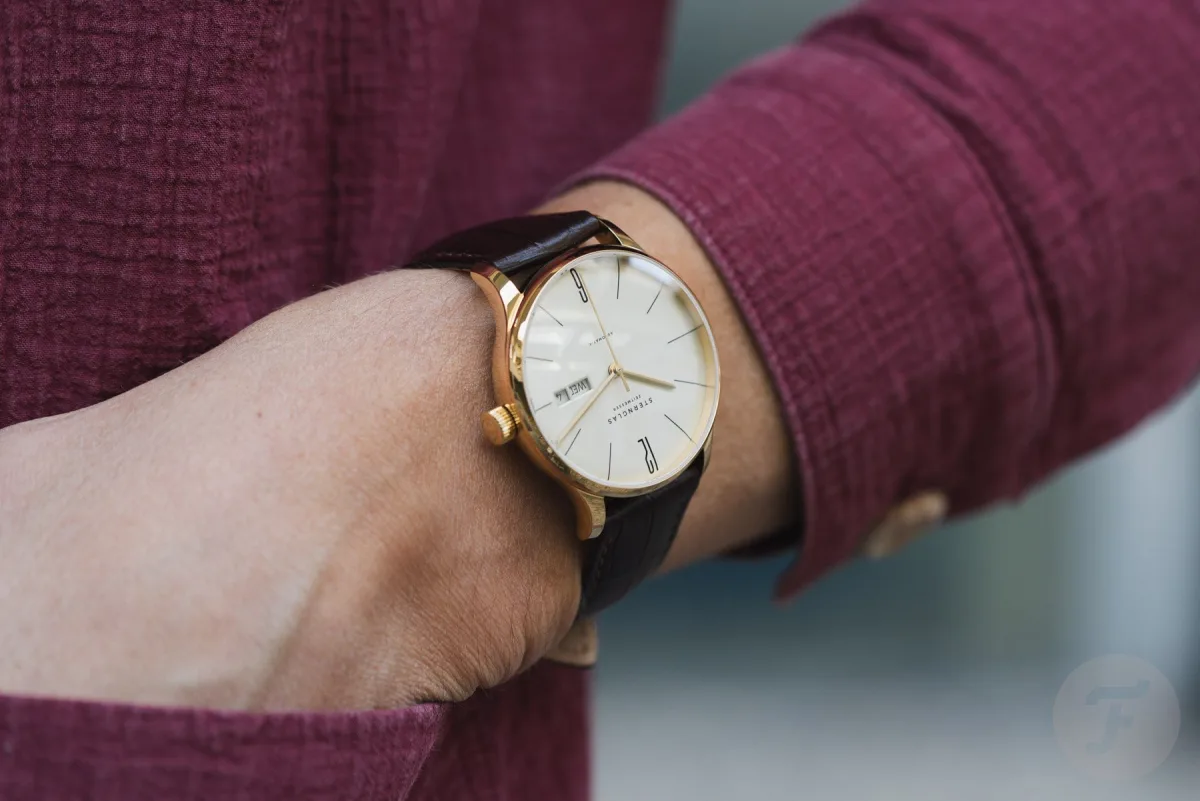
The Sternglas Berlin Automatic fits comfortably on a 17 cm wrist. The lug-to-lug distance is 45 mm, and their smooth curve helps the watch fit well on the wrist. Combined with the 38 mm case diameter, this creates harmonious proportions. The crown is optimally sized: large enough for convenient winding, but not too bulky for the case.
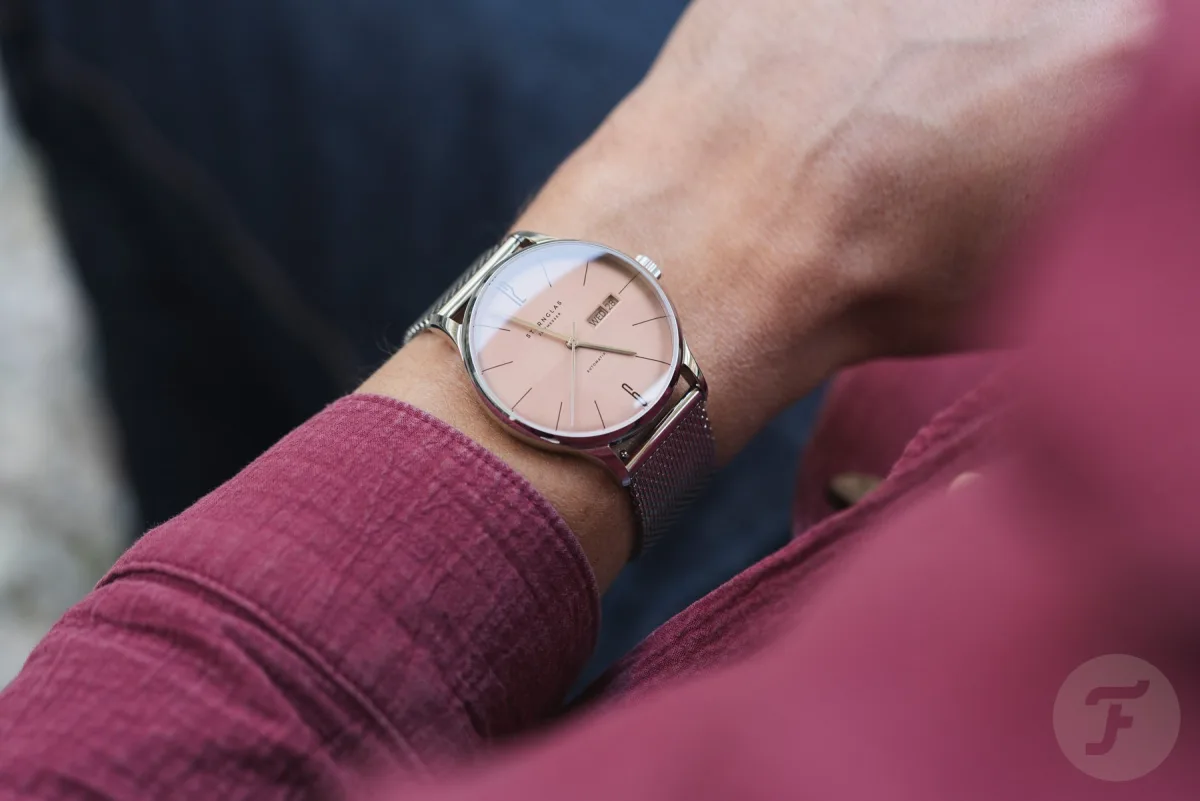
The grainy beige, copper, and blue dials are very attractive. They beautifully play with light, adding depth and sophistication to the classic look. Personally, I am not very fond of the date and day windows, but they will be useful for an active schedule.
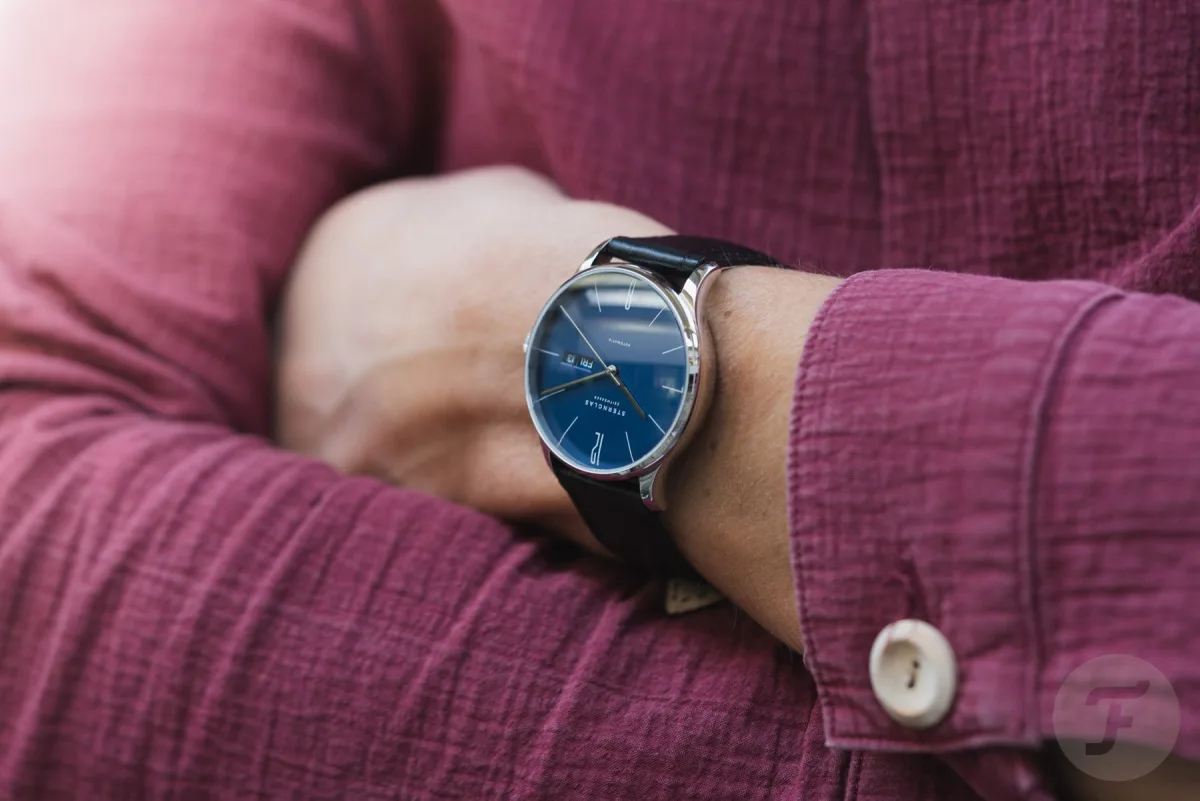
Of the three dial colors, my favorite is blue. Classic watches with a blue dial are rare in the market, giving the model a modern touch while maintaining a traditional style. If you prefer a more classic look, the gold PVD version with a beige dial would be a better fit. For those seeking a compromise, the copper dial would be a good choice.
Value for Money: Sternglas Berlin Automatic
The new Sternglas Berlin Automatic model costs 449 euros and comes with a brown or black calf leather strap embossed with an alligator pattern. For the same price, you can choose a steel Milanese bracelet. Personally, I would try replacing the strap with a more casual nubuck one, but the standard options pair well with the classic style and dial colors. Overall, the Sternglas Berlin Automatic offers an excellent combination of automatic classic watches at a reasonable price.
Share in the comments which version you would choose - quartz or automatic? And is it related to the available dial colors or the type of movement - battery versus self-winding mechanism?