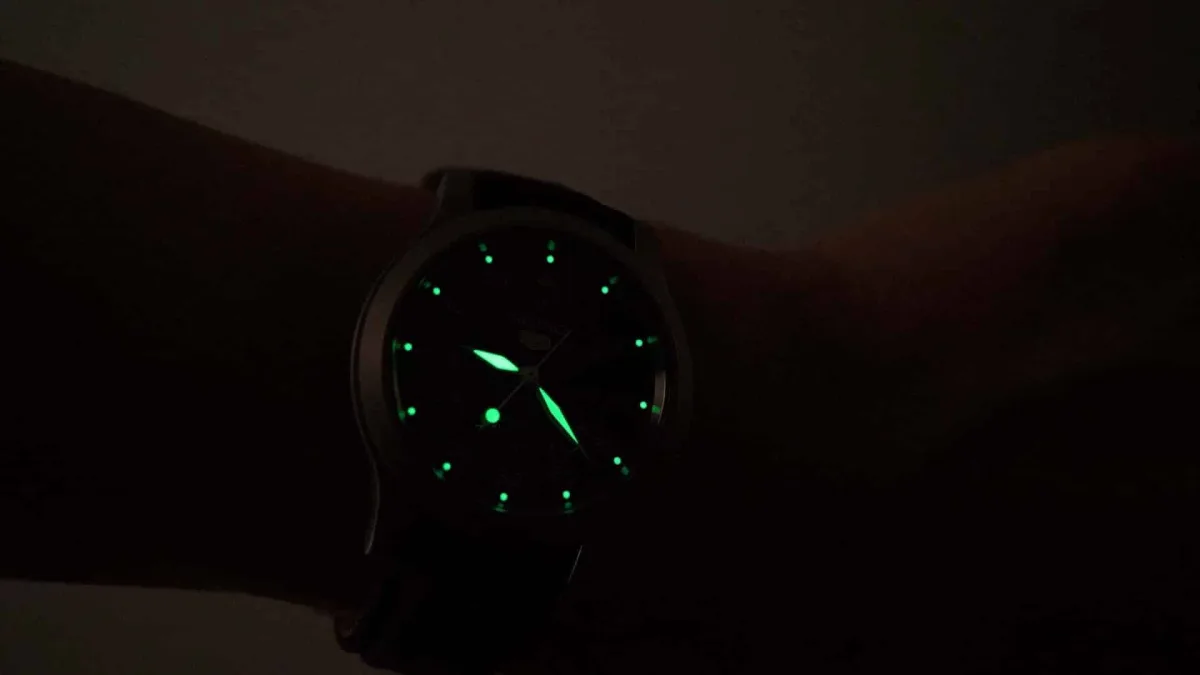
If you want to understand the features of luminous coatings in watches, this article is for you.
For collectors, the quality of the luminous coating (lume) in watches has become almost as important as complications or dial finishing. This is especially true for tool watches. Luminescence plays a key role in professional watches designed for diving, aviation, or working in low-light conditions. A strong luminous coating is an important feature of many such models. The arguments for quality lume are quite justified.
Luminescence determines how well a watch can be read in the dark. Even if you mostly use your watch during the day, the ability to glow in the dark is an important aspect. During deep dives, night flights, or cave exploration, a luminous coating becomes vital.
In this article, we will delve into lume in watches. The science of watch luminescence is as fascinating as the mechanics of their movements. However, luminous coating is primarily chemistry, not physics. Moreover, the technology of modern luminous coatings has a rich history!
What is Luminous Coating in Watches?
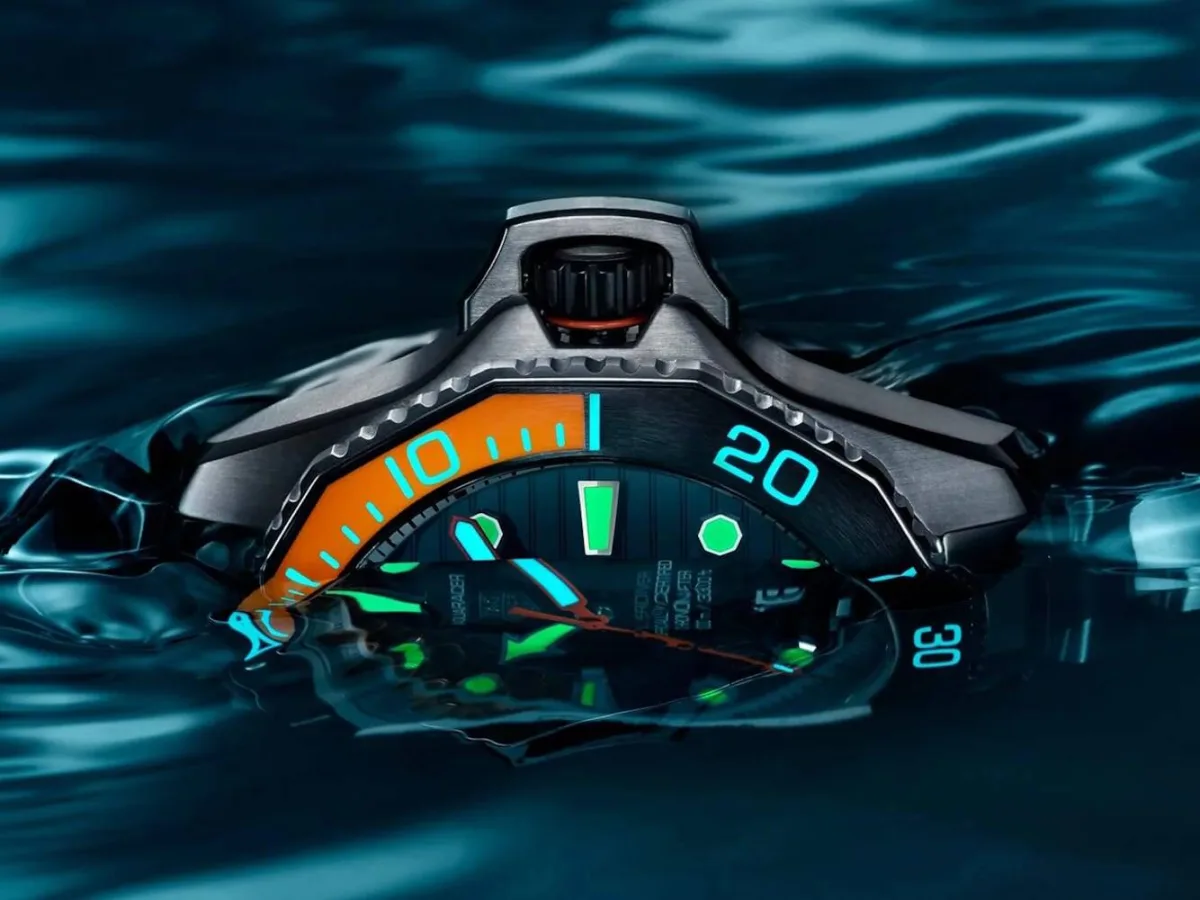
First of all, what is lume? It is a material that glows in the dark. It is applied to the hands, hour markers, and other important elements of the dial to ensure readability in low-light conditions. Military personnel and professionals using tool watches in work or research especially appreciate quality luminous coating.
As in all areas, the quality of lume varies. It is impossible to definitively name the best type, but we can consider the pros and cons of each.
What is the Best Luminous Coating?
A brief scientific excursion on the topic of the best lume. Luminescence is a glow that occurs without heating, unlike incandescence, where light comes from fire or a heated body. Today, the most common type of lume is photoluminescence, although tritium and electroluminescent dials are also popular. Each has its advantages and disadvantages.
Photoluminescent Paint
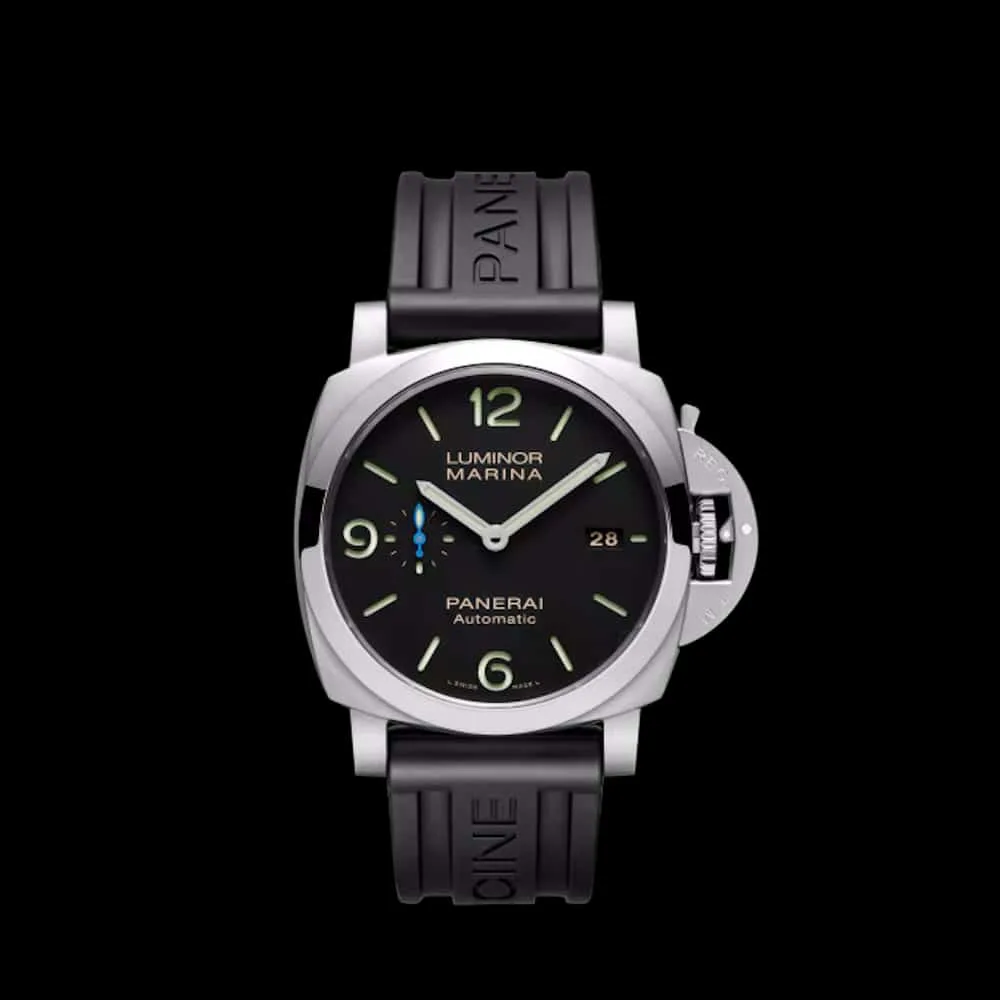
Photoluminescent paint absorbs light and then emits it, creating a glow on the dial. It is a non-toxic and non-radioactive material, a safe alternative to more dangerous types of lume that are no longer used in modern watches. However, knowledge of the history of hazardous materials is important for collectors, especially if the luminous coating is part of a brand's legacy. For example, Panerai became a leader in developing safe and bright lume, which became part of its signature style.
Photoluminescence comes in two types: fluorescence and phosphorescence. The main difference is that phosphorescence lasts longer, continuing to glow after activation, which is ideal for dials. Fluorescence is better suited for indoor lighting and neon signs.
In the 1990s, Japanese entrepreneur Kenzo Nemoto developed a stable and non-toxic phosphorescent paint based on strontium aluminate. Swiss company LumiNova AG implemented this formula in production. Super-LumiNova is still the most common luminescent material in watchmaking.
Dials with photoluminescent coating remain readable for several hours after being charged with light, although brightness significantly decreases in the first hour. The duration of the glow depends on the paint composition, the thickness of the applied layer, and the intensity of absorbed light. Some brands use their own formulas: Rolex's Chromalight glows blue for up to 8 hours, Seiko's LumiBrite is a proprietary photoluminescent compound based on strontium aluminate.
Radium Dials
After the tragedy of the "Radium Girls" in the 1920s, the use of radium in watches gradually ceased. Today, radium is not used at all. But why is it worth mentioning?
Many vintage watches contain radium coatings, which can be dangerous. Radium began to be used in the 1910s, without realizing its harm. Workers painting dials fell ill and died. Despite the adoption of a radiation control law in 1968, radium watches remained in circulation until the 1970s.
In the collector community, it was long believed that such watches are safe for normal use, as long as you don't inhale or lick the coating. However, modern research shows that radon - a radioactive gas - can form in non-ventilated vintage watches. Today, there are devices to measure radiation in watches, which has become an important tool for collectors.
Tritium
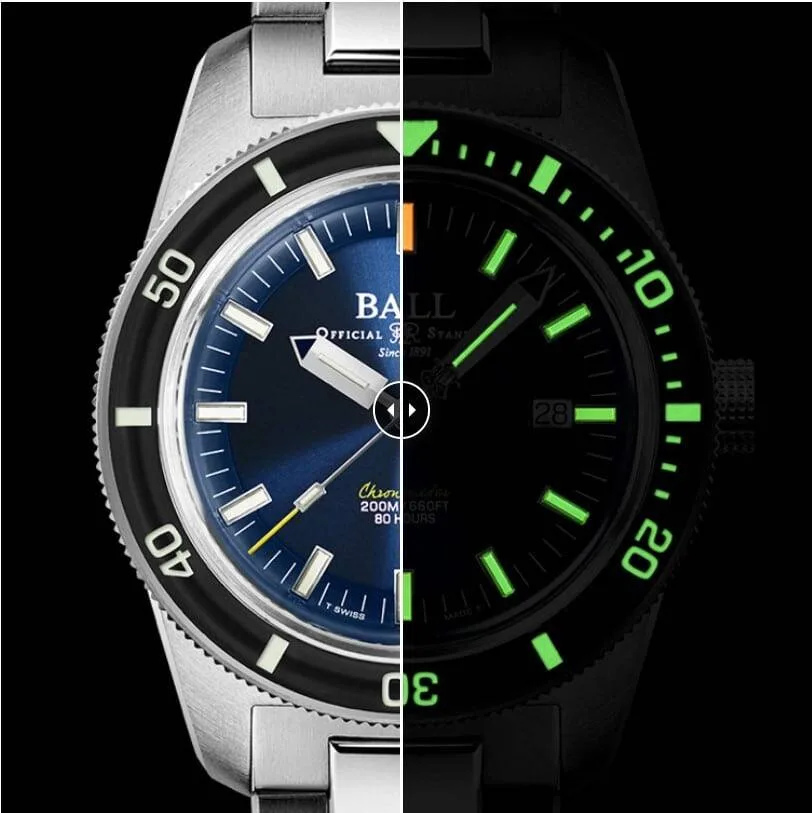
After radium, tritium came into use. Under the protective dial glass (mineral or sapphire), tritium is virtually non-radioactive. Its glow has a creamy-yellow hue, unlike the brownish radium. Of course, the absence of radioactivity is the best option. In the 1990s, completely safe photoluminescent materials appeared.
Tritium is used in the form of gas tubes, which provide continuous glow, not fading after a few hours. However, the glow duration of tritium is limited to about 12.5 years, whereas photoluminescence can last longer. This makes tritium effective in the short term, and photoluminescence in the long term.
Ball Watch uses tritium microtube technology to create dials with various glow colors. The tubes are placed on the hands and hour markers, they are lightweight and hermetically sealed with a laser after applying phosphor powder and filling with tritium. Inside, a chemical reaction occurs: tritium emits electrons, and the phosphor emits cold light. Ball microtubes provide bright, stable, and colorful glow.
Electroluminescence
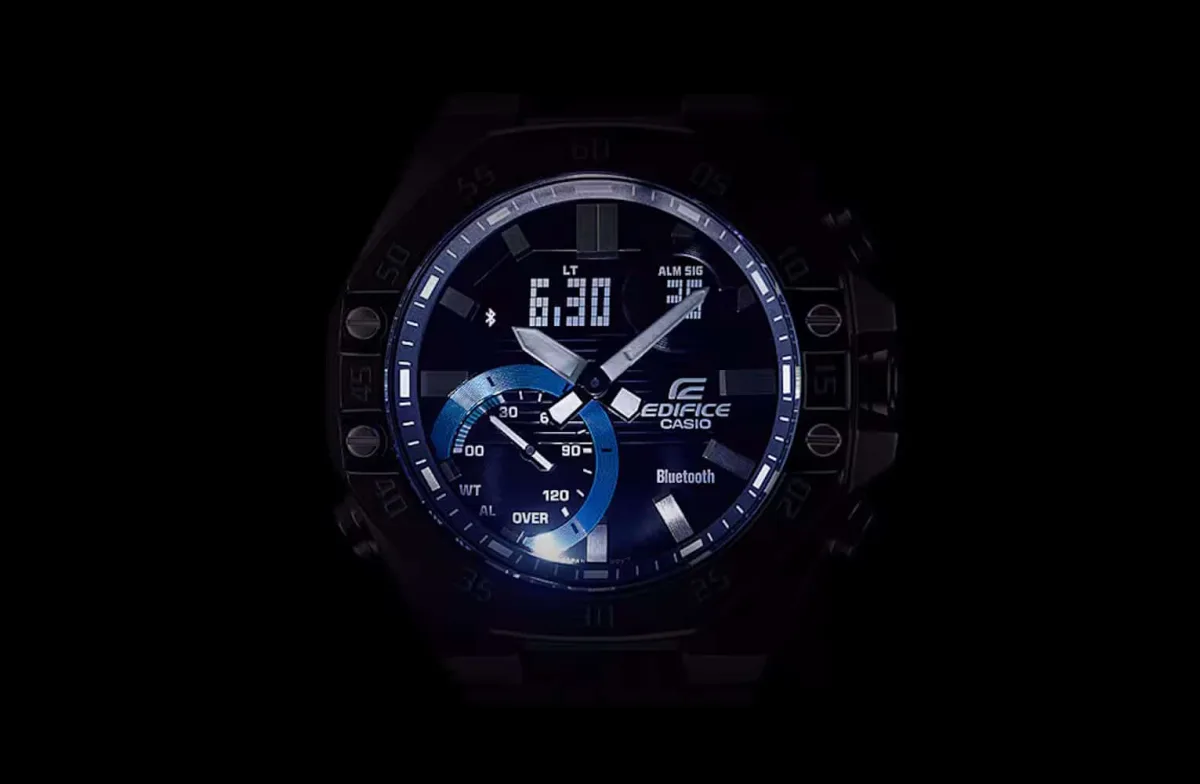
Electroluminescence (EL) is created by an electric current passing through a conductor behind the dial. When a button is pressed, it activates a glow similar to a flashlight. You are likely familiar with EL backlighting from Casio digital watches or historic Hamilton models. A good example is Timex Indiglo, a patented bright electroluminescent glow, although it requires a lot of battery power.
Frequently Asked Questions (FAQ)
What is lume in watches?
Lume is the glow of the dial, usually applied to markers and hands to ensure readability in the dark.
How long does the glow last in watches?
The glow time depends on the material used. Super-LumiNova is activated by contact with natural or artificial light but requires periodic recharging. Tritium glows constantly, but its glow ends after several years.
Is it safe to wear luminous watches?
Modern luminescent materials are safe. Previously, radium was harmful, and manufacturers gradually abandoned it. By the 2000s, Super-LumiNova became the standard in high-quality watches with luminescent dials.
Does the lume in watches fade over time?
Phosphorescent material technically does not lose its ability to glow. However, the paint can deteriorate due to moisture, dust, or UV exposure, which takes decades. The glow will always be restored with exposure to light.
How long does the lume glow?
A fully charged photoluminescent dial can glow from 30 minutes to several hours, depending on the thickness of the paint layer. Watches with tritium tubes glow in the dark constantly, but the brightness decreases over time.
Can lume be replaced in watches?
Yes, but it is a complex procedure. Removing parts and safely removing the old coating requires professional skills, so inexperienced collectors should entrust this to specialists.
Conclusion: Basics of Luminous Coating in Watches
Photoluminescence is the most common type of glow in watches. Super-LumiNova is safe for humans and demonstrates progress in lume technology. The main criticism is the rapid loss of brightness and sensitivity to moisture.
Electroluminescent backlighting is activated by a button and is widely used in digital models. Tritium provides long-lasting glow during operation, making it popular in tool watches. Additionally, collectors appreciate the patina and color changes of tritium dials as a manifestation of their uniqueness.
The choice of the best lume depends on how and where you use the watch. Do you prefer the vintage charm of tritium coating, the brightness of Ball Watch gas tubes, or the variety of Super-LumiNova colors? Share your opinion in the comments!