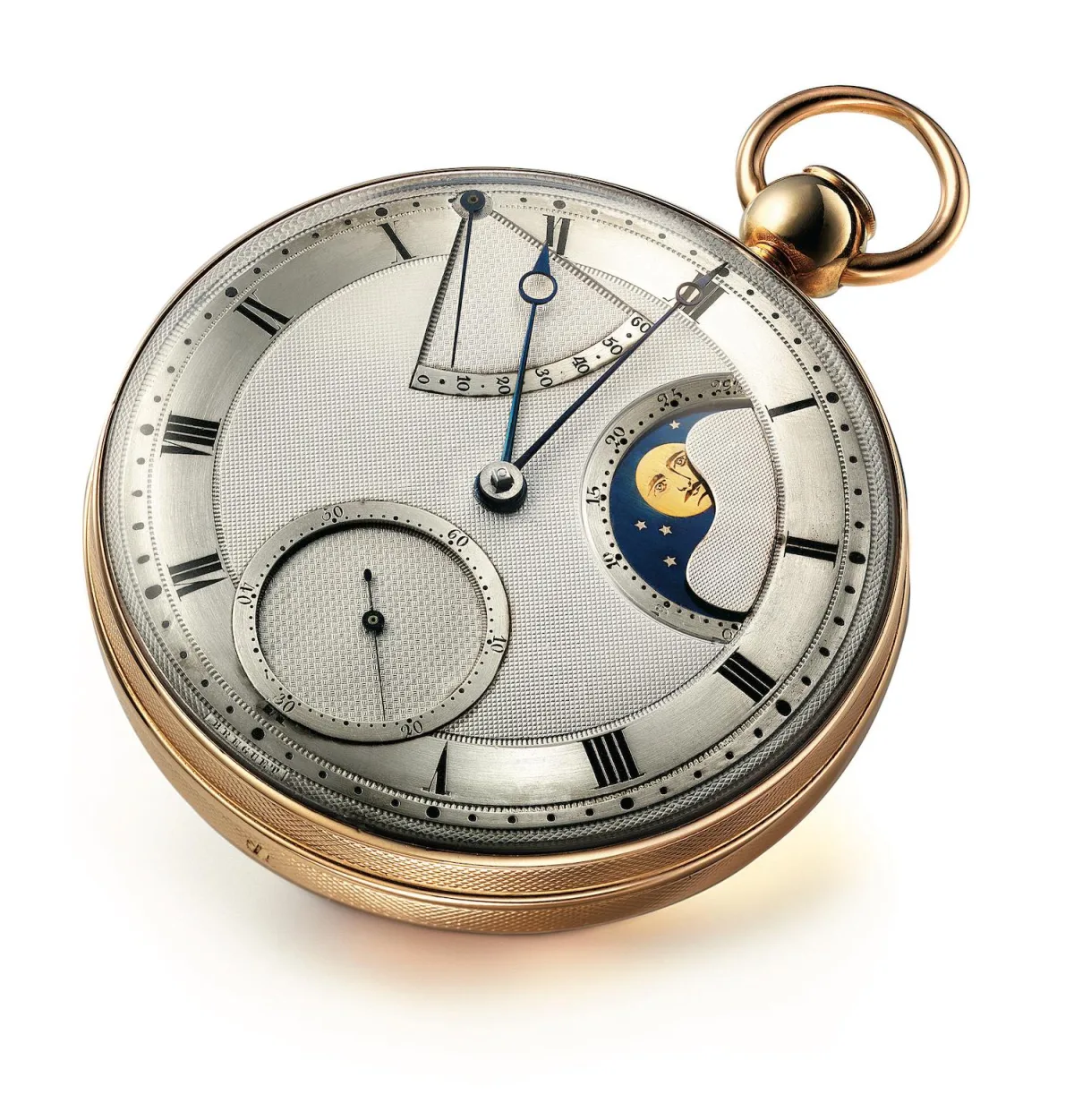
Known under the French name Guillochage, turning involves decorating wood or metal with interlacing lines.
This engraving technique originated more than five centuries ago. Initially, it was used on soft materials like wood and ivory, then adapted to metals, especially in the craft of jewelers and silversmiths. It is claimed that guilloché was first applied in watchmaking in the 1680s by Pierre Duhamel in Geneva on a watch case, but it became famous on dials thanks to Abraham-Louis Breguet, who introduced it in 1786. Intricate geometric patterns engraved on watch dials not only enhance their appearance but also improve readability.
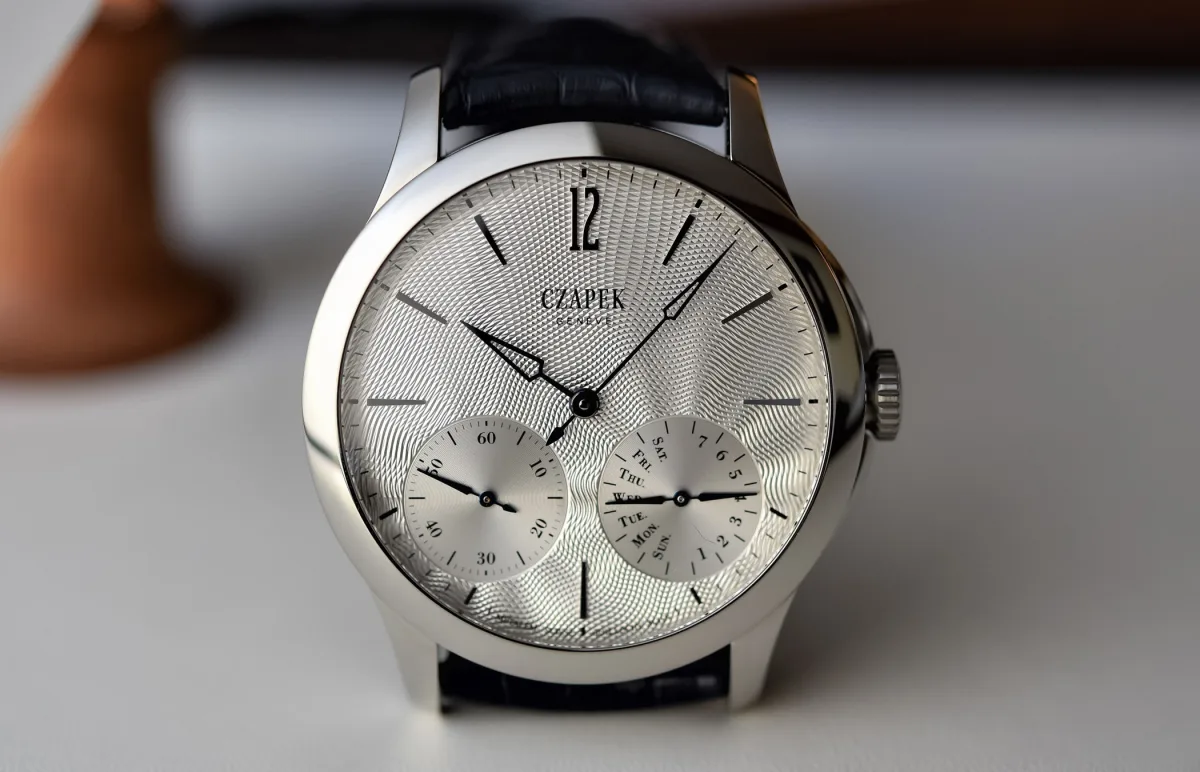
Guilloché dials give the dial surface depth and texture. This depth creates visual contrast as light plays on the engraved patterns, enhancing the overall aesthetic of the watch. Different patterns can be used to delineate sub-dials or highlight specific indicators. Today, guilloché has become an integral part of watchmaking traditions, with most guilloché being done on watches, dials, and other watch components like the rotor weight.
The traditional technique, known as turning or guilloché, is applied by a select group of craftsmen, with fewer than 100 in Switzerland. Contrary to its name, the engraving is not done by hand. Instead, lines are meticulously etched on the dial using a manual machine, such as a rose engine or straight-line engine, in circular or straight lines, repeating motifs and patterns guided by rosettes or strokes. As explained by Yann von Känel from Décor Guilloché SA (a guilloché workshop located in Neuchâtel), “the work is done not by the machine, but by the hand that operates it.”
Where Does the Name “Guilloché” Come From?
The etymology of the word guilloché is unclear – some versions link it to the name of the inventor of the engine lathe, Guillot or Guilloche depending on sources, though this lacks clear documentary evidence. Others link it to the old Italian word ghiocciare (derived from Goccia drop/bead), which may have meant decorating with interlacing lines in architecture and decorative arts.
Traditional Hand Guilloché
Hand guilloché requires years of experience, concentration, coordination, patience, and skilled hands. In this respect, it is a standalone art form. The plate is fixed to the lathe, and rotating wheels (rosettes) of various shapes set the movement, creating diverse patterns. One hand operates the crank to turn the workpiece, while the other guides the cutting tool. The precision of positioning the piece, rotation speed, and pressure on the tool for each line are crucial to achieving uniform and consistent decoration. Guilloché is time-consuming and labor-intensive; hours of painstaking work can be undone in an instant. The most complex dials can require a whole day of work, sometimes involving more than 1,000 different cuts.
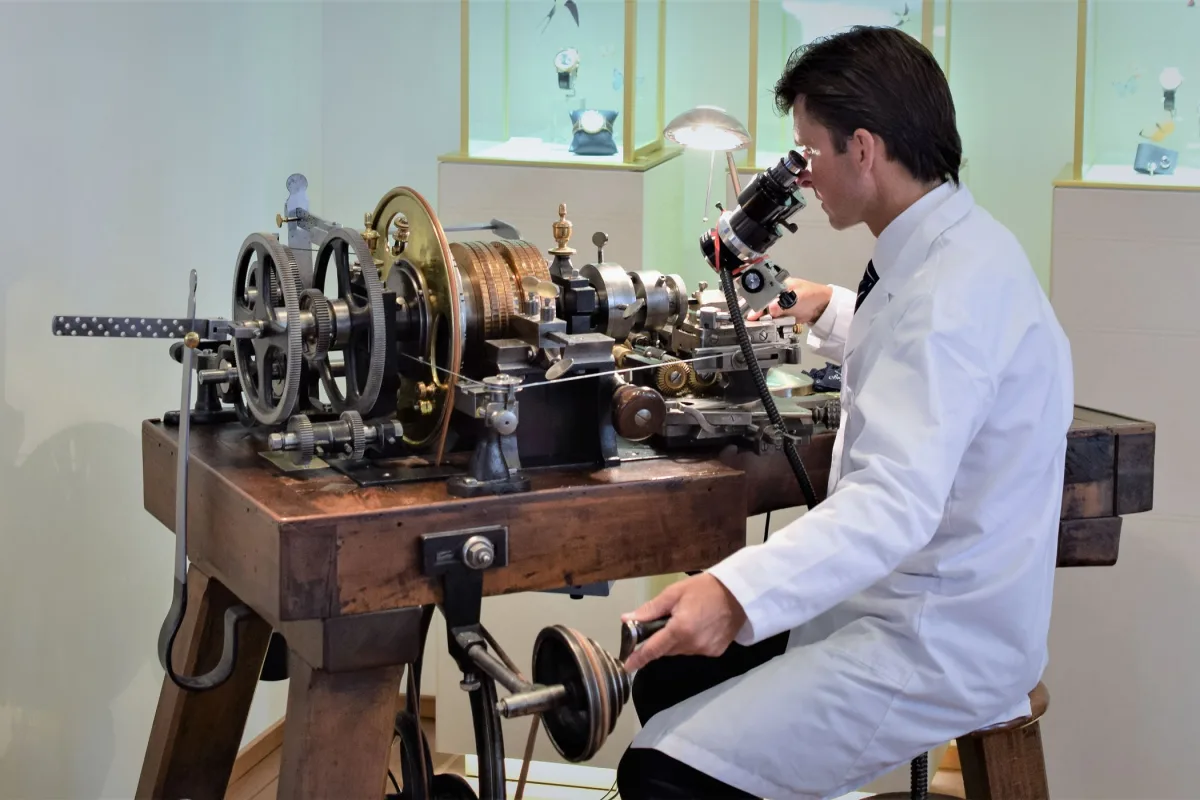
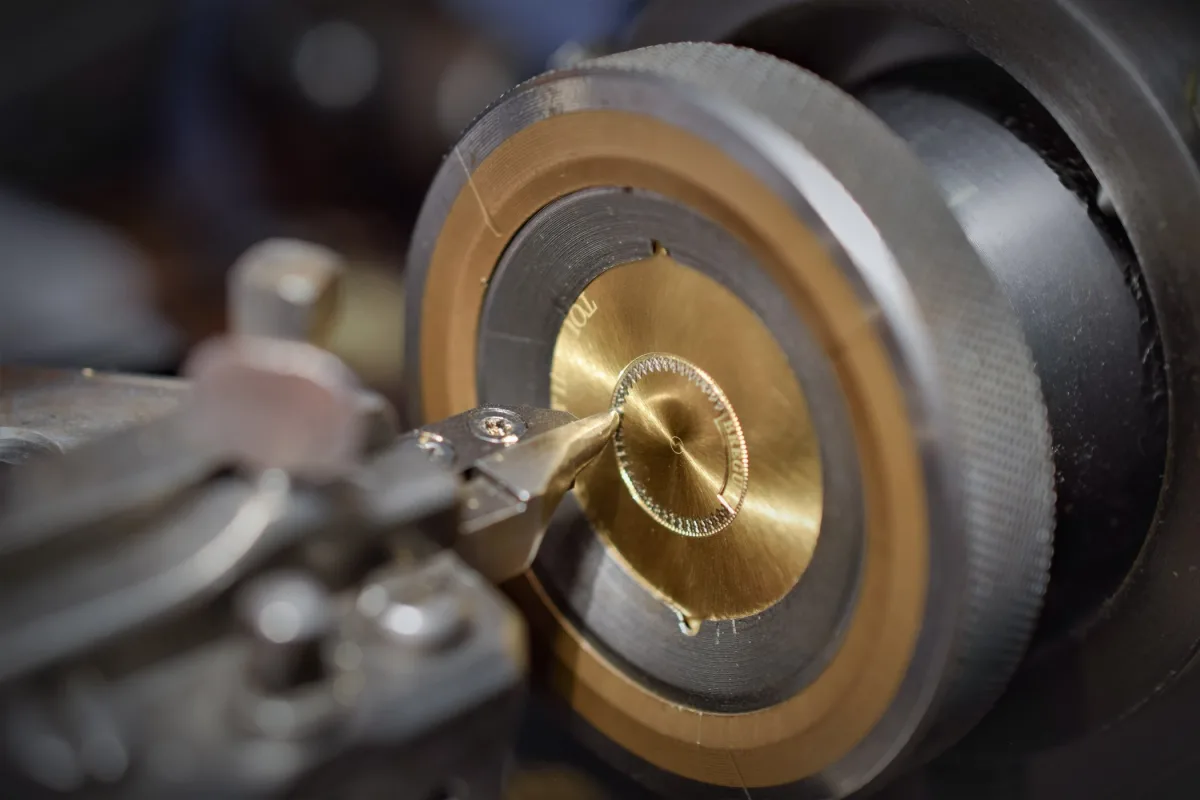
In Switzerland, there are likely fewer than 100 craftsmen dedicated to traditional guilloché. There are several independent workshops or craftsmen, such as in Val-de-Ruz (Décors Guillochés SA or Metalem) or Kari Voutilainen (with his dial-making company Comblémine SA). Some brands have dedicated craftsmen and workshops, for example, Breguet (probably the largest guilloché workshop in Switzerland) and Patek Philippe, as well as others like Jaeger-LeCoultre, Louis Vuitton with La Fabrique des Arts, or Chronoswiss. In the absence of official schools dedicated to guilloché, this art is passed from one master to another. According to Yann von Känel, it typically takes about five years to achieve full mastery in this craft.
The Case of the Petite Tapisserie Pattern
The iconic Petite Tapisserie pattern on Audemars Piguet Royal Oak Jumbo dials is created using a unique technique and a specialized engraving machine known as a “guilloché copying machine.” The brand has gathered about 30 such machines in special workshops, borrowed from those created by Robert-Alfred Lingard in La Chaux-de-Fonds at the end of the 19th century. Combining three traditional techniques – engraving, guilloché, and pantograph – allows the tapestry pattern to be engraved on a mechanical lathe, which replicates the matrix design, altering its size. In this case, the machine is not operated by the hand of a craftsman, however, the cutting tool performs the same work as a traditional rose engine. The process can be seen in the video above.

As explained by Audemars Piguet themselves, “the principle of the engraving machine is simple. Two round metal plates rotate at the same speed. On the first (template or model), the motifs to be reproduced (Tapisserie) are significantly enlarged. As the plate rotates, a finger (probe) moves over the Tapisserie relief (…) Thanks to the pantograph system, on the second plate (dial), the borer deepens the material to varying depths, mechanically reproducing the probe’s movements, but on a smaller scale.” If you look closely at the dial, you can see that the motif is done in a circle, with noticeable small diamonds between the pyramidal squares (burr marks) and concentric cutting lines visible on the surface of the squares.
INDUSTRIAL METHODS (CNC and Stamping)
Guilloché can also be performed using “industrial” methods, where the result achieved through a stamping tool or CNC machine (both commonly used for accessible luxury watches on a large scale) is quite satisfactory and consistent. CNC machines offer high precision and repeatability, allowing for the creation of intricate patterns with unmatched accuracy or performing 3D guilloché, expanding creative possibilities in this field.
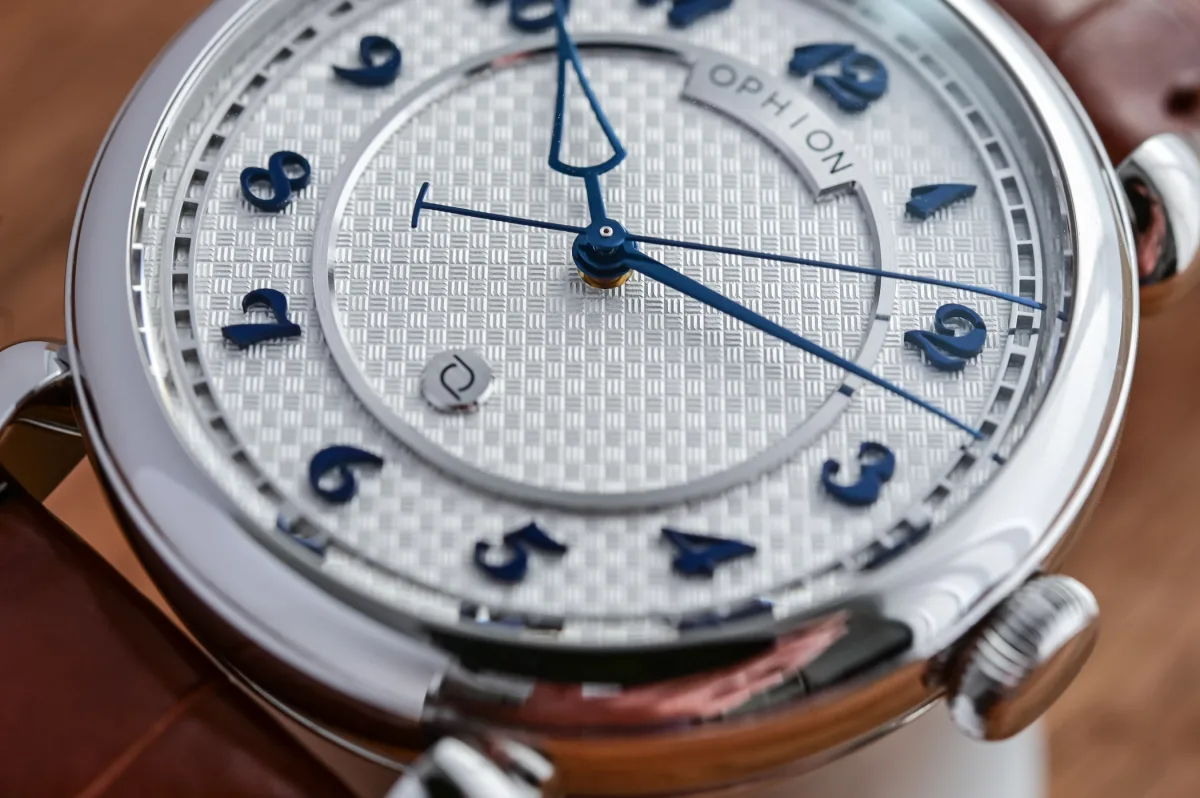
However, purists argue that dials made this way lack the characteristic brilliance of hand-done guilloché. This discrepancy becomes even more apparent with the use of laser engraving techniques. With hand-turned processing, each dial gains a unique character, and small imperfections serve as distinctive marks of authenticity. Such meticulous craftsmanship makes each watch an incomparable work of art, impossible to replicate. In short, if a dial is too perfect or too ordinary, it is quite possible that you are looking at a guilloché dial made on a CNC.
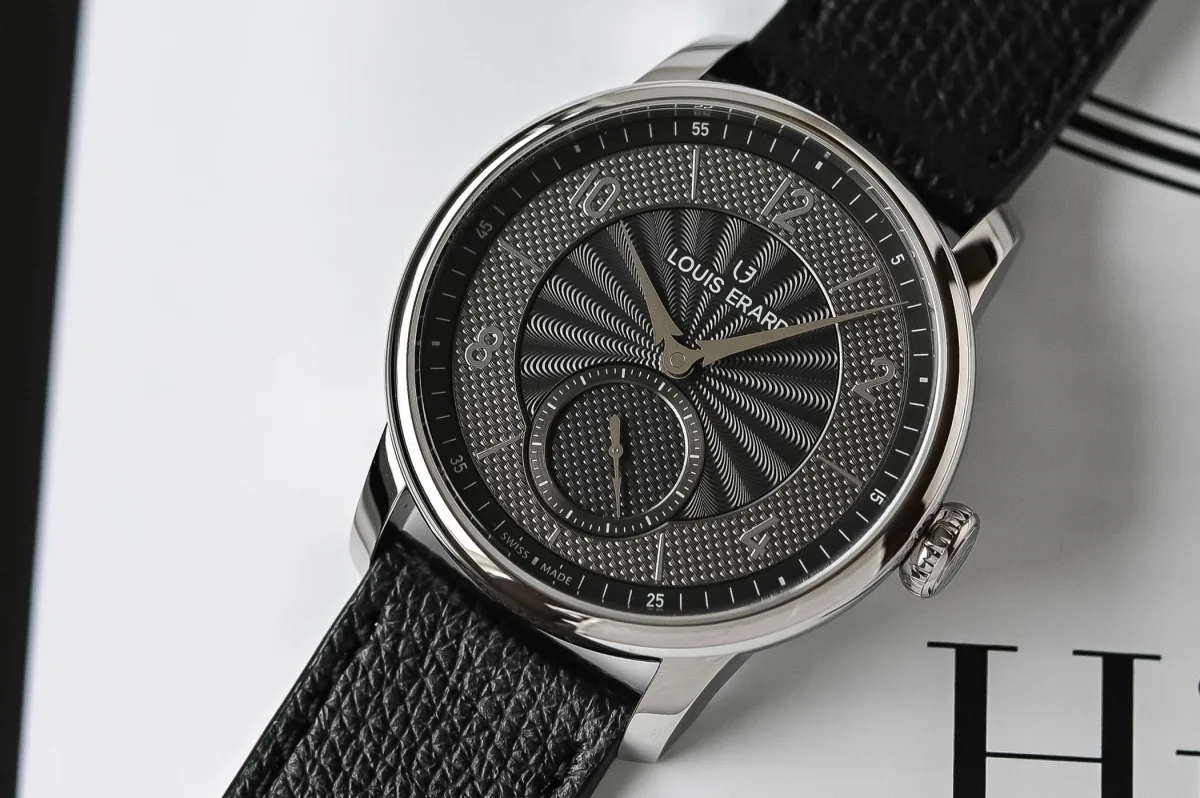
Finally, an economical way to achieve a guilloché pattern is stamping, where the brass base of the dial is pressed, deforming the material under pressure. However, as a result of this process, dials lack clarity, sharpness, and precision, and the texture seems less defined, without the previous depth and volume. Again, there is no charm of the human hand with its attractive imperfections.
EXAMPLES OF GUILLOCHÉ PATTERNS
There are countless guilloché patterns, and indeed, creativity in this area knows no bounds. Brands and craftsmen constantly introduce new patterns, keeping the tradition fresh and vibrant. Here are some examples of guilloché patterns, including some of the most classic ones.