
Over the last decade, we've witnessed the return of many once-vanished Swiss brands to the watch industry.
Recent examples include Gallet and Universal Genève. Today, another legendary brand joins them - Sicura. Under the leadership of the famous Ernest Schneider in the late 1960s and 1970s, Sicura released a series of innovative watches. Among them were dive models with a patented multi-bezel system and a dual crown architecture. One of these models served as inspiration for the new Sicura Hexa 400, marking the brand's revival after a 47-year absence. It's time to learn more about this.
The History and Significance of Sicura in Swiss Watchmaking
Those familiar with the history of Swiss watchmaking know that under Ernest Schneider's leadership, Sicura gained a reputation as a producer of innovative tool watches. Schneider later became CEO of Breitling and took the brand to new heights in the 1980s and 1990s. After a 47-year hiatus, Sicura returns with the Hexa 400 model - a diver's watch inspired by the classic 1968 Sicura 400 Diver, equipped with a dual bezel system for tracking information across multiple scales. The new Hexa 400 trio includes a standard diving bezel and an internal bezel for tracking time in a second time zone, making the watch multifunctional and providing much to discuss.
Technical Specifications of the Sicura Hexa 400
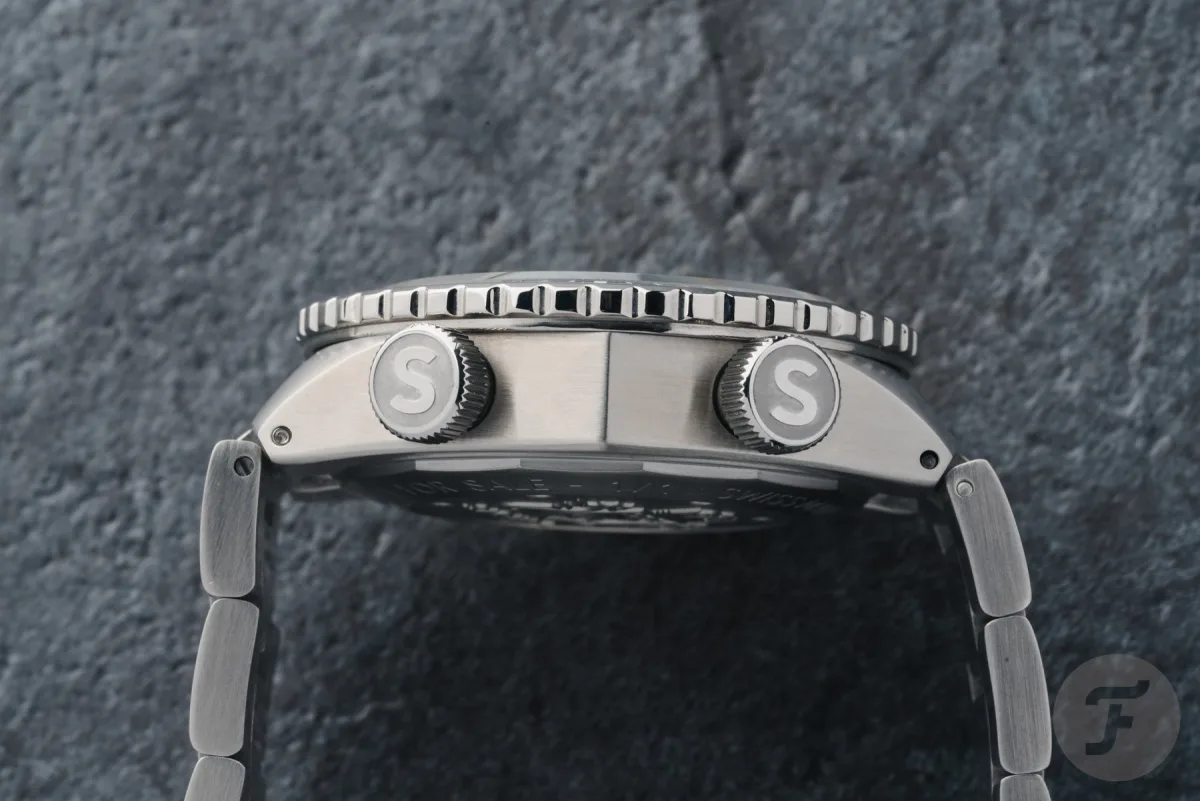
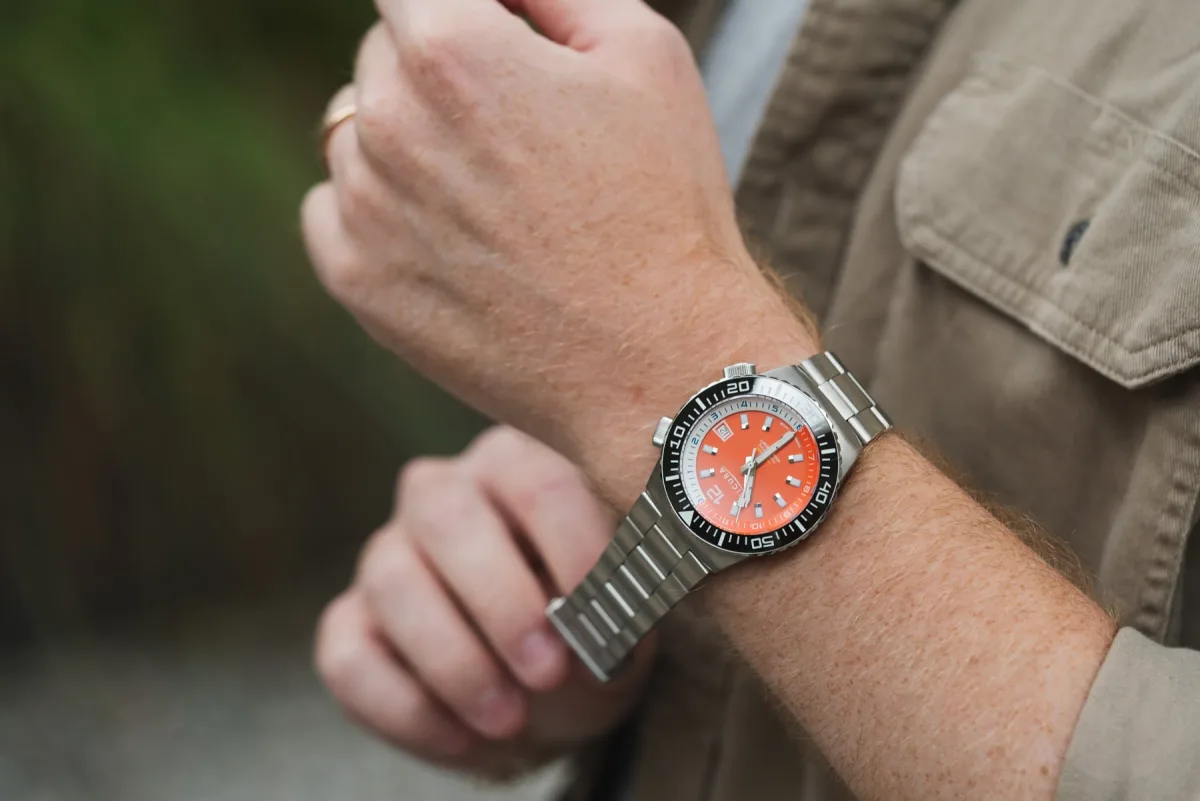
Let's start with the basic parameters. The case of the new Hexa 400 models is made of stainless steel with a diameter of 40 mm, closed lugs, a thickness of 14 mm, and a length of 46 mm. It is water-resistant up to 400 meters. The bezel with 120 clicks features a black ceramic insert with a 60-minute diving scale that glows in the dark. On the right side of the case are two crowns with the brand logo, giving the watch functionality and character. The upper crown rotates the inner bezel, while the lower one adjusts the date and time. The satin-finished case is complemented by a three-row Oyster-style bracelet with a folding clasp, equipped with a secure lock and a diver's extension, which also serves as a tool-free micro-adjustment.
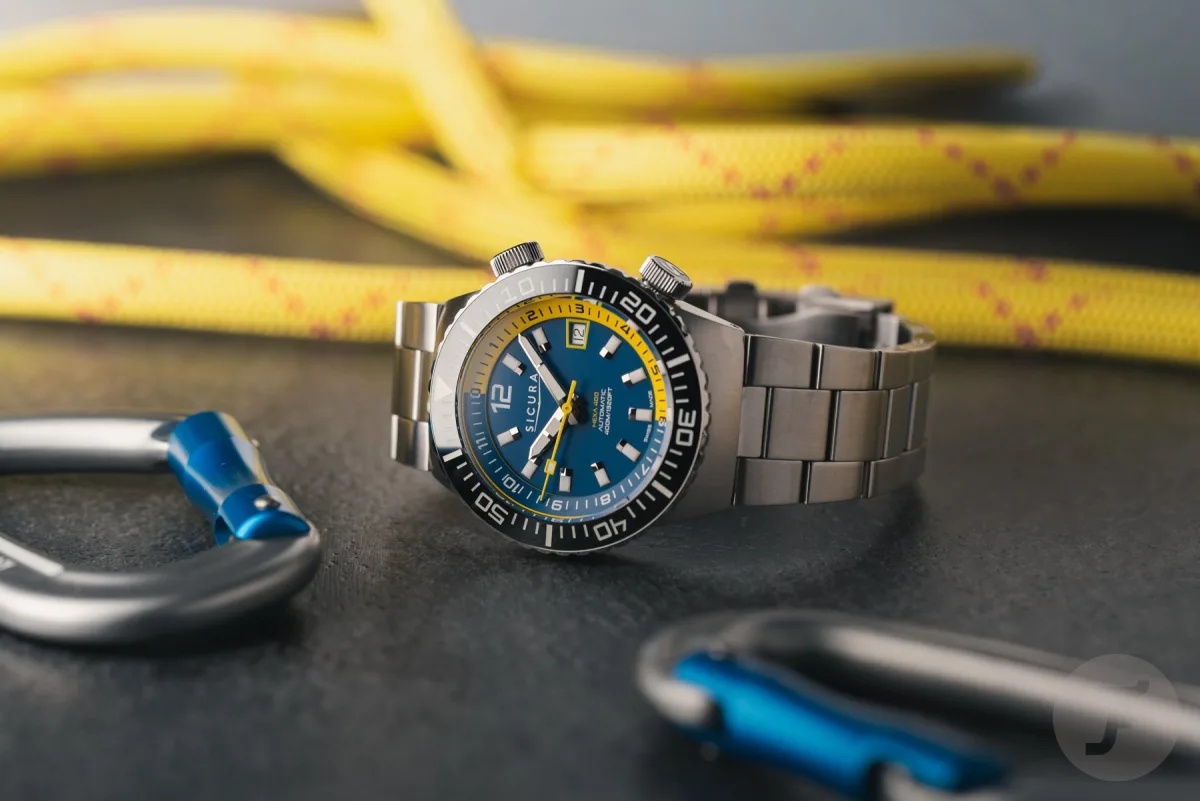
The matte dial features applied indices and large Arabic numerals at the 12 o'clock mark, as well as a date window at 3 o'clock. The internal rotating bezel is used to track a second time zone on a 12-hour scale. Three variants are available: a black dial with yellow accents, blue with yellow accents, and orange with white accents.
The accent color is used on the second hand and divides the 12-hour scale on the bezel into two halves. Interestingly, the original 1960s Diver 400 had a 24-hour scale, which I personally find more convenient. The Hexa 400 opts for a 12-hour scale, so there is no classic day-night division as in most GMT models. Additionally, the division is vertical rather than horizontal, creating a different visual dynamic.

Above the dial are hands with luminescent coating. Notably, the hands and hour markers have a pronounced retro style, while the rest of the design looks more modern.

Design and Style of the Sicura Hexa 400
Looking at the Hexa 400 design, classic IWC diver's watches come to mind. The model vaguely resembles the GST Deep One (ref. 3527) and the later Aquatimer models from the late 1990s to early 2000s. At the same time, the Hexa 400 carries the spirit of the 1960s thanks to the hands and markers borrowed from the original 400 Diver, giving the watch a special atmosphere.
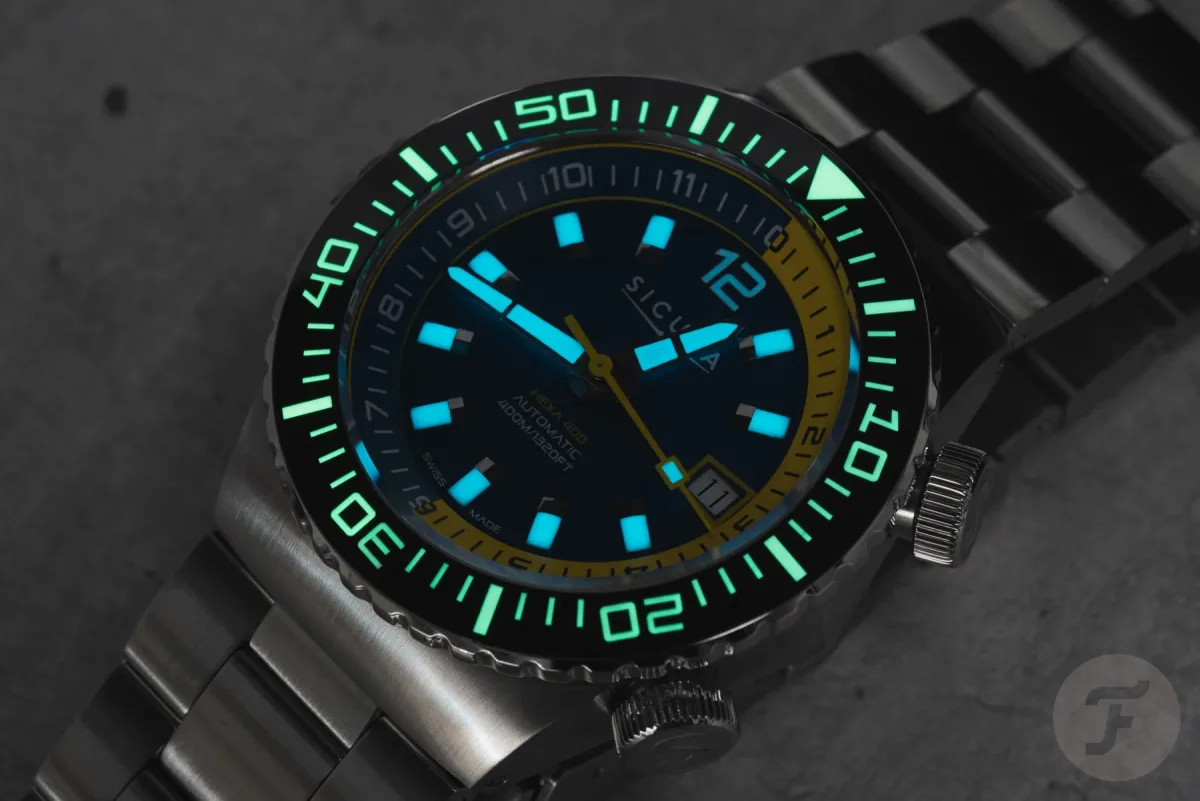
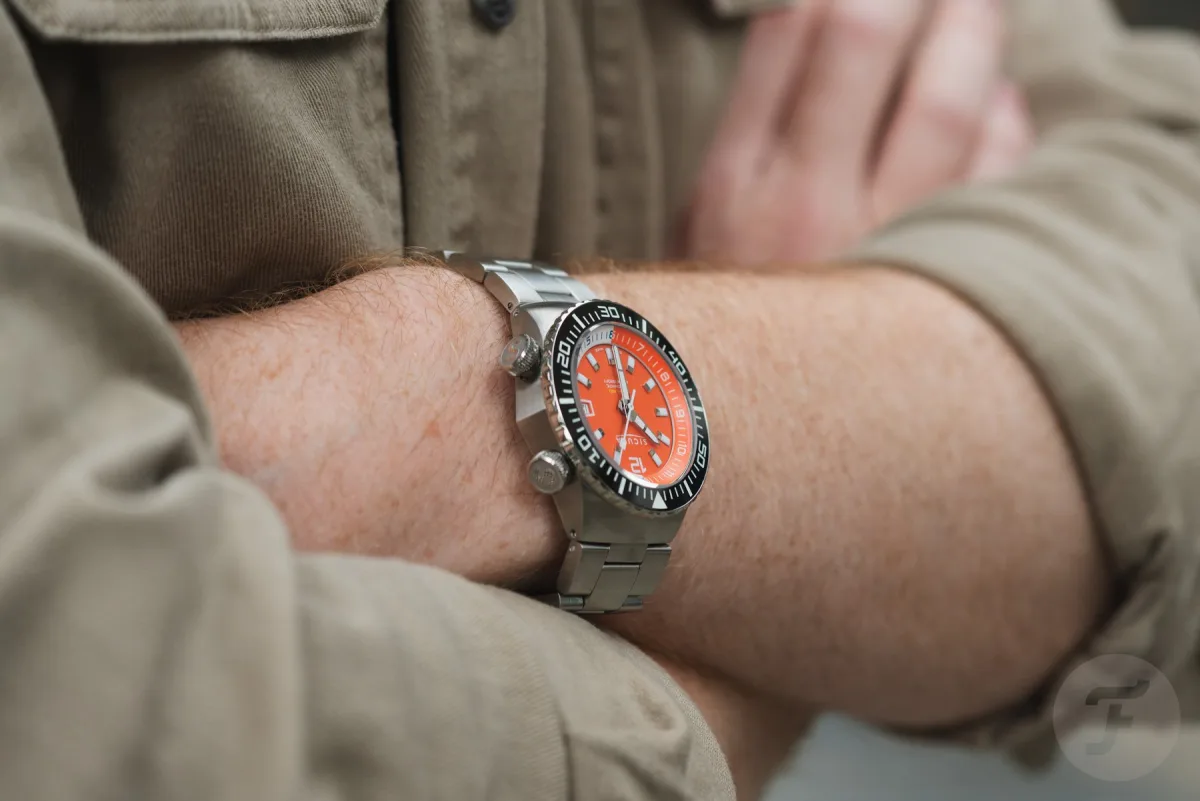
This is an unusual combination that may seem non-functional at first glance, but in practice, it looks harmonious. Personally, I prefer the darker options - blue and black, as these colors are convenient for everyday wear. Nevertheless, I like that Sicura added an orange dial, thus complementing the trio of new diver's models.

Inside the case is the automatic Sellita SW200-1 movement with a frequency of 28,800 vibrations per hour, 26 jewels, and a power reserve of about 38 hours. The movement is concealed behind a steel case back with the classic Sicura emblem - two seahorses and the brand name.

Practical Use of the Sicura Hexa 400
At first glance, the Hexa 400 watches make a massive and robust impression. The high quality of the case and bracelet is immediately apparent. The satin finish of the case is quite fine, but this is only noticeable upon close examination. Special attention should be paid to the shape of the hexagonal case - a rare and successful design move that blends well with the round dial and bezel. The integrated bracelet tapers from 24 mm at the case to 20 mm at the clasp. Although the bracelet looks noticeable, it's important to remember that these are primarily tool watches, and such sizes correspond to their serious diving character.
The model weighs 195 grams, giving the watch the feel of a reliable tool. Despite the weight, the watch sits comfortably on the wrist and feels quite compact. The rotation of the 120-click bezel provides a pleasant tactile sensation thanks to its clear, yet not loud clicks. However, with two rotating bezels and the absence of a minute scale on the dial, there is a need to precisely align the scales with the 12 o'clock mark, which may require some practice.
Managing Two Bezels with Different Scales
Special attention should be paid to the upper crown, which locks the internal bezel. After setting the bezel position, you need to press the crown and turn it to screw and lock it. It's important not to apply too much force, or the bezel may shift. This process requires a bit of skill, but it is enjoyable. The lower crown adjusts the date and time: the first position allows you to change the date clockwise, and the second - to set the time. The crowns are easy to grasp thanks to their large size and fine knurling.

Special mention should be made of the date window frame, done in the accent color. All date discs are white with black print, which is logical from a design perspective and goes well with the hour markers. In the standard position of the internal bezel, the vertical color separation of the scale creates an unusual visual effect. Personally, I prefer horizontal separation, which seems more aesthetic. However, if you don't use the second time zone function, you can simply set the bezel in a position convenient for you and wear the watch without issues.
Conclusion: Sicura Hexa 400 as the Brand's Revival
Overall, the introduction to the Sicura Hexa 400 was an interesting experience. These watches stand out for their originality and functionality thanks to the dual scale. They are directly connected to Sicura's rich history, known for producing unusual tool models. I'm sure many watch enthusiasts will want to try these new divers.

The practical side is also pleasing: the design moves away from the usual Rolex-inspired aesthetics and echoes IWC models, adding individuality. The Hexa 400 is a reliable and sturdy watch that can easily become an everyday companion. However, some details need refinement, such as the precise setting of the two bezels, which can be a challenging task for some users.

A Reliable Start to a New Chapter
The quality of the Hexa 400 matches the level of other brands in the sub-1500 euro price segment. For 1450 euros, the buyer gets a robust diver's watch from a revived Swiss brand with a rich history. The unique design and dual bezel functionality make them stand out among competitors. Therefore, I'm sure many will appreciate the new Sicura Hexa 400.

This is a worthy beginning for the brand's revival, and it will be interesting to watch the brand's further development, especially considering the unusual and bold tools Sicura produced in the 1970s.
