Water resistance is one of the key characteristics of modern watches, determining their ability to withstand water exposure.
Whether it's a digital, quartz, mechanical, or automatic watch, water can cause significant damage. Understanding water resistance principles will help you choose the right watch and avoid costly repairs.
Why is Water Resistance Important?
If you're a watch enthusiast, you know that different models are suited for different conditions and activities. For example, field watches are associated with outdoor adventures, while aviation watches are linked with flights and travel. Dive watches evoke deep-sea diving, although most owners of such models rarely test them in extreme conditions. Nevertheless, water resistance is a crucial parameter for everyday wear, especially if the watch regularly comes into contact with water.
Water Resistance vs. Waterproof: What's the Difference?
There is a common misconception that water-resistant watches are the same as waterproof ones. In reality, waterproof implies absolute impermeability to water, which no modern model can guarantee. The term "waterproof" is rarely used and mainly for marketing purposes. More commonly, "water resistance" refers to a watch's ability to withstand a certain amount of water pressure.
The main elements determining water resistance are the gaskets and seals, which can wear out over time and lose their properties. Therefore, regular maintenance is essential to preserve a watch's water resistance.
How Does Water Resistance Work? The Importance of Testing
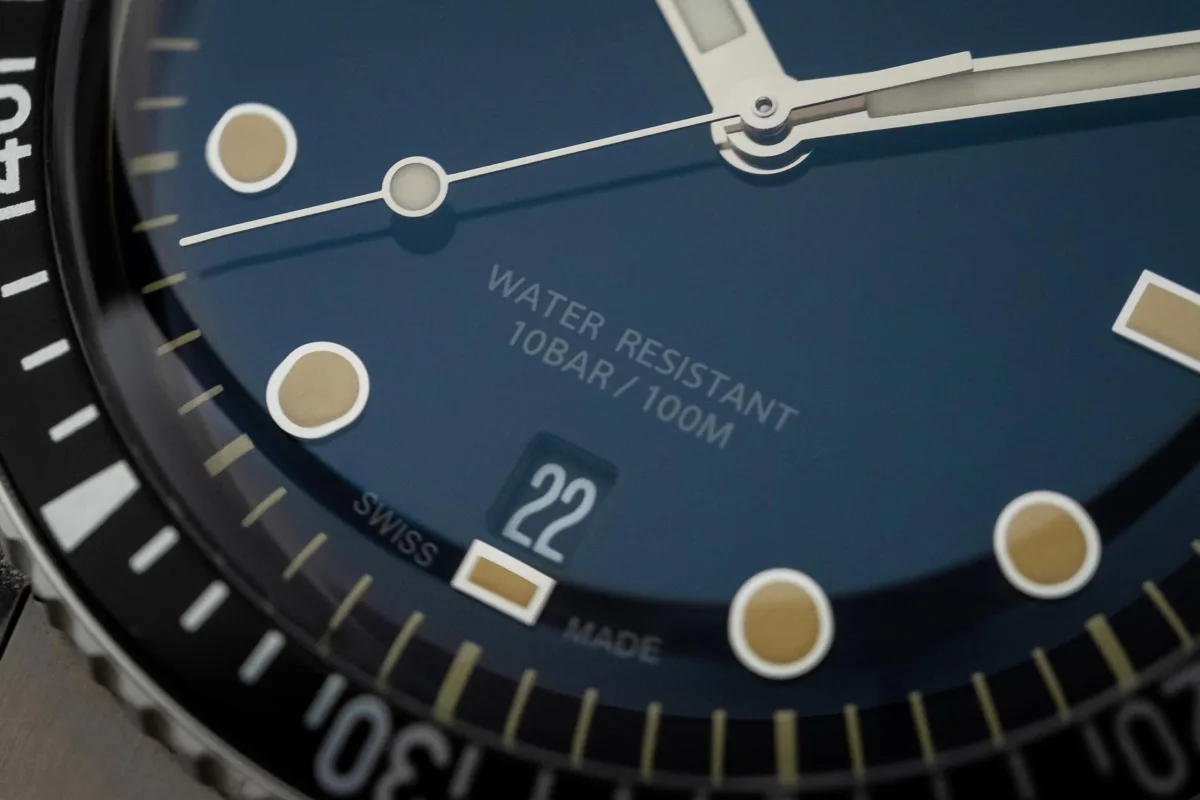
Water resistance is measured in atmospheres (ATM), bars, meters, or feet, indicating the water pressure a watch can withstand without damage. However, these figures are obtained under laboratory conditions, where the pressure is static. In real life, watches face dynamic loads: temperature, water currents, sudden pressure changes, which complicate matters significantly.
Therefore, it's important to consider not only the numbers but also standards, such as ISO 6425 - the international standard for professional dive watches. It sets strict criteria that a model must meet for safe diving.
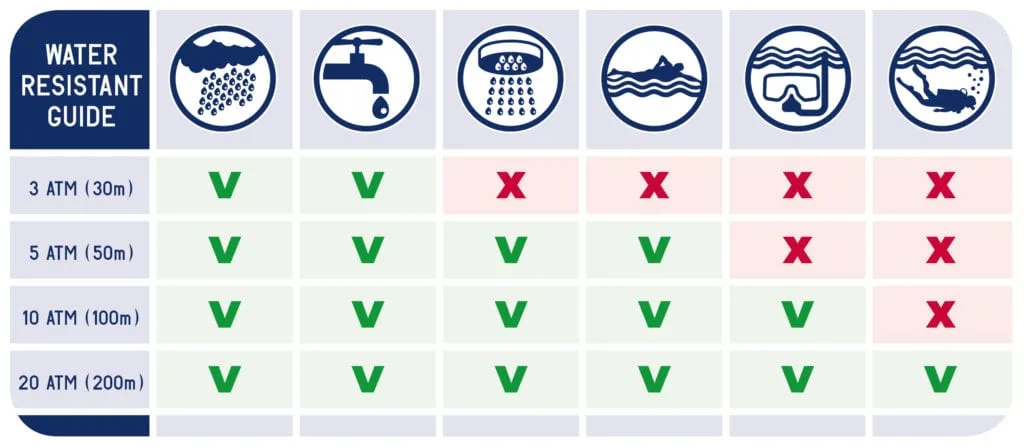
Watch Water Resistance Table
Frequently Asked Questions About Watch Water Resistance
What level of water resistance is considered good?
An optimal choice for most is a water resistance of 100 meters or more. Such watches are suitable for swimming and most everyday tasks, though it's not recommended to shower with them, even with high water resistance.
Are water-resistant watches waterproof?
No. Water resistance means the ability to withstand certain water exposure, but not absolute protection from it.
Can you swim with a 30-meter water-resistant watch?
No. Watches rated at 30 meters are only designed to protect against splashes and rain, swimming is not recommended.
Brief Summary on Watch Water Resistance
For professional dives deeper than 200 meters, special diving computers are used, not mechanical watches. Nonetheless, water-resistant watches remain an important part of gear for everyday use.
Most models with water resistance of 50-200 meters can withstand typical water-related stresses. Models with lower levels require caution and regular maintenance to prevent moisture ingress.
Water resistance is one of many technical specifications to consider when choosing a watch, especially if you plan to use it in contact with water.