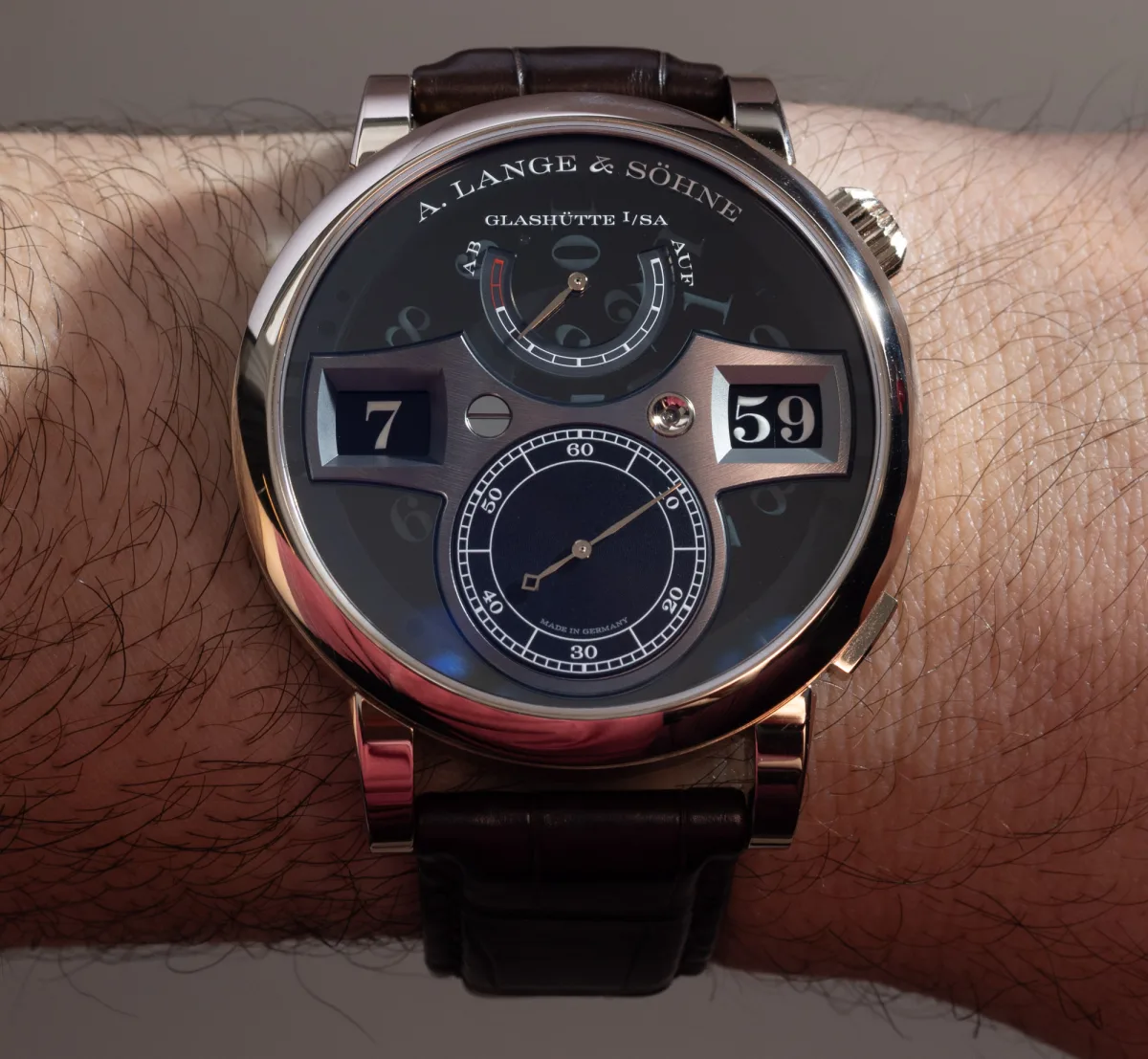
In 2024, it will be 15 years since A. Lange & Söhne introduced the Zeitwerk model in 2009. Zeitwerk is a mechanical watch with a digital time display, which has been produced in several limited editions over the years as one of the most exotic watches made by the Saxon brand.
Today we will talk about one of the limited versions of Zeitwerk, released in a quantity of 200 pieces - the 142.055 A. Lange & Söhne Zeitwerk Honeygold Lumen. These watches are steeped in history and quality and are considered legitimate “grail watches” for many enthusiasts. Let's uncover some aspects of Zeitwerk and explain why I find this family of A. Lange & Söhne models so appealing.
Although digital (as opposed to analog) displays are often associated with modernity, in fact, Zeitwerk is a watch inspired by vintage motifs. This complex mechanical movement is A. Lange & Söhne's attempt to recreate (in the form of a wristwatch) digital clocks originally created in the 1830s for opera audiences. The creator of the clocks was watchmaker Johann Christian Friedrich Gutkaes, who developed them at the request of the royal court so that the audience would know when opera performances were to begin at the historic Dresden Semper Opera House.
The room was too dark to see the hands of traditional 12-hour clocks, so a digital clock and five-minute display were created above the stage, which was legible and not too distracting. The clocks were rebuilt at least twice due to instances when the Semper Opera House was destroyed (due to fire or wartime bombing). Since Dresden is the nearest major city outside Glashütte, there is another connection between the opera clocks and the company A. Lange & Söhne. Ferdinand Adolph Lange - the original founder of A. Lange & Söhne - was Gutkaes's son-in-law and also learned the watchmaking trade from him.
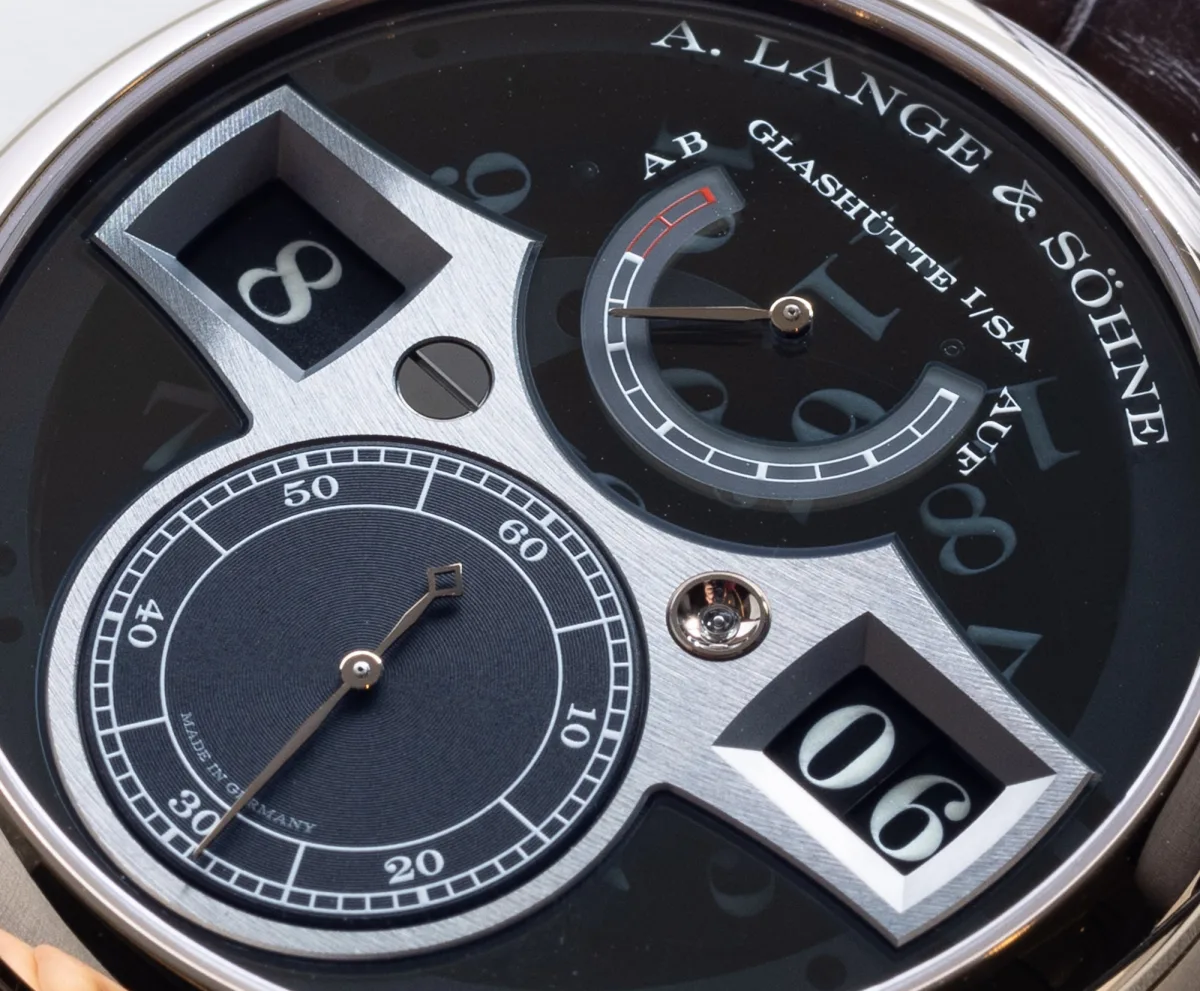
In 2009, a few months before the release of the Zeitwerk model, I visited the Dresden Semper Opera House with representatives of the brand and, of course, paid attention to the clocks. I told the representatives that it would be appropriate to create a wristwatch version, and the A. Lange & Söhne team smiled and nodded, understanding that the announcement of such a product was only a few months away. The main difference of this “Lumen” version of the Zeitwerk from the original lies in the dial and the use of luminescent material. The Zeitwerk model became the first Lange watch to receive the “Lumen” technology (which was later applied to other models), which changed the look of the dial and allowed time to be read in the dark. The main innovation was not only the use of luminescent material for the numbers but also the character of the smoked sapphire glass dial. To make the numbers sufficiently luminous when transitioning to display in the respective windows, they must first be charged with light.
This would be impossible with a traditional solid dial. To solve this problem, A. Lange & Söhne developed a semi-transparent section of sapphire glass for most of the dial. The trick is to allow enough light to charge the SuperLumiNova material but not create an unattractive view of the discs, which, for the most part, should remain invisible. The result was very impressive, and the Lumen model instantly became a hit among collectors from its first appearance.
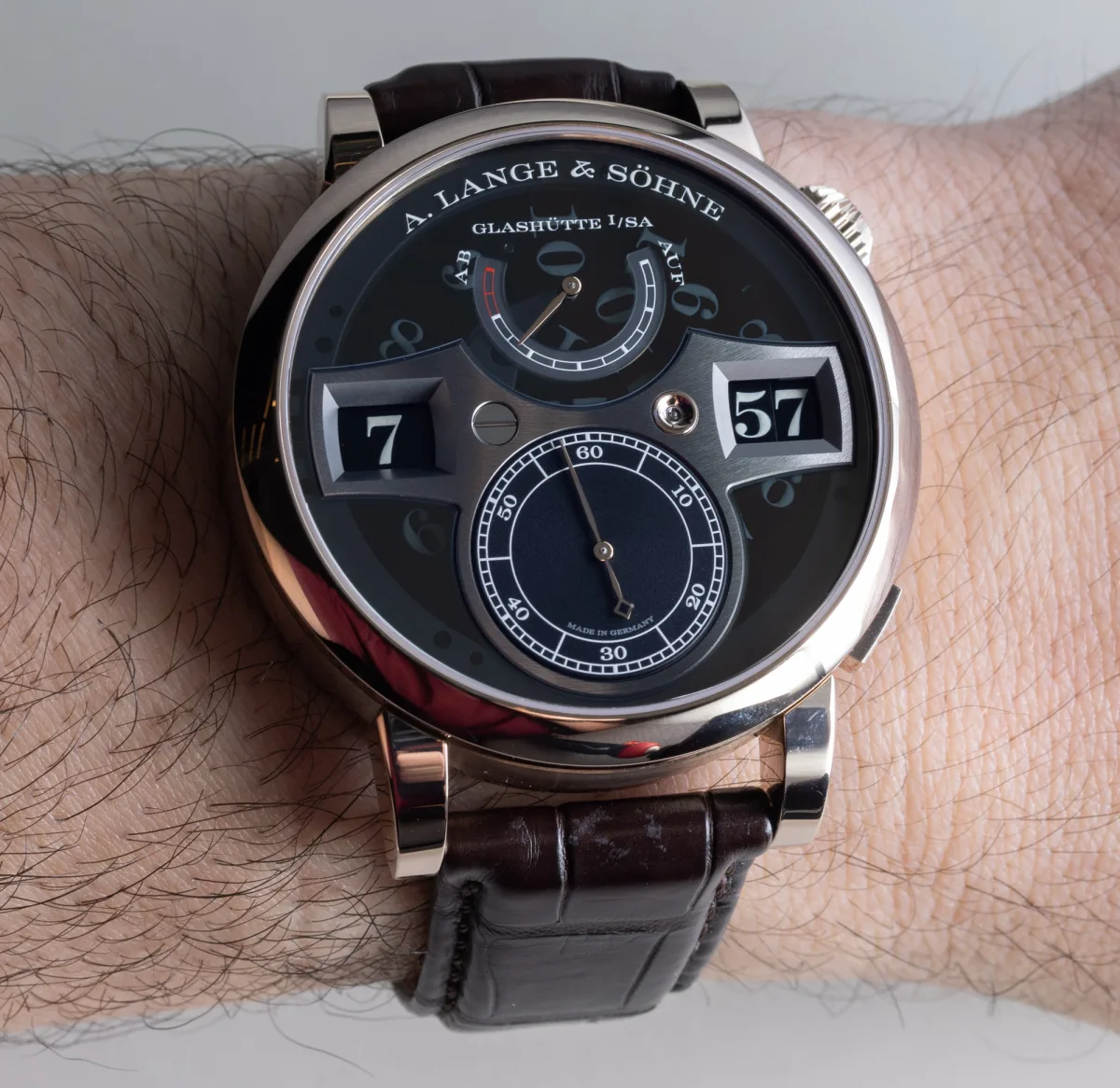
This particular version of the Zeitwerk Lumen is also released in A. Lange & Söhne's signature gold alloy, which the company calls “honeygold.” As far as I know, all Zeitwerk watches have cases made of precious metals, but Honeygold is most characteristic of the A. Lange & Söhne brand, as it has a somewhat unique shade. This unique alloy is especially beautiful when paired with black or brown tones. Accordingly, the reference 142.055 watch has an 18-carat Honeygold case, a dial with black accents, and a dark brown alligator leather strap. On the wrist, they look simply fantastic.
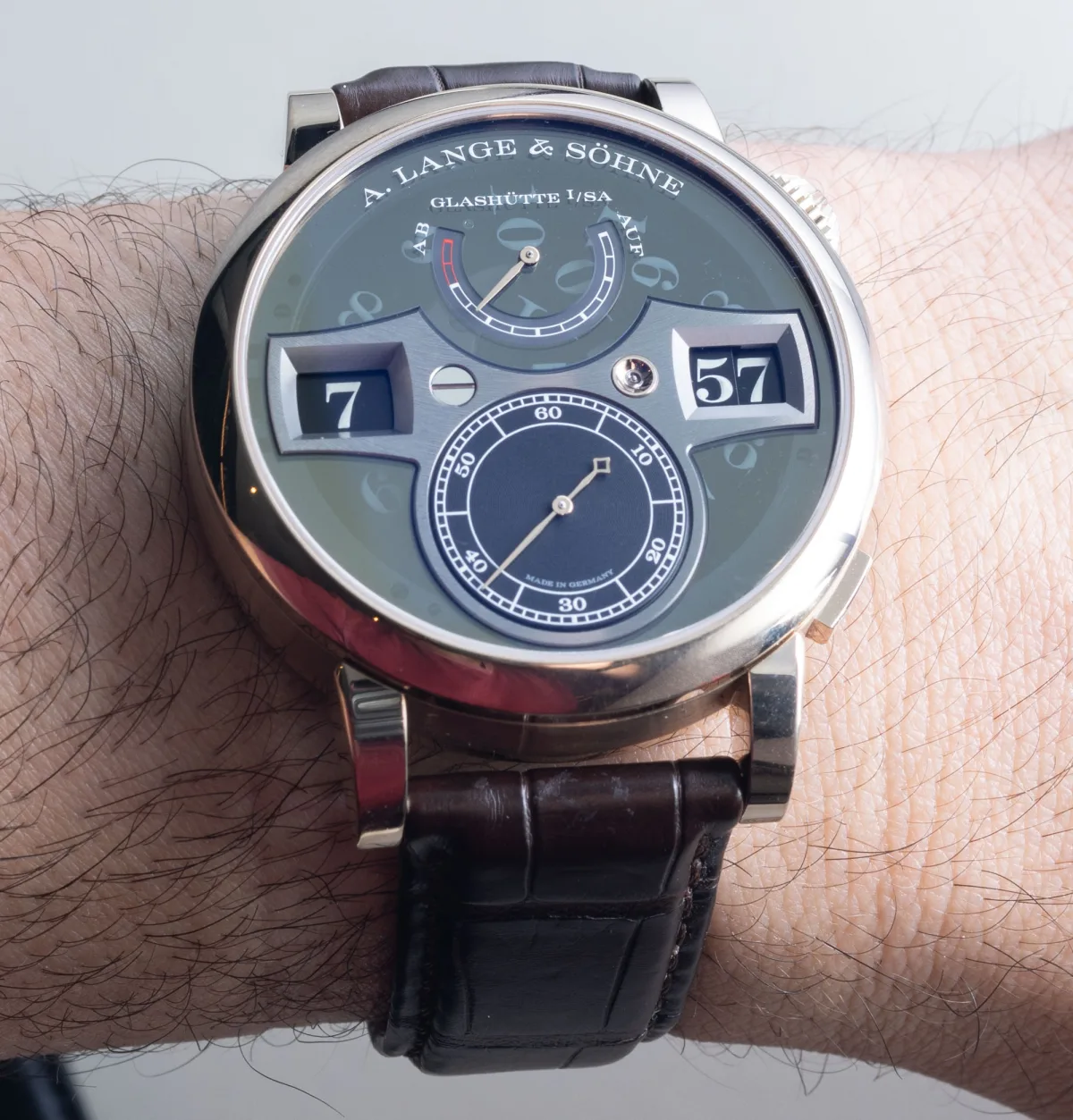
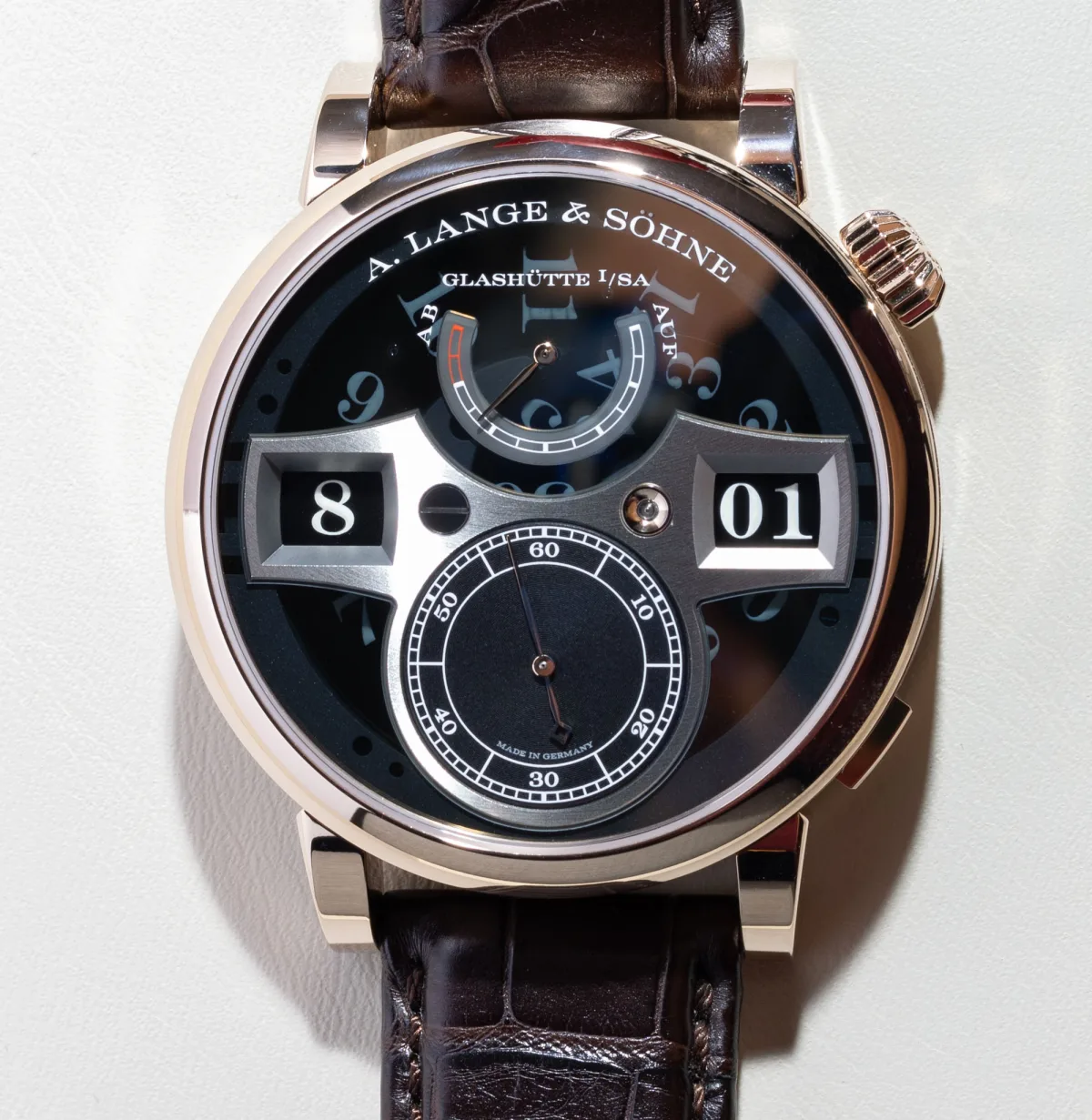
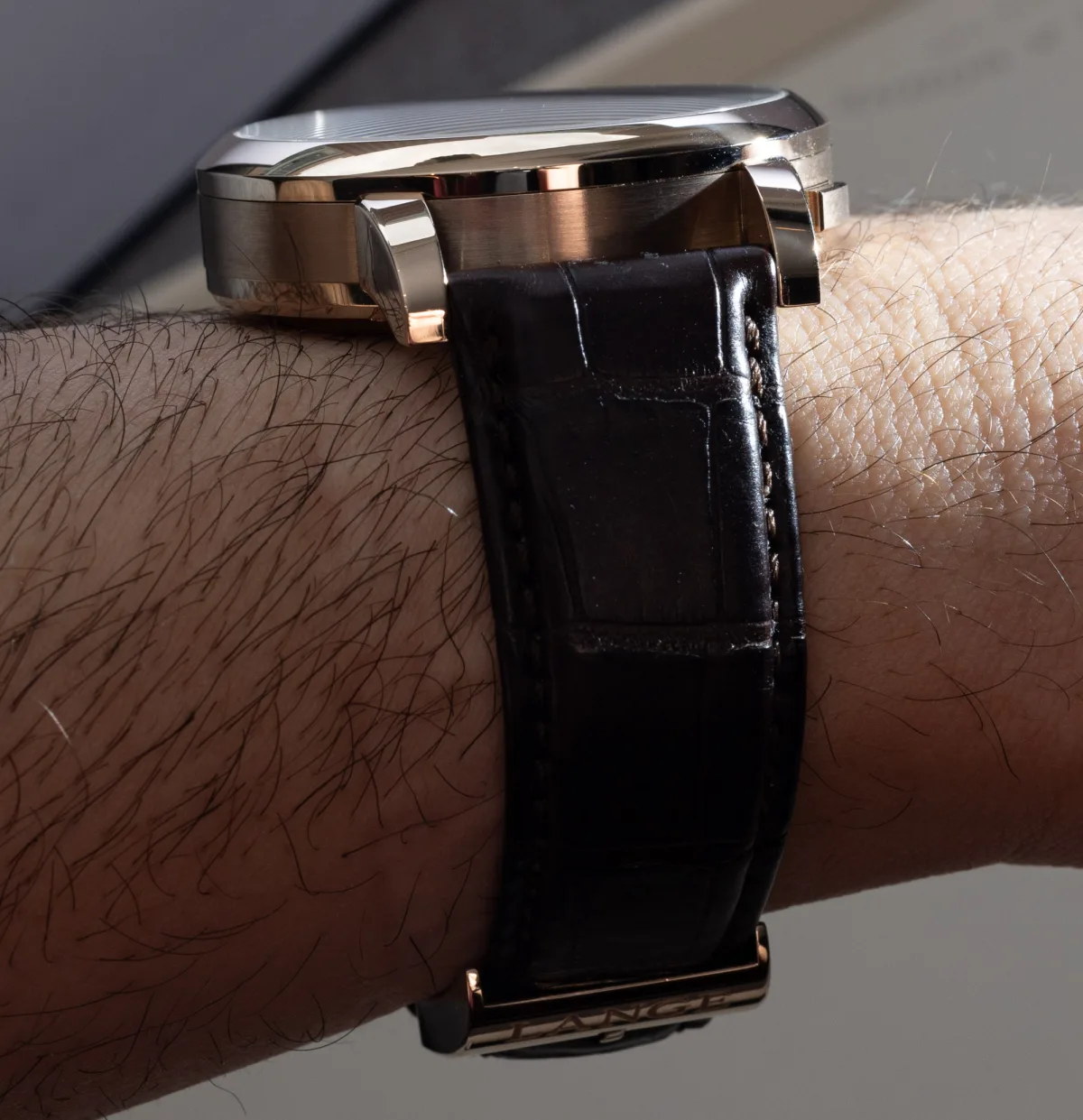
A. Over the years, Lange & Söhne has created even larger versions of Zeitwerk, aiming to complement the collection with new complications. The Zeitwerk platform has seen the addition of a decimal minute repeater and a striking mechanism, and later A. Lange & Söhne even introduced a Zeitwerk version with a date indicator. Nevertheless, in many respects, the base version is the best, mainly due to its purposeful functionality and because other versions of Zeitwerk are larger (and the musical ones are significantly more expensive). The Zeitwerk Honeygold Lumen case is about 42 mm wide, 12.6 mm thick, and water-resistant up to 30 meters. The watch's crown is positioned at “2 o’clock” to prevent it from digging into the wrist, and despite the size, they are very comfortable to wear.
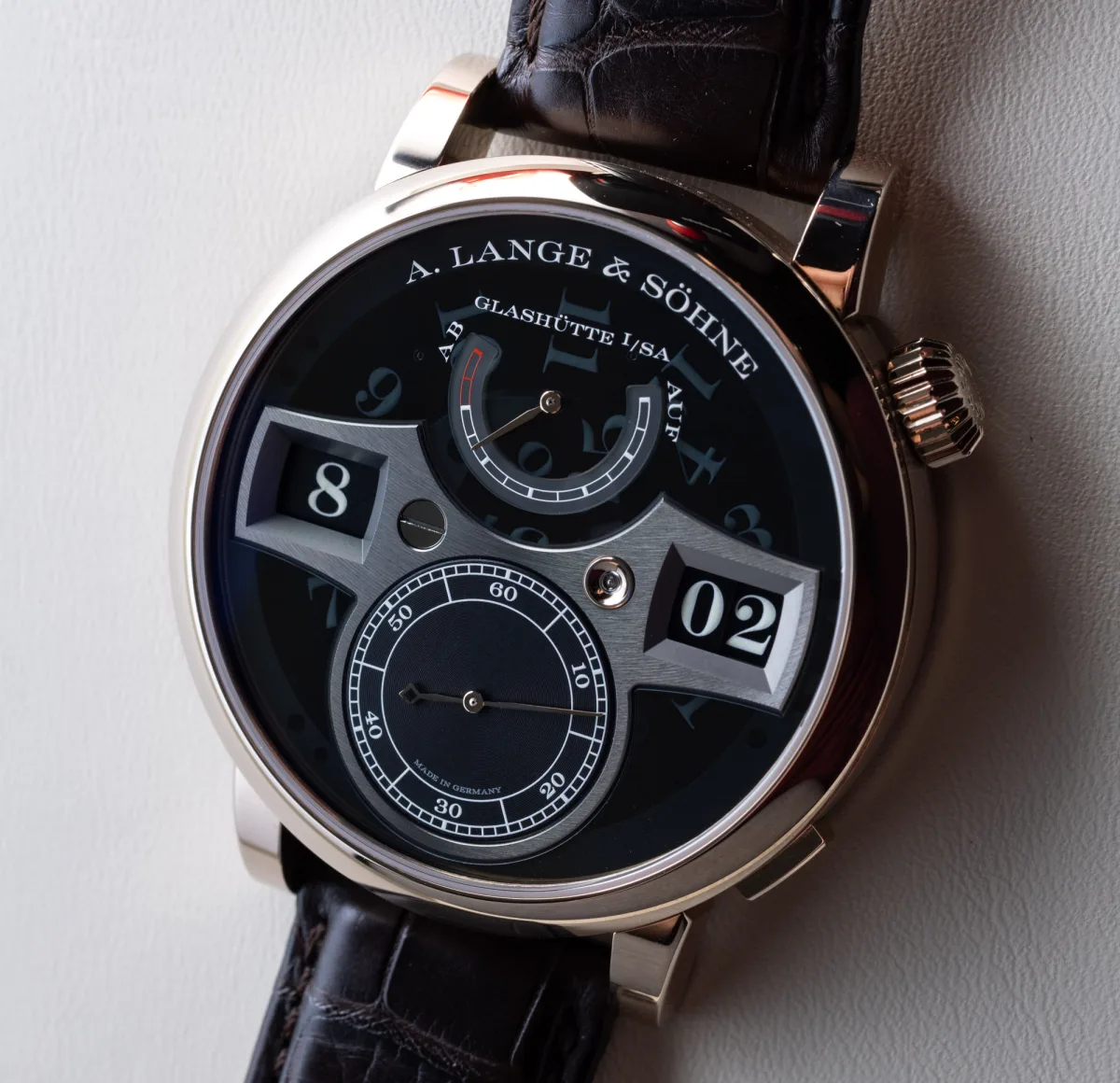
Although the Zeitwerk indication system is related to the Semper Opera House, the watches are much more associated with modern machinery and vehicles. A. Lange & Söhne found nothing but vintage high-class cars to relate to Zeitwerk. Accordingly, if you love the design and construction of such machines, you can see various compatible philosophies at play. The Zeitwerk dial is more like a dashboard than a traditional watch dial. I would be interested to know what associations readers have when they see the Zeitwerk. What do these A. Lange & Söhne watches remind you of?
Since A. Lange & Söhne introduced the Zeitwerk long ago, the price of these watches has risen sharply. The brand's reputation and demand have also increased, and I think A. Lange & Söhne simply decided that the limited edition and niche nature of Zeitwerk allow it to price each model a little higher. This is probably true, and even with a higher price, Zeitwerk still feels relatively competitive. Nevertheless, these are expensive watches and are made accordingly. Quality permeates every corner of the watch, whether it be the finely polished surfaces of its own mechanical movement or the admiration of the extreme precision with which the digital indicators change by the minute or by the hour.
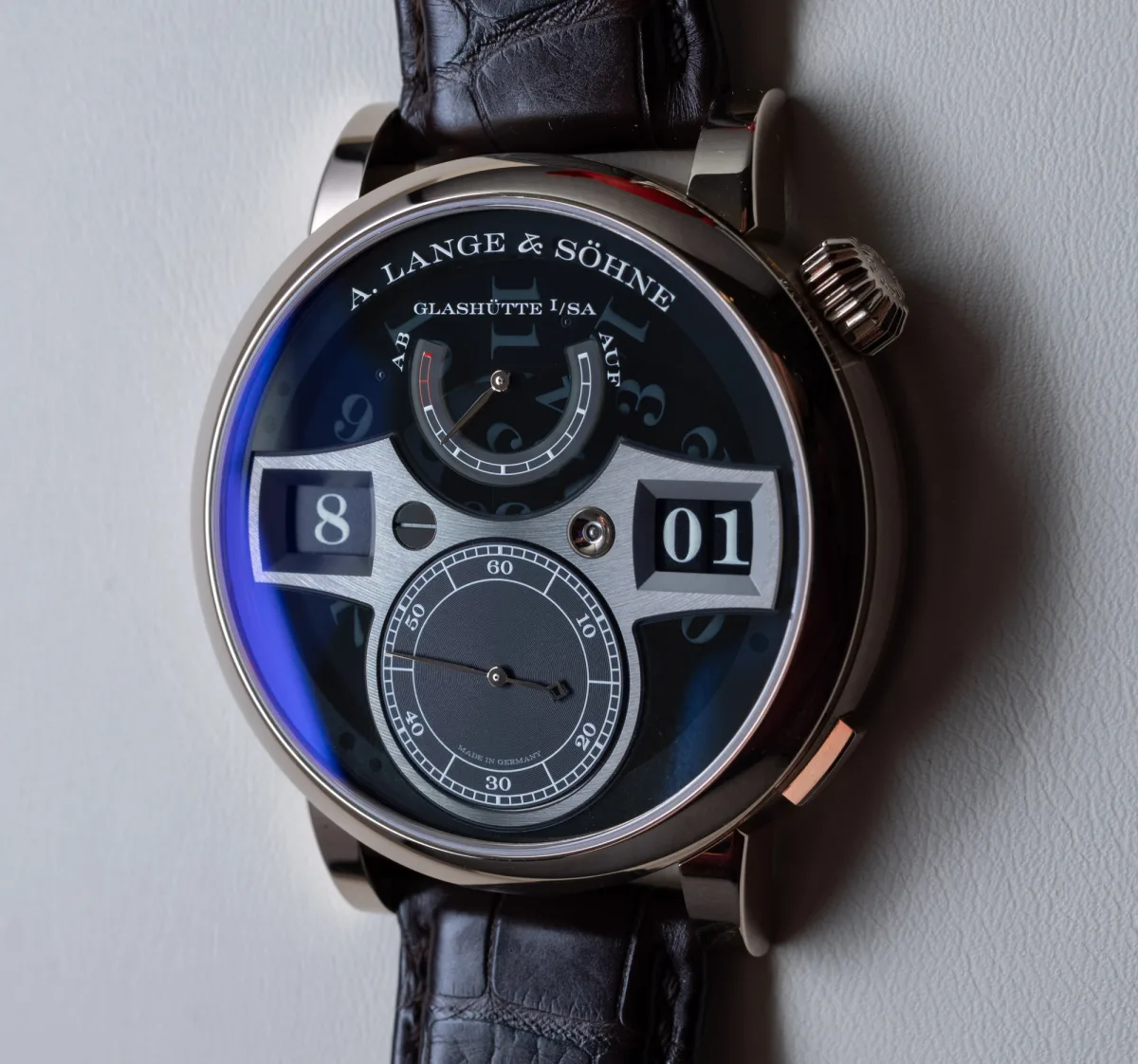
The Zeitwerk dial features two large windows for digital time indication. This includes one disc for hour indication and two overlapping discs (similar to a large date indicator) for minute indication. The dial also includes a traditional analog subsidiary seconds dial and a power reserve indicator. The latter function is extremely important for these watches as they are not only manually wound but also very power-hungry. It should be noted that since the release of Zeitwerk, Lange has refined the movement, including increasing the power reserve. I believe the original Zeitwerk had a power reserve of just 36 hours, while in the latest versions it has been increased to a more competitive 72 hours.
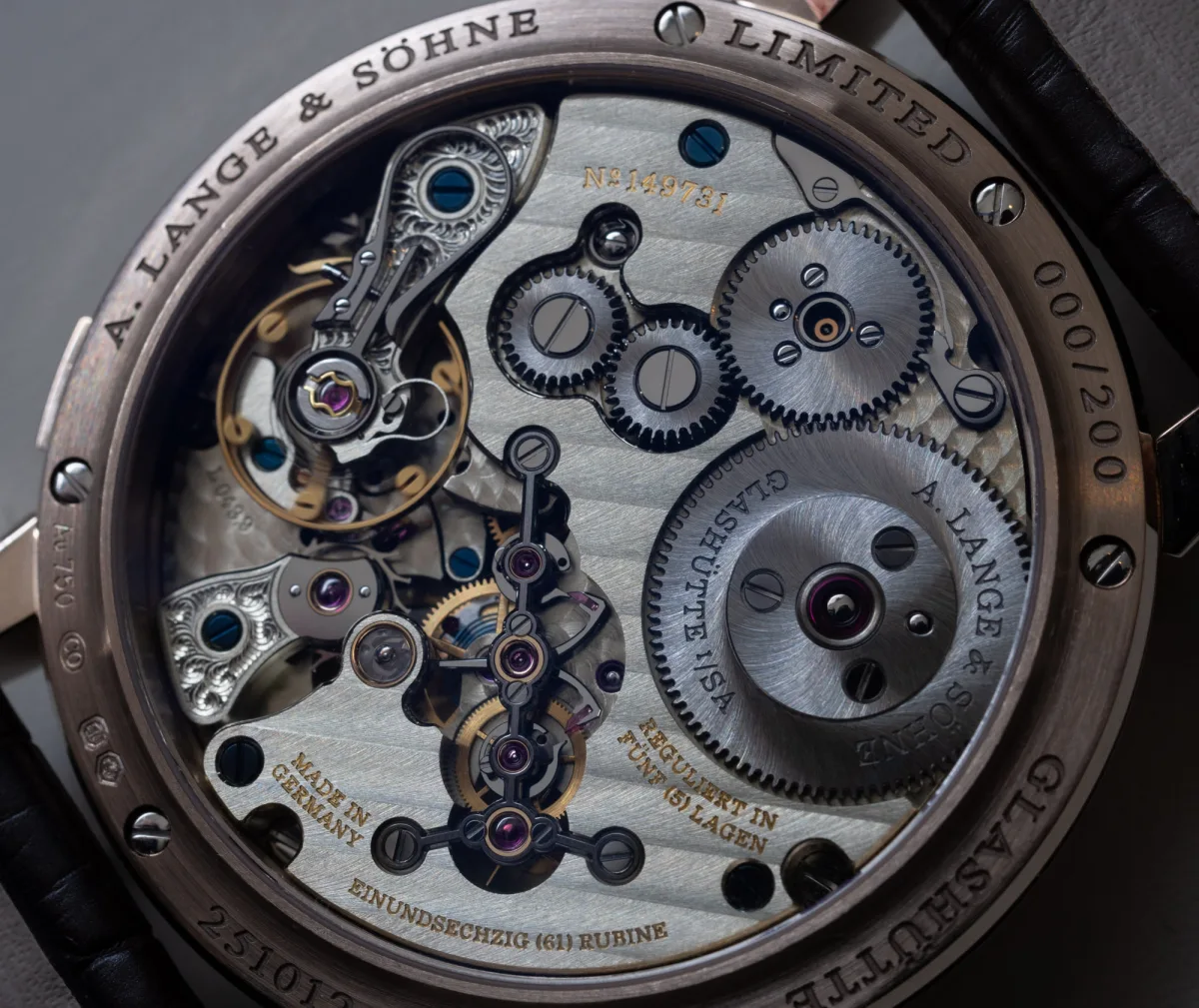
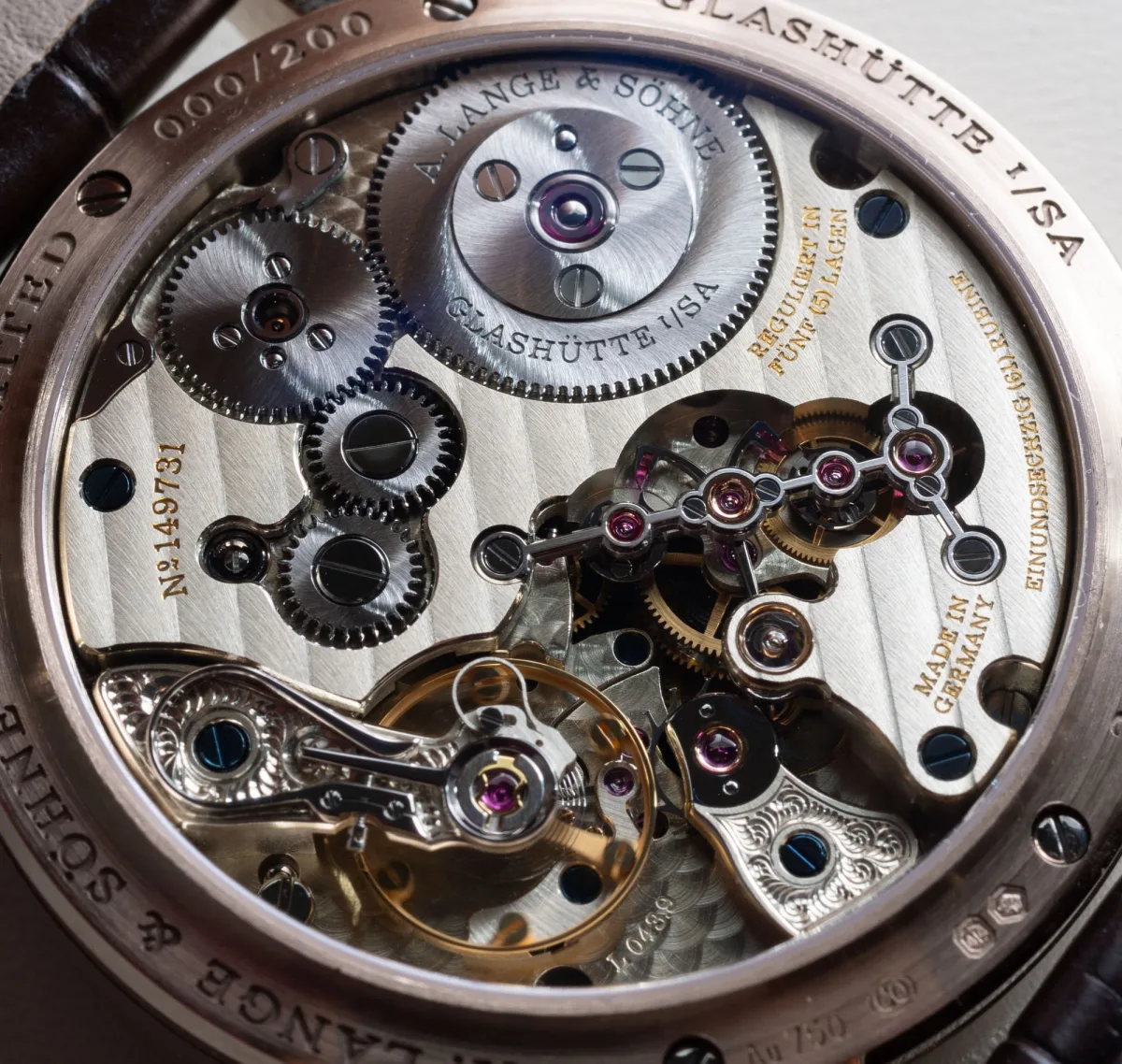
Why is the movement so power-demanding? Inside the A. Lange & Söhne Zeitwerk is the caliber L043.6. The hand-wound movement, consisting of 462 parts, operates at a stable frequency of 2.5 Hz (18,000 beats per hour) and has a power reserve of 72 hours. To ensure the power-hungry moving discs function correctly (and quickly), the L043.6 includes a sophisticated constant-force escapement system. This is where most of the energy goes. This system is necessary because a force accumulator was recognized as the best system to provide enough power to move the discs while maintaining the accuracy of the watch.
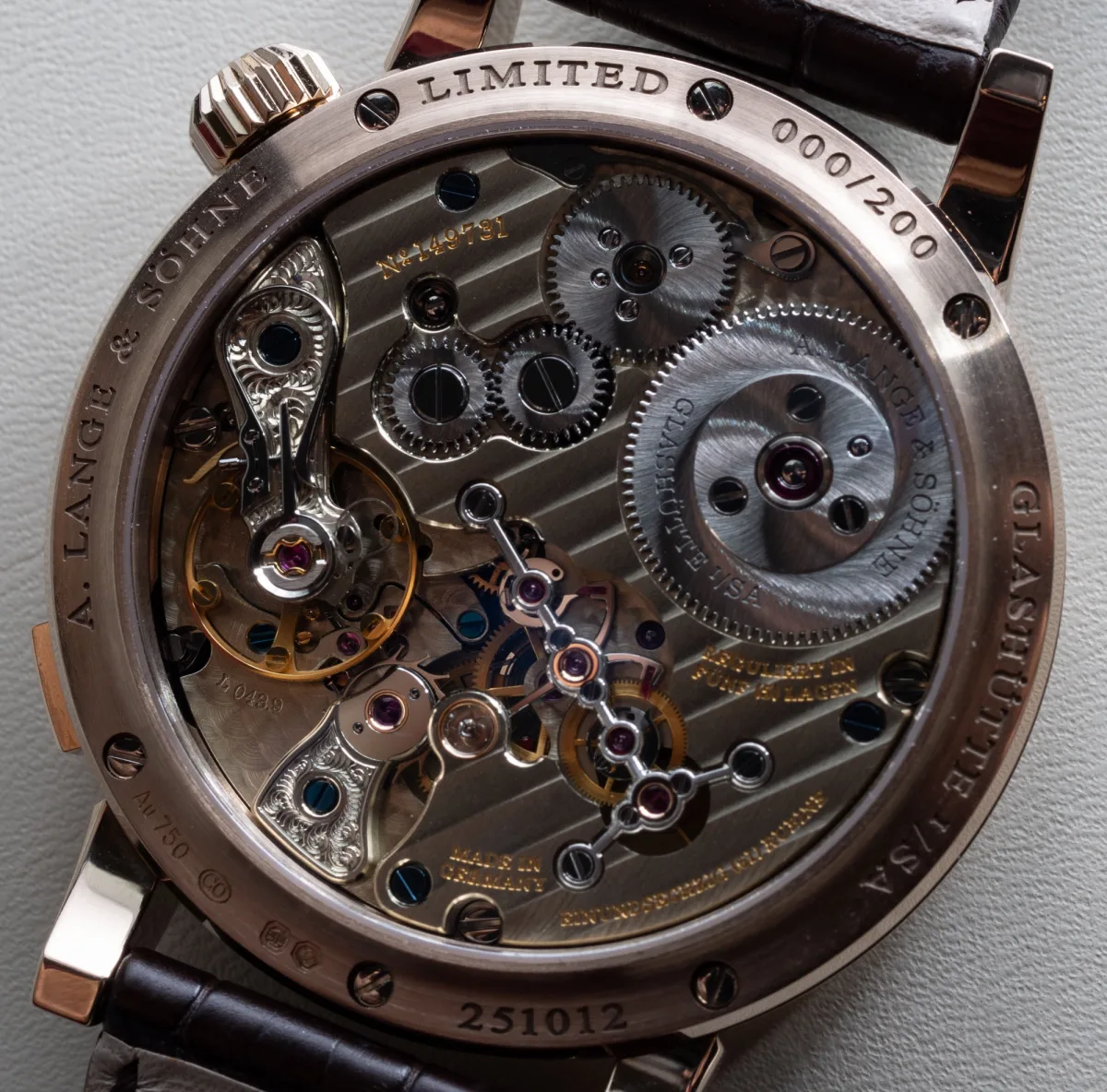
Constant-force systems are designed to slowly accumulate energy, which is then used in one big burst when it is necessary to replace several or all discs. The most power-demanding operation occurs when the hour changes, and all three discs must shift simultaneously. Such an operation would completely ruin isochronism if not for the application of a constant-force mechanism that acts as an intermediary in motion. Visually, you can see much of this through the sapphire crystal case back, admiring the truly beautiful mechanical movement in action.
The movement is fully decorated (even the parts that are not visible) and includes a combination of polishes, performed entirely by hand or with hand-operated machines (such as perlage or striping). As with all Lange movements, the 3/4 plate is made of an alloy known as German silver. The feature of this alloy is that it does not rust, although it does “patina,” meaning its color becomes a bit deeper over time. This allows for more precise machining and polishing without the need to coat or treat the metal components to ensure long-term environmental resistance. The combination of well-crafted details and Lange's love for large proportions and decoration of the movements gives A. Lange & Söhne movements that special status I mentioned above.
As you can see, the Zeitwerk watch has much to offer, whether it is the horological history in the German region of Saxony, exclusive high-class watchmaking techniques, interesting mechanical movements, or original expressions of “modern classic” design. In many respects, such watches provide endless room for conversation (or debate), and that is why they become so appealing as a grail, more so than just high-class watches. Every time I see someone with an A. Lange & Söhne Zeitwerk watch, I am delighted by how beautiful these watches are.
All their owners are confident, mature in their understanding of watches, and, of course, playful. Obviously, for their wrists, it's a good choice. And for your wrist? All you need is to afford one of these rare beauties. The price for the A. Lange & Söhne limited edition of 200 pieces reference 142.055 Zeitwerk Honeygold Lumen at the time of their debut in 2021 was $145,000 (but reportedly, the retail price has since increased).