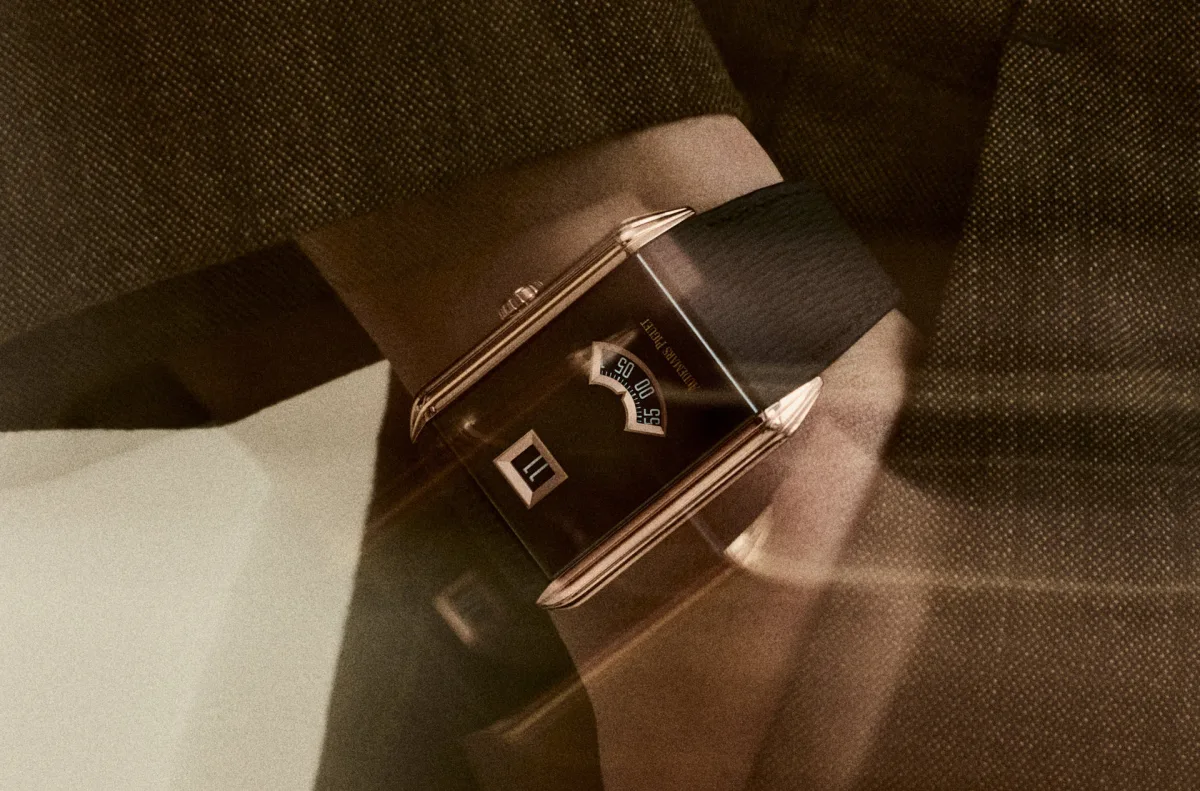
A new model inspired by a vintage piece from 1929.
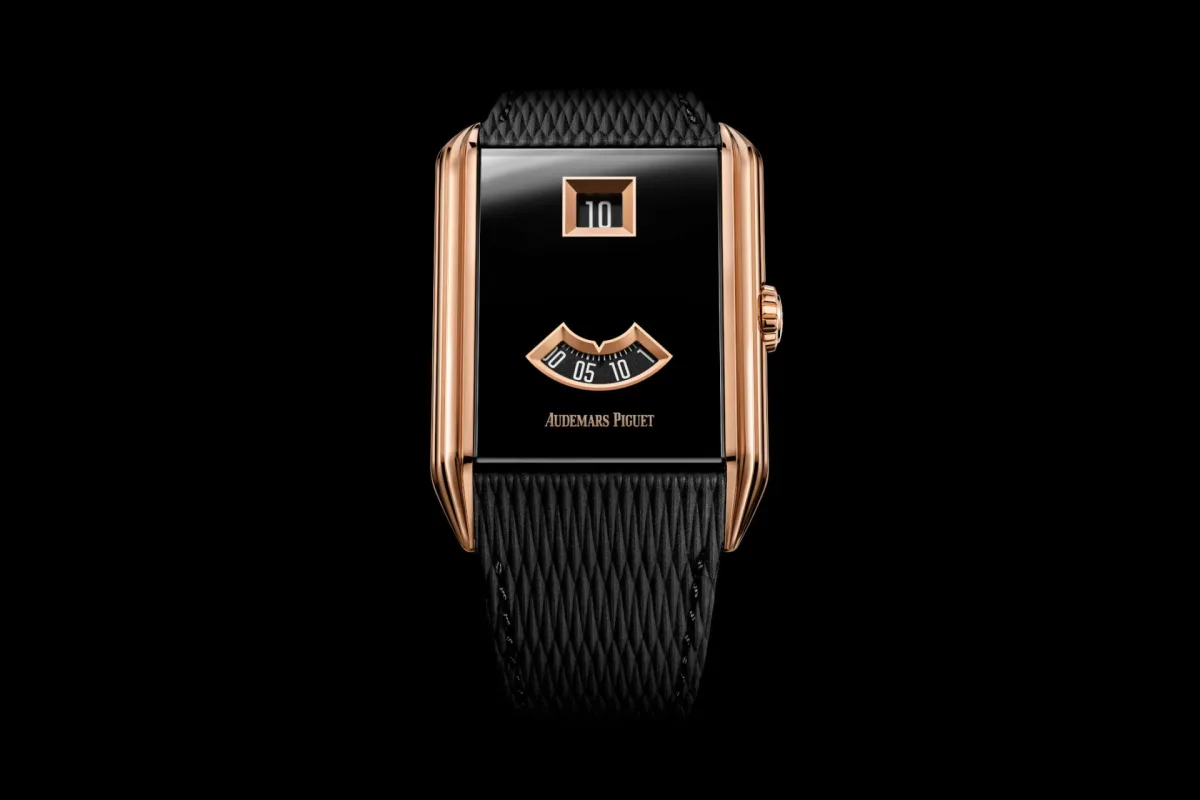
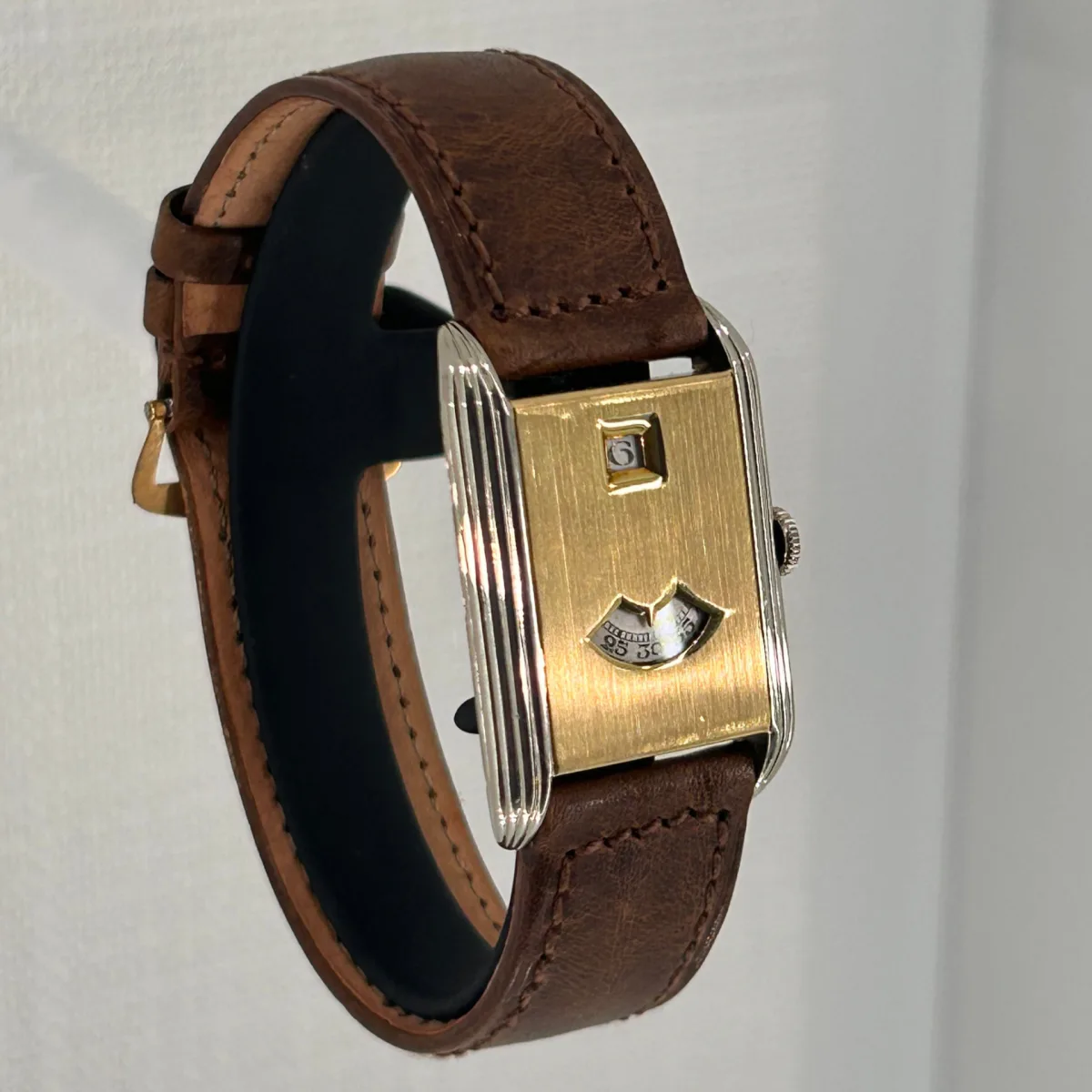
Although all three Audemars Piguet collections are rooted in the Royal Oak design, the company occasionally releases models that do not feature the octagonal case. An example is the 2024 [Re]Master02 with its bold asymmetrical case, which recalls the original 1961 model. The brand's latest release revives a 1929 design, focusing on the now-popular 'jumping hour' feature.
From 1924 to 1951, Audemars Piguet sold 347 watches featuring this function. The Pre-model 1271, which inspired the new release, was produced between 1929 and 1930 and was one of the company's first models to feature both a jumping hour window and a minute indication window.
This series included 14 pieces offered in cases of white gold, white and yellow gold, white and green gold, as well as platinum. Almost all were sold before the stock market crash in October 1929, which ended the 'roaring' 1920s. The unique platinum piece that served as a prototype for the new model is now housed in the Audemars Piguet museum-atelier.
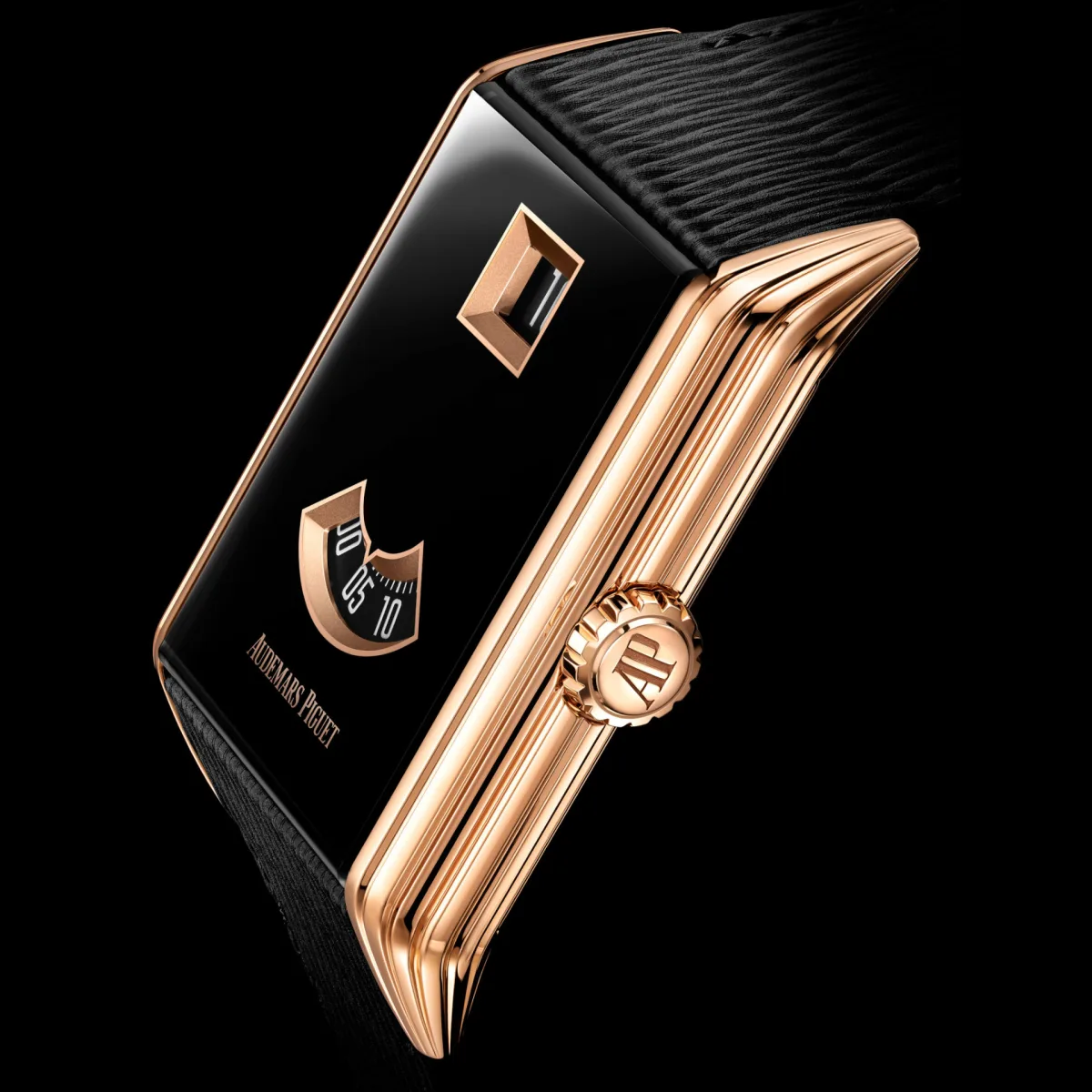
The case of the new model features an original rectangular shape flanked by two textured gold modules. This style is known as Streamline Moderne, also referred to as Paquebot or Ocean Liner, a late Art Deco branch characterized by smooth lines and curved aerodynamic shapes.
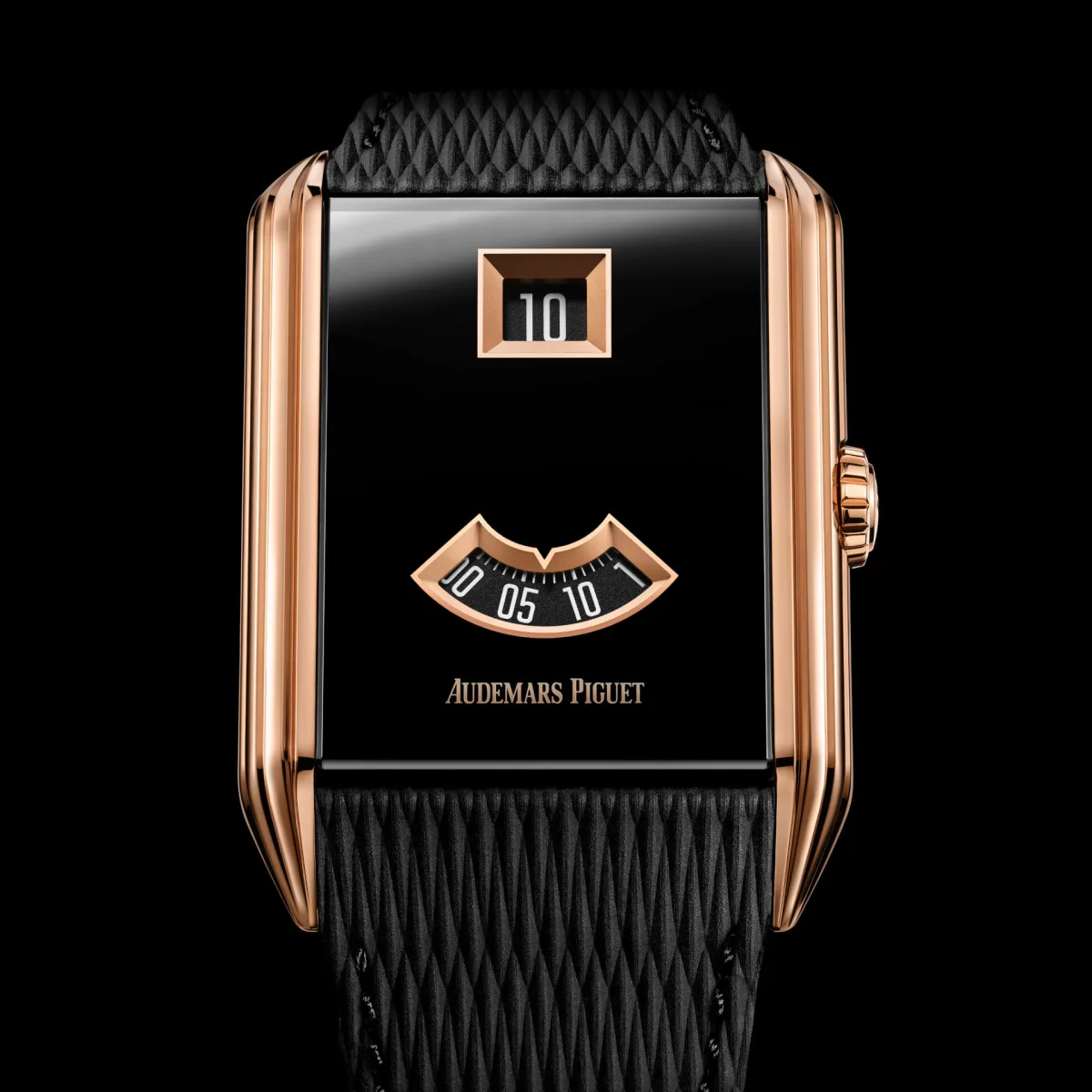
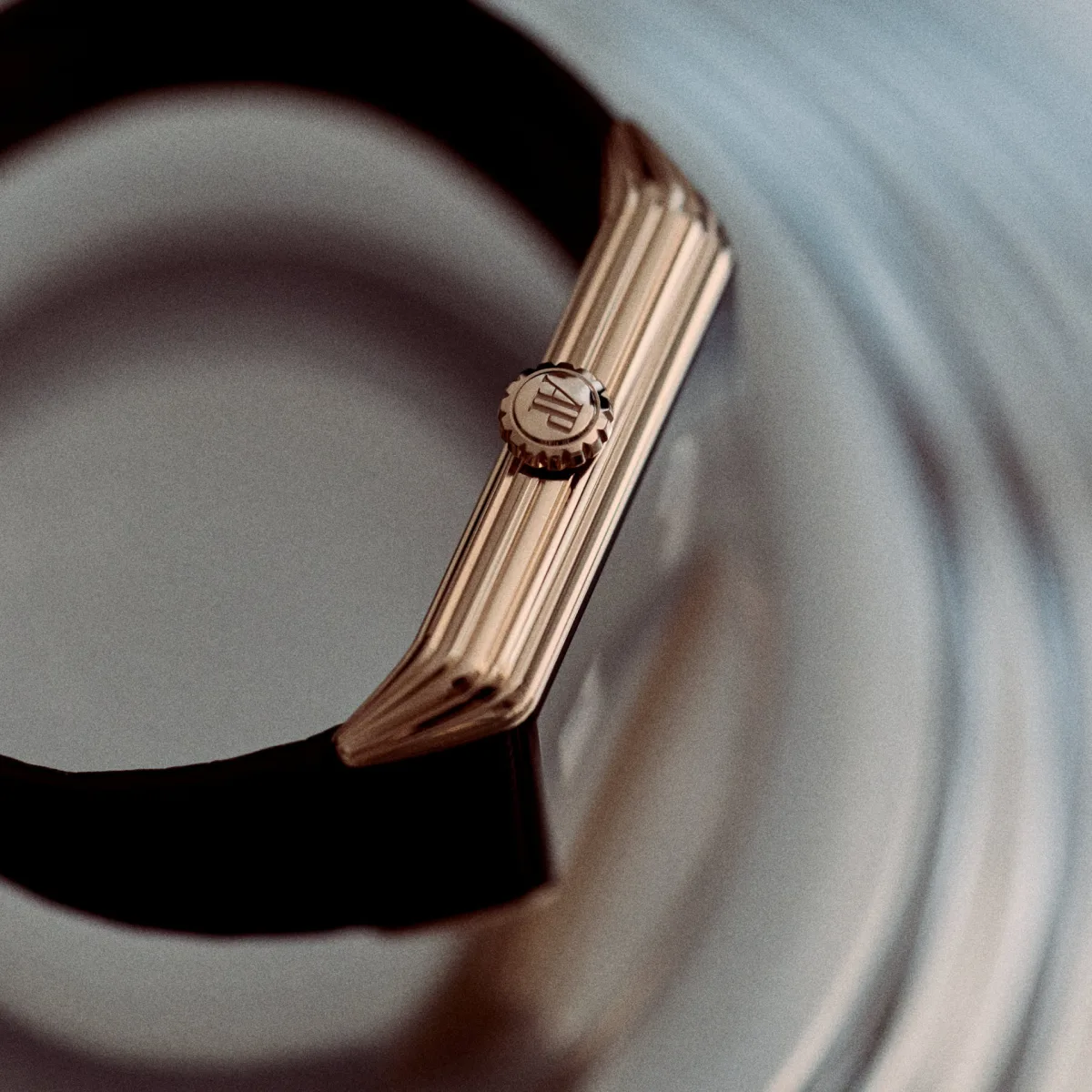
At 47.1 mm long, the case is 34 mm wide and has a reasonable thickness of 8.8 mm. It is crafted from 18K pink gold. The ridged elements on the sides transition into long lines that taper to pointed lugs. The design, executed with a CNC machine, is repeated on the case back, crown, and rotor.
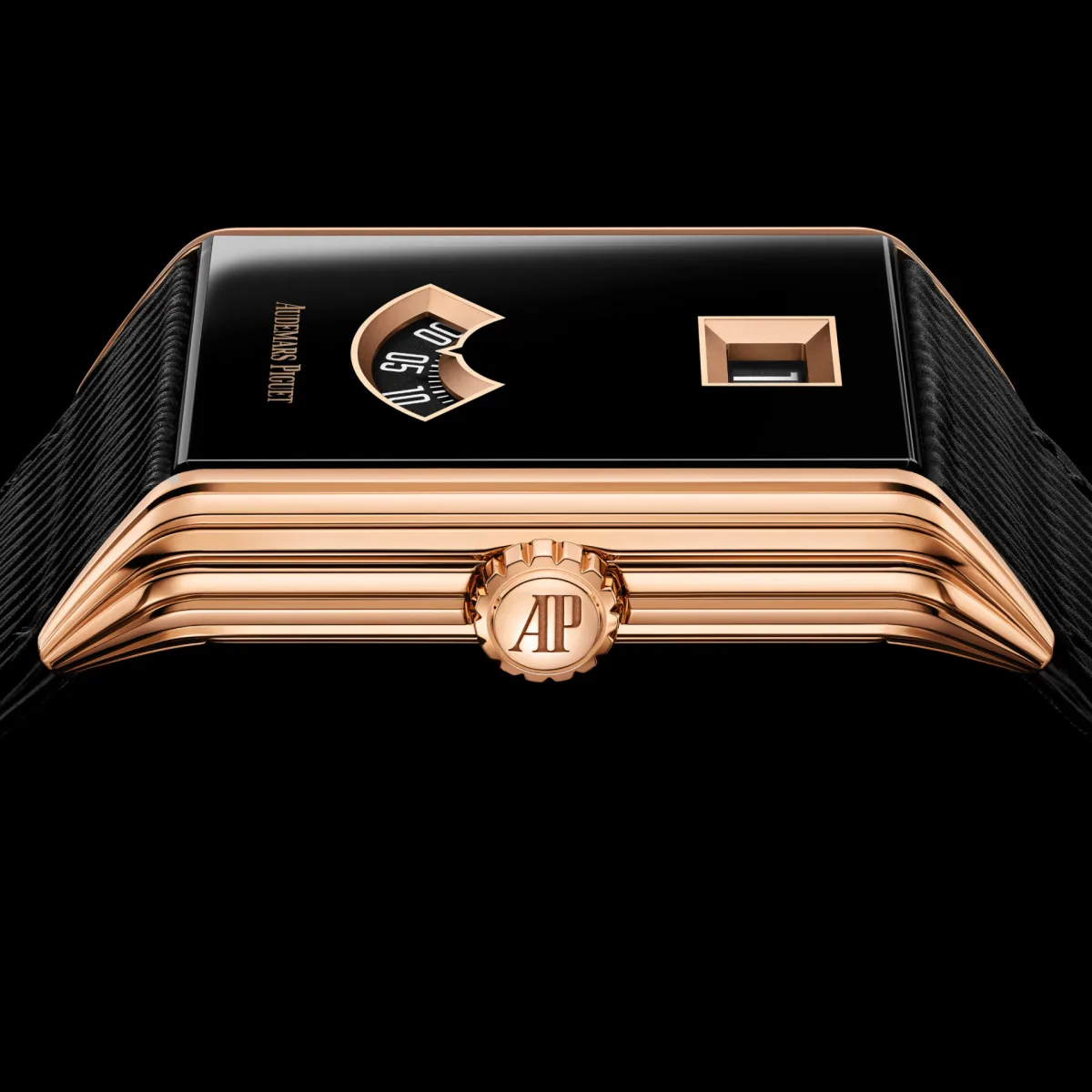
Originally, dials of jumping hour models were made from metal - gold or platinum. For this model, the dial is made of sapphire with a black PVD coating. Notably, the sapphire glass is open at the '6' and '12 o'clock markers. To ensure minimal water resistance, the dial plate is glued to the sapphire glass and then screwed to the case - a technology specially developed for this model.
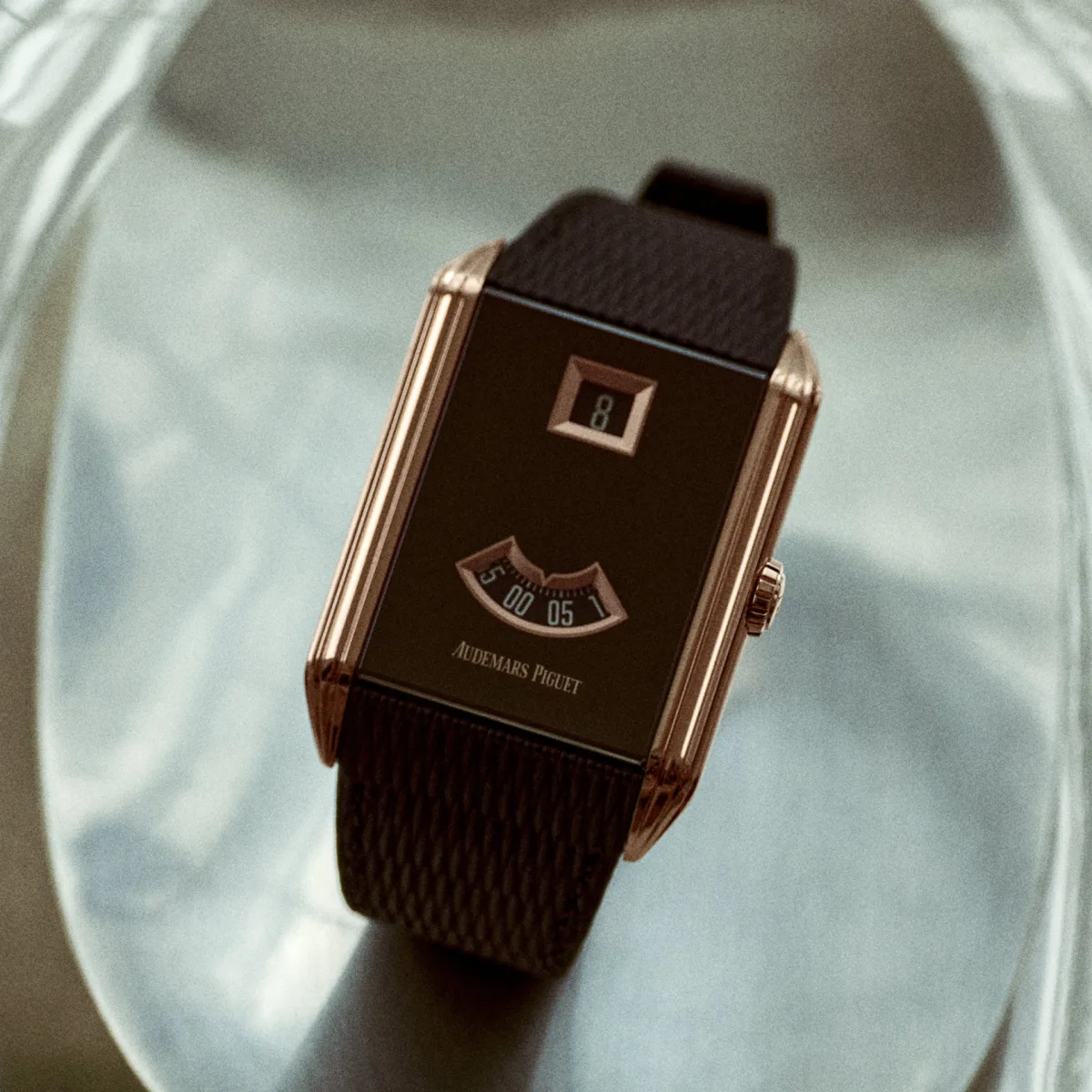
Despite its features, the watch maintains a traditional look. The dial presents two matte windows in gold frames that display the hours and minutes. White printed numbers on matte black discs and the completely black background of the sapphire glass create the illusion that the titanium hour and aluminum minute discs are under the dial.
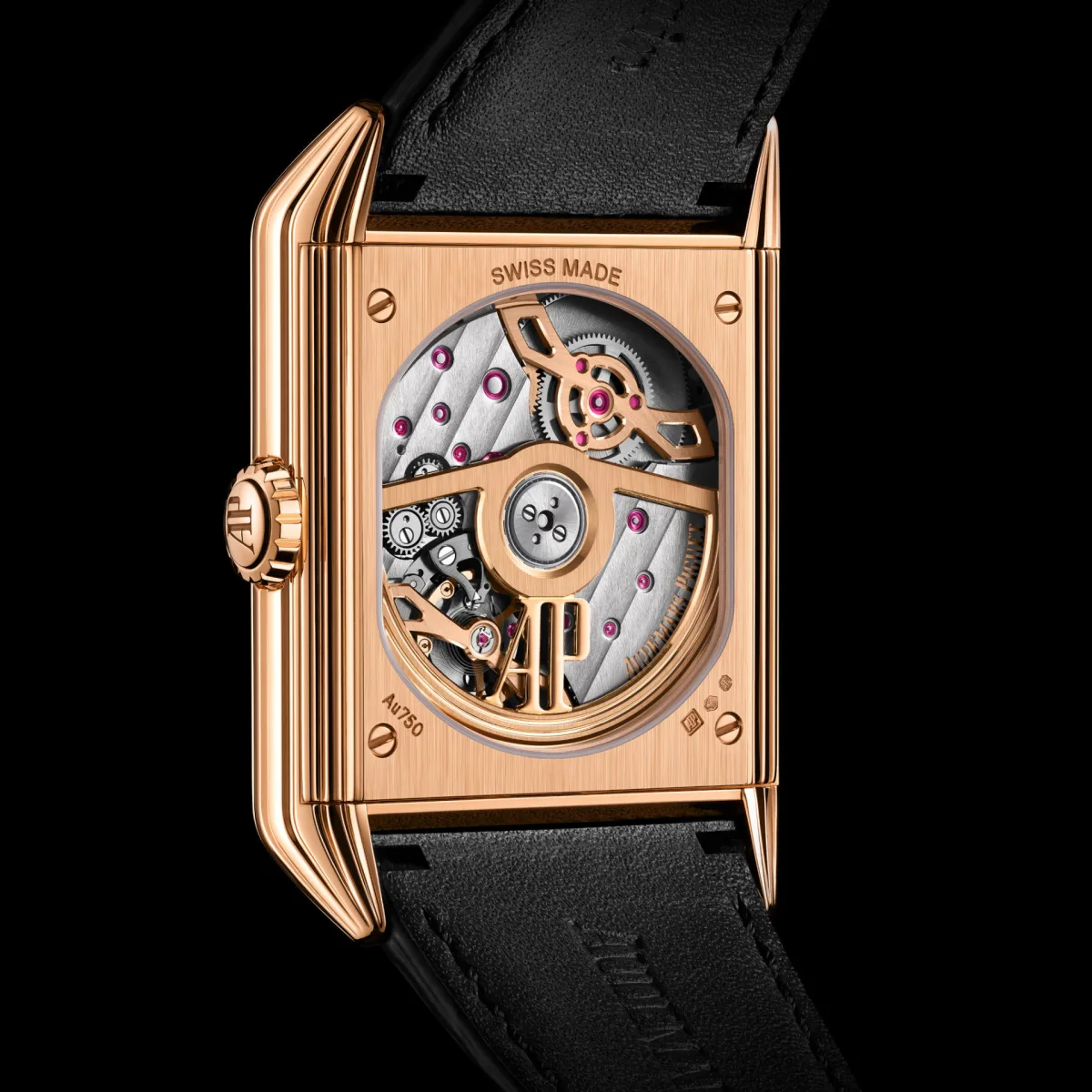
Under the sapphire case back is the relatively new caliber 7122, based on the 7121 caliber introduced in 2022. The movement operates at a balance frequency of 4 Hz, is wound by a solid gold rotor, and provides a 52-hour power reserve. This is nearly the same 55 hours as the 7121 caliber, despite the jumping hour indication requiring a large amount of energy. A key feature of the mechanism is the patented shock-absorbing system that mechanically prevents the hour jumps in case of impact.
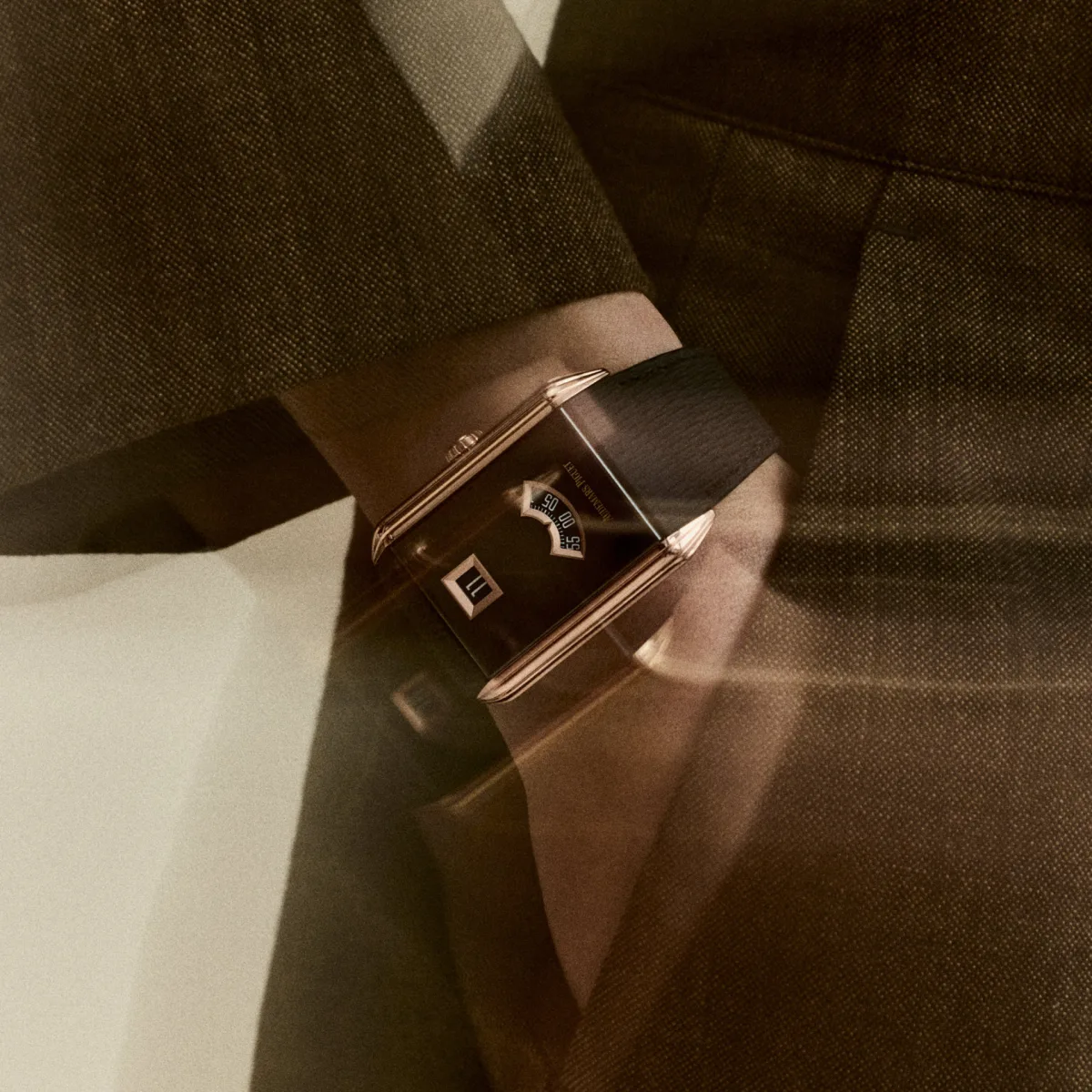
The finishing touch to the model is a black calfskin strap with a textured pattern. It is smoothly integrated between the lugs, creating the impression that the dial and strap are a single entity. The watch is released as part of the permanent collection. The approximate cost of the model is €64,900 or $71,200.