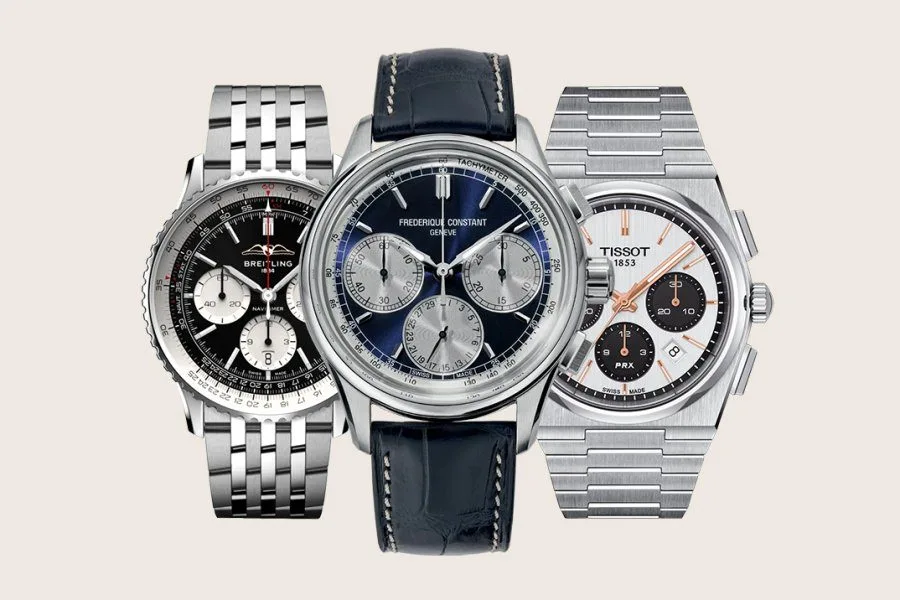
Collectors and everyday watch owners can find an almost limitless array of watch complications: from a simple date to romantic moon phases and the complex perpetual calendar.
Yet none have the allure and popularity of the chronograph. Chronograph watches have enjoyed consistent popularity throughout much of the past century, with some chronograph models remaining among the most sought after on the market today. But which chronograph watches are the best?
In this guide, we explore some of the best chronographs available today. Our list spans a wide range of chronographs - from quartz watches costing up to $100 to high horology pieces in precious metals for $200,000 and everything in between. You'll see offerings from renowned brands like Rolex, Omega, and Breitling, and perhaps discover a few new names. Yet all these watches share one thing: they are all fantastic examples of one of the most useful watch complications. So, look below to find out which are the best chronograph watches you can buy.
Best Chronograph Watches
What is a Chronograph?
First and foremost, it's important to explain what a chronograph is. Simply put, it's a stopwatch built into your watch. Most chronographs have two buttons - one to start and stop the timer, the other to reset it - and additional sub-dials/registers for tracking elapsed minutes and often hours. When you press the 'start' button, the chronograph second hand tracks seconds up to a minute. At that point, the minute register marks that minute, and the second hand continues to track time until the minute and hour registers are filled. So why do you need such a feature?
Well, for several reasons. Firstly, chronographs are very useful. Whether you're doing laundry, cooking, or timing rest intervals during a workout - you'll be surprised how often you need to time something. Secondly, and this can't really be put elegantly, chronographs are just cool. They have been historically widely used in motorsports, aviation, and even in space exploration, and many celebrities, like the 'kings of cool' Paul Newman and Steve McQueen, are remembered for their signature chronograph watches. So isn't it time you got one too?
A Brief History of the Chronograph
Emerging in the early 19th century as pocket watches, the chronograph has seen significant changes over the years. It is believed that the chronograph was invented by Louis Moinet in 1816, but a few years later, Nicolas Mathieu Rieussec created a version of this complication so that King Louis XVIII could time horse races. However, it was not until 1913 that Longines released the first wrist chronograph, the 13.33Z. The initial examples were monopushers, but in 1923, Breitling released a design with two separate pushers, changing the standards for chronograph operation.
Several watch companies around the world (but mostly in Switzerland and Japan) released automatic versions of the chronograph around the same time in 1969. Since then, these watches have become very popular among racers, astronauts, and more.
How to Use a Chronograph
Once you get used to using a chronograph, you'll find it quite simple and intuitive. In a two-button chronograph, the upper button is pressed to start and stop timing, while the lower button resets all registers.
Chronograph Movements
The watch movement is essentially the engine. It makes the watch work, keeps track of time, and in this case, controls the chronograph. Here are four types you'll see in this list.
- Quartz: The most affordable type of movement is quartz. Quartz movements are battery-powered, driving an oscillating electronic circuit regulated by a quartz crystal. They require little maintenance, are cheap to buy and repair, yet more accurate than most mechanical watches. But despite their accuracy and convenience, quartz movements are less popular among watch enthusiasts due to the lack of craftsmanship and build quality, as well as less tangible factors like the history and romance of mechanical watches.
- Meca-Quartz: A relatively new type of movement that has gained popularity in recent years is the so-called 'hybrid' movements. They use a standard quartz movement to keep time but incorporate a mechanical chronograph module. This gives the chronograph second hand a mechanical sweep absent in most (but not all) quartz chronographs, as well as more tactile feel from the buttons and at least some sense of having a real geared mechanism on your wrist. They are produced by an increasing number of manufacturers, but most quartz watches on the market use Seiko's VK line of movements.
- Manual Wind: One of the two types of mechanical movements, manual or hand-wound movements need to be wound to keep them running. Turning the crown of a manual wind watch winds the mainspring, which sends energy through a series of gears to the escapement, oscillating at a set frequency to slowly release energy and keep time constant. Once the energy runs out, the watch stops, so manual wind watches need to be wound regularly - usually every couple of days, depending on the movement's power reserve.
- Automatic: The other type of mechanical watch movement is automatic. It operates exactly like a manual wind movement but with one key difference. On the back of the movement, there is a weighted rotor that can also wind the mainspring. The rotor spins easily as the watch moves, so as long as you're wearing your automatic watch, it won't stop running. Like manual wind movements, automatic watches also have a power reserve that allows them to run for a few days without winding.
Types of Chronographs
- Simple: The most basic chronograph you most often encounter is the simple chronograph. This is a chronograph with two buttons, usually located at the two o'clock and four o'clock positions. The upper button typically activates the chronograph with a single press and stops it with another press while running. Pressing the lower button resets the chronograph as well as any registers that tracked it.
- Monopusher: A fairly rare type of chronograph is the monopusher. These mechanisms use a single button, sometimes even located within the crown. It starts, stops, and resets the chronograph, providing an uncluttered and less busy chronograph design.
- Flyback: Another rare type of chronograph is the flyback. In regular chronographs, pressing the reset button while the chronograph is running either does nothing or damages the mechanism. But in a flyback chronograph, pressing the reset button while the chronograph is running causes the second hand to 'fly' back to zero and instantly start timing again. This complication is useful for timing successive intervals, such as laps on a race track.
- Split-chronograph: The most complex and rare type of chronograph is the rattrapante, or split-chronograph. This type of mechanism houses two chronograph second hands stacked on top of each other. While the chronograph is running, pressing a button (its location depends on the model) causes one of these second hands to 'split' to mark the time you wanted to record. Meanwhile, the other second hand continues its path, tracking elapsed time. When you're done, press the button again, and the second hand instantly catches up with its twin and continues its discrete timing until you engage it again.
Omega Speedmaster Moonwatch Professional
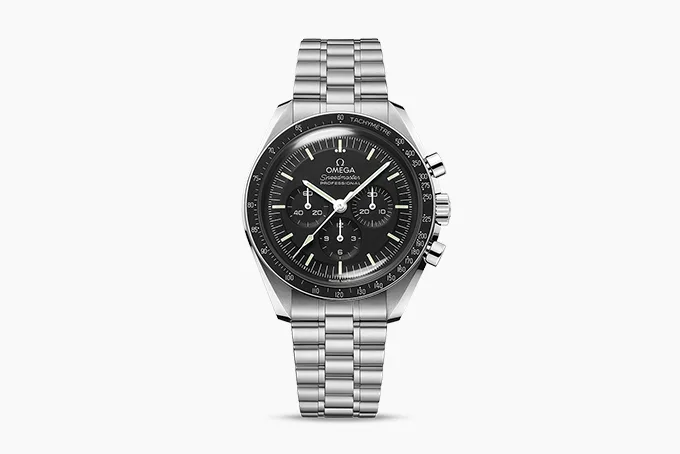
Omega's Speedmaster is a paradigm in the chronograph category and a superb watch for any occasion.
Best Chronograph: When you hear the word 'chronograph,' there's a good chance this is the watch you envision. The Speedy is the most legendary chronograph in the world, if not the most legendary watch overall, largely thanks to being worn on the Moon during the first Apollo 11 mission. But that's far from all it boasts. The Speedy is produced by Omega, one of the most prestigious watch companies in the world. It has a simple and versatile design that pairs literally with anything. And the new model features an all-new movement that has passed Omega's stringent METAS Master Chronometer certification.
- Case Size: 42mm
- Movement: Manual Wind
- Chronograph Type: Simple
TAG Heuer Carrera
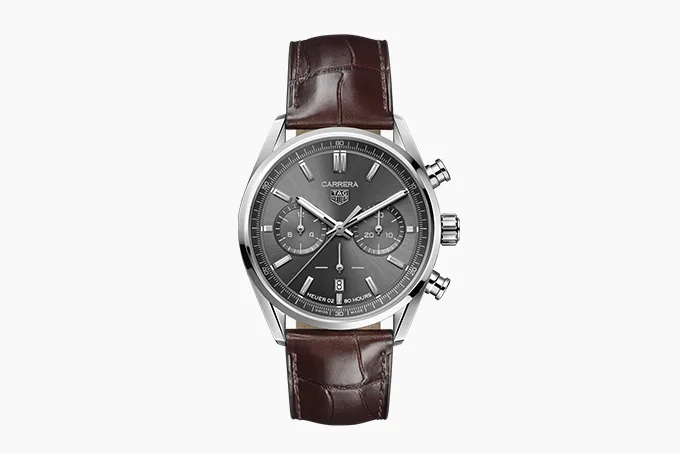
TAG's legendary Carreras are arguably the most important watches in motorsport history.
Runner-Up: Few companies can boast as many iconic chronograph models as TAG Heuer: Monaco, Autavia, and Carrera - all solidified vintage Heuer's status in 1960s-1970s motorsport culture. But the Carrera stands above the rest as the most versatile and arguably the most attractive of all the models. In many ways, it is the prototype racing chronograph with its piston-style pushers, tri-compax layout, and stick hands, and it's guaranteed to always look good - no matter what you're behind the wheel of at the moment.
- Case Size: 42mm
- Movement: Automatic
- Chronograph Type: Simple
Seagull 1963
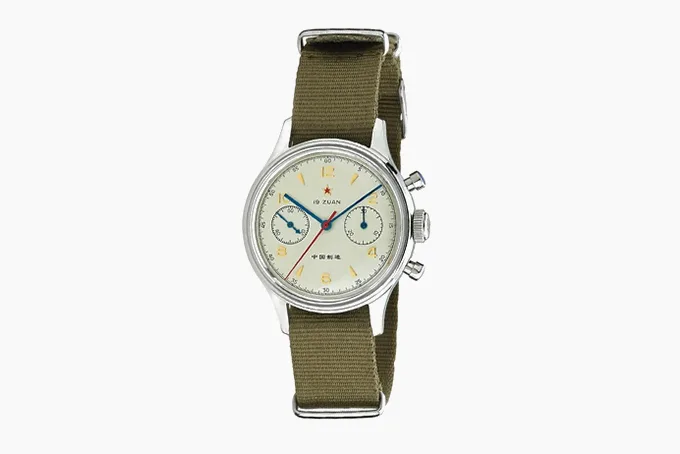
The mechanical Seagull chronograph is one of the few mechanical watches in this price range, stylish and vintage-inspired.
Best Budget Chronograph: One of the downsides of mechanical chronographs is they tend to be very expensive, typically starting at $2,000. An exception is the Chinese manual wind ST19 movement - an aesthetically pleasing column wheel chronograph that is effectively a clone of the Swiss Venus 175 movement from the 1940s. Seagull, the manufacturer of the ST19, has a reputation for keeping the best samples of the movement for its own line of watches. That's what you get in the Seagull 1963 model, along with a vintage-inspired look influenced by the ST19 watches worn by mid-century Chinese pilots.
- Case Size: 38mm
- Movement: Manual Wind
- Chronograph Type: Simple
Seiko Prospex Speedtimer Solar Chronograph
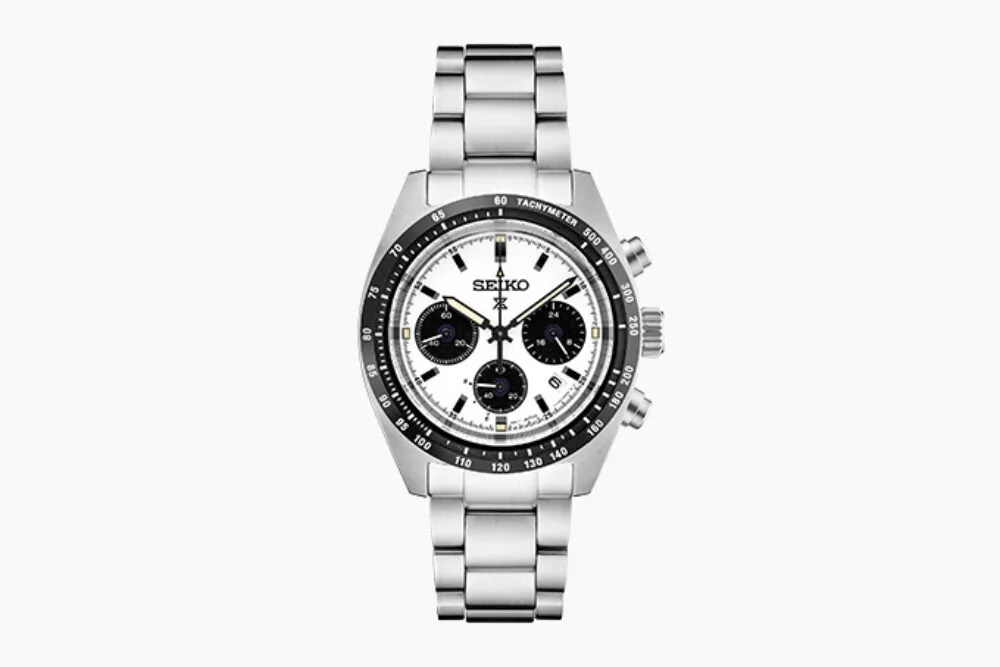
This version of Seiko's Prospex Speedtimer is a solar iteration of some of the brand's most iconic watches.
Best Solar Chronograph: There are many solar chronographs in the watch world, though not as many as during the heyday of quartz watches. Seiko has created one of the best solar chronographs and has equipped it with a three-register chronograph complication. These Prospex Speedtimer watches, inspired by the brand's first chronographs of the 1960s, feature a classic panda dial and boast a 6-month power reserve when fully charged. Equipped with a steel bracelet, the 39mm solar watches are water-resistant to 100m and even have a unique 24-hour sub-dial as one of the registers.
- Case Size: 39mm
- Movement: Solar
- Chronograph Type: Simple
Yema Rallygraf
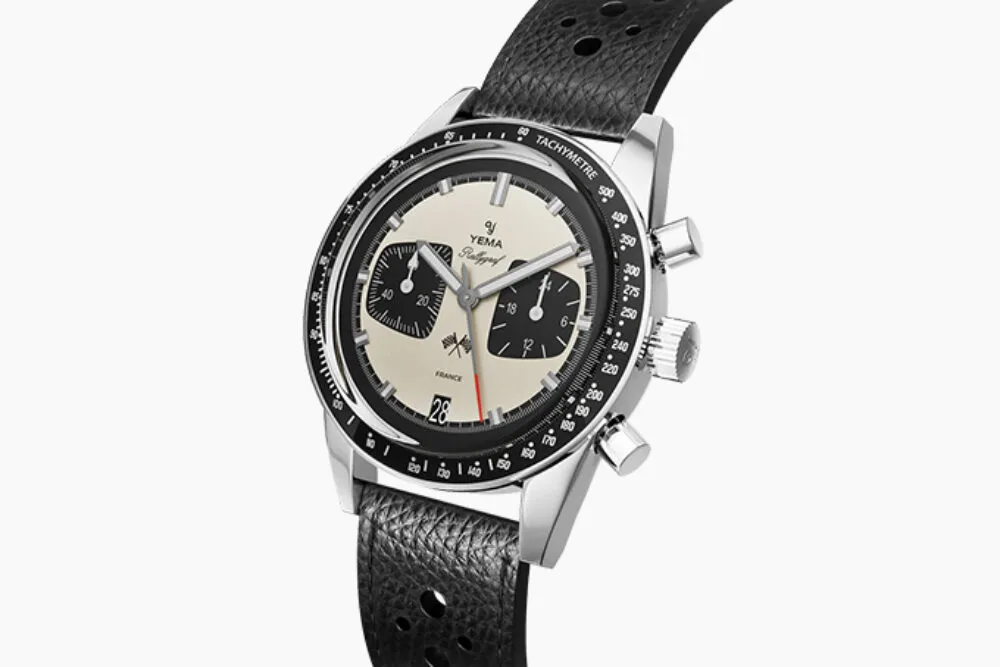
Few brands make moto-style chronographs like Yema, whose Rallygraf watches resemble vintage racing watches.
Best Racing Chronograph: Mario Andretti is considered one of the greatest racers of all time. He's the only person to have won the Daytona 500, the Formula One World Championship, and the Indy 500. And when Andretti won the latter in 1969, he did it with a Yema Rallye watch on his wrist. The modern Yema model is a contemporary reimagining of those watches, using quartz technology, featuring outstanding vintage motorsport-inspired style, and - unlike the near-unlimited number of microbrands with retro racing chronographs on the market - real automotive heritage.
- Case Size: 39mm
- Movement: Meca-Quartz
- Chronograph Type: Simple
Citizen Promaster Tsuno Chronograph Racer
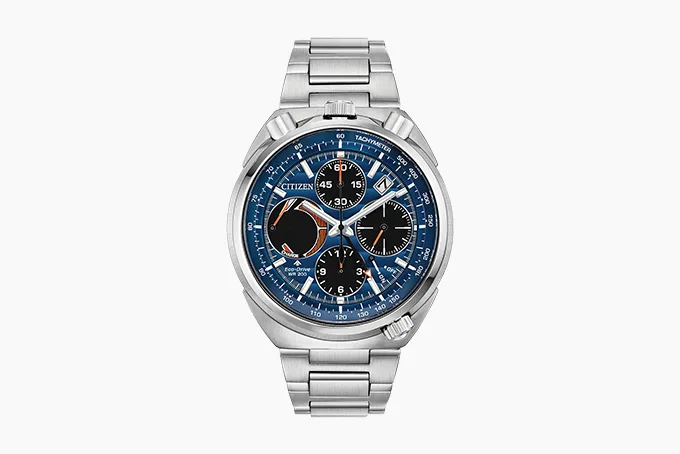
Citizen's Bullhead model is a long-time favorite, now with a solar-powered Eco-Drive quartz movement and an alarm function.
Best Bullhead Chronograph: A long-time favorite among vintage watch collectors, Citizen's 'Bullhead' chronographs of the 1970s were named so because their two pushers were positioned at the top of the case, rather than the side, resembling horns. This modern reimagining of the Bullhead by Citizen, though no longer equipped with an automatic movement like the original, features a hand-assembled solar-powered Eco-Drive quartz movement, still equipped with a smoothly sweeping chronograph hand, as well as an alarm and a convenient power reserve indicator.
- Case Size: 45mm
- Movement: Quartz
- Chronograph Type: Simple
Farer Bernina Titanium
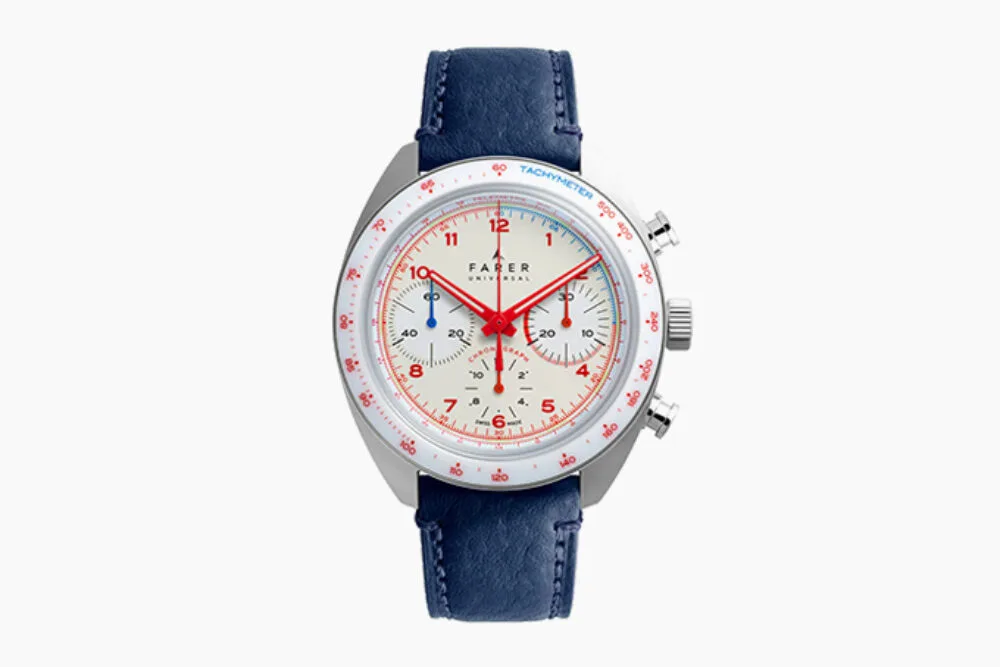
Farer's mastery of color is on full display with these Bernina titanium watches, also perfect for summer.
Best Titanium Chronograph: When Farer designs a watch, you can be sure it won't look like anything else on the market. The brand has quickly become known for its creative use of color, and the hand-wound Bernina chronograph is perhaps the best expression of Farer's design ethos. The cream dial and white ceramic bezel, combined with red and blue hands and accents - Bernina sounds odd but looks stunning and truly stands out in a crowd. The watch is crafted from a Grade 2 titanium case and serves as the official timing instrument for the Bernina Gran Turismo races, linking motorsport with what is quickly becoming a modern classic.
- Case Size: 41mm
- Movement: Manual Wind
- Chronograph Type: Simple
Frederique Constant Flyback Chronograph
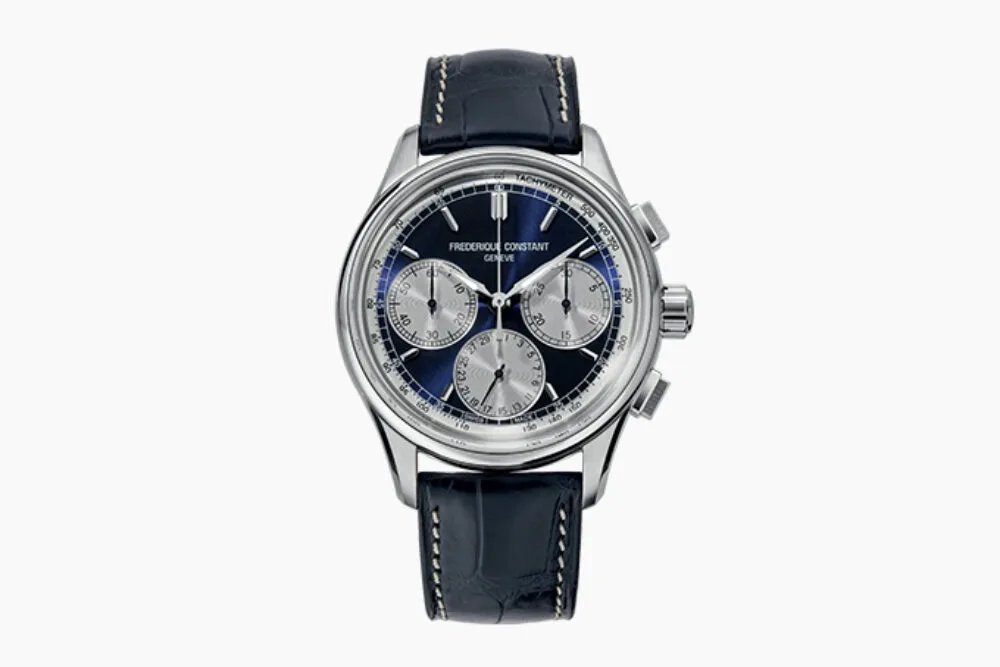
FC's signature flyback is not only beautiful but also relatively affordable compared to its contemporaries.
Best Flyback Chronograph: Flyback chronographs traditionally belong to the realm of high horology and are often found in watches that cost five or six figures. But Frederique Constant has a habit of creating complex movements at insanely low prices (comparatively), and that's what we have here. Equipped with the in-house FC-760 Caliber, these watches are likely the most affordable flyback chronograph on the market. Additionally, they feature exquisite finishing and a Patek-style aesthetic, while the stunning midnight blue dial provides seemingly endless depth.
- Case Size: 42mm
- Movement: Automatic
- Chronograph Type: Flyback
Tudor Black Bay Chrono
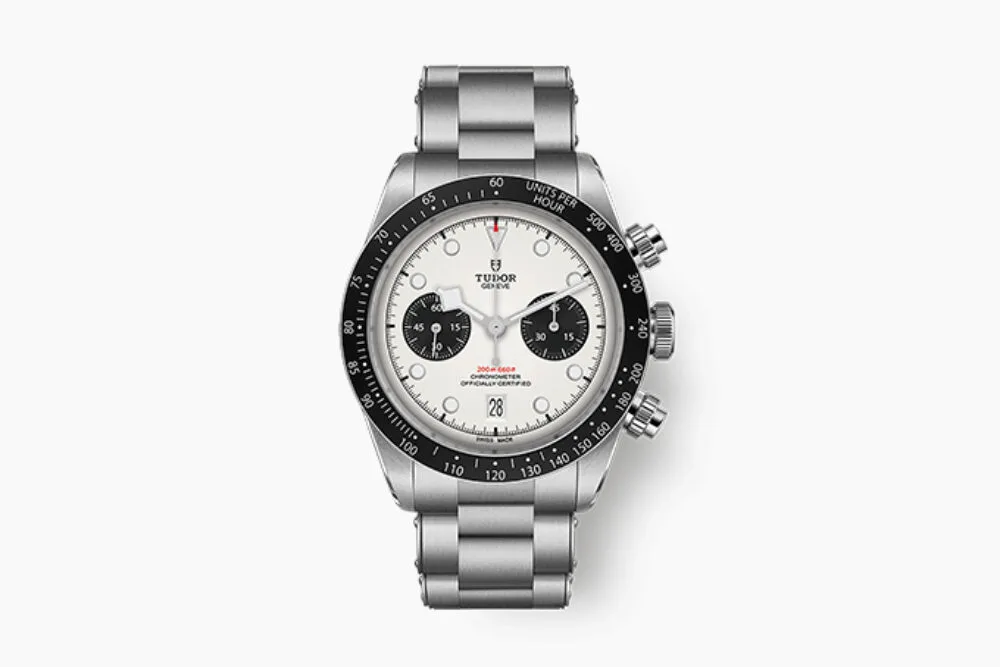
The diver model Black Bay from Tudor is iconic in itself, now fitted with a bicompax layout and 200m water resistance.
Best Diving Chronograph: Tudor is Rolex's rebellious younger sibling, allowing it to dress in all sorts of crazy things that its staid sibling would never dream of. Case in point is the sporty version of the Black Bay chronograph with a panda dial, one of the world's most iconic divers. This model can dive to a depth of 200 meters, which is quite rare for any chronograph. Besides its diving potential, the watch is executed in classic chronograph style with a bicompax display, tachymeter bezel, and 41mm steel case.
- Case Size: 41mm
- Movement: Automatic
- Chronograph Type: Simple
Montblanc 1858 Monopusher Chronograph
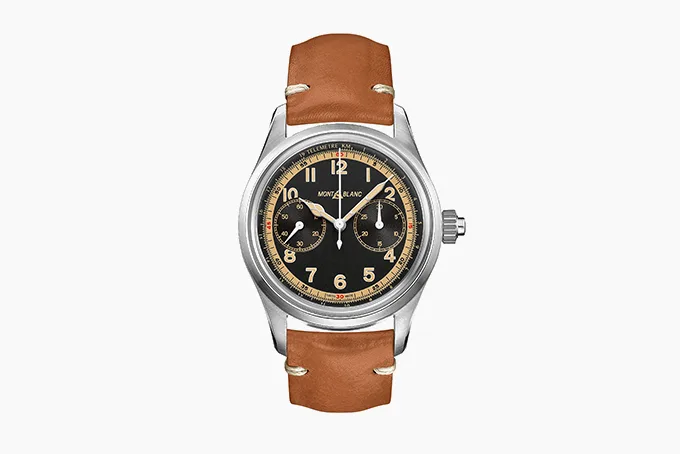
Monopusher chronographs are not common, but Montblanc's 1858 model wins with its vintage style and unique color scheme.
Best Monopusher: While Montblanc has been making luxury goods for 115 years, it has been producing watches for just over 20. But in that time, they've quickly figured out what's what, as evidenced by this impressive example. The company develops its own movements through its Minerva subsidiary, and this watch, inspired by Minerva's early 20th-century exploration offerings, features an exclusive Montblanc monopusher movement, delivering a chronograph unencumbered by a restrained vintage style.
- Case Size: 42mm
- Movement: Automatic
- Chronograph Type: Monopusher
IWC Portugieser Chronograph
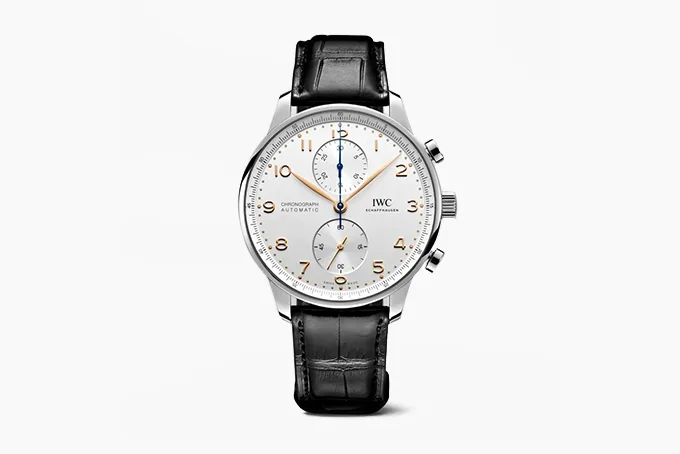
IWC proves chronographs can be used as dress watches with this Portugieser, a minimalist beauty inspired by 1930s marine watches.
Best Dress Chronograph: As one of the leading Swiss luxury watchmakers, IWC produces a range of recognizable and coveted models. But the Portugieser is perhaps the most recognizable line, with a design inspired by the 1930s marine theme that has undergone little change in nearly a century. The chronograph version features two registers in a unique and recognizable 12/6 layout, giving the spacious dial a pleasing symmetry. Everything about this watch screams 'stylish,' and it looks equally good with a suit or on open water.
- Case Size: 41mm
- Movement: Automatic
- Chronograph Type: Simple
Breitling B01 Navitimer
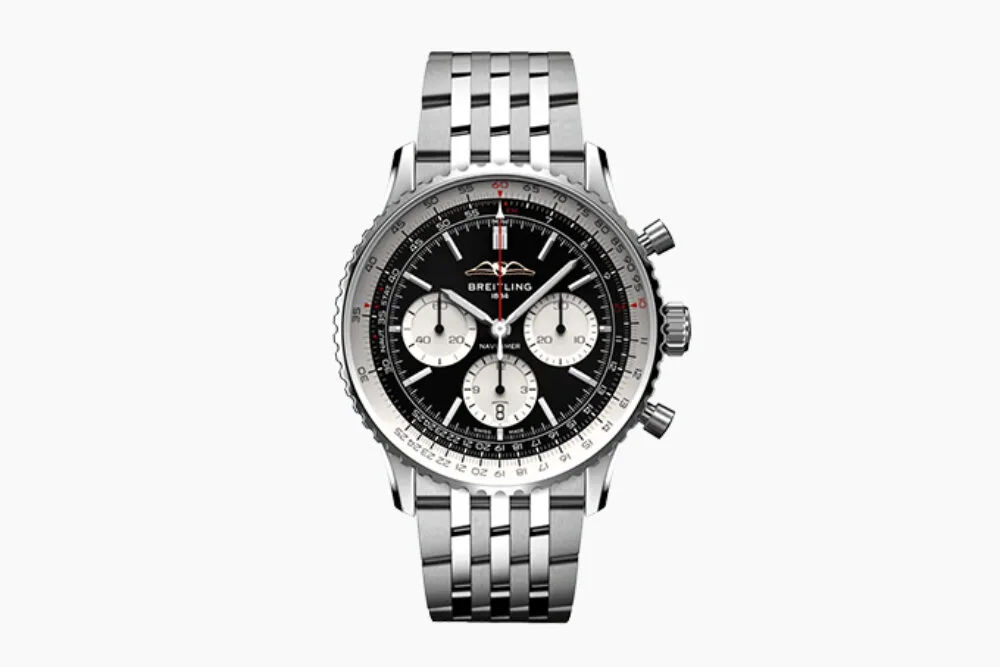
Breitling's B01 Navitimer is an aviation shout with its lively dial, toothed bezel, and classic color scheme.
Best Pilot's Chronograph: If you love pilot's chronographs, this specimen is a perfect fit. The Navitimer debuted in 1953 and has been recognized as the pilot's chronograph ever since. Everything about the Navitimer - its tri-register layout, signature lively dial, and toothed bezel with a logarithmic scale - suggests it should be worn at 30,000 feet with sunglasses and a leather flight jacket. But down at sea level, the Navitimer never loses its appeal and also has a reputation as one of the most reliable and iconic sports watches in the world.
- Case Size: 43mm
- Movement: Automatic
- Chronograph Type: Simple
Zenith Defy El Primero 21
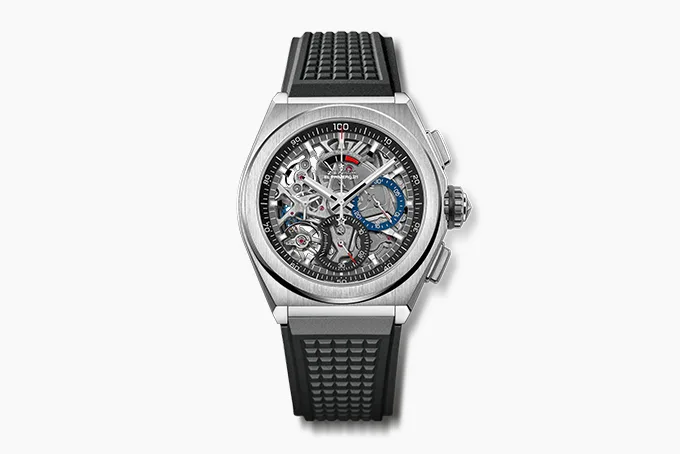
Zenith always strives for skeleton aesthetics, as in the Defy El Primero model, with its unusual register configuration and elegant case.
Best Skeletonized Chronograph: Depending on whom you ask, Zenith may or may not be the inventor of the automatic chronograph with the original El Primero movement in 1969 (there's some debate about which competing company's movement was actually first). But today, there's hardly any dispute about who makes the best automatic chronographs. This ultra-modern Defy model houses the latest version of the revered El Primero, the El Primero 21, with a chronograph capable of tracking time to an astounding 1/100th of a second. You might never need to use it, but you'll be very glad you have it.
- Case Size: 44mm
- Movement: Automatic
- Chronograph Type: Simple (with 1/100 second counter)
Rolex Cosmograph Daytona
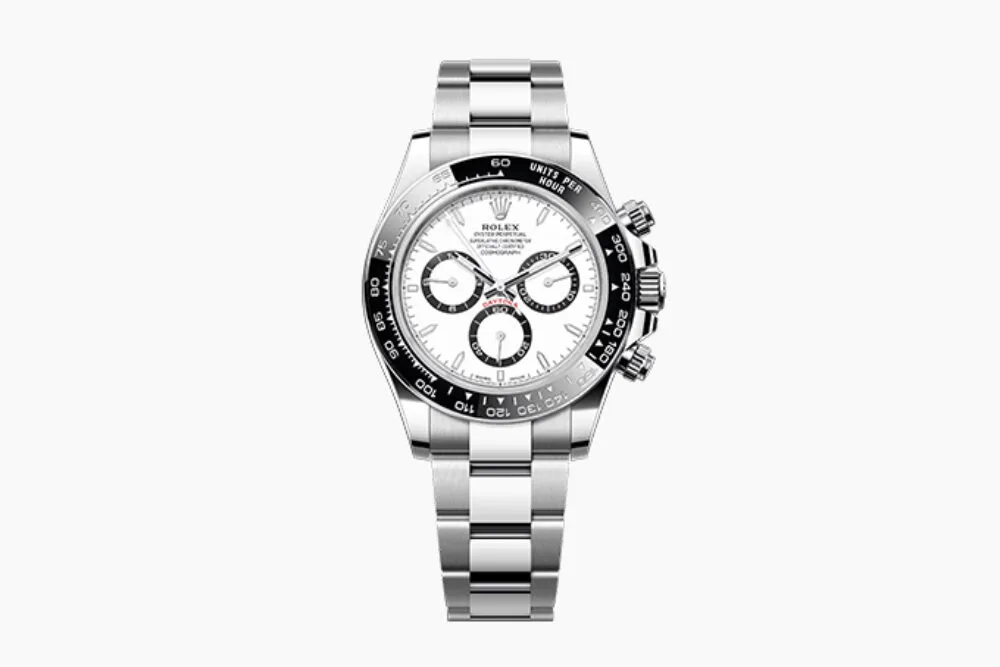
No list of chronographs would be complete without the Rolex Daytona - a legendary racing model with serious luxury credentials.
Best High-End Chronograph: After the Speedmaster, this is perhaps the most iconic chronograph in the world. From its legendary association with Paul Newman to its current exclusivity, the Daytona tops Rolex's famous lineup. It wasn't always this way, but the world has finally come around to this modestly sized and very handsome racing chronograph, appreciating its thick engraved ceramic bezel with tachymeter, unique sub-dials, and the perfect curved red 'DAYTONA' text above the active second counter. It's exalted.
- Case Size: 40mm
- Movement: Automatic
- Chronograph Type: Simple
A. Lange & Söhne Triple Split
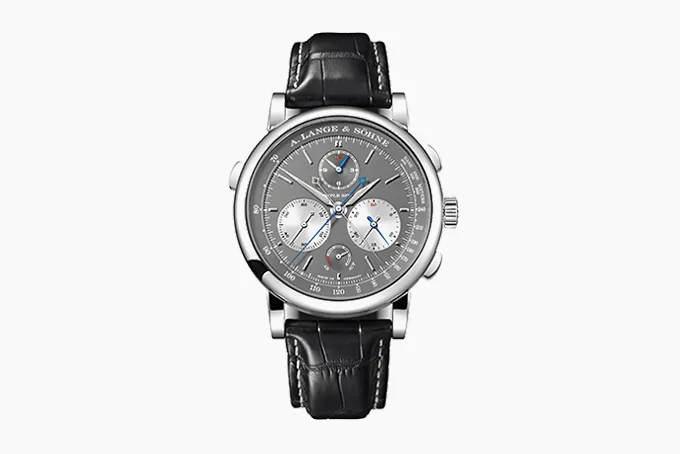
Lange's innovative Triple Split chronograph is the only triple-rattrapante chronograph in the world, allowing you to split seconds, minutes, and hours for timing multiple events.
Best Rattrapante Chronograph: Many consider Lange the greatest mechanical movement manufacturer on the planet, and it's hard to argue with them. The German watch company simply operates on another level, as evidenced by this remarkable watch. The Triple Split is the only triple-rattrapante chronograph in the world. This means you can not only split the chronograph second hands for timing multiple events but also split the chronograph's minute and hour hands. Essentially, it's three split-second chronograph modules working within one movement, which is, in a word, just ridiculous.
- Case Size: 43.2mm
- Movement: Manual Wind
- Chronograph Type: Triple-Rattrapante Flyback
Patek Philippe Perpetual Calendar Chronograph 5270P
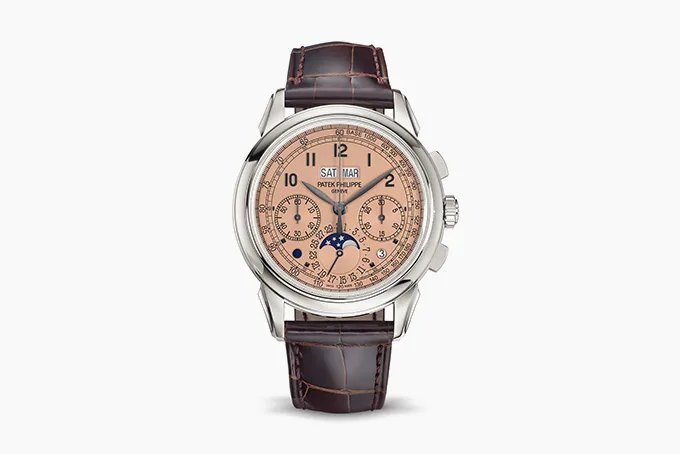
The Patek chronograph, worthy of 'Grail' status, features a refined salmon dial, platinum case, and a perpetual calendar function.
Best Manual Wind Chronograph: Since its inception in the 1940s, Patek's perpetual calendar chronograph line has been regarded as the pinnacle of watchmaking art. Combining two of the 'big three' complications in one watch remains an extremely challenging task even eight decades later, so few watch companies offer them today. The latest iteration of Patek's most legendary line is the 5270, which is particularly tantalizing in the 5270P execution with a platinum case, refined salmon dial, and blackened gold indices. If you have $200,000 to spend on a watch, you can get the very best.
- Case Size: 41mm
- Movement: Manual Wind
- Chronograph Type: Simple (with perpetual calendar)
The Best of the Best
Here are a few more quality chronographs
Tissot PRX Automatic Chronograph
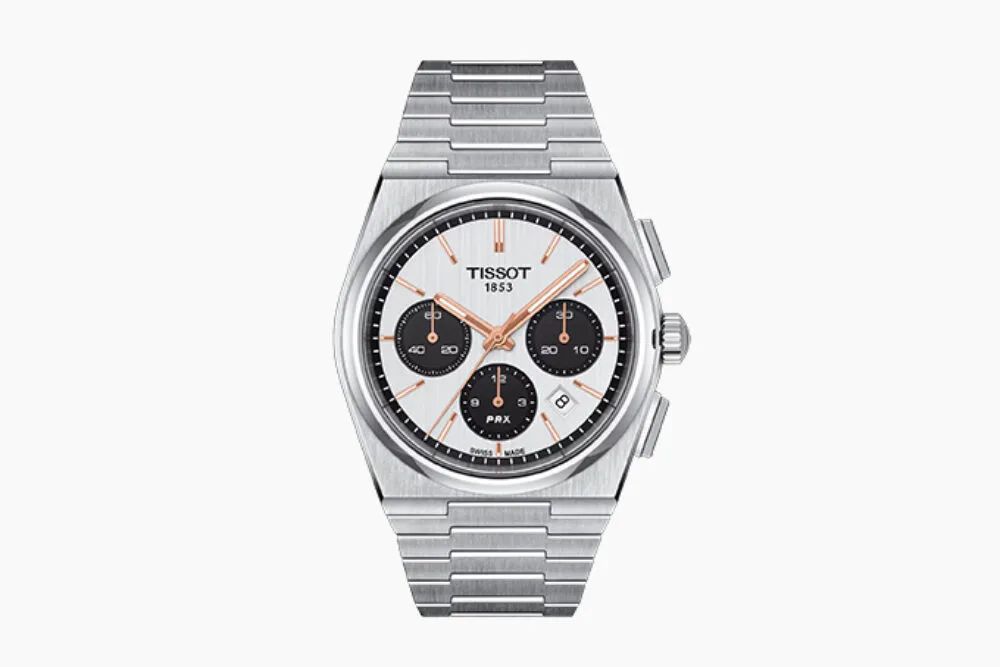
No list of chronographs can be complete without the Tissot PRX Automatic, which was reissued in 2021 based on the original 1978 quartz version. Ultimately, the PRX received a chronograph complication, characterized by a tonneau-shaped case and single-link bracelet. Behind the open case back lies the Swiss Valjoux A05 H31 movement, which powers a three-register chronograph with a classic panda-style black and white dial. It's housed in a 42mm stainless steel case with integrated lugs. These watches might not deserve a higher spot, but it's a classic chronograph under $2,000 that far exceeds its price.
- Case Size: 42mm
- Movement: Automatic
- Chronograph Type: Simple
Longines Avigation Bigeye
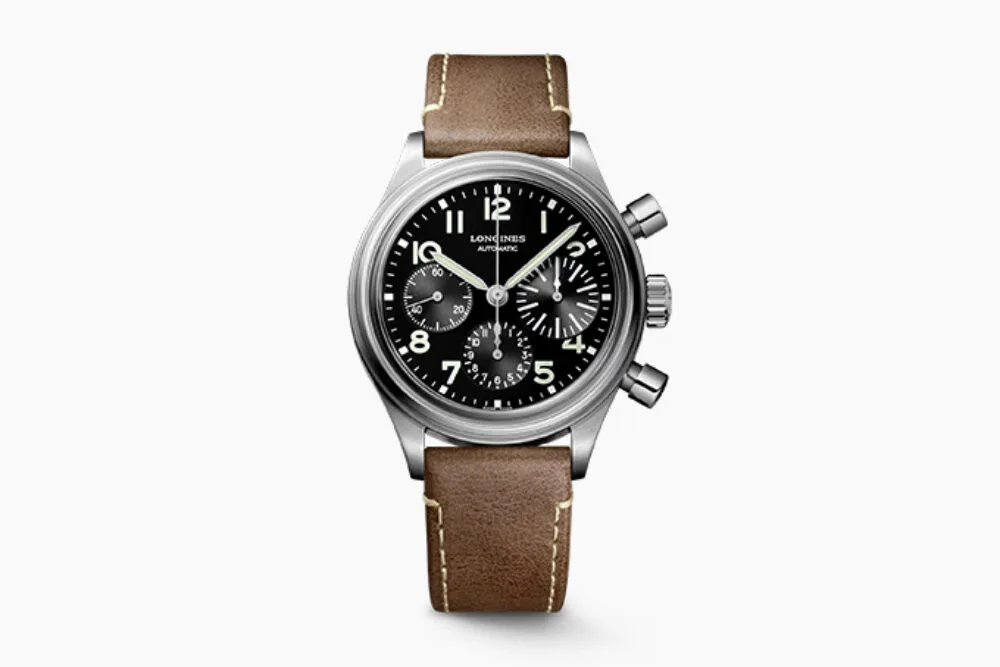
Longines' aviation history is reflected in the Avigation Bigeye model - a vintage-style pilot's chronograph with straightforward aesthetics. The watches with a black dial and matching registers come with a leather strap, but it can be swapped for a NATO strap. Housed in a 41mm stainless steel case, they're equipped with an automatic L688 movement with a 66-hour power reserve. If you like models reminiscent of aviation's heyday, try this one.
- Case Size: 41mm
- Movement: Automatic
- Chronograph Type: Simple
Hamilton Intra-Matic Chronograph H
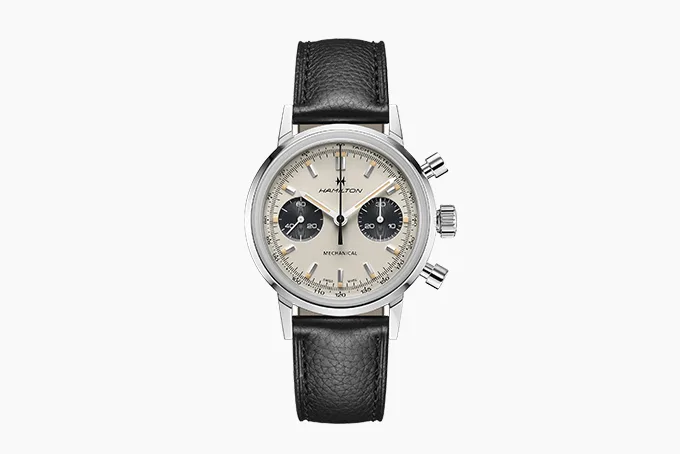
The automatic version of the Intra-Matic Chronograph was already arguably the best chronograph available in the $2K price range, and now Hamilton has sweetened the pot by equipping the watch with the new exclusive manual wind Cailber H-51 movement, boasting an increased 60-hour power reserve. The watch retains the look inspired by Hamilton's 1968 A & B chronographs but adds a few stylistic tweaks, including a heavily domed sapphire crystal that adds extra vintage charm.
- Case Size: 40mm
- Movement: Manual Wind
- Chronograph Type: Simple
Sinn 103
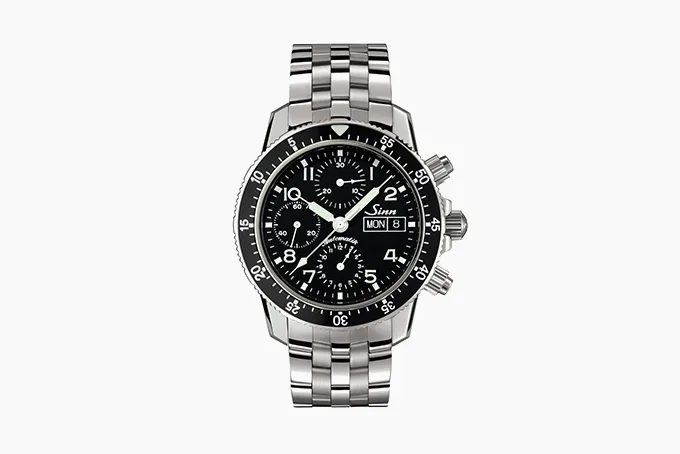
The German watch company Sinn does virtually one thing: it produces extremely functional and high-quality tool watches. The 103 pilot's chronograph is one of the brand's most iconic models, with its classic black and white design, retro syringe-style hands, and timelessness. Inside, there's an automatic movement based on the well-established and reliable Valjoux 7750 with the brand's signature left-hand register layout. Additionally, Sinn often adds elements to the chronograph formula such as a date complication, a 60-minute bezel, and 200m water resistance.
- Case Size: 41mm
- Movement: Automatic
- Chronograph Type: Simple