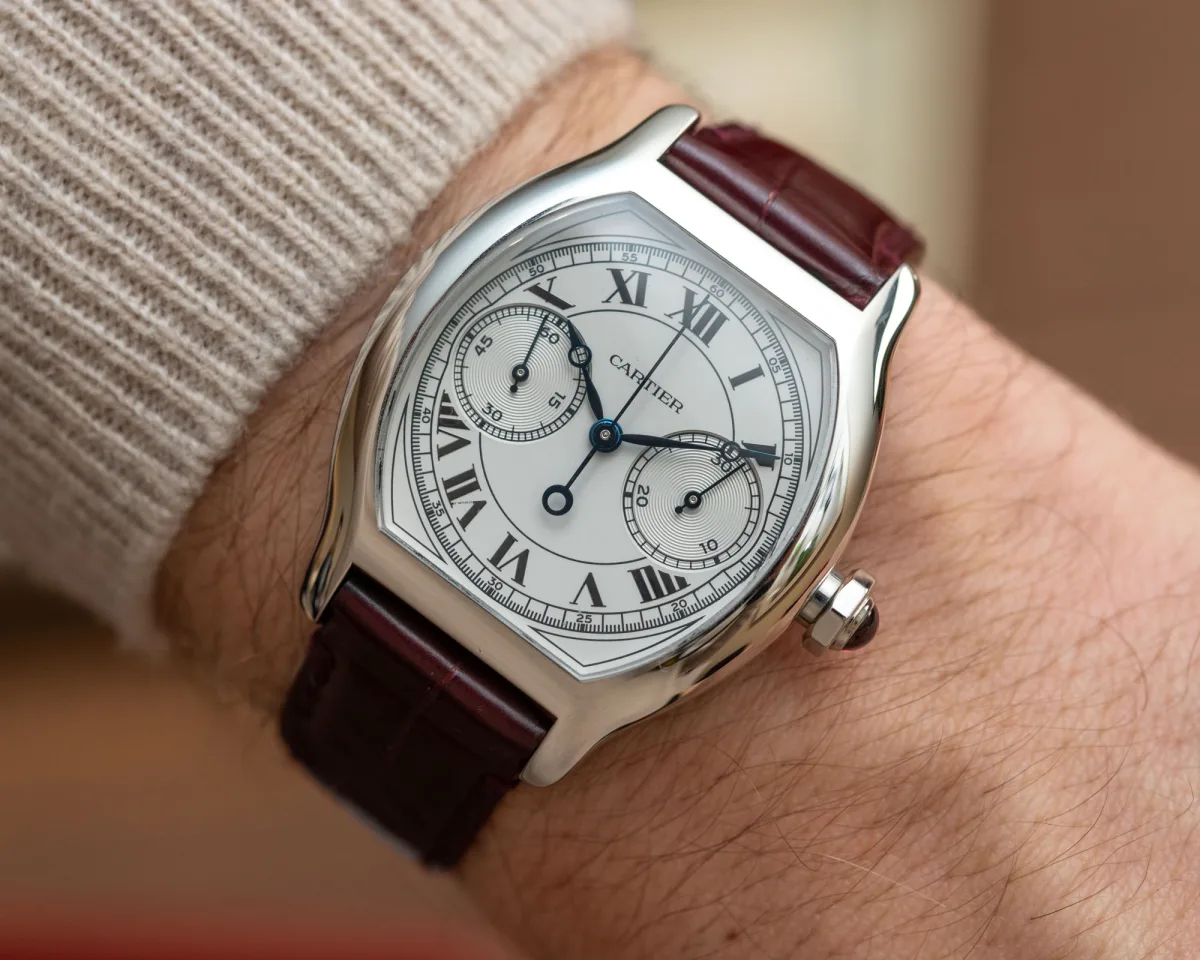
The watch I was eagerly waiting to see in person after its debut here is the Cartier Privé Tortue Monopoussoir Chronograph.
This watch draws attention with its look as a true, timeless, evergreen Cartier - the Tortue model has existed for over a century, since 1912, to be precise. It's a dress watch that can potentially impress with its mechanism, functionality, and versatility, making it wearable every day. But then comes the time of Privéness, and all of that fades.
Cartier Privé, or Collection Privée Cartier Paris (CPCP), is a special marking placed on watches the brand has decided to revive in limited numbers from its unmatched collections and designs. The most unpleasant aspect of the Cartier Privé collection is that it mostly comprises two types of watches: Complex, hard-to-produce, and controversial pieces that are rightfully limited in sale and soon forgotten by everyone except a small group of dedicated collectors.
The other type often released in the Privé collection is watches that are a vivid embodiment of everything that can be beautiful in Cartier watches: effortless style, beautiful proportions, with slightly and charmingly composed functionality.
But the most frustrating part is that because these watches also receive the Privé mark, their production is severely limited, and the price is raised, unlike the more competitively priced regular models that have strengthened Cartier's selection worldwide.

You probably already guessed that the Cartier Privé Tortue Monopoussoir Chronograph belongs to this latter group of Privé watches. Cartier provides no reasonable argument for the rarity and price of these watches - it's mostly just "they are limited because we call them Privé, and they are called Privé because they are limited".
Upon closer inspection of the watch itself, one can see frankly fantastic watches, yet lacking anything that would prevent them from being produced in larger quantities and at lower prices.
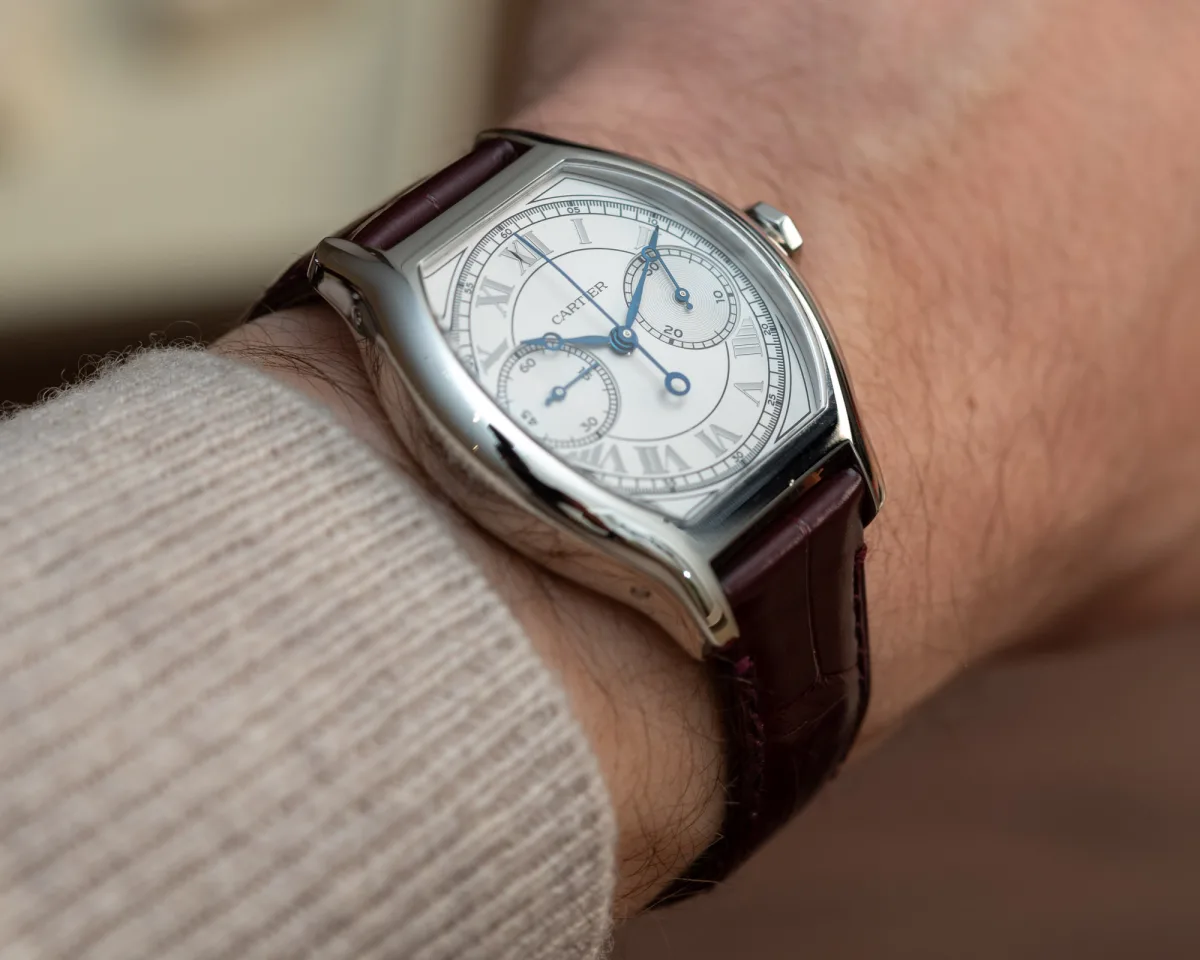
While the width of the Tortue Monopoussoir Chronograph at 34.8 mm might lead you to think these are small watches, the lug-to-lug measurement of 43.7 mm means they occupy quite a large area for their elegant genre.
Moreover, the watches are quite thin - their thickness is 10.2 mm, and while a couple of extra millimeters could probably be squeezed out of them, the Tortue case, bezel, and downward-curving lugs work best when not flattened by a steamroller. In a platinum case, as pictured, it also carries a wonderful heft.
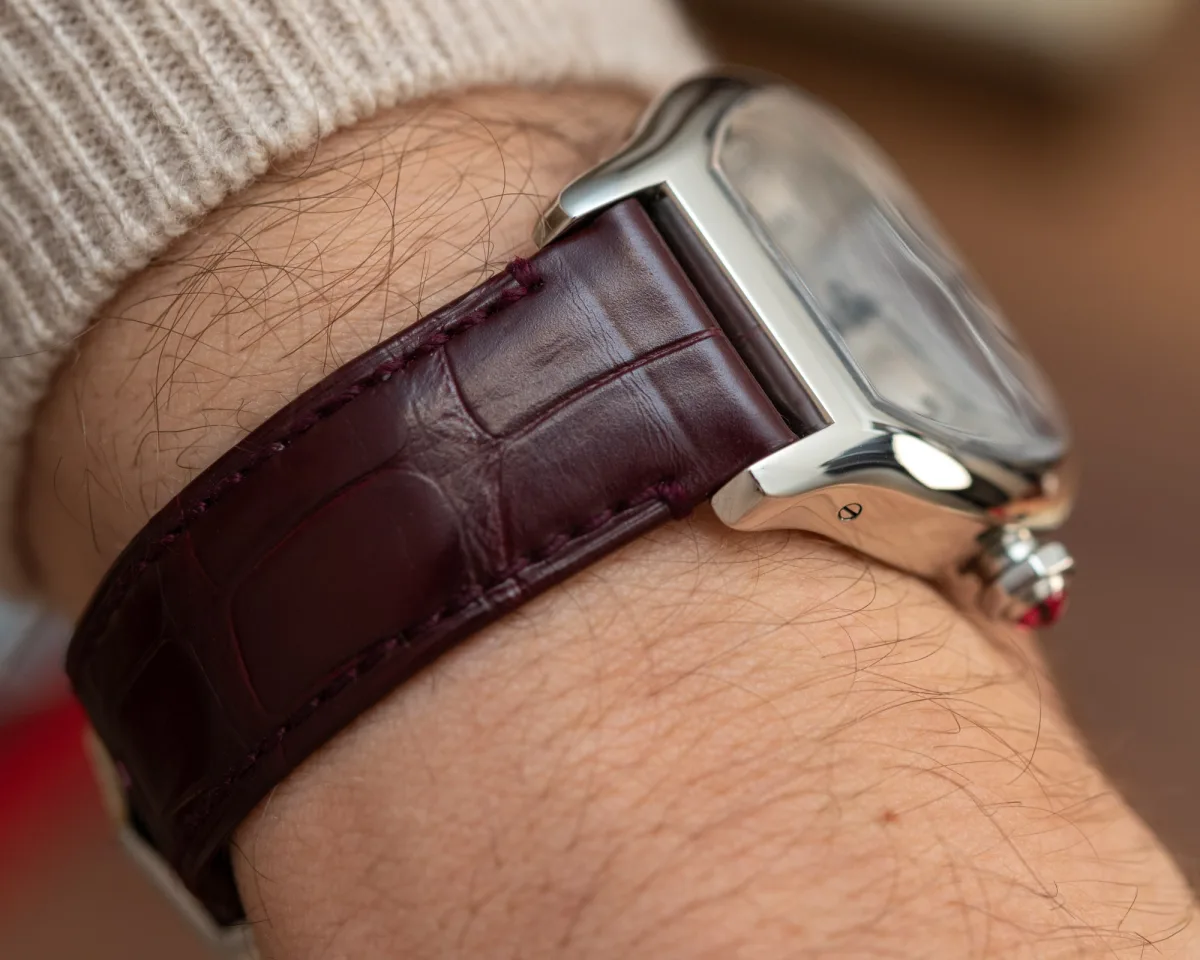
Nothing in the case design hints at the watches being difficult to manufacture. Yes, the mid-case and bezel are a single unit, but neither the overall shape nor the surfaces and their treatment come close to what competitors can do with platinum - especially with 18-karat gold, in which the Tortue Monopusher chronograph is also available.
This means externally there is little to say that these watches couldn't be a regular production Cartier in steel and precious metals.


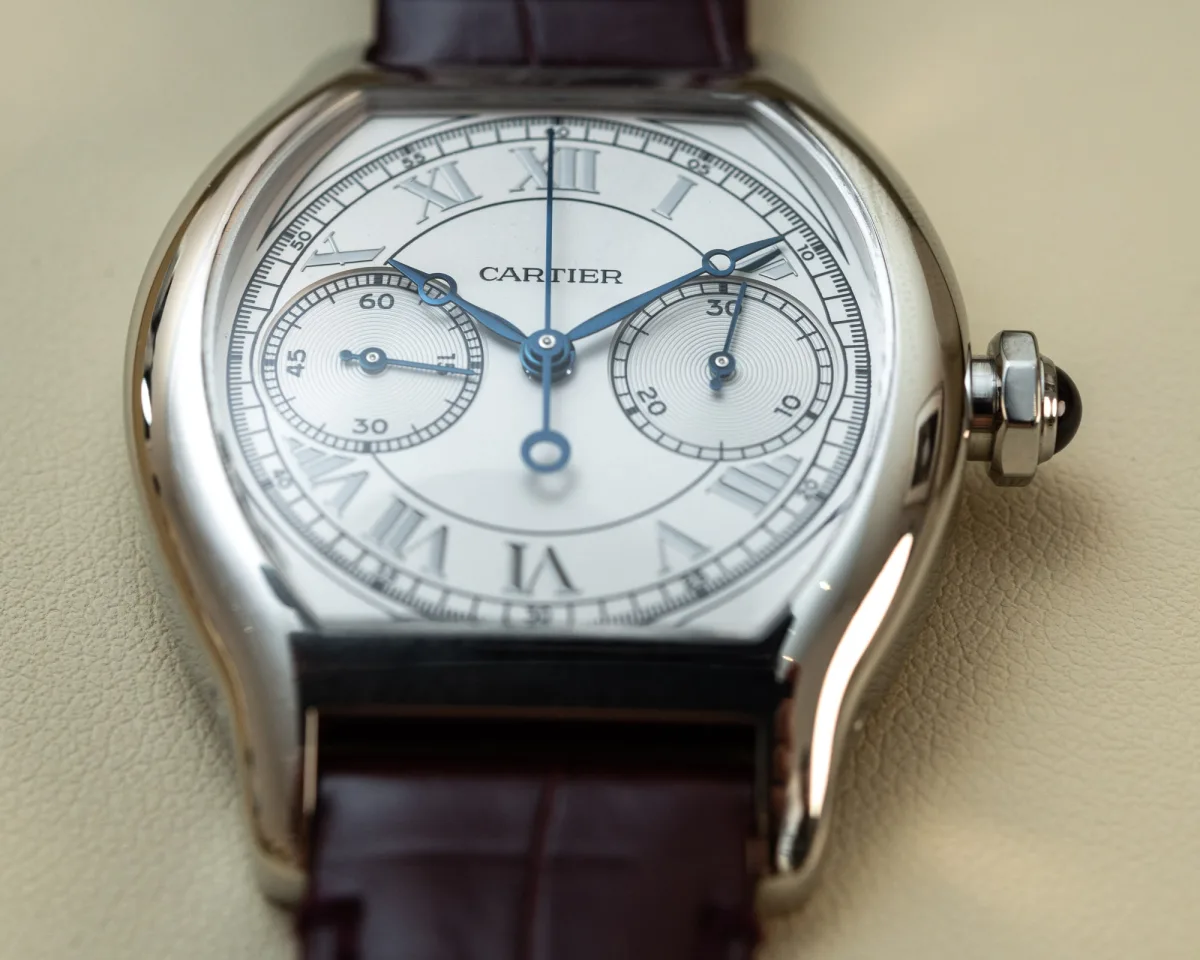
The dial looks lively but not overly so: several concentric circles, railroad tracks, many Arabic and Roman numerals. Neither the surface treatment, nor the hour markers, nor the hands, nor the colors are something special - all of this we've already seen on Cartier watches offered at a tenth of this price, for example, on the Ronde Croisiere.
At a price of nearly $60,000, one shouldn't expect guilloché or a dial made of pure gold or platinum. It's a basic dial for $59,000, and even for a tenth of that amount.
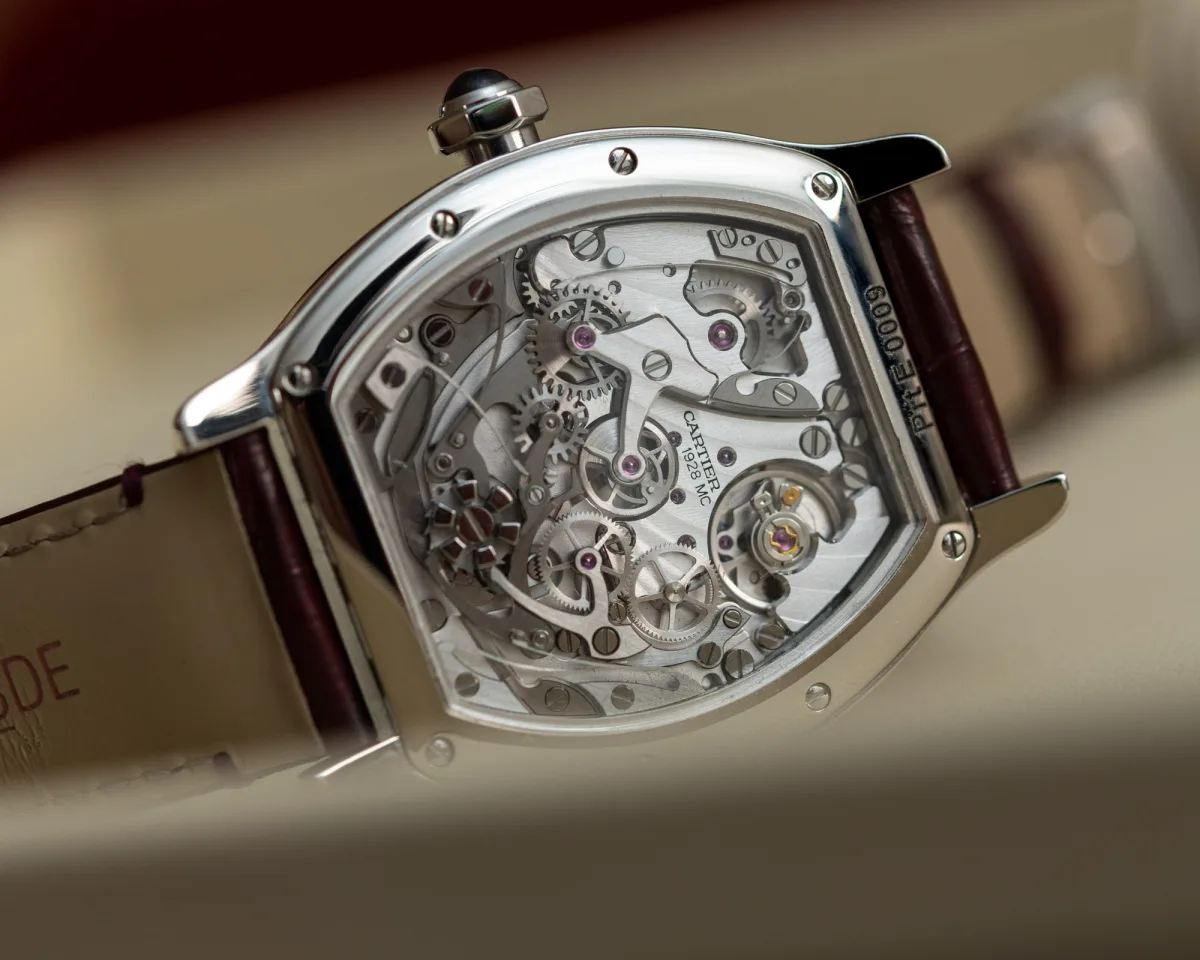
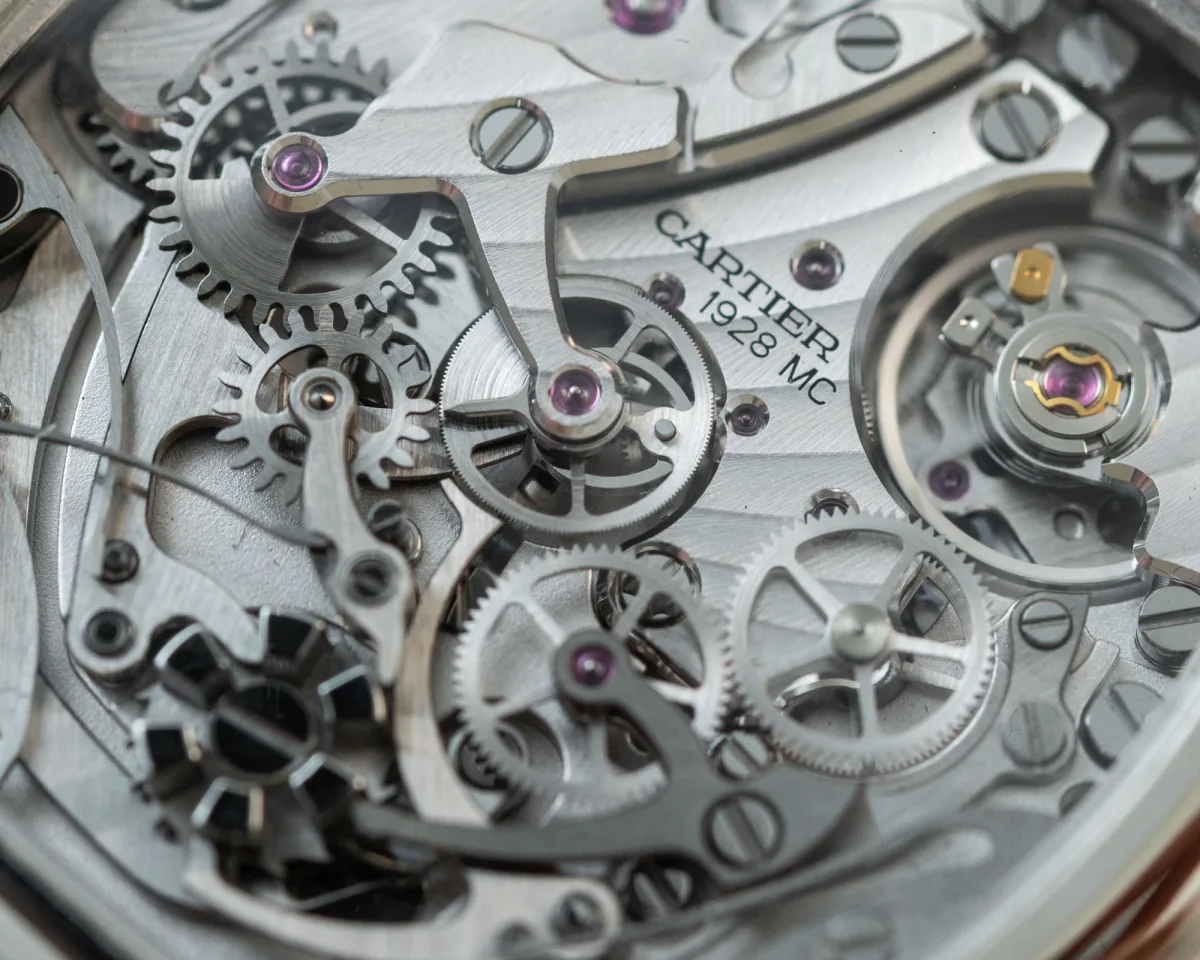
I've said it before, and you probably knew this already: We watch lovers are programmed to crave a manual-wind chronograph, the complication of which is exposed on the case back.
The Cartier Privé Tortue Monopoussoir Chronograph showcases this coveted caliber through a sapphire crystal case back, and the effect, as expected, is what watchmakers dream of.


Upon closer inspection, one can find numerous fine bevels and some exquisite matte surfaces, but the overall effect remains quite industrial and outdated.
Many levers, cams, and bridges have finely hand-finished edges, which is not seen on watches from major brands offered in such quantities at significantly lower prices, but here too, there's nothing that couldn't be sacrificed in pursuit of a lower price and increased production.
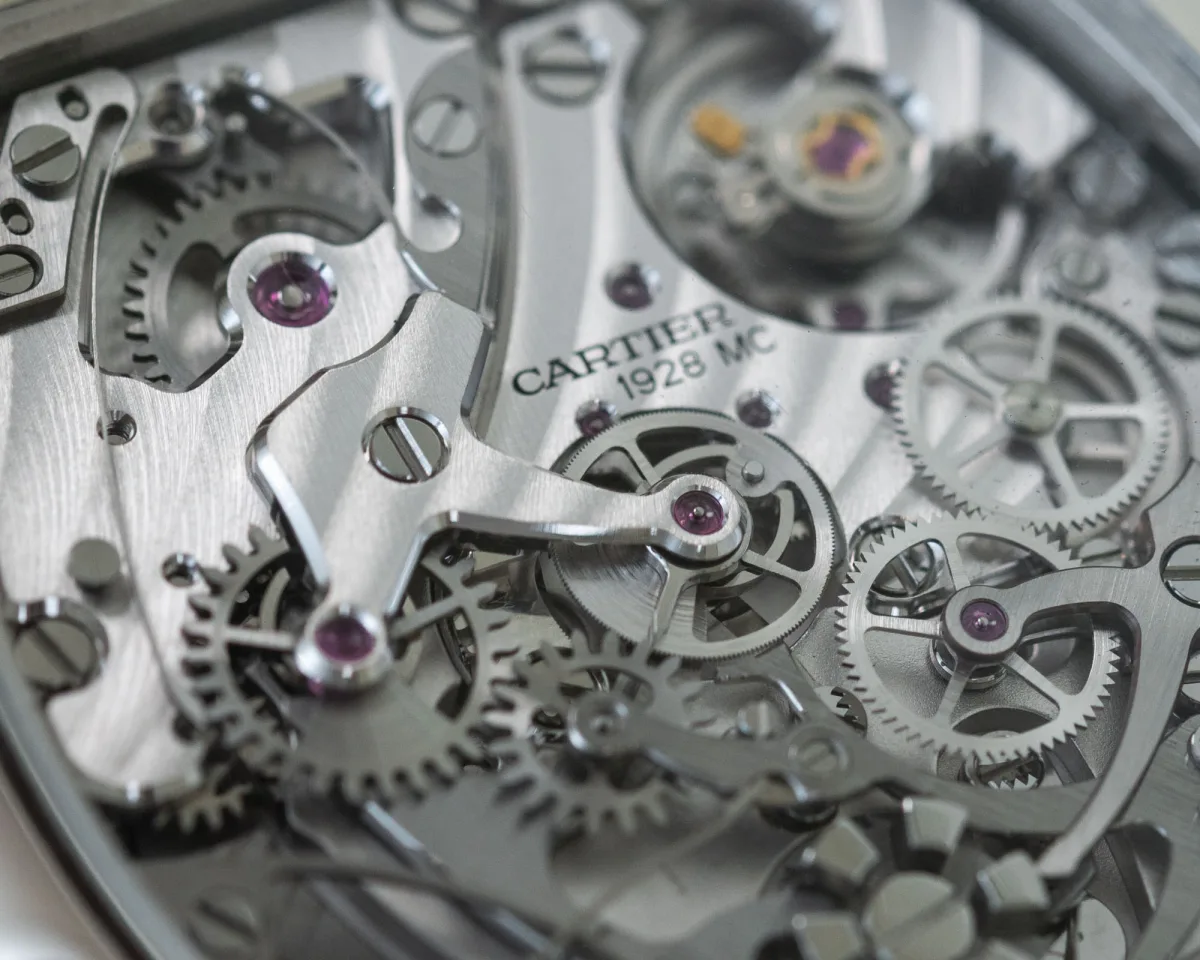
Despite the delightful construction of the watch, and Cartier deserving praise for creating a shaped movement (which follows the unconventional shape of the case rather than using a round movement), the finish and small details are not the kind one would want to gaze at for hours.
And the last thing that one wouldn't want to talk about, but at this price point, a free-sprung balance wheel would be much more preferable than the regulator pin that Cartier offers in the Caliber 1928 MC.
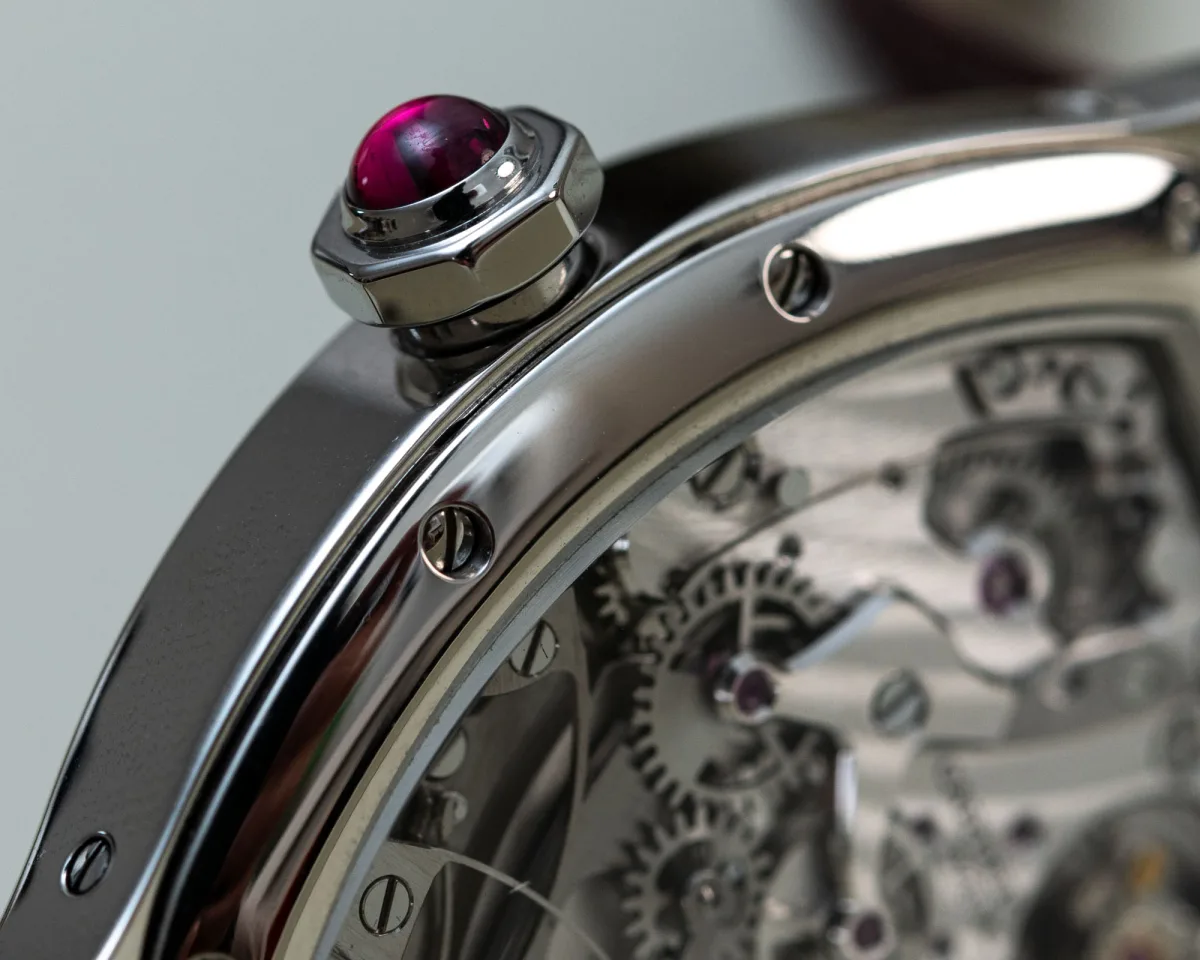
Developed in collaboration with Le Cercle des Horlogers, the Cartier Caliber 1928 MC starts, stops, and resets the chronograph function with a button integrated into the crown.
The crown is made of platinum with 8 facets and a ruby cabochon. Strangely, the cabochon is so small and rounded that it's really unpleasant to press when operating the chronograph. The power reserve is an unremarkable 44 hours, and the operating frequency is 3.5 Hz.
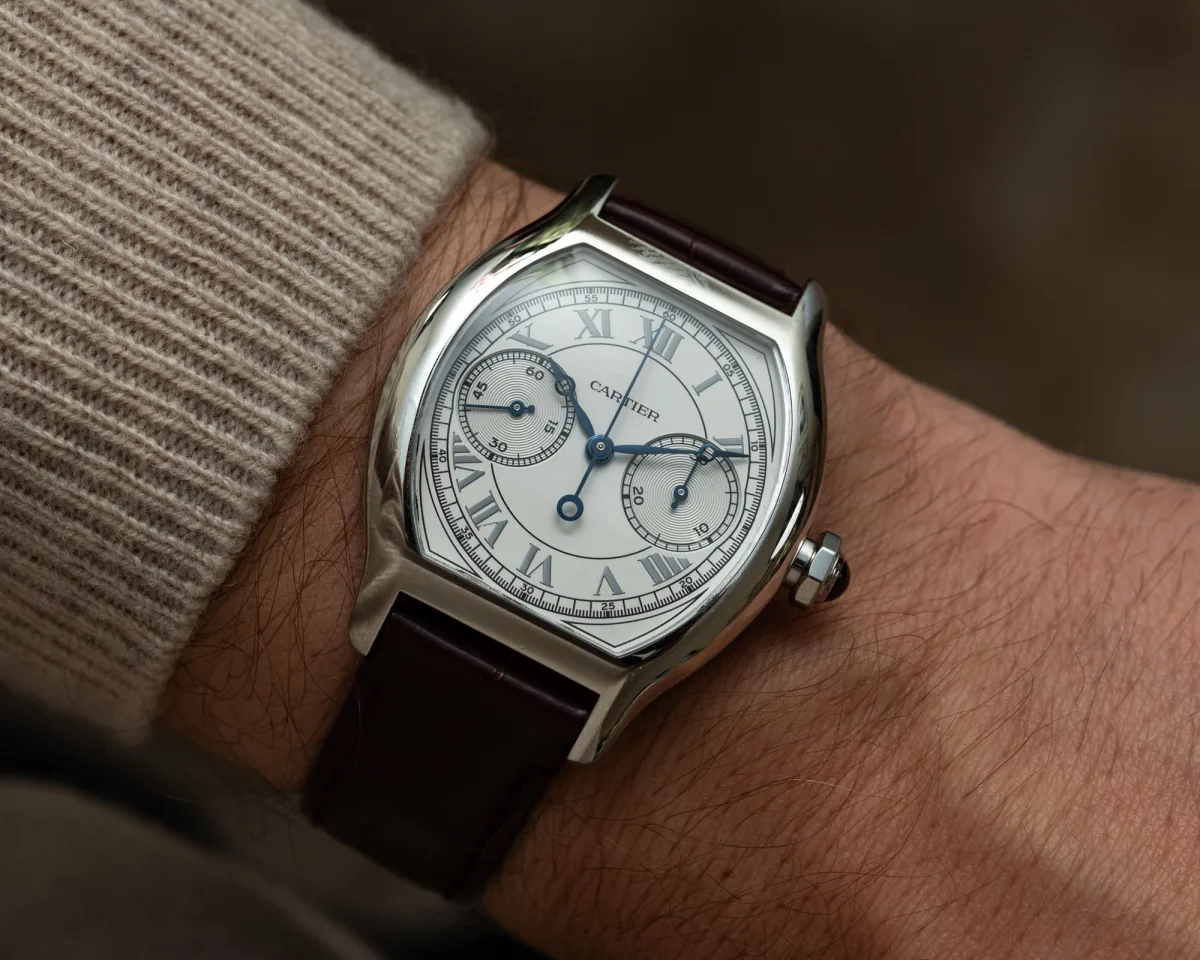
The Cartier Privé Tortue Monopoussoir Chronograph is a splendid watch on the wrist. The Tortue Monopoussoir model has existed since the 1920s, and although it has become bulkier over time, it has retained all its traits of class and elegance. Its shape is tense yet organic, serious yet approachable.
At a time when everyone, including us, is busy releasing bulky chronographs with integrated bracelets, Cartier could have taken center stage by bringing style to what has become an unwieldy watch genre.
The Tortue could have been the savior of the $15,000 chronograph (give or take a few thousand), and Cartier could have led the movement towards abandoning the bulky chronographs that are as heavy on the eyes as they are on the wrist. Instead, the company created an expensive and unnecessary limited chronograph for the wealthiest 0.1% - seemingly betting that they too don't need such values.
The price of the Cartier Privé Tortue Monopoussoir is $59,000 USD in platinum (ref. WHTO0008) and $51,000 USD in yellow gold (ref. WHTO0007), both models are limited to 200 pieces.