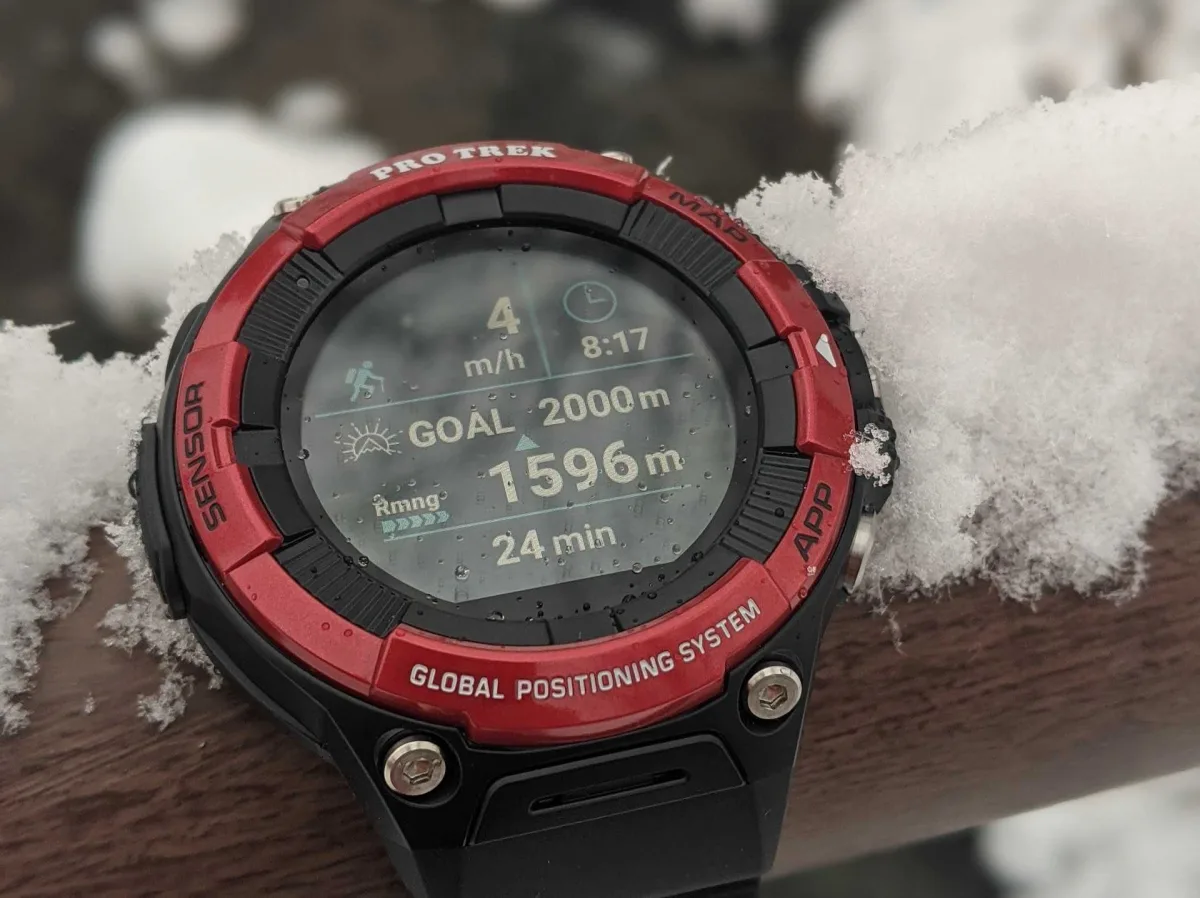
If you're in the market for durable, long-lasting watches for outdoor activities and ask a watch enthusiast what to buy, the answer will likely be Casio G-Shock. A good suggestion, of course, but it's not the only worthy contender in Casio's lineup. The Pro Trek line from Casio often remains in the shadow of its immensely popular older sibling, but the Pro Trek line was specifically designed for rough and clumsy outdoor use. For those in the know, the Pro Trek line was (and to some extent remains) the choice of the day if you're looking for features like an altimeter, barometer, compass, and thermometer without overpaying for high-end G-Shock. Of course, you won't get the Shock Resist from G-Shock, but you'll gain access to a huge number of high-end features at an attractive price.
The Casio Pro Trek WSD-F21 HR (hereafter referred to as Pro Trek) is a fully functional GPS smartwatch with an optical heart rate monitor, running on Google's Wear OS system and, of course, not lacking in durability, boasting military-grade protection (MIL-STD-810G). In addition to the built-in Wear OS apps, Casio offers its own display features and several custom apps, including Moment Setter, which allows you to customize notifications and information displayed during workouts or other activities. Want to get notified when there's an hour of daylight left in your hike or when you've reached a goal of 500 meters elevation gain? Moment Setter can do that. Despite having button controls, most of the interaction with the watch occurs through the touchscreen. A smartwatch with GPS functionality, heart rate monitor, and Wear OS is rare, but when a giant like Casio releases an update for its flagship smartwatches, it certainly deserves attention, and I was eager to work with them to see Casio's approach.
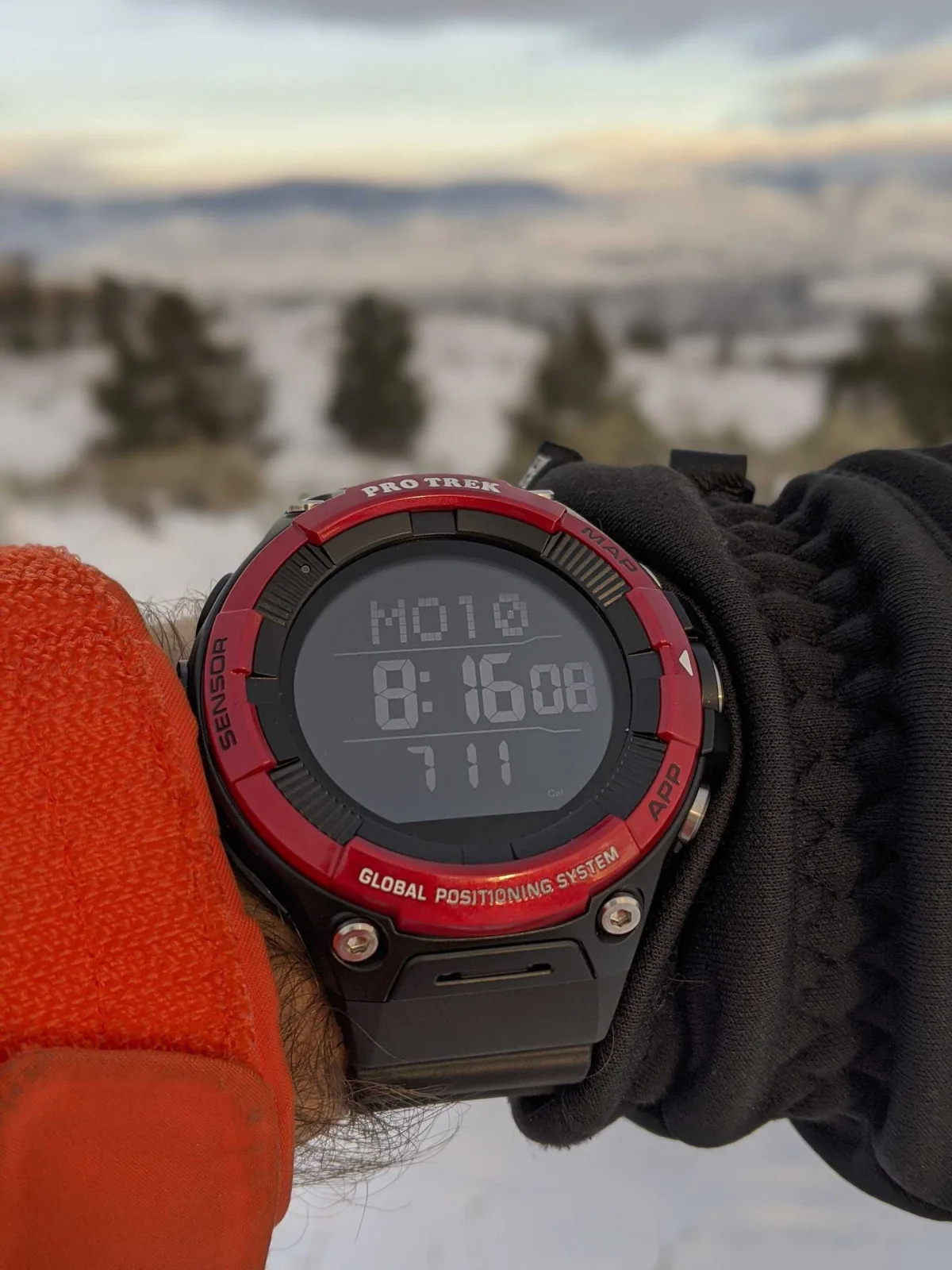
Reviewing smartwatches presents a particular challenge. In a typical review, watches do one thing: tell time. (Well, maybe a few things, depending on complications.) Thus, the reviewer's task is to show how well the watch performs this task, both functionally in terms of the mechanism, construction, and wearability, and aesthetically in terms of design, readability, and originality. The problem is that smartwatches do so many things and are such different things to different people that it's almost impossible to make a universal review. In the case of the Casio Pro Trek, I decided to focus on the Pro Trek line's ethos and examine how these watches function as smartwatches designed for outdoor activities. In this capacity, the watch accompanied me through the cold Canadian winter, as I ran trails, biked, skied, and hiked. When the temperature dropped below -20°C, I didn't hold back and took the watch to the gym and pool. Read on to find out how they performed.
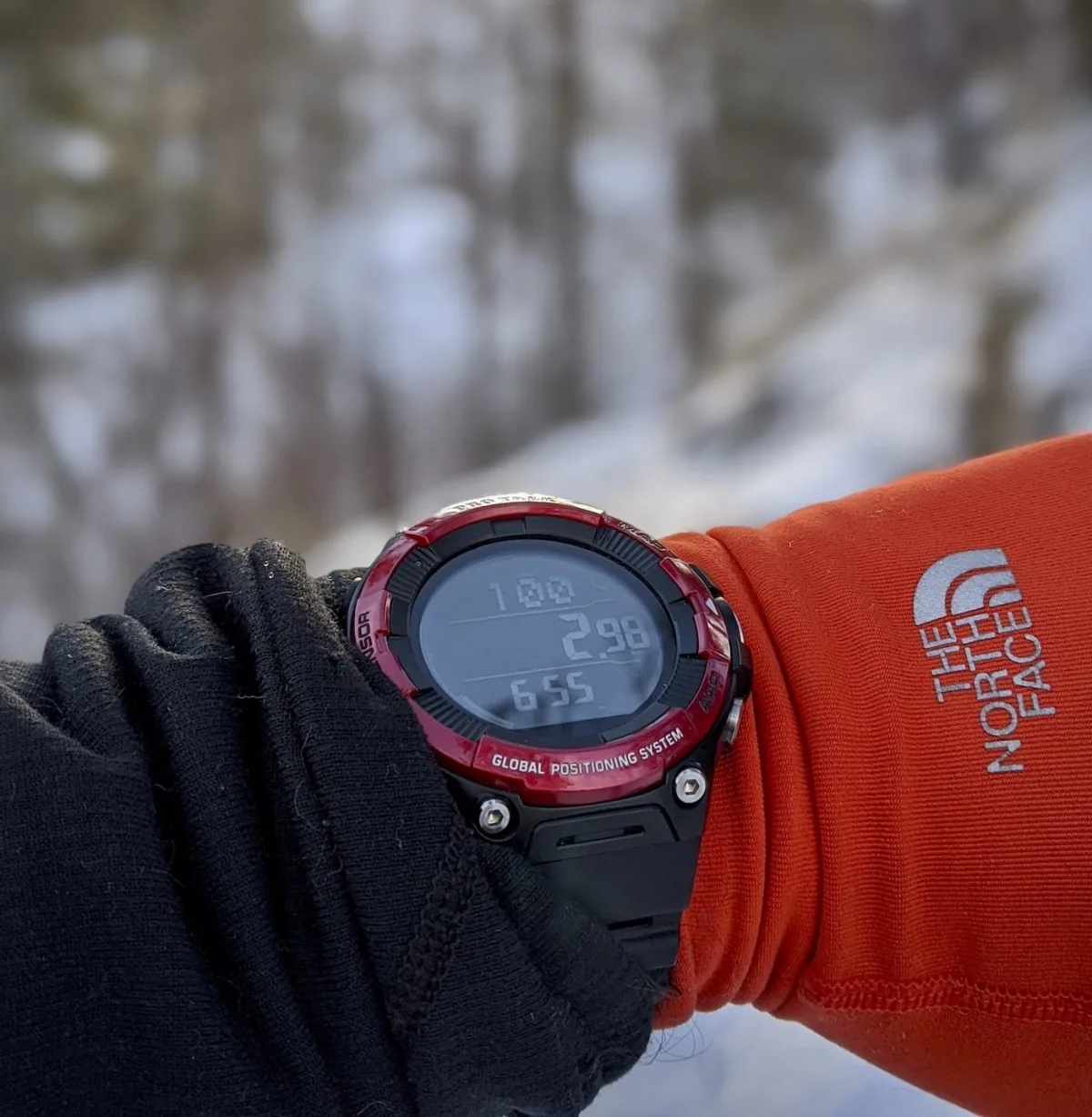
Case and Strap
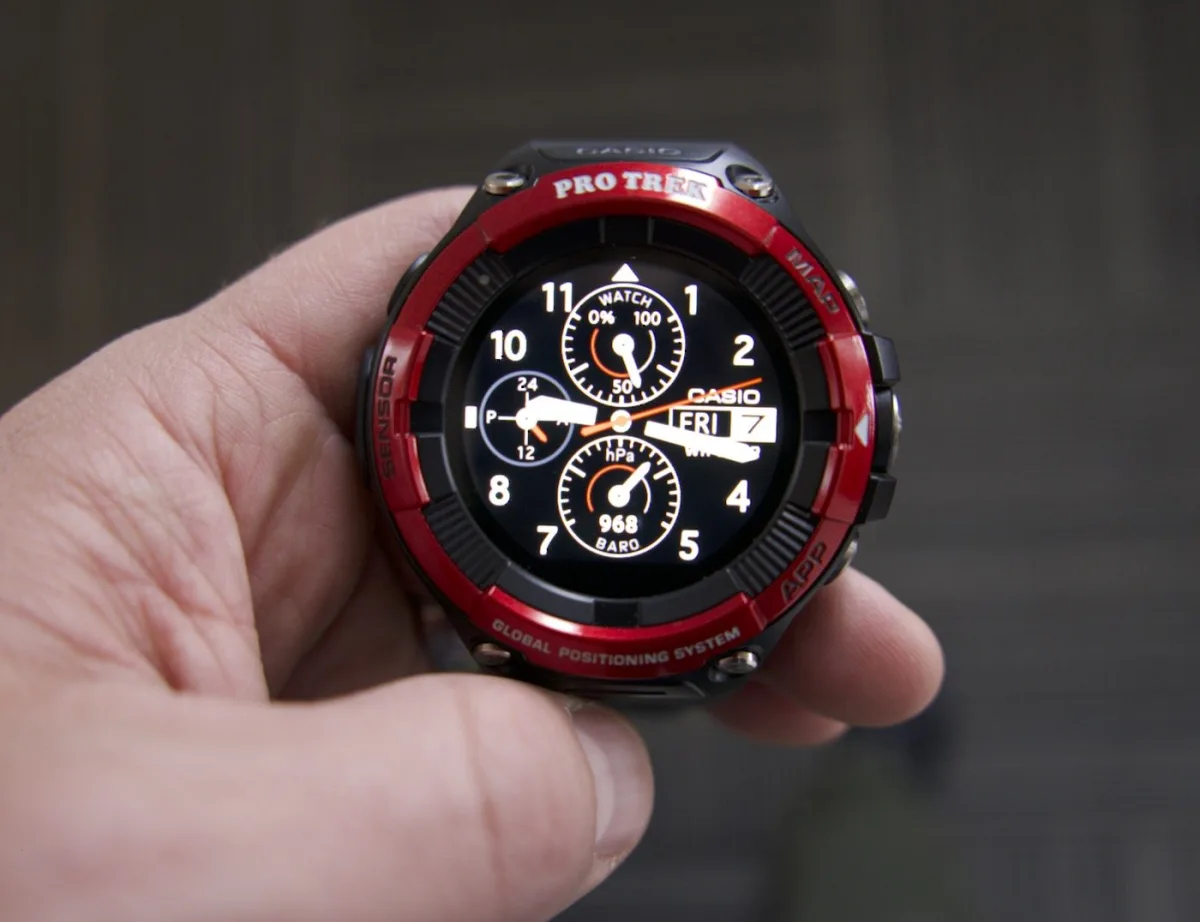
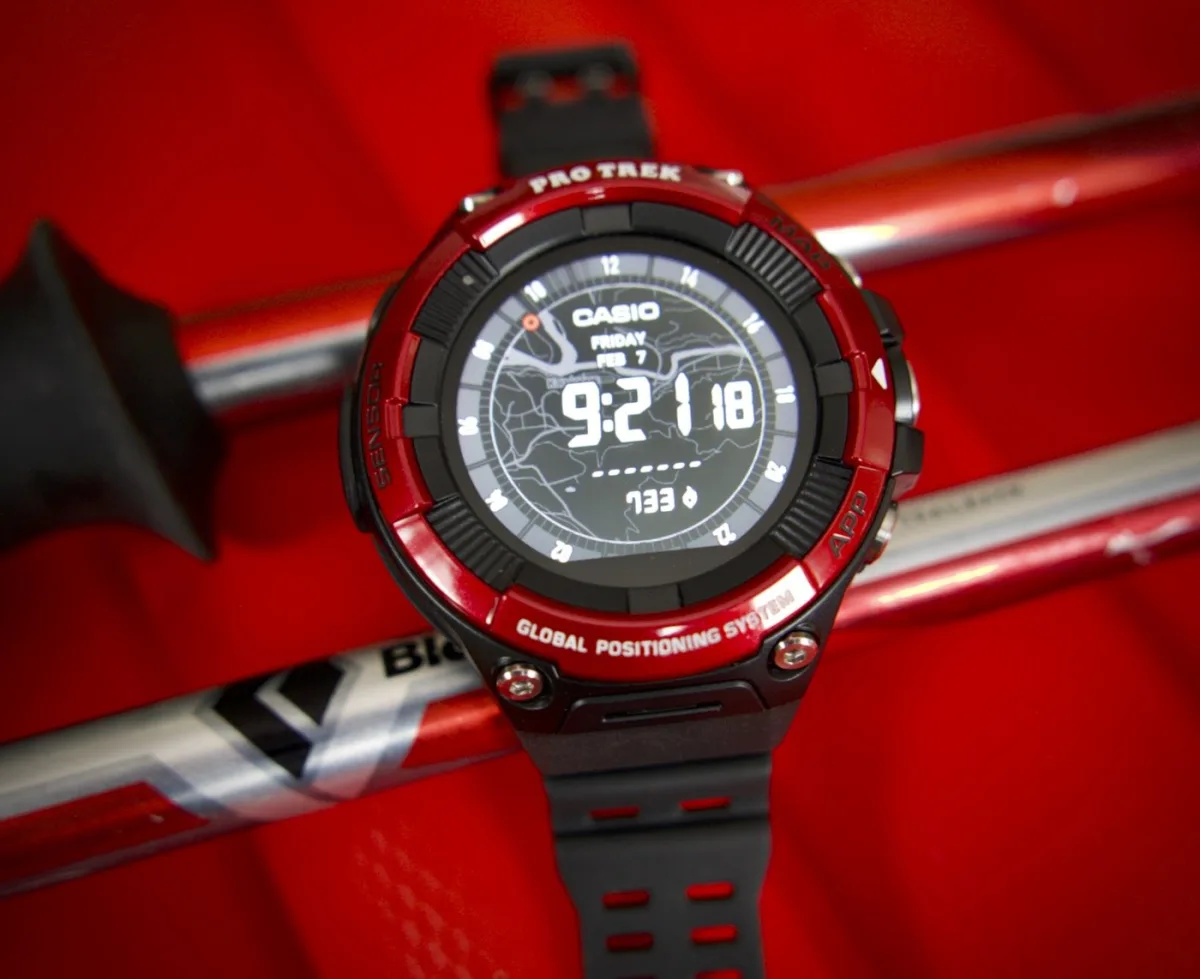
The Casio Pro Trek case is made of a mix of resin and plastic with a robust yet flexible integrated urethane strap. If you're familiar with Casio - either the G-Shock line or the Pro Trek line - the case should be immediately recognizable. A bold bezel with large text, numerous angles, and a blocky 3D design all speak of Casio. This particular model is available in two color variants: all black and with a cherry-red bezel. At 57.7 mm wide, these are large, bold watches, so the red bezel suits them.
Overall, the case design is familiar and quite typical for Casio, but it has a more aggressive and characteristic aesthetic than most sports smartwatches, which tend toward minimalism. Unfortunately, the first watch I received for review developed a crack on the back cover, leading to sensor failure, and had to be returned. Apparently, it was a manufacturing defect, and the replacement watch worked flawlessly. Issues happen, but what's important is how you handle them. Fortunately, Casio provides a two-year warranty on the watch, so I would be covered regardless of whether I was testing a review sample or not. Nonetheless, it is worth noting, and it was surprising given the brand's reputation as a reliable and durable manufacturer.
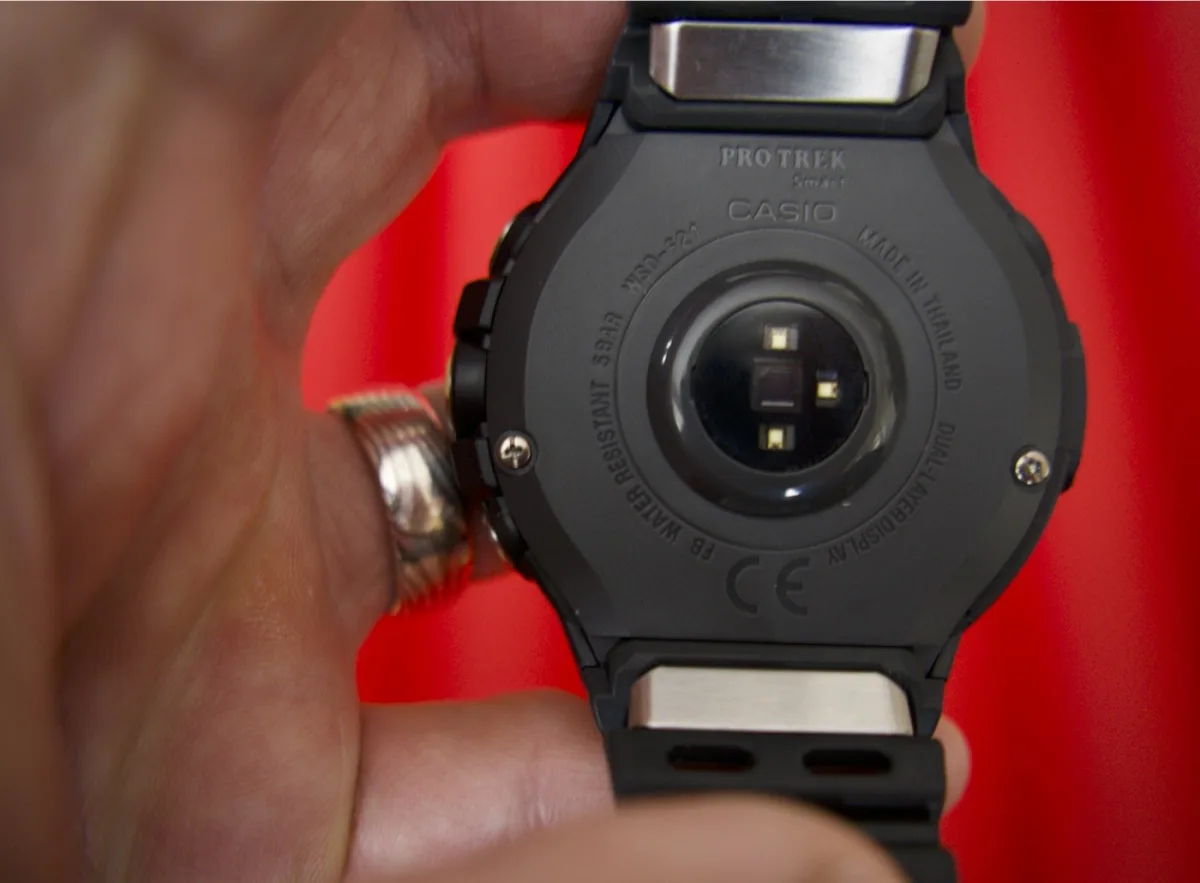
Back to the watch. As noted, the strap itself is integrated into the watch head, so this is not a watch for those who like frequent strap changes. While the strap is functional and comfortable, I have two issues.
First, Casio chose a plastic buckle. Considering the straps are metal and the watch is intended for use in harsh conditions, this choice makes no sense.
Second, replacement straps for this watch are currently unavailable. Presumably, if you break the buckle or strap within the two-year warranty period, you will receive compensation, but it would be nice to be able to simply purchase an additional strap just in case. In the past, I've broken rubber straps on watches designed for sports and had to discard the entire watch, so I always pay attention to this when buying.
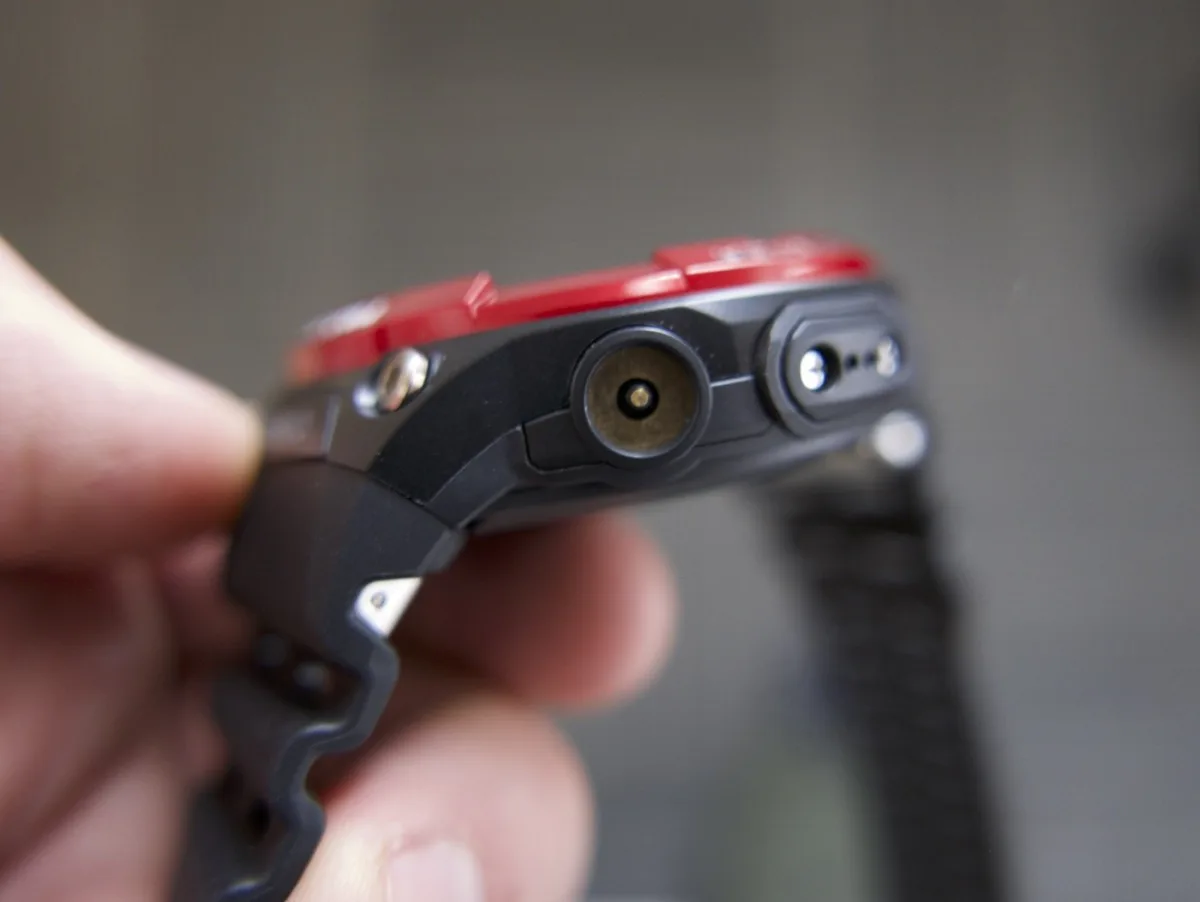
Charging the watch is done using a magnetic connection at the “10 o'clock” position. Unfortunately, the magnet is weak, so slight knocks to the watch or charging cable easily dislodge it. This is a minor issue since such smartwatches require nightly charging if you use them for daily workouts and activity tracking. It works when you get used to it and don't bump the cord, but a more robust attachment mechanism is clearly needed here.
Screen and Operating System
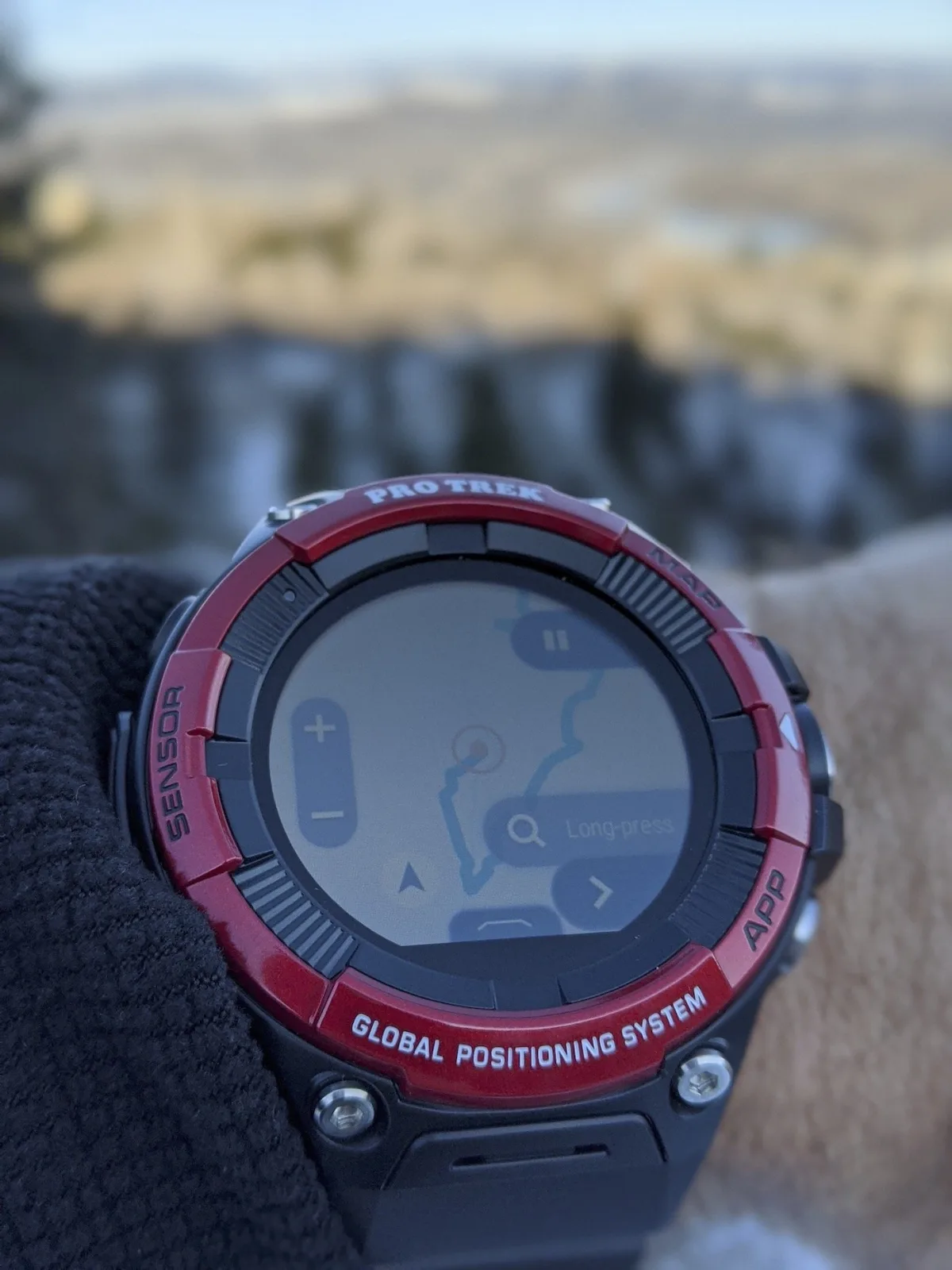
At first glance at the screen, you're greeted by a simple monochrome display, but a quick swipe or touch of the screen reveals a full-color 1.32-inch TFT LCD with a resolution of 320x300 pixels. In almost any lighting, the display is easily discernible, but in bright sunlight, elements like maps can get slightly lost (see photo below). There are several built-in watch faces to choose from, including analog displays, and additional display options are always available, but I stuck with the standard screen setting. I find that if I'm wearing a smartwatch, I want to use all its functionality; if I want an analog display, I'll find something else in my watch box. The main screen is exceptionally functional, displaying the day, date, time, heart rate, and calories burned, with a heart rate log located around the outer edge of the dial. Start moving, and the display changes to show a bar for instant heart rate assessment and workout intensity. It's the type of simple functionality I greatly appreciate.
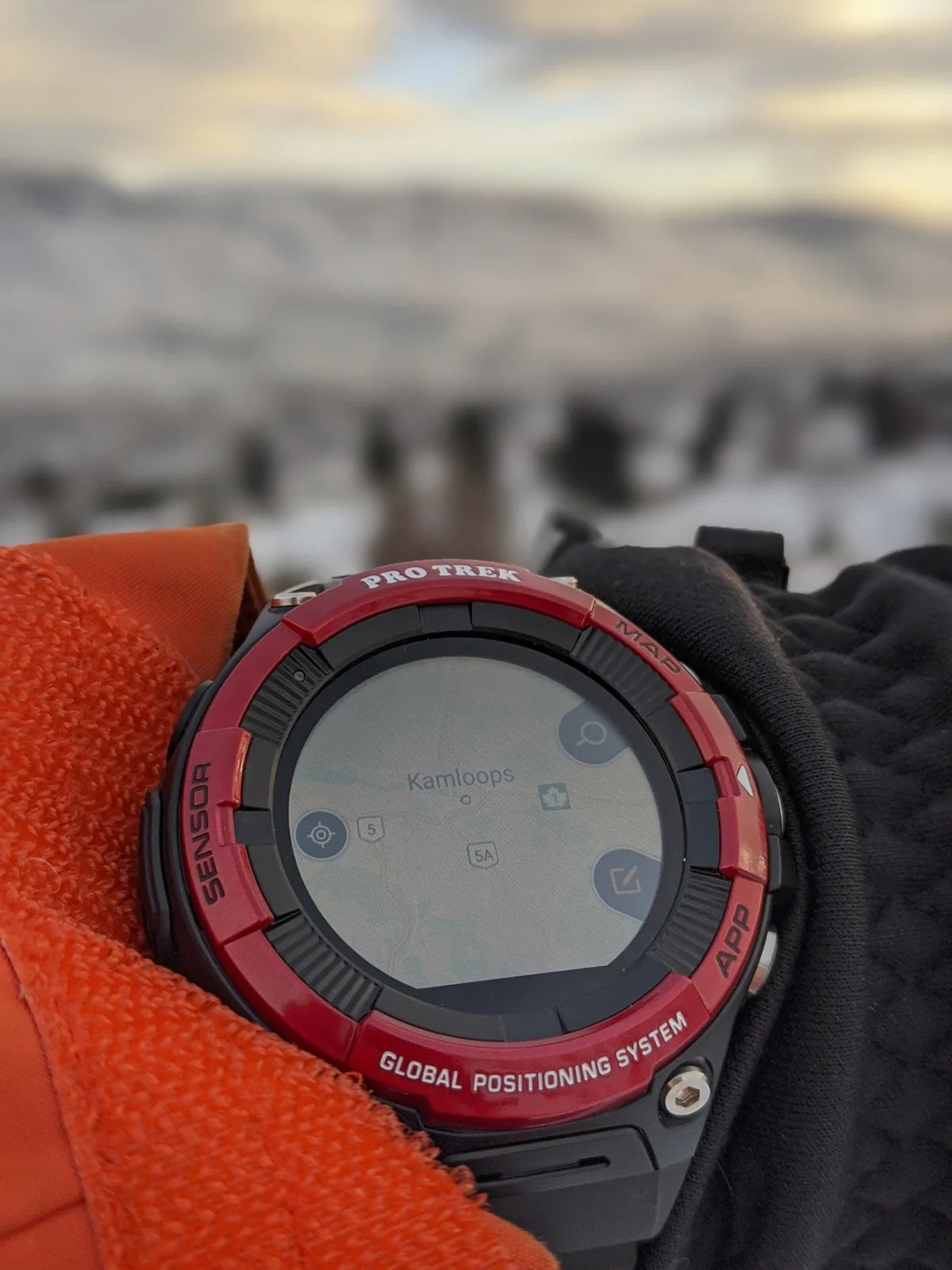
Access to options on the watch is achieved through a combination of button presses and swiping the touchscreen. Swipe down, and you gain access to the settings menu, swipe right for notifications and access to OK Google, swipe left for access to customizable screens (such as weather, timer, Google Fit, etc.), and swipe up for notifications. Access to the map is achieved with a quick press of the “map” button, while the “apps” button leads you to the built-in workout apps screen. If you want to access other apps from the Google Play store, the central button will guide you. Those familiar with Wear OS from other smartwatches will feel at home, but newcomers to the Wear OS ecosystem may need some time to master navigating the various screens and options. The user experience isn't entirely intuitive, and I would definitely recommend watching a few getting started videos to avoid frustration. Once you get the hang of it, using the device becomes simple and natural.
Performance
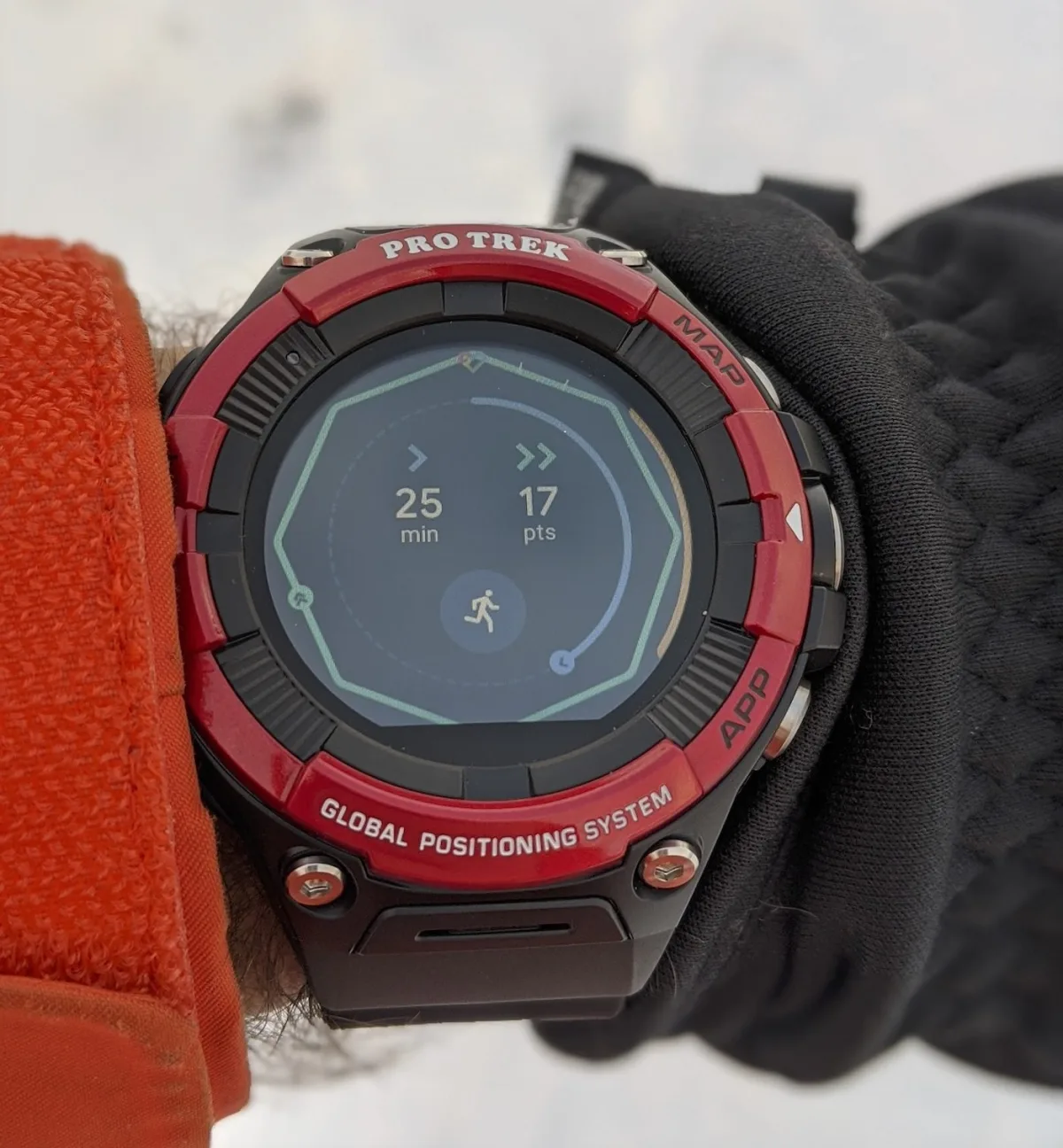
Using the watch primarily as a fitness watch for trail running, mountain biking, hiking, and skiing gave me plenty of opportunities to familiarize myself with the activity tracking apps. Regardless of the activity, the GPS signal was quickly acquired and provided accurate distance and elevation tracking. Typically, by the time the activity screen loaded, I had enough time to press the play button and start the exercise. Even after traveling to a ski resort, the GPS was acquired within seconds.
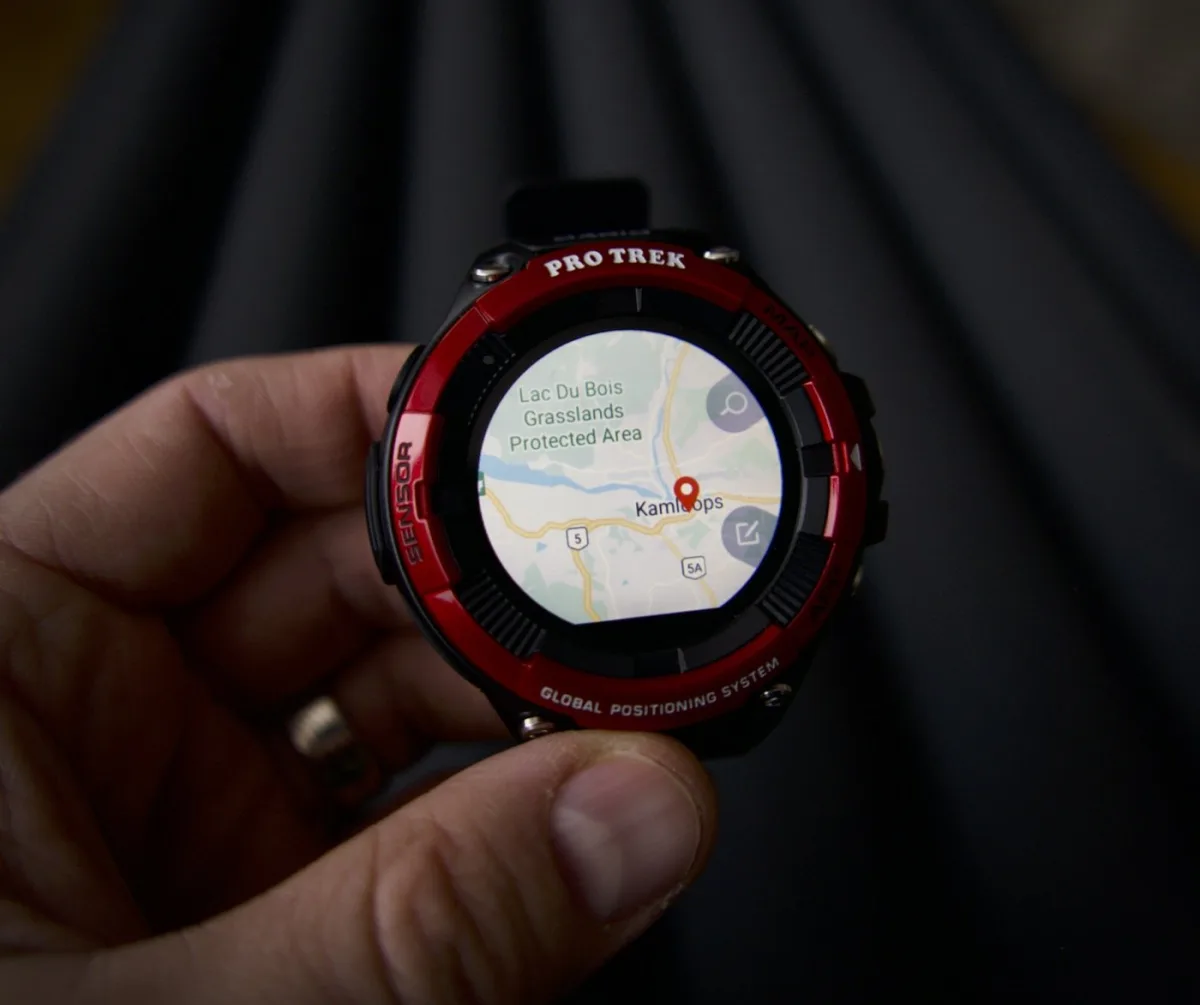
The maps are excellent and certainly one of the main advantages of the smartwatch's large color screen. Since I ran and biked on familiar routes, I didn't use the map import feature, but importing maps from Google Maps for a pre-planned run can be done fairly quickly and easily. However, I did download a large map of my region because I often run without the watch being connected to the phone, and if I happen to get a little lost in the woods (which is quite easy to do), having saved maps can help you easily return to familiar terrain. In the worst case, there is also a built-in compass function for navigation.
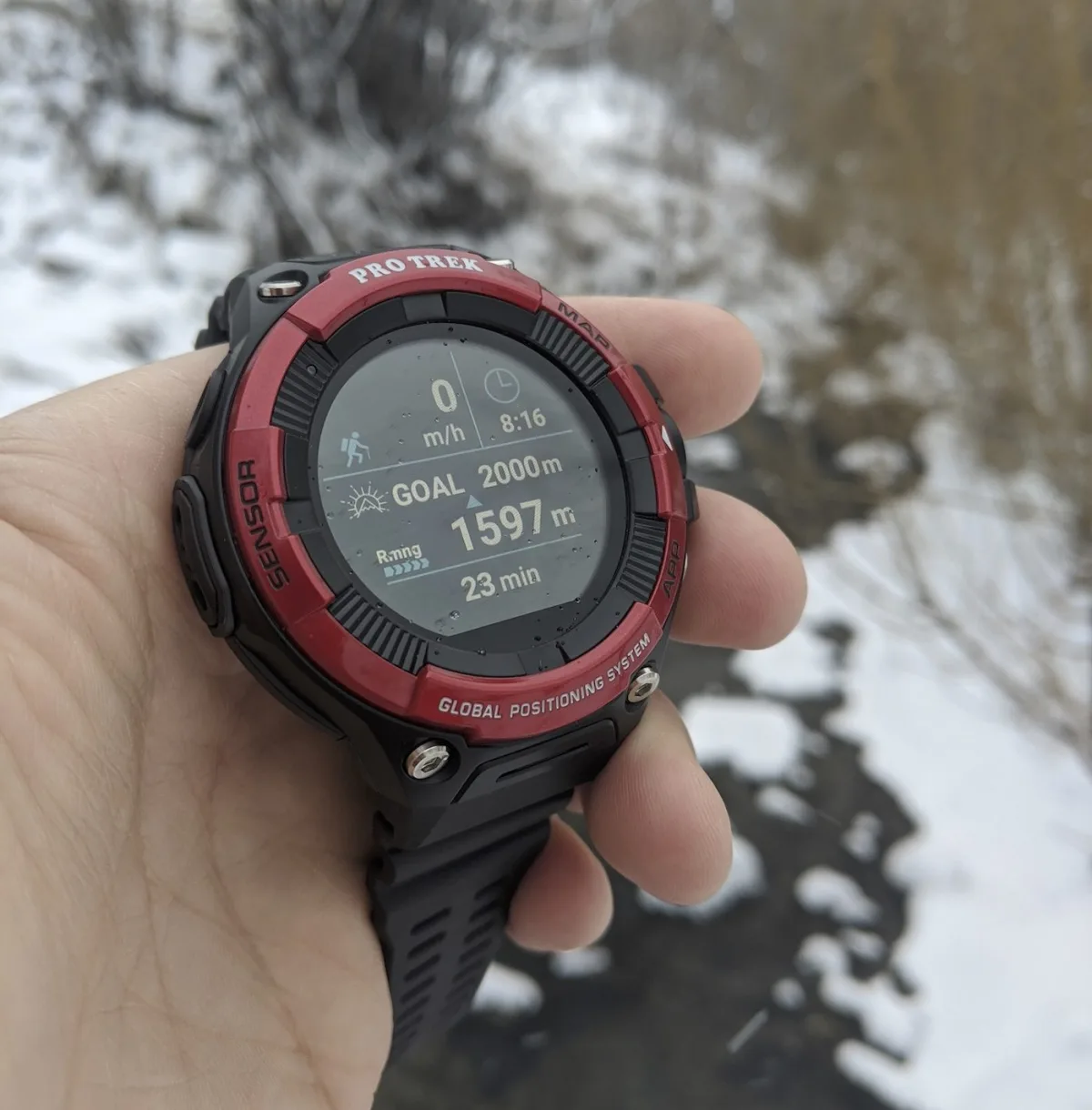
The running and cycling apps provide easily accessible information (pace, time, and distance covered, heart rate, etc.), which can be customized according to your preferences. The only inconvenience is that switching from the low-power “always-on” display to the color activity display requires a tap or wrist flick. This isn't an issue during running, but it's a bit annoying during cycling as it requires taking your hand off the handlebar. Additionally, touchscreens aren't ideal in winter, as you need to remove gloves to change screens, access notifications, and other functions. Fortunately, the buttons are easy to use with gloves for pausing and resuming the workout.
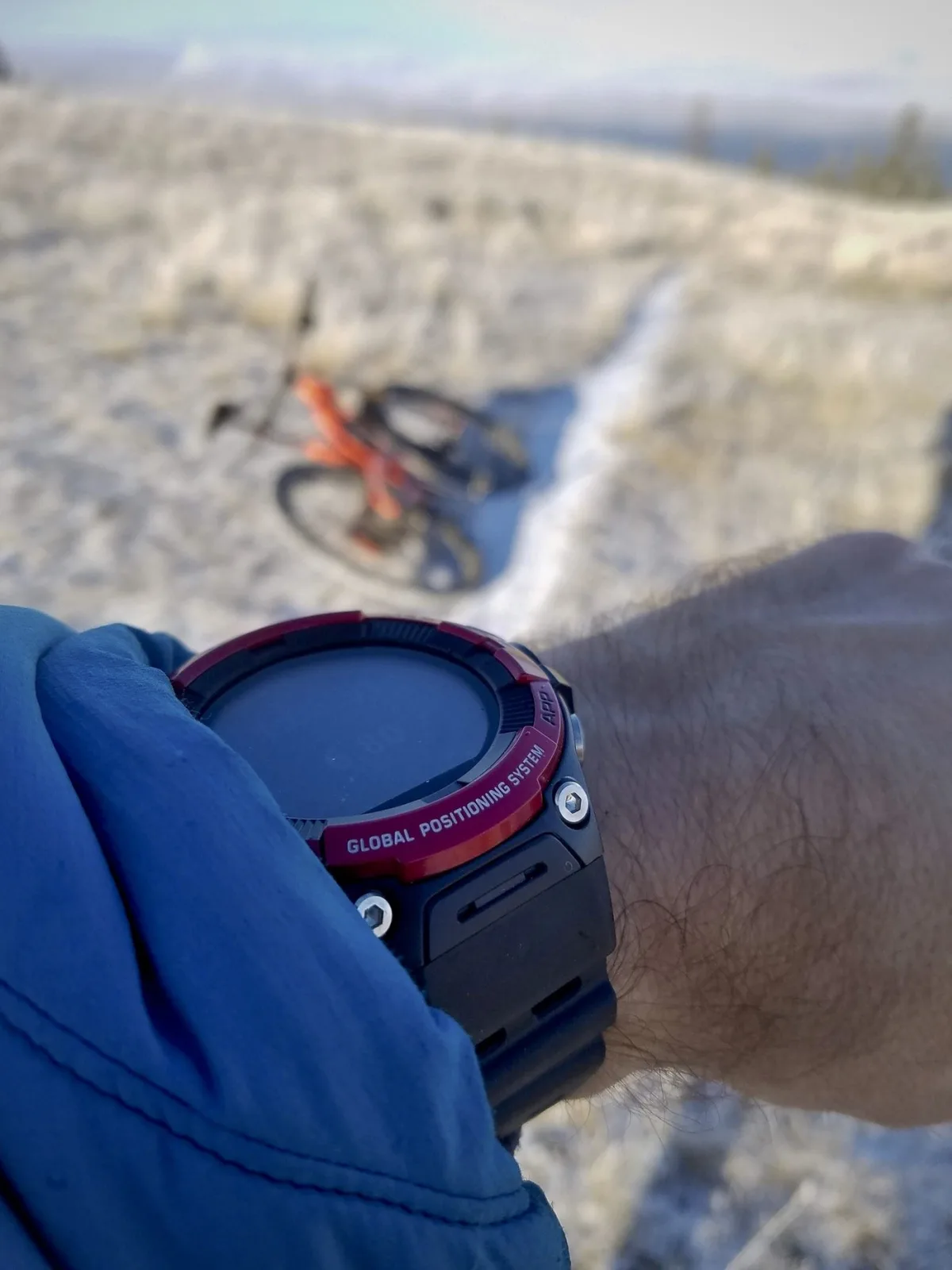
I wasn't able to review all the apps (I'm not that ambitious), but I used the skiing app during several trips to the mountain. It works well for tracking distance covered, max speed, and other metrics. Unfortunately, it requires you to pause your run at the bottom of the list and resume it at the top. This is quite easy to forget, and if you're interested in tracking these metrics for training purposes, an incredibly fast uphill (while riding the lift) will mess things up. My previous Garmin Fenix 3 GPS watch automatically detected uphill movement and paused until you started descending. This would be a relatively simple software update, and I would certainly appreciate it.
One app surprisingly absent is a swimming app. This isn't a Casio issue, but rather an issue with the built-in exercise apps that come with Wear OS. This can be rectified by downloading a third-party app like swim.com, but it's somewhat puzzling given how these watches are intended to be used. When used indoors, it's worth noting that these are bulky watches. During long runs or bike rides, I didn't notice their size, but when running on an indoor track, doing high-intensity interval training, and lifting weights, I wished they were less bulky on the wrist.
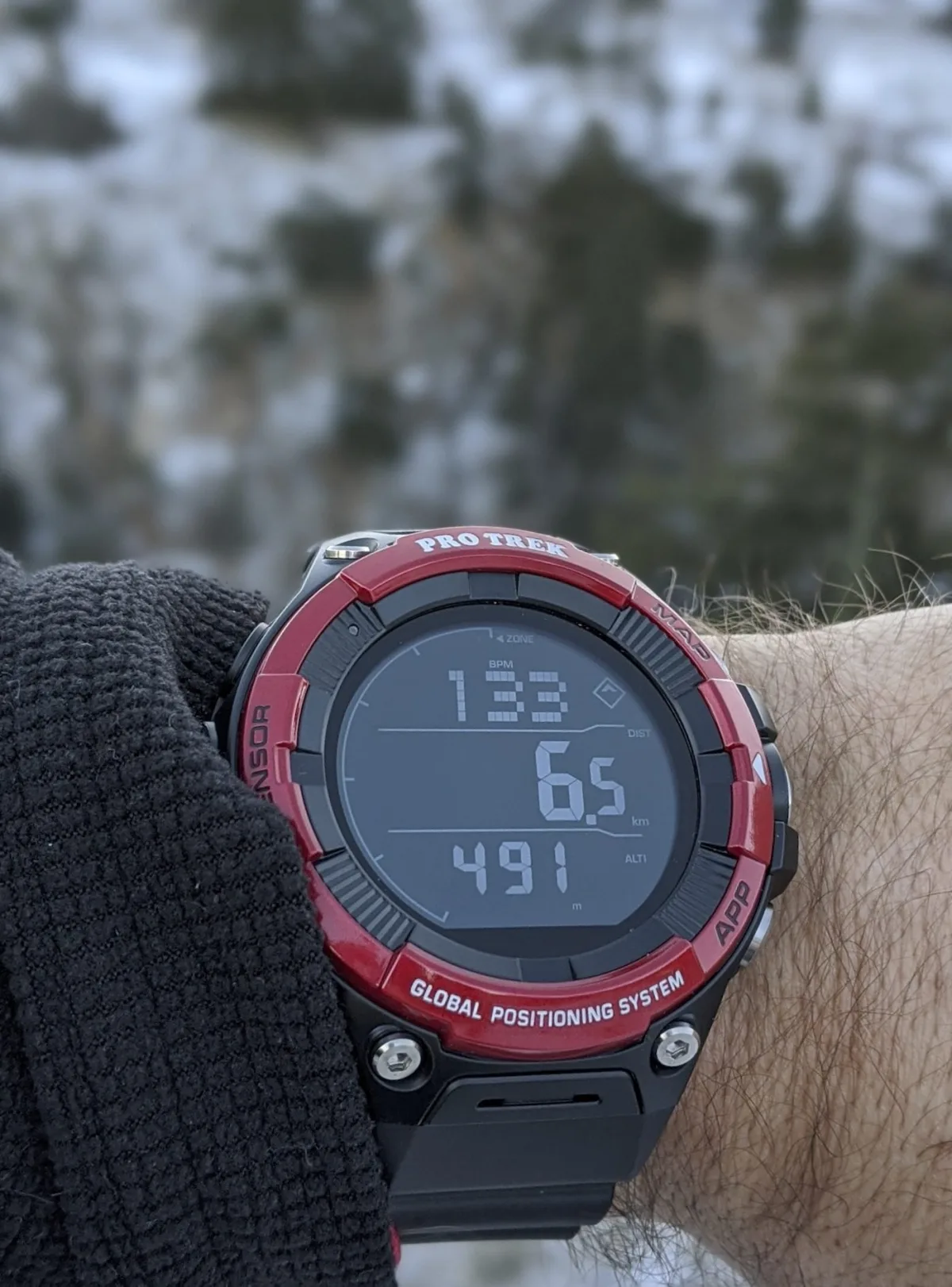
One final note. After completing and saving a workout, a screen appears with data on the distance covered, VO2 Max, calories burned, etc. Unfortunately, once you proceed to this screen, you cannot go back and view previous workout metrics without going through a cumbersome process of downloading data from Google Drive. If you want to have constant access to your metrics, keep this in mind.
Final Thoughts
From an aesthetic standpoint, the Casio Pro Trek WSD-F21 HR will be polarizing and will become something of a niche product, primarily targeted at outdoor enthusiasts, fitness, and adventure lovers. And while that's not necessarily a bad thing, the Pro Trek certainly lacks the sleek, understated look that made the Apple Watch such a versatile timepiece and successful product. I would gladly wear the Pro Trek if I'm going for a run or hike, but it's not the watch I would choose for work... and I work in a very casual environment. The large size and loud design do not lend themselves to constant wear. At least, not for me.
For sports activities, the Casio Pro Trek has become my go-to watch. When running and cycling, the apps worked well and provided the GPS tracking and heart rate monitoring I look for in a fitness watch. Functionally, the watch does everything I need and much more that I'm likely never to use. If you're a fan of Casio and looking for a smartwatch with a distinctive aesthetic, the Pro Trek WSD-F21 HR is worth considering. However, the Pro Trek isn't without its flaws. Some are due to Wear OS functionality and can be fixed by downloading individual apps (like a dedicated swimming app). Some issues, though, are design-related. The integrated strap, plastic buckle, and weak charging connection contradict the Pro Trek line's rugged history, and the watch overall could be less bulky. Despite these shortcomings,
Casio Pro Trek priced at $499 is a good option with a generous full-color display that should satisfy Casio fans looking for a smartwatch for outdoor activities.
Essential Data
>Brand: Casio
>Model: Pro Trek WSD-F21 HR
>Price: $499
>Size: 57.7 mm wide, 16 mm thick.
>Why you need it: During outdoor workouts, especially mountain biking and trail running.
>Friend we would recommend them to first: Someone looking for a fitness-oriented smartwatch who likes Casio's design language.
>Best feature of the watch: Excellent GPS functionality and generous full-color display.
>Worst feature of the watch: Integrated strap with plastic buckle and very large case.