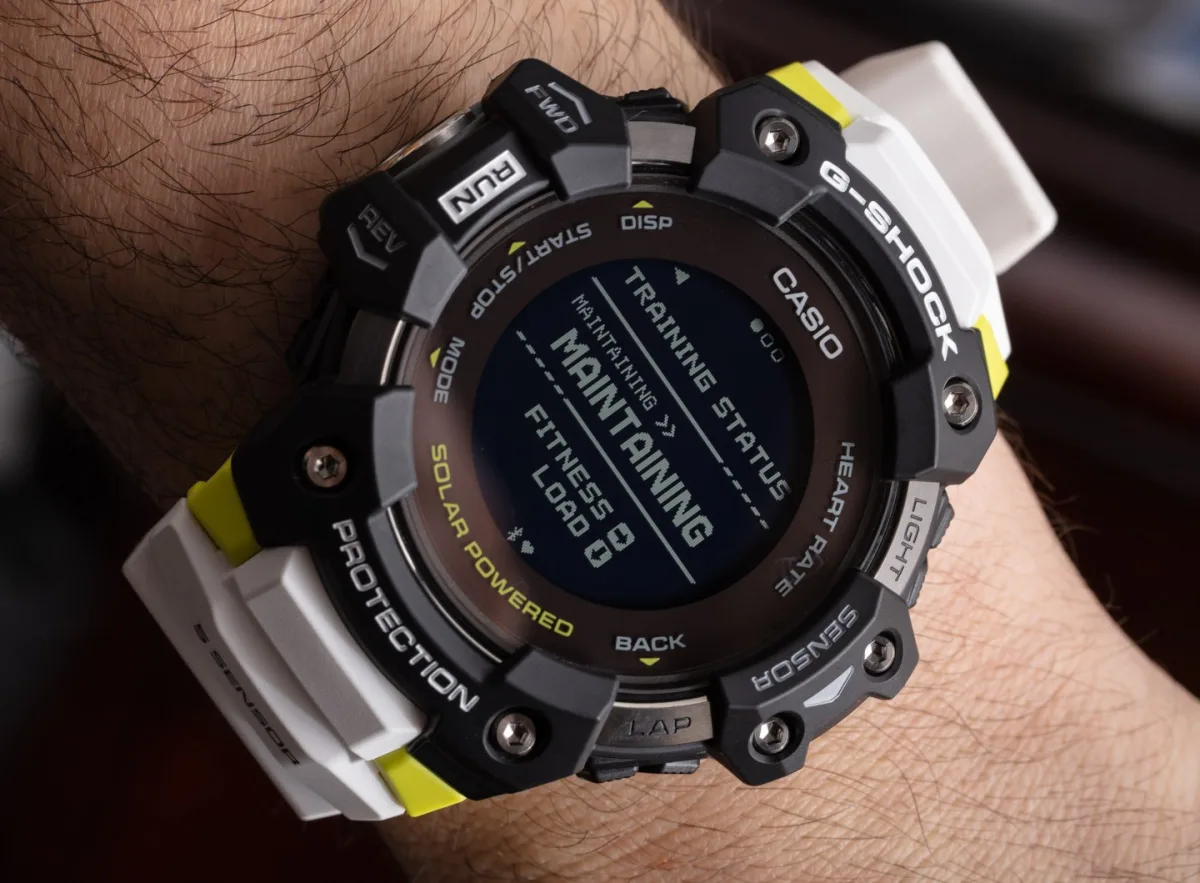
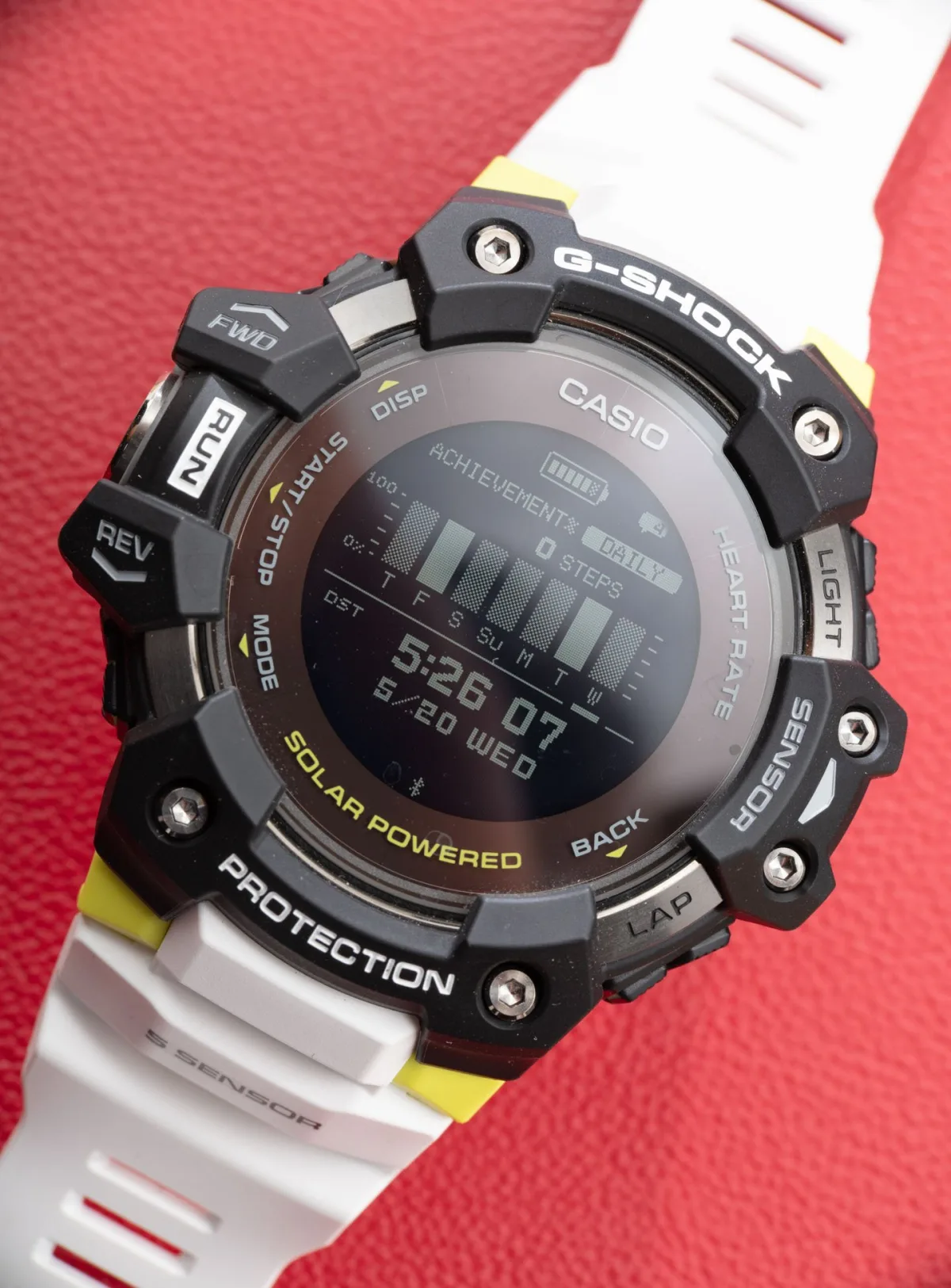
In 2020, the Japanese company Casio presented an even clearer vision of the future for G-Shock. The world-renowned "bulletproof" collection of high-strength G-Shock watches is over 35 years old, and Casio continues to release both fashionable inherited models and technologically complex modern G-Shock products, appealing not only to enthusiasts but also to watch collectors. The Casio G-Shock Move GBD-H1000 is precisely the product we'll review today, available in a variety of color palettes (black, white, and neon green model GBDH1000-1A7).
The evolution of Casio G-Shock watches is not a linear development of products that directly improve each other, but more like an evolutionary tree with branches that diverge in different directions, representing various ways and options that Casio engineers have experimented with to keep G-Shock innovative and relevant. One direction was to take the durability and functionality of G-Shock watches and present them in a fully analog (non-digital) form with products that reached their pinnacle in the MR-G collection. Another direction was to incorporate Bluetooth functionality into core watches as a simple way to update time while traveling. Casio has even invested in smartwatches, starting with the WSD-F30 supporting Google Wear (the latest generation of Casio smartwatches at the time of writing), as well as hybrid approaches combining smartwatch functionality with more traditional G-Shock capabilities. The G-Shock Move GBD-H1000 is just such a hybrid product, and I personally believe it represents the future of Casio G-Shock watches better than almost anything else Casio has released recently.
The Evolution of Hybrid Smart G-Shock Watches
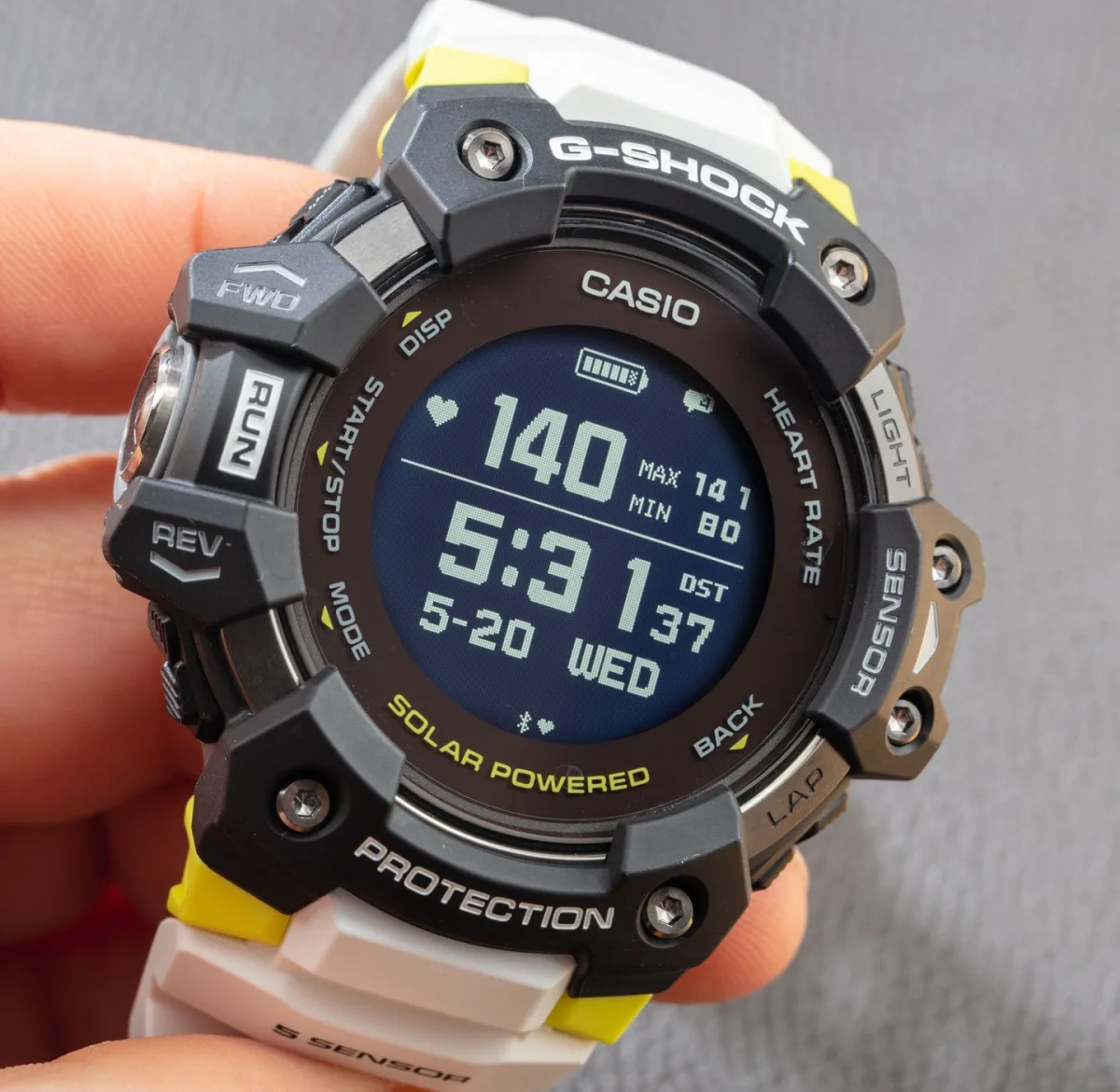
The direct predecessor of the GBD-H1000 was the Casio G-Shock Rangeman GPR-B1000, which introduced the new MIP LCD display, dual USB/solar charging, and a next-generation operating system. The GPR-B1000 is a diving watch, larger and twice as expensive as the newer GBD-H1000 model. The pricing strategy for the latest generation G-Shock is likely a strategic decision, as Casio seeks to aggressively capture a larger share of the smartwatch and activity tracker market. Considering what you get, the price indeed seems advantageous when looking at competitors.
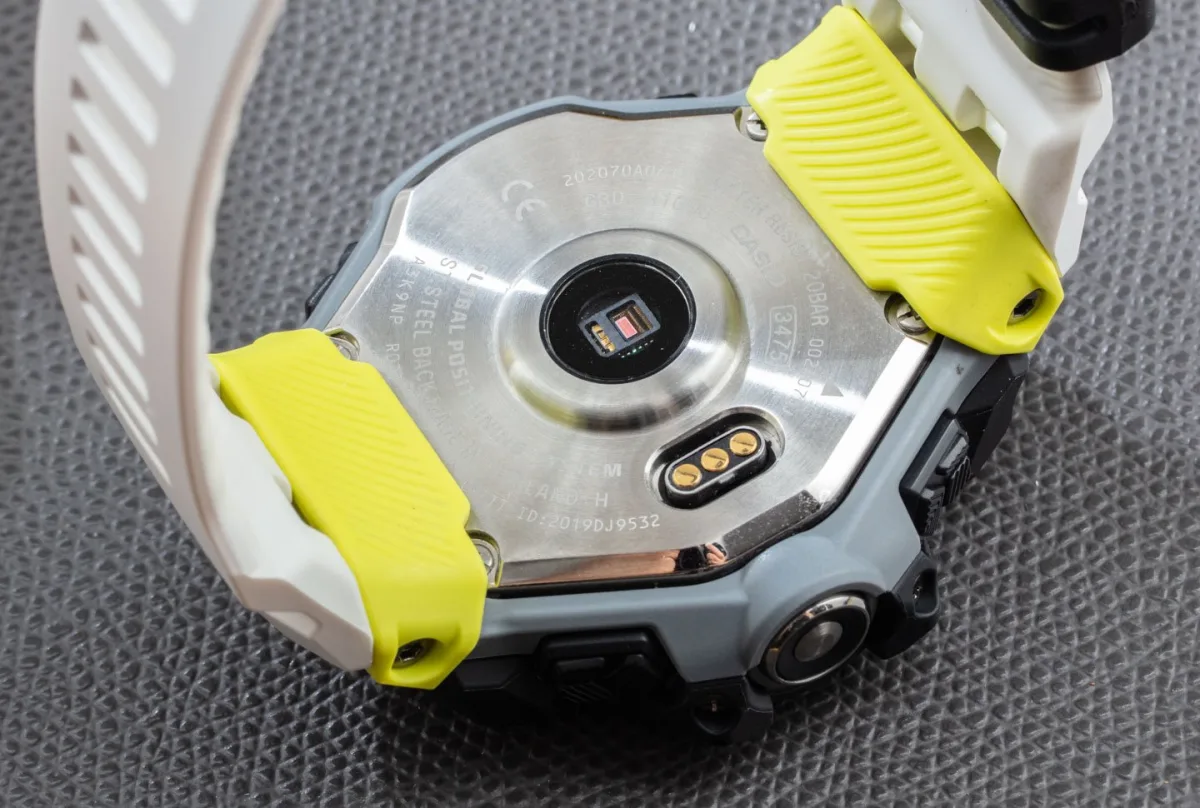
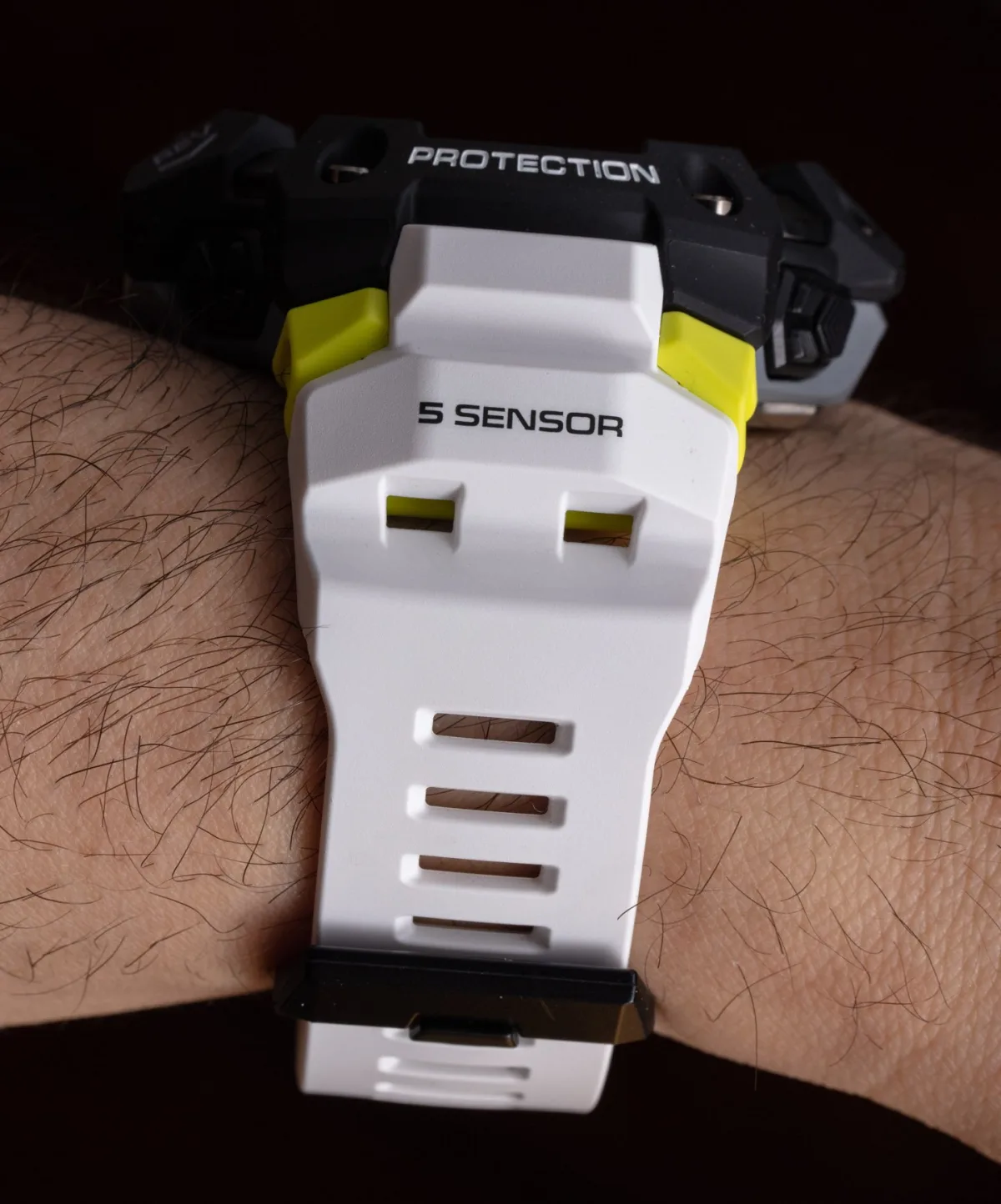
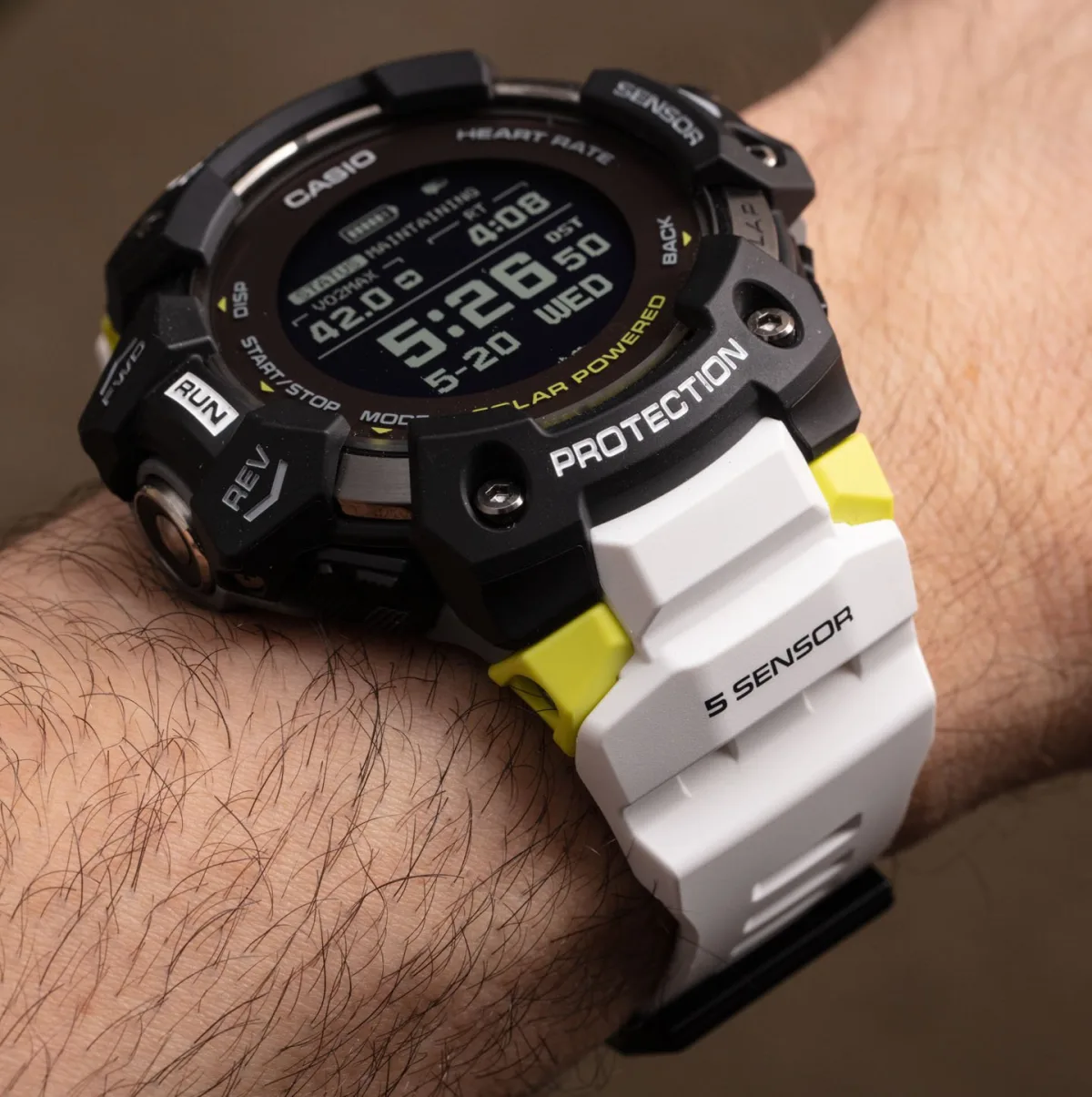
G-Shock Move is also the brand's first "five-sensor" watch, with the addition of a special heart rate monitor. In fact, the watch has more than five sensors, but considering the traditional way of counting them, these five sensors are a compass, altimeter/barometer, thermometer, step counter, and heart rate monitor. Don't forget that the Casio module inside the GBD-H1000 is equipped with GPS signal and Bluetooth functions.
The reason I call the G-Shock Move "hybrid smartwatches" is that, being "connected" watches that offer notifications and Bluetooth, they undoubtedly do more smart things in smartwatches than traditional watches. However, they do not offer a more modern smartwatch experience with apps and two-way communication between the watch and phone, like the Apple Watch or a device running Google Wear.
Instead, Casio developed its own operating system, which emphasizes functionality and efficiency. This is likely done to prioritize battery life and overall reliability. Casio engineers have extensive experience creating calculators that consume very little power. Essentially, most Casio digital watches are like this.
Features such as a heart rate sensor and Bluetooth connectivity are what modern consumers need, but they are power-consuming when it comes to battery life. Casio knows it cannot compete in all areas of the smartwatch market, but the brand rightly assumed they could have an advantage when it comes to energy-efficient devices.
Accordingly, one of the most common consumer complaints about smartwatches and bracelets, in general, is the need for regular charging. The GBD-H1000 watch is equipped with a passive solar charging system (the photovoltaic element is a ring around the screen) and can be charged using a magnetic USB cable. The advantage of Casio is that, for the most part, you can wear and use the G-Shock Move like any other G-Shock watch without the need to charge it regularly, like a smartwatch. However, if you regularly use power-consuming features such as GPS tracking, the solar power system will not be able to cope with battery discharge.
Casio will continue to improve the core features of the G-Shock Move, as such devices are always a target for progress when it comes to adding new elements, improving hardware, and enhancing software. I genuinely believe that this new operating system represents the future of most G-Shock watches. The new screens are much more readable than standard LCD screens, the operating system is deeper and more interesting, and additional features, such as a heart rate sensor, can easily find their niche and percentage of sales of wristwatches produced by Casio.
Durability and Design of G-Shock
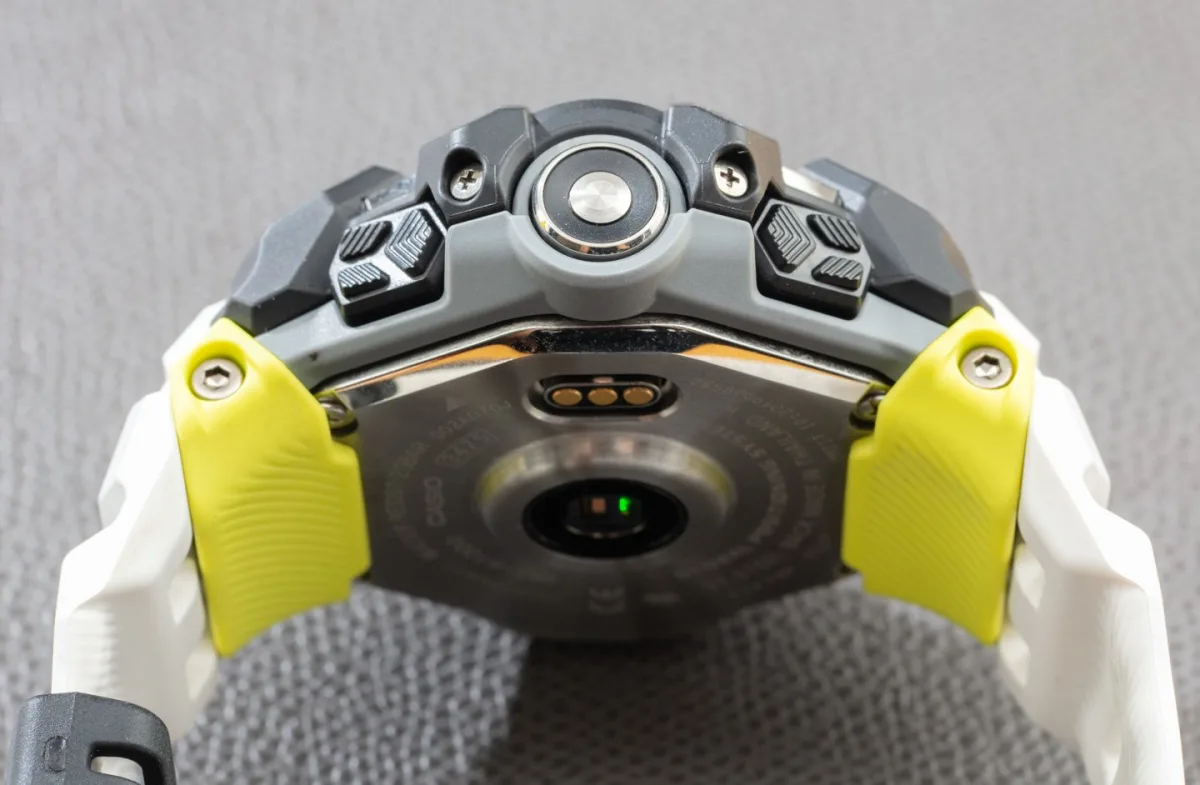
Despite the fact that the GBD-H1000 now belongs to the "G-Shock Move" family, I still consider them the spiritual successor of the Rangeman family in terms of design. The case is smaller and more comfortable to wear than the last-generation Rangeman it replaced, but
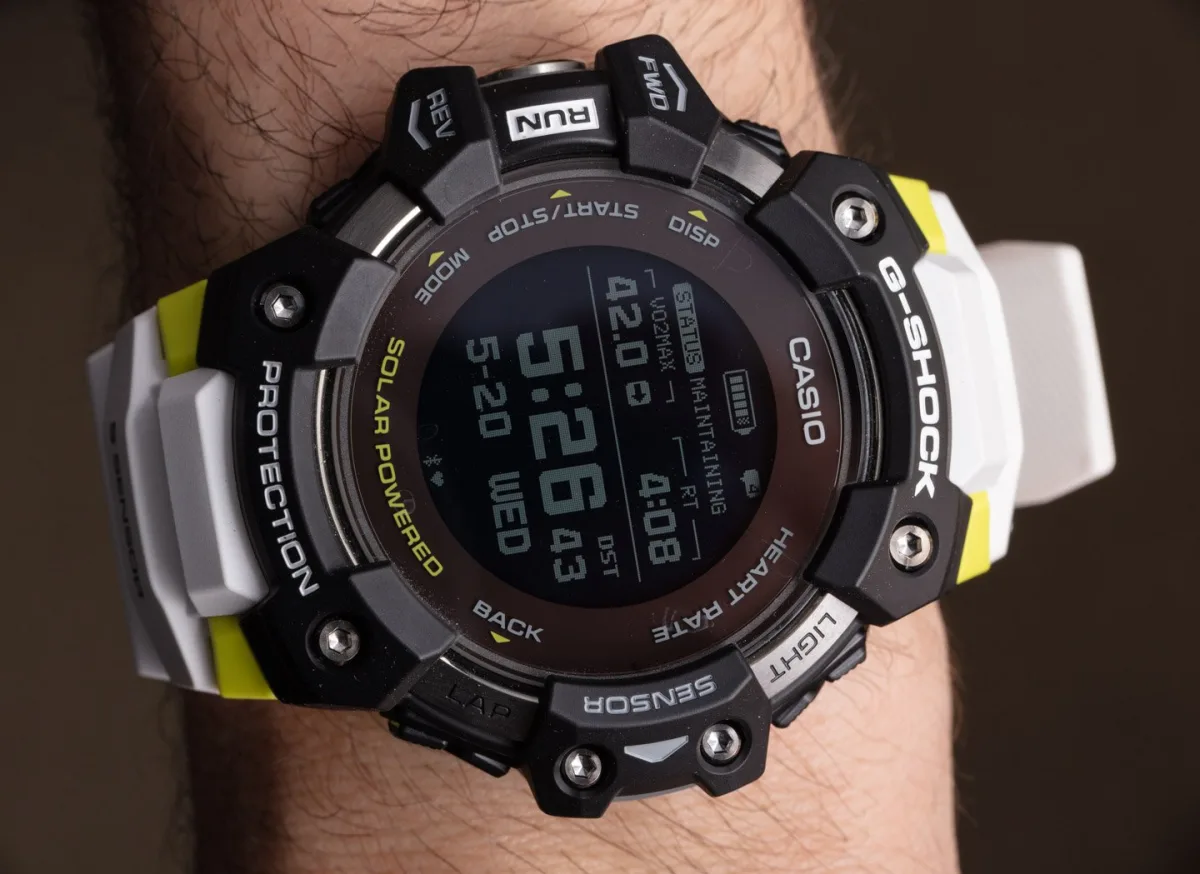
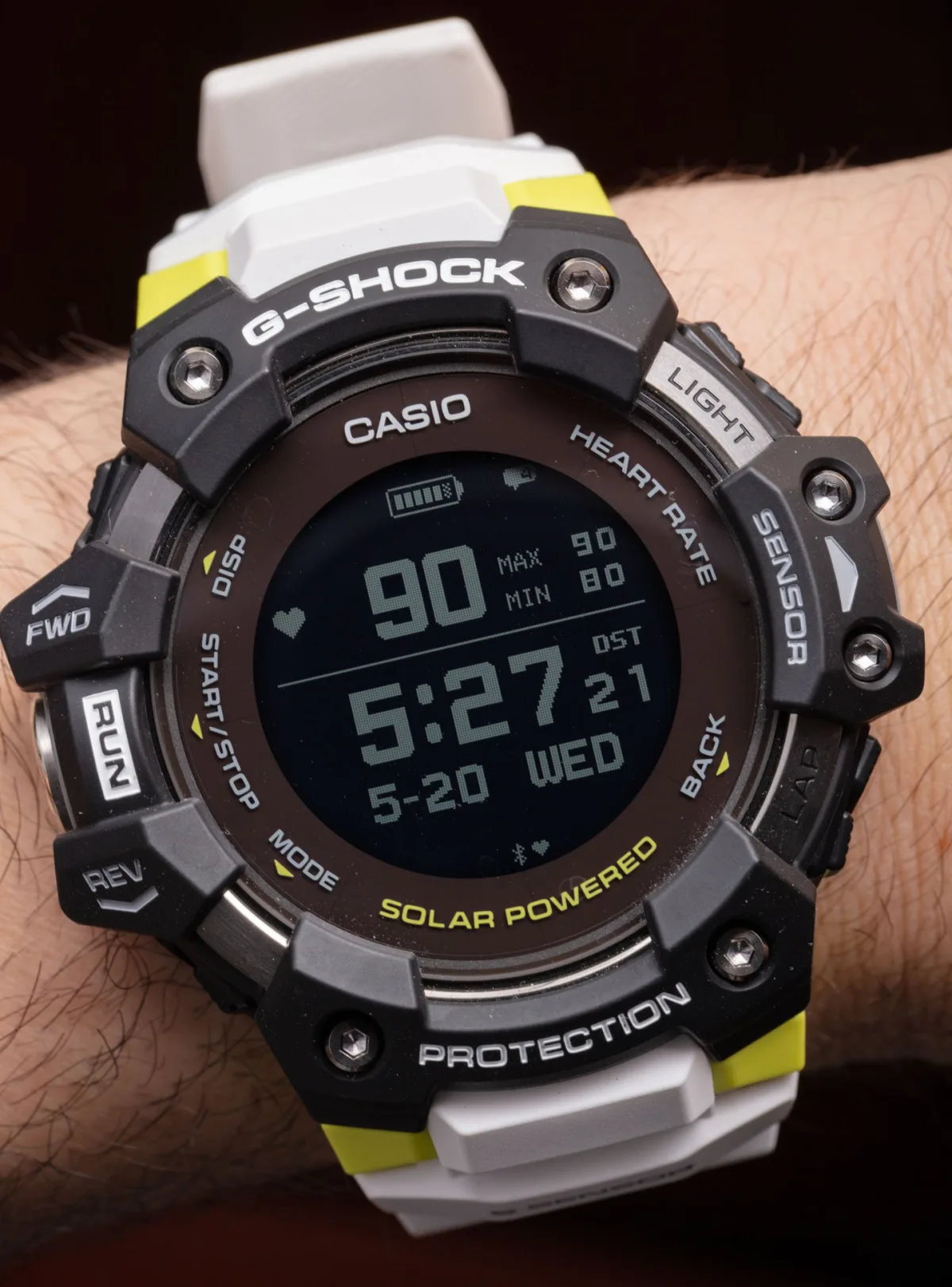
GBD-H1000 is still a large watch: 55 mm wide, 63 mm from lug to lug, and 20.4 mm thick. The resin and steel case (water-resistant to 200 meters) is well-made but weighs only 101 grams. Mineral glass is placed over the screen, protected by a cool bezel.
Like all G-Shock watches, you can easily drop the GBD-H1000 and not worry about them. This applies increasingly to many competing smartwatches, but I don't think most other watches can withstand such abuse as G-Shock and still look and function well.
Not everyone likes the black, white, and neon green-yellow color scheme of the GBDH1000-1A7. It seems that the watch was designed to match fashionable sneakers, but otherwise, they are difficult to match with a casual wardrobe. Other colors will appear in the future, but for now, Casio also releases the G-Shock Move GBDH1000-1 model, which is entirely made of black resin and looks somewhat more conservative.
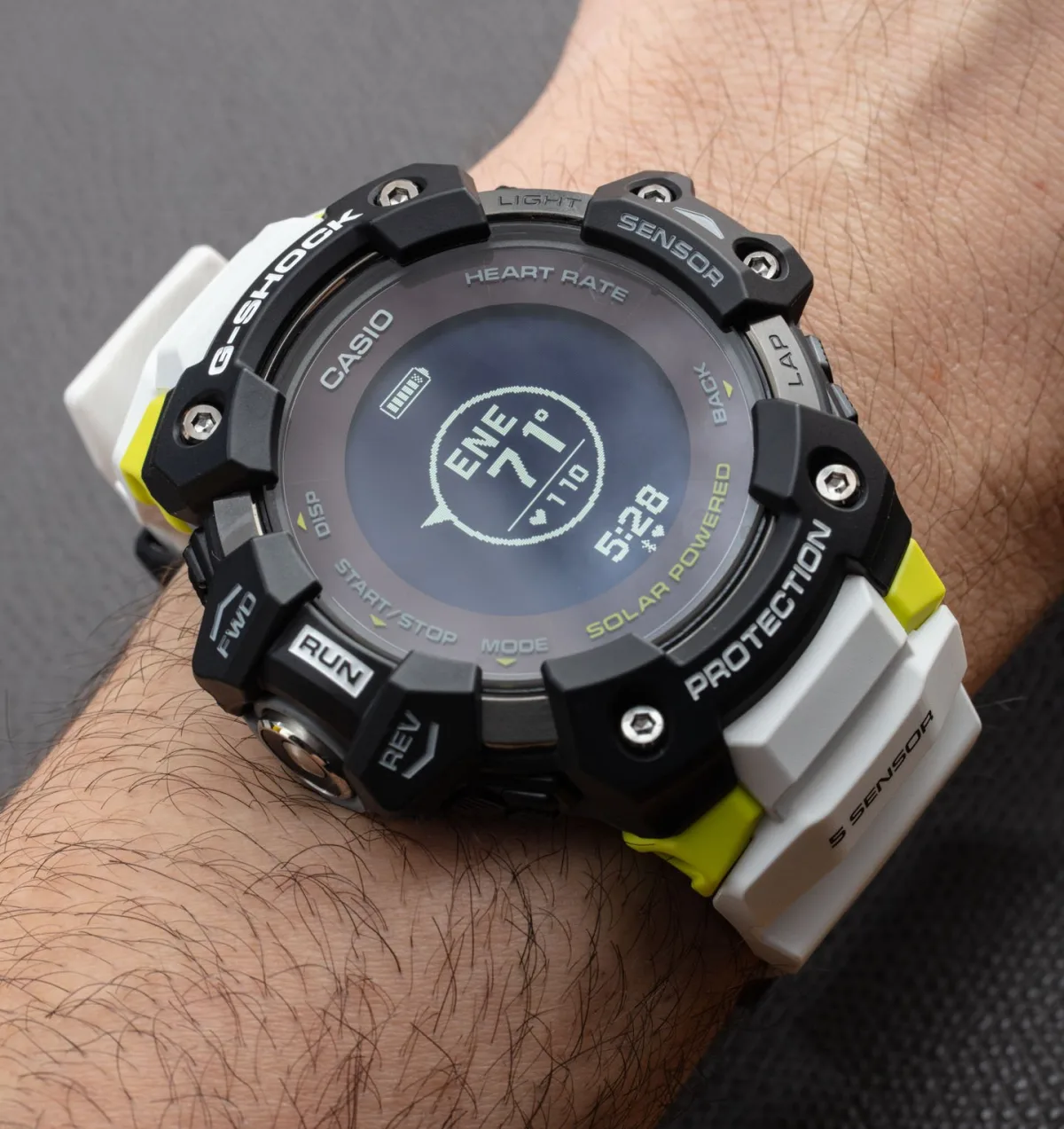
Compared to the Rangeman GPR-B1000, the GBD-H1000 buttons are reversed, but otherwise, there are still five buttons on the case, and there is no "scroll wheel" like the Rangeman. Despite a relatively simple and curved learning guide, it's not difficult to figure out how to use the new G-Shock operating system. But! Casio still has a way to go to match other modern smartwatches when it comes to an intuitive user interface and input design. A scroll wheel or some type of directional arrow system would be a great addition - as understanding which button to press requires learning and depends on the screen you are currently viewing.
G-Shock Move also has one of the best magnetic charging cables I've seen. They replaced the "claw dock" of the Rangeman, and while it takes a bit of fiddling to ensure the cable is correctly inserted, it stays securely attached to the back cover during charging. Given this, I found that I only used the charger occasionally after intensive GPS use. This is where I give my biggest compliment to the Casio team - finally, there is a modern activity tracker with Bluetooth connectivity that I don't need to worry about charging every day.
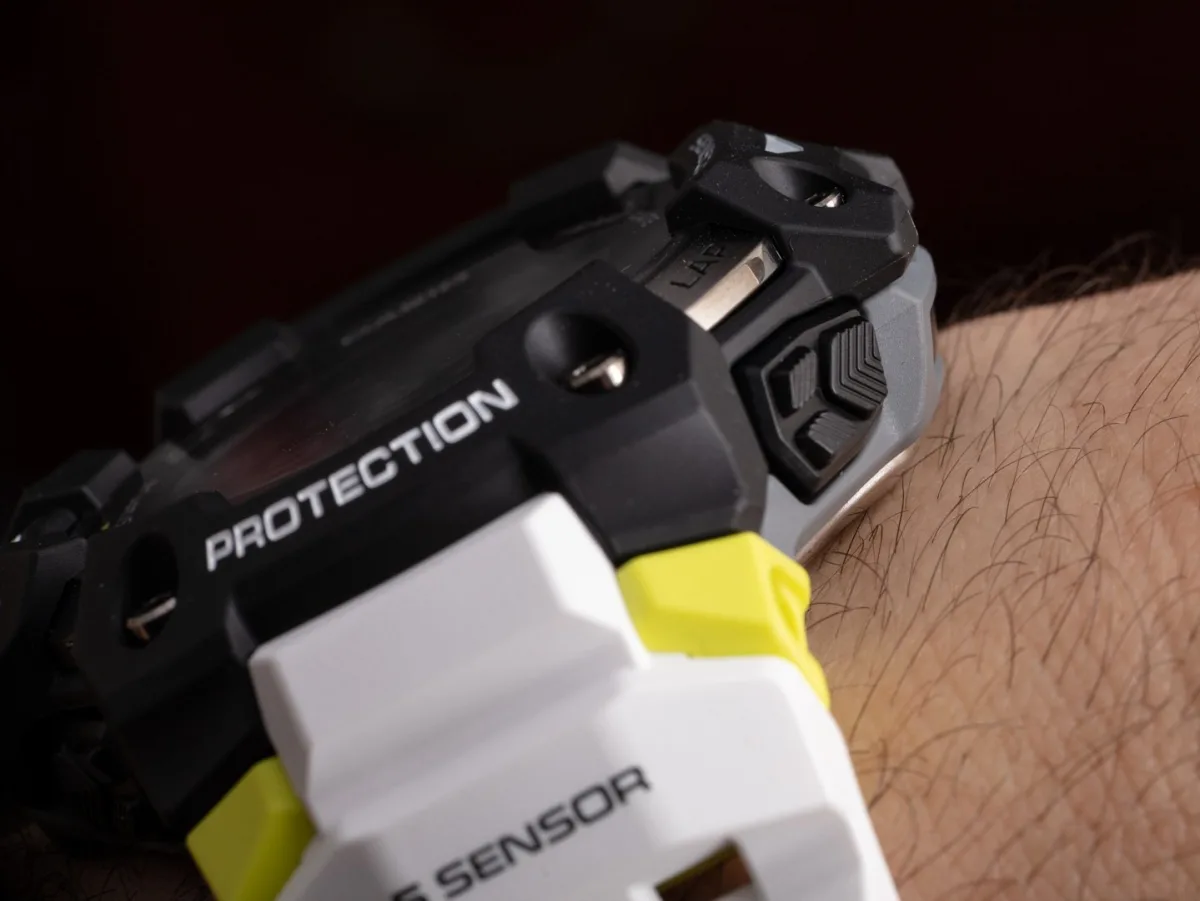
Keep in mind, I charged the watch by placing it near a window so that light hit the screen. It would be silly to assume that such a device does not need charging - it is too demanding on power outside of the (GPS/Bluetooth) energy-saving mode. It is more accurate to say that I kept the watch charged with solar energy, not USB. Therefore, if you can expose the GBD-H1000 to sufficient sunlight daily, I think you can use GPS for a few hours a week and probably avoid using the USB charger unless you use GPS very intensively.
Where I would like to see more attention to design is in the digital displays themselves. Of course, Casio engineers are still getting used to the new system, but the displays look rather simple and lack the flair, like the case design. Casio is still a newcomer to creating modern-looking and attractive user interface screens, but soon I would like to see a little more sexiness or at least additional display options when it comes to the aesthetic reading experience on the GBD-H1000 and subsequent products.
G-Shock Move App and Smartwatch Features
While most existing Casio watches with Bluetooth support use the G-Shock Connect app, the GBD-H1000 is one of the first Casio watches to use the new G-Shock Move app. This app allows you to adjust various watch settings and receive activity data from the watch, allowing you to view more information about your workouts/adventures, as well as helping you stick to your fitness goals.
To date, I've used a large number of smartwatch apps and found that each of them has its quirks. One of them is the need to sometimes restart the app or manually initiate pairing to get the watch and smartphone to interact with each other. Only Apple Watch with their fully proprietary software ecosystem seems to avoid this. It's not a big deal, but I hope that in the future, Bluetooth-connected watches and corresponding smartphone software will connect more smoothly and reliably in the background.
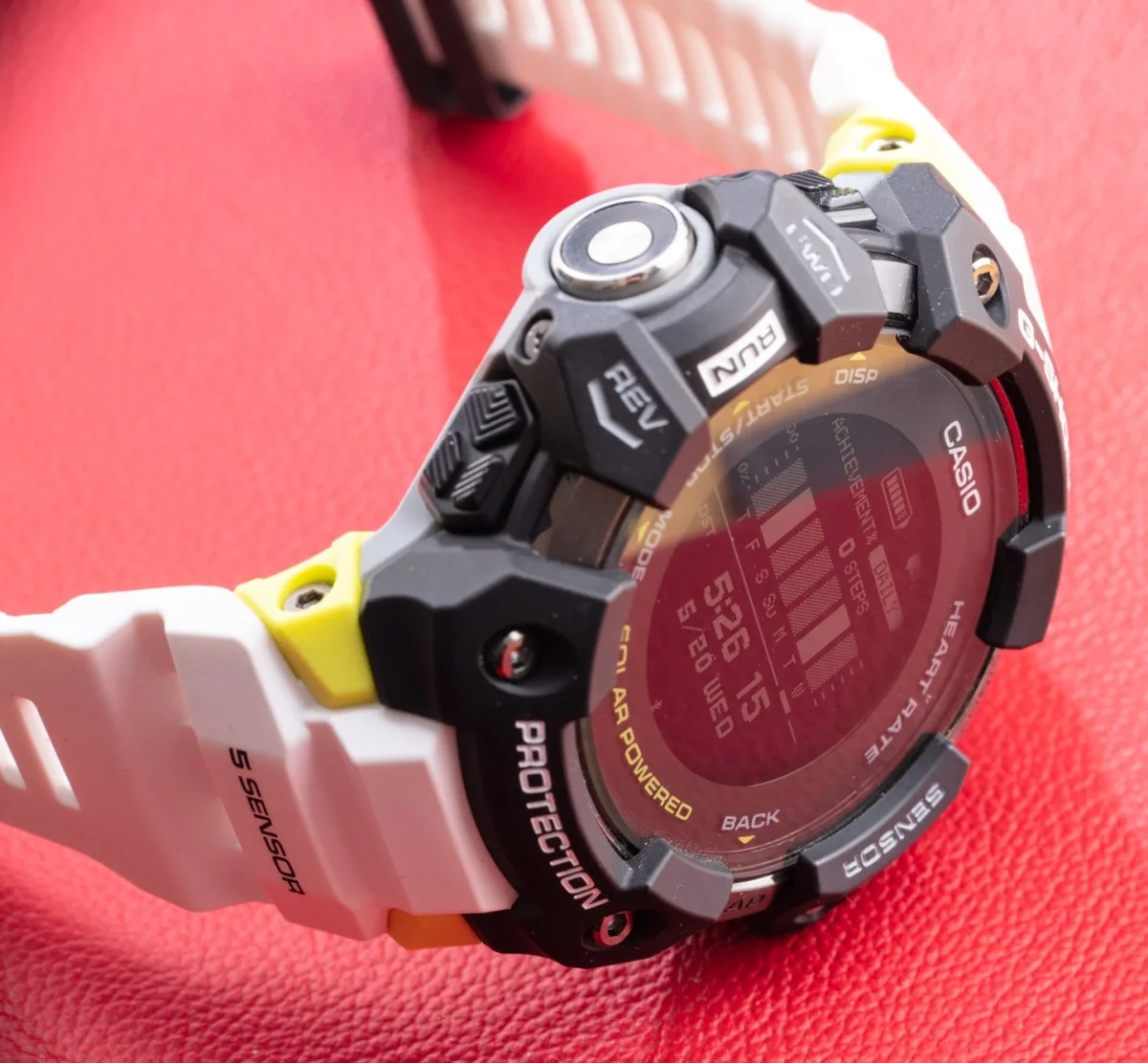
With the G-Shock Move app, you can do and view many things that are not available on the watch or are simply more convenient on the phone. For example, I found that viewing the details of my workout is not as simple on the watch screen compared to the app. The app is also noticeably faster than the G-Shock Move watch itself in some respects. The watch's operating system generally doesn't lag, but if it's updating something related to memory (e.g., saving or deleting a workout), it takes some time. This is likely due to Casio's desire to make the system more compact and not consume too much energy to preserve battery life. Thus, practically all modern smartwatches and activity trackers have functionality based on a balance between battery life and performance.
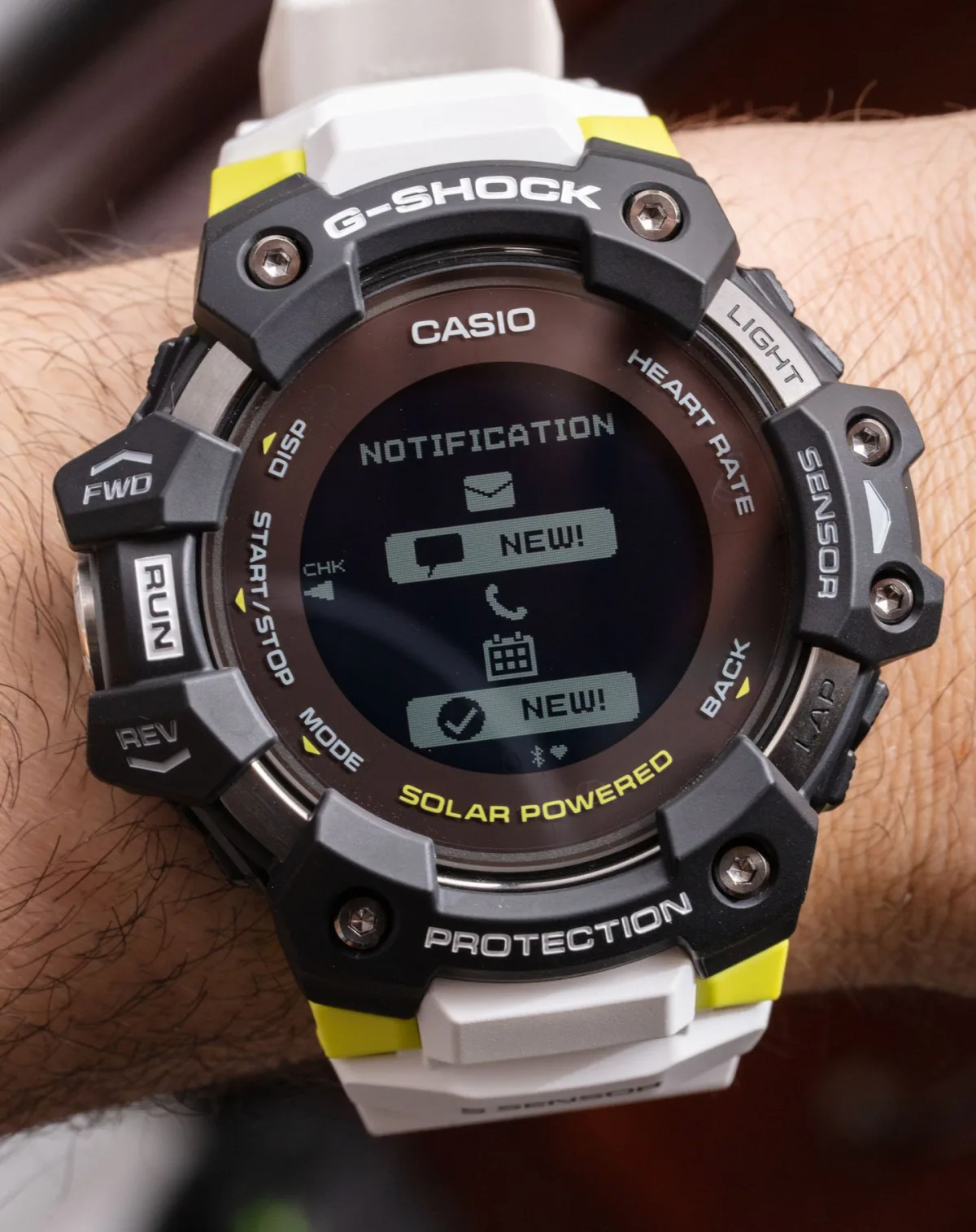
While you can receive basic smartphone notifications on the GBD-H1000 screen, I prefer to disable this feature, as I find it a bit distracting (after all, it's not such a simple and energy-intensive process). I like to think of smartphone connectivity as an accessory to independent watches. Some smartwatches, like the Apple Watch, are not designed to live too long without being near their phone. The GBD-H1000 has features that get a significant boost from working with a smartphone, but in reality, this device can be used completely independently of a smartphone. Even things like automatic time updates can be done directly via GPS signal.
How to Use G-Shock Move GBD-H1000 as an Activity Tracker During Workouts
Now let's talk about how to break a sweat with the G-Shock Move GBD-H1000. All these theoretical talks about activity tracking are just a prelude to experiencing the watch as a workout companion. For testing sports smartwatches, I prefer hiking. It also helps that I engage in the same type of activity with different products, so I can assess how different products compare to each other.
To some extent, this is related to design, but more accurately, I would say that each activity tracking watch manufacturer chooses different priorities for their products. For example, some watches offer more features but much less battery life. The longer you have to work without recharging, the more useful the device is. As I mentioned, Casio currently focuses on ultra-durability and long battery life in their activity trackers.
The MIP LCD screen is indeed brighter in sunlight and is one of the most readable digital displays I've ever encountered in similar watches. It reflects light just like many Garmin screens but even more effectively (although the Casio screen is monochrome, while the Garmin is full-color). Overall, Casio received high marks for these new types of screens.
Unlike some other activity tracker watches, Casio doesn't seem to allow you to specify the sport or activity you are engaged in. Garmin and Apple want the user to inform the device about the activity they are doing (cycling, swimming, running, etc.) before the workout. Casio still requires you to manually inform the G-Shock Move when you are about to train, but you simply activate it without selecting a specific activity. I don't know all the implications of this, but I assume it will lead to simpler management for many consumers and help collect more accurate owner data, which the GBD-H1000 does not track as well at this stage as other smartwatches.
As a GPS-based device striving to be energy-efficient, I found that activity tracking during my hikes was quite accurate. However, I found that in some areas, the GBD-H1000 readings differ from those of the Garmin MARQ. I have already tested the Garmin MARQ and Apple Watch during physical activity tracking and found that the results of these two devices are surprisingly similar. Casio seemed a bit off when it came to tracking heart rate, altitude, and calories burned. Nevertheless, if you consistently use the G-Shock Move, they will track indicators consistently, so even if you burn more calories than the watch shows, you will know from workout to workout how your indicators change.
I assume that Garmin and Apple use more energy for GPS and other tracking functions, while Casio handles it more conservatively. This likely has some minor performance implications, which explains the different readings. I don't consider this a reproach to Casio, but overall, I want to tell consumers not to expect the same metrics from all activity trackers, even if they all claim to track the same parameters.
During workout tracking, you have access to several on-screen displays. I like the ability to view the current heart rate, as well as data such as total distance or workout time. Most of these are available, but I still found myself scrolling through screens a bit more than I would like when trying to focus on hiking. However, this is a common complaint about most activity trackers. In the future, I would like to see software in the G-Shock Move app that allows me to create custom viewing options so that during a workout, I can see only the data I need without having to fiddle with buttons.
Even if you don't engage in active measurements during a workout or adventure, the GBD-H1000 will still be able to report your current heart rate and a lot of other data. It just won't use GPS for tracking, etc. So even as regular sports watches with additional tools like a compass, HR monitor, and step counter, the GBD-H1000 can work very well.
Finally, let me discuss the "Workout" mode, which is actually somewhat different from the activity tracking mode (which most people refer to as tracking the current workout). The "Workout" mode on the watch is one of the main screens of the mode and is essentially a series of five "summable" and programmable repeating countdown timers. This mode is best suited for people who like to include interval training in their workouts. For example, it is popular to conduct workouts based on a series of three-minute countdown intervals. The watch can be programmed for this. You can also complicate the task and program five repetitions of a three-minute countdown timer and then three repetitions of a 10-minute countdown timer. Although it requires some planning, this new feature finally offers a satisfying solution for those looking for an interval training feature in their watch.
Consumers Best Suited for G-Shock Move Watches
Most consumers today still lack experience incorporating smartwatches into their workout routine or lifestyle. This means they rely on products to guide them on what to expect, rather than buying new smartwatches and activity trackers with too many built-in expectations. The lack of frequent recharging may be one of the few exceptions to what I just said.
This means that just as consumers will guide Casio on how to further develop their hybrid smartwatches, Casio is guiding consumers on how to use these products. I encourage avid adventurers and those who regularly exercise to experiment with great products like the G-Shock Move GDB-H1000 and see how they can help improve their lives and achieve fitness goals. For many people, the simple ability to see the distance traveled, time spent, and required effort is enough.
In the GBD-H1000 model, Casio cared for more advanced athletes by offering features such as VO2 max calculation (maximum oxygen consumption) and recommended recovery time. These tools are useful, but if you don't come to the workout already knowing how to use these features, the GBD-H1000 device itself won't give you too many clues. This is a major issue with fitness trackers that I think will be resolved in the coming years as consumers gain more built-in knowledge on how to use these devices more fully.
If you never want to track workouts, are G-Shock Move watches right for you?
That's a good question. As I mentioned, the watches are designed for seamless, standalone wearing, not requiring a smartphone or charging, provided you disable the GPS function. New tools, such as the heart rate sensor, are useful throughout the day, for example, as a stress measurement tool or to ensure you exert enough intensity to start the calorie-burning process. The GBD-H1000 represents the latest step by Casio in developing a new operating system that is only a few years old. More time must pass before ordinary consumers see this in more fashionable or thinner G-Shock models with corresponding refined and focused feature sets. This is important to note because smartwatch enthusiasts and similar watches naturally divide into those ready for experimentation and those impatient in searching for the latest technologies on their wrist, such as Apple products.
The G-Shock Move GBD-H1000 watches from Casio currently lead the industry in activity-tracking watches in several areas, namely, when it comes to the unique combination of battery life with many features. I never felt that the GBD-H1000 was simple in its functions, even if the main functionality of the watch is more simplified than some competitors that offer a more truthful smartwatch experience. Most importantly, the GBD-H1000 is a device that creates a sense of novelty that will still delight fans of traditional G-Shock products. Casio continues to prove that it prefers to maintain quality, performance, and high expectations from fans, even if it releases new features a little slower than some tech competitors. I will definitely continue to wear this watch on my wrist during my active life for a long time. The price for the Casio G-Shock Move GBDH1000-1A7 is $399.99 USD.
Essential Data
>Brand: Casio
>Model: G-Shock Move GBD-H1000 (reference GBD-H1000-1A7, as tested)
>Price: $399.99 USD
>Dimensions: 55 mm wide, 20.4 mm thick, and 63 mm lug-to-lug distance
>Who this model is suitable for: As everyday sports watches when features like a compass and heart rate sensor are useful, or as a special activity tracker when I'll be away from a charging station for several days.
>Friend we would recommend them to first: Anyone interested in enjoying a next-generation G-Shock product that can now be fully integrated into a tracked, active lifestyle.
>Best feature of the watch: Excellent battery life compared to competitors. Very readable and clear screen. A large number of features/functions for an activity tracker that is more of a traditional watch than a smartwatch.
>Worst feature of the watch: Color scheme is not for everyone. The case is still quite large, despite being comfortable on the wrist. Understanding how to use the new operating system requires learning. The system is slow on the watch when saving/deleting data.